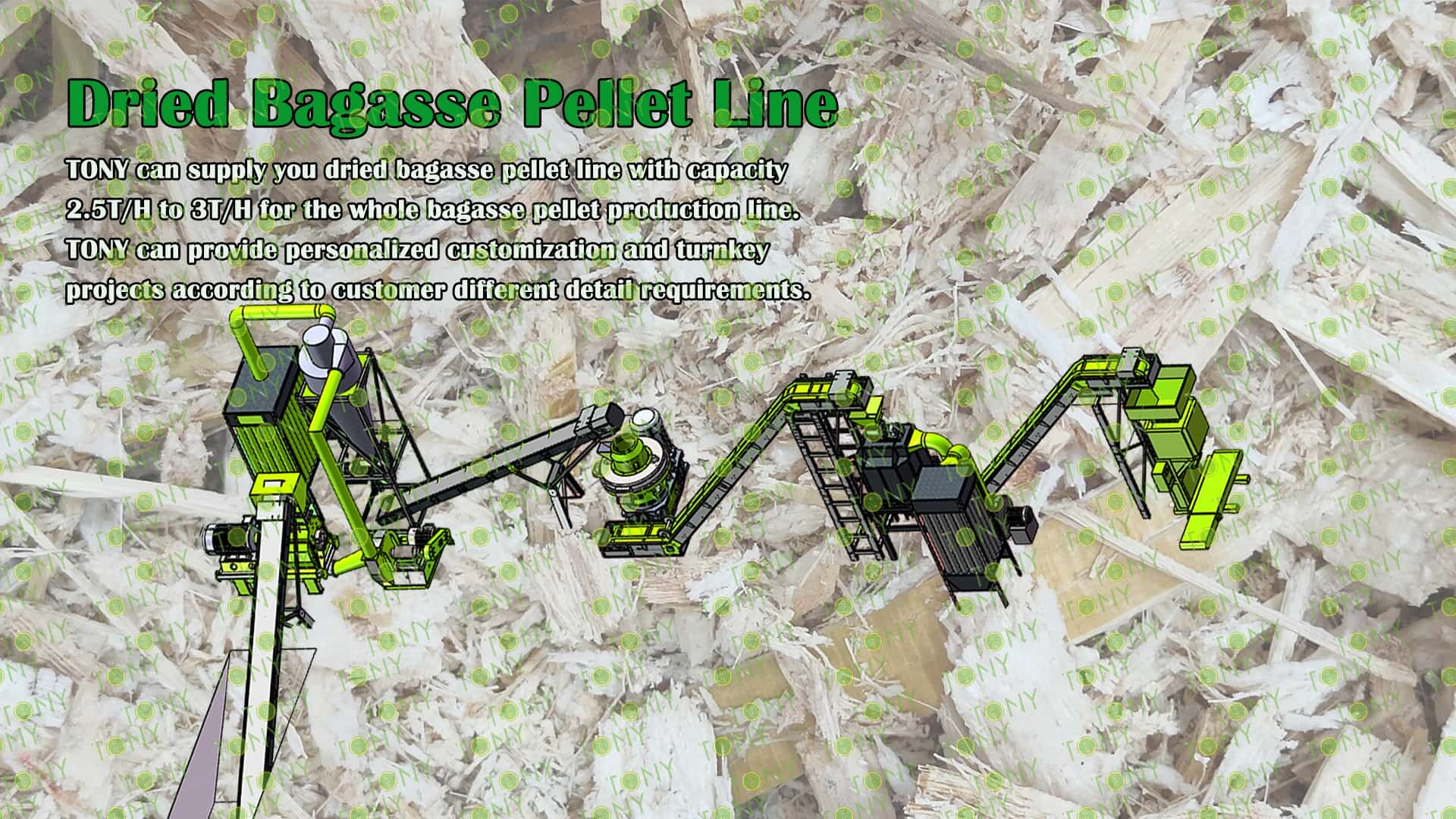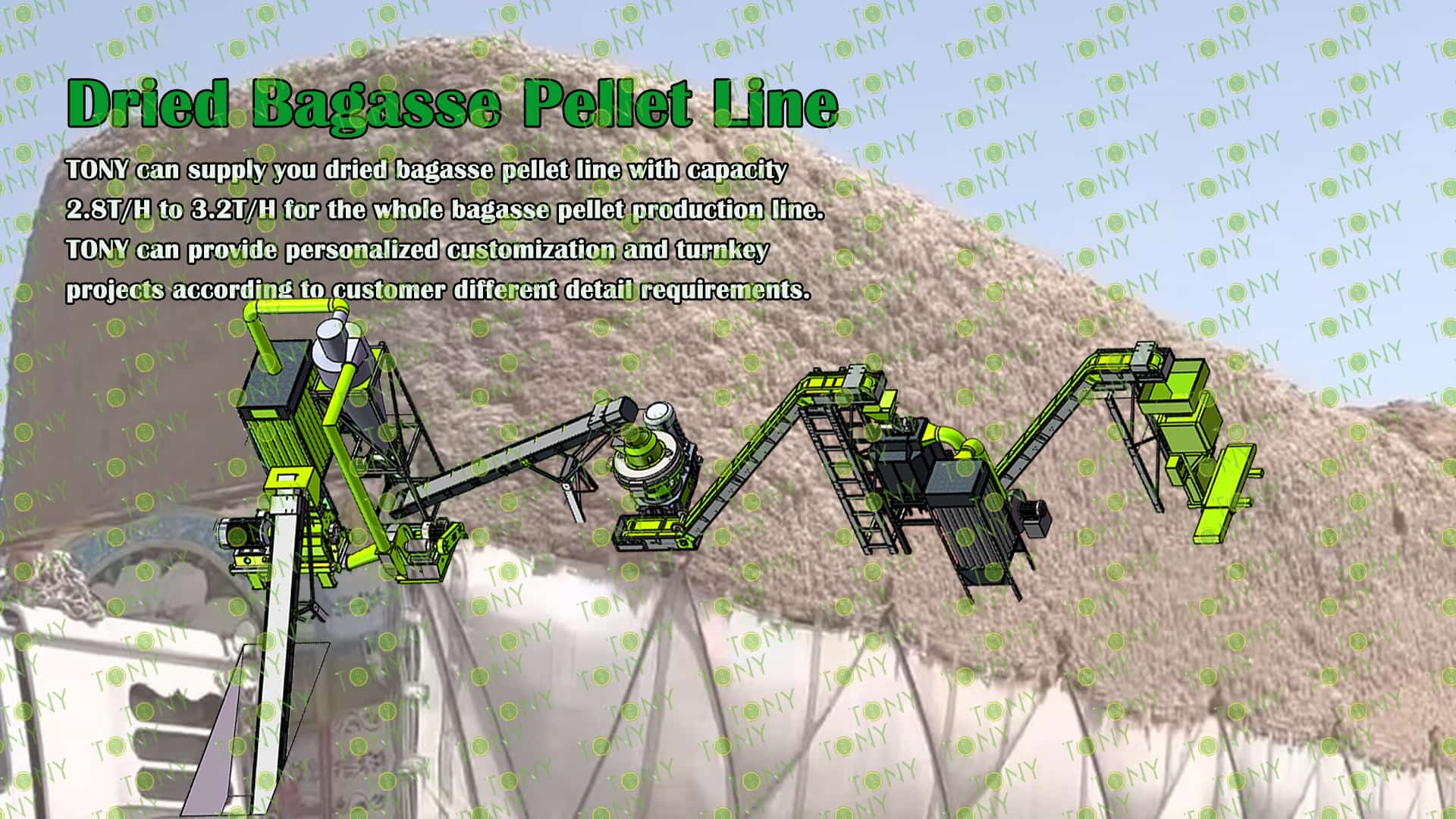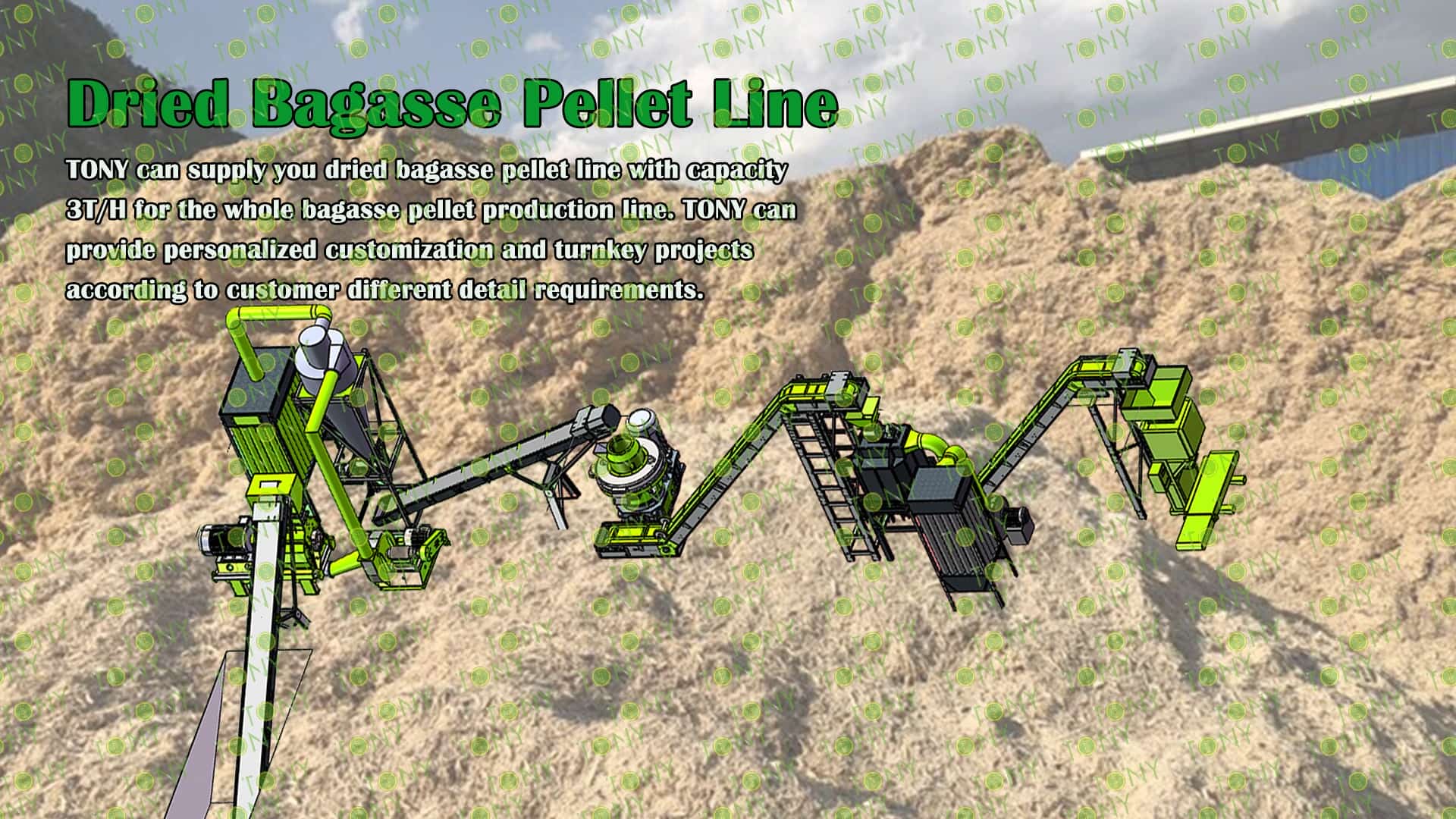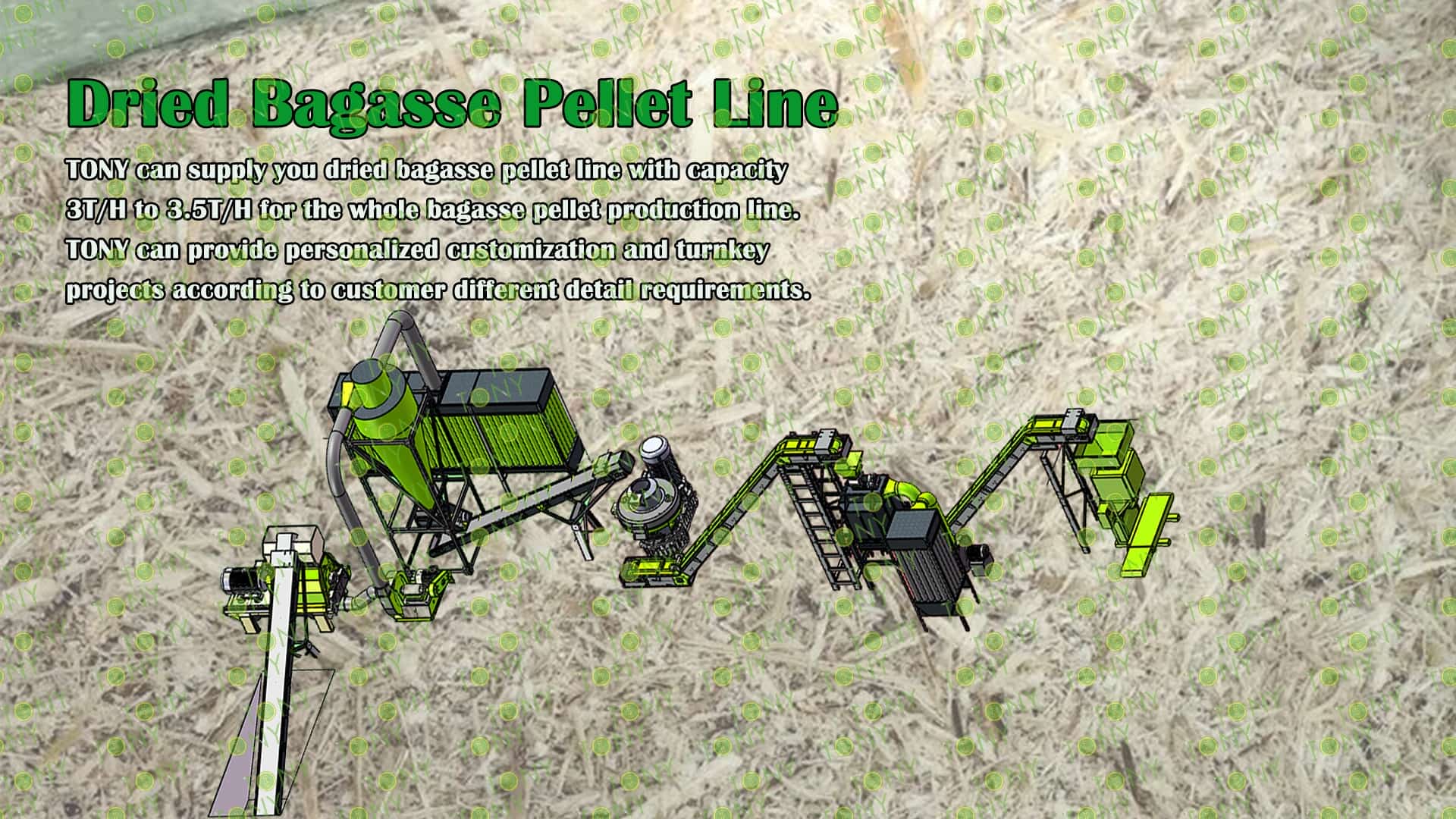




















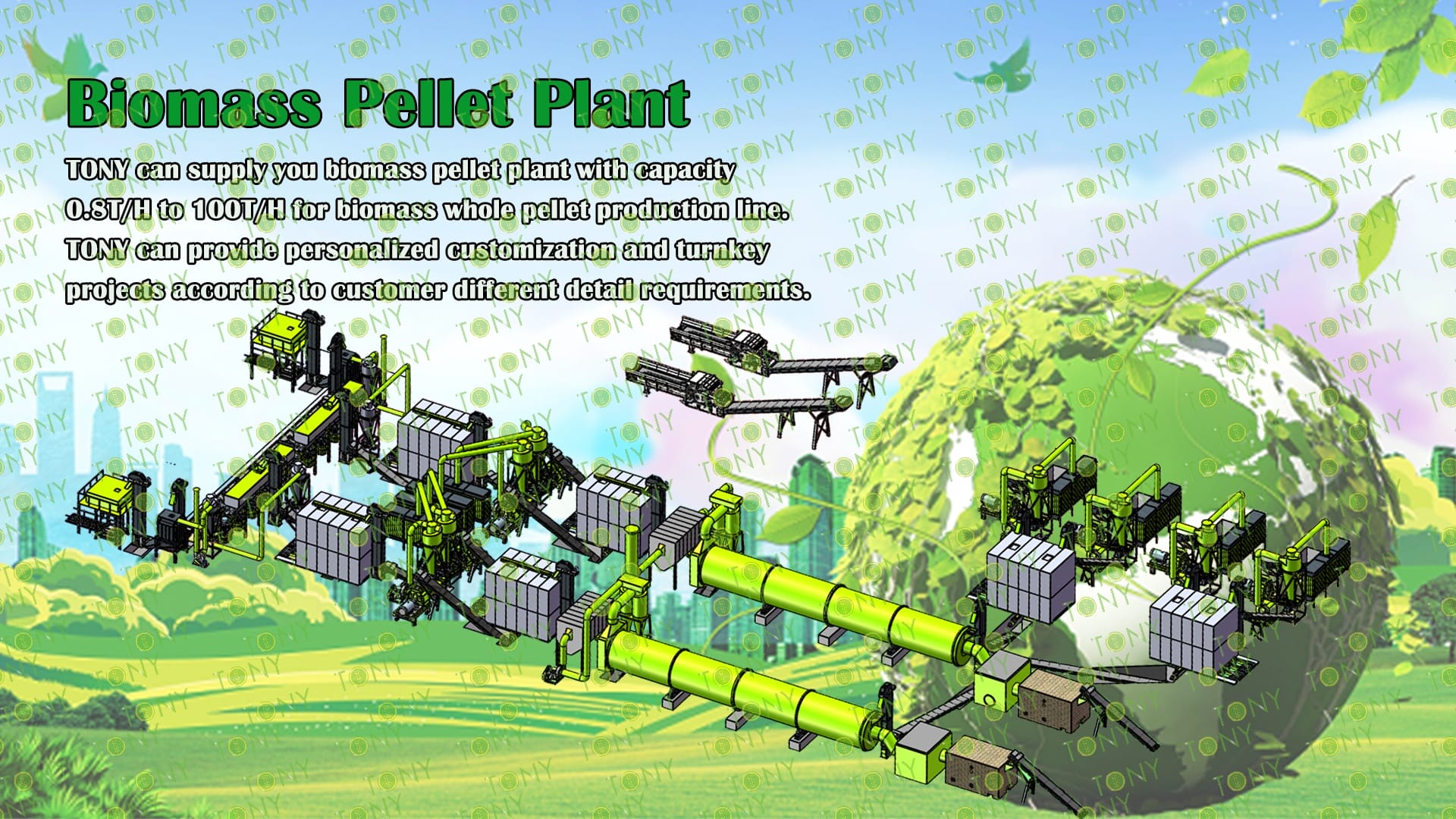
Project Brief Introduction:
1.Product:Dried Bagasse Pellet Line
2.Capacity: 18T/Hour
3.TONY Brand 18Ton /Hour Dried Bagasse Pellet Line Project Process
4.Main Machine:Hammer Mill,Large Hydraulic Storage Silo,TONY Pellet Machine TYJ760-III-200KW,Pellets Cooler,Packing Machine And Belt Conveyors
5.Total Power: About 1920KW
6.Need Area: About ㎡ L: M W: M H: M
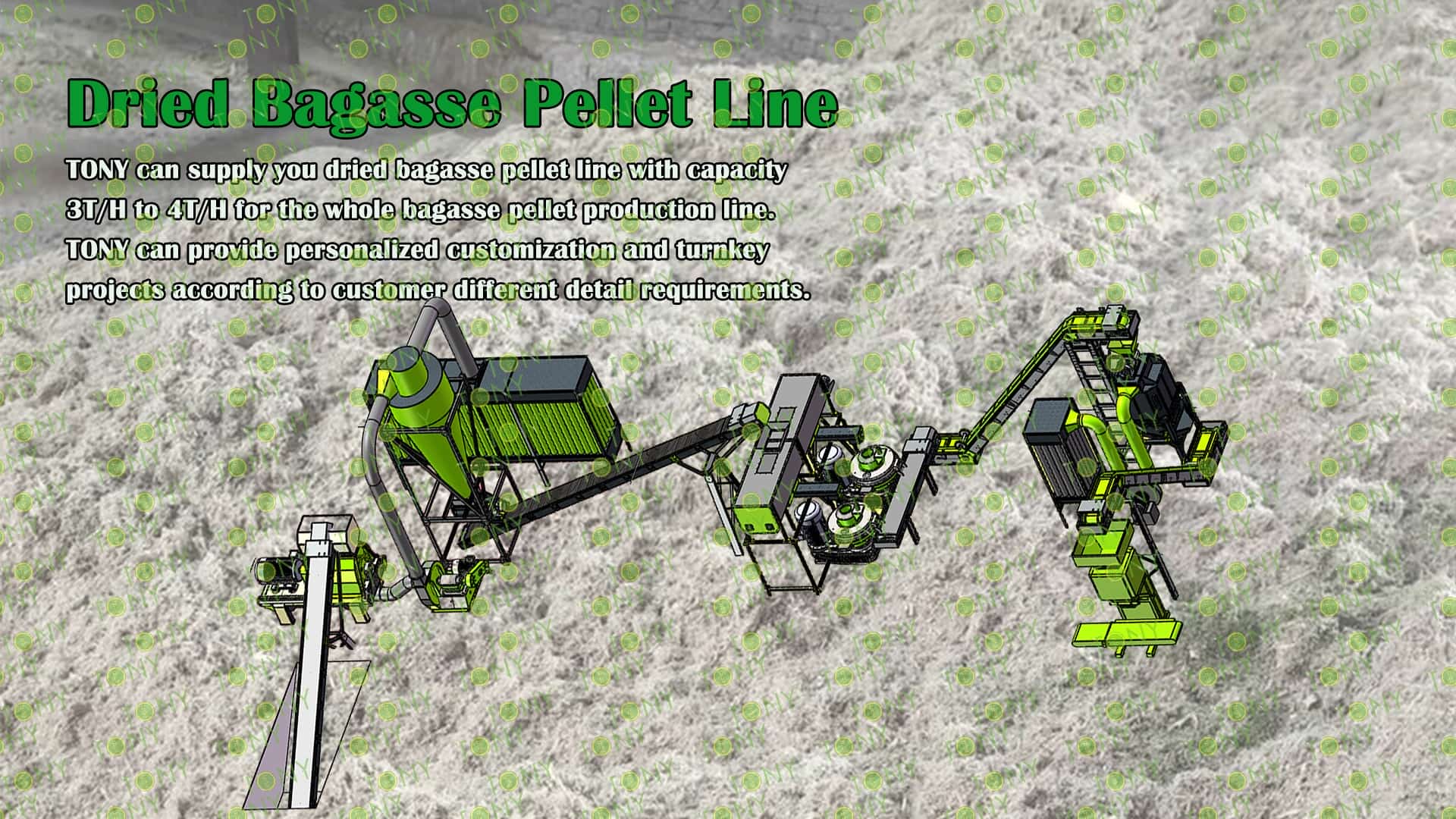
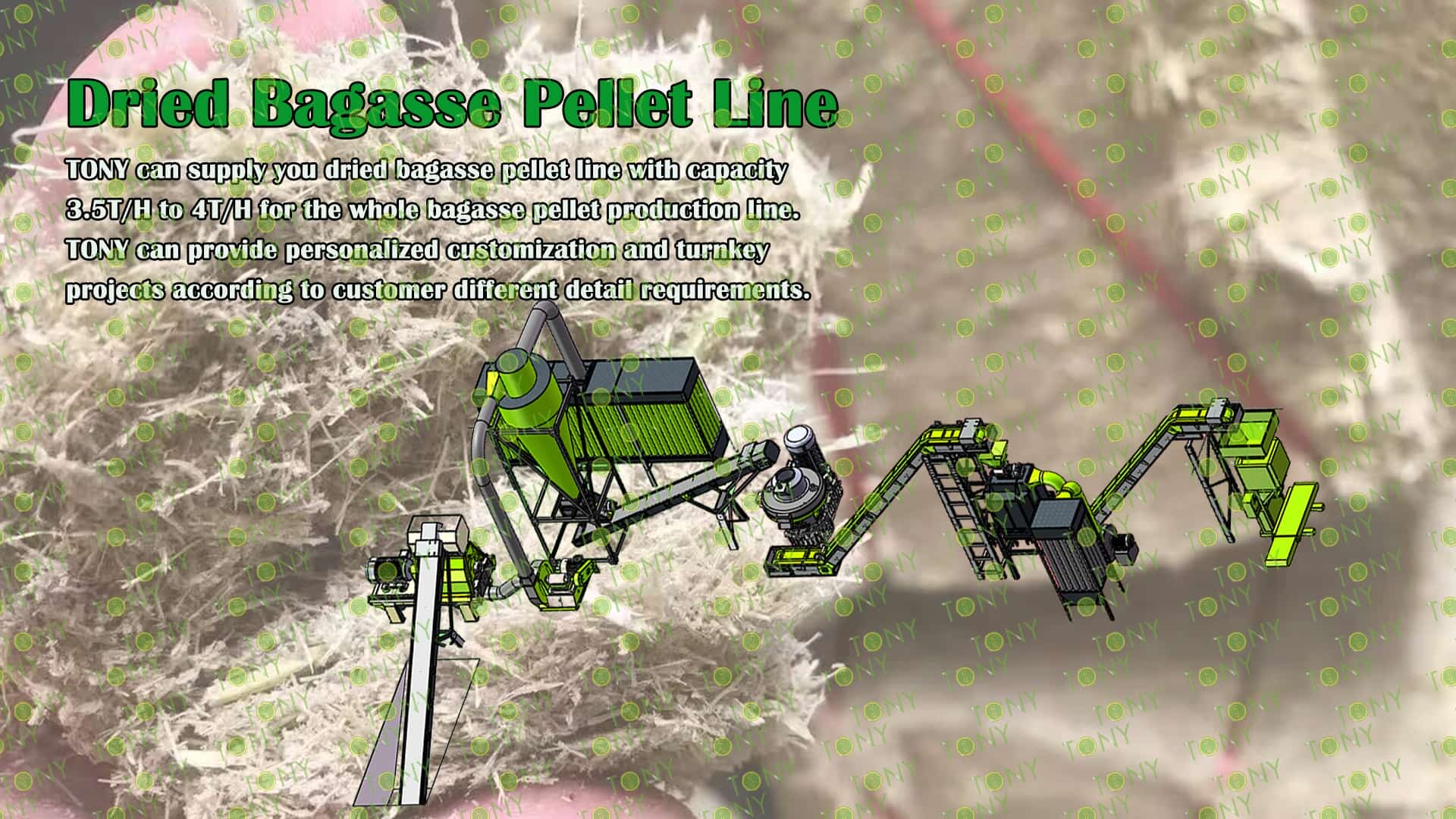
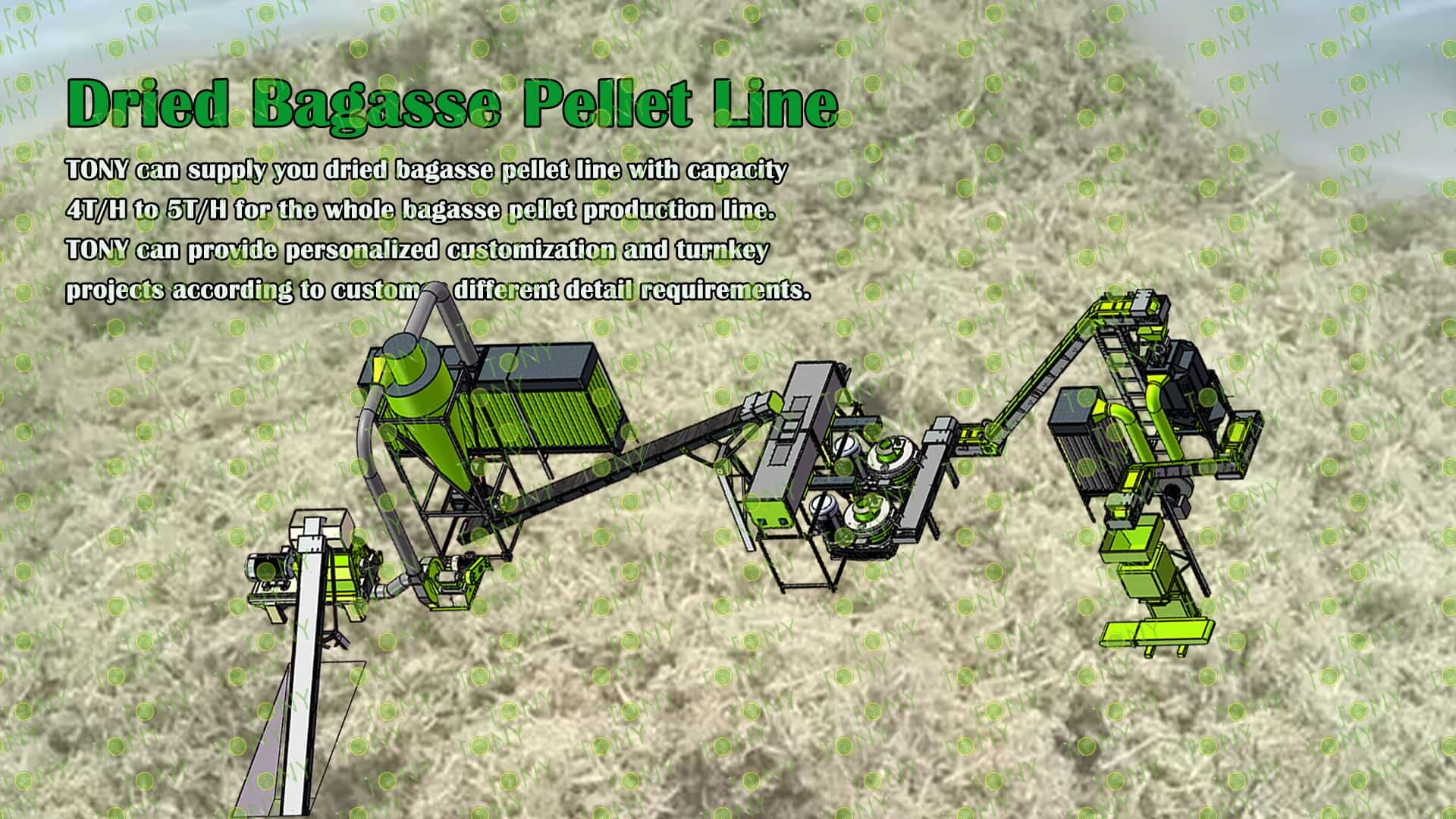
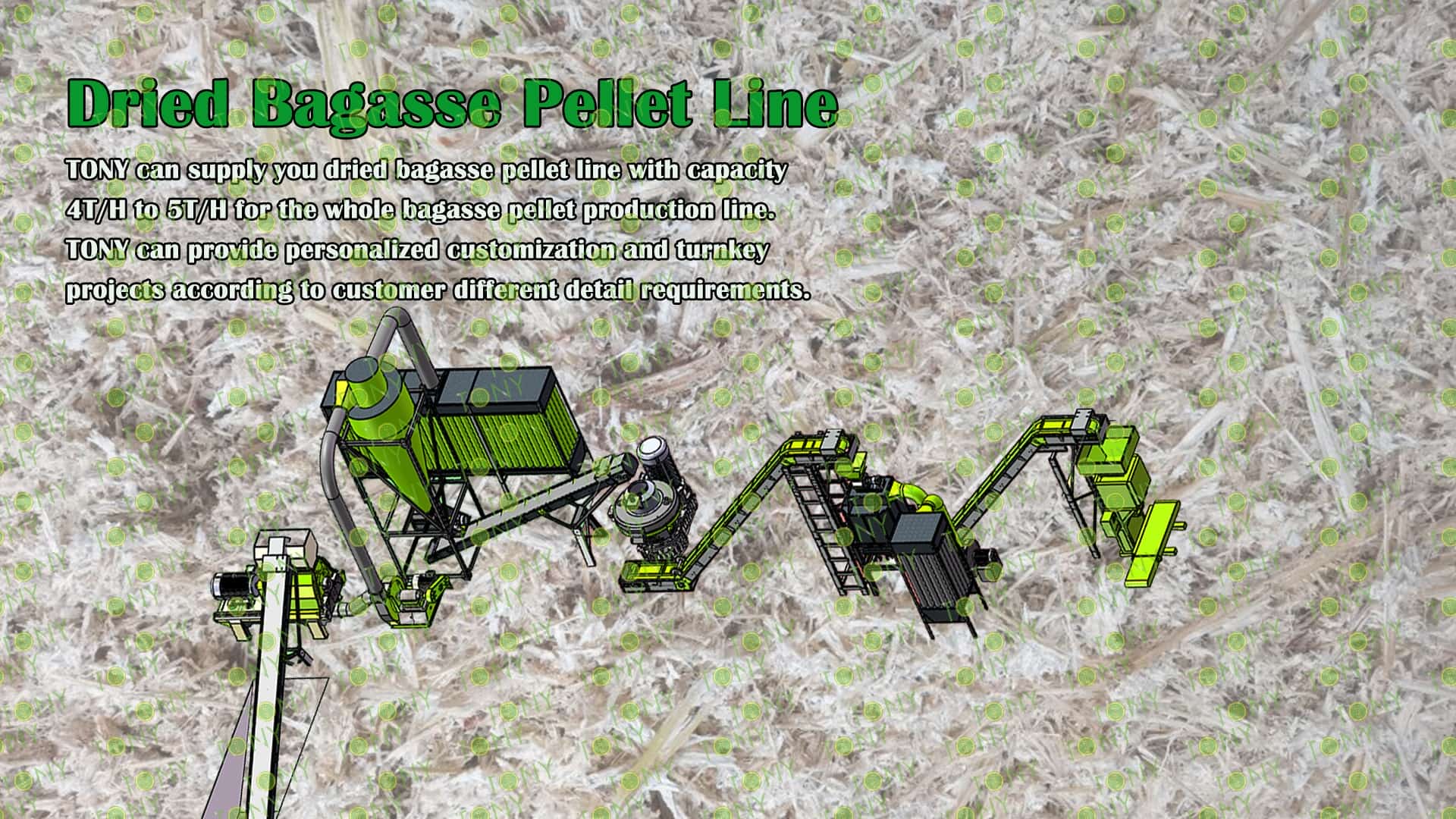
Project Layout For Customer:
图片
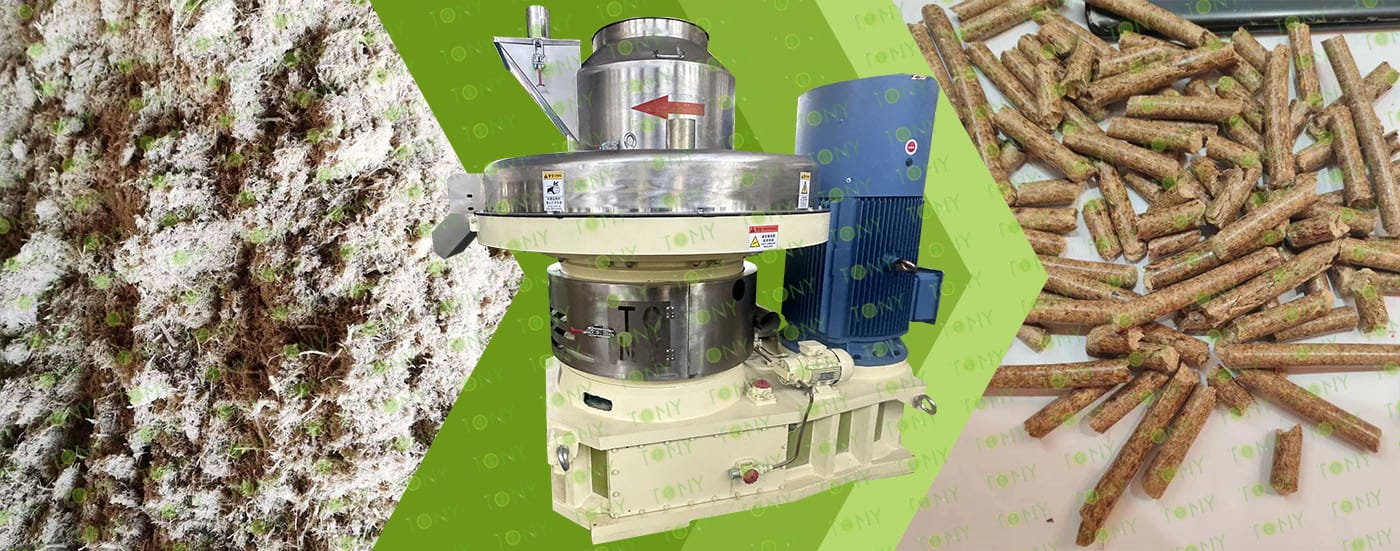
1.The working principle of dried bagasse biomass pellet processing equipment
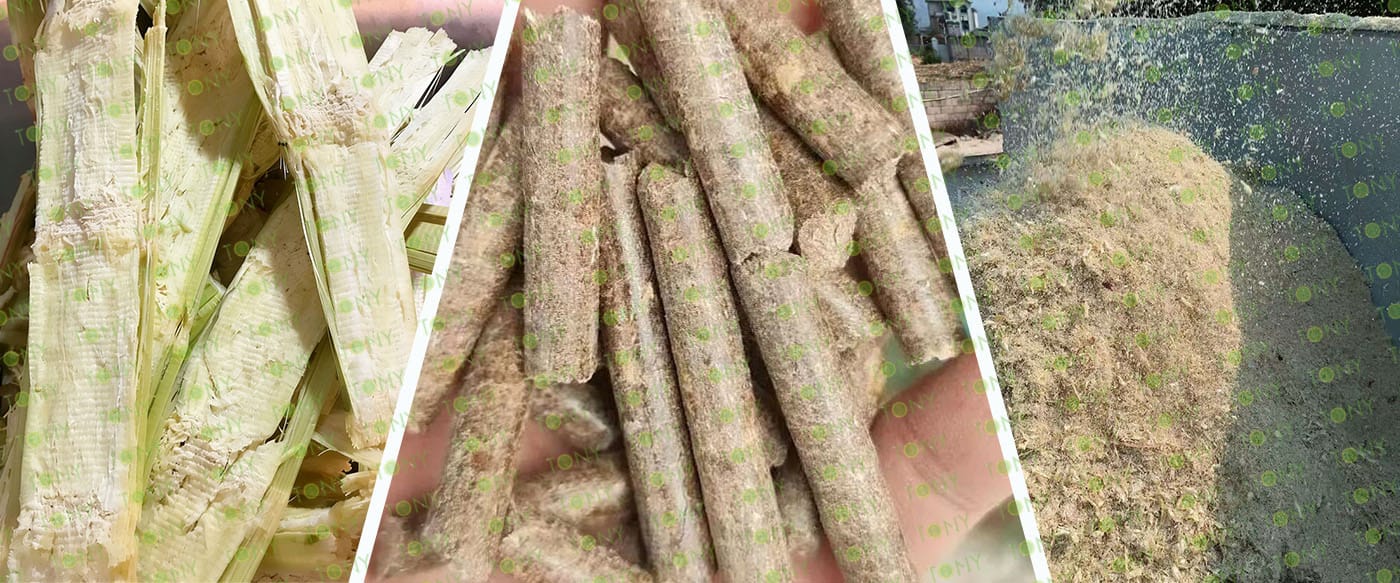
Processing dry sugarcane bagasse into biomass pellets relies on a comprehensive suite of mechanical equipment and physical compression molding technology. The entire process is primarily accomplished through pulverization, compression molding, and cooling. The core equipment is a biomass pellet machine (also known as a bagasse pellet machine or ring die pellet machine), which operates based on the physical mechanism of high-pressure extrusion and frictional heat generation.
2.Characteristics of dried bagasse biomass pellet processing equipment
(1)The pretreatment process is greatly simplified, reducing costs and improving efficiency.
The drying step is eliminated: the moisture content of dry bagasse has been reduced to the optimal molding range of 15%-20%. No additional equipment such as drum dryers is required, which directly reduces equipment investment and floor space.
The grinding difficulty is reduced: the fiber brittleness of dry material increases, making it easier to grind than wet bagasse. Small and medium-sized grinders can be used, and the energy consumption of grinding is reduced by 20%-30%, while reducing the probability of equipment blockage.
(2)Lower energy consumption and higher stability in the molding process.
Energy consumption is significantly reduced: dry material does not need to consume energy to remove moisture, only to meet the extrusion molding requirements. The unit energy consumption of core equipment such as ring die pelletizers is reduced, which is 15%-25% lower than that of wet material processing. Better molding quality: Dry bagasse fibers are more tightly bound, making it less likely for "soft particles" or "loose particles" to occur during the extrusion process. The particle molding rate can reach over 95%, and the finished product density (1.2-1.3g/cm³) and calorific value (17-18MJ/kg) are more stable.
(3)More friendly post-processing and production environment
Reduced cooling burden: The temperature of dry material pellets after molding is usually 10-15℃ lower than that of wet material, shortening the cooling equipment processing time and eliminating the need to worry about agglomeration caused by water evaporation.
Dust pollution is controllable: Although dust is generated during the dry material processing, there is no "sticky dust" like wet material. With a dust collector, it can easily meet the standards, and the frequency of equipment cleaning and maintenance is reduced, reducing downtime.
3.Application scenarios of dried bagasse biomass pellet processing equipment
(1)Main sugarcane producing areas and their surrounding areas (core raw material oriented)
The core advantage of this type of location is the convenient access to raw materials and extremely low cost, which is the area where the equipment is most concentrated. Application logic: Sugar mills produce a large amount of sugarcane bagasse waste every year. The equipment can be directly connected to the sugar mill to recycle raw materials. The processed pellets can be used for the sugar mill's own boilers (replacing coal) and can also be sold to surrounding markets, greatly reducing the cost of raw material transportation. Typical scenario: Sugar mills build supporting small pellet processing plants to jointly participate in raw material recycling and processing.
(2)Areas with clean fuel demand (end demand oriented)
The core of this type of location is that there is a clear fuel gap or environmental protection requirements. The pellets produced by the equipment can directly meet local demand. Specific locations: rural areas with high heating demand, small and medium-sized industrial clusters with high environmental protection requirements (such as food processing parks, textile industrial parks), and the surrounding areas of biomass power plants. Application logic: Northern rural areas need to replace loose coal to achieve clean heating, and industrial clusters need low-pollution fuels to meet environmental protection standards. The pellets produced by the equipment can be directly used as fuel for local heating, industrial boilers, and power generation in power plants, realizing "local production and local consumption."
(3)Agricultural Circular Economy and Specialized Industry Scenarios (Resource Reuse-Oriented)
Application Logic: Planting bases can crush the pellets and use them as seedling substrates or organic fertilizer raw materials, reducing agricultural production costs; board mills and activated carbon plants can use the pellets as production auxiliary materials, replacing traditional raw materials such as wood and coal, in line with the concept of green production.
Typical Scenario: Organic fertilizer plants purchase small equipment to mix sugarcane bagasse pellets with livestock and poultry manure for composting; board mills install processing lines to crush the pellets and use them for board pressing.
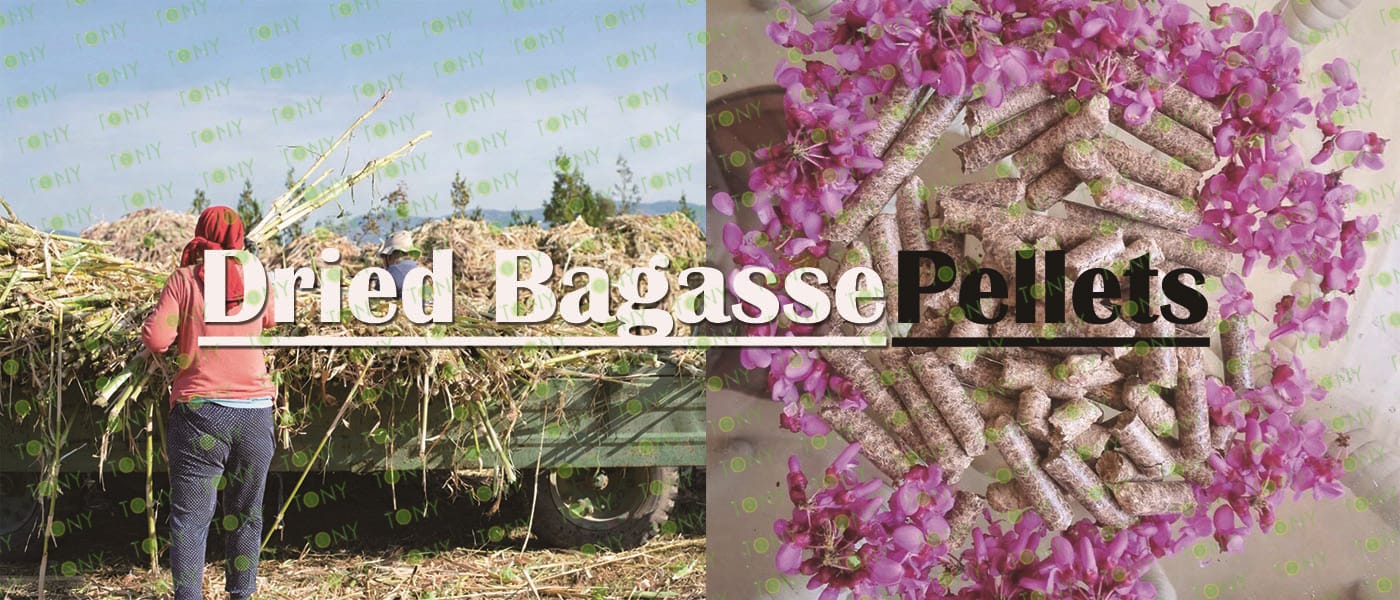
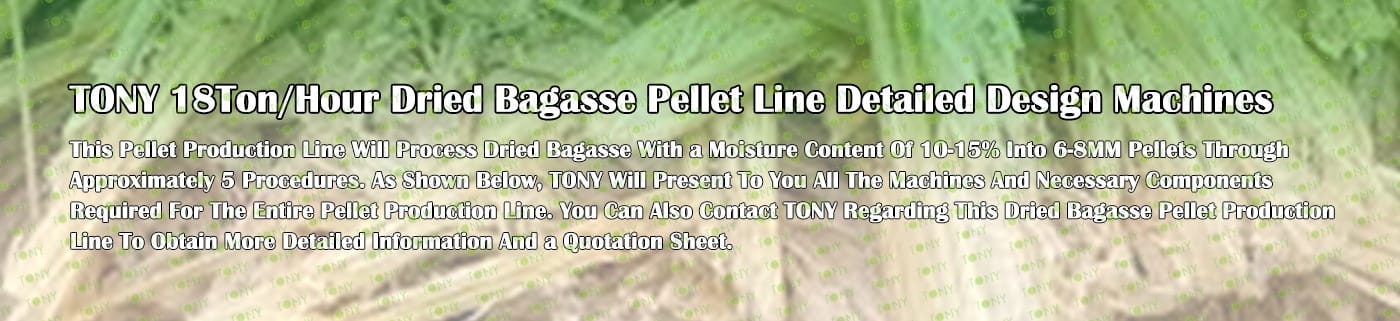
TONY Brand 18Ton/Hour Dried Bagasse Pellet Manufacturing Plant can take dried bagasse as the main raw material. After pretreatment and processing, it is solidified into high - density Bagasse pellet fuel. This fuel is an ideal substitute for coal and oil and plays a role in energy conservation and emission reduction. At present, it has been widely used in regions rich in bagasse resources.
1. Capacity: 18Ton/Hour
2. Raw materials: Dried bagasse
3. Moisture: dried type, about 10-15%.
4. Application: All kinds of bagasse materials suitable for pellet production.
Suitable customers: Sugarcane processing factories are the direct output of bagasse, such as sugar mills, sugarcane ethanol factories, sugarcane pulping factories, etc.; centralized storage and transit places, such as sugar mills, ethanol factories, agricultural product processing parks, where multiple sugarcane processing factories often gather to form a park. The storage and transit areas of bagasse are uniformly planned within the park, and the resource concentration is extremely high.and other places where bagasse raw materials have advantages
5. Finished Pellets Markets: Large power plants, domestic heating, industrial heating, combustion heat, heating systems, boiler rooms, school canteens, foundry heat sources.

1. Project Name: Dried Bagasse Pellet Production Line
2. Raw Material: All kinds of dried bagasse
3. Moisture Content of Raw Material: 10-15%
4. Capacity: 18 tons per hour
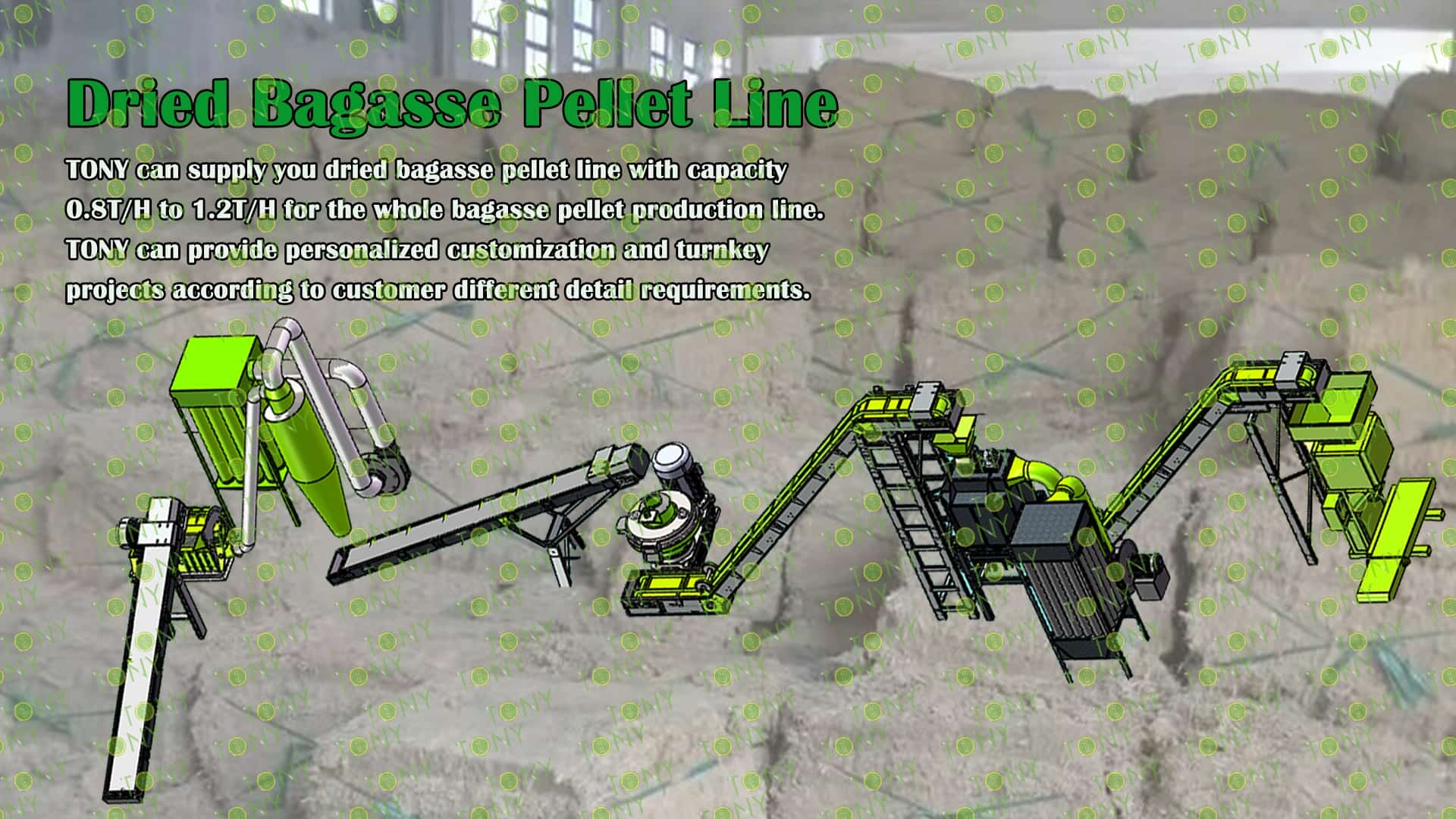
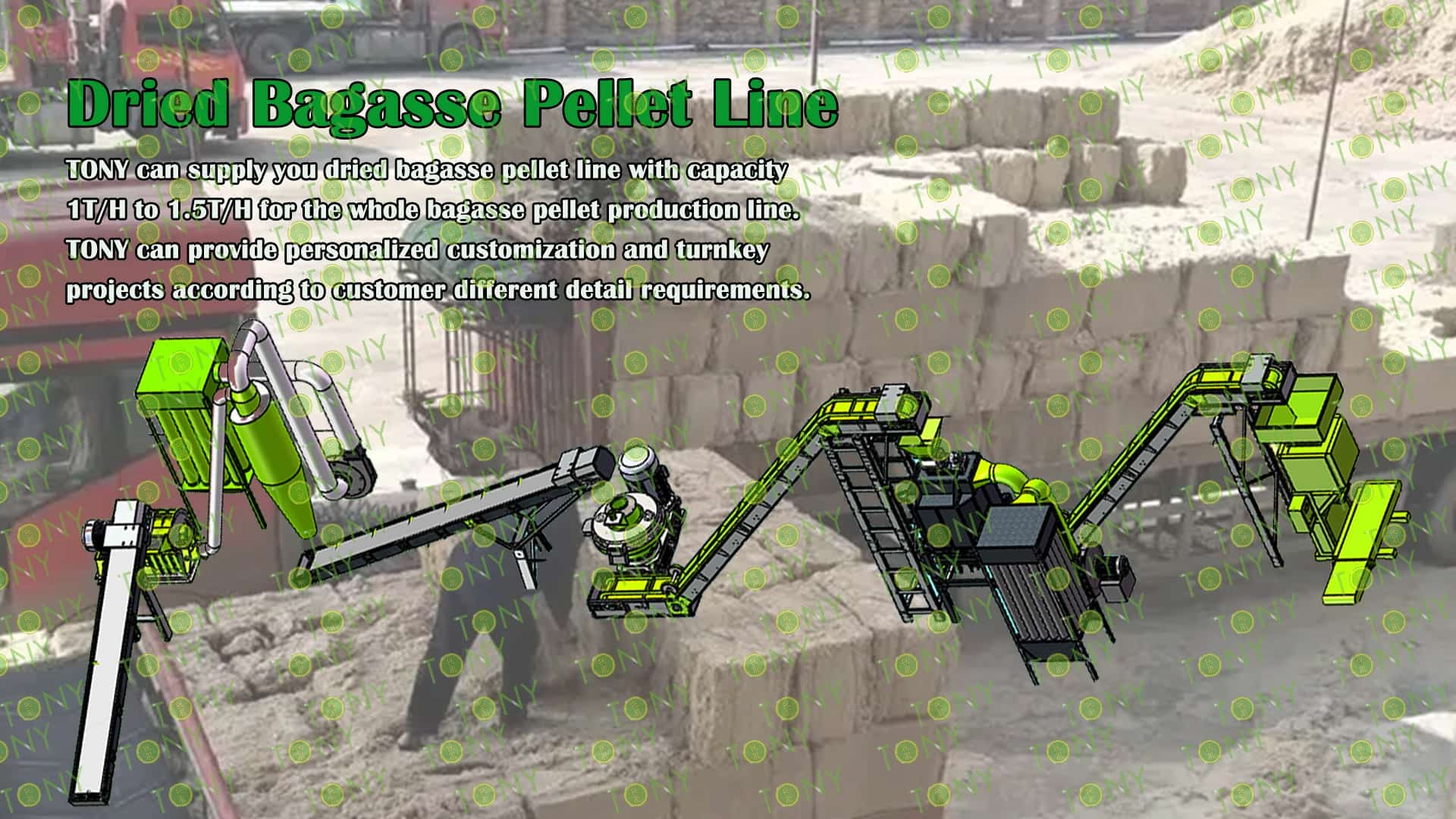
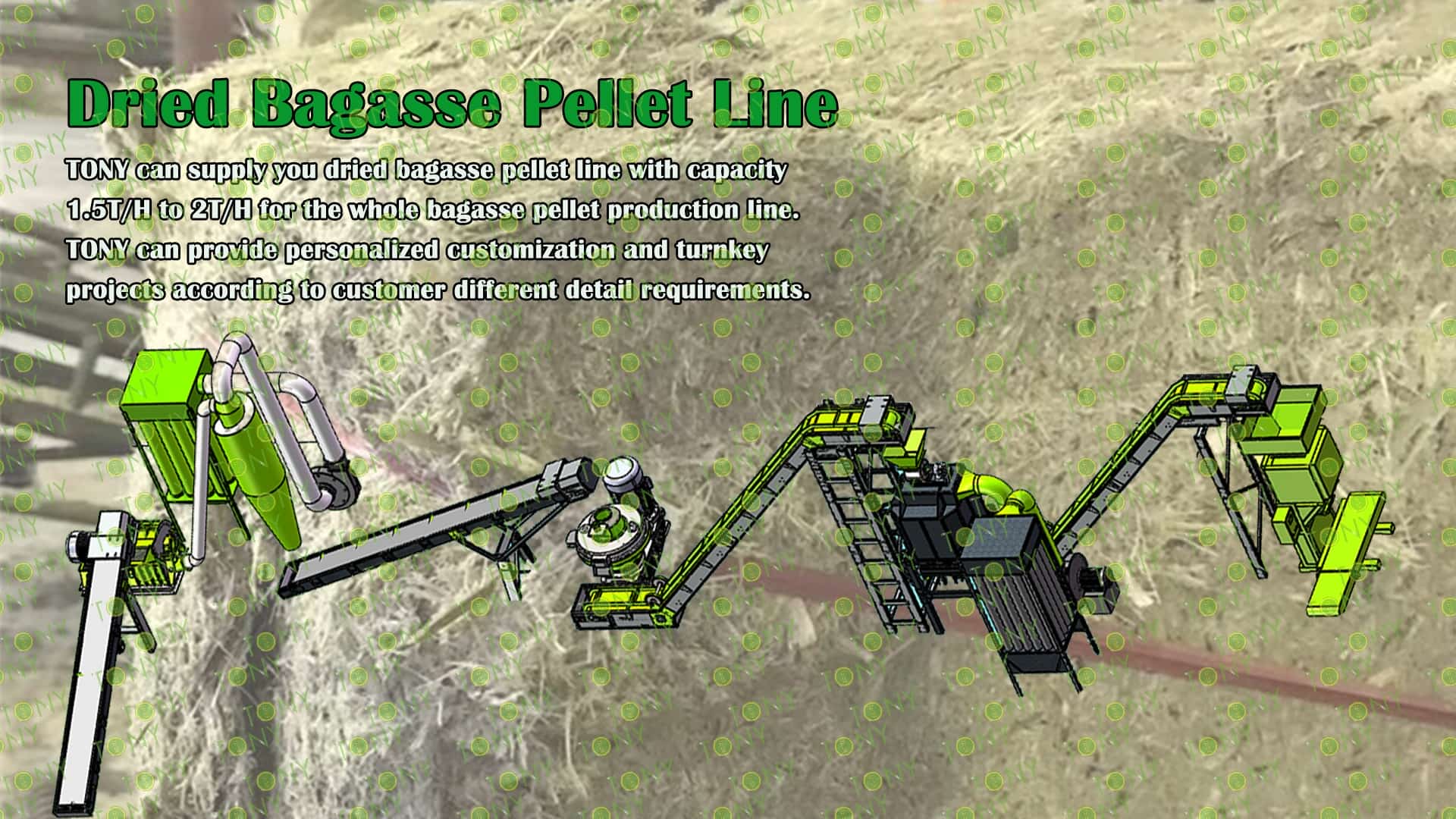
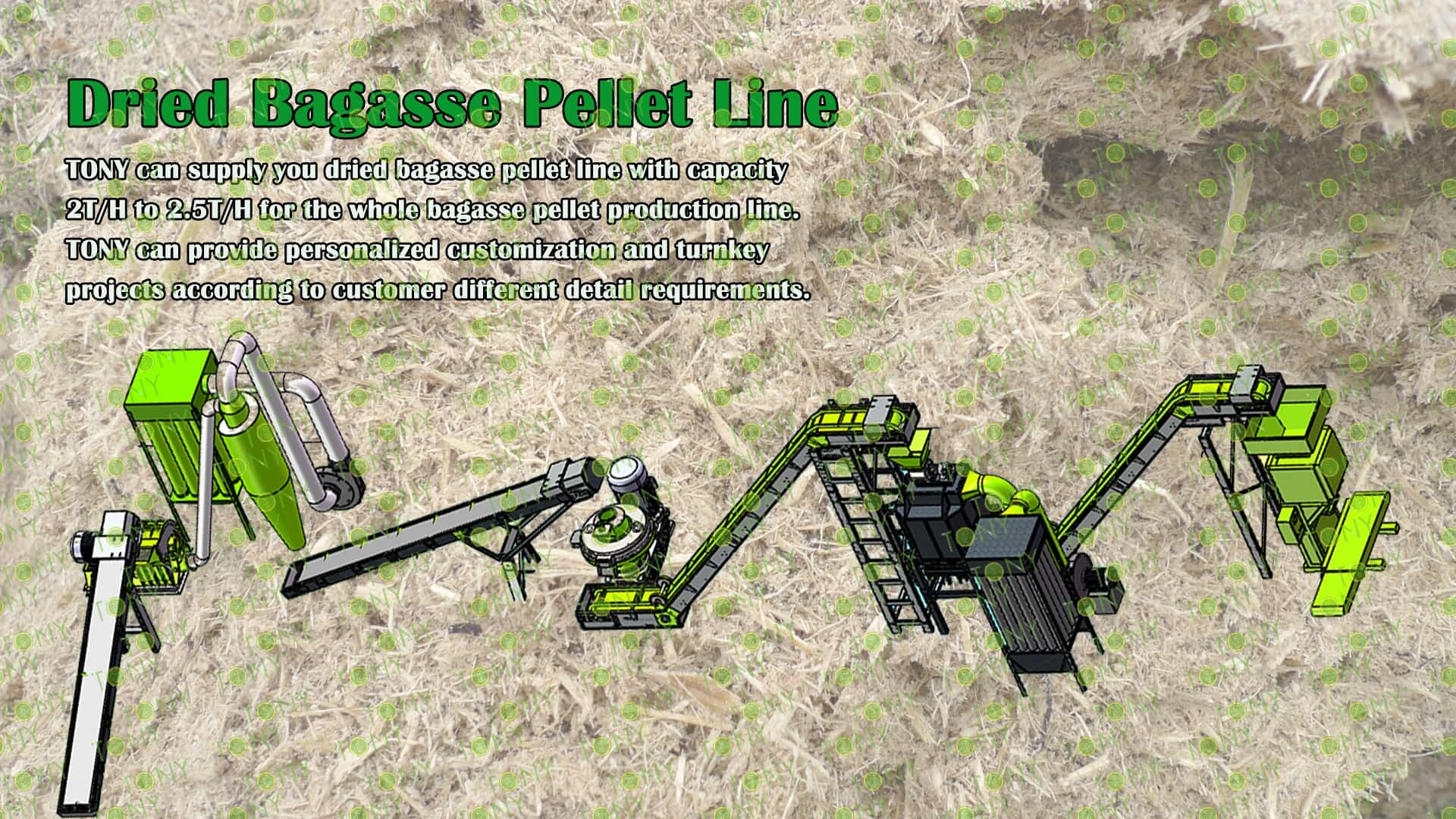
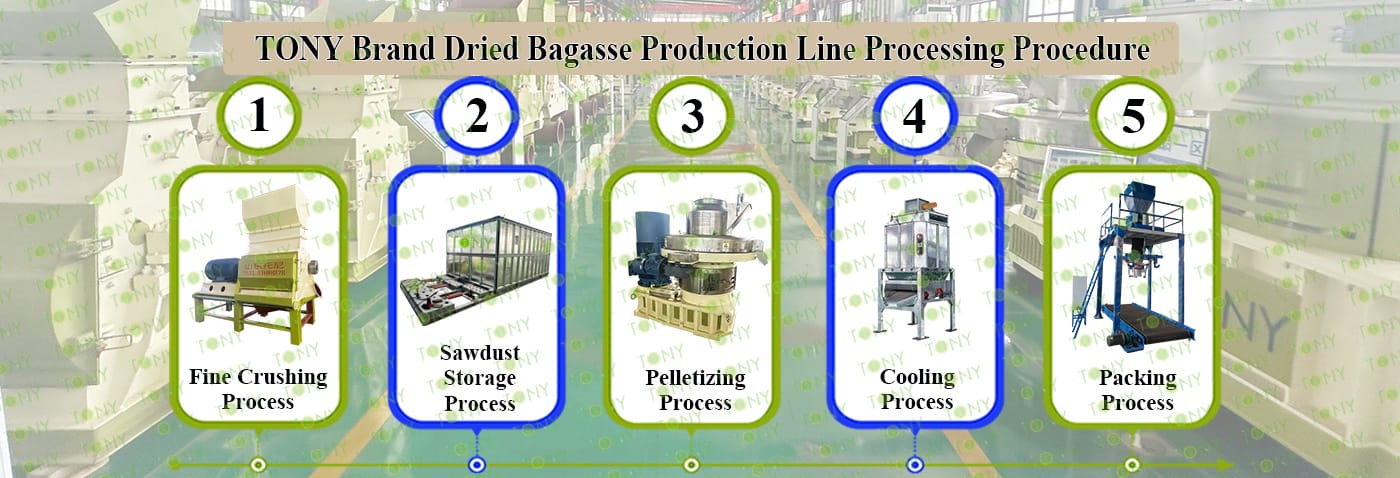
5. Process: Fine Crushing Process -- Bagasse Storage Process- Pelletizing Process - Cooling Process - Packing Process
6. Main Equipment: Effective Hammer Mill-TFD75-132-132KW,TONY Large Hydraulic Storage Silo,TONY Pellet Machine- TYJ760-Ⅲ-200KW, Galvanized Pellets Cooler, Ton Packing Machine and Belt Conveyors

|
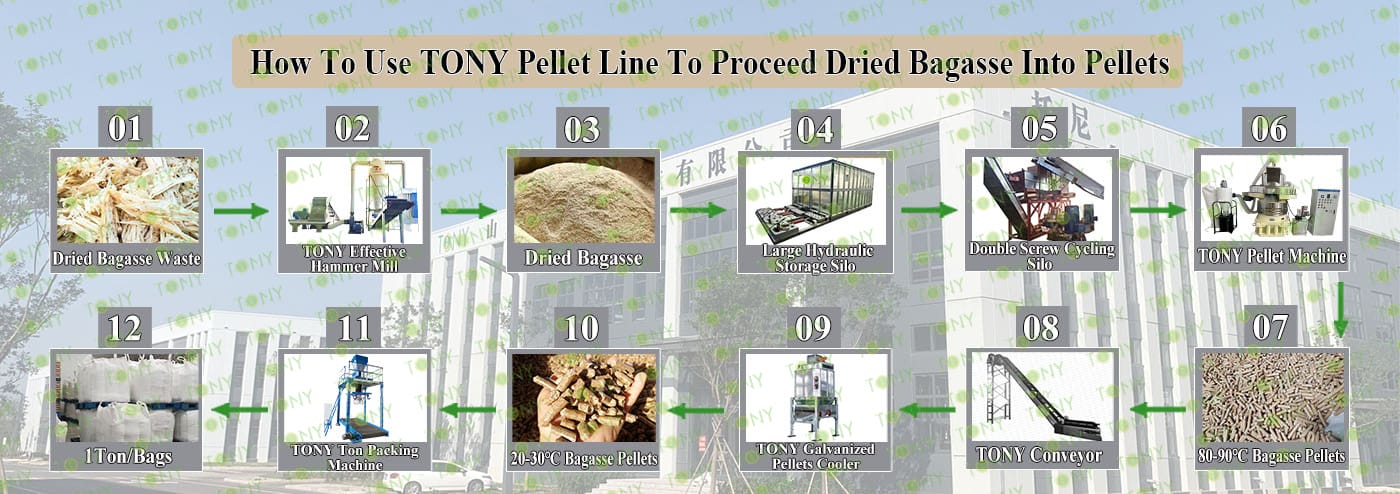
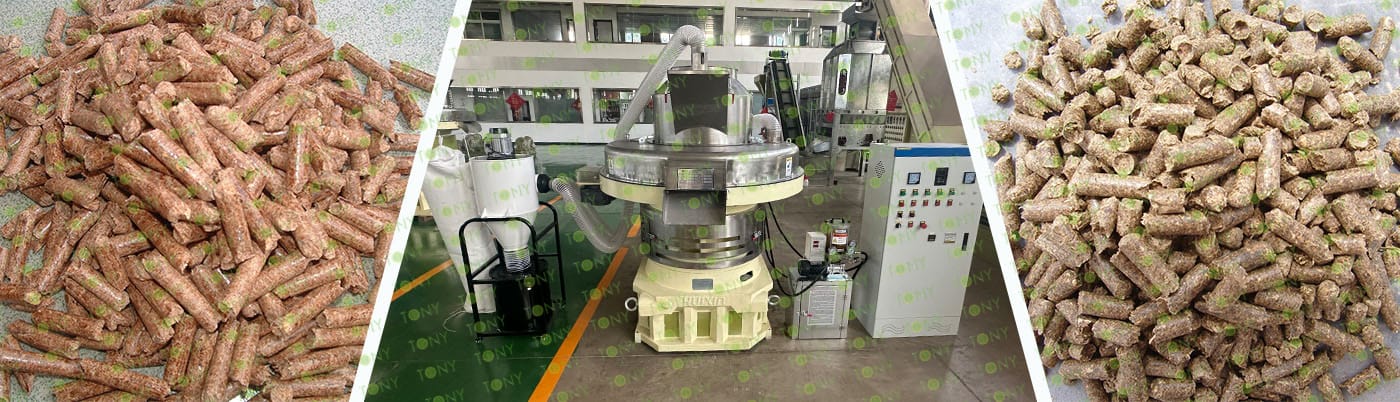
How to use the TONY pellet production line to make pellets from dried bagasse? The process mainly includes the following steps and equipment: 1. Use TONY effective hammer mill to crush the slightly larger bagasse into 8-14 mm bagasse.If customer has enough Investment budget,he can also chose TONY Special Cutting Machine for bagasse which will be more expensive than the hammer mill. 2.Use TONY large hydraulic storage silo to storage 8-14 mm bagasse. 3. Use TONY vertical ring die pellet machine to produce pellets with a diameter of 6-8 mm. 4. Use TONY galvanized pellets cooler to cool the pellets from 80-90°C to 20-30°C. 5. Use TONY ton packing machine to pack the pellets into bags, each weighing 1 ton. For more detailed information and quotations, you can contact TONY. TONY can provide all the above - mentioned products at highly competitive prices and with excellent quality. |
|
|||||||||||||||||||||||||||||||||||||||||||||
三维图
三维图
| Next, TONY Will Introduce To You All The Necessary Machinery That Will Be Used For The Whole Pellet Production Line. Some Machines Can Be Custom - Made By Customers According To Different Customers' Detailed Demands. Contact TONY For More Details, Including Quotation And Layout. | ||
 |
 |
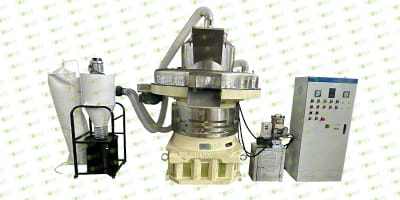 |
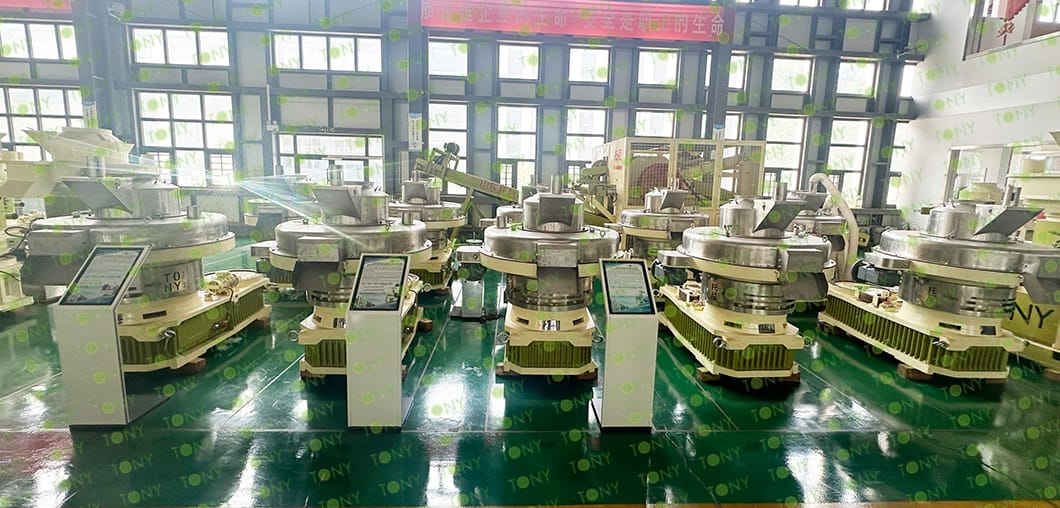
| Effective Hammer Mill | Large Hydraulic Storage Silo | Vertical Ring Die Pellet Machine |
| 1.To Crush Larger Bagasse Into 8-14mm Baggase. 2.Model: TFD75-132-132KW*4sets 3.Capacity: 4-5Ton/Hour/Set |
1.To Storage Bagasse Before Dryer Control Bagasse Flow Entering The Dryer Model: TCY-20*2sets 2.TONY Uses Galvanized Material |
1.To Press Dry Bagasse Into 6-8mm Biomass Pellets 2.Model: TYJ760-III-200KW*6sets 3.Capacity:3-3.5Ton/Hour/Set 4.New 304SS Type |
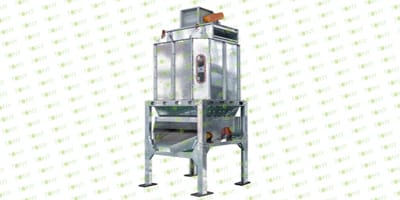 |
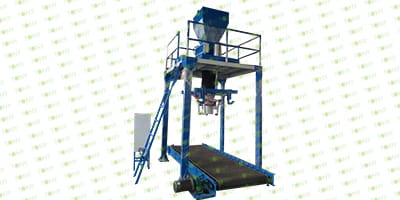 |
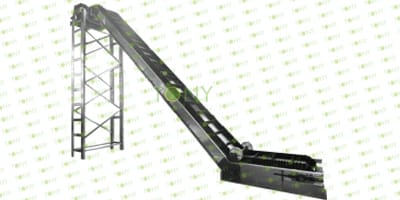 |
| Galvanized Pellets Cooler | Ton Packing Machine | Belt Conveyor |
| 1.To Cool Pellets From 80-90℃ Into 20-30℃ 2.Model: TCN-4*2sets 3.Capacity:18Ton/Hour |
1.To Pack Pellets Into 1Ton/Bags 2.Model: TBD*2sets 3.Capacity: 18Ton/Hour |
1.Transport Bagasse,Pellets. 2.Width: 80cm*16sets 3.Capacity:Designed With The Whole Line |
三维图
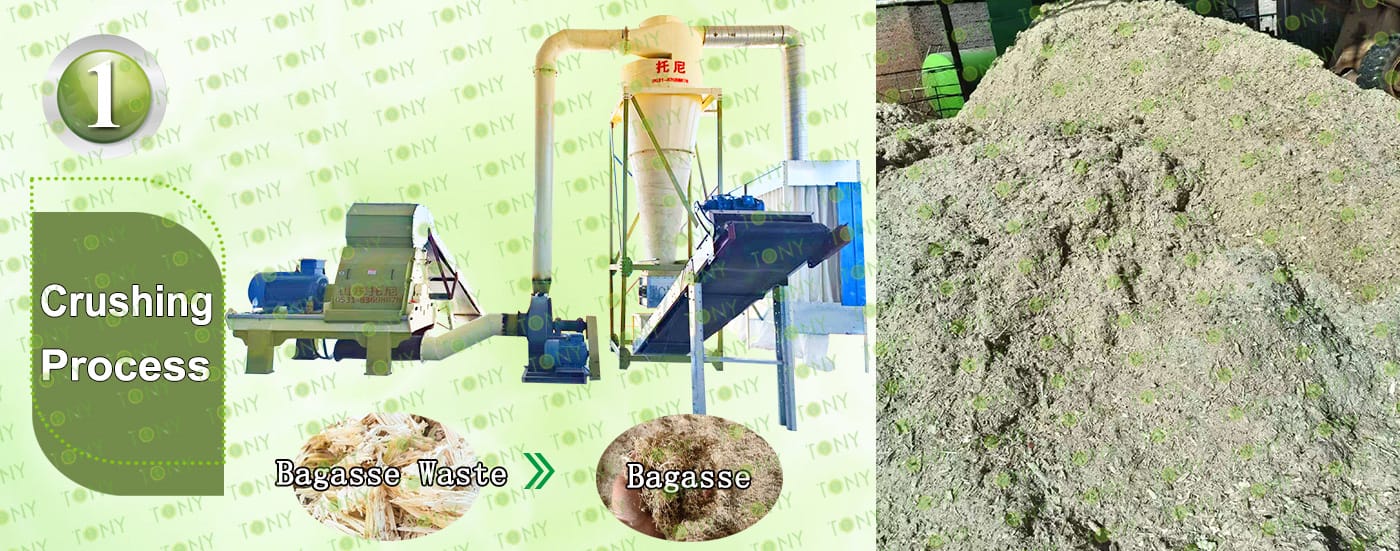
1.Bagasse Fine Crushing Process:
A.This process is mainly used to crush larger bagasse into 8-14mm bagasse.
B.Capacity:18Ton/Hour.
C.TONY brand effective hammer mill TFD75-132-132KW*4sets
Main Parts:
(1)TONY Effective Hammer Mill.
(2)Galvanized Dust Collector.
(3)Sawdust Transportation Fan Blower.
(4)Cyclone With Airlock.
(5)Electrical Cabinets.
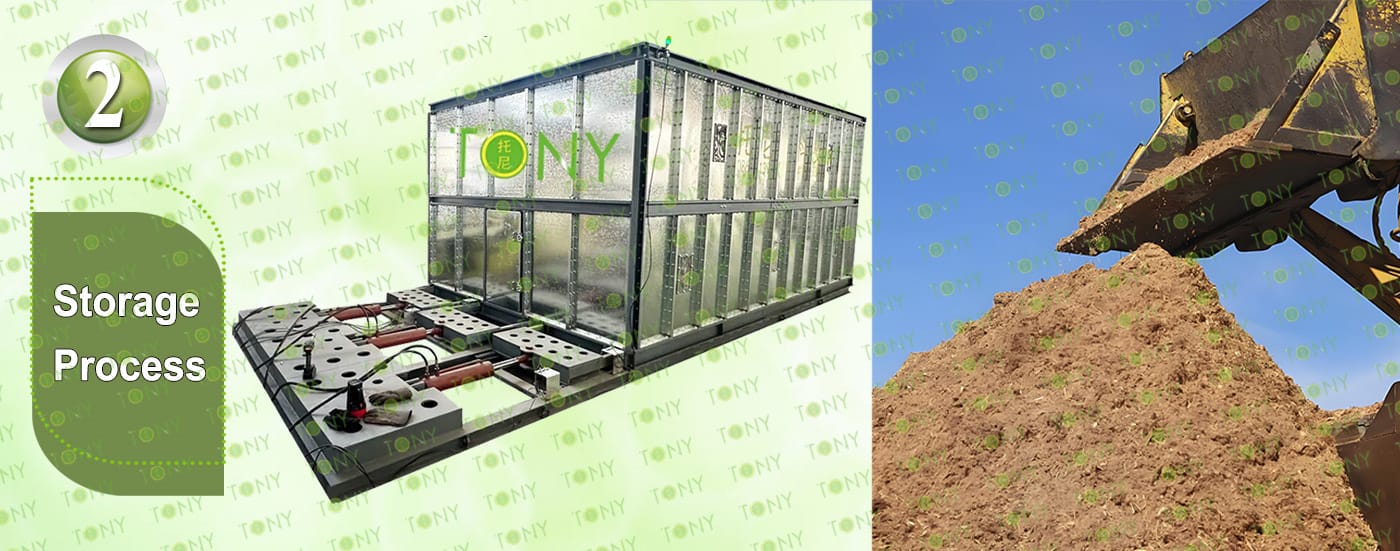
2.Bagasse Storage Process:
A. This process is mainly used to storage the bagasse that comes out of the hammer mill.It is hydraulic galvanized storage bin which is more stalbe and Bagasse in it is not easy to be blocked.
B.TONY Brand Large Hydraulic Storage Silo to storage the bagasse that comes out of the hammer mill.This process can be optional by customer.If customer do not chose the storage bin,he can storage the Bagasse on the ground directly which may need some labour.
Main Parts:
(1)TONY's New Large Hydraulic Storage Silo.
(2)With Screws Inside The Storage Bin To Prevent Bagasse Blocked.
3.Pelletizing Process:
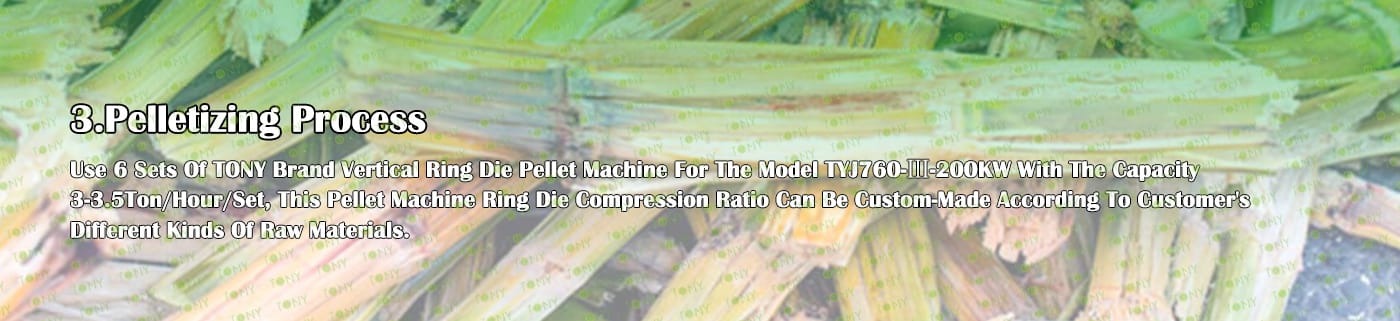
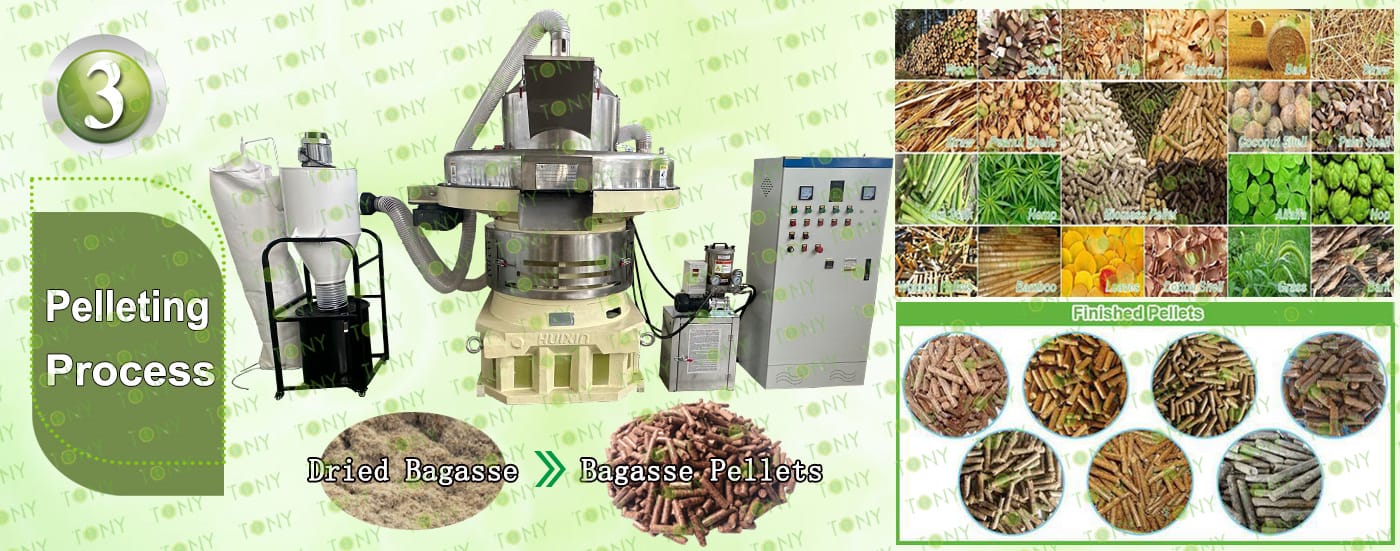
A.This process is mainly used to to product pellets into φ6-8mm.
B.Capacity:18Ton/Hour.
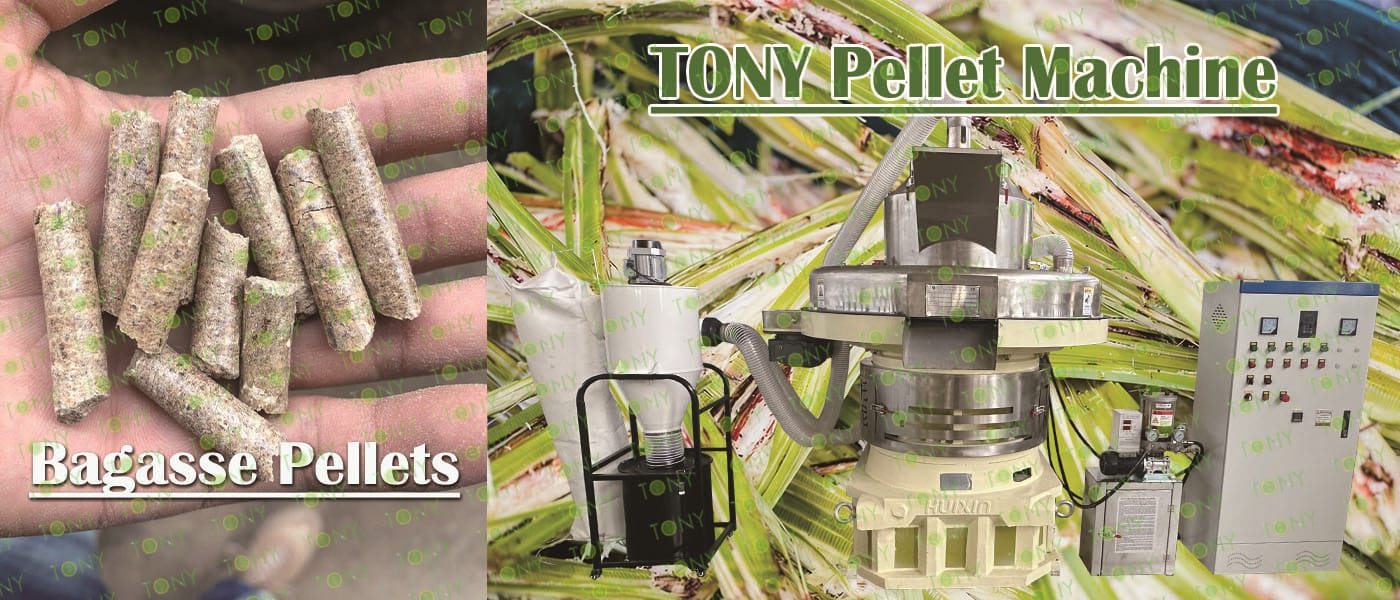
C.TONY brand vertical ring die pellet machine TYJ760-III-200KW*6sets
D.Double Screw Cycling Silo is added above the pellet machine, which has the advantages of saving space, saving labor, intelligently controlling the feeding speed, not easy to block the material, and improving production efficiency.
Main Parts:
(1)TONY's new Vertical Ring Die Pellet Machine.
(2)Cyclone And Bags Dust Collectors.
(3)Automatic Lubrication System.
(4)Electrical Cabinets.
4.Cooling Process:
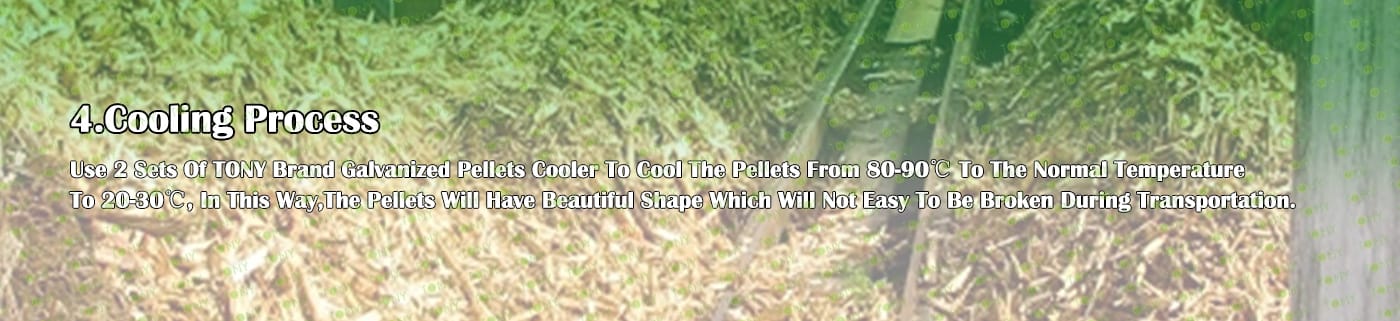
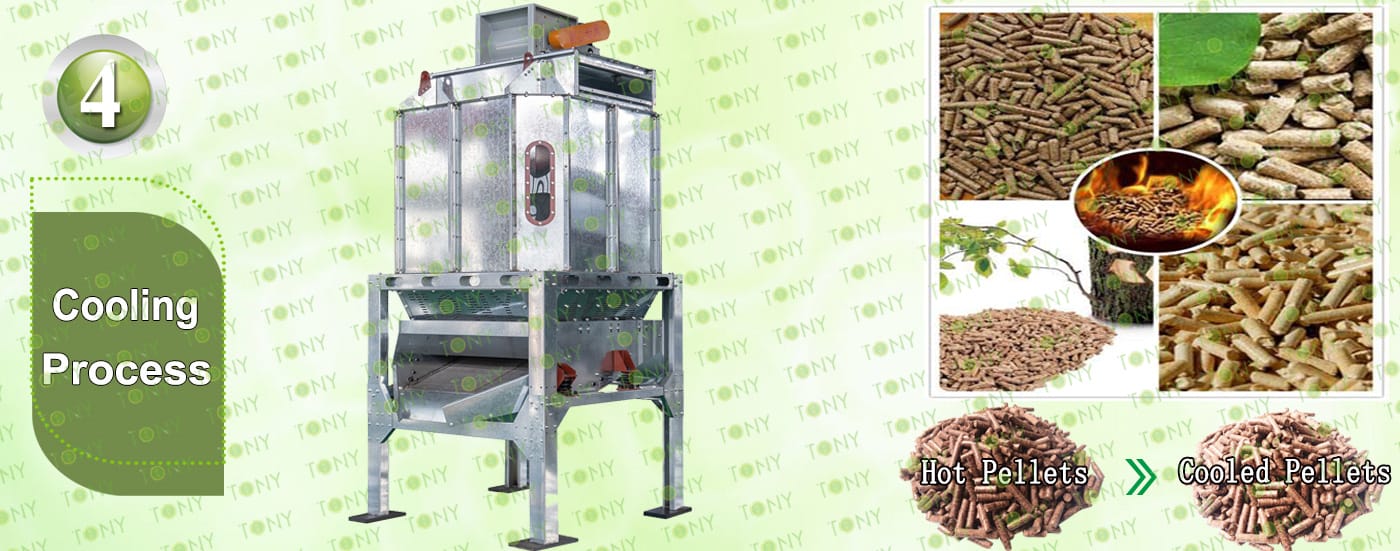
A.This process is mainly used to cool pellets from 80-90℃ to 20-30℃
B.Capacity:18Ton/Hour.
C.TONY brand galvanized pellets cooler *2sets
Main Parts:
(1)TONY's new Galvanized Pellets Cooler With Vibrating Screen.
(2)Cyclone And Bags Dust Collectors.
(3)Fan Blower.
(4)Connect Pipes.
5.Packing Process:
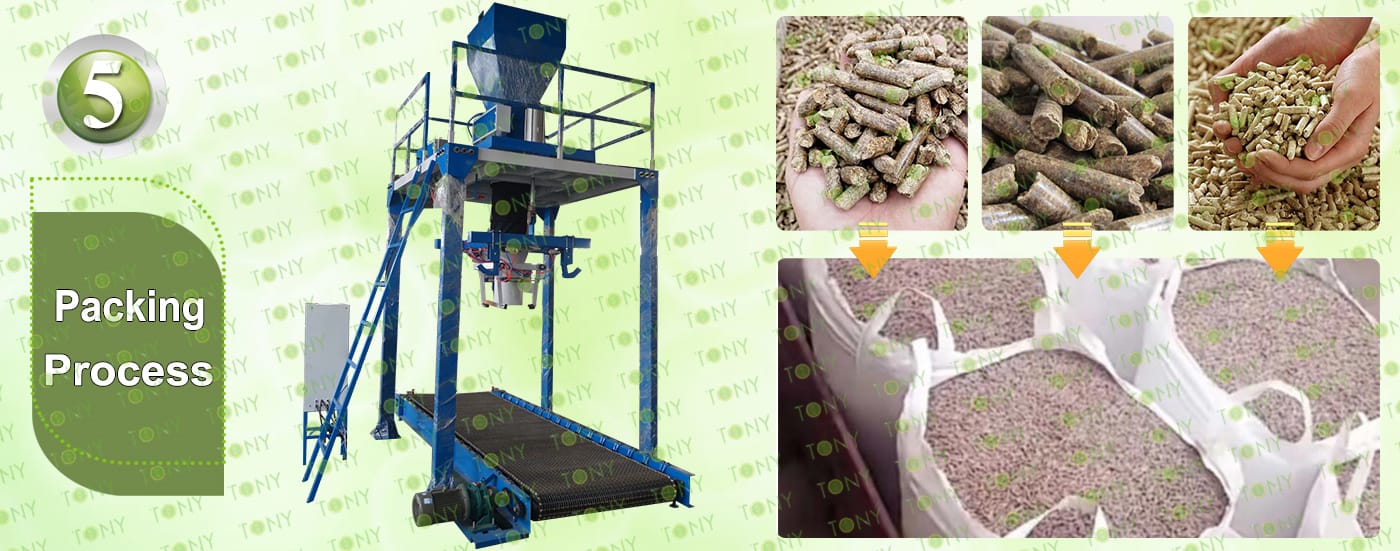
A.This process is mainly used to pack pellets into 1Ton/Bags.
B.Capacity:18Ton/Hour.
C.TONY brand ton packing machine*2sets
Main Parts:
(1)TONY Ton Packing Machine
(2)Electronic Platform Scale Metering System
(3)Automatic Tare, Zero, and Drop Correction Functions
(4)Feeding System Features Fast, Medium, and Slow Feeding Speeds to Ensure Measuring Accuracy
Market Prospects Analysis of the Dry Bagasse Processing Project into Biomass Pellets
Market and Revenue Side - Rigid Demand and a Clear Profit Model
1.Stable Downstream Market Demand:
The annual demand for biomass pellets continues to grow in industrial sectors (food processing, textiles, chemicals), for boiler fuel replacement, raw material procurement for biomass power plants, and rural clean heating, along with long-term price stability. The project's products are expected to find a stable market.
2.Calculated Profitability:
For a medium-sized project, the investment payback period for processing wet bagasse into pellets is only 2-3 years, with clear economic benefits.
3.Significant Potential for Industrial Chain Extension:
The project can expand into further processing of the pellets in the later stages, such as carbonizing some of the pellets into biomass activated carbon (for wastewater treatment and air purification), or crushing them for use as organic fertilizer, further increasing product value and broadening profit channels.
1.Widely available and low-cost raw material:
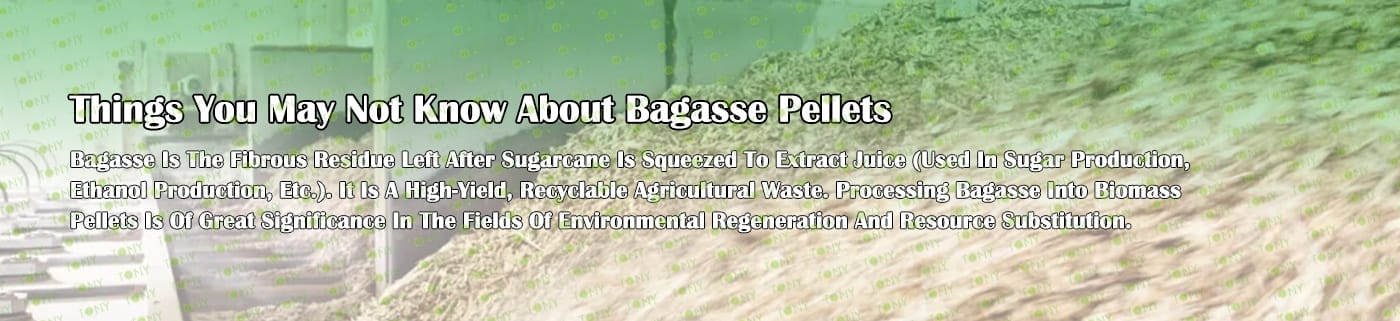
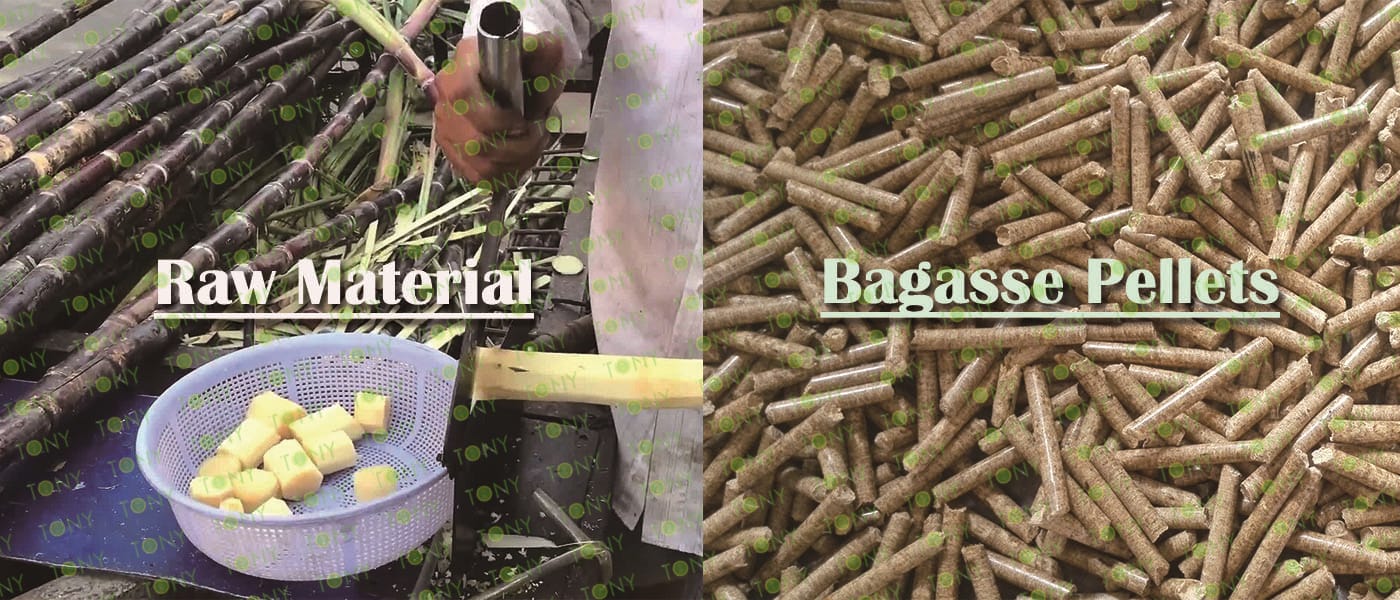
Sugarcane is one of the world's major cash crops, and the annual production of bagasse from sugar and ethanol production is enormous. Previously, this bagasse was often incinerated or discarded. Using it as a raw material for biomass pellets not only significantly reduces the cost of obtaining the raw material, but also transforms waste into valuable resources, solving the problem of waste accumulation.
2.Highly renewable:
Sugarcane is an annual crop that can be planted and harvested year after year. Its waste, bagasse, is a renewable biomass resource. Compared to non-renewable fossil fuels (coal, oil, and natural gas), it provides a sustainable resource supply, meeting the renewable energy requirements of carbon neutrality.
3.Low raw material density, enabling flexible transportation and pre-processing:
Bagasse itself has a density of only approximately 100-150 kg/m³, making it relatively expensive to transport. However, after being pelletized, the density increases to 1100-1300 kg/m³. This allows for local processing into pellets within sugarcane-producing areas and subsequent centralized transportation, significantly reducing the cost and difficulty of long-distance raw material transportation.


2025 Tony Machinery - All Rights Reserved. Map