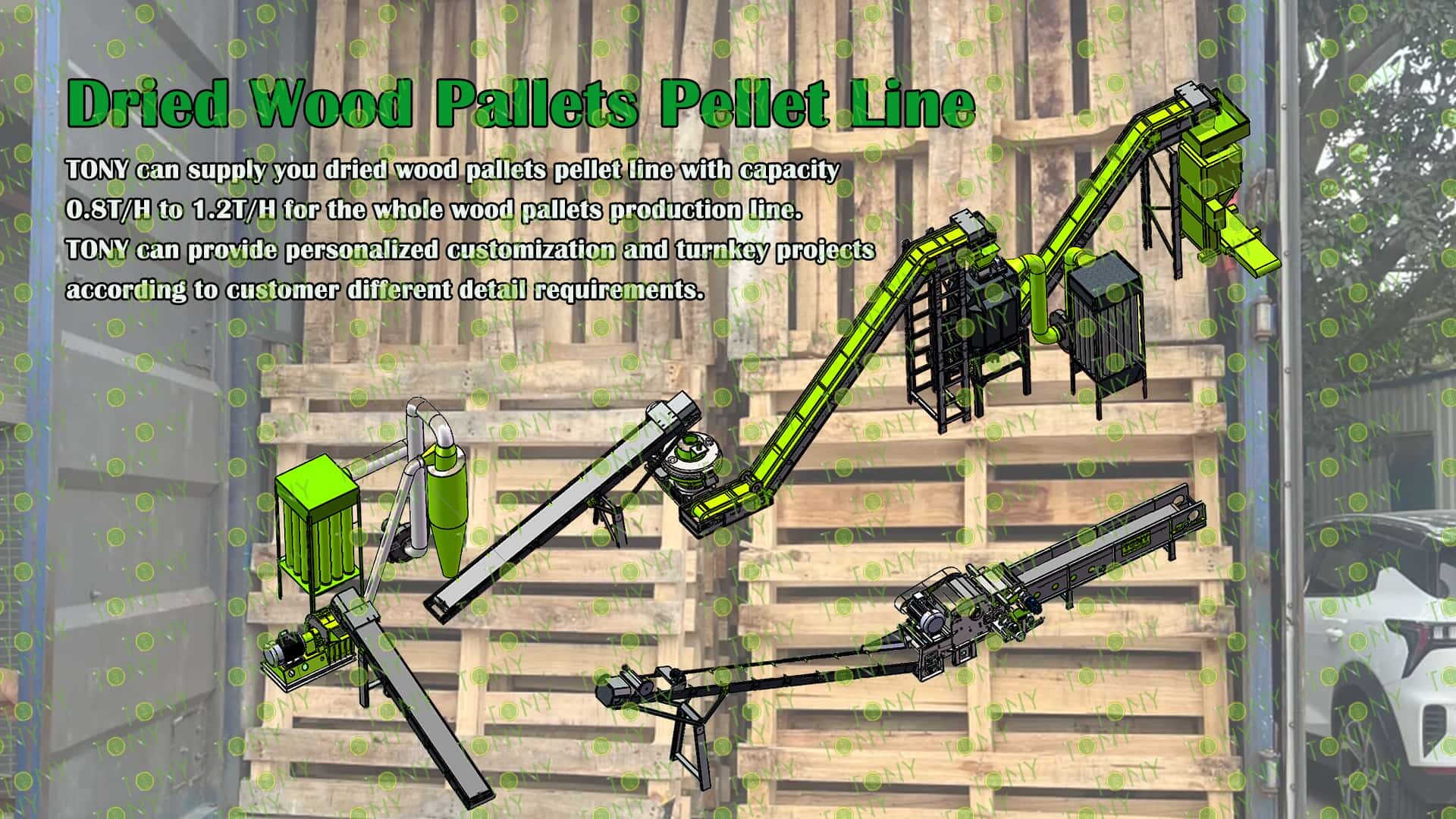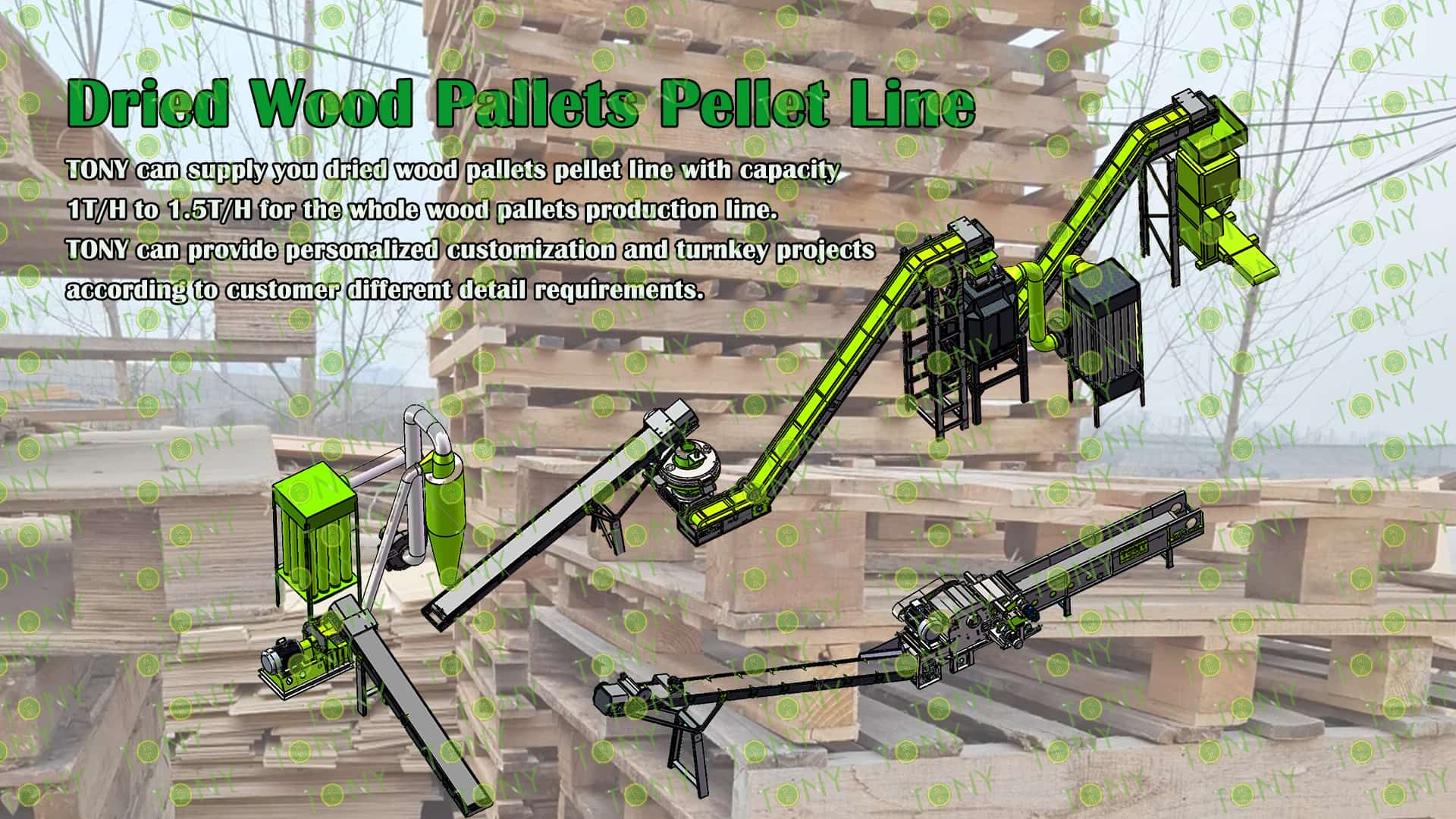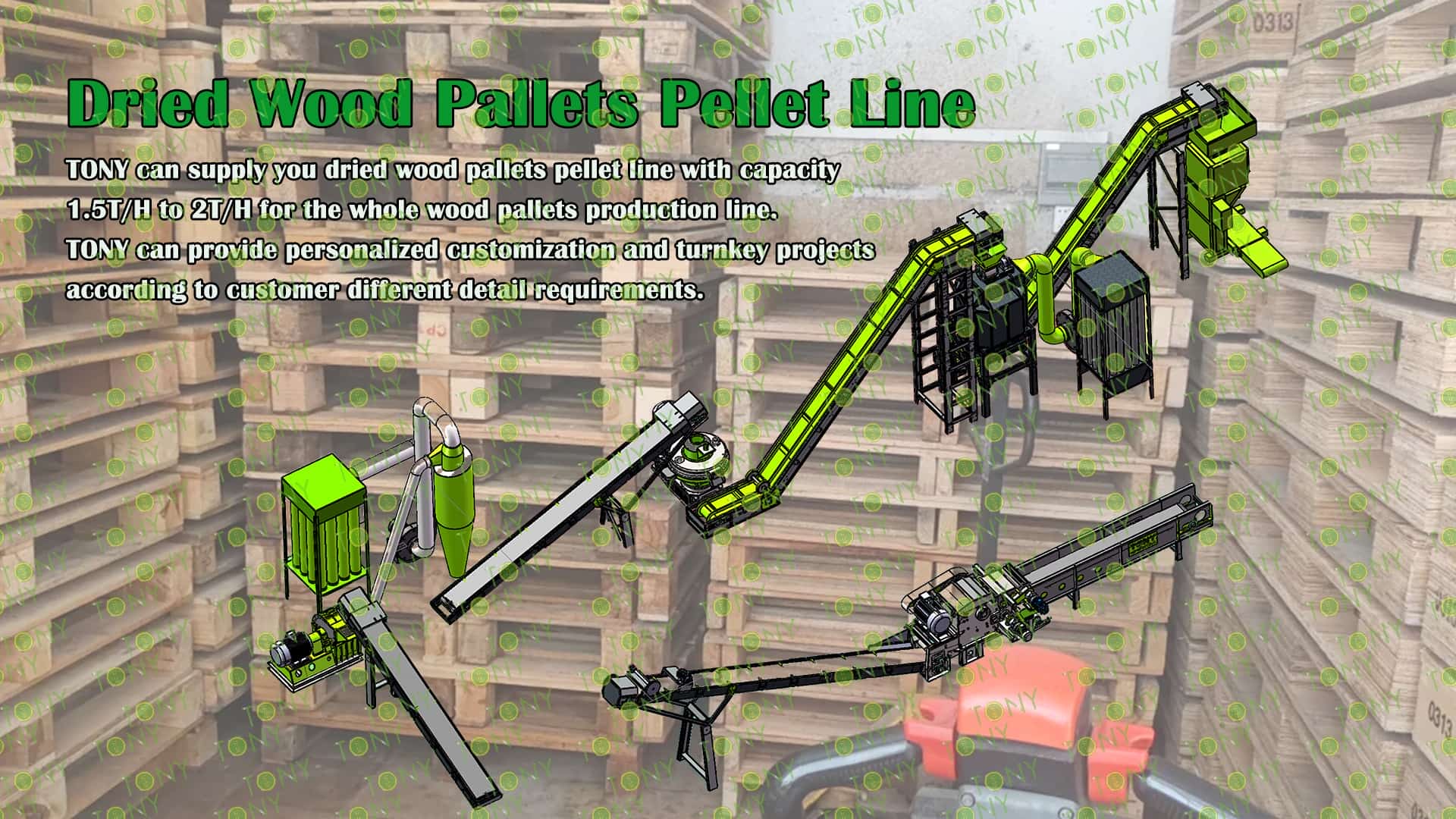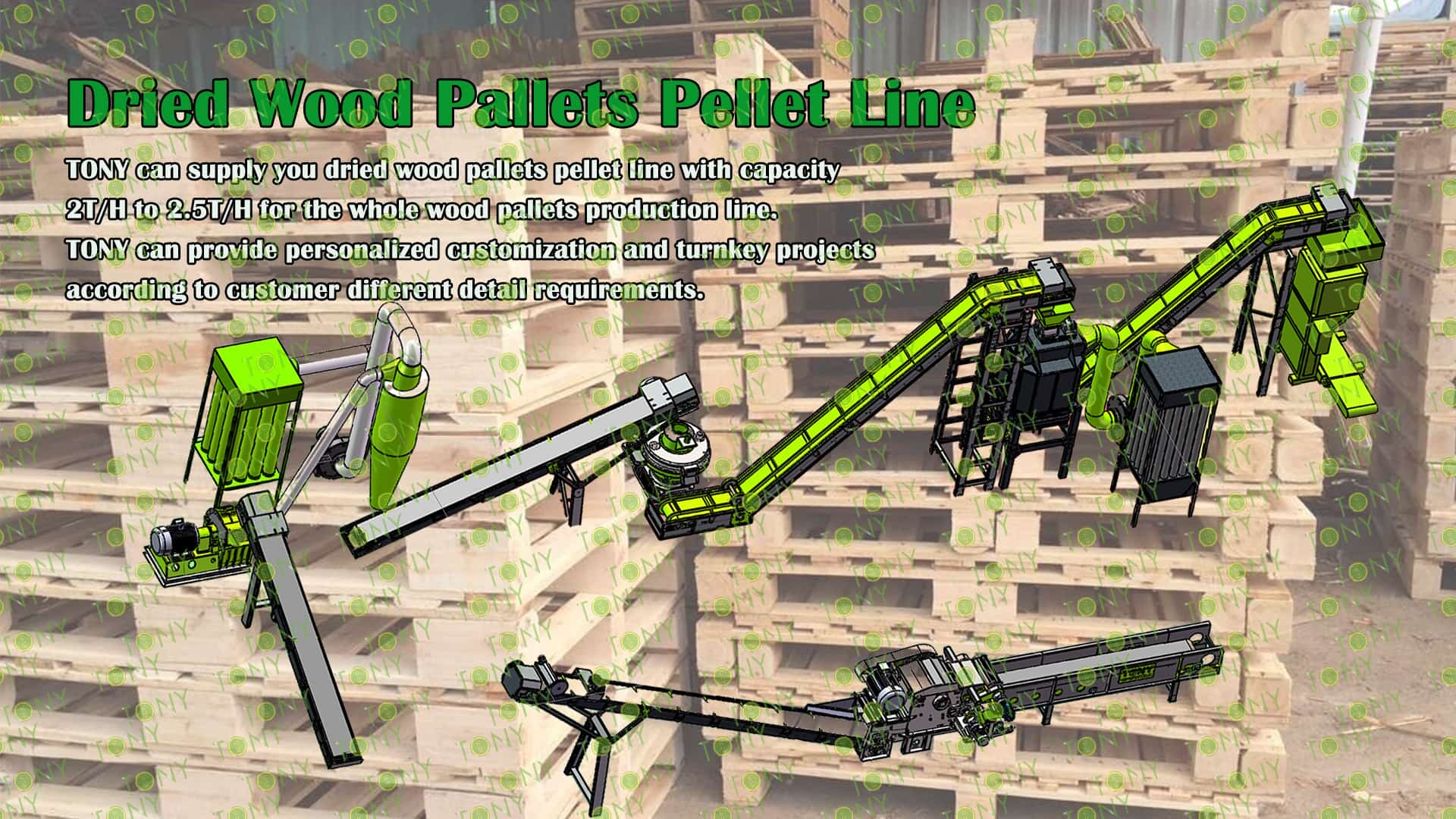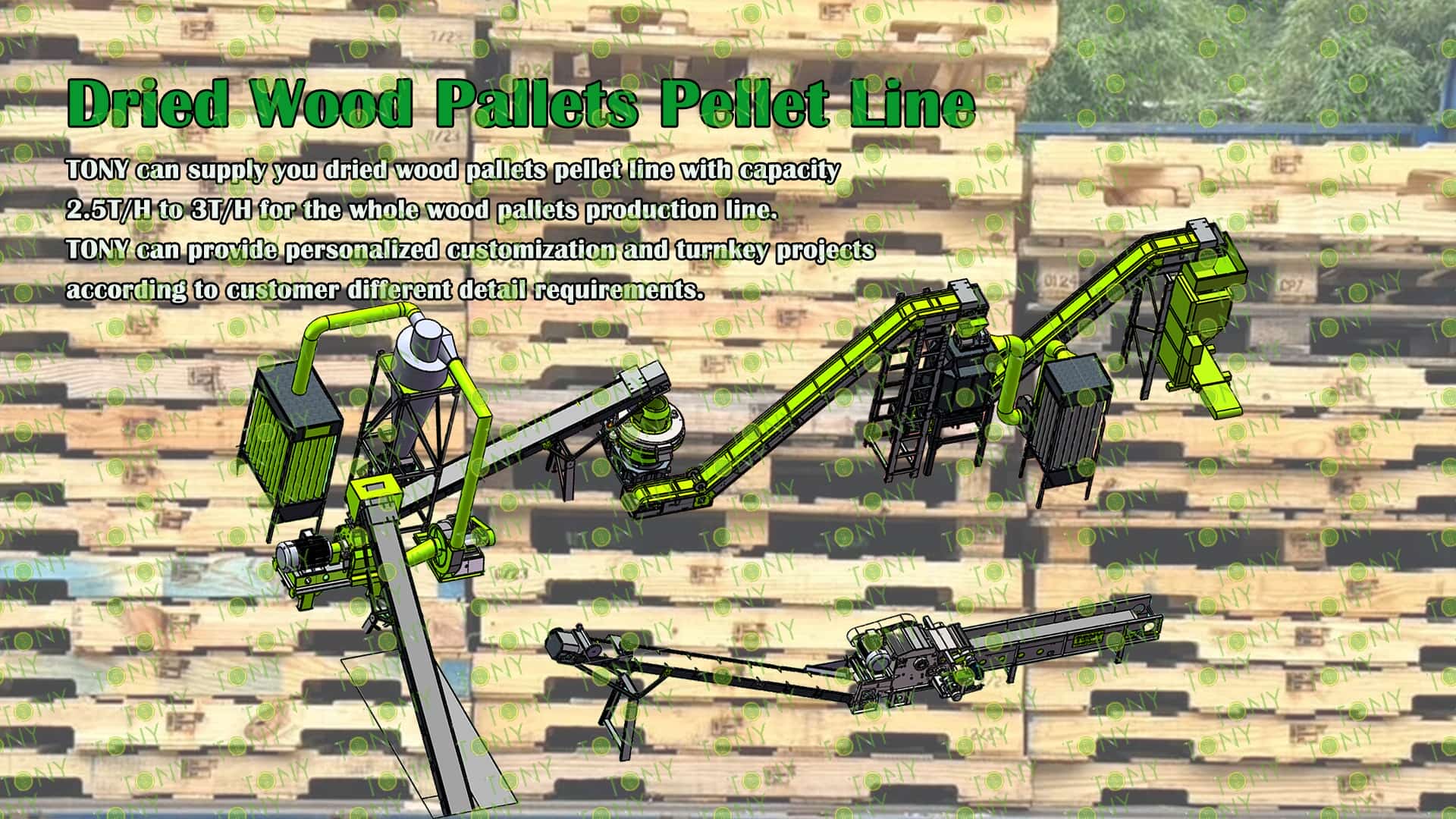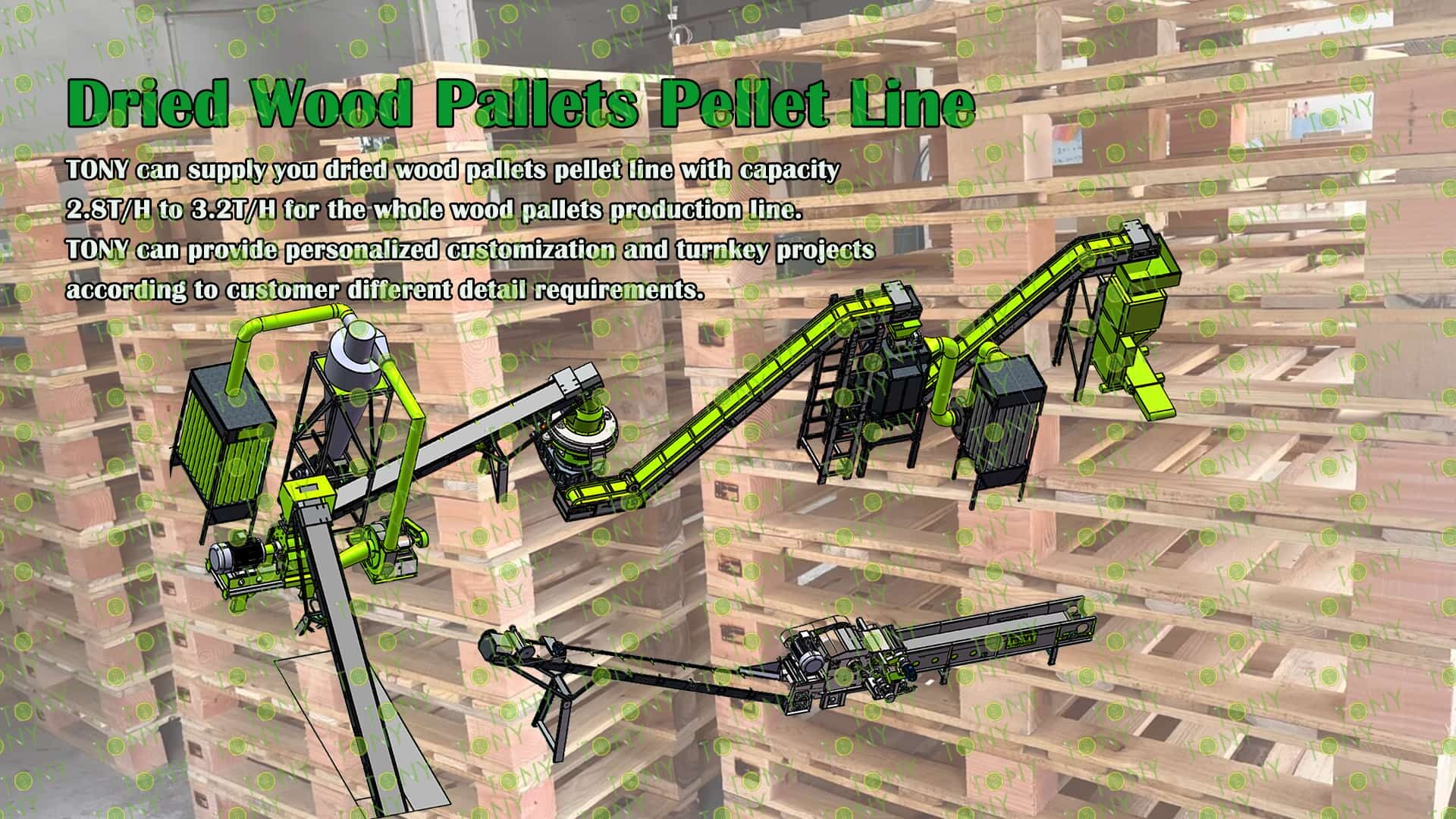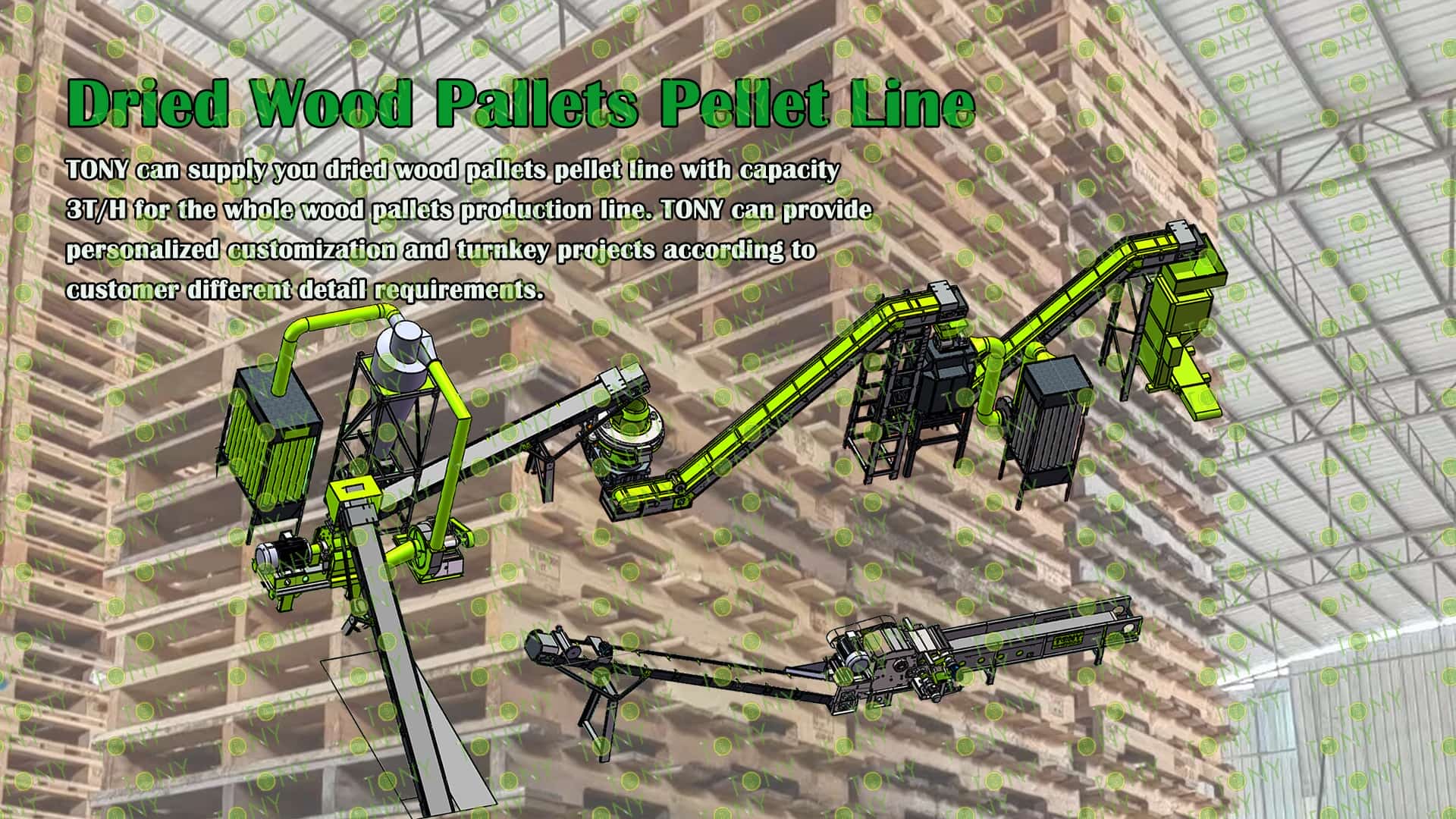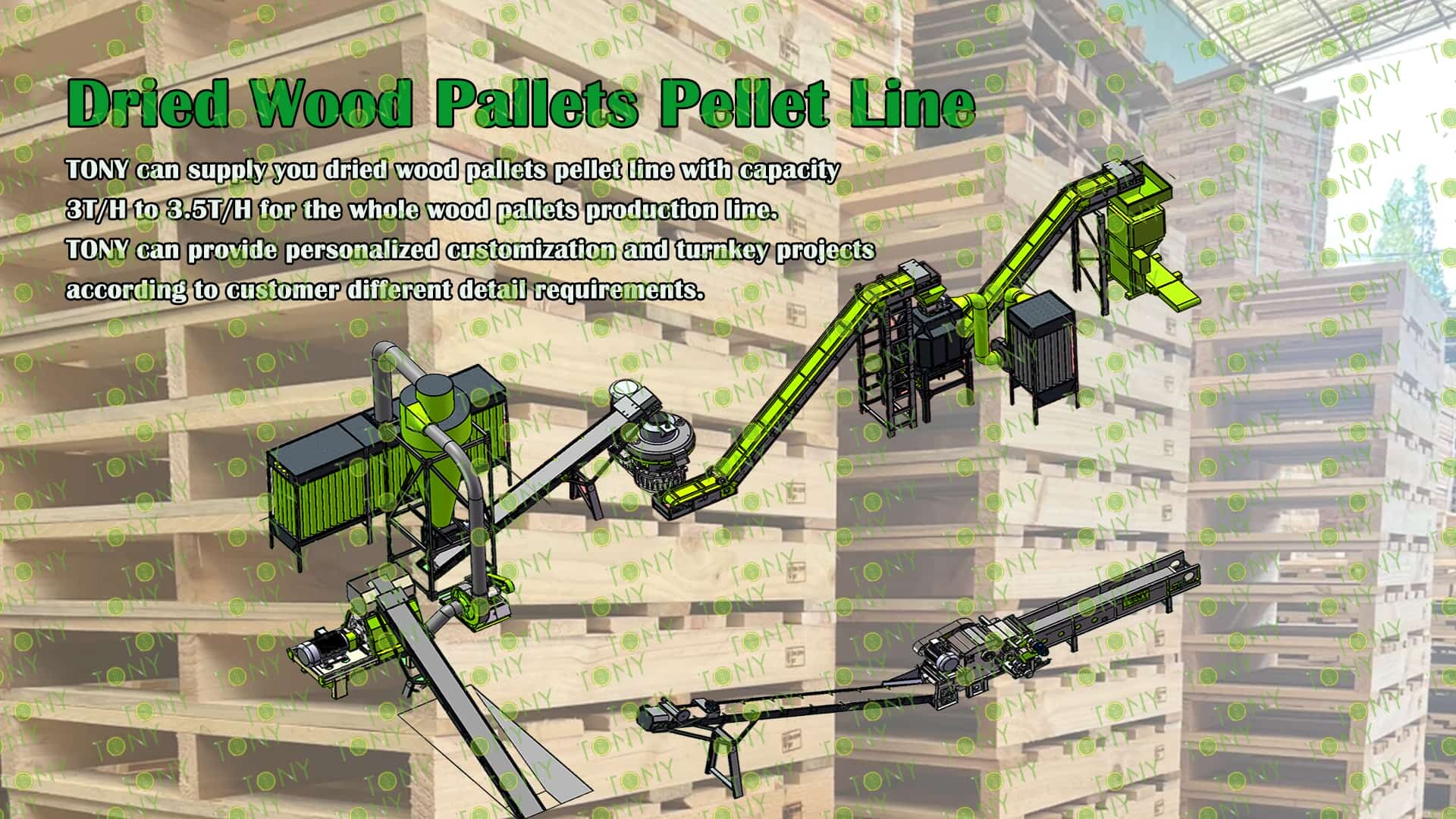





















Project Brief Introduction:
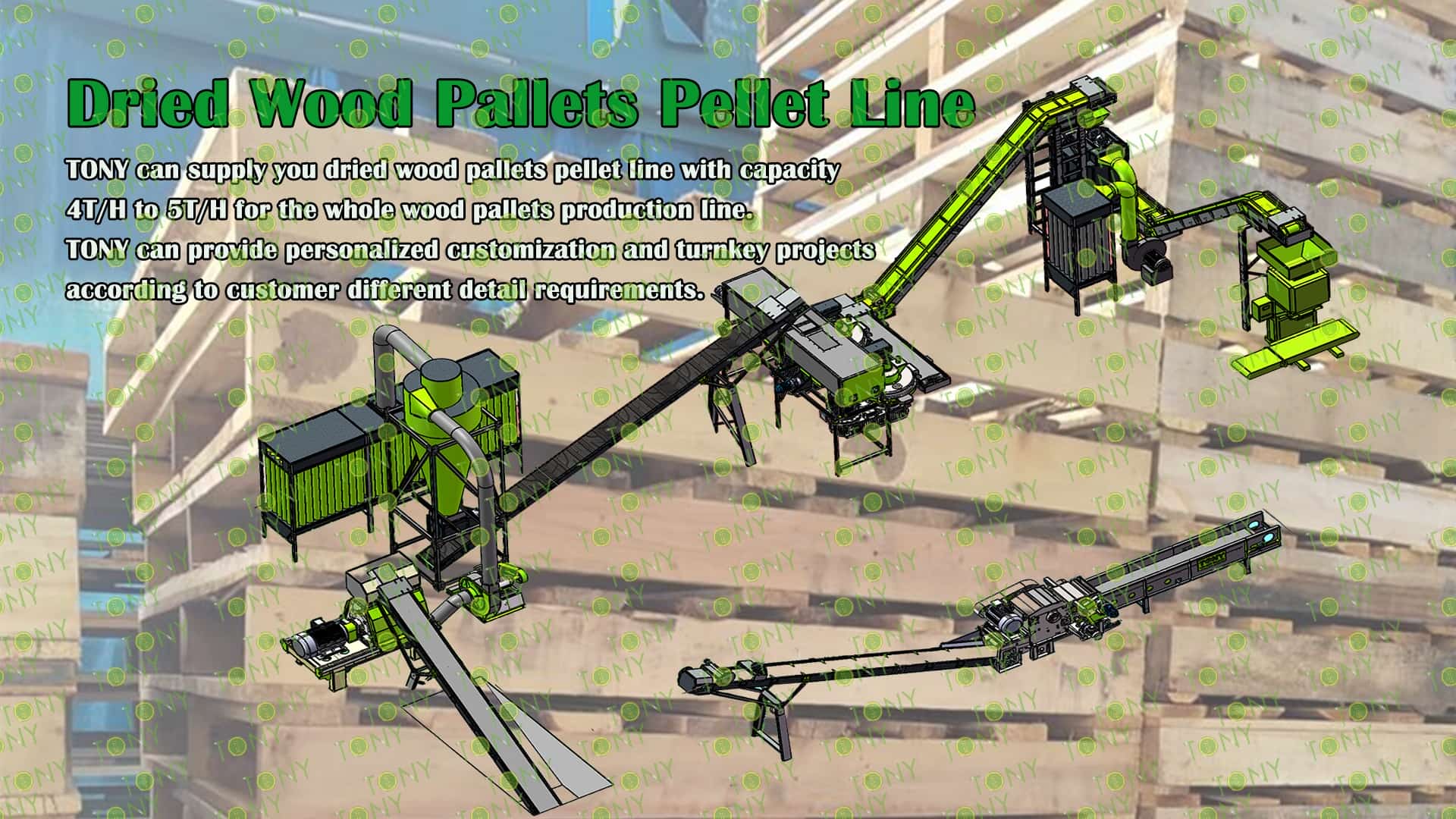
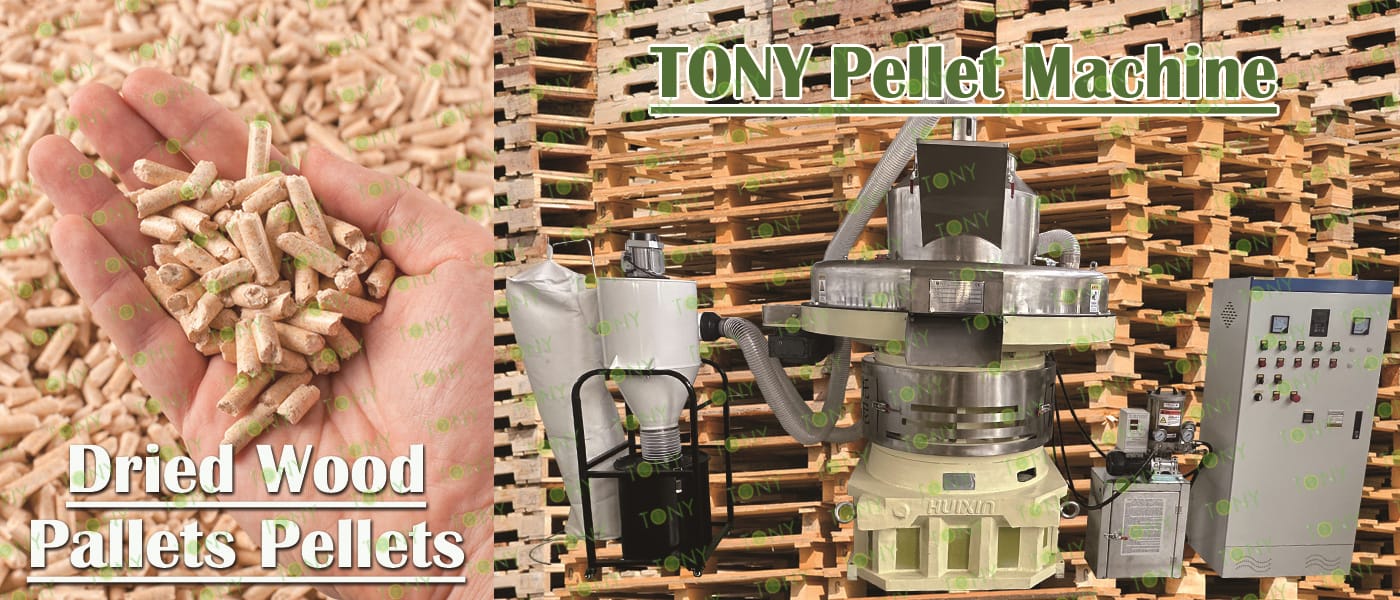
1.Product:Dried Wood Pallets Pellet Line
2.Capacity: 14-15T/Hour
3.TONY Brand 14-15Ton /HourDried Wood Pallets Pellet Line Project Process
4.Main Machine: Comprehensive Chipper,Hammer Mill, TONY Pellet Machine TYJ760-Ⅲ-185KW,Pellets Cooler,Packing Machine And Belt Conveyors
5.Total Power: About 1800KW
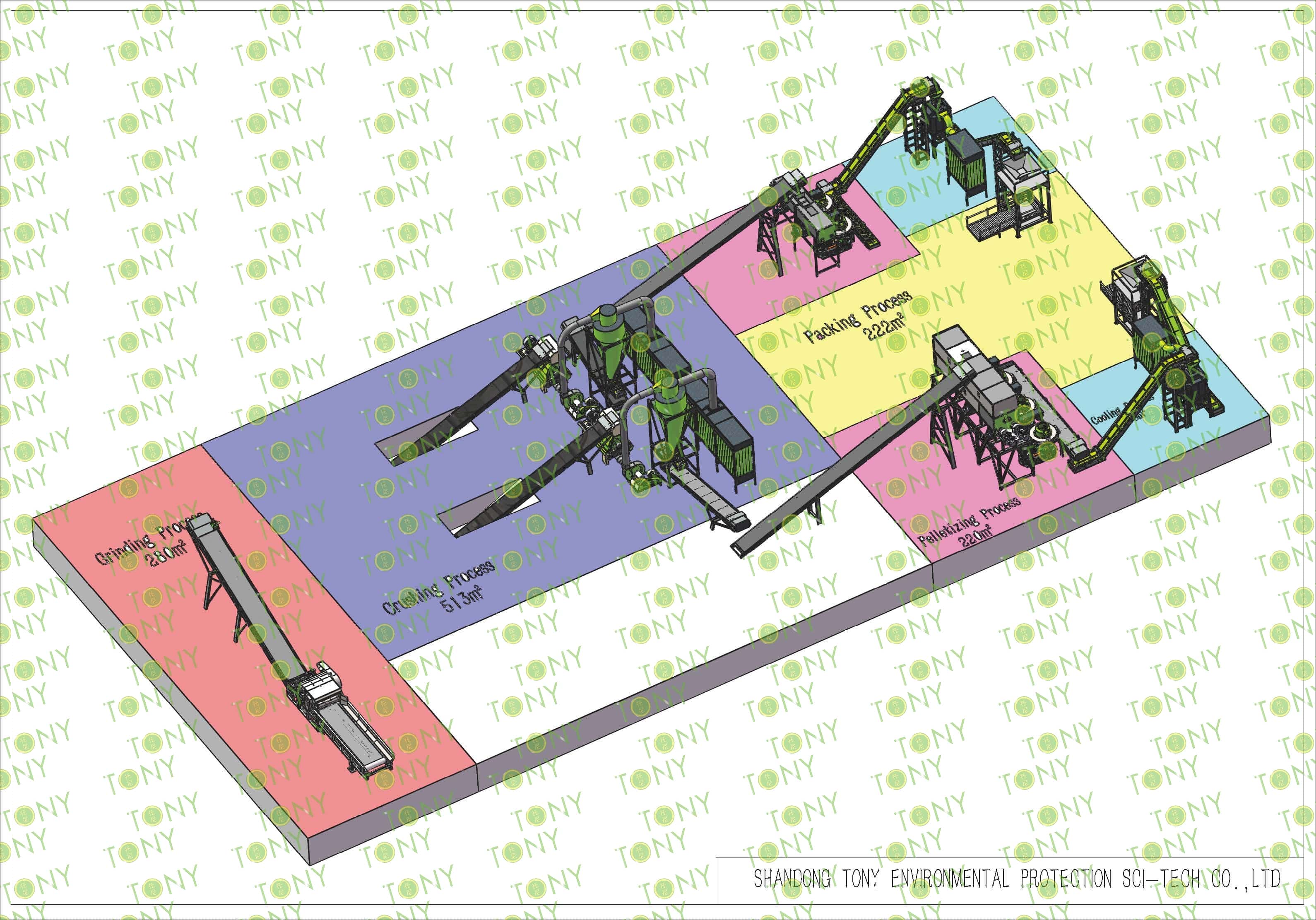
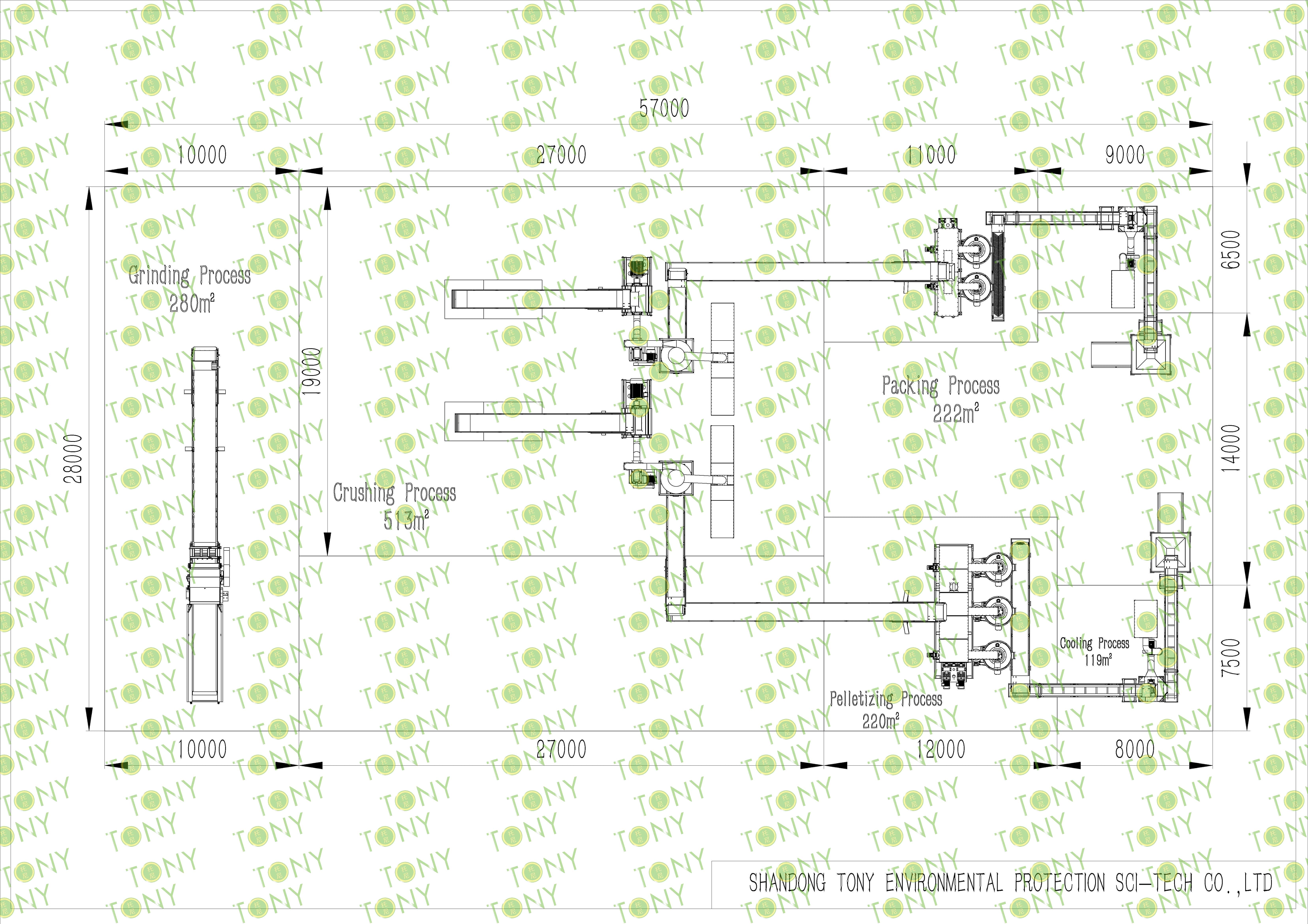
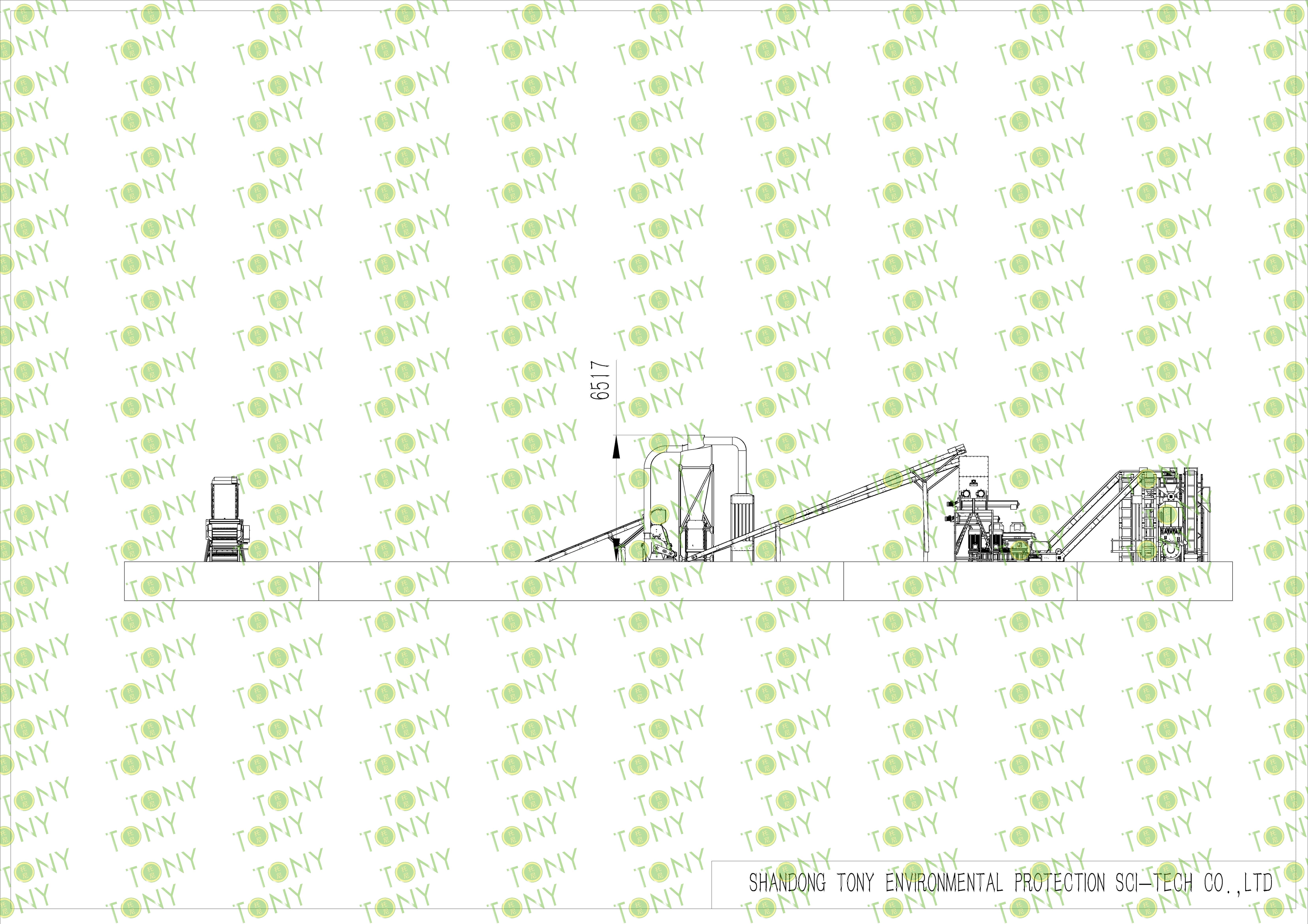
6.Need Area: About 1596㎡ L: 57 M W: 28 M H: 6.517 M
Project Layout For Customer:
1.The working principle of dried wood pallets biomass pellet processing equipment
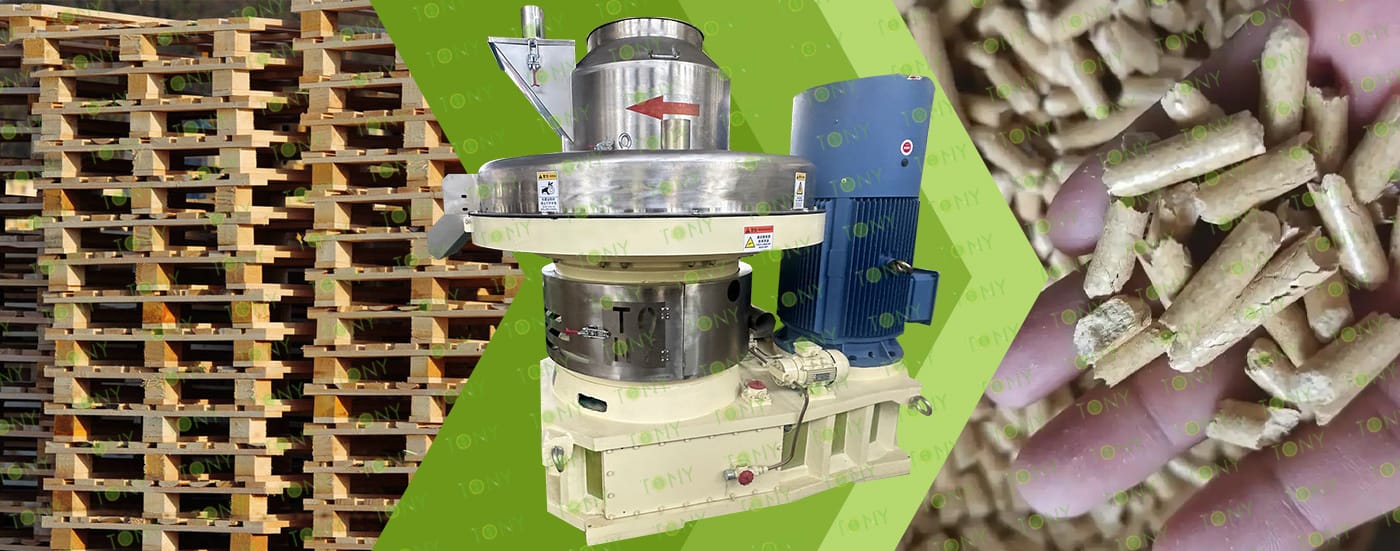
The core equipment in pallet pellet processing is the biomass ring die pelletizer, which utilizes a combination of mechanical extrusion, frictional heating, and fiber self-bonding. The specific process is as follows:
During the extrusion process, rollers exert a pressure of up to 50-150 MPa on the powder, forcing it from its loose state (density 0.15-0.3 g/cm³) into the die's forming hole, forming a cylindrical column.
As the powder moves through the hole, it creates intense friction with the hole walls. Frictional heating raises the column temperature to 100-120°C, completely melting the softened lignin and hemicellulose, forming a natural adhesive that tightly binds the surrounding wood fiber particles together.
At the same time, the high temperature and pressure also remove some free moisture from the material (reducing the final pellet moisture content to 10%-15%) and rearranges the wood fiber structure, forming a high-density, high-strength column (density increased to 0.8-1.2 g/cm³).
2.Characteristics of dried wood pallets biomass pellet processing equipment
(1)Material compatibility:The core crushing and pelletizing equipment (such as hammer mills and ring die pelletizers) can process all types of wooden pallets (including solid wood pallets, plywood pallets, and compressed wood pallets). There is no need to strictly classify the raw materials, and only pre-treatment is required to remove metal impurities.
(2)Durability of vulnerable parts:The hammers of the crushing equipment and the ring die/roller of the pelletizer are made of high-hardness alloy materials (such as 65Mn steel and Cr12MoV steel). After heat treatment, the wear resistance is improved. The service life of the hammer can reach 100-200 hours, and the service life of the ring die can reach 500-1000 hours, which reduces the frequency of equipment shutdown and part replacement and ensures production continuity.
(3)No secondary pollution:During the production process, the dust in the drying stage is recovered (re-pelletized) through the cyclone separator, and the crushed powder in the screening stage is recycled, without any waste of raw materials; when the equipment is in operation, no wastewater is discharged.
(4) Easy to operate:The production line is equipped with a touch screen control system. Key parameters can be set through the interface with one click. Workers can operate independently after 1-2 weeks of training without professional technical background.
(5)Low maintenance cost:The equipment structure is modular (for example, the crushing chamber of the crusher and the granulating chamber of the granulator can be disassembled separately). Daily maintenance (cleaning the screen, replacing the hammer, lubricating the bearing) can be completed by only 2-3 people, without the need for a professional maintenance team. Consumable parts (hammers, screens, cutters) are inexpensive and can be purchased in bulk from the manufacturer, further reducing maintenance costs.
(6)Flexible site requirements:A small production line only requires a few hundred square meters of space (including raw material storage area, equipment area, and finished product area). There is no need for complex factory renovation, which reduces site costs.
3.Application scenarios of dried wood pallets biomass pellet processing equipment
Wood pallet pellet processing equipment is the core equipment for realizing the transformation of “waste wood pallets → biomass pellets”. Its application scenarios are centered around the source of raw materials, production scale, and processing needs. It is mainly divided into two categories: “centralized processing projects” and “supporting processing scenarios”:
(1)Centralized processing projects:large-scale production scenarios This type of scenario takes “large-scale processing of waste wood pallets and batch production of biomass pellets” as its core goal. The equipment must have high production capacity and a high degree of automation. It is usually implemented as an independent biomass pellet processing plant,
(2)Professional biomass pellet plant: Build a large-scale processing plant in an area with developed logistics and abundant waste wood pallet resources, and configure a complete production line of “wood pallet dismantling machine → crusher → dryer → pelletizer → cooling and screening machine → packaging machine” with a daily production capacity of 50-200 tons. The products are mainly supplied to B-end customers such as industrial boilers and power stations;
(3)Supporting processing lines for solid waste treatment centers: Large-scale industrial solid waste treatment centers (such as centers for processing waste wood and waste packaging in the manufacturing industry) add wood pallet pellet processing equipment to convert waste wood pallets that originally needed to be landfilled/incinerated into high-value-added pellets, realizing "Solid waste reduction (over 80% reduction) + resource utilization" while also receiving environmental protection subsidies (such as solid waste treatment subsidies and pellet sales subsidies).
(4)Supporting processing scenarios:on-demand processing and local utilization.This type of scenario aims to "reduce the cost of raw material transportation and meet the energy needs of itself/surrounding areas". The equipment scale is flexible (small/medium-sized) and is usually directly matched with the producers and users of wood pallets:
(5)Logistics parks/manufacturing factories self-processing: Large logistics parks and production enterprises (such as auto parts factories and furniture factories) generate a large number of waste wood pallets every year. They build supporting "small processing workshops" to process the processed pellets directly for their own factory heating and production heat, without the need to purchase energy from outside, thus reducing energy costs (saving 20%-30% compared to purchasing natural gas/coal);
(6)Biomass boiler user supporting processing: Enterprises using biomass boilers (such as textile factories and chemical plants) build supporting processing lines within the factory area to process the recycled waste wood pallets into pellets and directly supply them to their own boilers, avoiding quality fluctuations (such as excessive ash content and insufficient calorific value) and transportation costs of purchased pellets, thus realizing the internal cycle of "raw materials - production - energy use";
(7)Rural/ Small-scale processing sites in townships: In townships with developed agriculture and scattered waste wood pallet resources, small-scale processing sites are built, equipped with simple production lines (such as "mobile crusher + small pelletizer"). Products are mainly supplied to surrounding farmers for heating and small-scale agricultural drying (such as greenhouse heating and grain drying), meeting regional scattered needs and reducing farmers' energy costs.
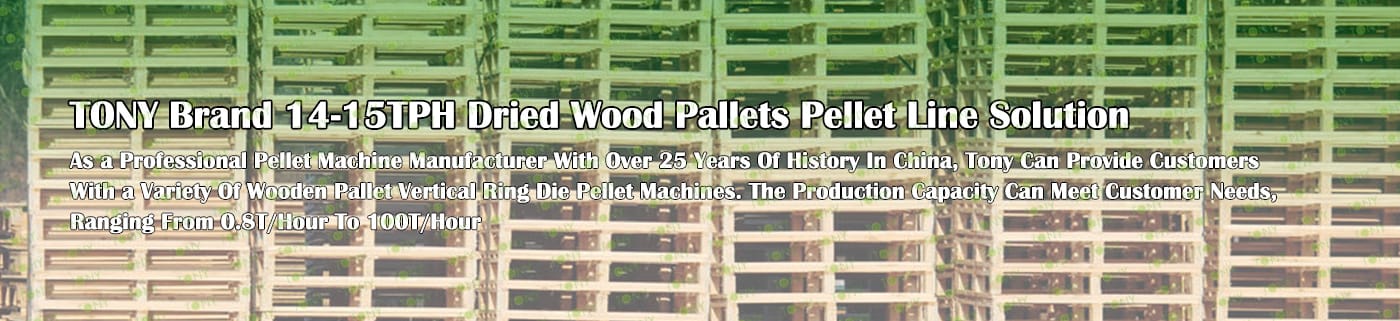
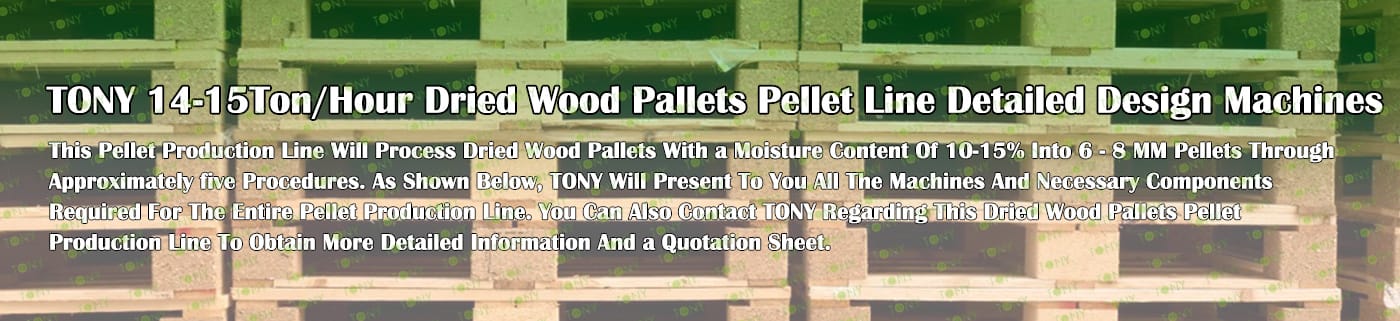
TONY Brand 14-15Ton/Hour Dried Wood Pallets Pellet Manufacturing Plant can take dried wood pallets, various types of wood - related biomass materials, such as branches, small - diameter logs, and wood shavings. After pretreatment and processing, dried wood pallets is solidified into high - density wood pellet fuel.The content of pollutants such as sulfur dioxide and nitrogen oxides produced by biomass pellets during combustion is extremely low, and the dust emission is also low, which can effectively reduce air pollution. Moreover, the raw material sources of biomass pellets are very wide, and the combustion efficiency is high. Compared with traditional fossil energy, it reduces the production and use costs and has higher economic efficiency. It has received a lot of attention and promotion.
1. Capacity: 14-15Ton/Hour
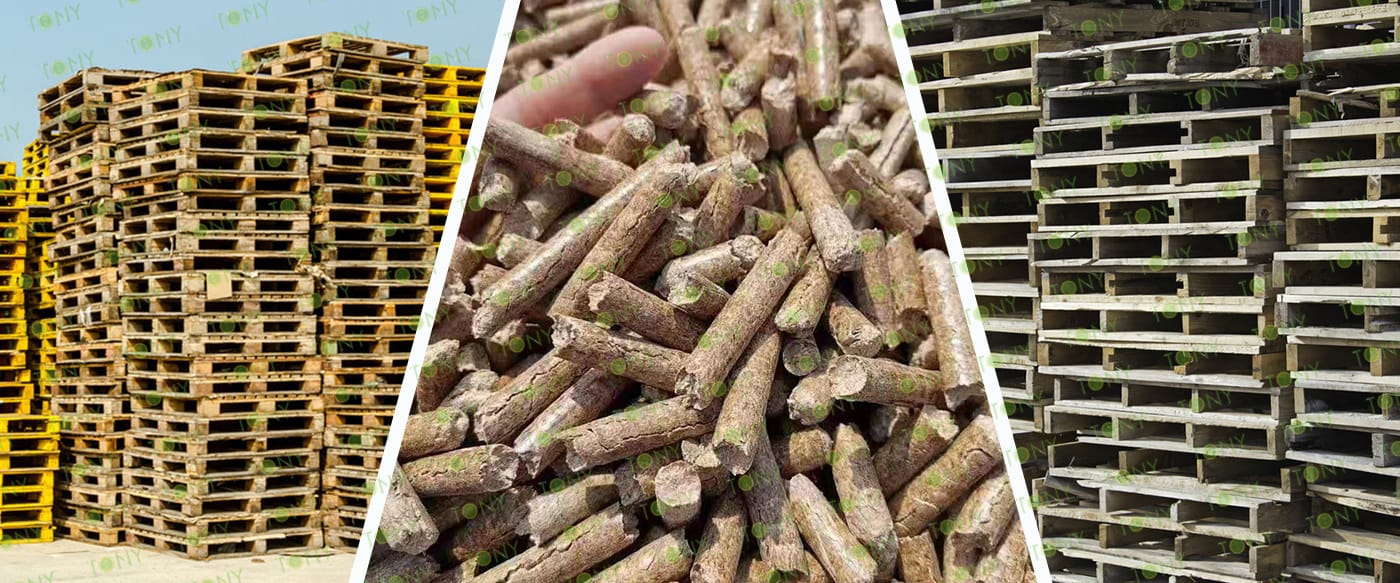
2. Raw materials: Dried wood pallets
3. Moisture: Dry type, about 10-15%.
4. Application: All kinds of waste wood pallets or more waste wood raw materials
Suitable customers: Logistics and warehousing companies, various manufacturing plants, ports and airports, construction sites, large supermarkets and shopping malls, and other places where waste wood pallets have advantages
5. Finished Pellets Markets: Large power plants ,domestic heating, industrial heating, combustion heat, heating systems, boiler rooms, school canteens, foundry heat sources.

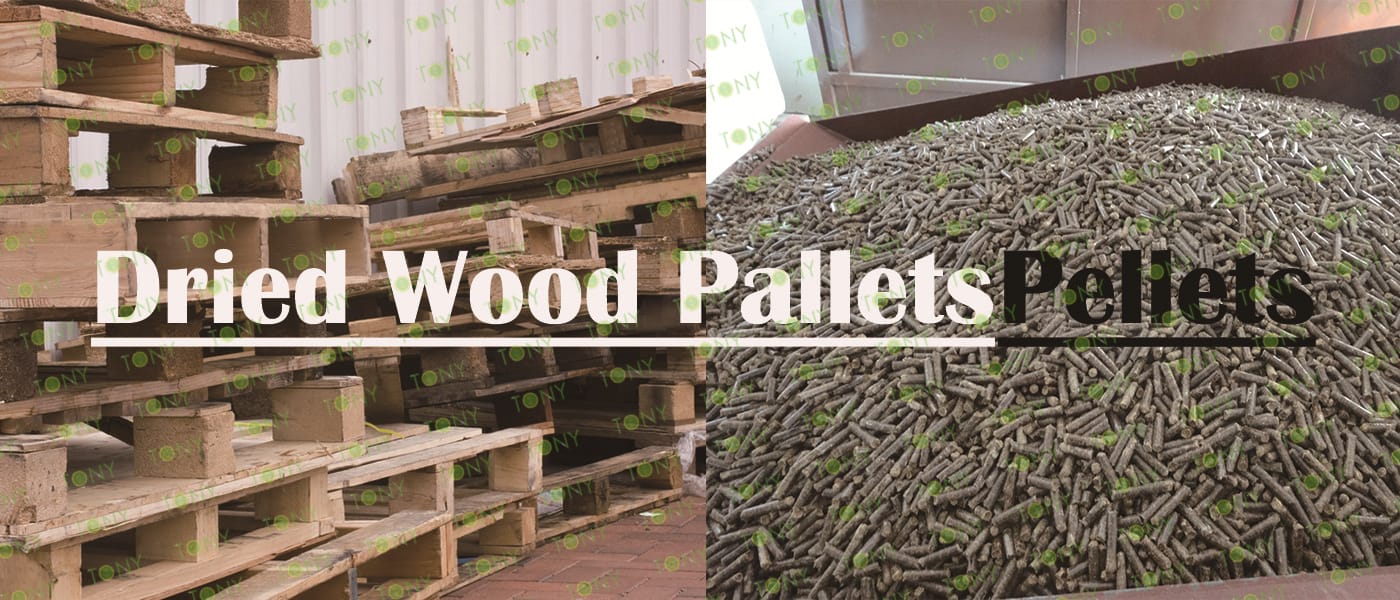
1. Project Name: Dried Wood Pallets Pellet Production Line
2. Raw Material: All kinds of dried wood pallets
3. Moisture Content of Raw Material: 10-15%
4. Capacity: 14-15 tons per hour
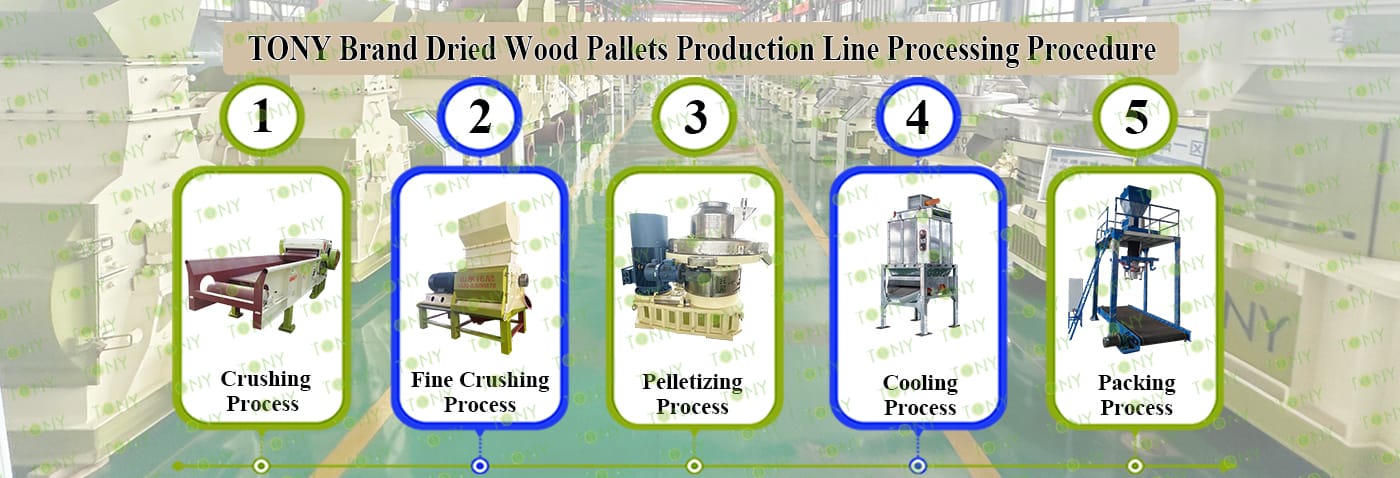
5. Process: Crushing Process - Fine Crushing Process - Pelletizing Process - Cooling Process - Packing Process
6. Main Equipment: Comprehensive Chipper TPC1400-700-250KW, Effective Hammer Mill-TFD85*220-220KW, TONY Pellet Machine TYJ760-Ⅲ-185KW, Pellet Cooler, Ton Packing Machine and Belt Conveyors

|
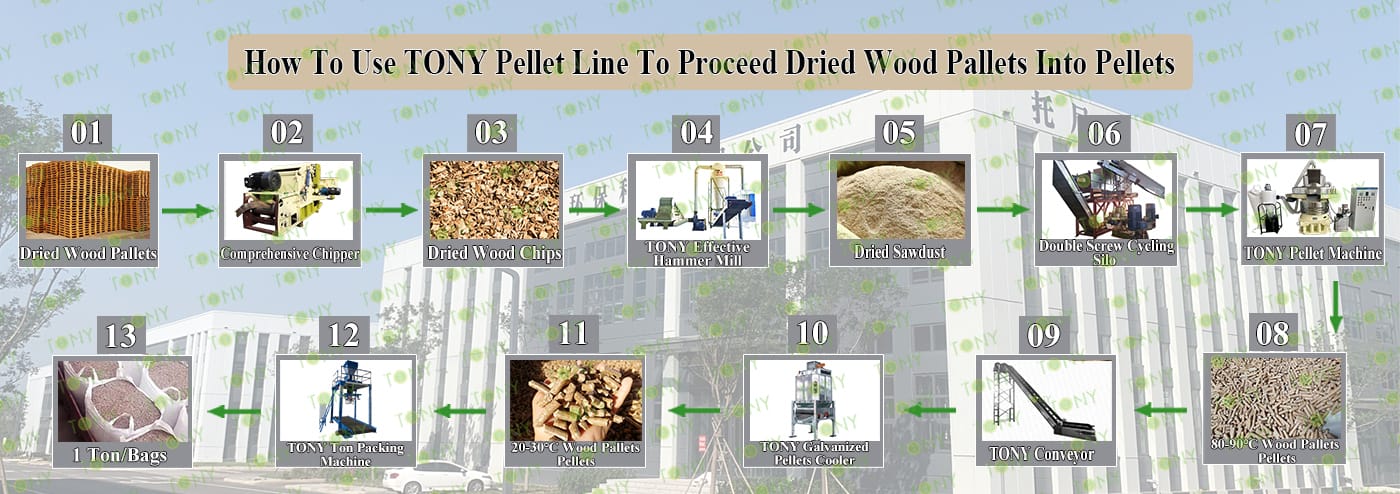
How to use the TONY pellet production line to make pellets from dried wood pallets? The process mainly includes the following steps and equipment: 1. Use TONY comprehensive chipper to grind dried wood pallets with width 1.4m into wood chips 25 - 55 mm in length. 2. Use TONY effective hammer mill to crush the 25-55 mm wood chips into 8-14 mm sawdust. 3. Use TONY vertical ring die pellet machine to produce pellets with a diameter of 6-8 mm. 4. Use TONY galvanized pellets cooler to cool the pellets from 80-90°C to 20-30°C. 5. Use TONY ton packing machine to pack the pellets into bags, each weighing 1 ton. For more detailed information and quotations, you can contact TONY. TONY can provide all the above - mentioned products at highly competitive prices and with excellent quality. |
|
|||||||||||||||||||||||||||||||||||||||||||||
| Next, TONY Will Introduce To You All The Necessary Machinery That Will Be Used For The Whole Pellet Production Line. Some Machines Can Be Custom - Made By Customers According To Different Customers' Detailed Demands. Contact TONY For More Details, Including Quotation And Layout. | ||
 |
 |
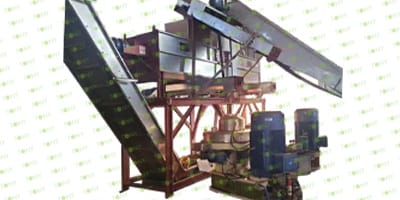 |
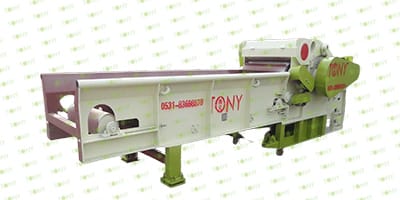
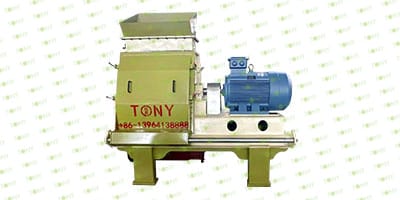
| Comprehensive Chipper | Effective Hammer Mill | Double Screw Cycling Silo |
| 1.To Grind Wood pallets Width ≤1.4m Into25-55mm Wood Chips. 2.Model: TPC1400-700-250KW With 24 Hammer Heads*1set 3.Capacity: 20-30Ton/Hour. |
1.To Crush 25-55mm Wood Chips Into 8-14mm Sawdust. 2.Model: TFD85*220-220KW*2sets 3.Capacity: 7-8Ton/Hour/Set |
1.To Stroage Sawdust Before Pellet Machine; Adjust The Speed Of Sawdust Entering The Pellet Machine 2.Model: TLC-15*1set 3.Capacity:14-15Ton/Hour/Set |
 |
 |
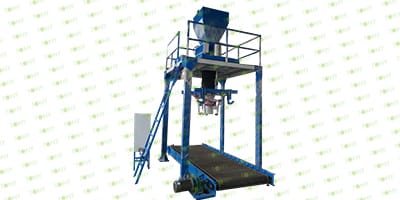 |
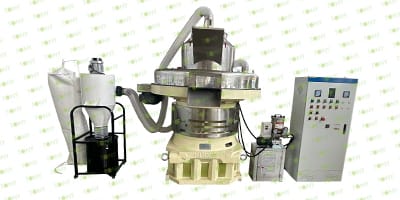
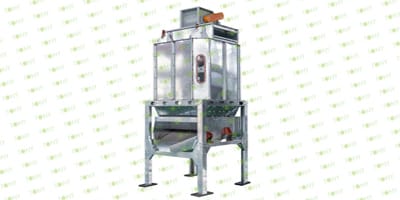
| Vertical Ring Die Sawdust Pellet Machine | Galvanized Pellets Cooler | Ton Packing Machine |
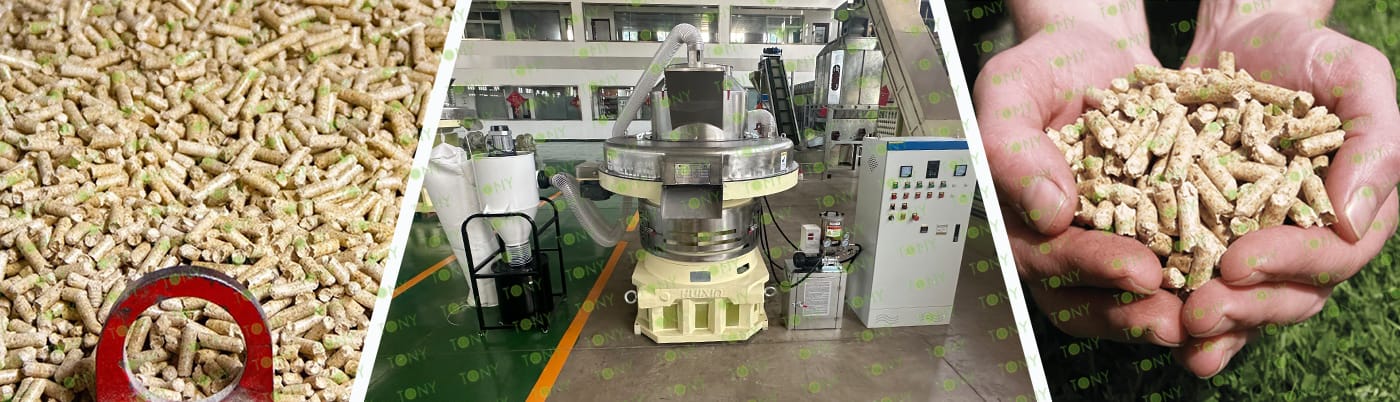
| 1.To Press Dry Sawdust Into 6-8mm Biomass Pellets 2.Model: TYJ760-III-185KW*5sets 3.Capacity:2.8-3.3Ton/Hour/Set 4.New 304SS Type |
1.To Cool Pellets From 80-90℃ Into 20-30℃ 2.Model: TCN-10*1set 3.Capacity:14-15Ton/Hour |
1.To Pack Pellets Into 1Ton/Bags. 2.Model: TBD*1set 3.Capacity: 14-15Ton/Hour |
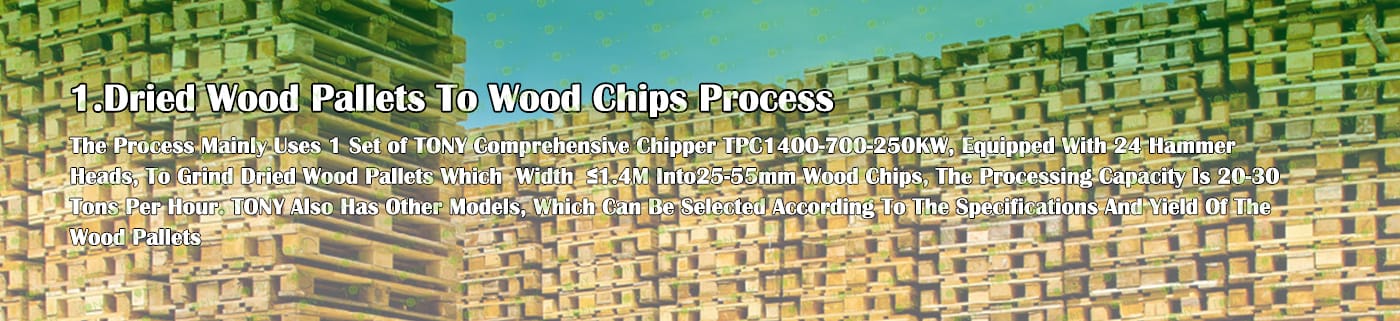
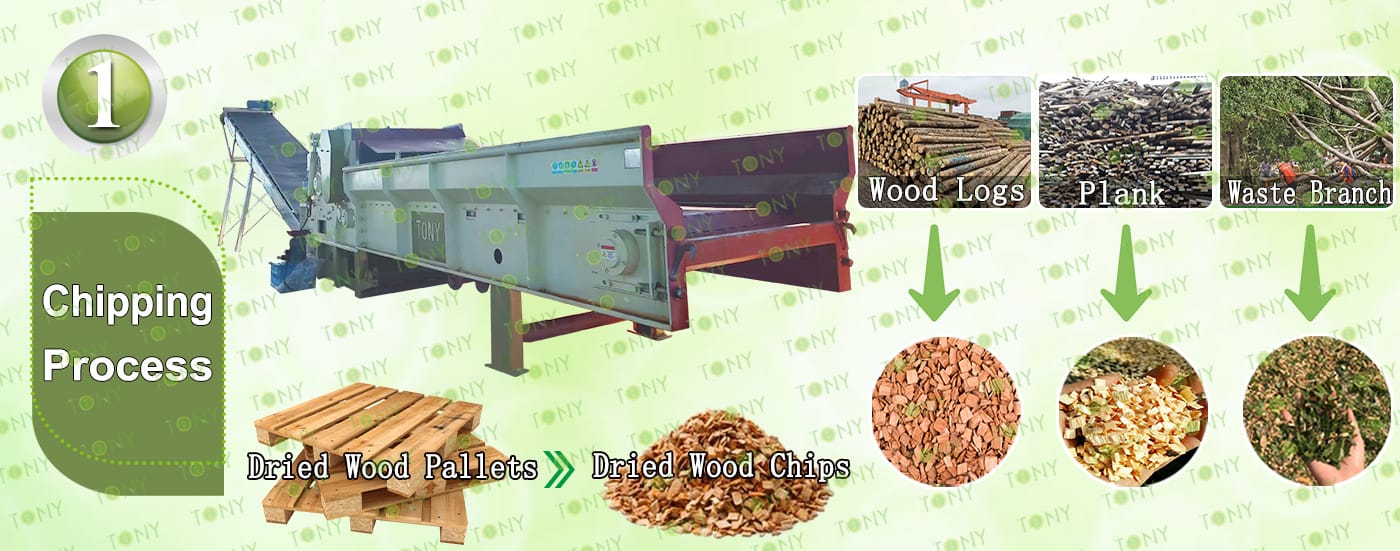
1.Wood Pallets Chipping Process:
A. This process is mainly used to grind wooden pallets with nails less than 1.4 m in width into wood chips with a size of 25-55 mm. The final size of the wood chips can be adjusted by replacing the screen with different sizes and replacing or adjusting the hammer heads with different specifications.
B.TONY brand comprehensive chipper TPC1400-700-250KW model with 24 hammer heads*1set
C.Capacity:20-30Ton/Hour.
Main Parts:
(1)TONY's Comprehensive Chipper.
(2)Feed And Discharge Belt Frequency Control To Prevent Card Material
(3)Hydraulic System Control Can Be Used For Thicker Materials
(4)Electronic Control System Allows The Equipment To Be Used Normally
Contact Tony For More Details With Quotation

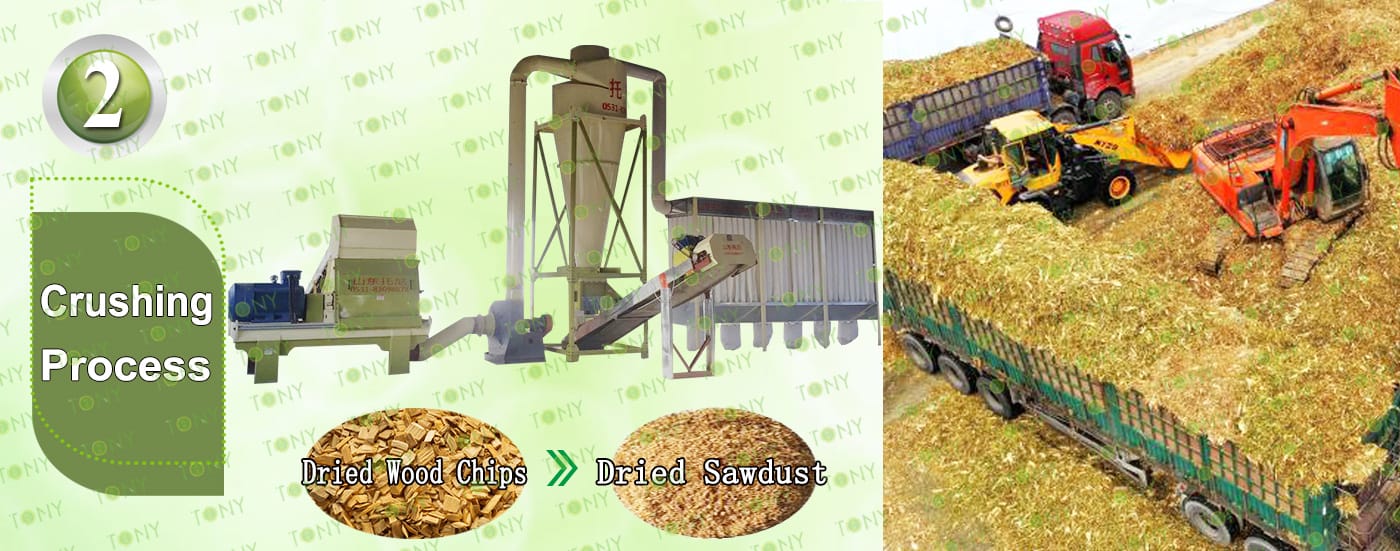
2.Wood Chips Fine Crushing Process:
A.This process is mainly used to crush 25-55mm wood chips into 8-14mm sawdust.
B.Capacity:14-15Ton/Hour.
C.TONY brand effective hammer mill TFD85*220-220KW*2sets
Main Parts:
(1)TONY Effective Hammer Mill.
(2)Galvanized Dust Collector.
(3)Sawdust Transportation Fan Blower.
(4)Cyclone With Airlock.
(5)Electrical Cabinets.

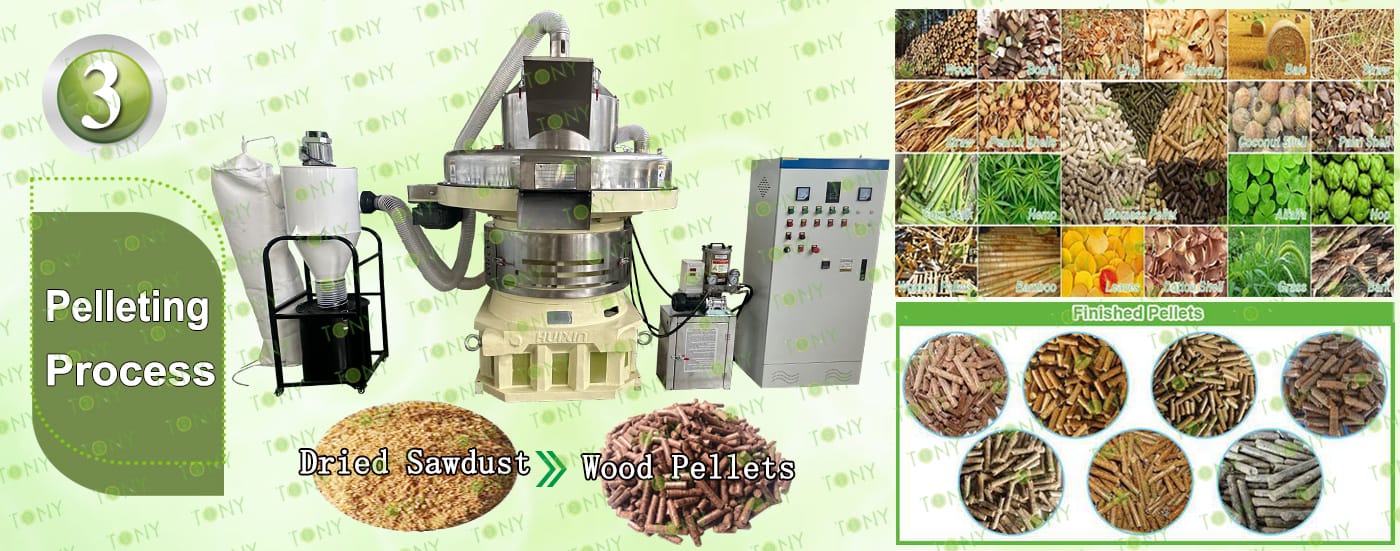
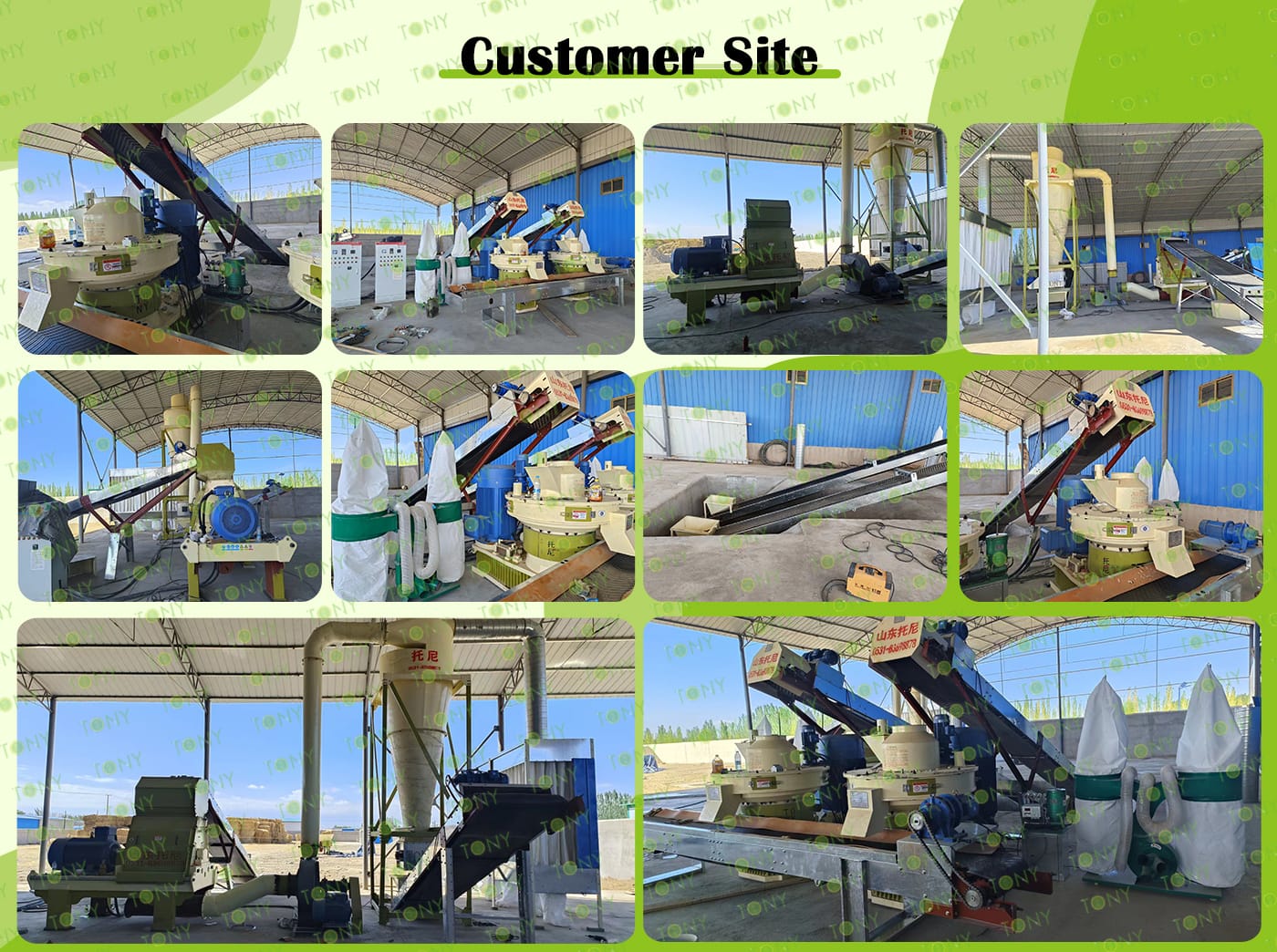
3.Pelletizing Process:
A.This process is mainly used to to product pellets into φ6-8mm.
B.Capacity:14-15Ton/Hour.
C.TONY brand vertical ring die pellet machine TYJ760-Ⅲ-185KW*5sets
D.Double screw cycling silo is added above the pellet machine, which has the advantages of saving space, saving labor, intelligently controlling the feeding speed, not easy to block the material, and improving production efficiency.
Main Parts:
(1)TONY's New Vertical Ring Die Pellet Machine.
(2)Cyclone And Bags Dust Collectors.
(3)Automatic Lubrication System.
(4)Electrical Cabinets.
You can chose TONY new type SS304 pellet machine

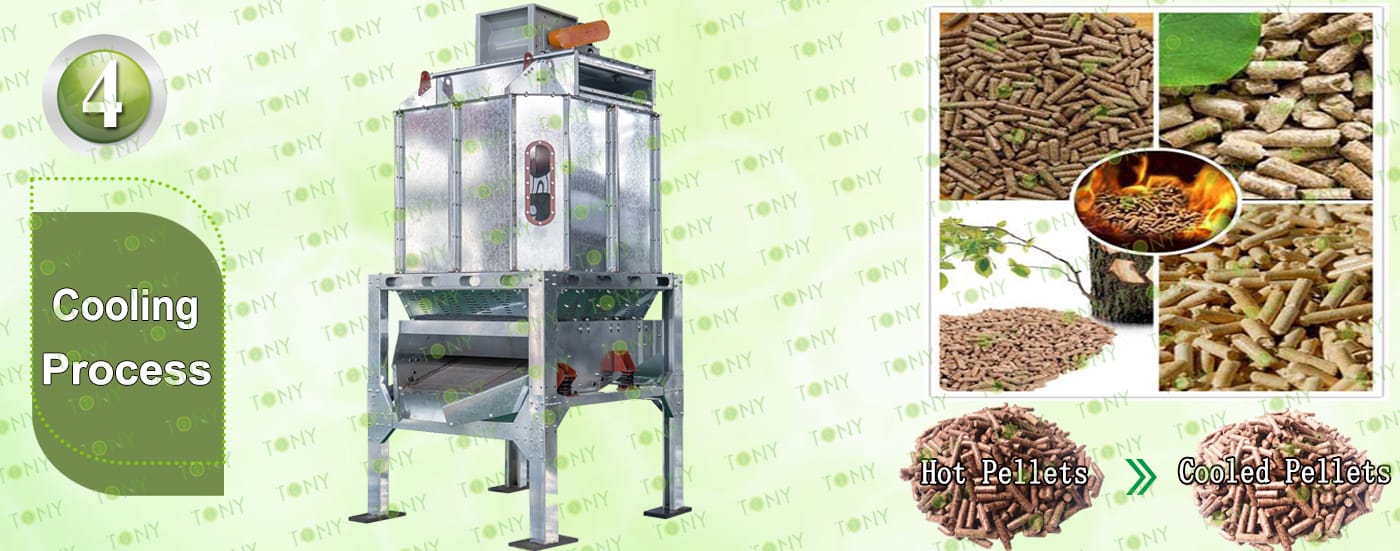
4.Cooling Process:
A.This process is mainly used to cool pellets from 80-90℃ to 20-30℃
B.Capacity:14-15Ton/Hour.
C.TONY brand galvanized cooler separator*1set
Main Parts:
(1)TONY's Galvanized Cooler Separator With Vibrating Screen.
(2)Cyclone And Bags Dust Collectors.
(3)Fan Blower.
(4)Connect Pipes.

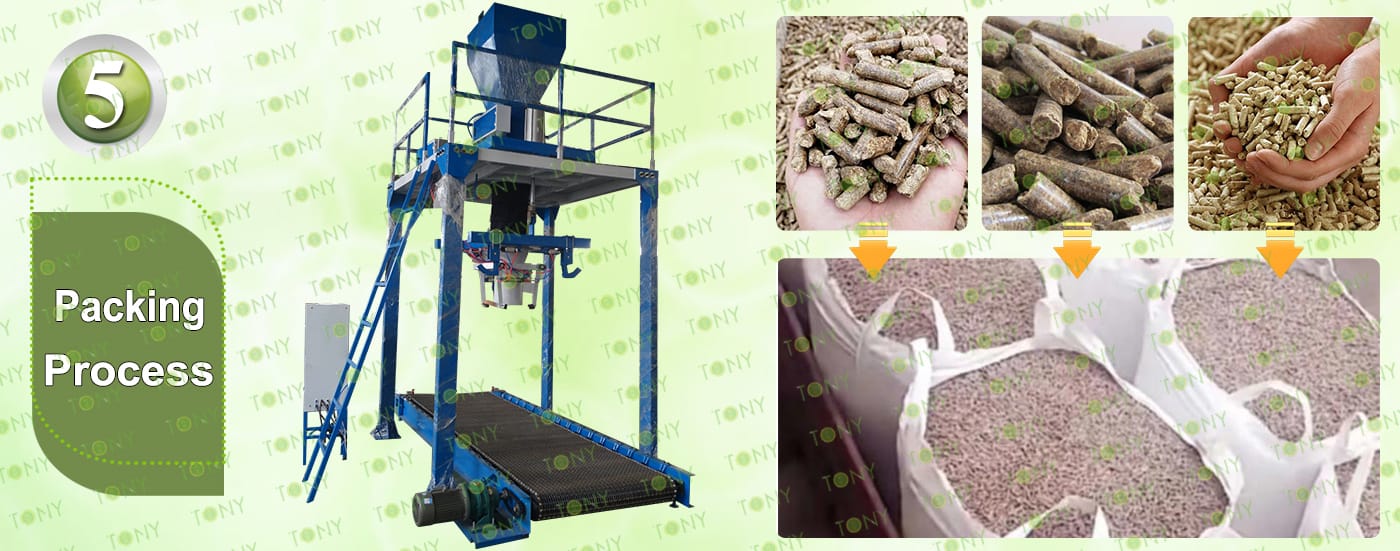
5.Packing Process:
A.This process is mainly used to pack pellets into 1ton/bags.
B.1 set of TONY ton packing machine
Main Parts:
(1)TONY Ton Packing Machine
(2)Electronic Platform Scale Metering System
(3)Automatic Tare, Zero, and Drop Correction Functions
(4)Feeding System Features Fast, Medium, and Slow Feeding Speeds to Ensure Measuring Accuracy


Competitive advantages and challenges of the wood pallet processing biomass pellet project
1.Core competitive advantages
(1)Raw material cost advantage: Wood pallet waste has a wide range of sources (such as logistics companies and manufacturing scraps), low recycling costs, and can be efficiently processed through wood crushers.
(2)Policy and environmental protection dividends: Wood pallets are renewable resources, and the biomass pellets processed from them are in line with the "circular economy" policy orientation and are easy to obtain subsidies or tax incentives.
(3)High technological maturity: Existing wood crushing and pelletizing equipment can achieve large-scale production and reduce unit costs.
2.Potential challenges
(1)Fierce market competition: The global wood pellet market is dominated by leading companies, and new entrants need to compete with differentiation.
(2)Raw material supply stability: Wood pallet recycling is affected by fluctuations in the logistics industry, and it is necessary to establish diversified recycling channels to avoid raw material shortages5.
(3)Upgraded environmental standards: Some regions have higher requirements for carbon emissions and ash content of biomass pellets, and investment in technology upgrades is needed to meet compliance. 3. Market demand trends and corporate strategy recommendations
3.Future demand trends
With the upgrading of environmental protection technology, the penetration rate of wood pallet pellets in high-end industrial fields will increase, becoming the fastest-growing sub-category.
In addition to traditional power generation and industrial furnaces, the demand for biomass pellets in civil heating (such as home fireplaces) and agricultural greenhouse heating will gradually emerge.
Regional layout is accelerating, Mature markets such as Europe and North America are highly competitive, and emerging markets (such as Southeast Asia and South America) may become new growth points for demand
4.Corporate strategy recommendations
(1)Raw material side: Sign long-term recycling agreements with logistics companies and manufacturing parks to ensure a stable supply of wood pallet waste, and explore diversified raw material supplements such as straw and sawdust.
(2)Product side: Focus on the high-growth pellet market, reduce ash content and improve combustion efficiency through technological research and development, and meet the needs of high-end customers.
(3)Market side: Prioritize layout in regions with strong policy support such as Europe and China, and use cross-border e-commerce or local cooperation to expand sales channels.

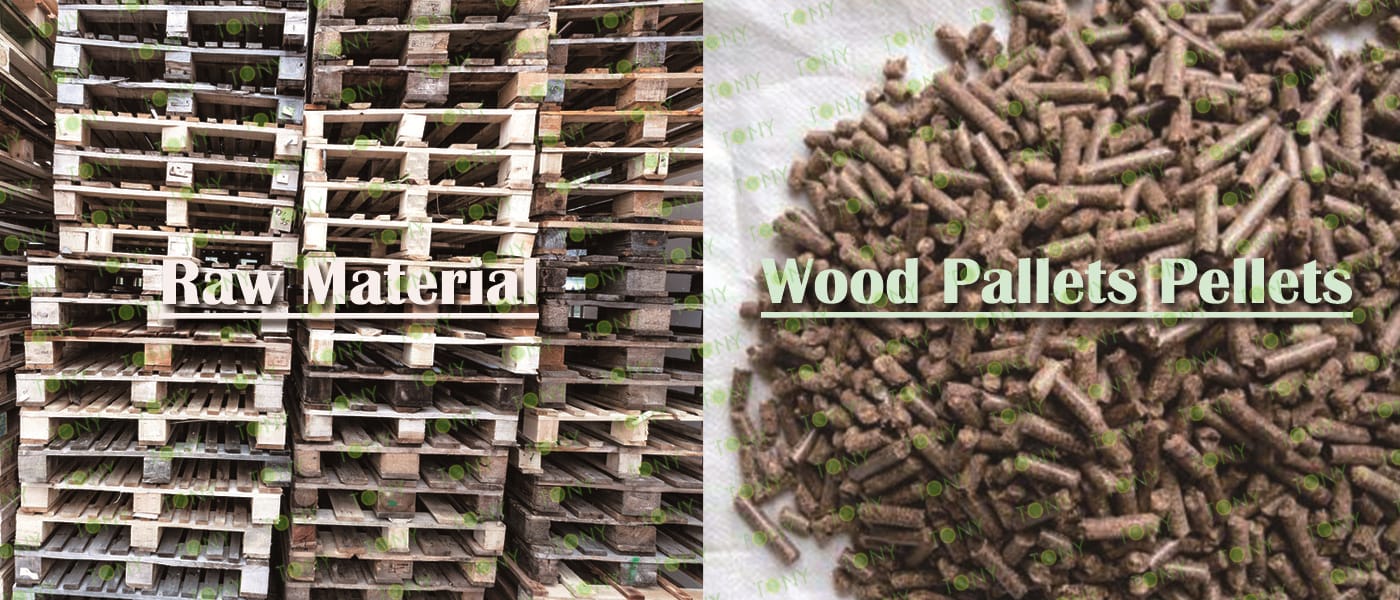
Dry pallet pellets are positioned as "mid-to-high-end wood pellets" and are suitable for different applications:
1.Residential applications (home fireplaces, heating stoves):
They offer significant quality advantages—low ash content (requires long cleaning cycles, typically every 1-2 weeks), smokeless and odorless (combustion is complete, with pollutant emissions far lower than coal and bulk biomass), high density (requires minimal storage space, with 1 ton of pellets equivalent to approximately 0.8-1 cubic meters), and a superior user experience compared to ordinary straw pellets.
2.Industrial applications (factory boilers, biomass power plants):
They offer quality that meets the requirements of continuous operation—stable calorific value (fluctuation ≤5%), high pellet yield (reducing feed system clogging), and low ash content (reducing coking on boiler heating surfaces and extending equipment life). They can partially or completely replace coal (calorific value: 1.8-2 tons of pellets equals 1 ton of coal) and comply with environmental protection policies (carbon emissions from biomass fuel combustion are near "carbon neutral").
3.Special Applications (Greenhouse Heating, Food Processing and Drying):
Pellets produced from pure solid wood pallets meet low-pollution requirements and are suitable for applications with high air quality requirements.



2025 Tony Machinery - All Rights Reserved. Map