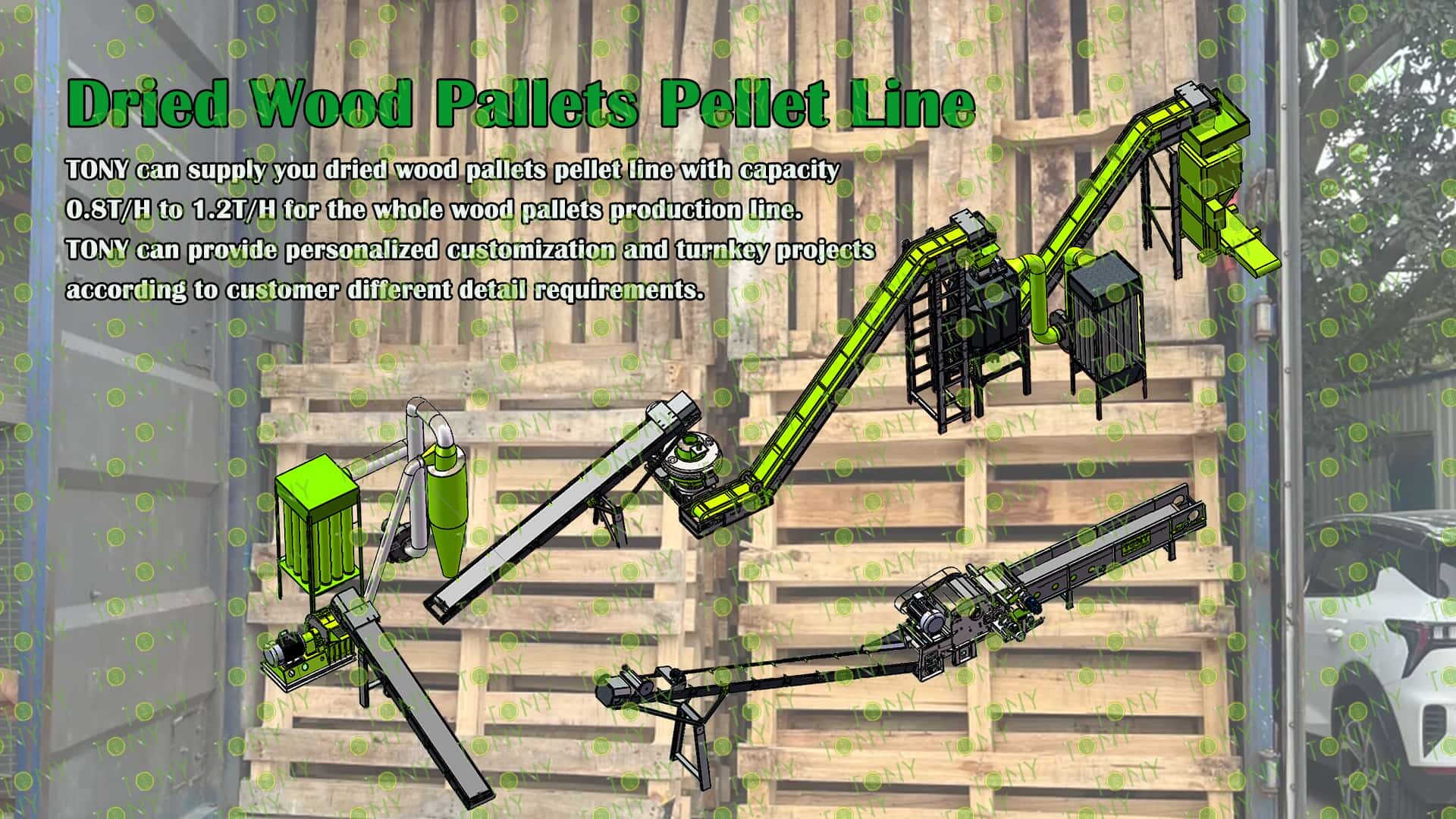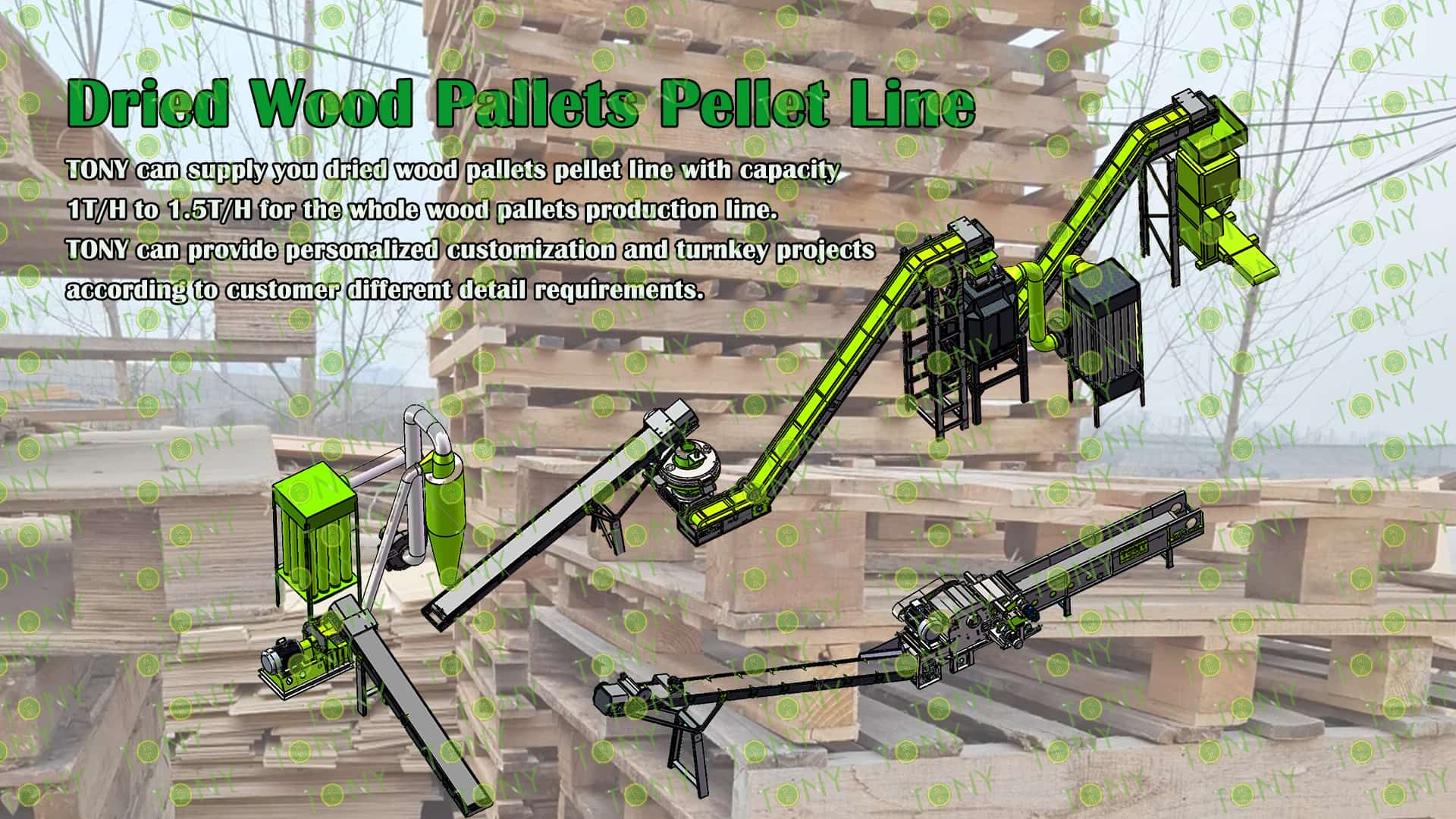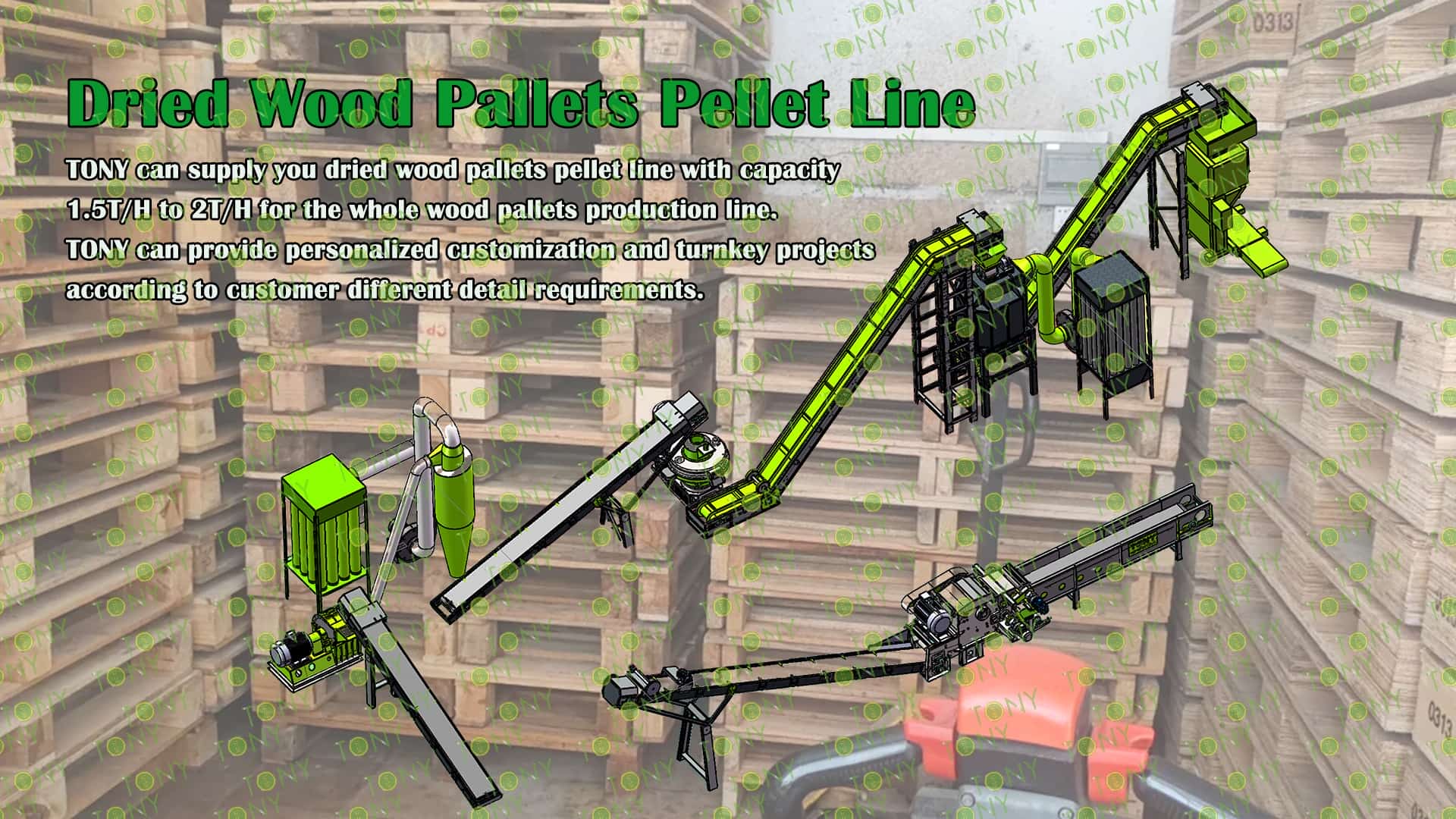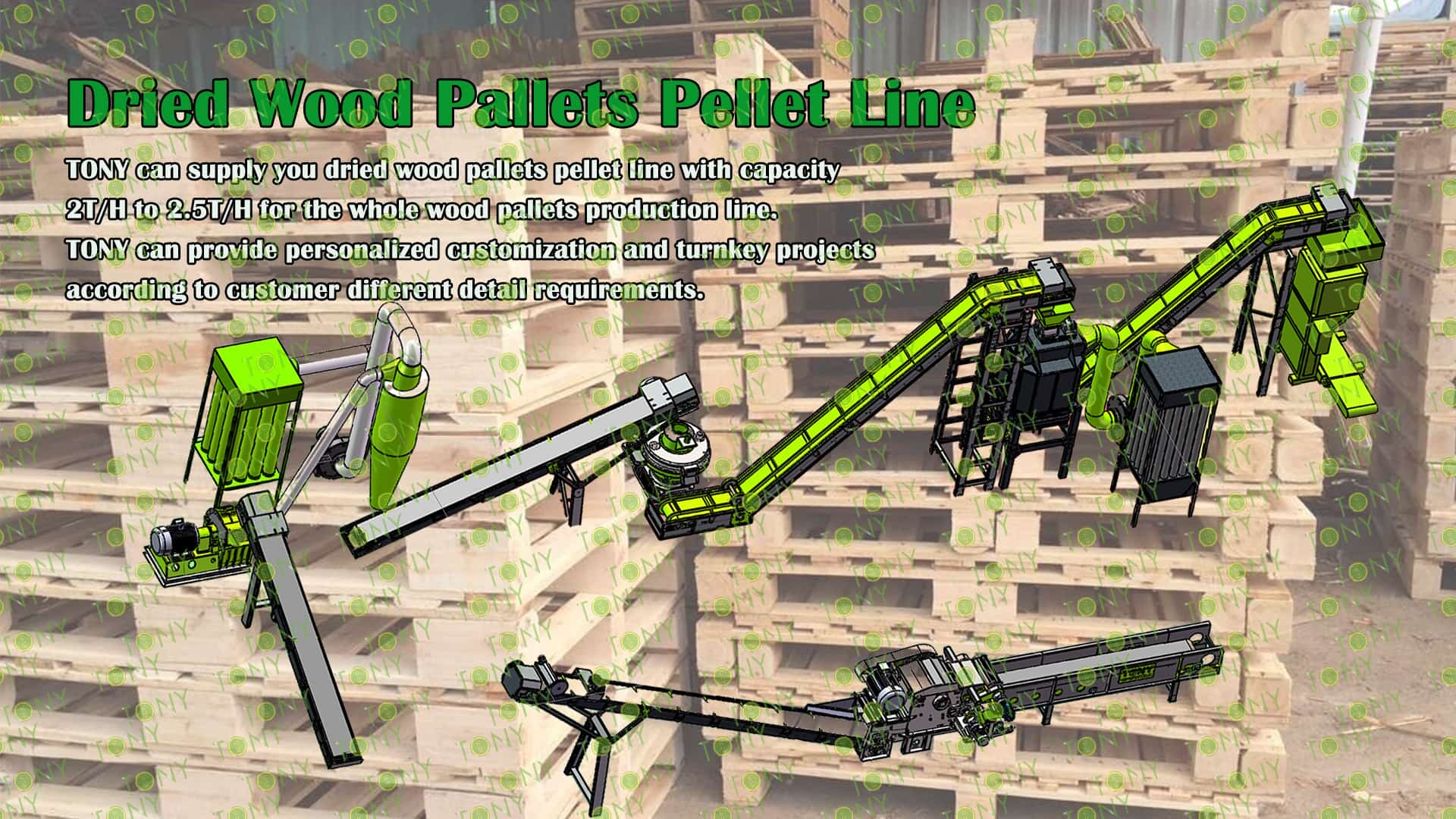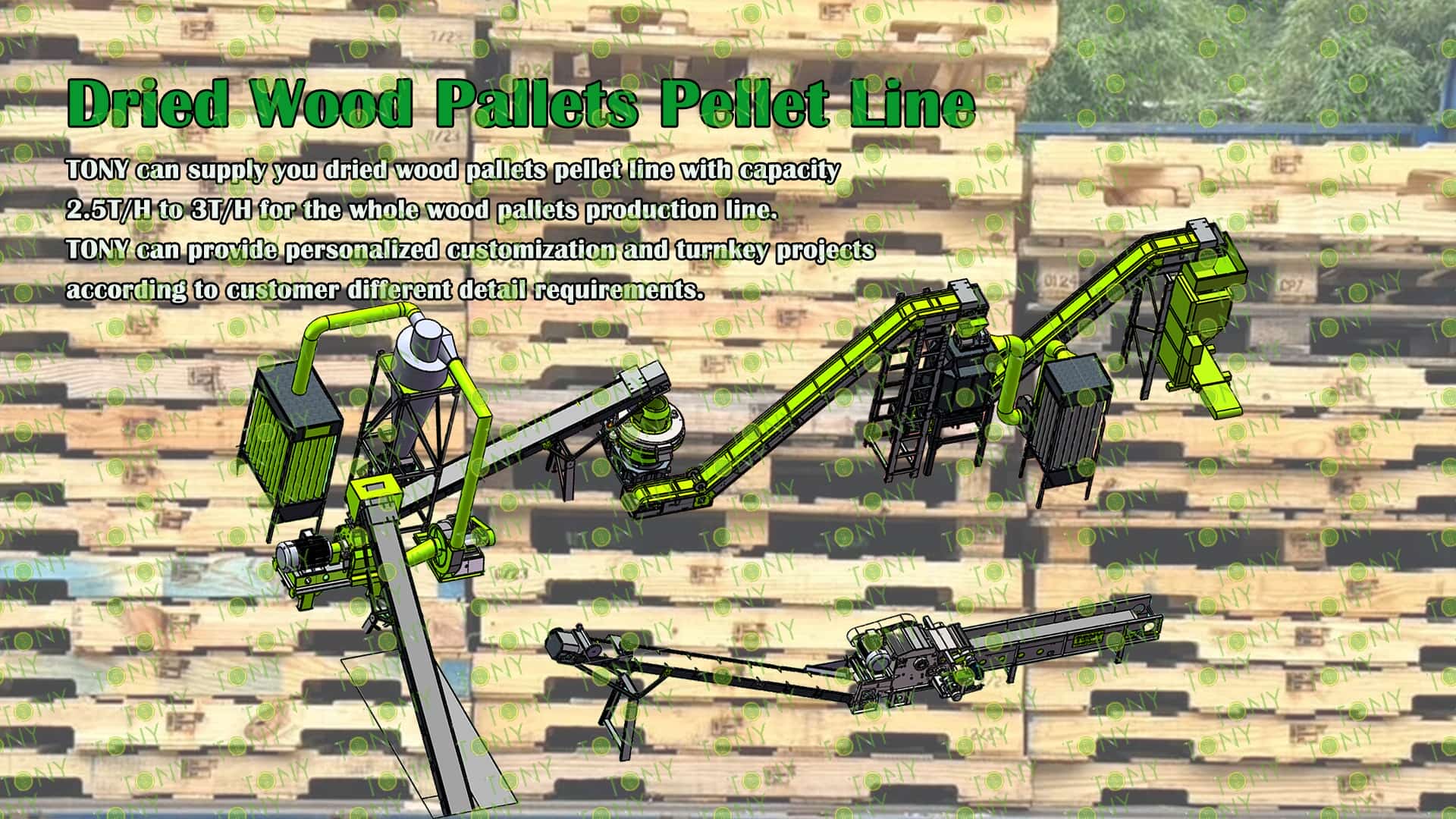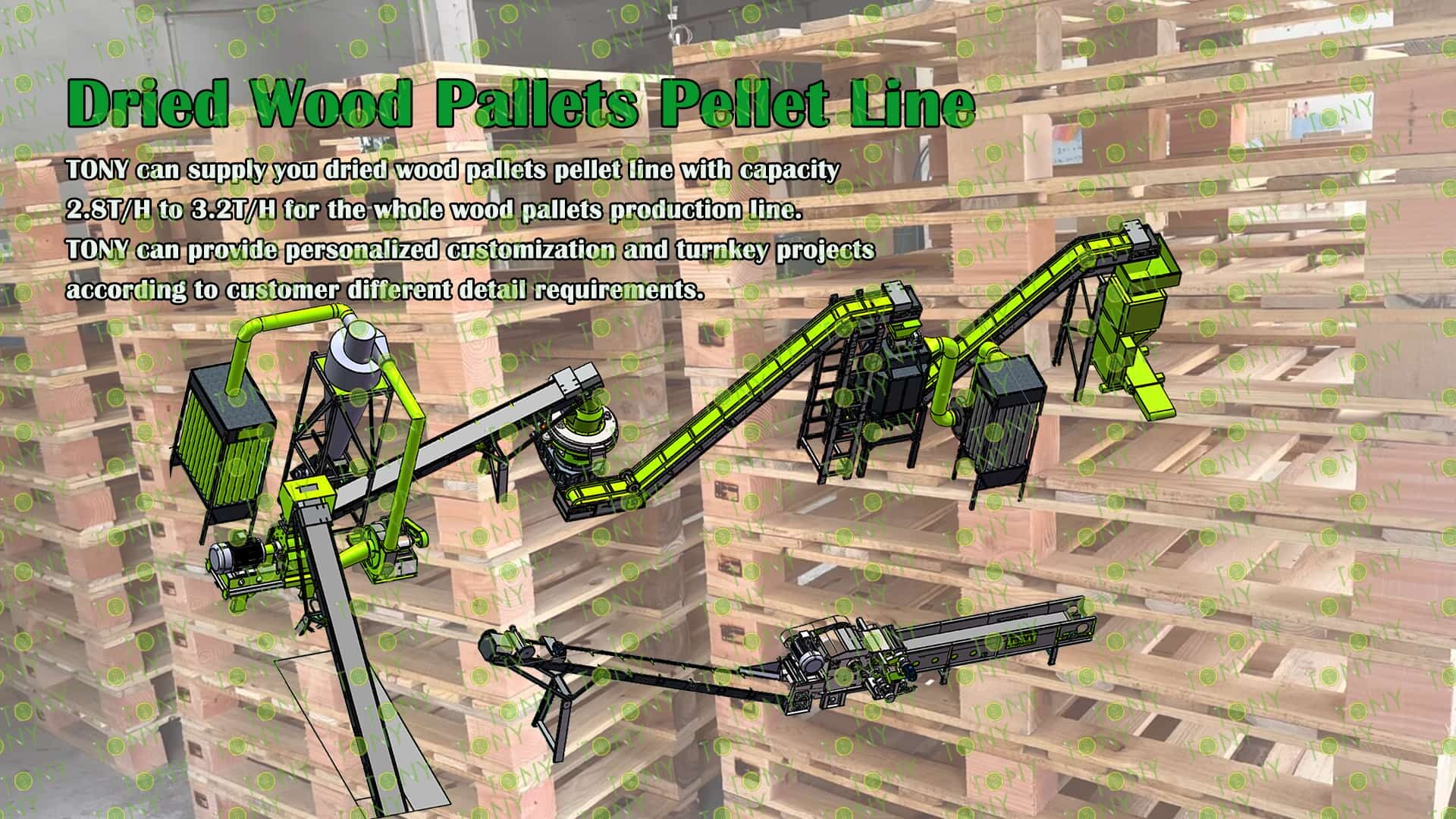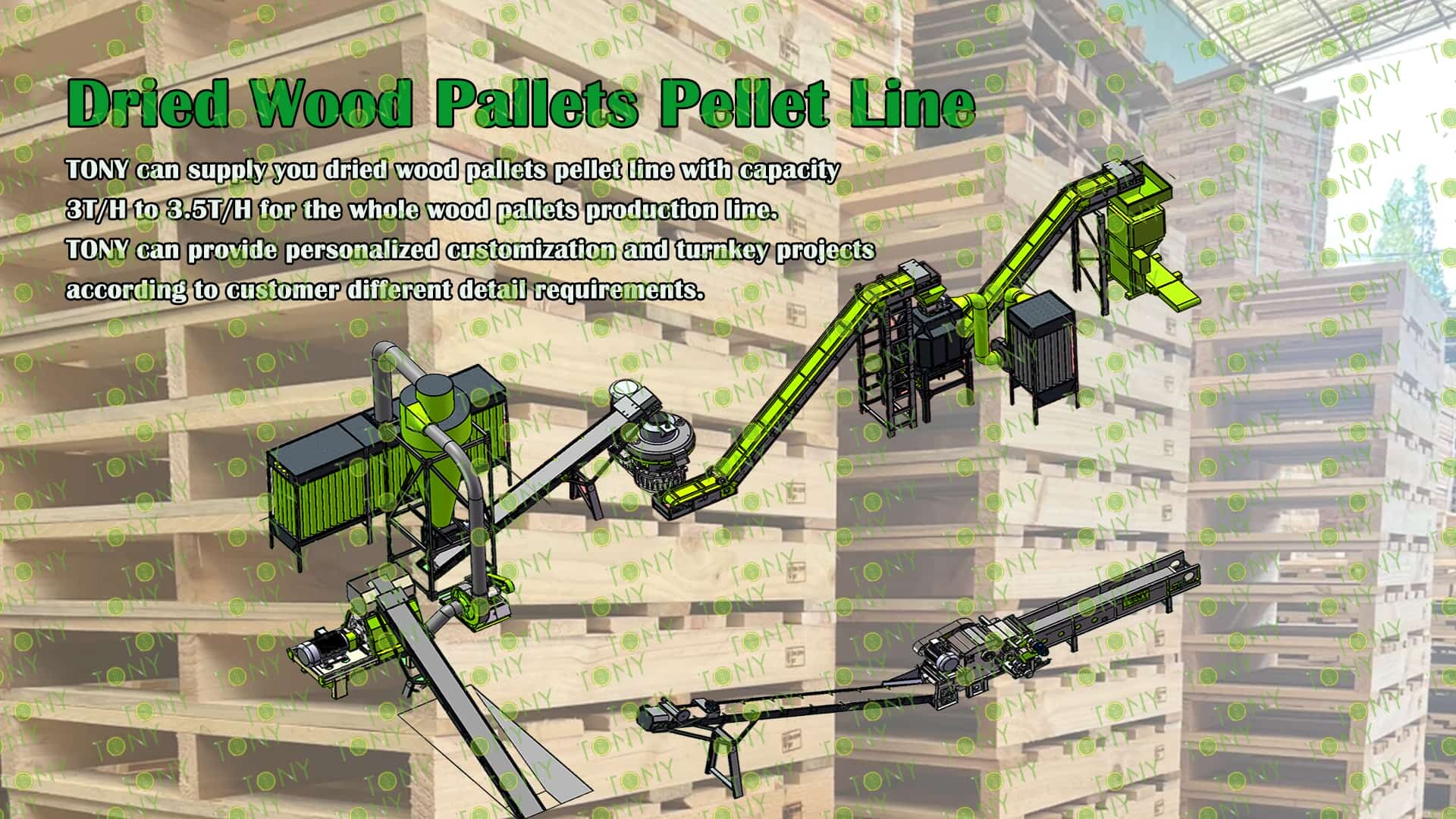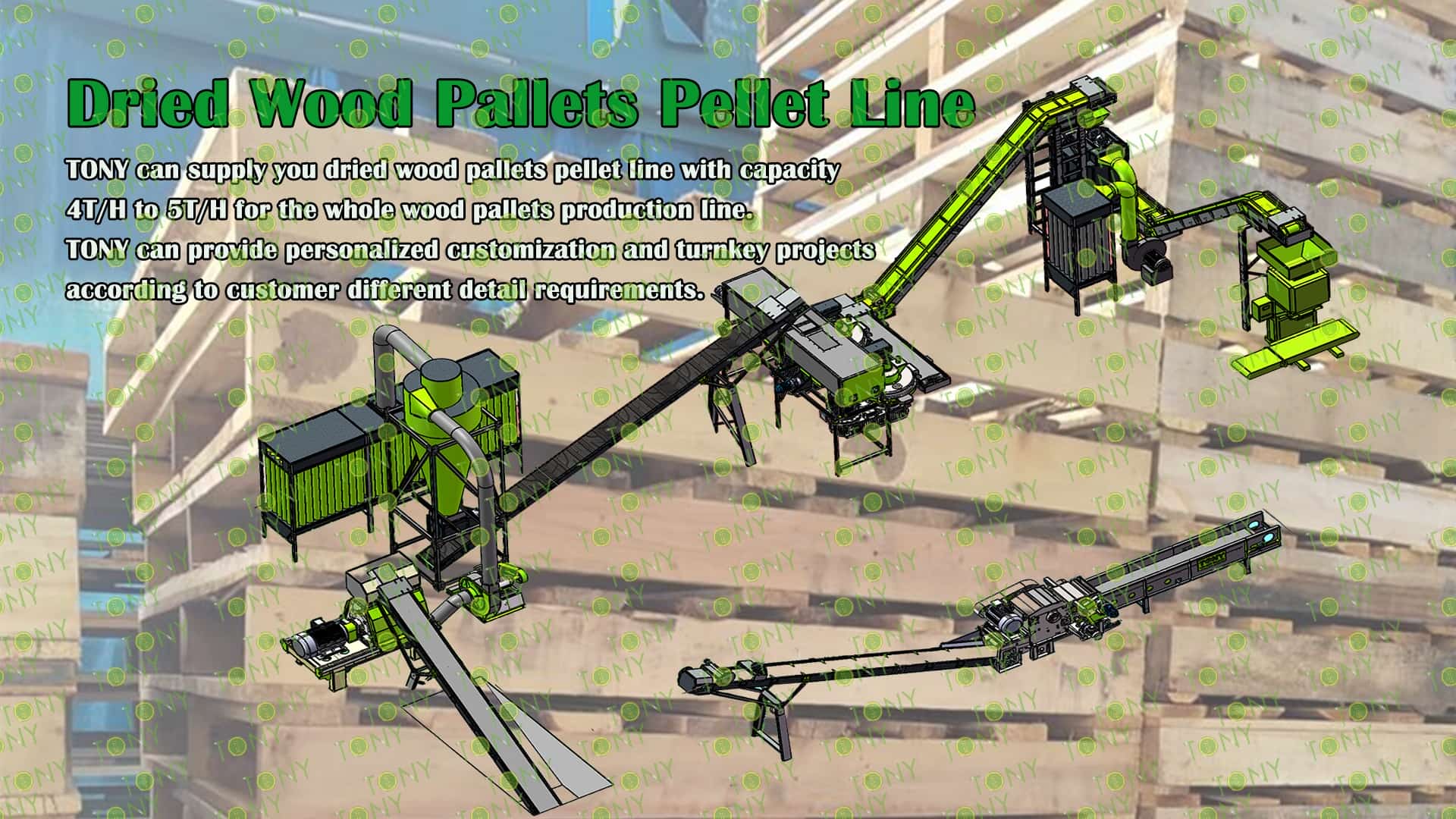






















Project Brief Introduction:
1.Product:Dried Wood Pallets Pellet Line
2.Capacity: 12.5-15T/Hour
3.TONY Brand 12.5-15Ton /HourDried Wood Pallets Pellet Line Project Process
4.Main Machine: Comprehensive Chipper,Hammer Mill, TONY Pellet Machine TYJ760-Ⅲ-160KW,Pellets Cooler,Packing Machine And Belt Conveyors
5.Total Power: About 1700KW
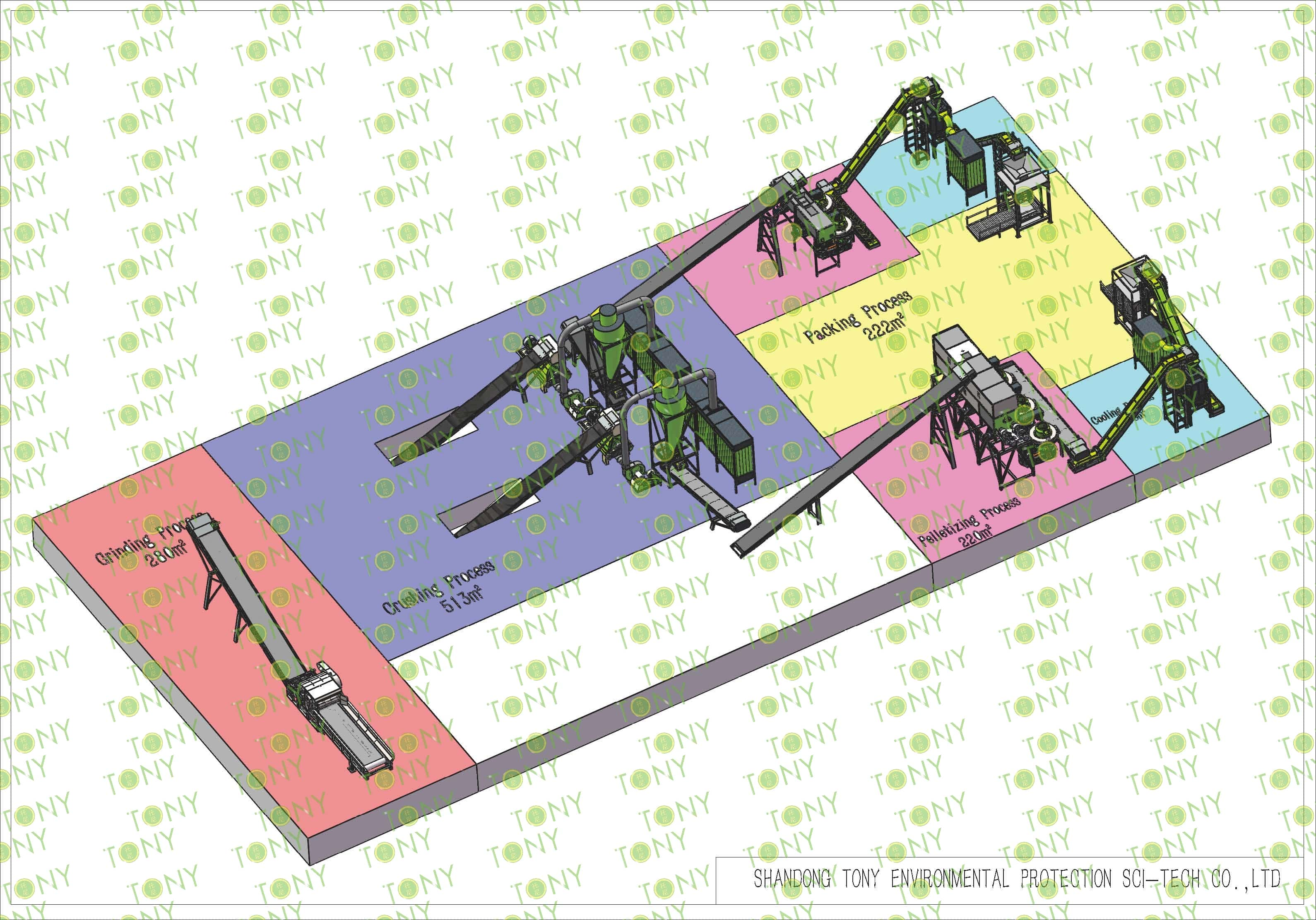
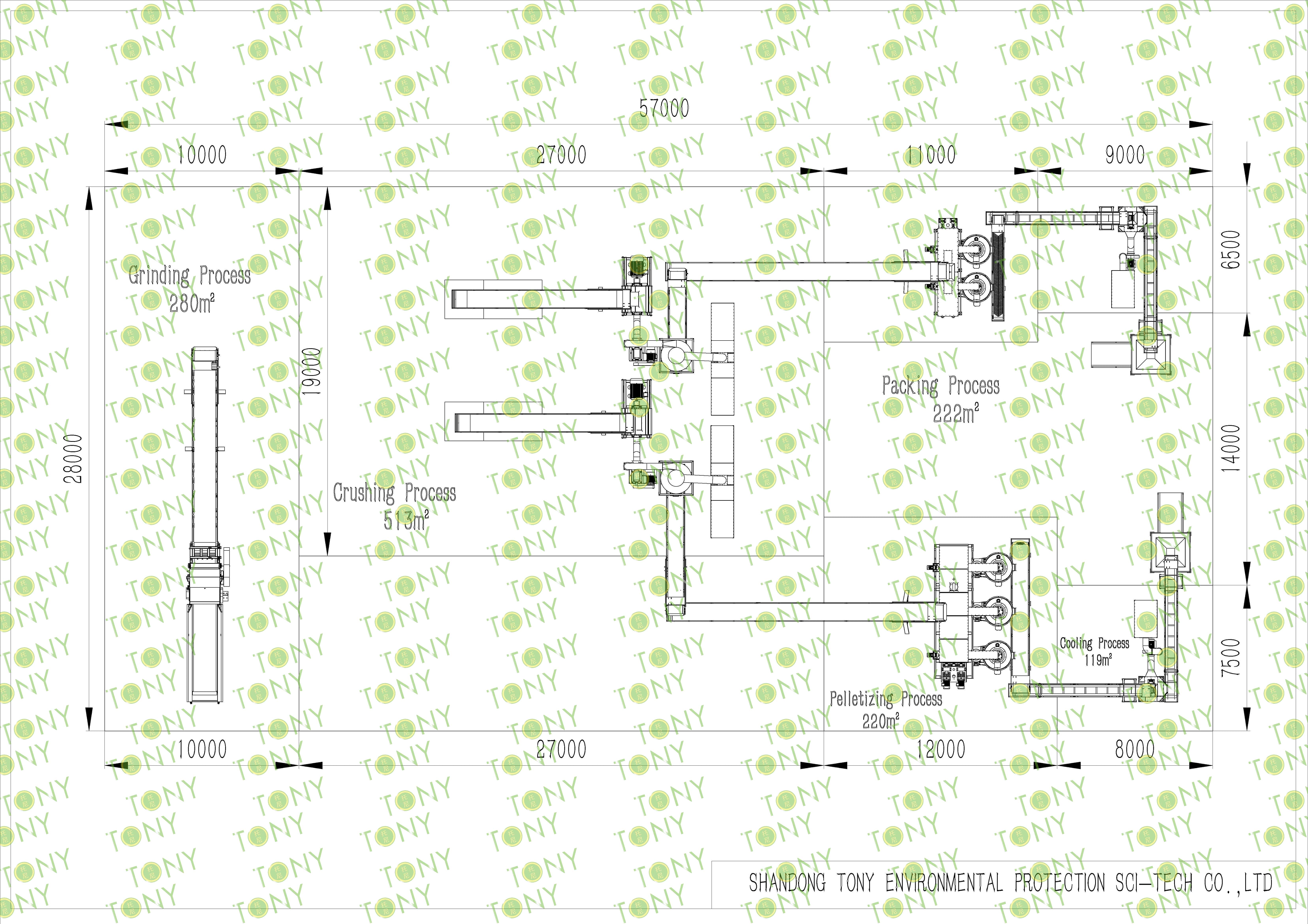
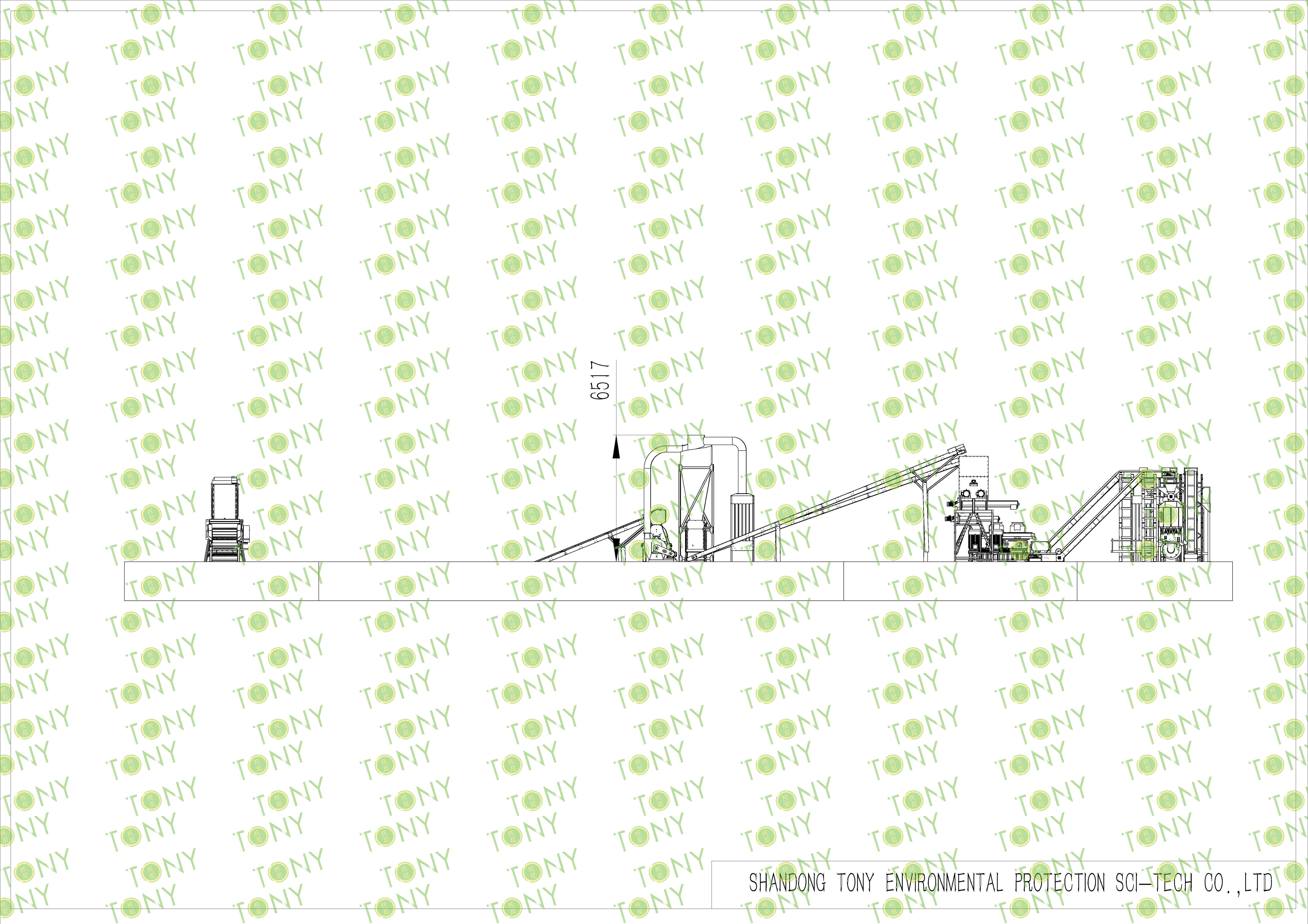
6.Need Area: About 1596㎡ L: 57 M W: 28 M H: 6.517 M
Project Layout For Customer:
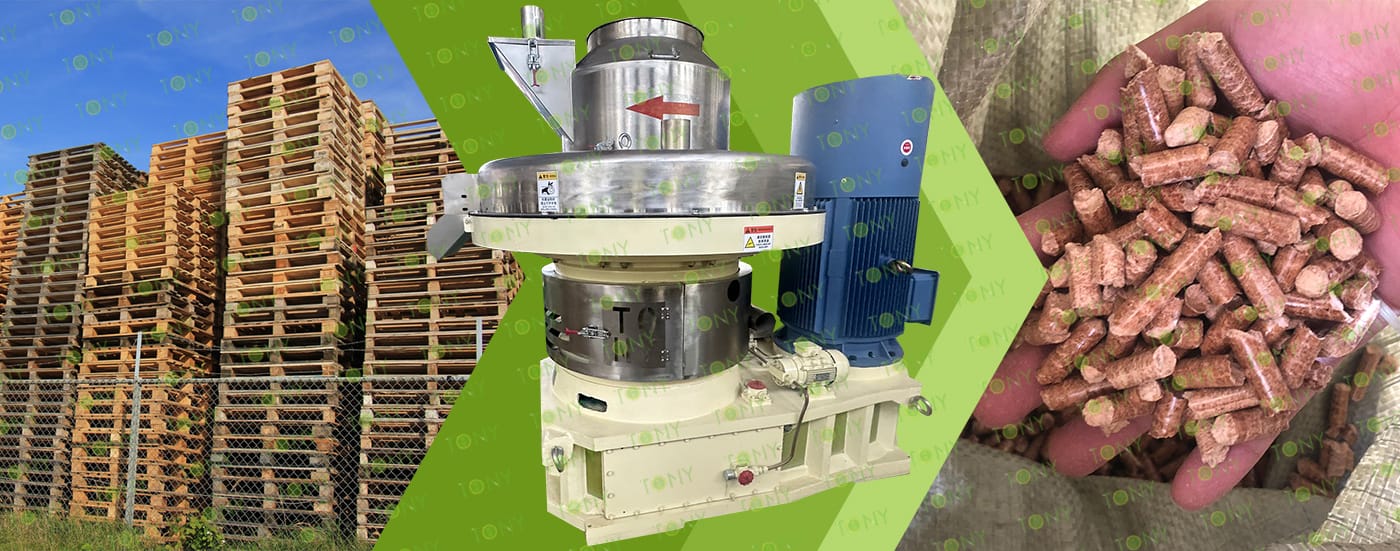
1.The working principle of dried wood pallets biomass pellet processing equipment
(1)Crushing equipment:
This addresses the issue of raw material suitability. Dry pallets (mostly solid or compressed wood) are large and may contain metallic impurities (such as nails and screws), requiring pre-treatment equipment to pave the way for subsequent processes.
(2)Fine crushing equipment:
This converts the raw material into a pelletizable fine powder/wood chips. The dry pallet wood must be crushed into uniform, fine wood chips (typically 2-5mm in size) to meet the pelletizing equipment's feed requirements. The core process is to achieve material refinement through shearing, impact, and grinding.
(3)Pelletizing equipment:
This is the core process, compressing fine wood chips into high-density pellets. The pelletizing equipment is the core of the entire production line. Its principle is to compress loose, fine sawdust into high-density pellets with a circular cross-section (6-12mm in diameter, 8mm is common) and a length of 3-10mm using a combination of mechanical extrusion and lignin softening. The key lies in the ring die pelletizer.
(4)Cooling Equipment:
This equipment reduces pellet temperature to prevent mold and loosening. Pellets fresh from the ring die are at temperatures of 80-90°C and contain approximately 10%-12% moisture. Direct storage can lead to cracking due to thermal expansion and contraction, and mold growth due to high temperature and humidity. Therefore, cooling equipment is required to cool pellets to room temperature (±5°C) and stabilize the moisture content.
2.Characteristics of dried wood pallets biomass pellet processing equipment
(1)Flexibility in raw material processing
The wood pellet machine is suitable for processing various wooden pallets, density boards, artificial boards and other different products.
(2)Low energy consumption and environmental protection
The equipment adopts a spiral feeding device, with an energy utilization rate of 85%; The fully enclosed structure reduces dust and noise pollution.
(3)Durability and easy maintenance
The key components are made of special steel and specially treated, which ensures a long service life of the equipment. The whole machine has a compact structure and a small footprint, and can be put into production after installation and commissioning.
(4)Easy maintenance and cost control
The pellet machine adopts an automatic refueling system to save maintenance costs; the equipment troubleshooting is simple, and no professional personnel are required for daily maintenance.
(5)Resource recycling
The waste of wooden pallets is converted into recycled products such as pellet fuel to achieve efficient recycling of wood resources.
3.Application scenarios of dried wood pallets biomass pellet processing equipment
Wood pallet pellets are processed through crushing, drying, extrusion molding and other processes. Waste wood pallets are processed into pellet fuel or recycled materials to achieve resource recycling.
Equipment applicable industries and user groups
(1)Wood processing and furniture manufacturing
Processing wood pallet scraps and sawdust generated during the production process, converting them into internal energy or pellet fuel for export.
(2)Biomass energy companies
Using wood pallets and other wood waste as raw materials, large-scale production of pellet fuel is carried out to supply power plants or industrial boilers.
(3)Environmental recycling companies
The equipment realizes the resource processing of waste wood pallets, meets the needs of sustainable development, and reduces the environmental pressure caused by landfill or incineration

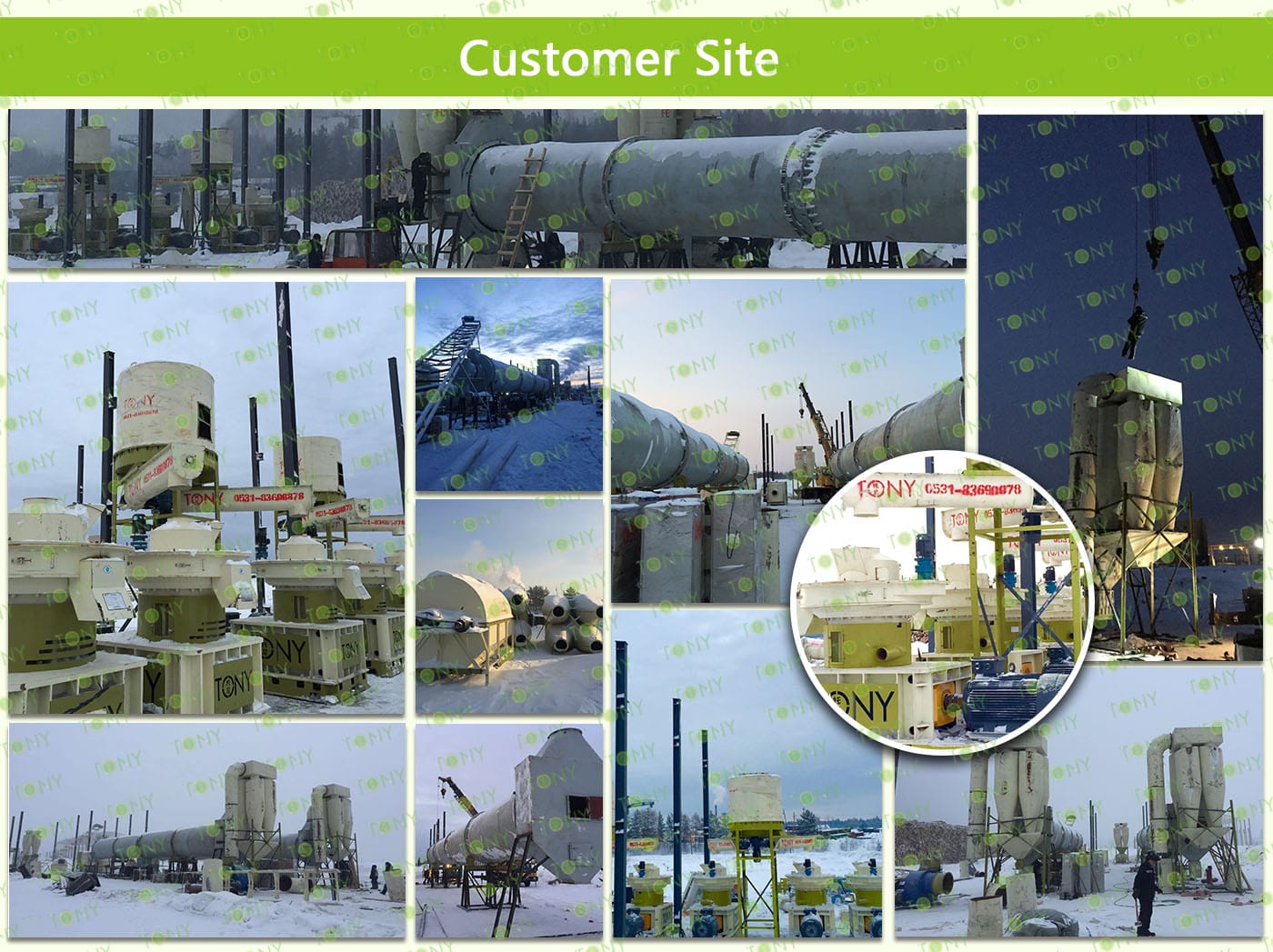
TONY Brand 12.5-15Ton/Hour Dried Wood Pallets Pellet Manufacturing Plant can take dried wood pallets, various types of wood - related biomass materials, such as branches, small - diameter logs, and wood shavings. After pretreatment and processing, dried wood pallets is solidified into high - density wood pellet fuel.The content of pollutants such as sulfur dioxide and nitrogen oxides produced by biomass pellets during combustion is extremely low, and the dust emission is also low, which can effectively reduce air pollution. Moreover, the raw material sources of biomass pellets are very wide, and the combustion efficiency is high. Compared with traditional fossil energy, it reduces the production and use costs and has higher economic efficiency. It has received a lot of attention and promotion.
1. Capacity: 12.5-15Ton/Hour
2. Raw materials: Dried wood pallets
3. Moisture: Dry type, about 10-15%.
4. Application: All kinds of waste wood pallets or more waste wood raw materials
Suitable customers: Logistics and warehousing companies, various manufacturing plants, ports and airports, construction sites, large supermarkets and shopping malls, and other places where waste wood pallets have advantages
5. Finished Pellets Markets: Large power plants ,domestic heating, industrial heating, combustion heat, heating systems, boiler rooms, school canteens, foundry heat sources.

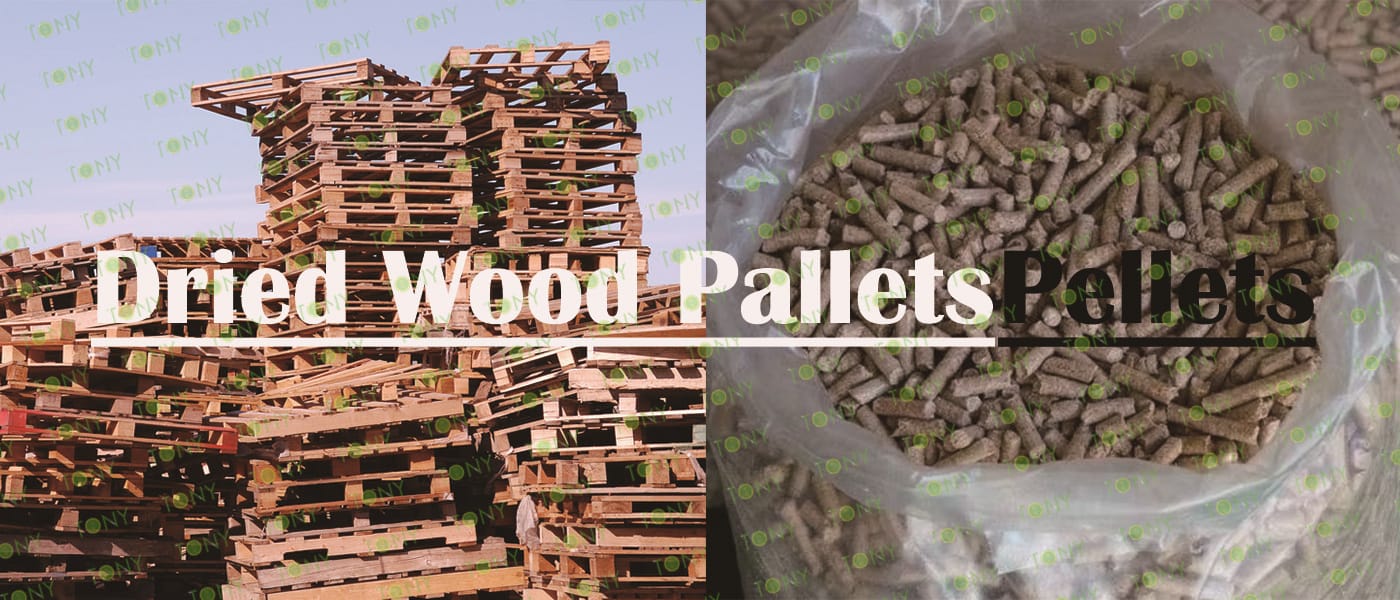
1. Project Name: Dried Wood Pallets Pellet Production Line
2. Raw Material: All kinds of dried wood pallets
3. Moisture Content of Raw Material: 10-15%
4. Capacity: 12.5-15 tons per hour
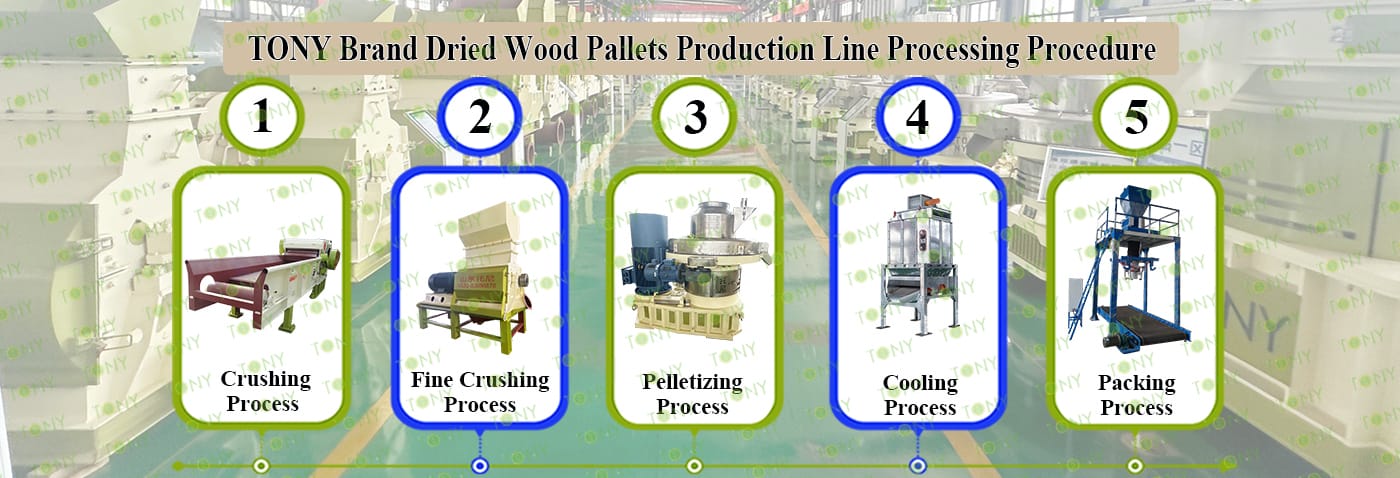
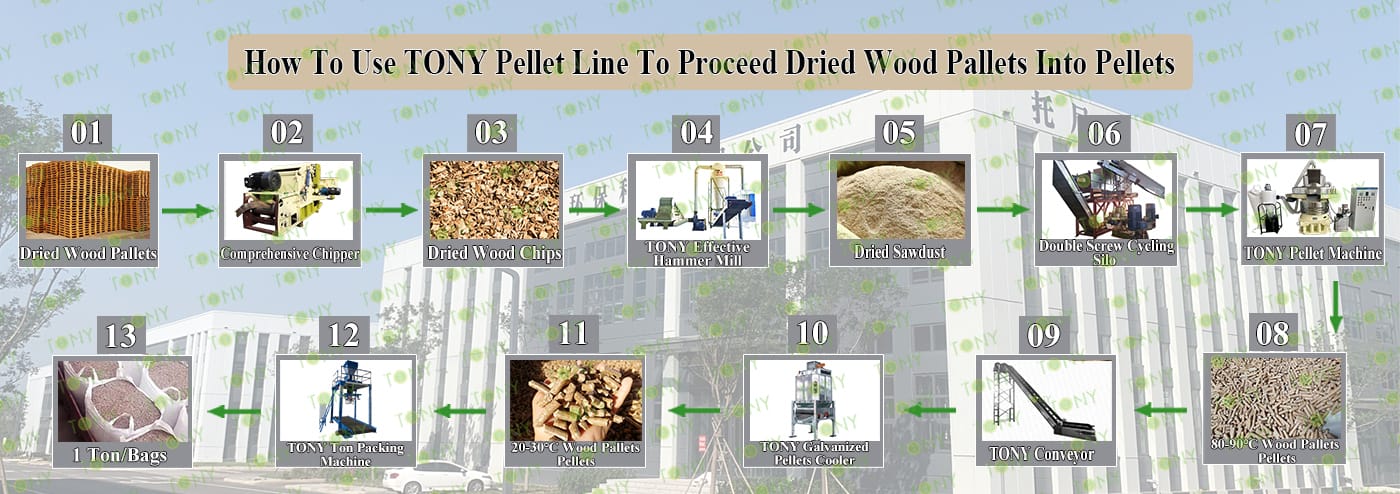
5. Process: Crushing Process - Fine Crushing Process - Pelletizing Process - Cooling Process - Packing Process
6. Main Equipment: Comprehensive Chipper TPC1400-600-200KW, Effective Hammer Mill-TFD85*220-220KW, TONY Pellet Machine TYJ760-Ⅲ-160KW, Pellet Cooler, Ton Packing Machine and Belt Conveyors

|
How to use the TONY pellet production line to make pellets from dried wood pallets? The process mainly includes the following steps and equipment: 1. Use TONY comprehensive chipper to grind dried wood pallets with width 1.4m into wood chips 25 - 55 mm in length. 2. Use TONY effective hammer mill to crush the 25-55 mm wood chips into 8-14 mm sawdust. 3. Use TONY vertical ring die pellet machine to produce pellets with a diameter of 6-8 mm. 4. Use TONY galvanized pellets cooler to cool the pellets from 80-90°C to 20-30°C. 5. Use TONY ton packing machine to pack the pellets into bags, each weighing 1 ton. For more detailed information and quotations, you can contact TONY. TONY can provide all the above - mentioned products at highly competitive prices and with excellent quality. |
|
|||||||||||||||||||||||||||||||||||||||||||||

| Next, TONY Will Introduce To You All The Necessary Machinery That Will Be Used For The Whole Pellet Production Line. Some Machines Can Be Custom - Made By Customers According To Different Customers' Detailed Demands. Contact TONY For More Details, Including Quotation And Layout. | ||
 |
 |
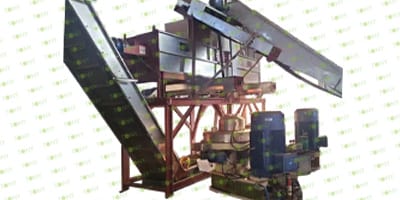 |
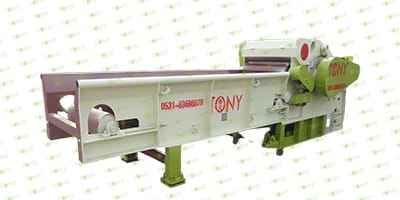
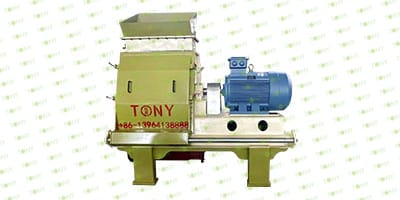
| Comprehensive Chipper | Effective Hammer Mill | Double Screw Cycling Silo |
| 1.To Grind Wood pallets Width ≤1.4m Into25-55mm Wood Chips. 2.Model: TPC1400-600-200KW With 24 Hammer Heads*1set 3.Capacity: 14-20Ton/Hour. |
1.To Crush 25-55mm Wood Chips Into 8-14mm Sawdust. 2.Model: TFD85*220-220KW*2sets 3.Capacity: 7-8Ton/Hour/Set |
1.To Stroage Sawdust Before Pellet Machine; Adjust The Speed Of Sawdust Entering The Pellet Machine 2.Model: TLC-15*1set 3.Capacity:12.5-15Ton/Hour/Set |
 |
 |
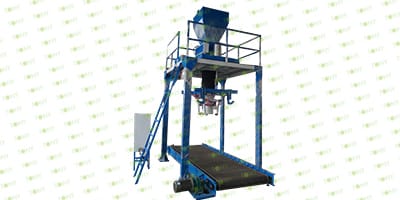 |
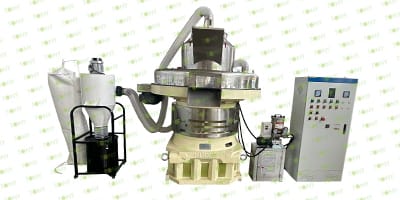
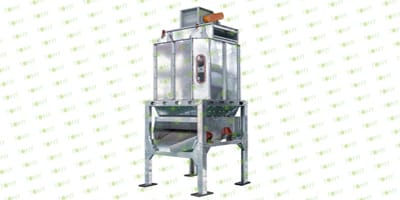
| Vertical Ring Die Sawdust Pellet Machine | Galvanized Pellets Cooler | Ton Packing Machine |
| 1.To Press Dry Sawdust Into 6-8mm Biomass Pellets 2.Model: TYJ760-III-160KW*5sets 3.Capacity:2.5-3Ton/Hour/Set 4.New 304SS Type |
1.To Cool Pellets From 80-90℃ Into 20-30℃ 2.Model: TCN-10*1set 3.Capacity:12.5-15Ton/Hour |
1.To Pack Pellets Into 1Ton/Bags. 2.Model: TBD*1set 3.Capacity: 12.5-15Ton/Hour |

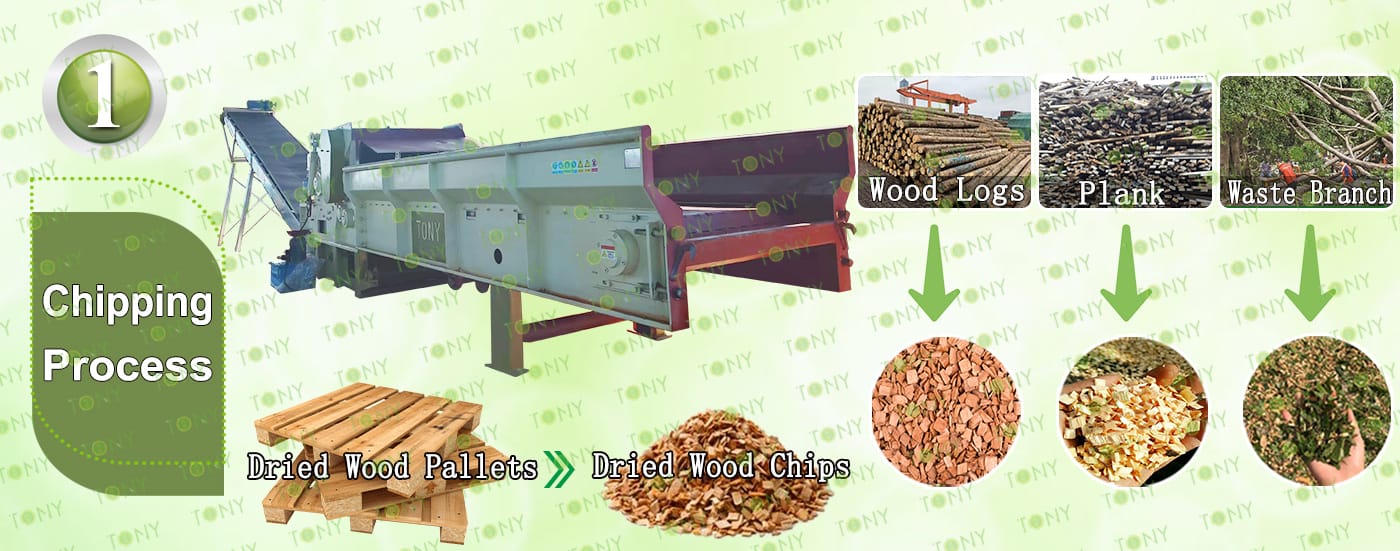
1.Wood Pallets Chipping Process:
A. This process is mainly used to grind wooden pallets with nails less than 1.4 m in width into wood chips with a size of 25-55 mm. The final size of the wood chips can be adjusted by replacing the screen with different sizes and replacing or adjusting the hammer heads with different specifications.
B.TONY Brand comprehensive chipper TPC1400-600-200KW model with 24 hammer heads*1set
C.Capacity:14-20Ton/Hour.
Main Parts:
(1)TONY's Comprehensive Chipper.
(2)Feed And Discharge Belt Frequency Control To Prevent Card Material
(3)Hydraulic System Control Can Be Used For Thicker Materials
(4)Electronic Control System Allows The Equipment To Be Used Normally
Contact Tony For More Details With Quotation
2.Wood Chips Fine Crushing Process:
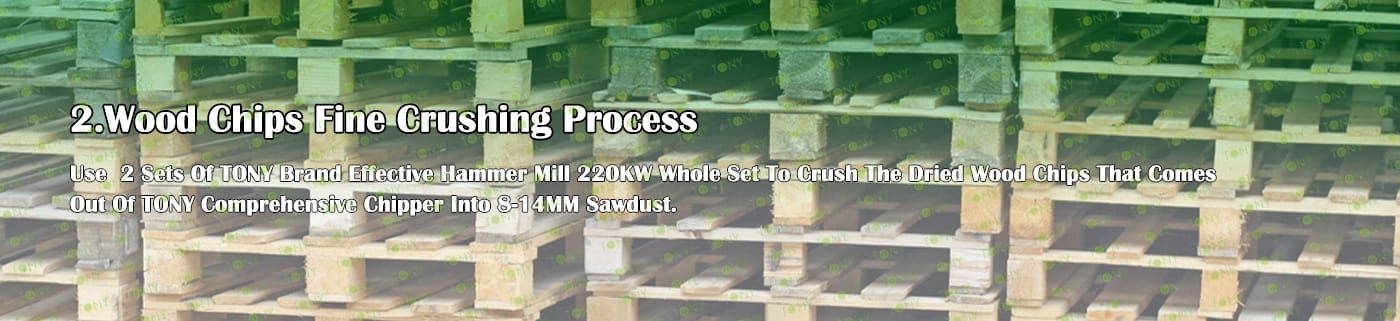
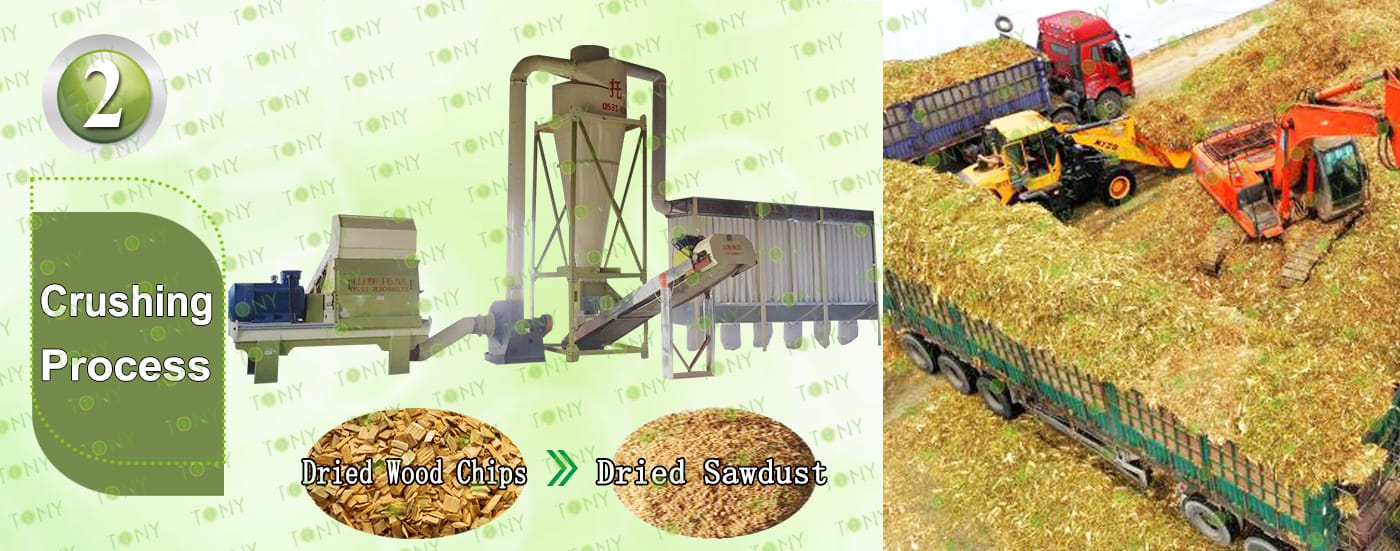
A.This process is mainly used to crush 25-55mm wood chips into 8-14mm sawdust.
B.Capacity:12.5-15Ton/Hour.
C.TONY brand effective hammer mill TFD85*220-220KW*2sets
Main Parts:
(1)TONY Effective Hammer Mill.
(2)Galvanized Dust Collector.
(3)Sawdust Transportation Fan Blower.
(4)Cyclone With Airlock.
(5)Electrical Cabinets.

3.Pelletizing Process:
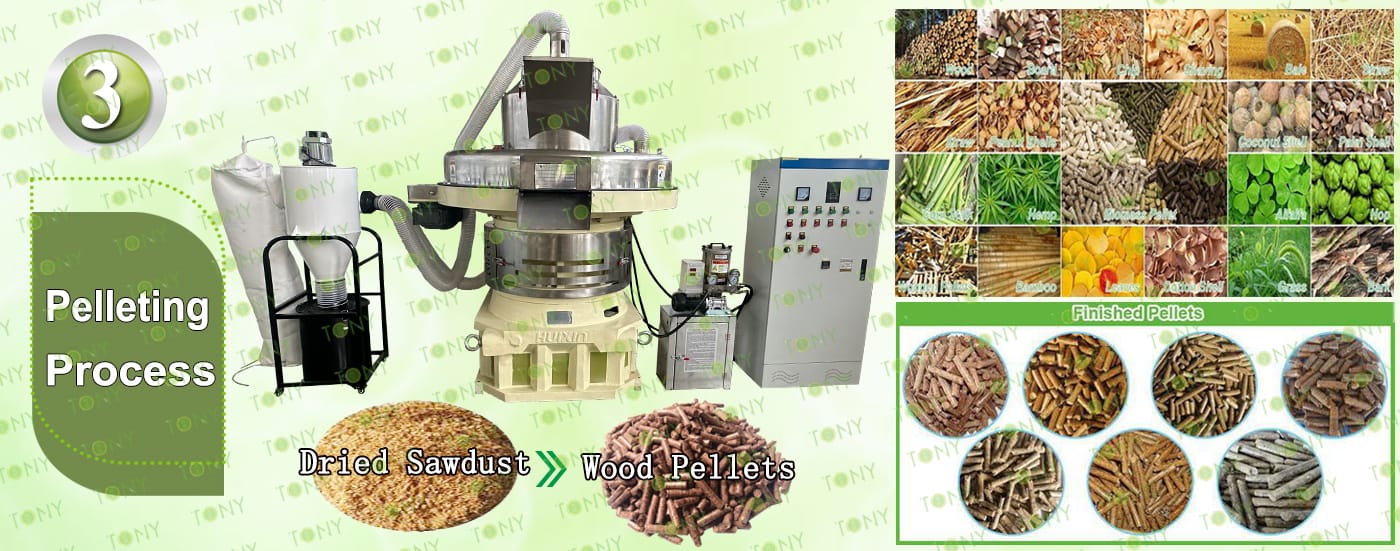
A.This process is mainly used to to product pellets into φ6-8mm.
B.Capacity:12.5-15Ton/Hour.
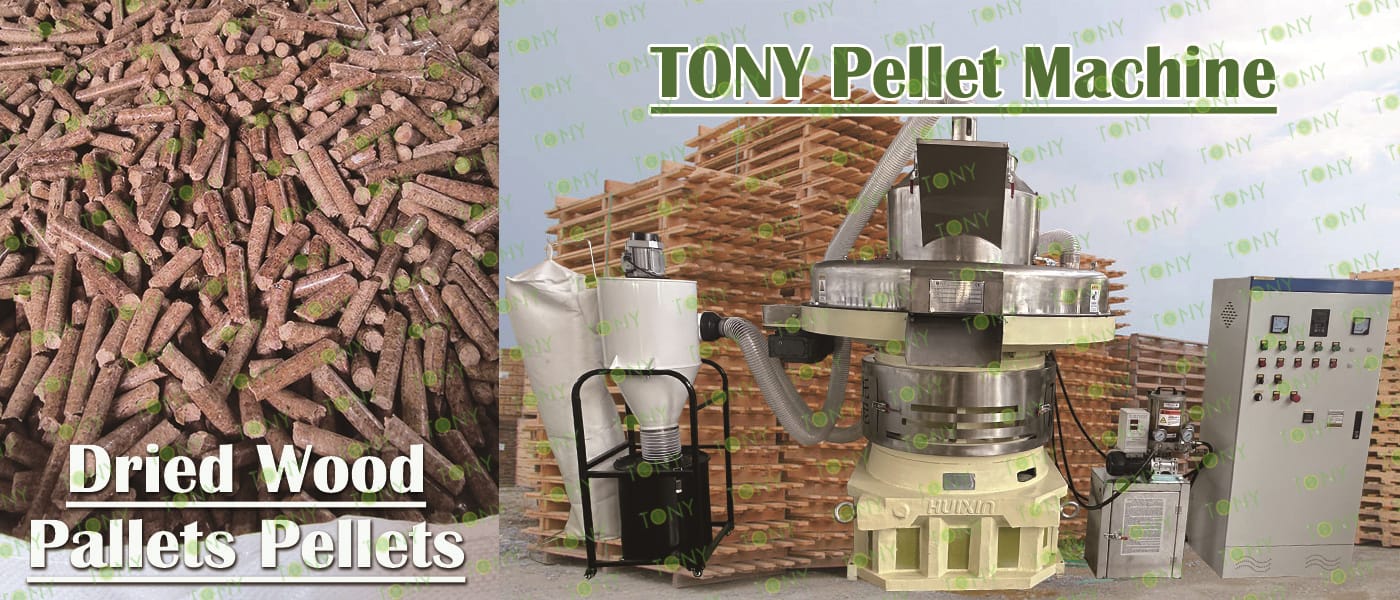
C.TONY brand vertical ring die pellet machine TYJ760-Ⅲ-160KW*5sets
D.Double screw cycling silo is added above the pellet machine, which has the advantages of saving space, saving labor, intelligently controlling the feeding speed, not easy to block the material, and improving production efficiency.
Main Parts:
(1)TONY's New Vertical Ring Die Pellet Machine.
(2)Cyclone And Bags Dust Collectors.
(3)Automatic Lubrication System.
(4)Electrical Cabinets.
You can chose TONY new type SS304 pellet machine

4.Cooling Process:
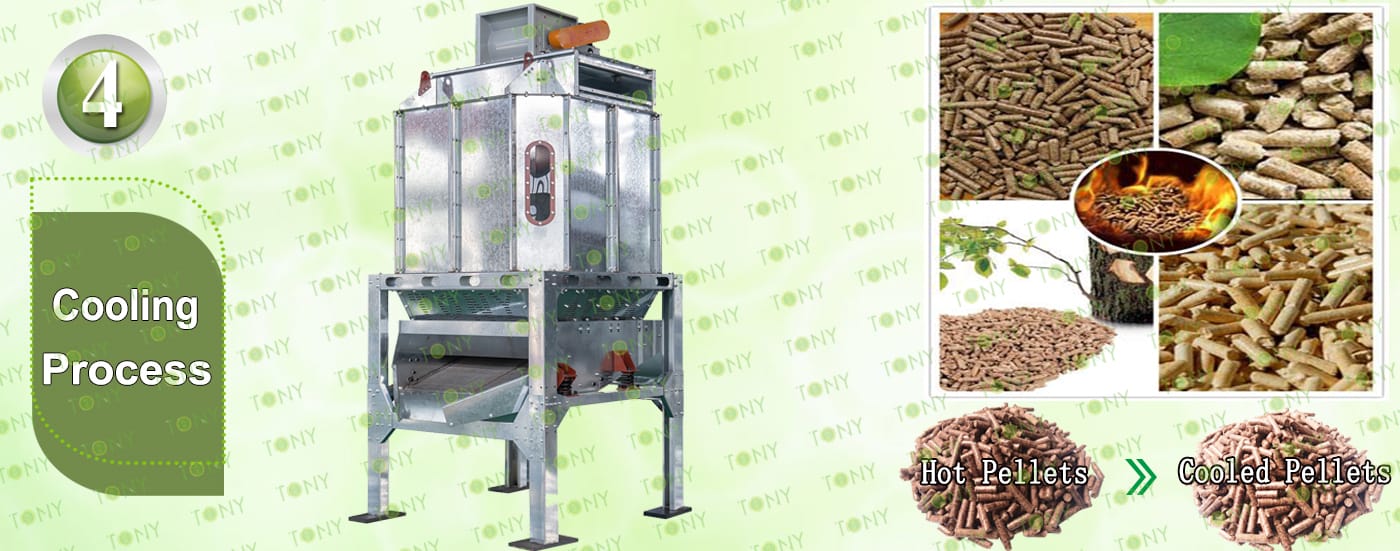
A.This process is mainly used to cool pellets from 80-90℃ to 20-30℃
B.Capacity:12.5-15Ton/Hour.
C.TONY brand galvanized cooler separator*1set
Main Parts:
(1)TONY's Galvanized Cooler Separator With Vibrating Screen.
(2)Cyclone And Bags Dust Collectors.
(3)Fan Blower.
(4)Connect Pipes.

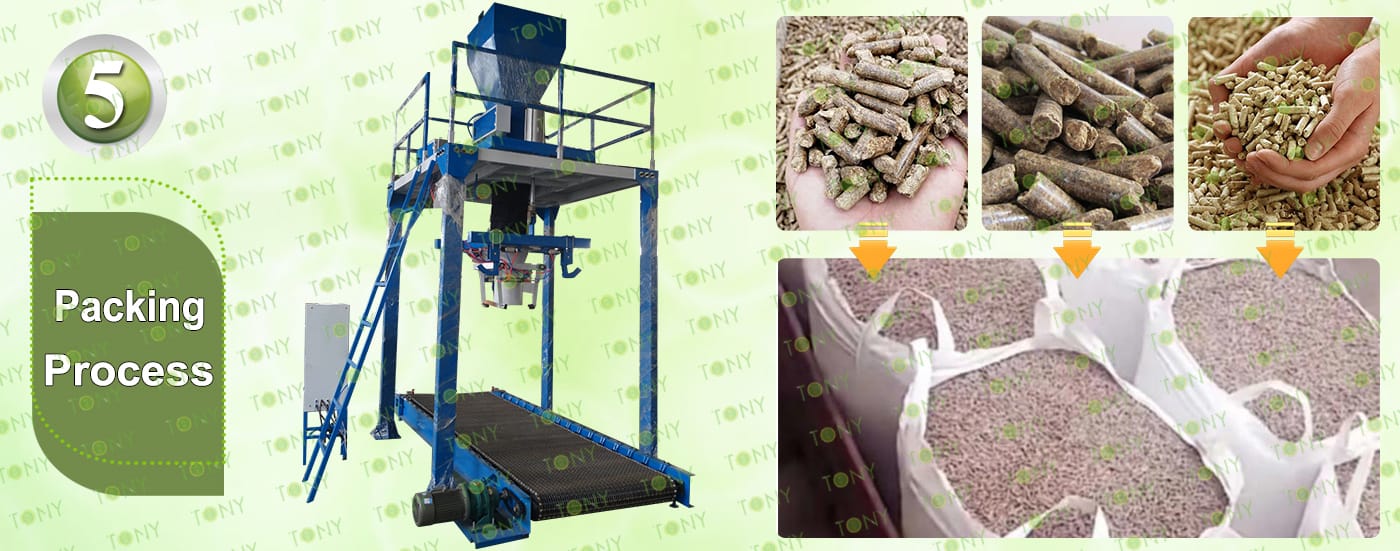
5.Packing Process:
A.This process is mainly used to pack pellets into 1ton/bags.
B.1 set of TONY ton packing machine
Main Parts:
(1)TONY Ton Packing Machine
(2)Electronic Platform Scale Metering System
(3)Automatic Tare, Zero, and Drop Correction Functions
(4)Feeding System Features Fast, Medium, and Slow Feeding Speeds to Ensure Measuring Accuracy


How to build a stable and scalable market system for wood pallet pellets?
The market is the foundation for a sustainable project. Long-term profitability must be achieved through "customer lock-in + market expansion + brand building":
1.Target "strong-demand customers" and sign long-term supply agreements.
Prioritize your partnership with industrial boiler users (such as food factories, chemical plants, and textile mills), heating companies (rural centralized heating, residential heating), and livestock farms (for greenhouse heating and livestock and poultry insulation). These customers have stable demand (usually exceeding 1,000 tons per year). One- to three-year supply contracts can be signed with a price adjustment mechanism (e.g., in line with coal/natural gas price fluctuations) to ensure consistent sales.
2.Expand high-value-added applications to break through "low-end competition"
Develop "specialty pellets": Targeted at different customer needs, we produce high-calorific value pellets (e.g., pure dry tray pellets with a calorific value of approximately 4200-4500 kcal/kg, suitable for high-load industrial boilers), low-ash pellets (for small household fireplaces, with an ash content ≤3%), or add combustion aids (e.g., biomass tar inhibitors) to improve combustion efficiency. These products offer price premiums of over 20%.
3.Connect with "green energy projects":
These include biomass cogeneration and biomass gasification power generation projects. These clients have high pellet quality requirements (e.g., ash content ≤5%, sulfur content ≤0.05%), but also have large order volumes and stable payment cycles. These clients can be long-term strategic partners.
4.Branded operations: Enhance market resilience
Establish a product quality traceability system: Each batch of pellets is labeled with the raw material source, production date, and quality indicators (calorific value, ash content, moisture content) to enhance customer trust (industrial clients, in particular, demand high quality consistency).


1.Stable performance:
strong adaptability and easy operation. The physical properties and combustion performance of pallet pellet fuel are superior to those of traditional biomass fuel (such as loose straw and logs), and it is easier to meet the needs of industrial and civilian scenarios:
(1)High energy density and easy storage and transportation: After compression molding, the volume of pellet fuel is only 1/5~1/3 of the raw material (loose pallet fragments), the density can reach 1.1~1.3t/m³, and the energy density is about 4200~4800kcal/kg (close to medium-quality coal); and the particle shape is regular and not easy to absorb moisture, so it can be stored in ordinary warehouses. There is no scattering or dust during transportation, and the logistics cost is more than 30% lower than that of loose biomass.
(2)Stable combustion and precise temperature control: When pellet fuel burns, the flame is uniform and the heat release is stable. It will not flicker like loose straw. It is suitable for scenarios that require a stable heat source (such as industrial boilers, drying equipment, and home heating stoves). When paired with a dedicated pellet burner, it can achieve automatic feeding and temperature control, and the operation difficulty is lower than that of traditional fuels.
2.Economic advantage: cost control
(1)Low raw material cost: Waste pallets belong to the category of "waste recycling" and the purchase price is much lower than that of raw materials such as logs and corn stalks, which directly reduces the production cost of pellet fuel.
(2)The use cost is lower than fossil energy: From the perspective of terminal use cost, the unit heat cost of pallet pellet fuel is about 1.2 to 1.5 times that of coal, but much lower than natural gas (about 1/2 to 2/3 of natural gas) and liquefied gas (about 1/3 to 1/2 of liquefied gas). For industrial heat use (such as food processing, building material drying), commercial heating and other scenarios, long-term use can significantly reduce energy expenditure.



2025 Tony Machinery - All Rights Reserved. Map