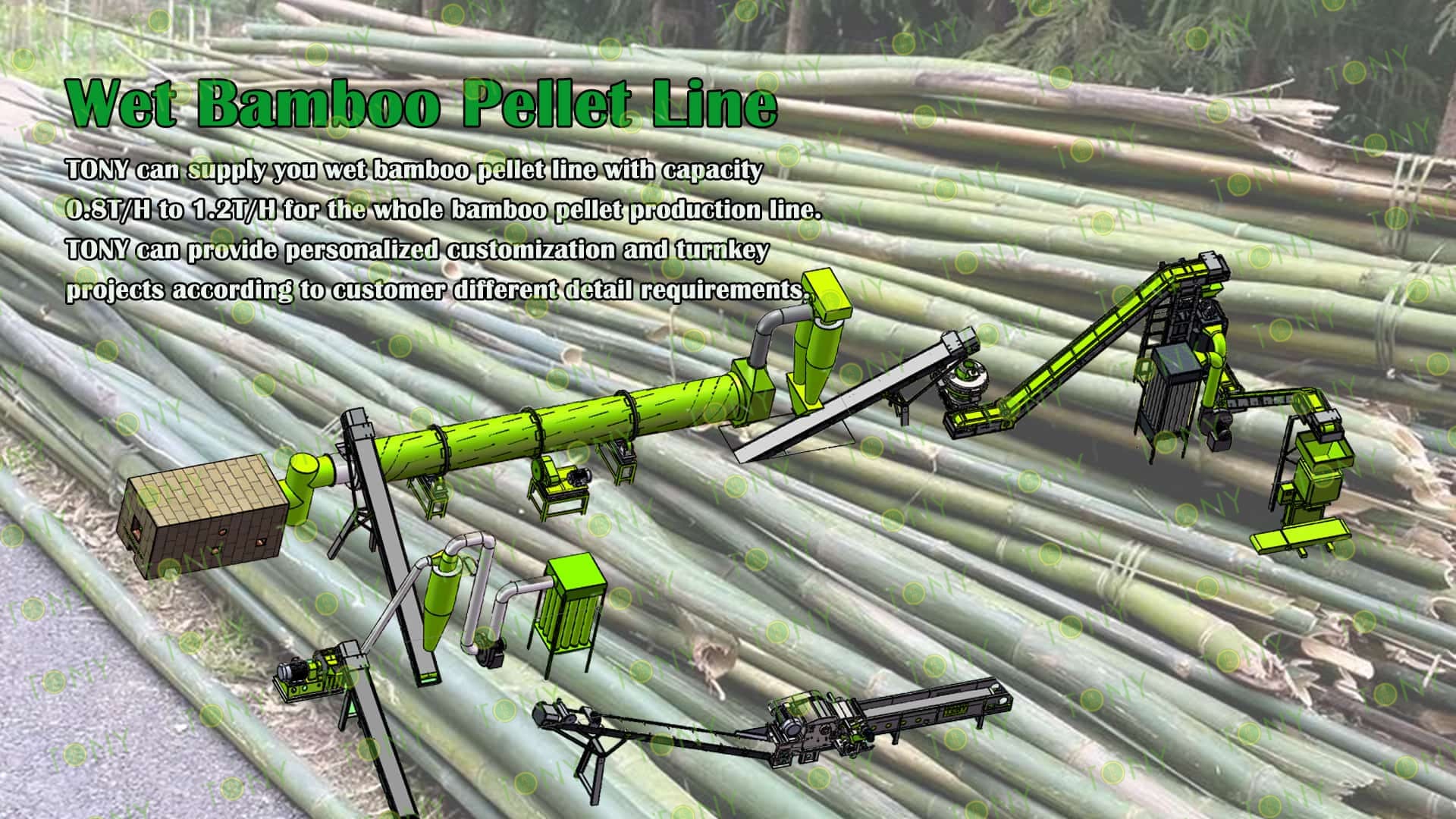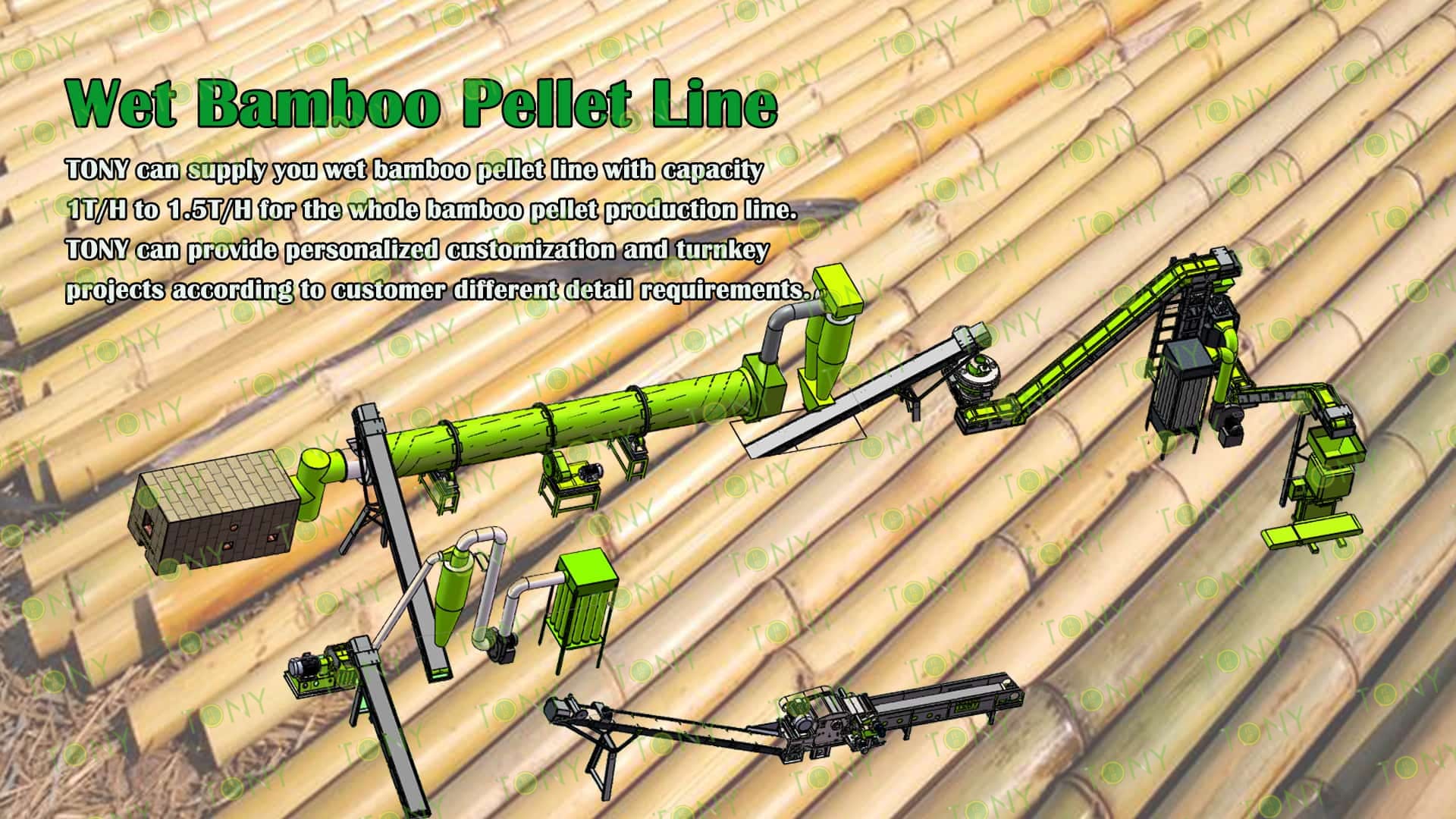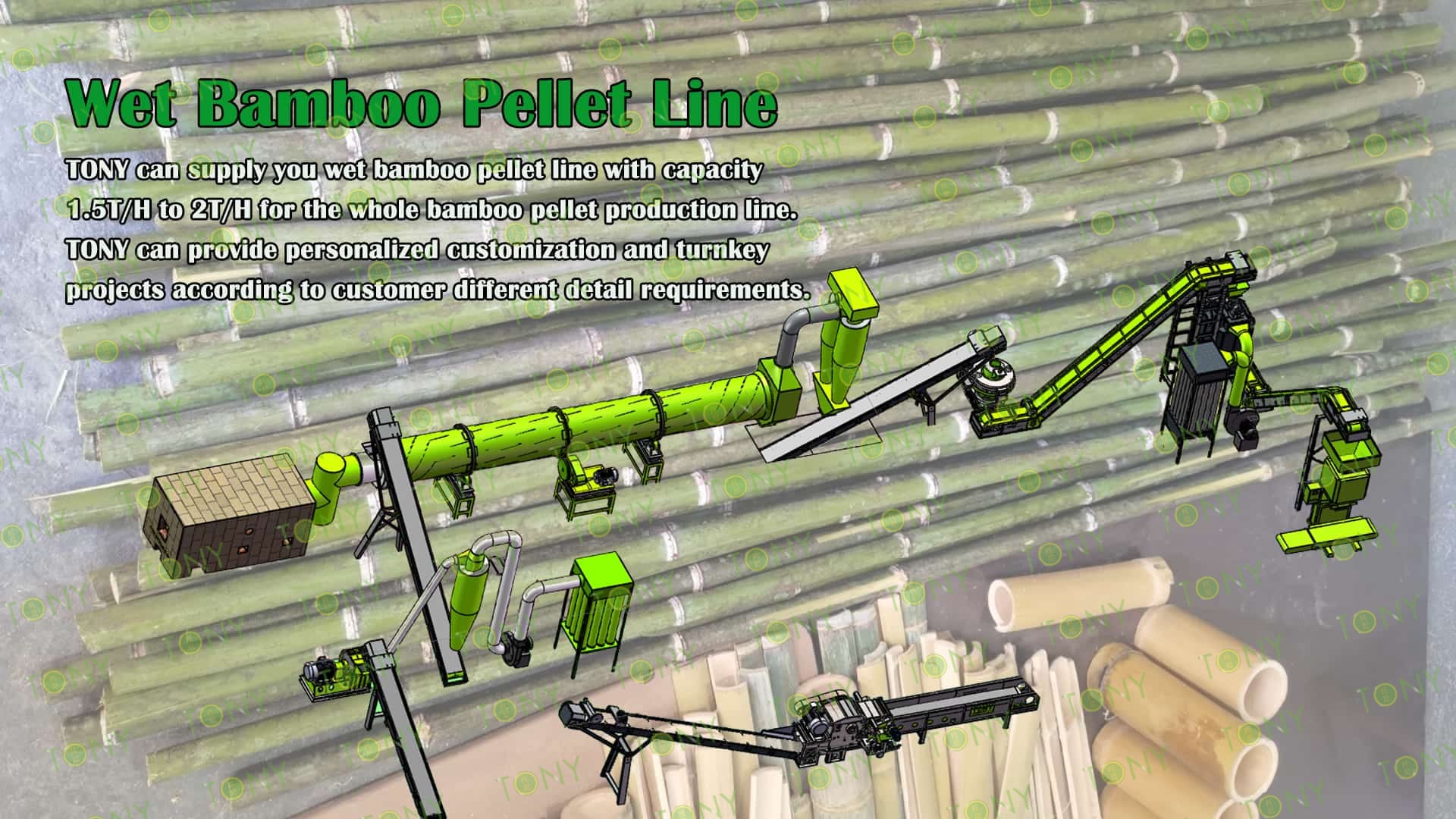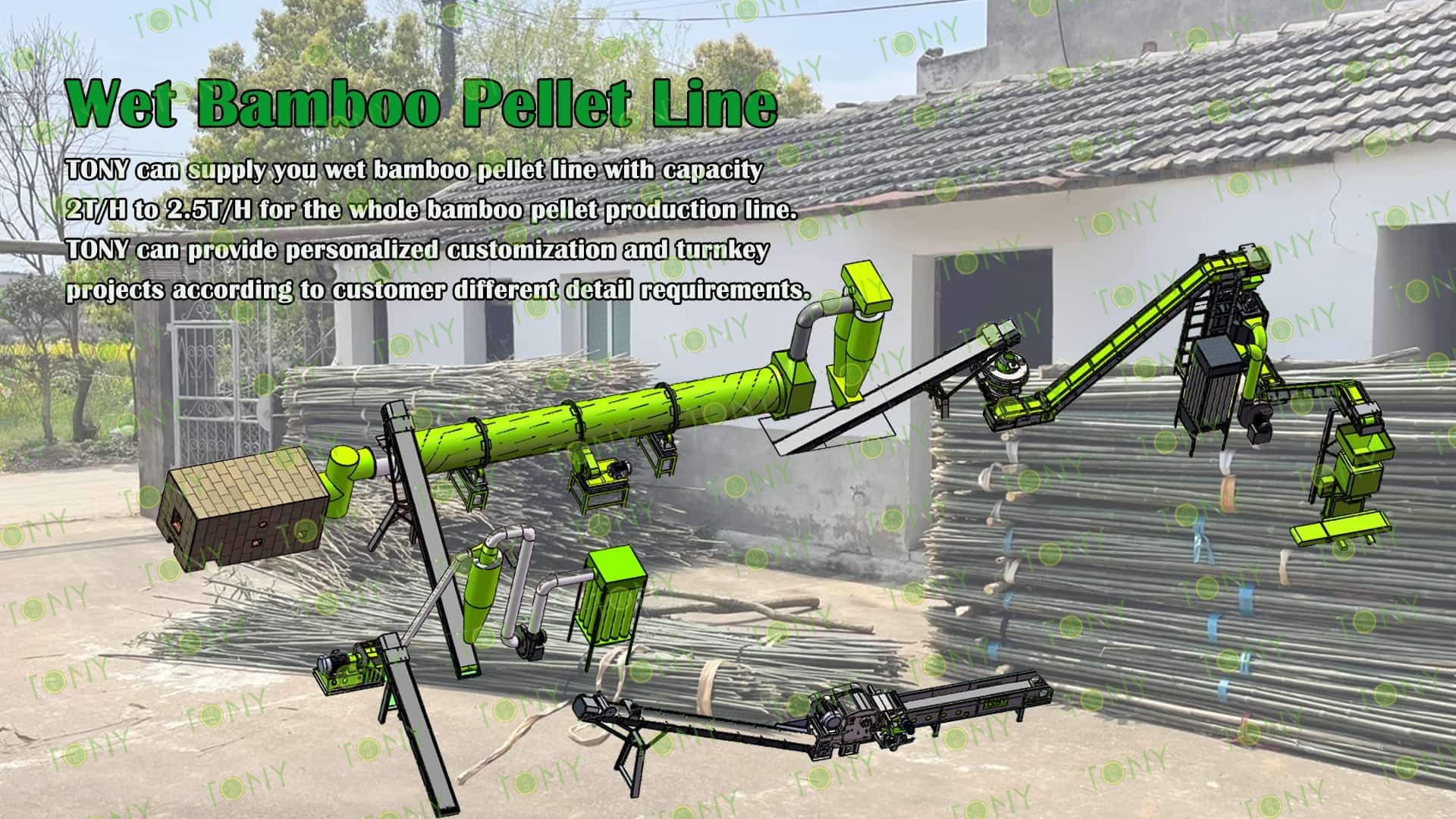




















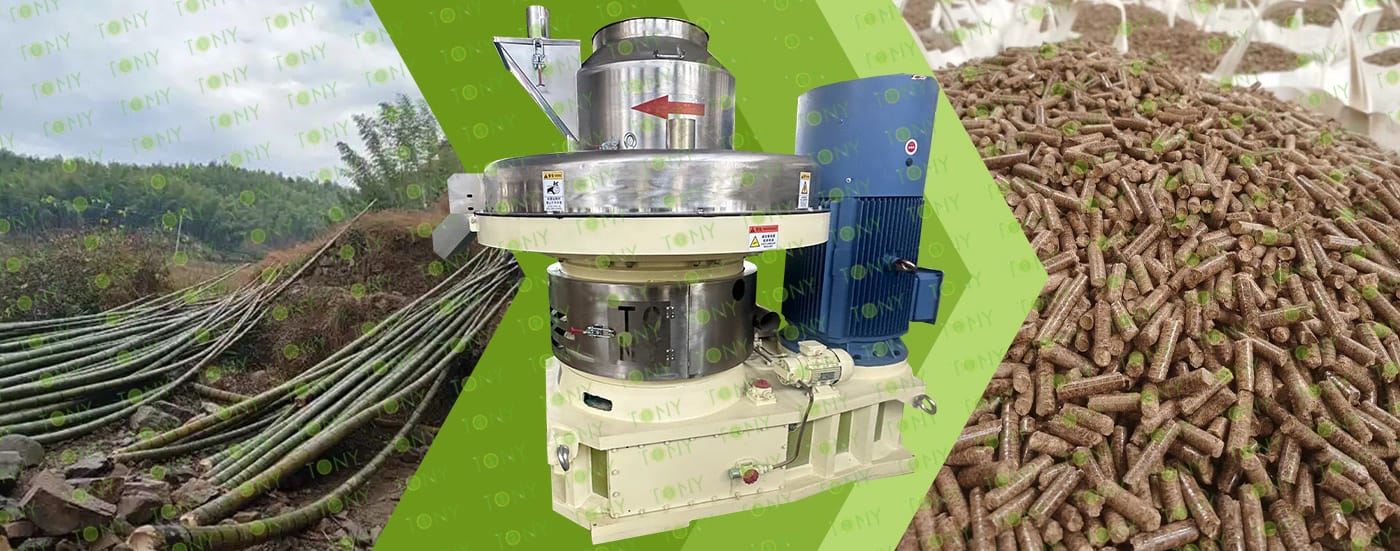
1.The working principle of wet bamboo biomass pellet processing equipment
The wet bamboo biomass pellet machine uses high temperature and high pressure to compress wet bamboo into pellets.
The specific process is as follows: First, the wet bamboo is pre-treated, crushed, finely pulverized, and dried before being fed into the biomass pellet machine through a feed system. Next, the bamboo shavings pass through a compression system, where they are compressed into pellets. This process requires high temperature and high pressure to ensure the pellets are formed properly. Finally, the pellets are cooled and screened through a cooling and screening device to ensure pellet quality.
2.Characteristics of wet bamboo biomass pellet processing equipment
(1)Environmental Advantages:Low Pollution, Carbon Neutrality, and Policy Compliance
(2)Extremely Low Emissions:No black smoke during combustion; sulfur dioxide emissions are only 0.005-0.01 g/m³ (far lower than 0.1-0.3 g/m³ for coal), nitrogen oxide emissions are <50 mg/m³, and particulate matter emissions are <10 mg/m³. These all meet the "Special Emission Limits" in the National Standard for Boiler Air Pollutant Emission (GB 13271-2014), eliminating the need for complex flue gas treatment equipment.
(3)Zero Carbon Emissions through Carbon Cycle:Sawdust originates from wood that absorbed CO2 during tree growth. The CO2 released during combustion is reabsorbed by newly planted trees, creating a carbon cycle. Compared to coal (fossil carbon, which releases new carbon emissions upon combustion), this essentially achieves carbon neutrality, aligning with the national "dual carbon" target and making it a clean fuel promoted by government policy.
(4)Recyclable Solid Waste:The ash produced (less than 5% of the total) is rich in potassium, calcium, and other elements, and can be used directly as fertilizer or soil conditioner, avoiding secondary solid waste pollution. Coal ash, on the other hand, requires special treatment and can cause heavy metal pollution of the soil.
3.Application scenarios of wet bamboo biomass pellet processing equipment
(1)Industrial Heating Applications:Industries such as food processing (baking, sterilization), textile dyeing (steam heating), chemical processing (low-temperature reaction heating), and building materials (tile drying) require large amounts of low- to medium-temperature heat (80-300°C). Biomass pellet boilers can provide stable steam or hot water at a cost that is only 60-70% of natural gas and 40-50% of electricity, making them widely used by small and medium-sized enterprises for cost reduction and emissions control.
(2)Commercial Heating:Large public buildings such as hotels, schools, hospitals, and office buildings can use biomass pellet-fired central heating systems to replace traditional coal-fired boilers, meeting environmental standards (complying with national "ultra-low emission" standards). Furthermore, the storage space required for pellet fuel is small, and refilling is infrequent.

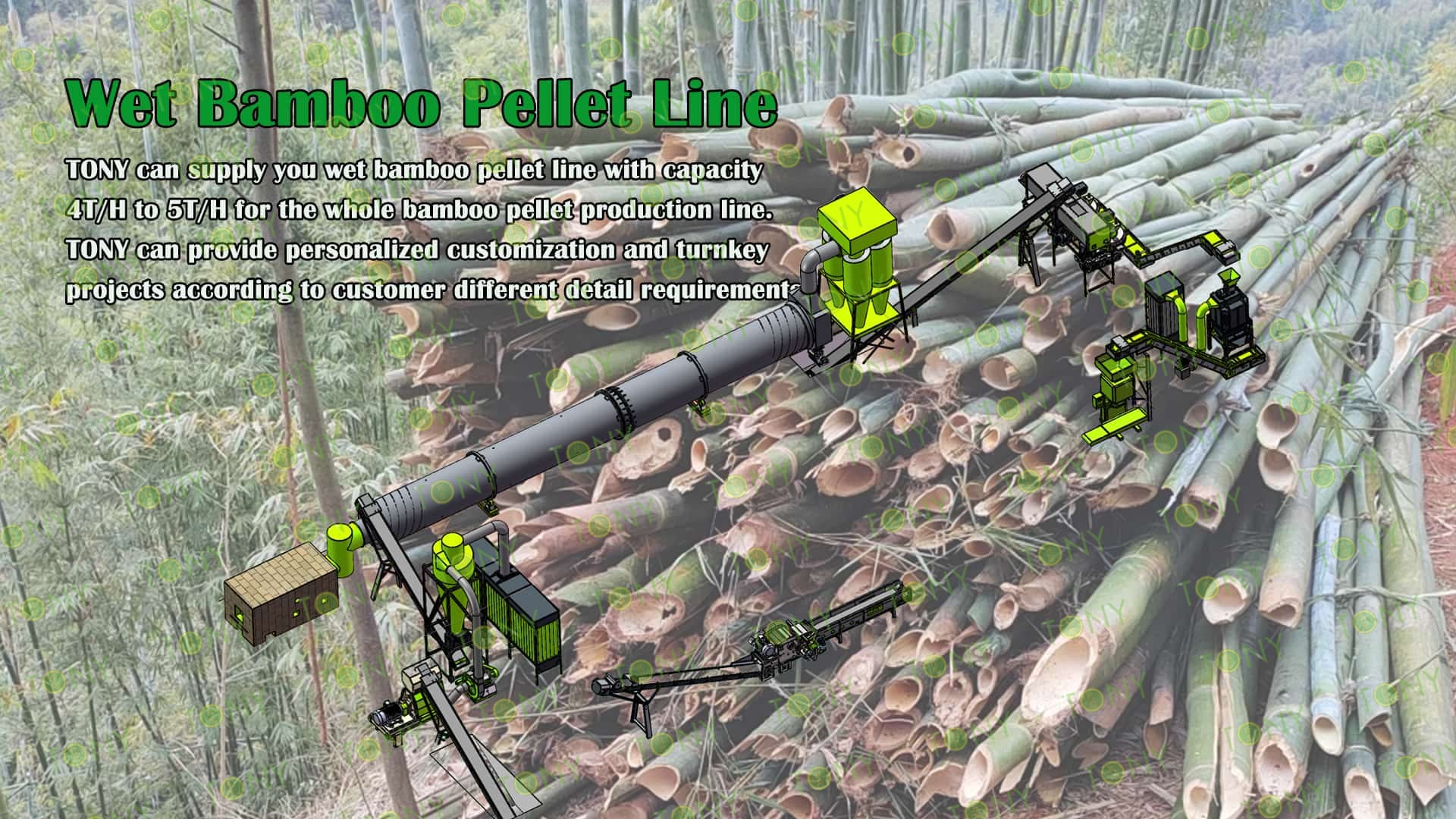
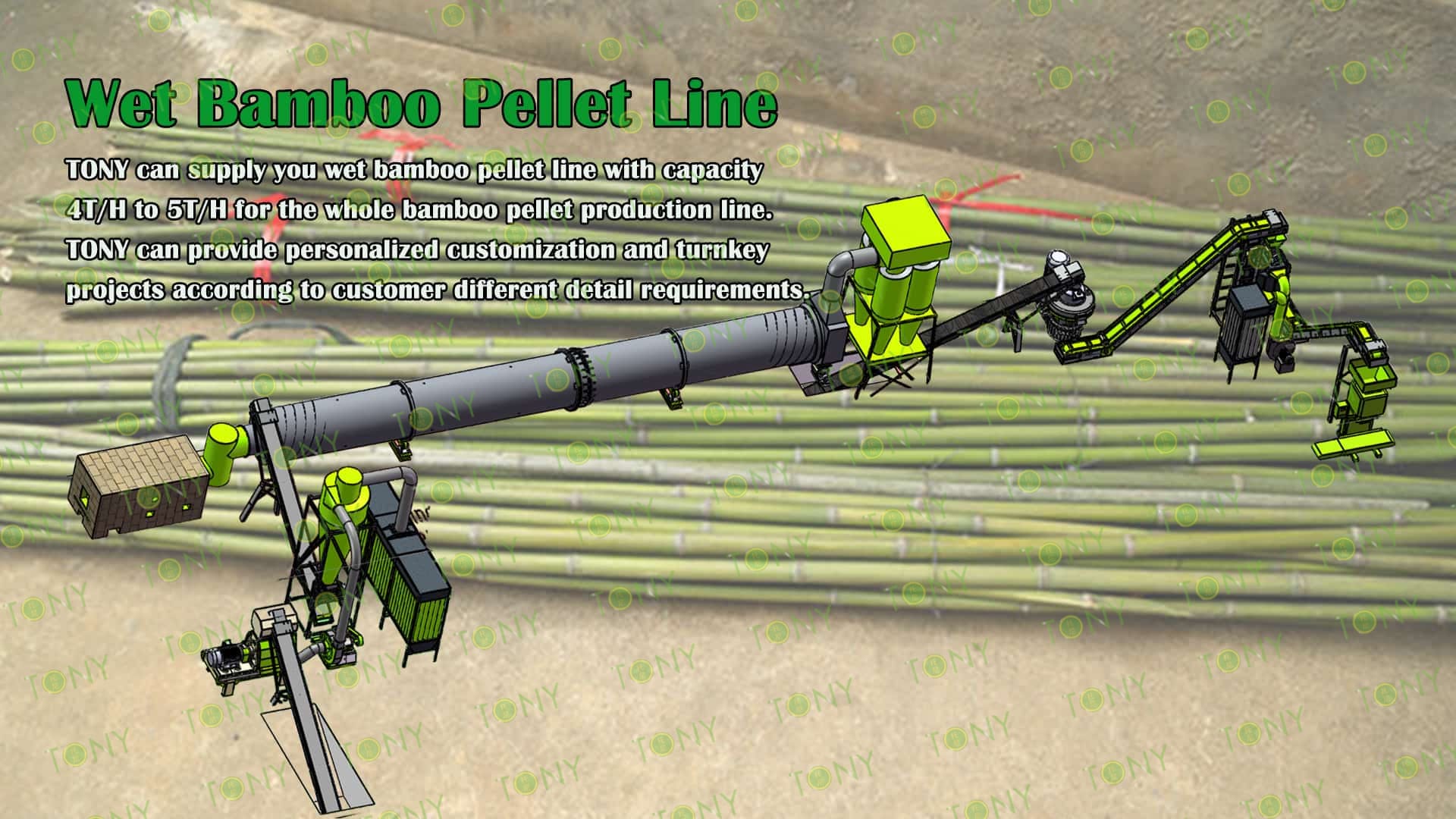
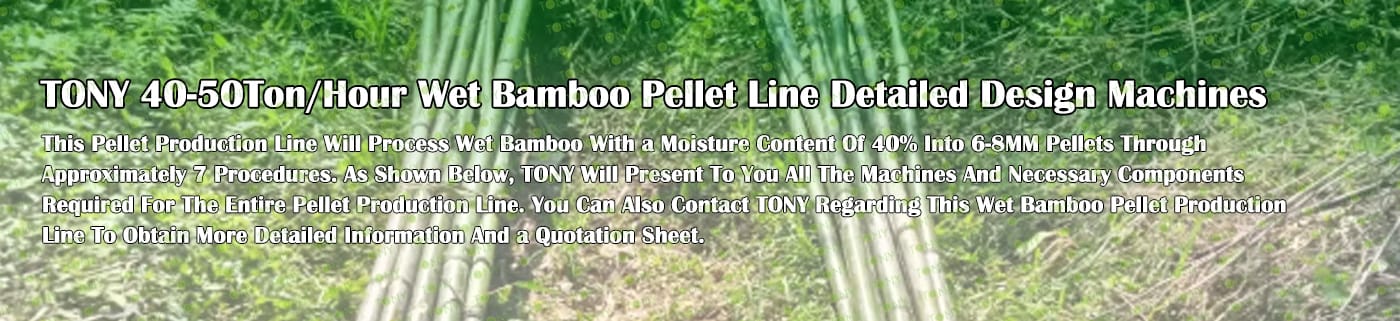
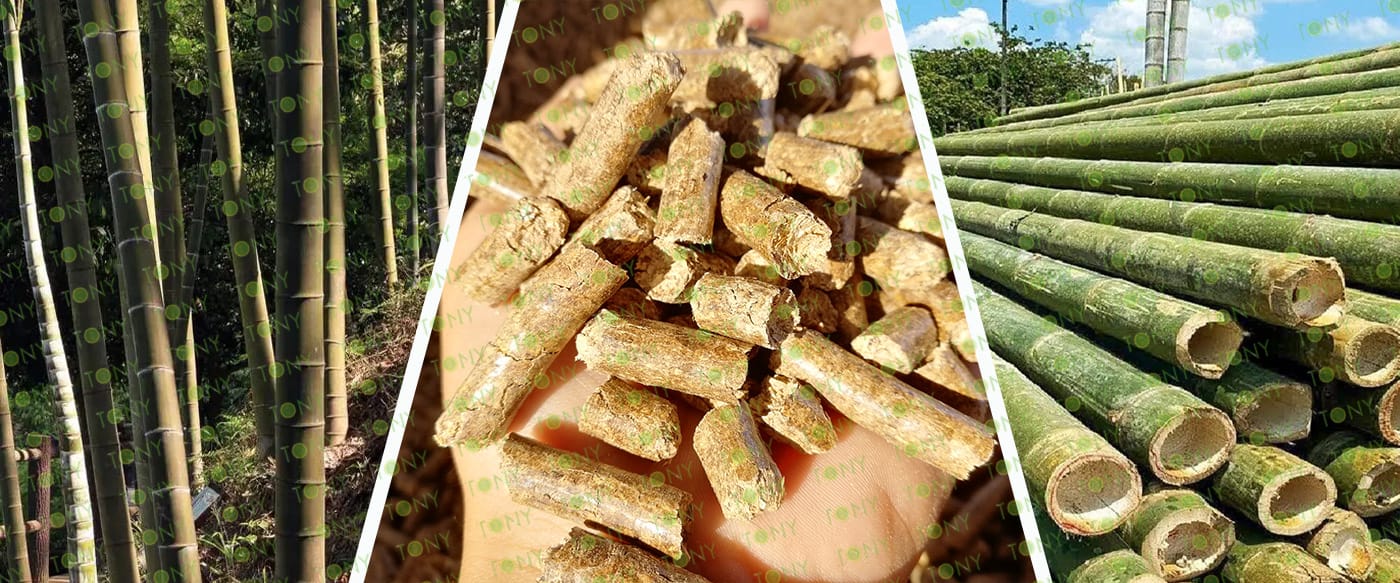
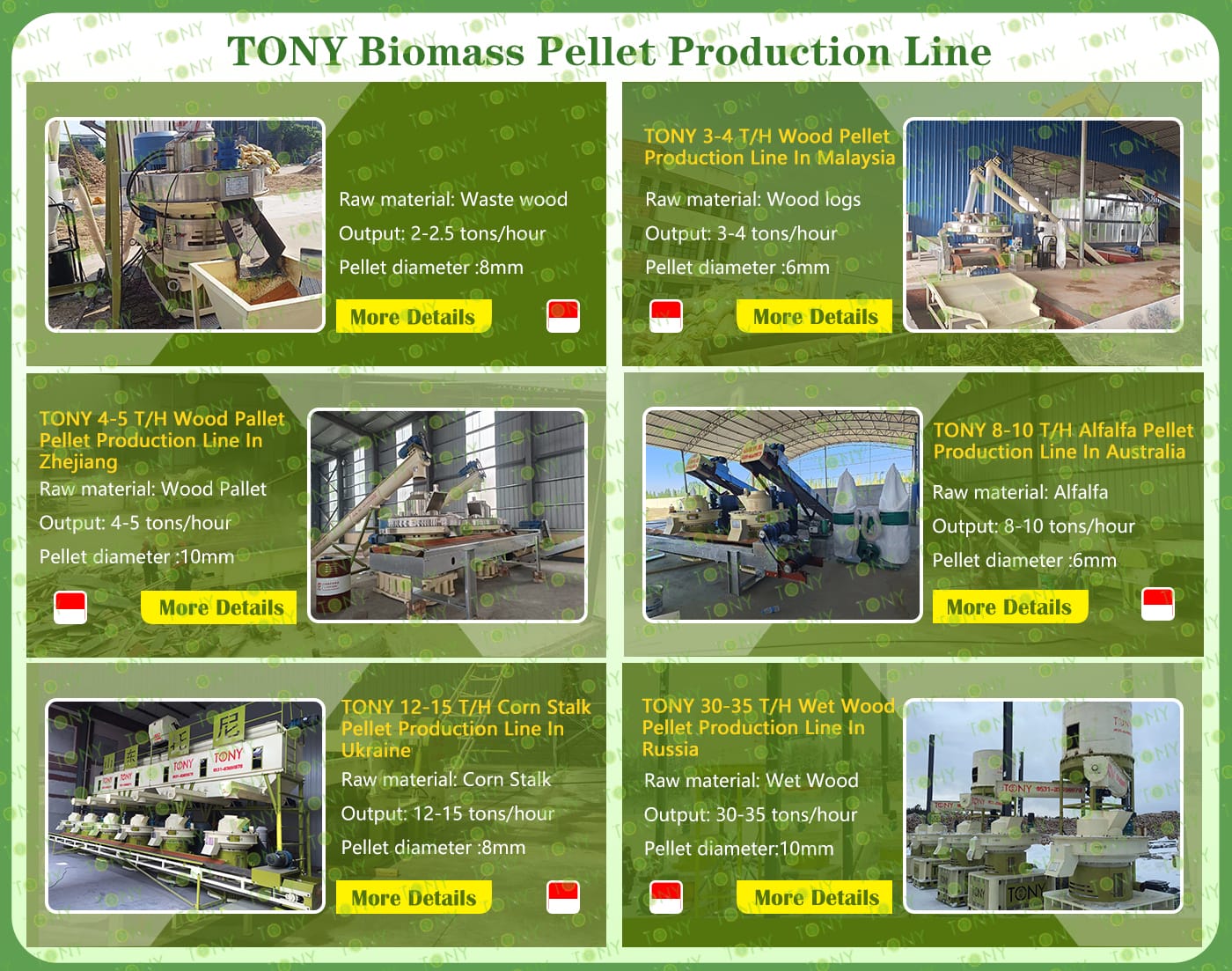
TONY Brand 48-60Ton/Hour Wet Bamboo Pellet Manufacturing Plant can take wet bamboo as the main raw material. After pretreatment and processing, it is solidified into high - density bamboo pellet fuel. This fuel is an ideal substitute for coal and oil and plays a role in energy conservation and emission reduction. At present, it has been widely used in regions rich in bamboo resources.
1. Capacity: 48-60Ton/Hour
2. Raw materials: Wet Bamboo
3. Moisture: Wet type, about 40%.
4. Application: All kinds of bamboo materials suitable for pellet production.
Suitable customers: Bamboo product processing companies, large-scale farms, agricultural/forestry parks, areas with dense bamboo resources, biomass energy companies/fuel traders, green environmental protection technology companies, and other places where bamboo raw materials have advantages
5. Finished Pellets Markets: Large power plants, domestic heating, industrial heating, combustion heat, heating systems, boiler rooms, school canteens, foundry heat sources.

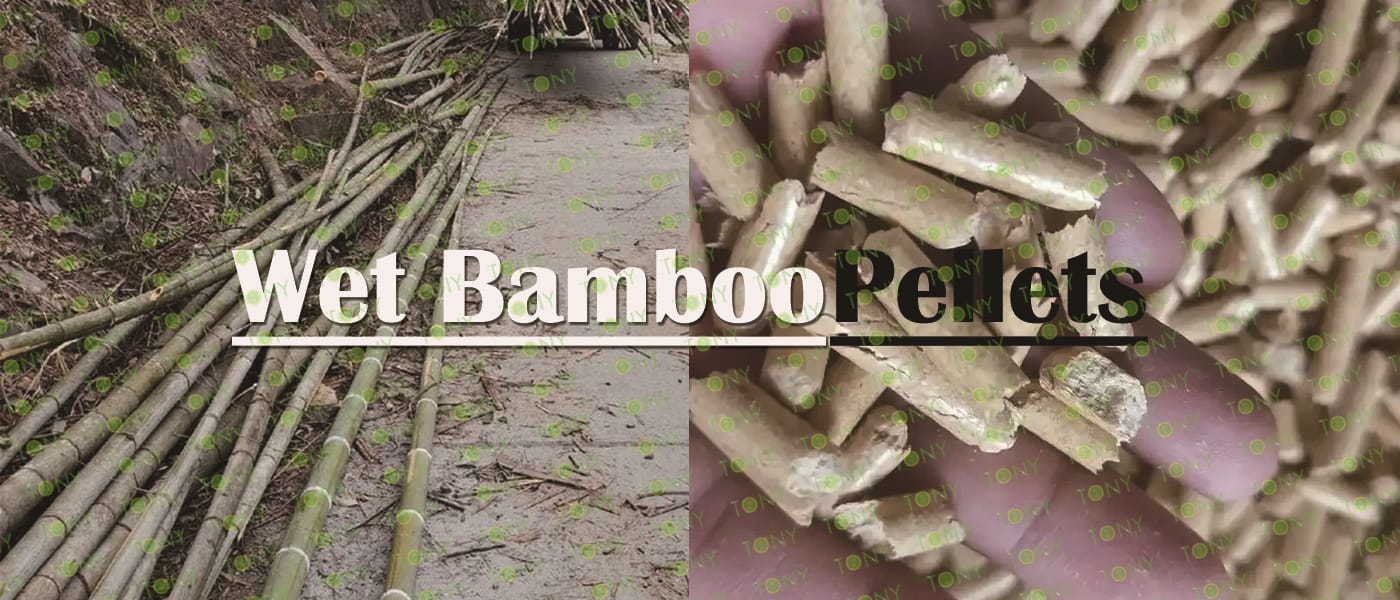
1. Project Name: Wet Bamboo Pellet Production Line
2. Raw Material: All kinds of wet bamboo
3. Moisture Content of Raw Material: 40%
4. Capacity: 48-60 tons per hour
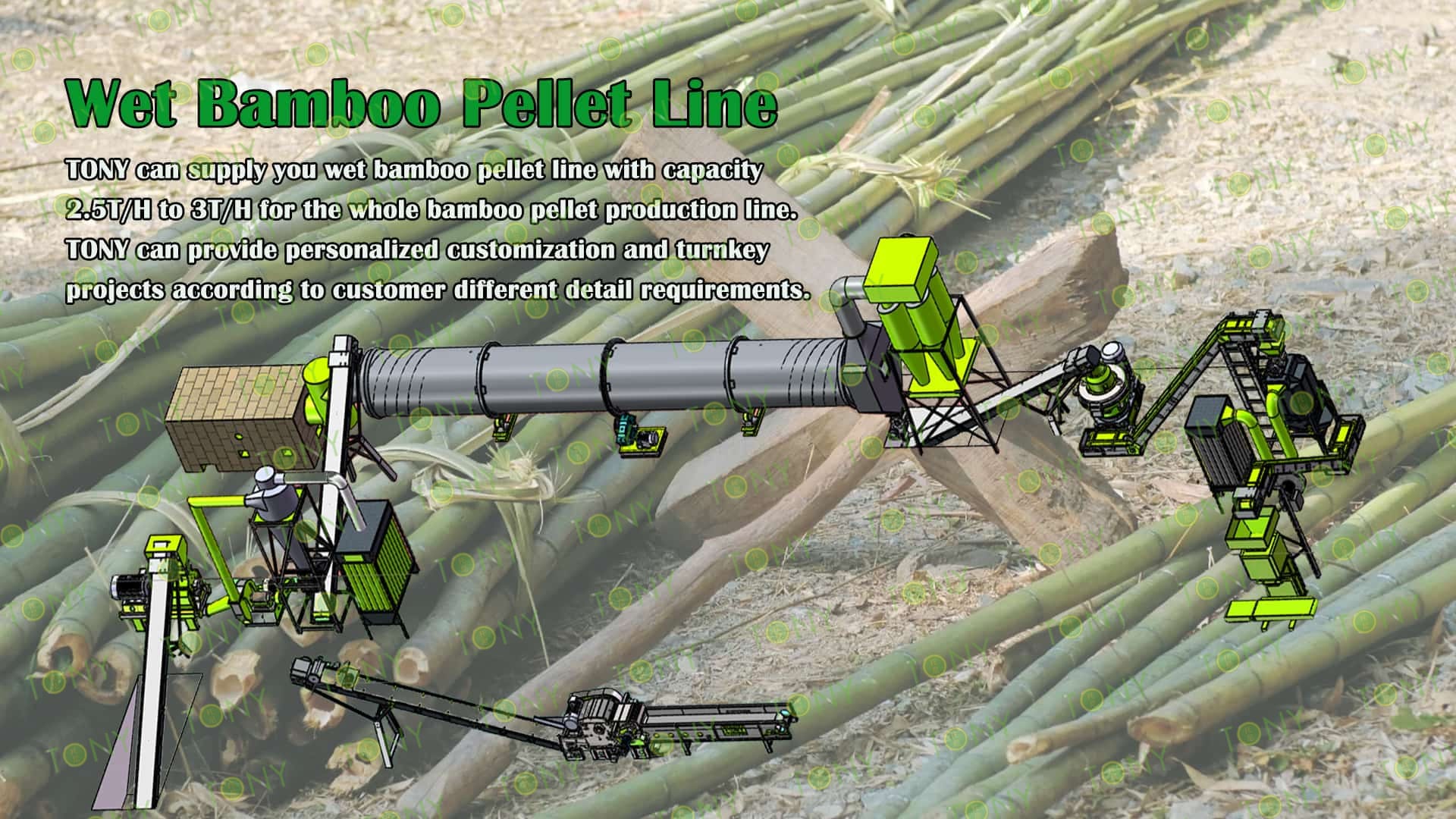
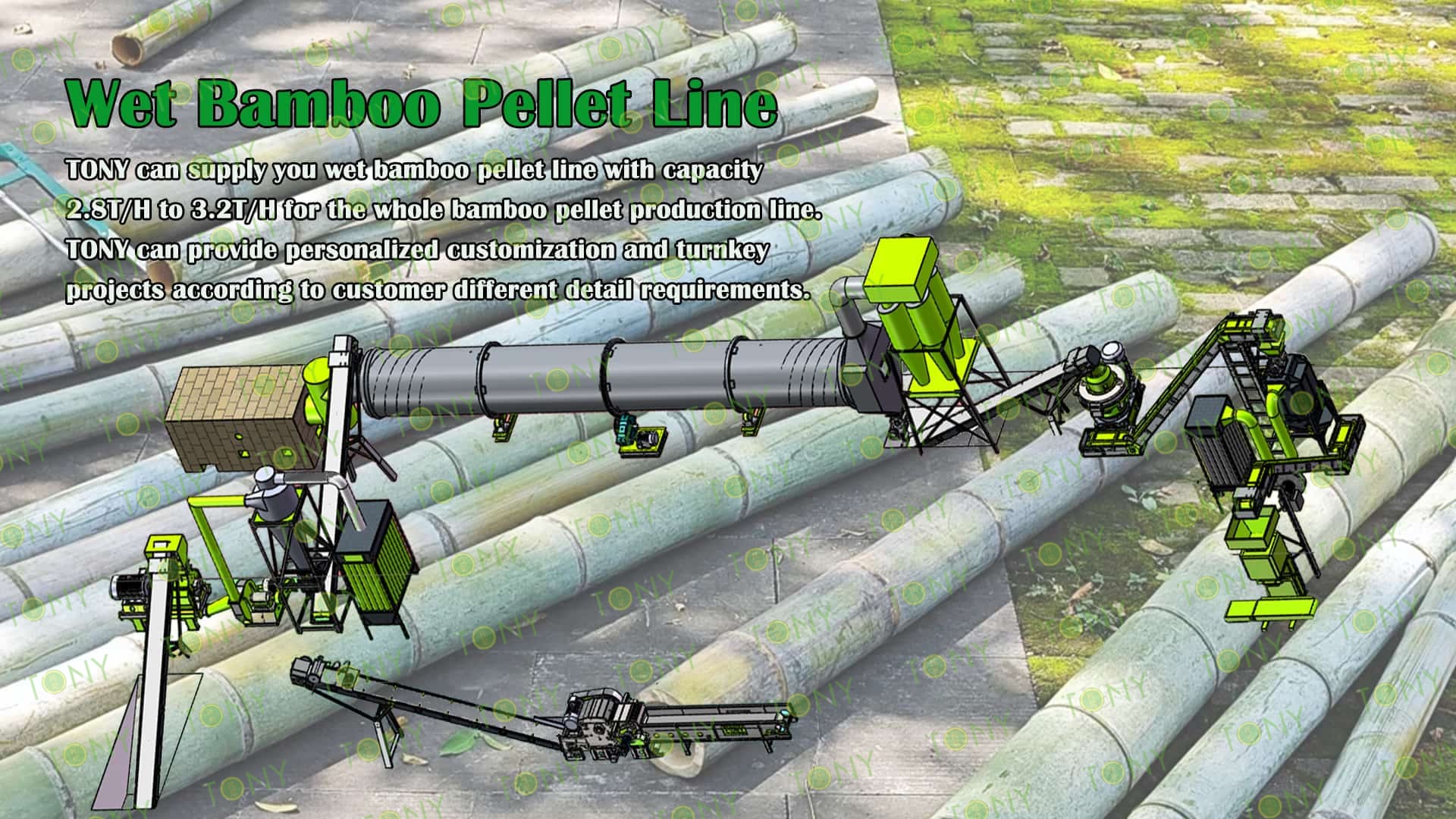
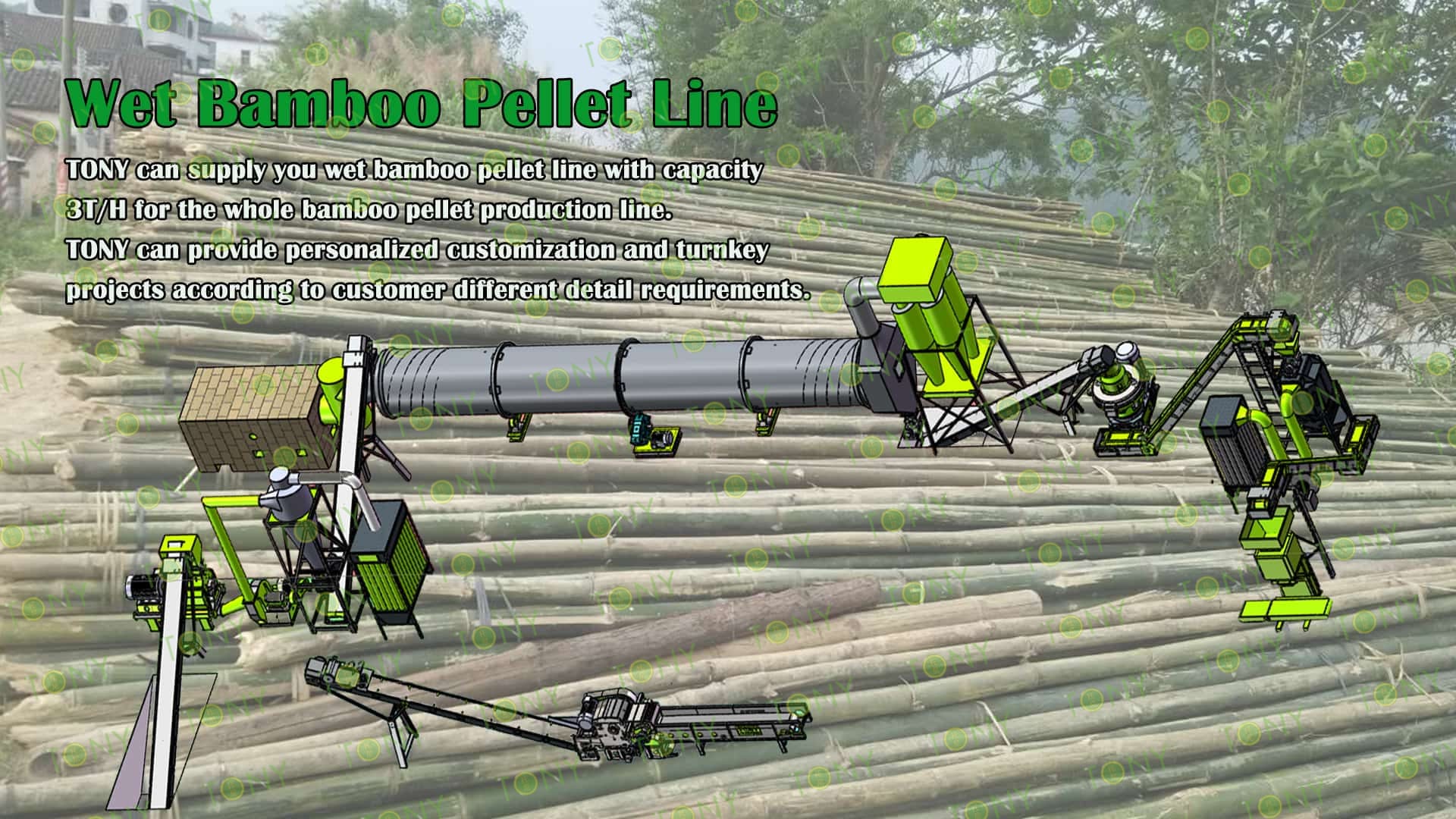
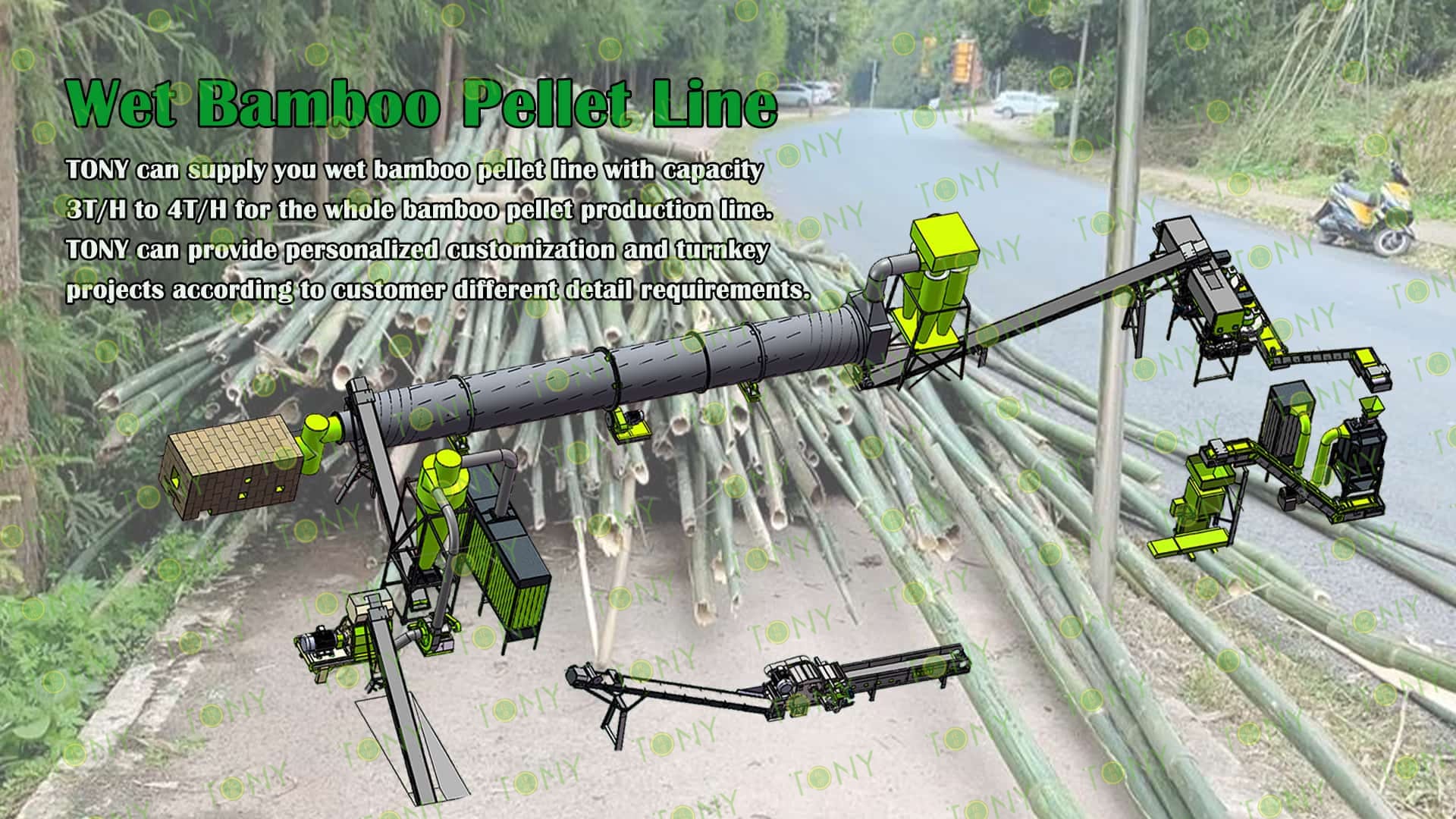
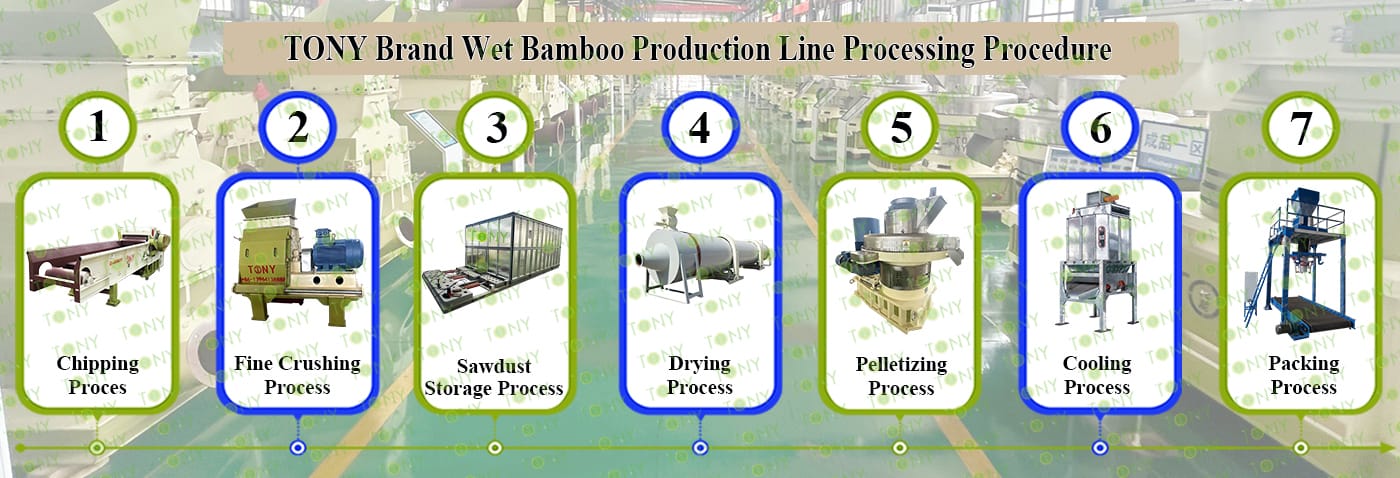
5. Process: Crushing Process - Fine Crushing Process -Bamboo Dust Storage Process- Drying Process - Pelletizing Process - Cooling Process - Packing Process
6. Main Equipment: Comprehensive Chipper TPC1600-1000-315KW, Effective Hammer Mill-TFD120-200-355KW, TONY Large Hydraulic Storage Silo,Rotary Drum Dryer-3.2-28m, TONY Pellet Machine TYJ860-Ⅲ-280KW, Galvanized Pellets Cooler, Ton Packing Machine and Belt Conveyors

|
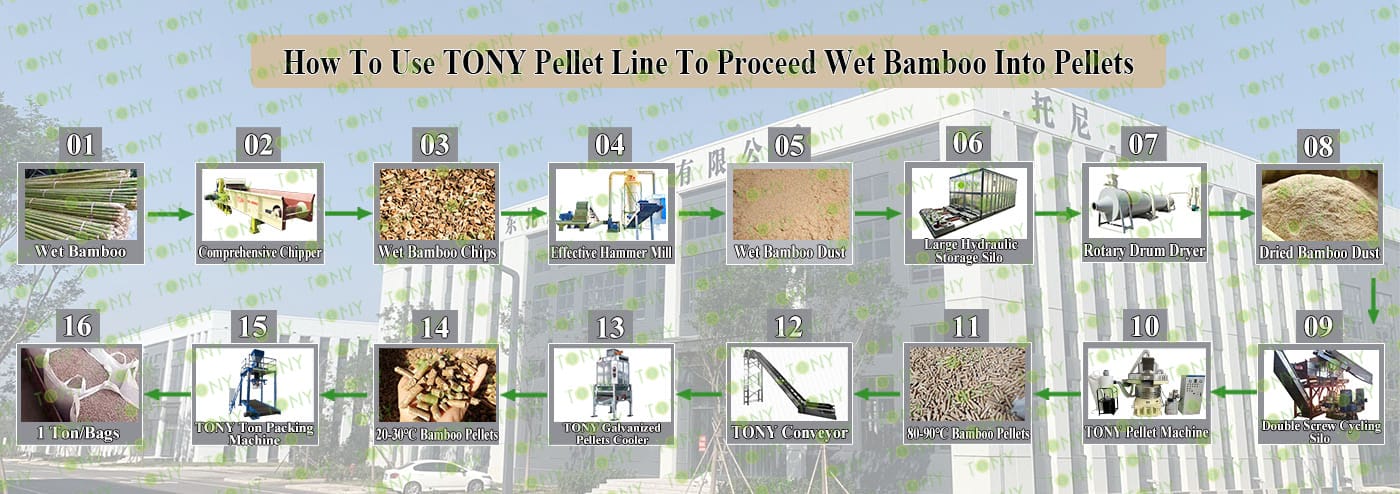
How to use the TONY pellet production line to make pellets from wet bamboo? The process mainly includes the following steps and equipment: 1. Use TONY comprehensive chipper to cut wet bamboo with a diameter of less than 40 cm into bamboo chips 25 - 55 mm in length. 2. Use TONY effective hammer mill to crush the 25-55 mm bamboo chips into 8-14 mm bamboo dust. 3.Use TONY large hydraulic storage silo to storage 8-14 mm bamboo dust 4. Use TONY rotary drum dryer to dry the bamboo dust with a 40% moisture content down to a moisture content of 10%-15%. 5. Use TONY vertical ring die pellet machine to produce pellets with a diameter of 6-8 mm. 6. Use TONY galvanized pellets cooler to cool the pellets from 80-90°C to 20-30°C. 7. Use TONY ton packing machine to pack the pellets into bags, each weighing 1 ton. For more detailed information and quotations, you can contact TONY. TONY can provide all the above - mentioned products at highly competitive prices and with excellent quality. |
|
|||||||||||||||||||||||||||||||||||||||||||||||||||||||
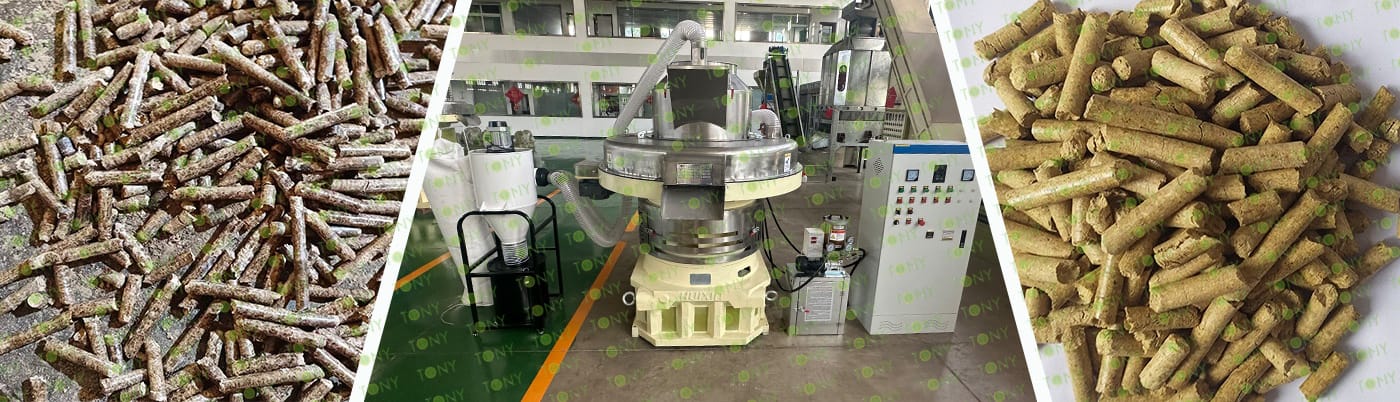
| Next, TONY Will Introduce To You All The Necessary Machinery That Will Be Used For The Whole Pellet Production Line. Some Machines Can Be Custom - Made By Customers According To Different Customers' Detailed Demands. Contact TONY For More Details, Including Quotation And Layout. | |||
 |
 |
 |
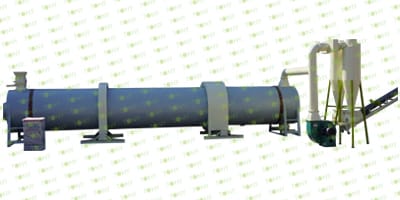 |
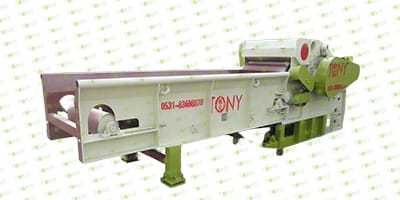
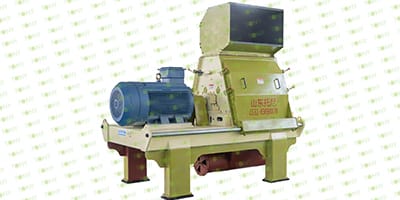
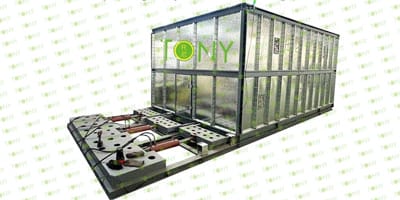
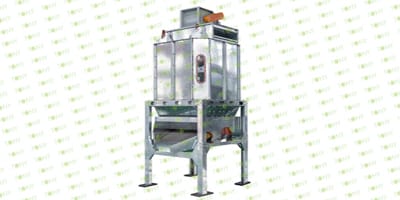
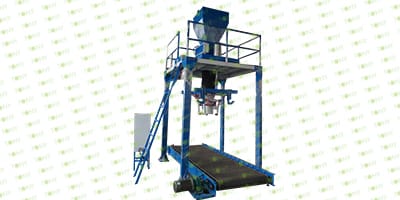
| Comprehensive Chipper | Effective Hammer Mill | Large Hydraulic Storage Silo | Rotary Drum Dryer |
| 1.To Grind Bamboo φ ≤40 cm Into25-55mm Bamboo Chips. 2.Model: TPC1600-1000-315KW With 6 Blades*3sets 3.Capacity:48-60Ton/Hour. |
1.To Crush 25-55mm Bamboo Chips Into 8-14mm Bamboo Dust. 2.Model: TFD120-200-355KW*5sets 3.Capacity:10-12Ton/Hour/Set |
1.To Storage Bamboo Dust Before Dryer Control Bamboo Dust Flow Entering The Dryer Model: TCY-30*5sets 2.TONY Uses Galvanized Material |
1.To Dry The 40% Bamboo Dust Into 10-15% Bamboo Dust. 2.Model: THGD3.2-28*5sets 3.Capacity:10-12Ton/Hour/Set |
 |
 |
 |
 |
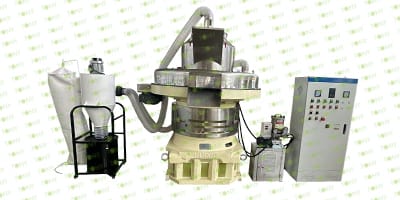
| Vertical Ring Die Pellet Machine | Galvanized Pellets Cooler | Ton Packing Machine | Belt Conveyor |
| 1.To Press Dry Bamboo Dust Into 6-8mm Biomass Pellets 2.Model: TYJ860-III-280KW*12sets 3.Capacity:4-5Ton/Hour/Set 4.New 304SS Type |
1.To Cool Pellets From 80-90℃ Into 20-30℃ 2.Model: TCN-10*3sets 3.Capacity:48-60Ton/Hour |
1.To Pack Pellets Into 1Ton/Bags 2.Model: TBD*3sets 3.Capacity: 48-60Ton/Hour |
1.To Transport Bamboo Chips,Bamboo Dust,Pellets. 2.Width: 80cm*35sets 3.Capacity:Designed With The Whole Line |

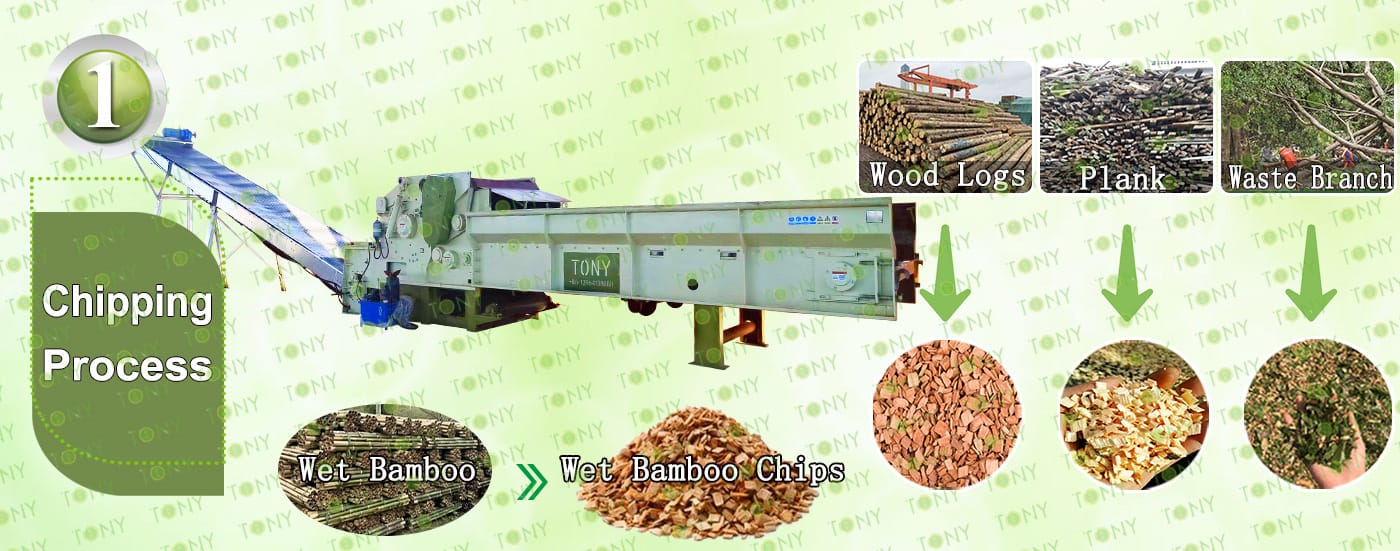
1.Wet Bamboo To Bamboo Chips Process:
A.This process is mainly used to grind the bamboo whose diamater is under 40 cm into bamboo chips with size 25-55mm. The finish bamboo chips size can be adjustable by changing different sizes of screeners and adding flying knives inside the wood chipper.
B.TONY brand comprehensive chipper TPC1600-1000-315KW with 6 flying blades type*3 sets
C.Capacity:48-60Ton/Hour.
Main Parts:
(1)TONY's Comprehensive Chipper.
(2)Feed And Discharge Belt Frequency Control To Prevent Card Material
(3)Hydraulic System Control Can Be Used For Thicker Materials
(4)Electronic Control System Allows The Equipment To Be Used Normally
Contact Tony For More Details With Quotation

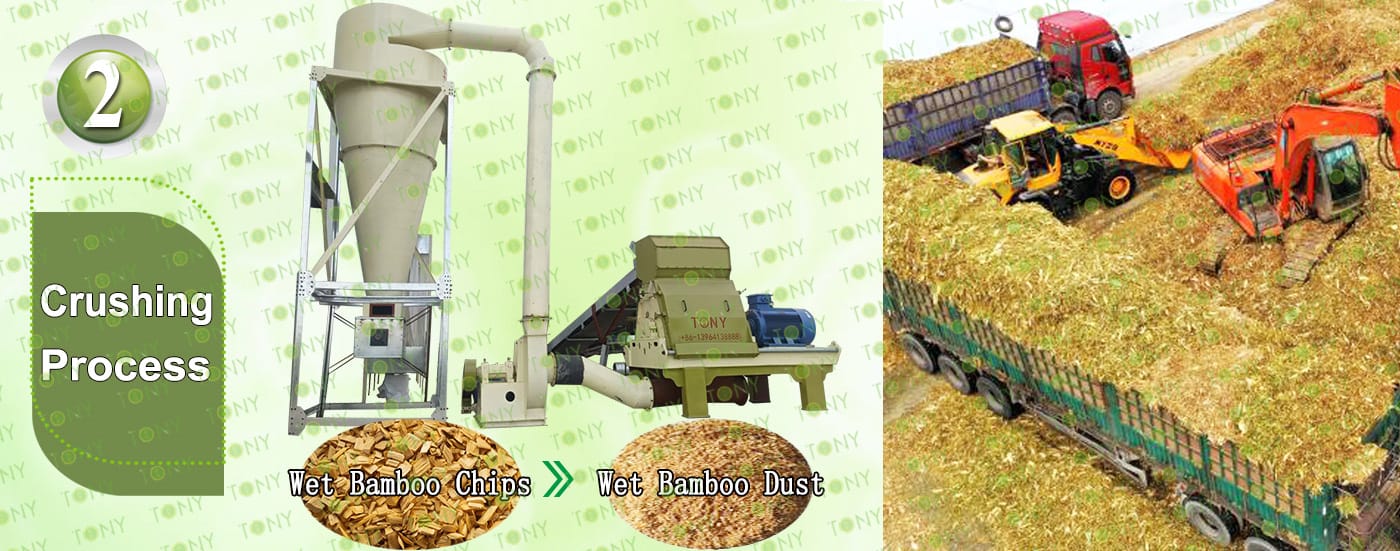
2.Bamboo Chips Fine Crushing Process:
A.This process is mainly used to crush 25-55mm bamboo chips into 8-14mm bamboo dust.
B.Capacity:48-60Ton/Hour.
C.TONY brand effective hammer mill TFD120-200-355KW*5 sets
Main Parts:
(1)TONY Effective Hammer Mill.
(2)Galvanized Dust Collector.
(3)Sawdust Transportation Fan Blower.
(4)Cyclone With Airlock.
(5)Electrical Cabinets.

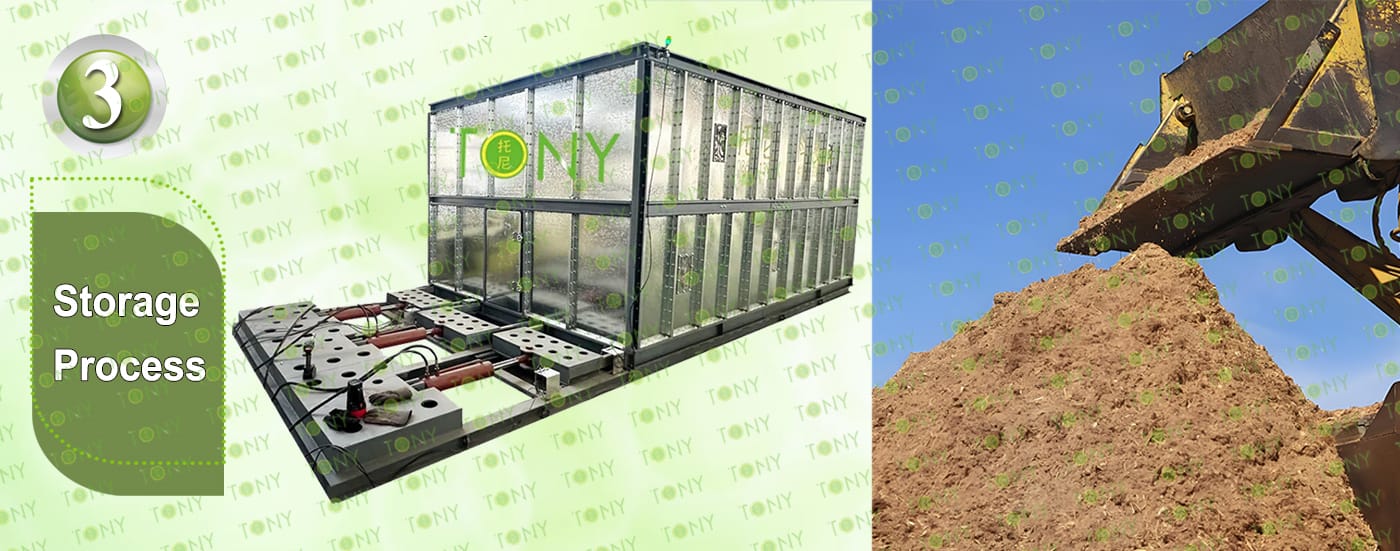
3.Bamboo Dust Storage Process:
A. This process is mainly used to storage the bamboo dust that comes out of the hammer mill.It is hydraulic galvanized storage bin which is more stalbe and bamboo dust in it is not easy to be blocked.
B. TONY Brand Large Hydraulic Storage Silo to storage the bamboo dust that comes out of the hammer mill.This process can be optional by customer.If customer do not chose the storage bin,he can storage the bamboo dust on the ground directly which may need some labour.
Main Parts:
(1)TONY's New Large Hydraulic Storage Silo.
(2)With Screws Inside The Storage Bin To Prevent Bamboo Dust Blocked.

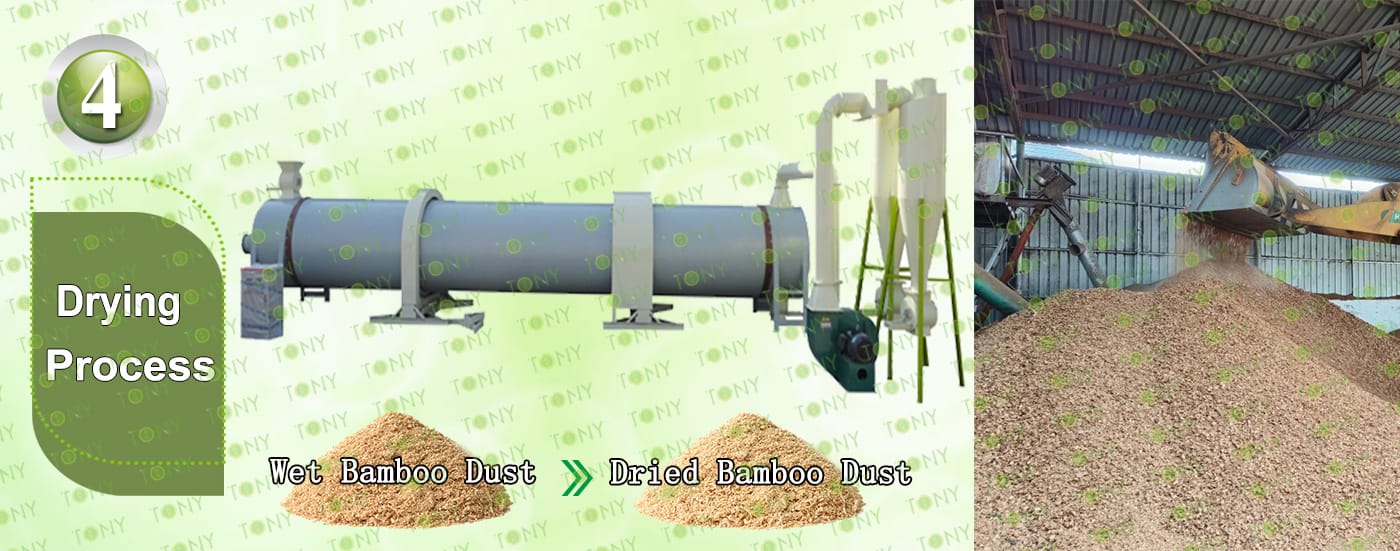
4.Bamboo Dust Drying Process:
A.This process is mainly used to dry the bamboo dust from 40% to 10-15%.
B.Capacity:48-60Ton/Hour.
C.TONY use 5 sets of 3.2*28m rotary drum dryer for this process, TONY hot blast stove is made of firebrick pan, shell with H steel plate as the frame. There are 3 layers of fire blocking device inside, which can effectively prevent the fire from entering the tumble dryer.Customers can choose to use waste wood, biomass pellets, natural gas, etc. as fuel for the hot air furnace
TONY dryer use spiral tube material, and is not easy to deform.
Unlike other manufacturers with iron plate splicing welding, very easy to deformation.
Main Parts:
(1)TONY's Rotary Drum Dryer Main Body. (Reducers With Motors and Pips.)
(2)TONY's Hot Stove.
(3)Fan Blower+Cyclone With Airlock.
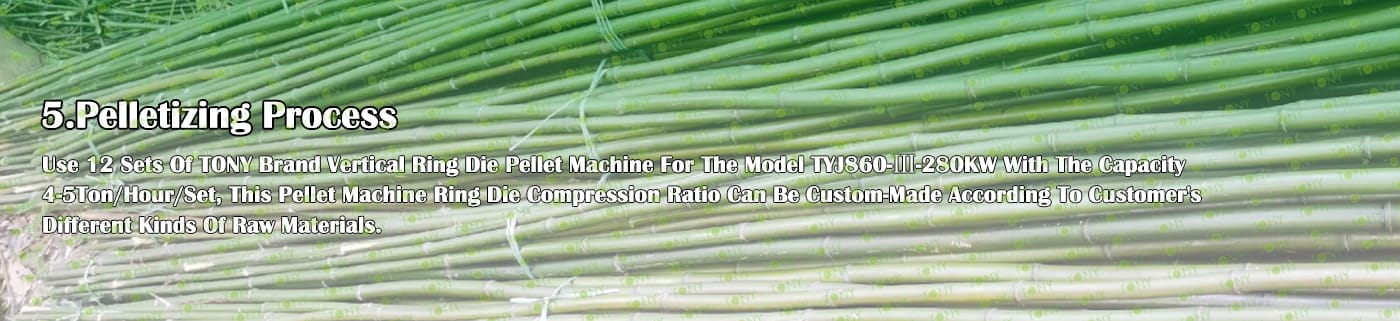
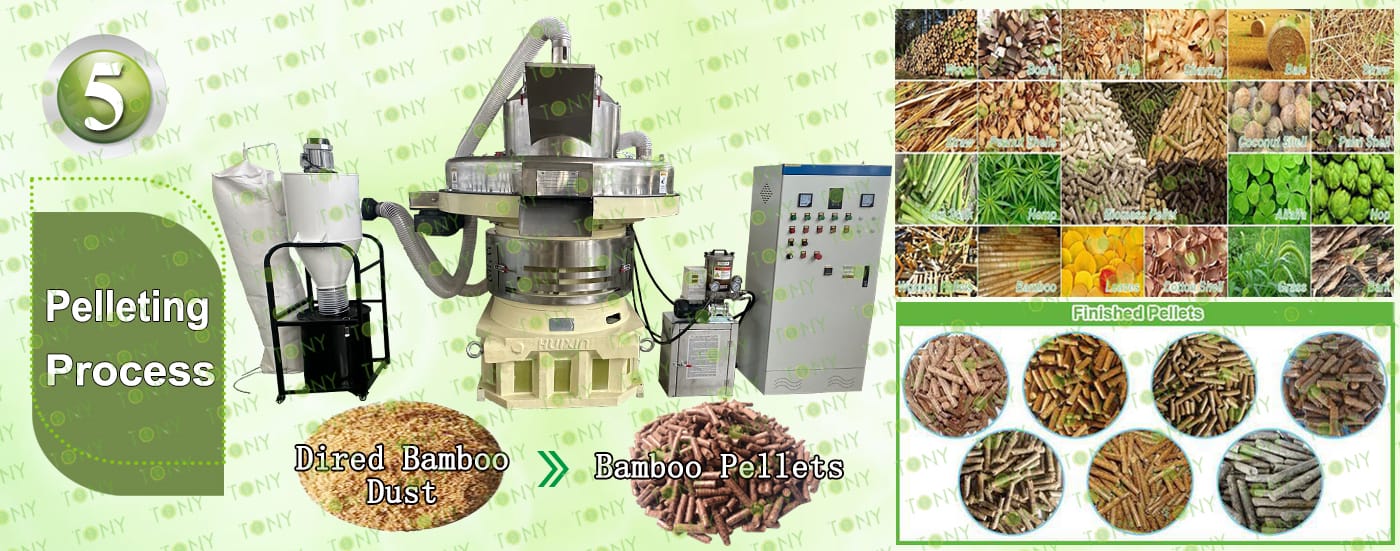
5.Pelletizing Process:
A.This process is mainly used to to product pellets into φ6-8mm.
B.Capacity:48-32Ton/Hour.
C.TONY brand vertical ring die pellet machine TYJ860-Ⅲ-280KW*12 sets
D.Double Screw Cycling Silo is added above the pellet machine, which has the advantages of saving space, saving labor, intelligently controlling the feeding speed, not easy to block the material, and improving production efficiency.
Main Parts:
(1)TONY's new Vertical Ring Die Pellet Machine.
(2)Cyclone And Bags Dust Collectors.
(3)Automatic Lubrication System.
(4)Electrical Cabinets.
You can chose TONY new type SS304 pellet machine
6.Cooling Process:
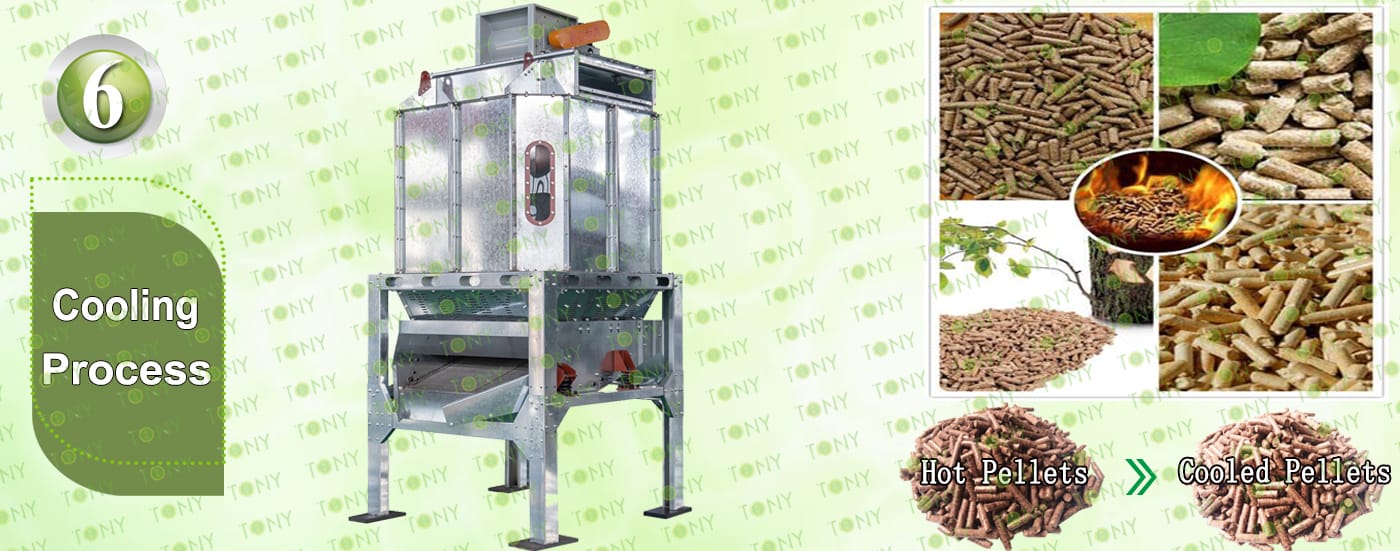
A.This process is mainly used to cool pellets from 80-90℃ to 20-30℃
B.Capacity:48-60Ton/Hour.
C.TONY brand galvanized pellets cooler *3sets
Main Parts:
(1)TONY's new Galvanized Pellets Cooler With Vibrating Screen.
(2)Cyclone And Bags Dust Collectors.
(3)Fan Blower.
(4)Connect Pipes.
7.Packing Process:
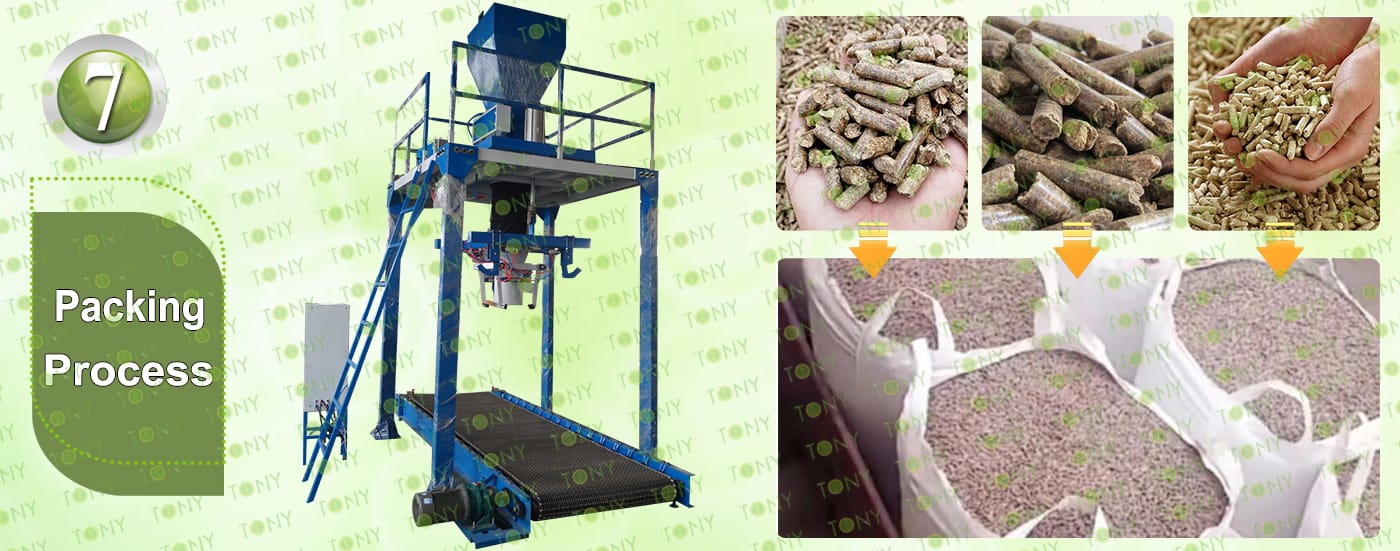
A.This process is mainly used to pack pellets into 1Ton/Bags.
B.Capacity:48-60Ton/Hour.
C.TONY brand ton packing machine*3 sets
Main Parts:
(1)TONY Ton Packing Machine
(2)Electronic Platform Scale Metering System
(3)Automatic Tare, Zero, and Drop Correction Functions
(4)Feeding System Features Fast, Medium, and Slow Feeding Speeds to Ensure Measuring Accuracy

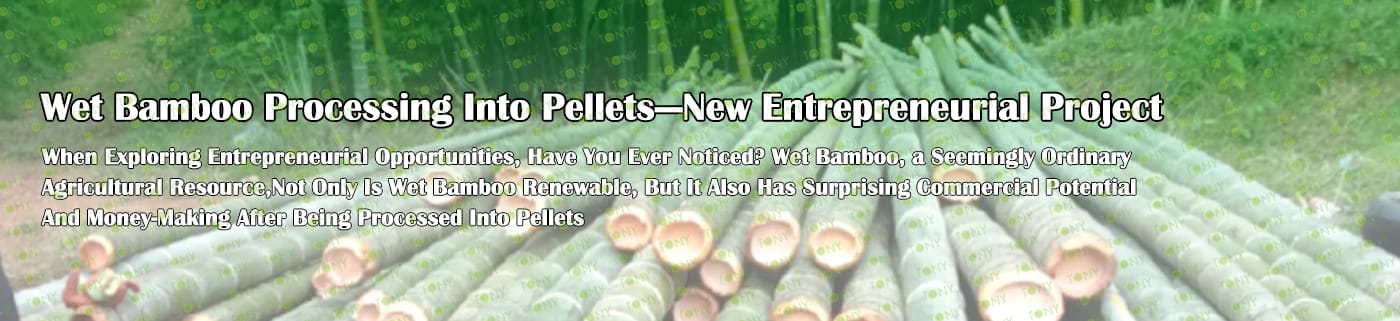
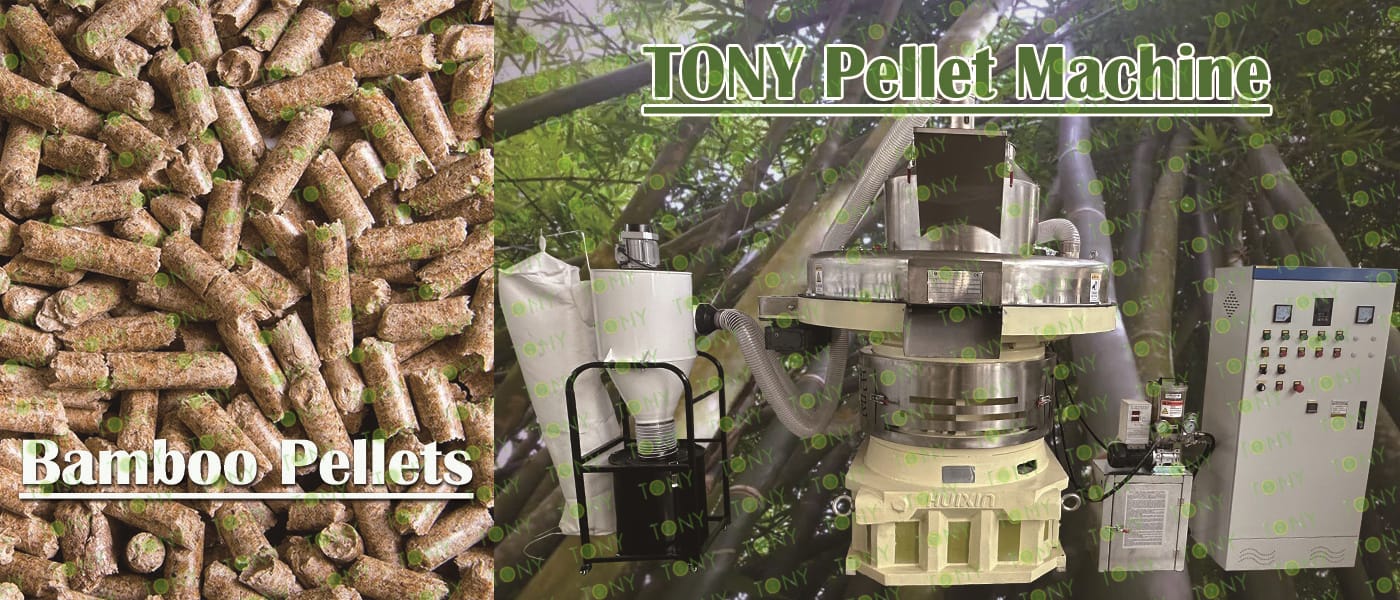
The bamboo biomass pellet project converts bamboo materials (including bamboo poles, processing scraps, and waste) into biomass pellet fuel. This fuel is clean and renewable, offering a viable alternative to traditional fossil fuels. Market demand is widespread, and my country's abundant bamboo resources provide favorable conditions for the project's implementation.
1.Energy and Environmental Trends:
With growing global energy demand, traditional fossil energy sources are in short supply and pose significant pollution risks. Clean, renewable biomass energy is becoming a key development direction. Bamboo biomass pellet fuel has high combustion efficiency and low pollution emissions, aligning with the trend of green and low-carbon development.
2.Waste Utilization and Economic Benefits:
Solid waste generated during bamboo processing, such as scraps, powder, silk, roots, and branches, can be used as raw materials, transforming waste into valuable resources, reducing raw material costs and minimizing resource waste.
The project aims to improve bamboo biomass resource utilization, reduce energy consumption, and minimize environmental pollution. Technological innovation will lower production costs and enhance product competitiveness. The project aims to establish advanced production lines, achieve high annual production volumes (e.g., the planned annual production volume of XX million tons within five years), increase market share, and become a market leader. The project also aims to improve the industrial chain, drive the development of related industries, and promote economic growth.

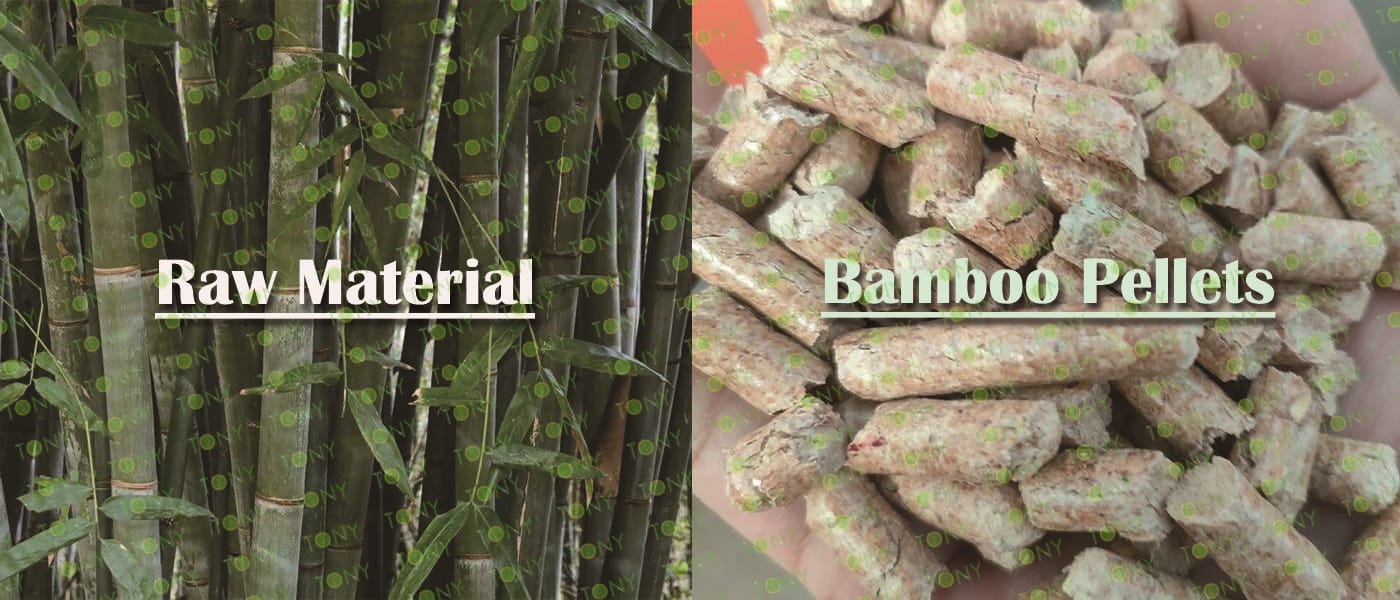
Advantages of Wet Bamboo as Biomass Pellets
Processing wet bamboo into biomass pellets not only offers numerous advantages in terms of environmental protection, economy, social development, and energy structure improvement, but also boasts exceptional combustion properties. The main advantages are as follows:
1.Calorific Value and Combustion Residue
The calorific value and ash content of wet bamboo biomass pellets after combustion are approximately 10% lower than those of medium-grade coal. However, wet bamboo biomass pellets burn completely under normal operating conditions. Coal, on the other hand, does not burn completely, leaving behind ash containing 10% to 15% combustible components. Therefore, in practical applications, the effective calorific value of the two is comparable.
2.Flammability
Wet bamboo biomass pellets have better ignition properties than coal. They ignite easily, significantly reducing the ignition time required to initiate combustion.
3.Solid Emissions
Wet bamboo biomass pellets have significantly lower solid emissions than coal. This not only reduces slag disposal costs but also reduces environmental pollution. Solid emissions from wet wood biomass pellets are primarily ash, accounting for approximately 0.4% to 7.0% of the total weight. In contrast, solid emissions from coal combustion are a mixture of ash, alkali, and unburned coal, accounting for approximately 25% to 40% of the total weight.
4.Air Pollution and Corrosion
Coal causes significantly greater air pollution and boiler corrosion than wet bamboo biomass pellets. Coal smoke contains large amounts of particulate carbon as well as toxic and corrosive gases such as sulfur dioxide and carbon monoxide. Wet bamboo biomass pellets are primarily composed of C-H organic matter, and their flue gas contains no particulate carbon or sulfur dioxide. Instead, it consists primarily of C-H volatile gases, with virtually zero SO₂ and CO emissions. The smoke color during combustion is below Ringelmann Grade This significantly reduces air pollution and CO₂ emissions, making wet bamboo biomass pellets internationally recognized as a "clean fuel."
5.Cost and Time Savings
Compared to burning coal, using wet bamboo biomass pellets for boiler operation can save costs and time. For example, using wet bamboo biomass pellets for a 0.5-ton boiler reduces fuel costs by 11% and saves 34% of time compared to burning coal. Another example is a 0.5-ton boiler with fuel costs reduced by 10% and time saved by 16%.
6.Sustained Combustion
Wet bamboo biomass pellets typically burn 8 to 10 times longer than soft bulk materials, maintaining a stable and continuous combustion state and ensuring a more reliable energy supply.


2025 Tony Machinery - All Rights Reserved. Map