




















1.The working principle of dried hay/grass/alfalfa biomass pellet processing equipment
The working process of the equipment includes the following main steps:
Feeding Stage:The raw materials enter the equipment through the feed port and are ready for the next step of processing.
Preliminary Crushing:Before the raw materials enter the compression chamber, they usually need to undergo preliminary crushing to ensure that the raw material particles are uniform in size, which is convenient for subsequent high-pressure compression and molding.
High-pressure Compression: After the raw materials enter the compression chamber, they are subjected to strong compression force and are squeezed into strips or other shapes to enhance the bonding force between the particles.
High-temperature Treatment:The compressed raw materials enter the high-temperature furnace for heat treatment to promote the pyrolysis and polymerization of components such as lignin, and further improve the calorific value and corrosion resistance of the particles.
Cooling and Molding:The raw materials after high-temperature treatment need to be cooled by the cooling system to prevent overheating, deformation or combustion, and then molded into regular granular solid fuels under the action of the mold or extrusion plate.
Discharging Stage:The molded particles are discharged through the discharge port to become the final biomass pellet fuel product.
2.Characteristics of dried hay/grass/alfalfa biomass pellet processing equipment
(1)Streamlined Process:Pre-treatment equipment focuses on "cleaning + crushing". The dry hay/grass/alfalfa already meets moisture standards, eliminating the need for drying equipment. The pre-treatment process is simpler, and the equipment design emphasizes impurity removal and material refinement.
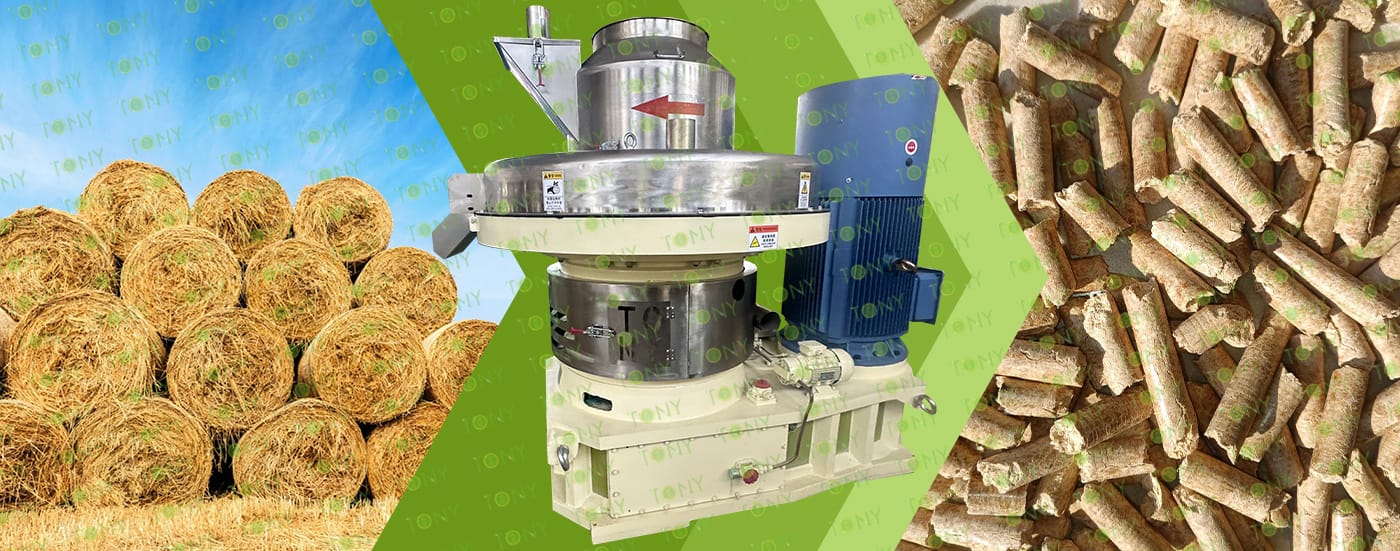
(2)Pellet Machine:The core is a ring die pelletizer with a longer ring die life. The forming rate is higher.
(3)Cooling and Screening Equipment:No need for significant dehumidification (only moisture content needs to be stabilized at 10%-15%), resulting in lower fan energy consumption.
3.Application scenarios of dried hay/grass/alfalfa biomass pellet processing equipment
(1)Boilers in small and medium-sized enterprises:Many small and medium-sized enterprises need to use boilers in their production process. Traditional coal-fired boilers are gradually restricted due to environmental issues. Biomass pellet fuel, as a clean energy, can replace coal for the boilers of these enterprises.
(2)Home heating and hot water systems:With the improvement of environmental awareness and the government's support for clean energy, biomass pellet fuel has also begun to enter the home market. It can be used for home heating and hot water systems, such as fireplaces, heating stoves, etc.
(3)Agriculture and forestry:In the fields of agriculture and forestry, biomass pellet fuel can be used to dry grains, heat greenhouses, etc. In addition, biomass pellet fuel made from crop waste can also help farmers deal with agricultural waste such as straw and reduce environmental pollution.
(4)Industrial production:Some industrial production processes require a lot of heat energy, such as food processing, textiles and other industries. Biomass pellet fuel can be used as a heat energy source for these industries, reducing dependence on traditional fossil fuels.
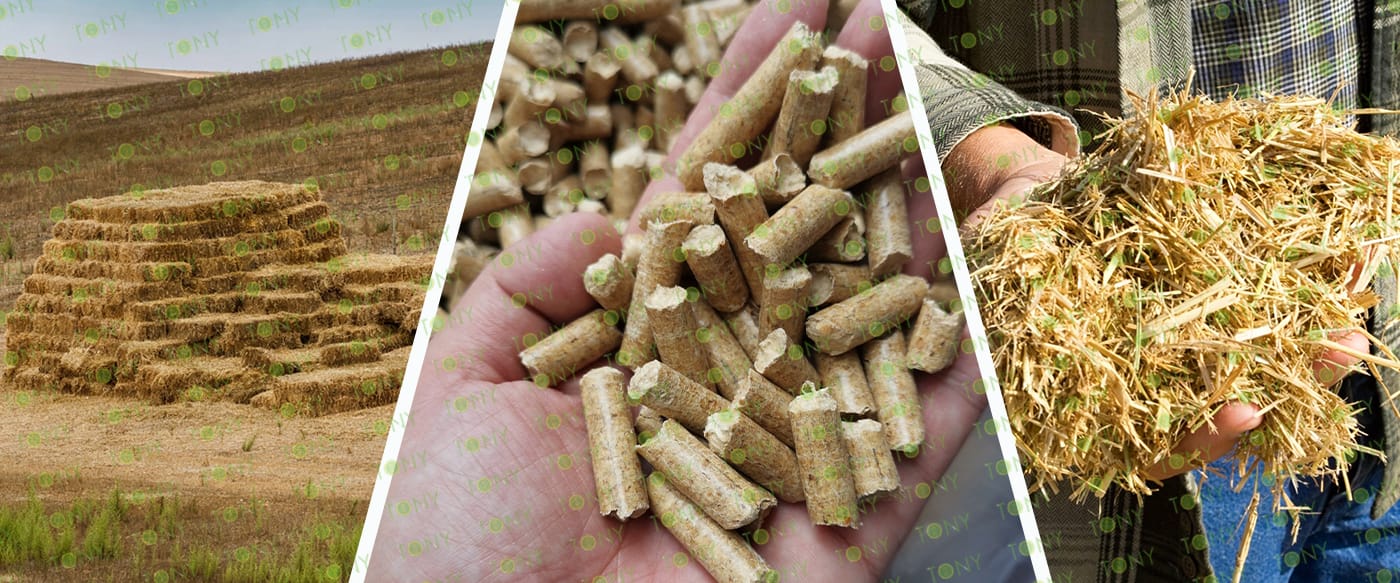
TONY Brand 40-50TPH Dried Hay/Grass/Alfalfa Line can process dried grass and various biomass materials related to agricultural waste into biomass pellets. Grass processed into biomass pellets has a wide range of uses. As fuel: Grass pellets can be used as fuel for power plant boilers, industrial boilers, and residential heating. Its calorific value is similar to coal, but it is cheaper and produces fewer pollutants during combustion, making it a more environmentally friendly fuel. As animal feed: Grass pellets processed by a grass pellet mill can be used as livestock feed. This method can make full use of grass, reduce feed costs, and also help solve the problem of grass disposal. These uses can not only effectively use agricultural waste, reduce environmental pollution, but also create economic benefits and promote sustainable agricultural development.
1. Capacity: 40-50Ton/Hour
2. Raw materials: Dried Hay/Grass/Alfalfa
3. Moisture: About 10-15%
4. Application: All kinds of biomass materials suitable for pellet production.
Suitable customers: Green energy companies, agricultural cooperatives, and small - scale rural processing units that have ready access to dried grass and related agricultural residues.
5. Finished Pellets Markets: The core applications of grass pellets revolve around two main directions: "clean energy substitution" and "feed supplementation," covering diverse scenarios such as industrial heating, agricultural breeding, and residential heating. This not only solves the pollution problem caused by grass waste but also provides low-cost energy and feed resources.
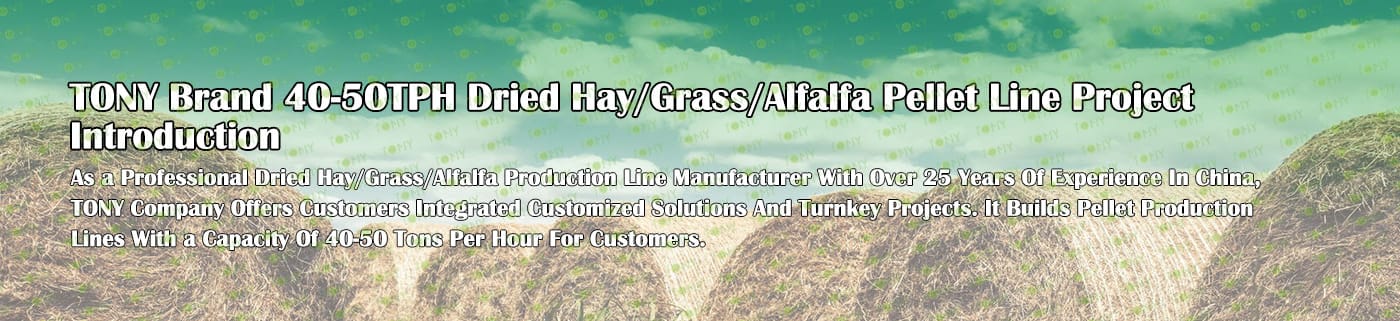
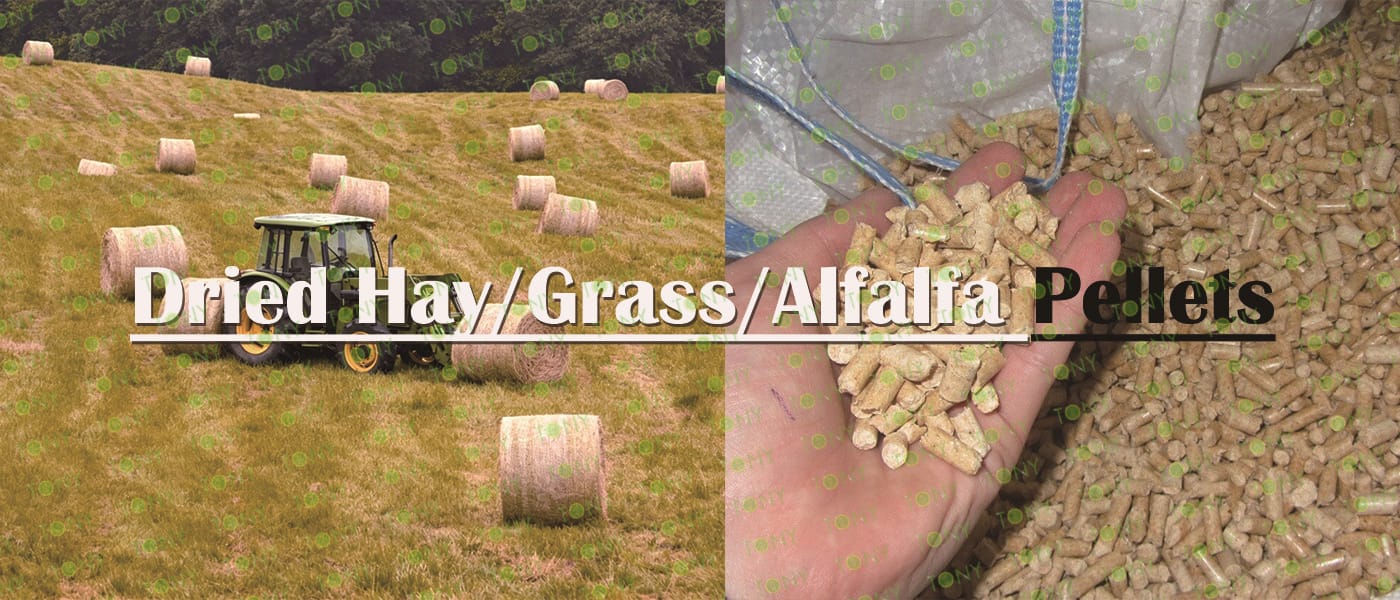
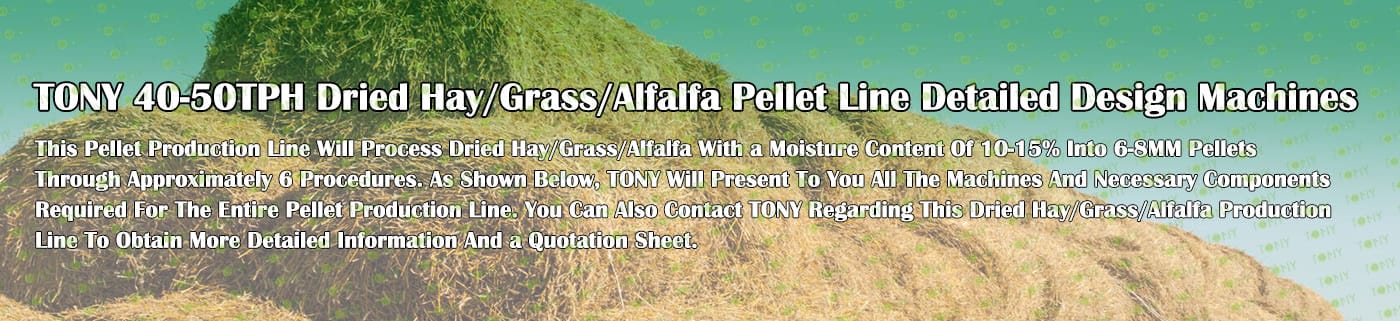
1. Project Name: Dried Hay/Grass/Alfalfa Pellet Production Line
2. Raw Material: Bales of Dried Hay/Grass/Alfalfa
3. Moisture Content of Raw Material:10-15%
4. Capacity: 40-50TPH
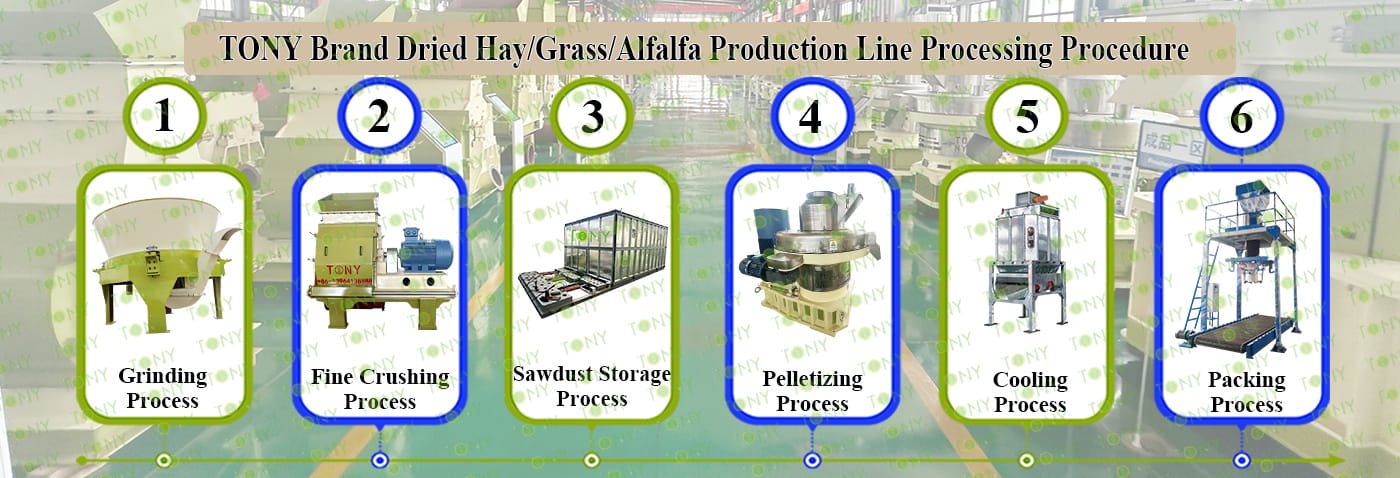
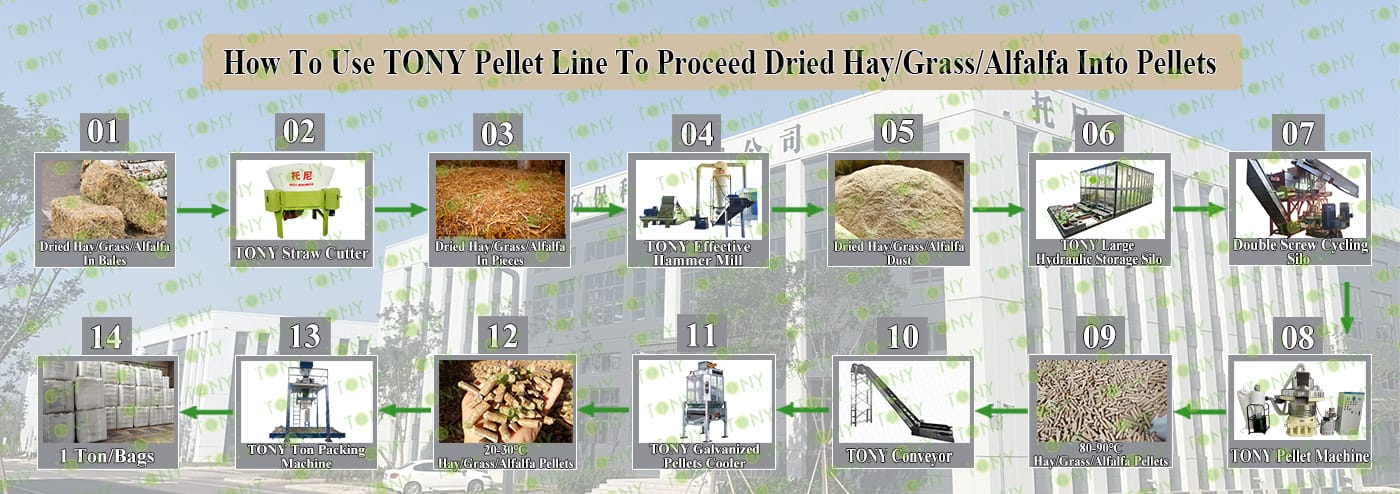
5. Process: Grinding Process - Fine Crushing Process - Grass Dust Storage Process - Pelletizing Process - Cooling Process - Packing Process
6. Main Equipment: Straw Cutter -TPX3500-200KW, Effective Hammer Mill- TFD120-200-355KW, TONY Large Hydraulic Storage Silo,TONY Pellet Machine-TYJ860-III-280KW, Galvanized Pellets Cooler, Ton Packing Machine and Belt Conveyors
|
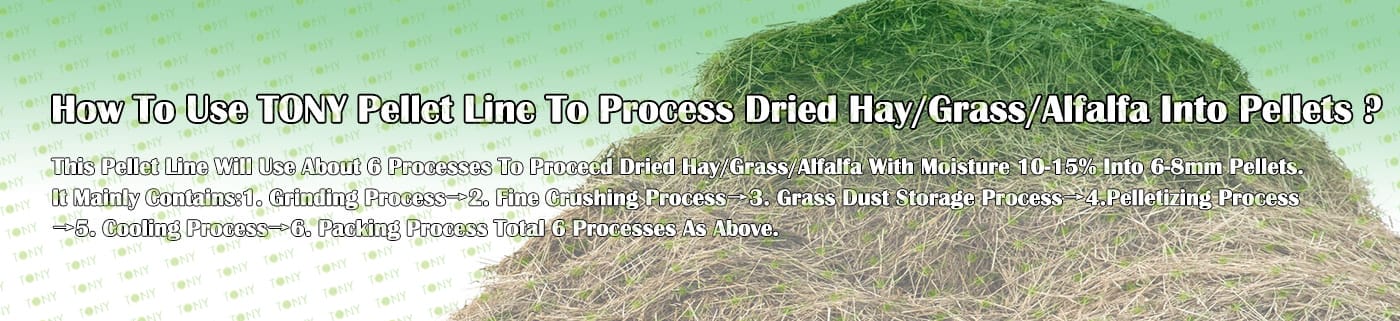
How To Use TONY Pellet Line To Proceed From Dried Hay/Grass/Alfalfa Into Pellets? It mainly contains the following steps and machines as following: 1.Use TONY straw cutter to grind dried hay/grass/alfalfa bales φ ≤3m into 60-70mm dried hay/grass/alfalfa pieces. 2.Use TONY effective hammer mill to crush 60-70mm dried hay/grass/alfalfa pieces into 8-14mm dried hay/grass/alfalfa dust. 3.Use TONY large hydraulic storage silo to storage 8-14 mm dried hay/grass/alfalfa dust. 4.Use TONY vertical ring die pellet machine to products pellets with φ6-8mm. 5.Use TONY galvanized pellets cooler to cool pellets from 80-90℃ to 20-30℃. 6.Use TONY ton packing machine to pack the pellets into 1 ton/bags. You can contact TONY to get for more details information and quotation. TONY can supply you all the products as above with competitive price and excellent quality. |
|
||||||||||||||||||||||||||||||||||||||||||||||||||
| Next, TONY Will Introduce To You All The Necessary Machinery That Will Be Used For The Whole Pellet Production Line. Some Machines Can Be Custom - Made By Customers According To Different Customers' Detailed Demands. Contact TONY For More Details, Including Quotation And Layout. | ||
 |
 |
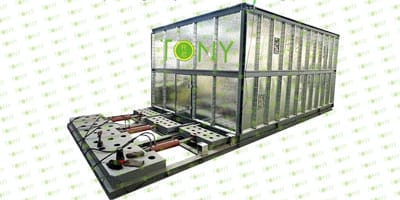 |
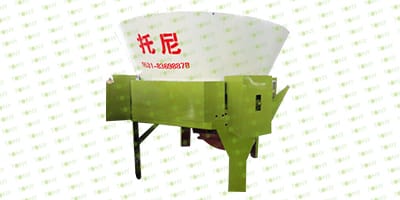
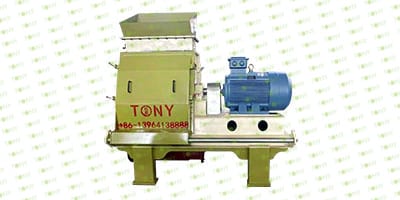
| Straw Cutter | Effective Hammer Mill | Large Hydraulic Storage Silo |
| 1.To Grind Dried Hay/Grass/Alfalfa Bales Diameter ≤3m Into 60-70mm Dried Hay/Grass/Alfalfa Pieces 2.Model:TPX3500-200KW*4Sets 3.Capacity:10-12Ton/Hour/Set |
1.To Crush 60-70mm Dried Hay/Grass/Alfalfa Pieces Into 8-14mm Dried Hay/Grass/Alfalfa Dust. 2.Model: TFD120-200-355KW*4Sets 3.Capacity:13-15Ton/Hour/Set |
1.To Storage Dried Hay/Grass/Alfalfa Dust Before Pellet machine 2.Model: TCY-35*4sets 3.TONY Uses Galvanized Material |
 |
 |
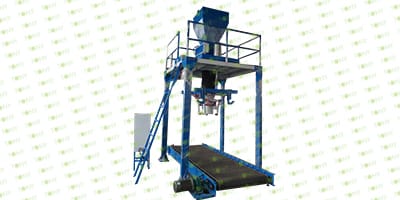 |
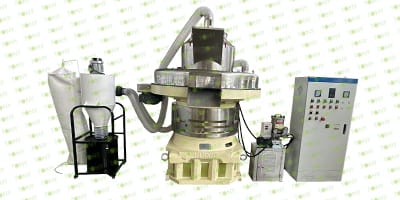
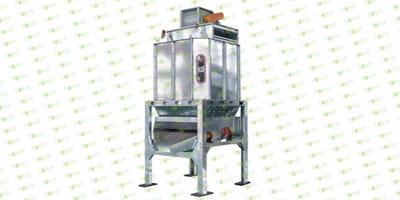
| Vertical Ring Die Pellet Machine | Galvanized Pellets Cooler | Ton Packing Machine |
| 1.To Press Hay/Grass/Alfalfa Dust Into 6-8mm Biomass Pellets 2.Model:TYJ860-III-280KW*10Sets 3.Capacity:4-5Ton/Hour/Set 4.New 304SS Type |
1.To Cool Pellets From 80-90℃ to 20-30℃ 2.Model:TCN-10*2Sets 3.Capacity:40-50Ton/Hour |
1.To Pack Pellets Into 1 Ton/Bags. 2.Model: TBD*2Sets 3.Capacity: 40-50Ton/Hour |
1.Grinding Process:
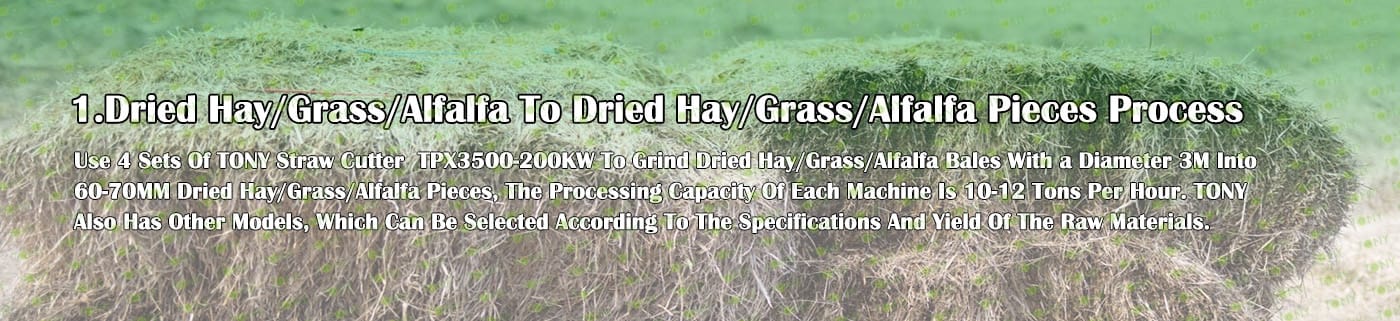
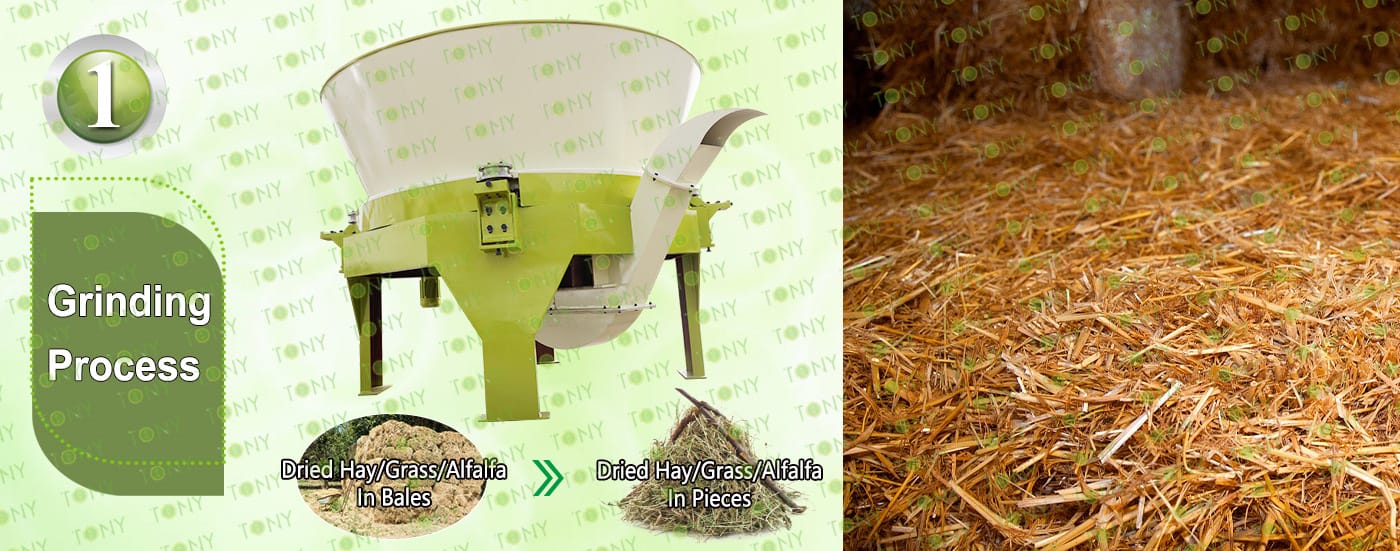
A.The process is mainly used to grind dried hay/grass/alfalfa within 3m in diameter into dried hay/grass/alfalfa pieces. The rotary cutting mode of the outer chain of the gear, the rotary cutting rotor blade is sharp, and the blade types are various, which can be rotated to cut various bales of grass with different diameters, different thicknesses, different lengths and different water contents
B.TONY brand straw cutter TPX3500-200KW models *4sets
C.Capacity:10-12ton/hour/set
Main Parts:
(1)Tony's New Straw Cutter
(2)Enlarged Turntable
(3)Rotary Cutting System
(4)Drive system
(5)Electrical Cabinet.
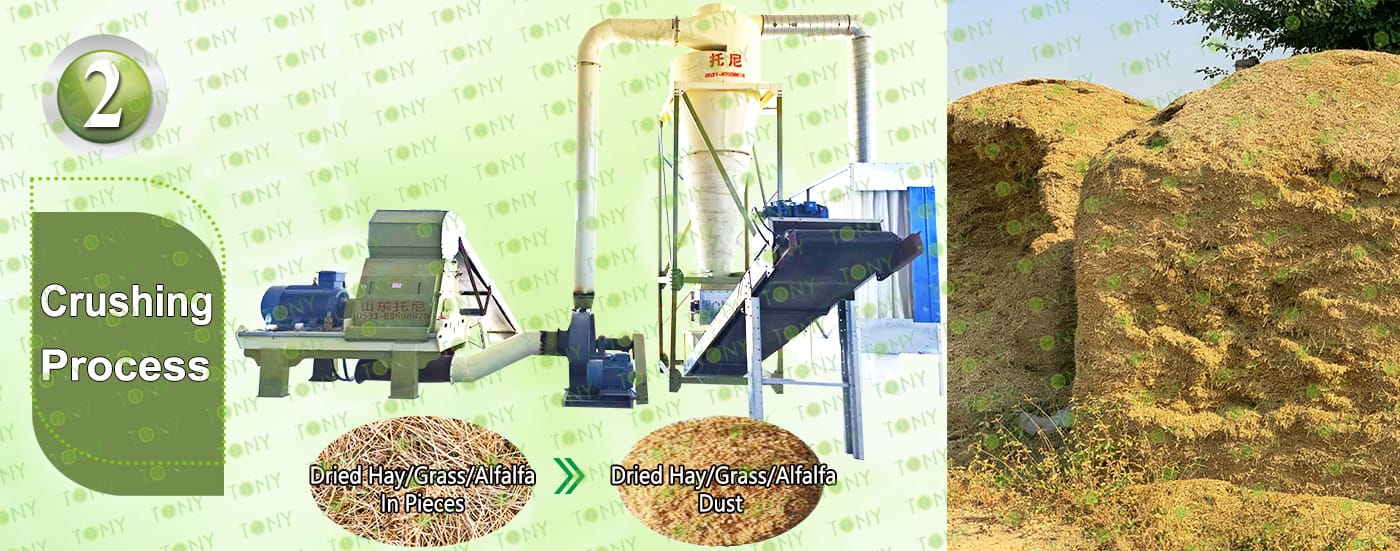
2.Fine Crushing Process
A. The process is mainly used to crush 60-70mm dried hay/grass/alfalfa pieces into 8-14mm dried hay/grass/alfalfa dust.
B.TONY brand effective hammer mill TFD120-200-355KW *4sets
C.Capacity: 40-50tons/hour.
Main parts:
(1)TONY Effective Hammer Mill
(2)Galvanized Dust Collector.
(3)Sawdust Conveying Fan.
(4)Cyclone With Airlock.
(5)Electrical Cabinet.
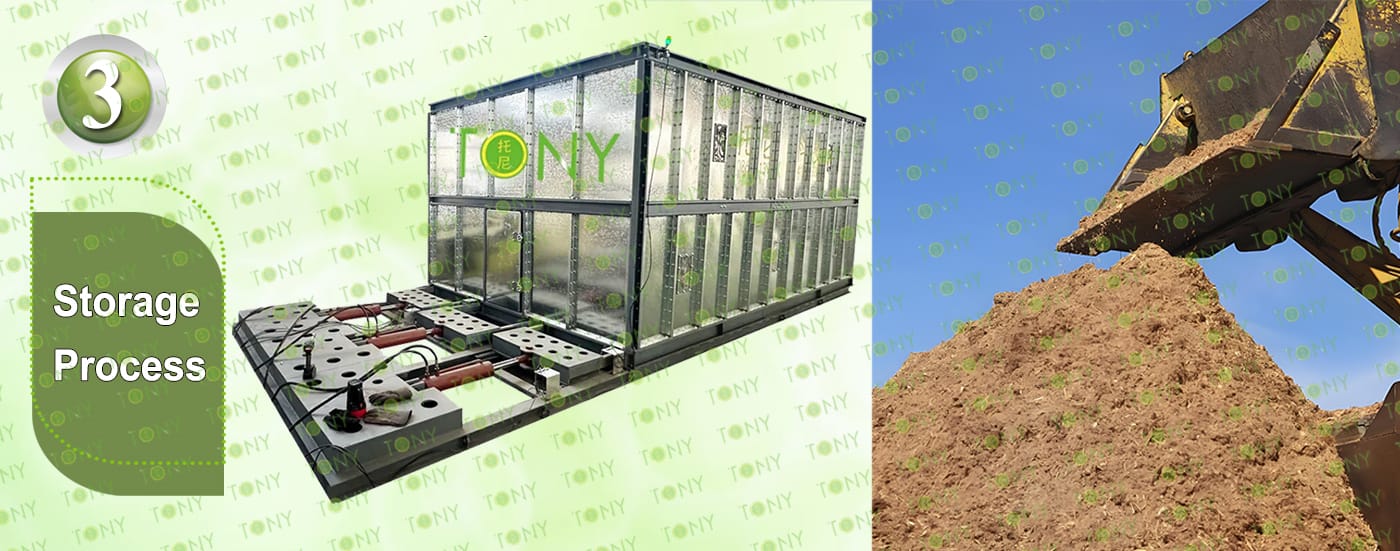
3.Hay/Grass/Alfalfa Dust Storage Process:
A. This process is mainly used to storage the hay/grass/alfalfa dust that comes out of the hammer mill.It is hydraulic galvanized storage silo which is more stable and hay/grass/alfalfa dust in it is not easy to be blocked.
B.TONY Brand Large Hydraulic Storage Silo to storage the hay/grass/alfalfa dust that comes out of the hammer mill.This process can be optional by customer.If customer do not chose the storage bin,he can storage the sawdust on the ground directly which may need some labour.
Main Parts:
(1)TONY's New Large Hydraulic Storage Silo.
(2)With Screws Inside the Storage Bin to Prevent Hay/Grass/Alfalfa Dust Blocked.
4.Pelletizing Process:
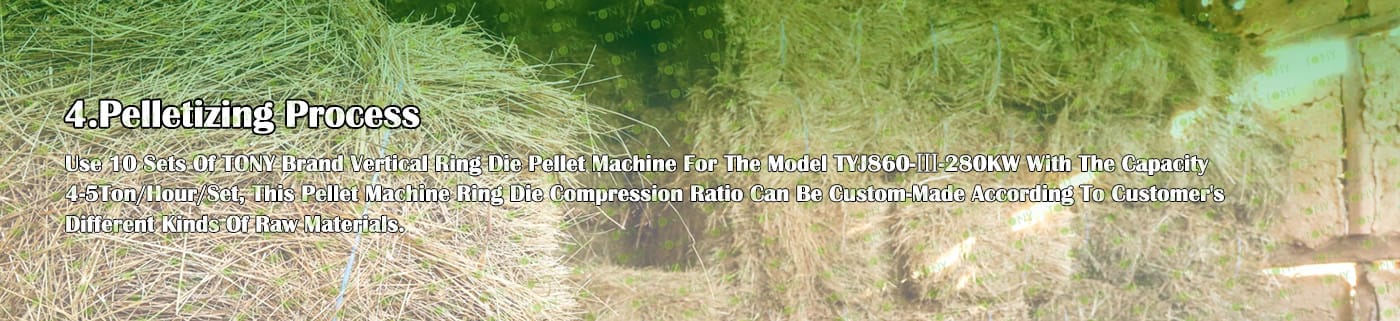
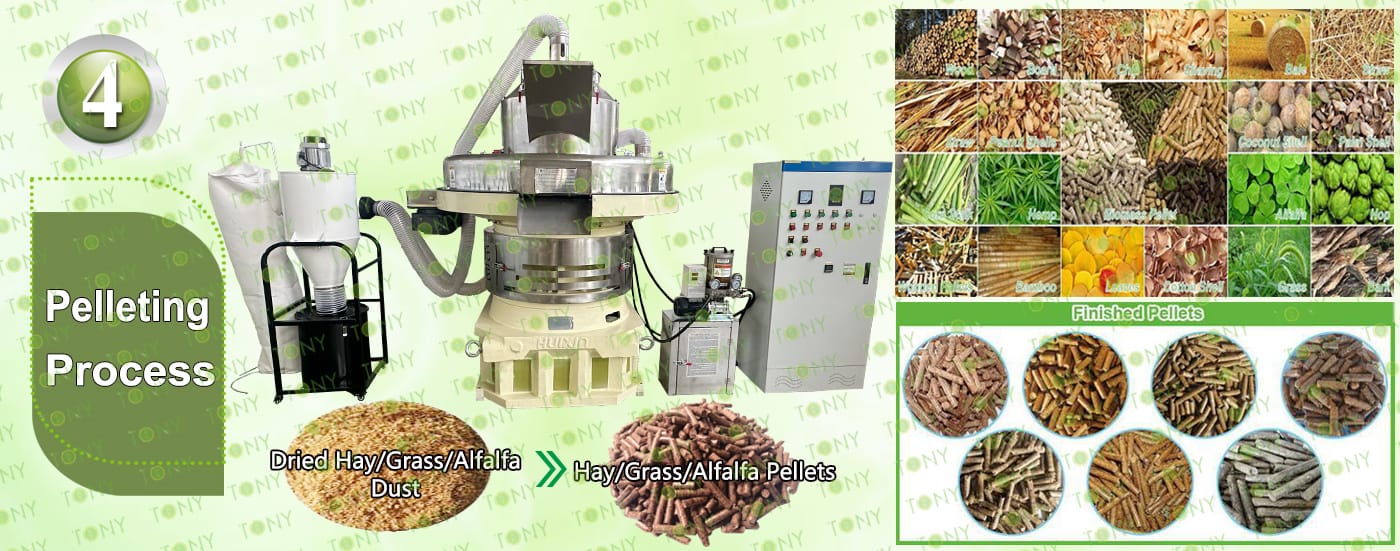
A.This process is mainly used to products pellets with φ6-8mm.
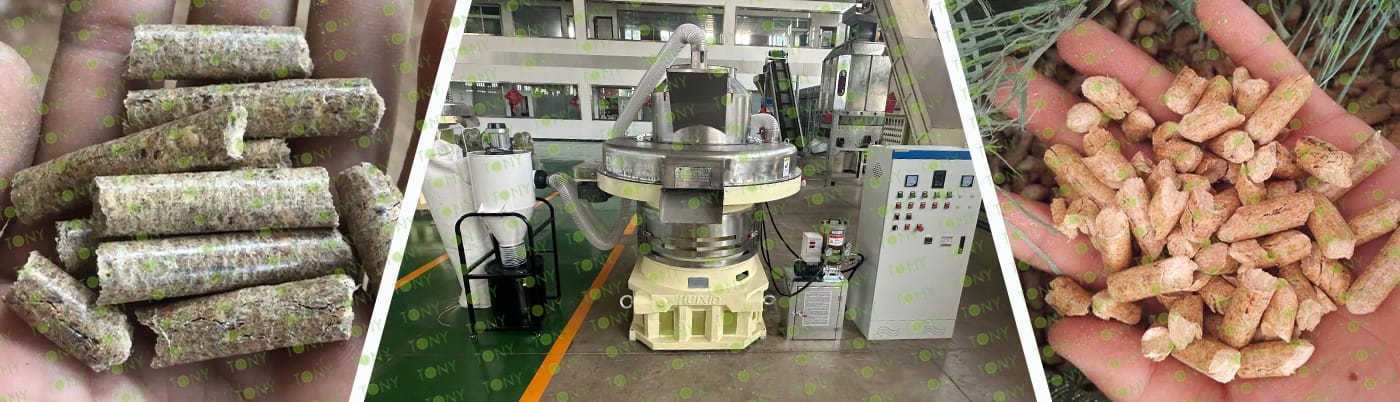
B.TONY brand vertical ring die pellet machine TYJ860-Ⅲ-280KW *10sets
C. Capacity:40-50tons/hour.
D.Double Screw Cycling Silo is added above the pellet machine, which has the advantages of saving space, saving labor, intelligently controlling the feeding speed, not easy to block the material, and improving production efficiency.
Main Parts:
(1)TONY New Vertical Ring Die Pellet Machine.
(2)Cyclone And Bags Dust Collectors.
(3)Bearings Automatic Lubrication System.
(4)Electrical Cabinets.
For more equipment details and information, you can contact TONY
5.Cooling Process:
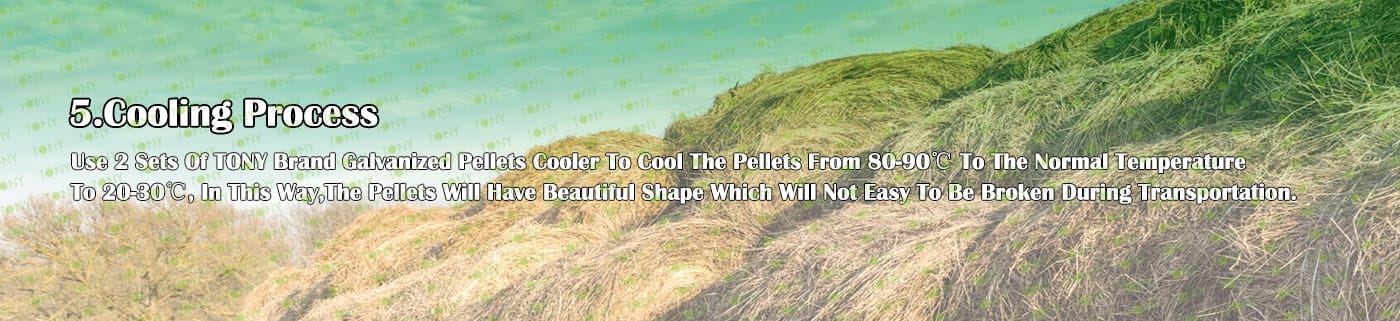
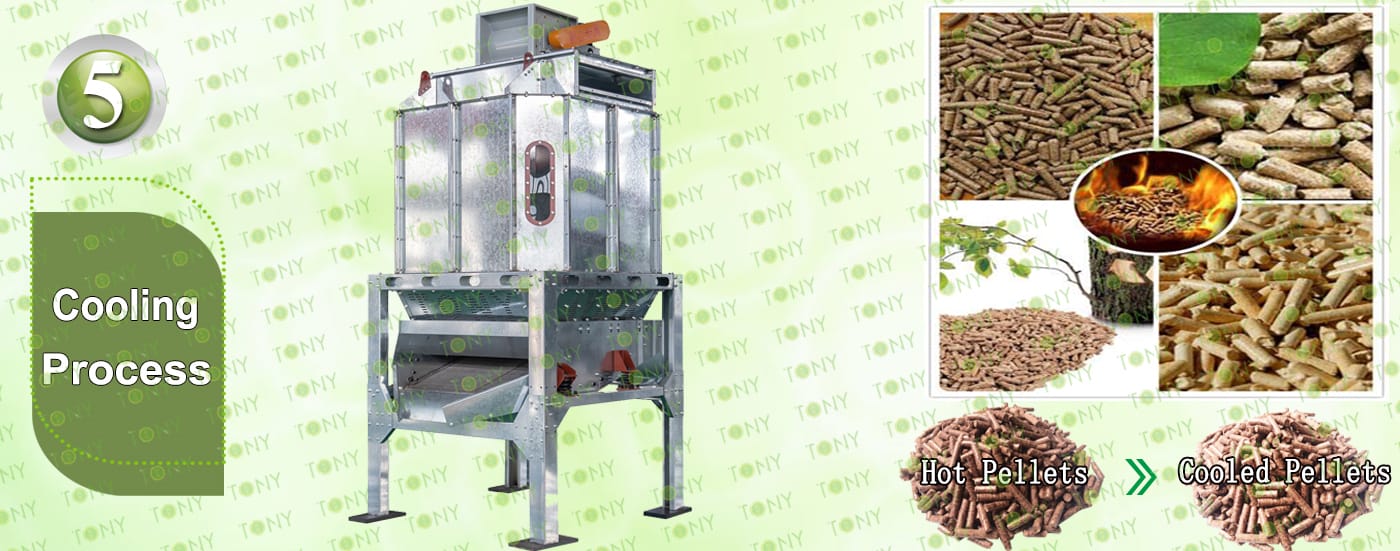
A.This process is mainly used to cool pellets from 80-90℃ to 20-30℃
B.TONY brand galvanized pellets cooler*2 sets
C.Capacity:40-50tons/hour.
Main Parts:
(1)TONY's New Galvanized Pellets Cooler Separator With Vibrating Screen.
(2)Cyclone and bags dust collectors.
(3)Fan Blower.
(4)Connect Pipes.
6.Packing Process:
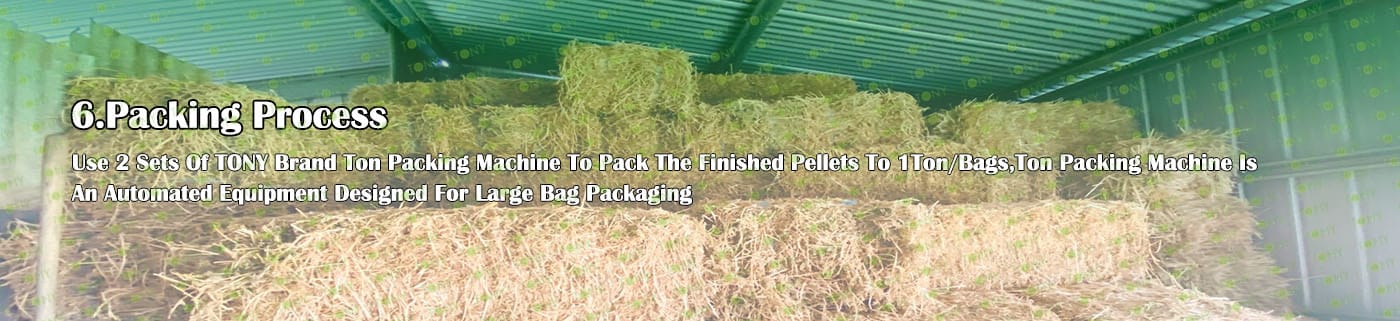
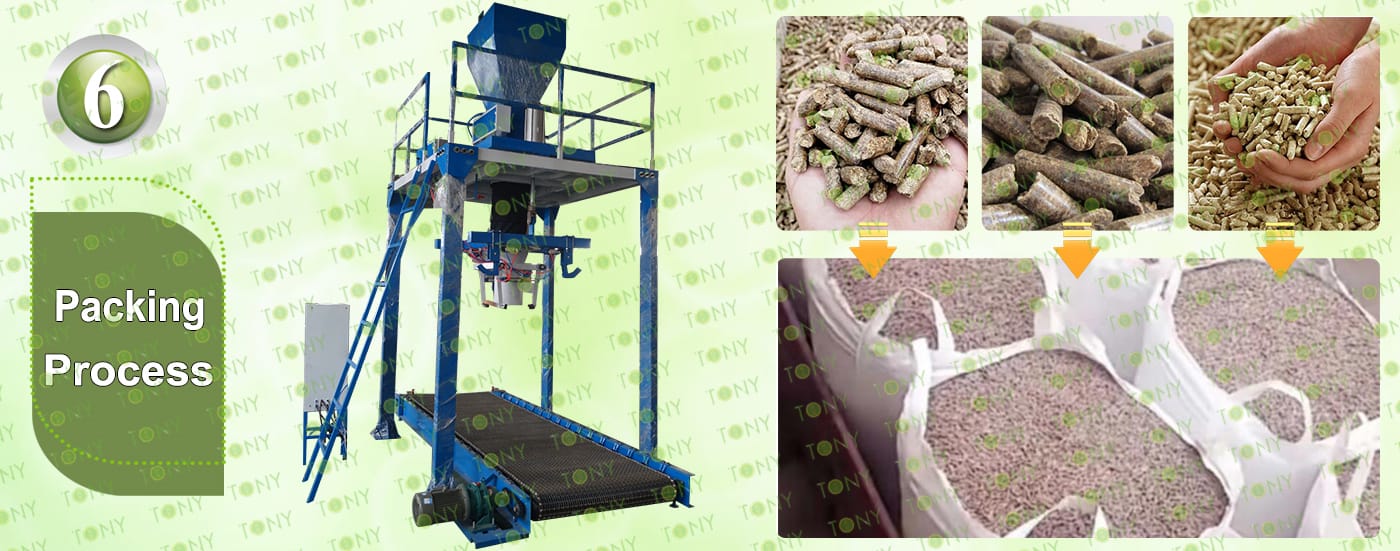
A.This process is mainly used to pack pellets into 1Ton/Bags.
B.TONY brand ton packing machine*2sets
C.Capacity: 40-50tons/hour.
Main Parts:
(1)TONY Ton Packing Machine
(2)Electronic Platform Scale Metering System
(3)Automatic Tare, Zero, and Drop Correction Functions
(4)Feeding System Features Fast, Medium, and Slow Feeding Speeds to Ensure Measuring Accuracy

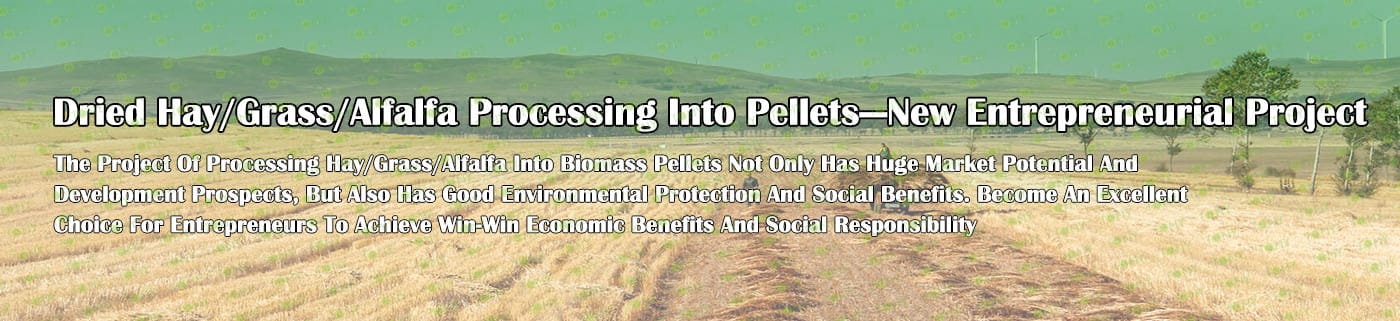
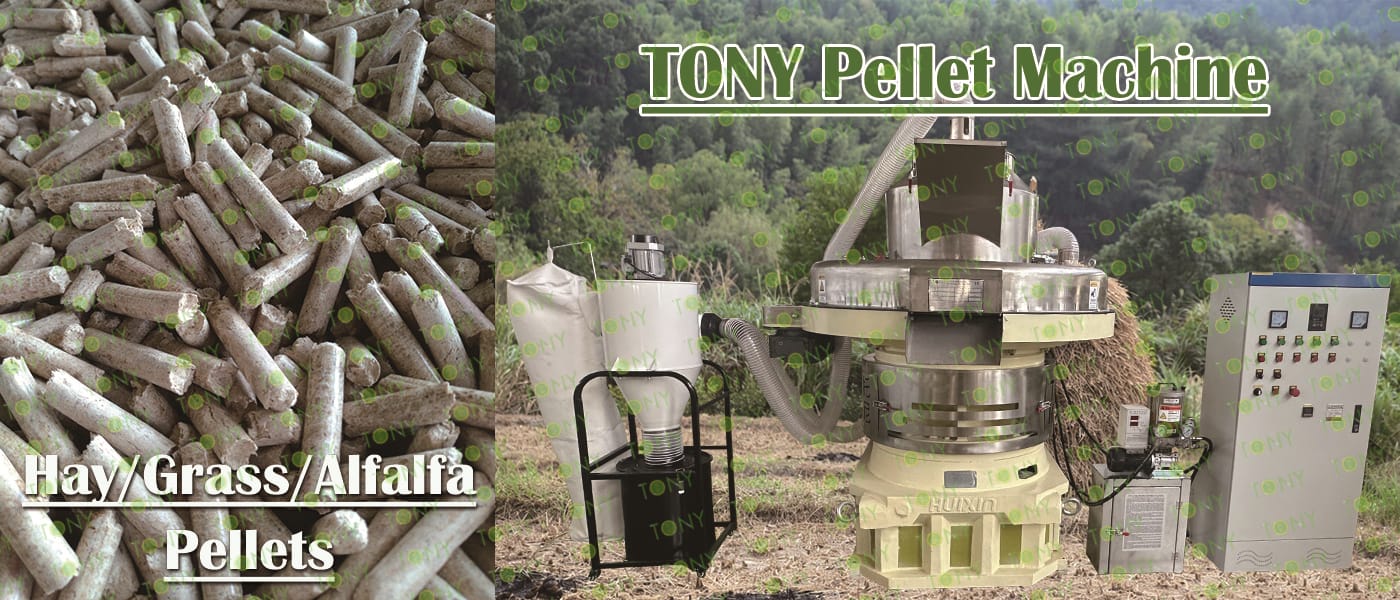
Biomass pellet fuel, produced using dried hay, grass, and alfalfa through crushing, pulverizing, and extrusion (compression) processes, replaces non-renewable fuels such as coal and oil, offering significant economic, environmental, and social benefits.
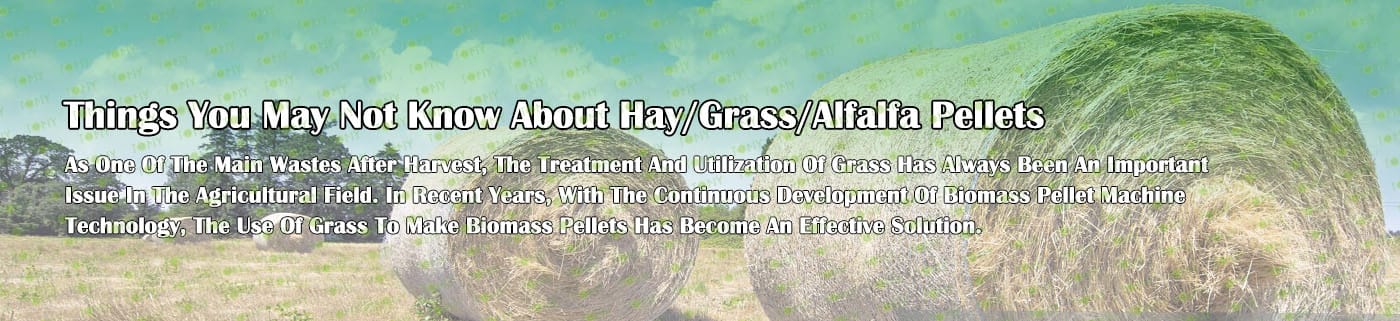
Changing energy consumption structures and controlling air pollution have become crucial issues for sustainable socio-economic development. How to find clean energy alternatives to fossil fuels like coal and oil? Biomass energy, as a renewable and clean energy source, is attracting increasing attention. Using dried hay, grass, and alfalfa through crushing, pulverizing, and extrusion (compression) processes to produce biomass pellet fuel offers significant economic, environmental, and social benefits, specifically in the following aspects:
1.Economic Benefits
Using dried hay, grass, and alfalfa as raw materials for biomass pellet fuel is advantageous because these are agricultural waste resources, abundant, readily available, and very inexpensive. Even with the addition of fuel and power costs, wages and benefits, equipment depreciation, and other costs, the overall cost remains low. Currently, the price of hay pellets in the market continues to rise, which can bring substantial economic benefits to customers.
2.Environmental Benefits
Improper handling of dried hay/grass/allfalfa can pollute the environment to some extent. Pellets made from dried hay/grass/allfalfa, when burned in a dedicated gasification boiler, achieve a thermal efficiency of up to 81%. Carbon dioxide and sulfur dioxide emissions are close to zero. It can replace non-renewable fuels such as coal and oil, and reduce the environmental impact of waste.
3.Social Benefits
The completion of the dried hay/grass/allfalfa pellet production line project will not only increase revenue but also expand employment and reduce unemployment. Furthermore, this product can replace non-renewable energy sources, addressing the energy crisis and contributing to the establishment of a sustainable energy system and the promotion of economic development.
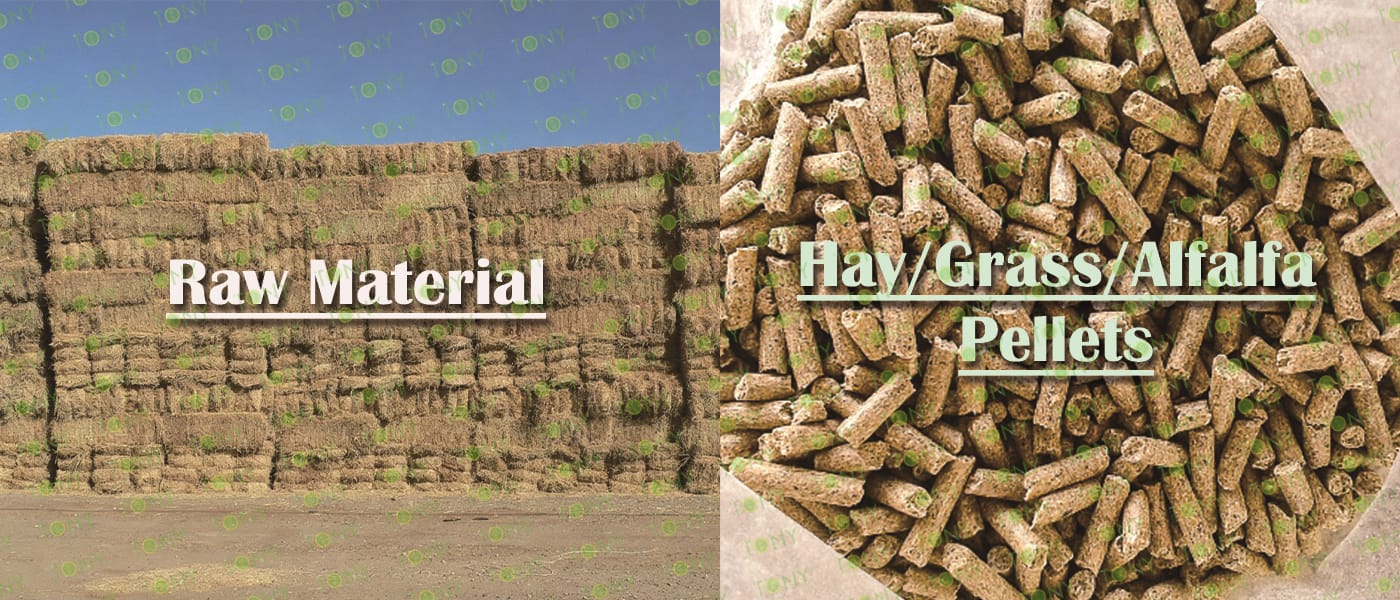
Biomass pellet fuel has the characteristics of energy saving, environmental protection, saving non-renewable resources, and alleviating the contradiction between electricity and oil shortages. With the continuous promotion and application of biomass fuel, the future demand for biomass pellet fuel will inevitably increase significantly, and the market prospects are very broad.
Superior Environmental and Sustainable Development Advantages
1.Clean Combustion:
Emissions of sulfur dioxide and nitrogen oxides during combustion are far lower than those of coal, with an ash content of only 2%-5%, resulting in minimal air pollution and meeting the environmental emission standards of most regions.
2.Zero Carbon Emissions:
Hay/Grass/Alfalfa absorbs carbon dioxide during its growth. The carbon dioxide released after pellet combustion can be absorbed by new crops, forming a "carbon neutrality" cycle, in line with the "dual carbon" policy.
3.Resource Recycling:
The raw materials are mostly surplus Hay/Grass/Alfalfa or agricultural waste, avoiding problems such as moldy hay and straw burning, truly turning waste into treasure.
2025 Tony Machinery - All Rights Reserved. Map