




















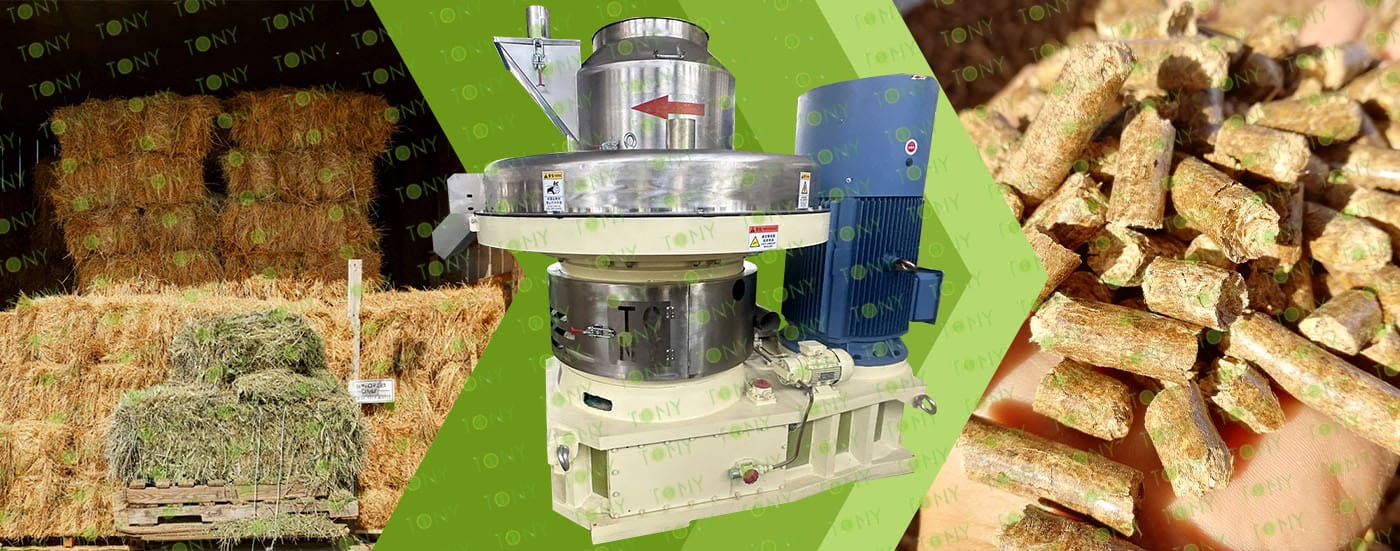
1.The working principle of dried hay/grass/alfalfa biomass pellet processing equipment
(1)Raw Material Pretreatment:Hay/Grass/Alfalfa powder is crushed to a particle size of 3-5mm to remove impurities and prevent clogging or loosening.
(2)Extrusion Molding:After the material enters the pelleting chamber, it is pressed into the ring die hole by pressure rollers, forming pellets through friction against the inner wall of the die.
(3)Pellet Shaping:After cooling and sieving, the extruded pellets meet the required hardness and density (approximately 0.8-1.3 t/m³).
2.Characteristics of dried hay/grass/alfalfa biomass pellet processing equipment
(1)The Dried grass pellet biomass pellet processing equipment has the characteristics of high efficiency and low energy consumption. It can quickly process biomass raw materials into fuel pellets and improve production efficiency.
(2)The biomass pellet machine has molds of various specifications. The corresponding molds can be selected for processing according to different biomass raw materials, improving the adaptability of processing.
(3)The biomass pellet processing equipment has a high degree of automation and good safety, effectively reducing labor intensity and improving production efficiency.
(4)The quality specifications of the pellet biomass fuel processed by the Dried grass biomass pellet processing equipment are stable and meet the production standard requirements.
3.Application scenarios of dried hay/grass/alfalfa biomass pellet processing equipment
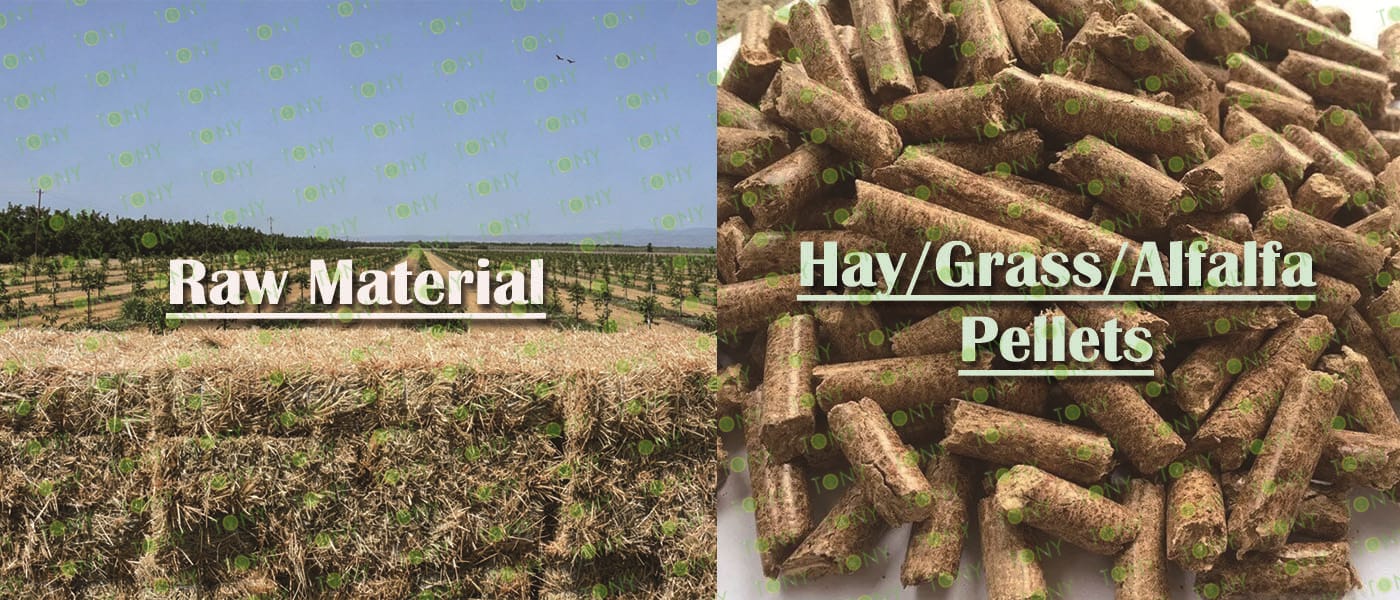
Dried grass pellet processing equipment is mainly used in three scenarios: large-scale animal husbandry, agricultural waste resource utilization, and biomass energy production. The core function is to convert dried grass into pellets that are easy to use, store, or transport.
(1)Feed preparation for large-scale animal husbandry
In large-scale farms for herbivorous animals such as cattle, sheep, and rabbits, this equipment can directly process fresh grass and silage dried grass into pellet feed. Pellets are small in size, which is convenient for centralized storage and precise feeding in farms, reducing feed waste during transportation and feeding. Conditioning during the pelleting process can improve the palatability and digestibility of grass feed, helping to improve breeding efficiency.
(2)Resource utilization of agricultural waste
The equipment can convert dried grass agricultural waste generated after harvesting into usable pellet products. The processed pellets can be used as supplementary feed for ruminants, realizing "turning waste into treasure" and reducing breeding costs. They can also be used as raw materials for organic fertilizers, and after subsequent fermentation treatment, they are returned to farmland to reduce environmental problems caused by straw burning.
(3)Production of Biomass Energy Pellets
In the field of biomass energy, equipment can process dried herbaceous plants with suitable moisture content into biomass pellet fuel.
The formed pellet fuel has high density and stable combustion efficiency, and can replace coal in small boilers, home heating stoves, and other applications.
Compared to loose wet grass, pellet fuel is easier to transport over long distances and store for extended periods, reducing energy transportation and storage costs.
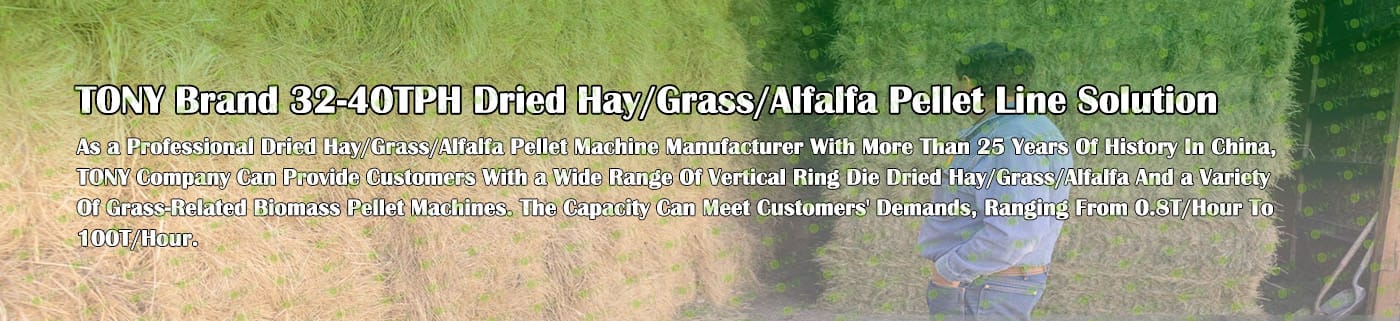
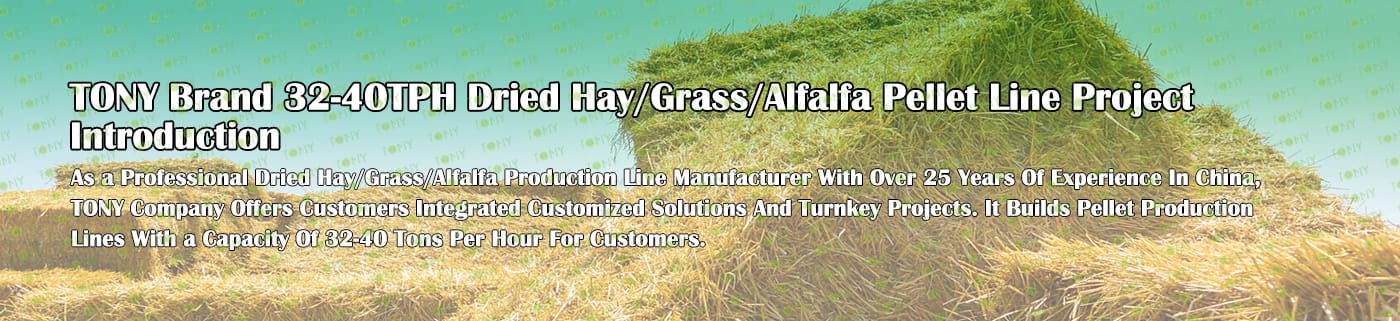
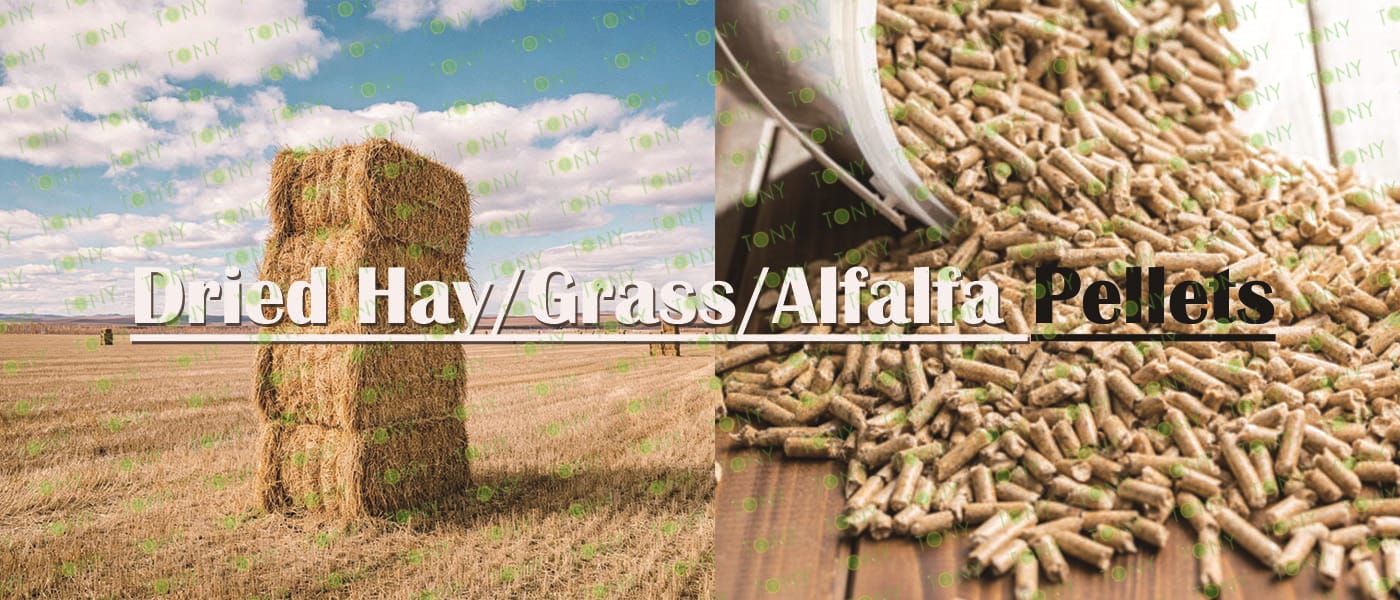
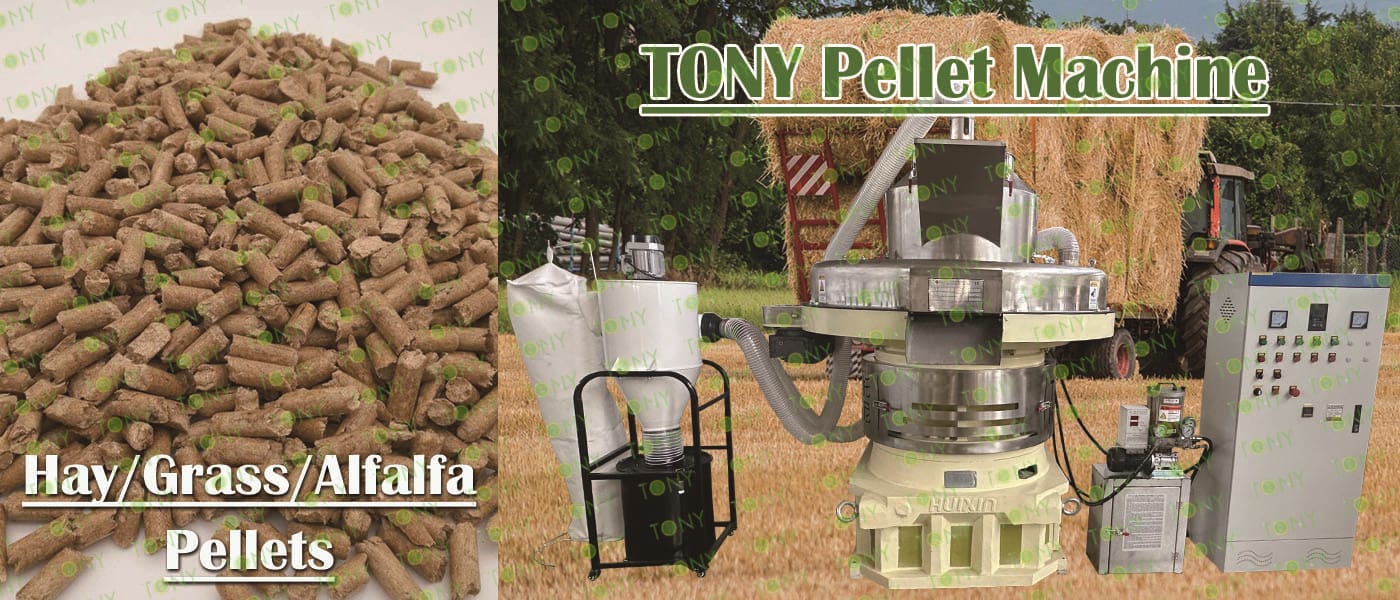
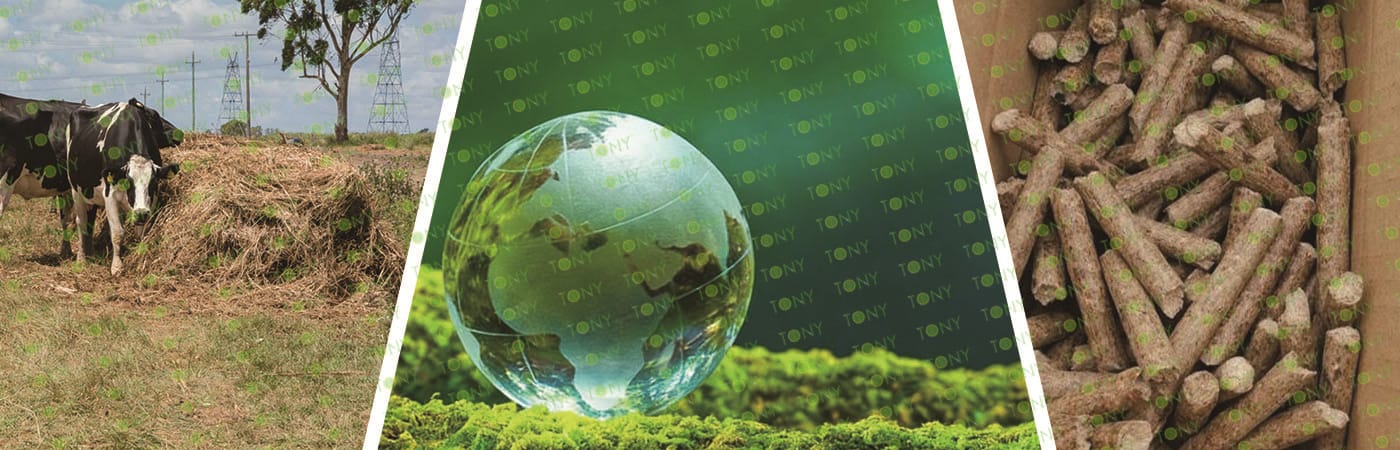
TONY Brand 32-40TPH Dried Hay/Grass/Alfalfa Line can process dried grass and various biomass materials related to agricultural waste into biomass pellets. Grass processed into biomass pellets has a wide range of uses. As fuel: Grass pellets can be used as fuel for power plant boilers, industrial boilers, and residential heating. Its calorific value is similar to coal, but it is cheaper and produces fewer pollutants during combustion, making it a more environmentally friendly fuel. As animal feed: Grass pellets processed by a grass pellet mill can be used as livestock feed. This method can make full use of grass, reduce feed costs, and also help solve the problem of grass disposal. These uses can not only effectively use agricultural waste, reduce environmental pollution, but also create economic benefits and promote sustainable agricultural development.
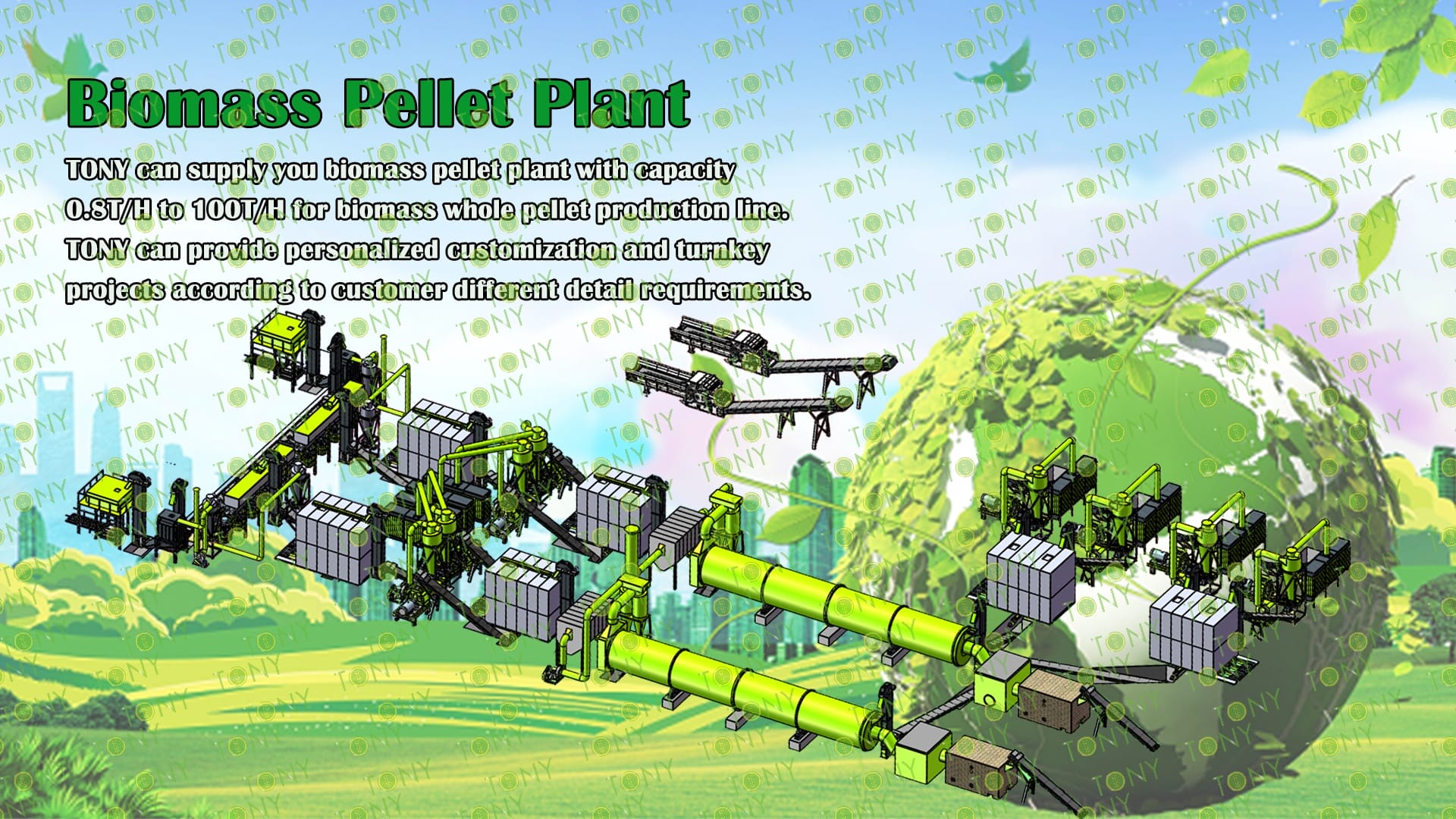
1. Capacity: 32-40Ton/Hour
2. Raw materials: Dried Hay/Grass/Alfalfa
3. Moisture: About 10-15%
4. Application: All kinds of biomass materials suitable for pellet production.
Suitable customers: Green energy companies, agricultural cooperatives, and small - scale rural processing units that have ready access to dried grass and related agricultural residues.
5. Finished Pellets Markets: The core applications of grass pellets revolve around two main directions: "clean energy substitution" and "feed supplementation," covering diverse scenarios such as industrial heating, agricultural breeding, and residential heating. This not only solves the pollution problem caused by grass waste but also provides low-cost energy and feed resources.
1. Project Name: Dried Hay/Grass/Alfalfa Pellet Production Line
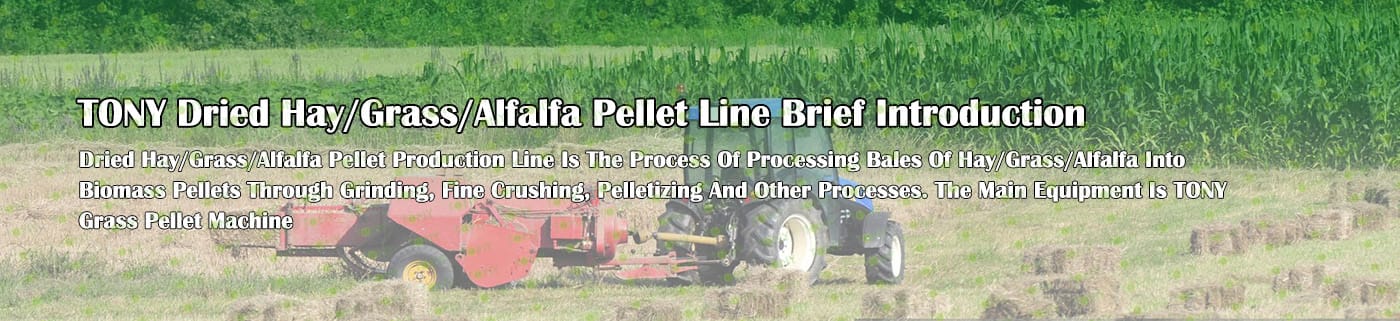
2. Raw Material: Bales of Dried Hay/Grass/Alfalfa
3. Moisture Content of Raw Material:10-15%
4. Capacity: 32-40TPH
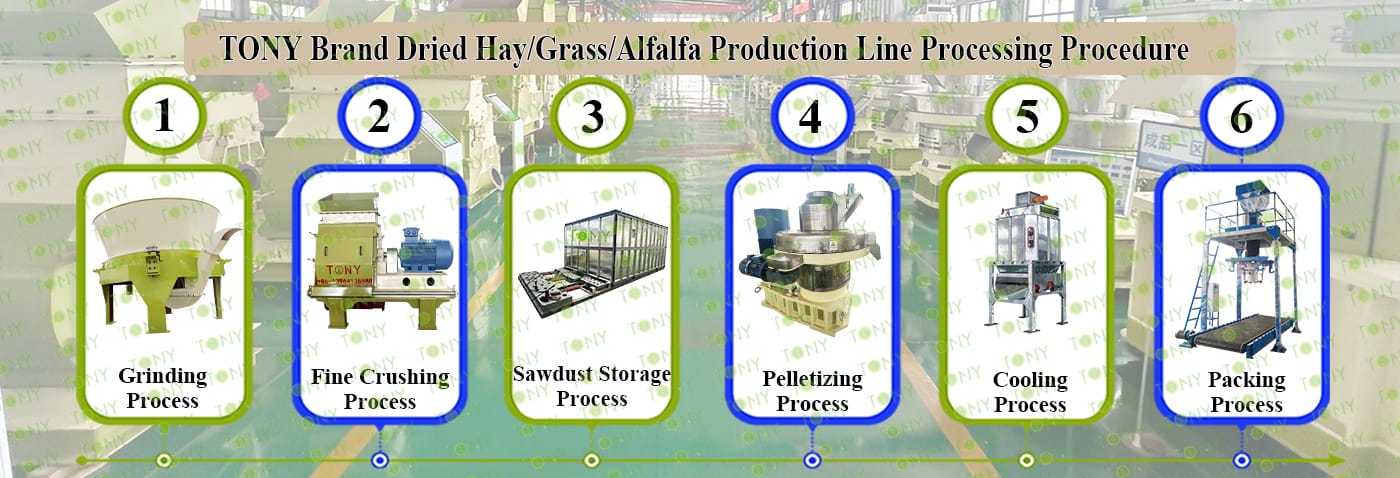
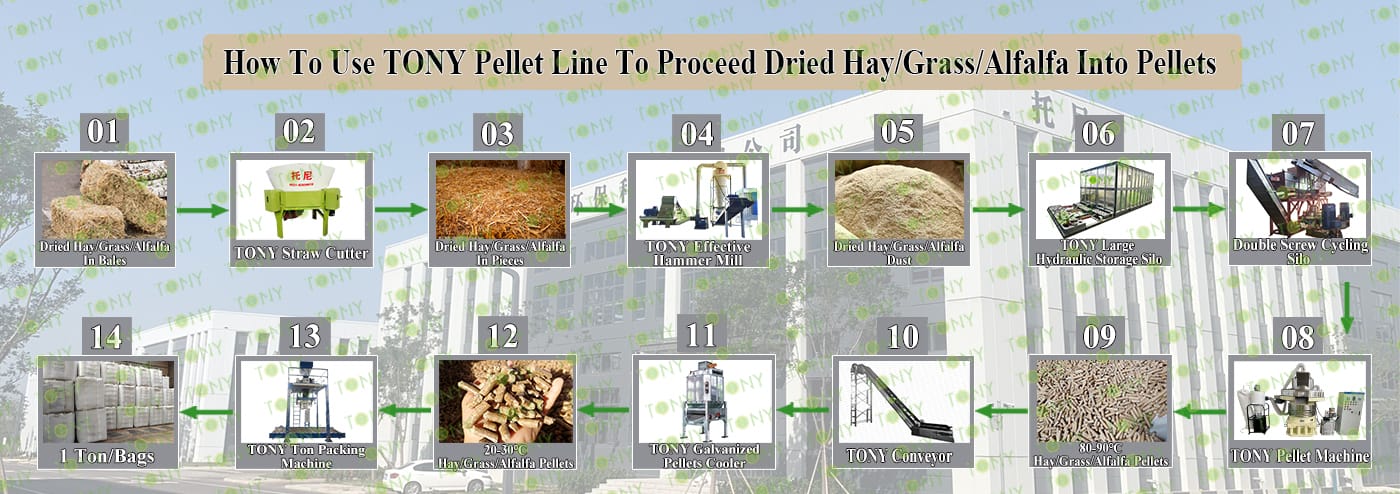
5. Process: Grinding Process - Fine Crushing Process - Grass Dust Storage Process - Pelletizing Process - Cooling Process - Packing Process
6. Main Equipment: Straw Cutter -TPX3500-160KW, Effective Hammer Mill- TFD100-200-315KW, TONY Large Hydraulic Storage Silo,TONY Pellet Machine-TYJ860-III-280kw, Galvanized Pellets Cooler, Ton Packing Machine and Belt Conveyors
|
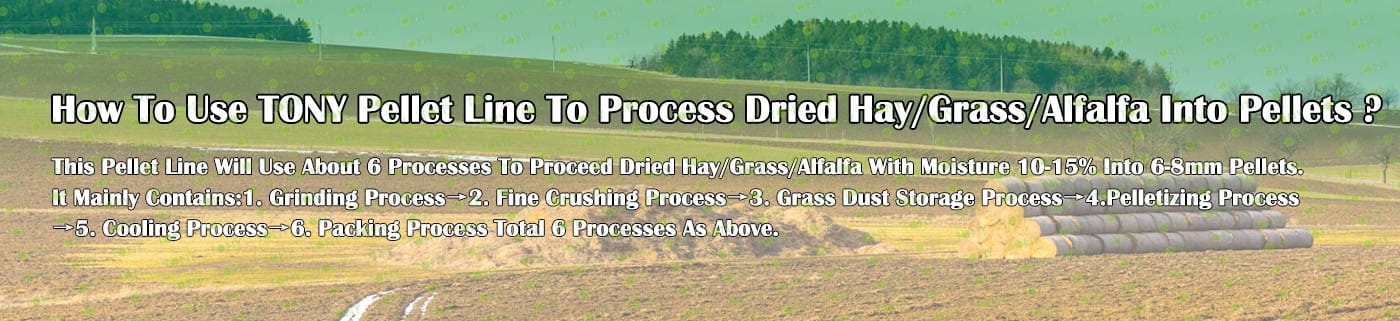
How To Use TONY Pellet Line To Proceed From Dried Hay/Grass/Alfalfa Into Pellets? It mainly contains the following steps and machines as following: 1.Use TONY straw cutter to grind dried hay/grass/alfalfa bales φ ≤3m into 60-70mm dried hay/grass/alfalfa pieces. 2.Use TONY effective hammer mill to crush 60-70mm dried hay/grass/alfalfa pieces into 8-14mm dried hay/grass/alfalfa dust. 3.Use TONY large hydraulic storage silo to storage 8-14 mm dried hay/grass/alfalfa dust. 4.Use TONY vertical ring die pellet machine to products pellets with φ6-8mm. 5.Use TONY galvanized pellets cooler to cool pellets from 80-90℃ to 20-30℃. 6.Use TONY ton packing machine to pack the pellets into 1 ton/bags. You can contact TONY to get for more details information and quotation. TONY can supply you all the products as above with competitive price and excellent quality. |
|
||||||||||||||||||||||||||||||||||||||||||||||||||
5.图片
原材料+颗粒图
颗粒+机器图
| Next, TONY Will Introduce To You All The Necessary Machinery That Will Be Used For The Whole Pellet Production Line. Some Machines Can Be Custom - Made By Customers According To Different Customers' Detailed Demands. Contact TONY For More Details, Including Quotation And Layout. | ||
 |
 |
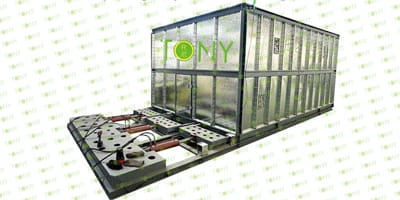 |
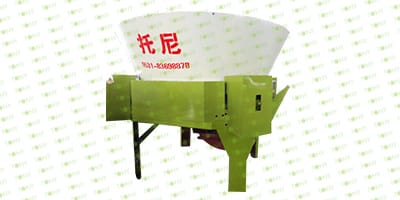
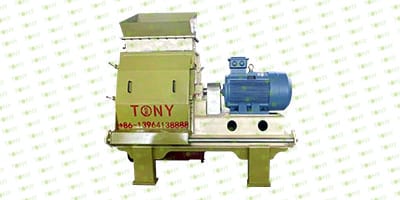
| Straw Cutter | Effective Hammer Mill | Large Hydraulic Storage Silo |
| 1.To Grind Dried Hay/Grass/Alfalfa Bales Diameter ≤3m Into 60-70mm Dried Hay/Grass/Alfalfa Pieces 2.Model:TPX3500-160KW*4Sets 3.Capacity:8-11Ton/Hour/Set |
1.To Crush 60-70mm Dried Hay/Grass/Alfalfa Pieces Into 8-14mm Dried Hay/Grass/Alfalfa Dust. 2.Model: TFD100-200-315KW*3Sets 3.Capacity:12-14Ton/Hour/Set |
1.To Storage Dried Hay/Grass/Alfalfa Dust Before Pellet machine 2.Model: TCY-35*3sets 3.TONY Uses Galvanized Material |
 |
 |
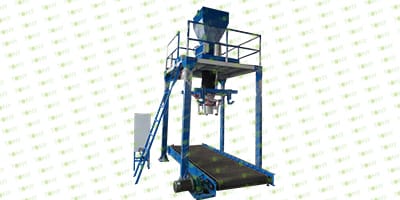 |
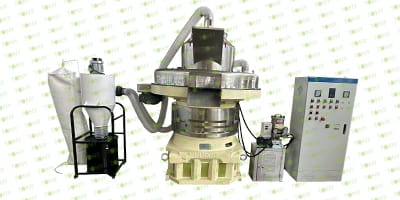
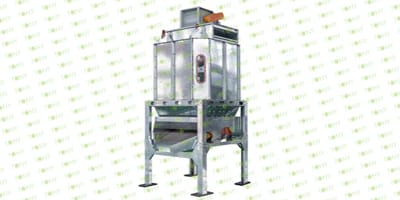
| Vertical Ring Die Pellet Machine | Galvanized Pellets Cooler | Ton Packing Machine |
| 1.To Press Hay/Grass/Alfalfa Dust Into 6-8mm Biomass Pellets 2.Model:TYJ860-III-280KW*8Sets 3.Capacity:4-5Ton/Hour/Set 4.New 304SS Type |
1.To Cool Pellets From 80-90℃ to 20-30℃ 2.Model:TCN-10*2Sets 3.Capacity:32-40Ton/Hour |
1.To Pack Pellets Into 1 Ton/Bags. 2.Model: TBD*2Sets 3.Capacity: 32-40Ton/Hour |
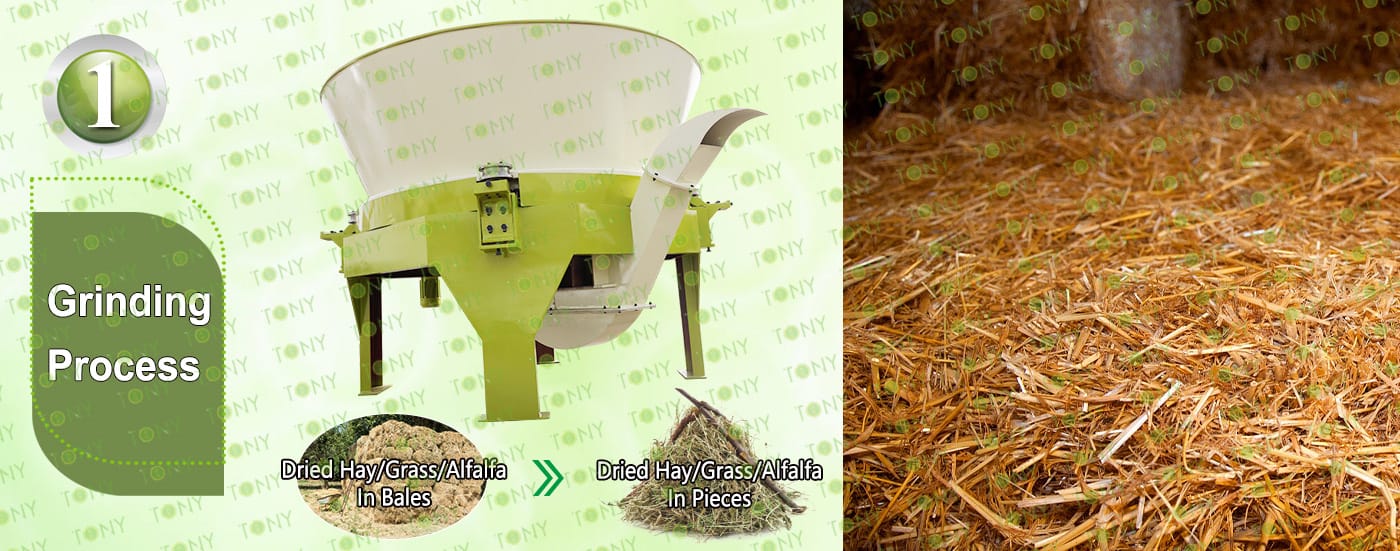
1.Grinding Process:
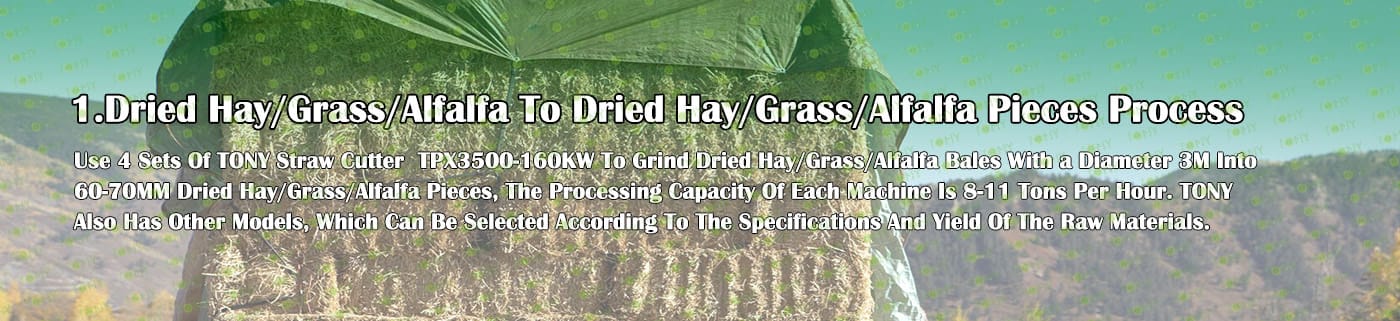
A.The process is mainly used to grind dried hay/grass/alfalfa within 3m in diameter into dried hay/grass/alfalfa pieces. The rotary cutting mode of the outer chain of the gear, the rotary cutting rotor blade is sharp, and the blade types are various, which can be rotated to cut various bales of grass with different diameters, different thicknesses, different lengths and different water contents
B.TONY brand straw cutter TPX3500-160KW models *4sets
C.Capacity:8-11ton/hour/set
Main Parts:
(1)Tony's New Straw Cutter
(2)Enlarged Turntable
(3)Rotary Cutting System
(4)Drive system
(5)Electrical Cabinet.
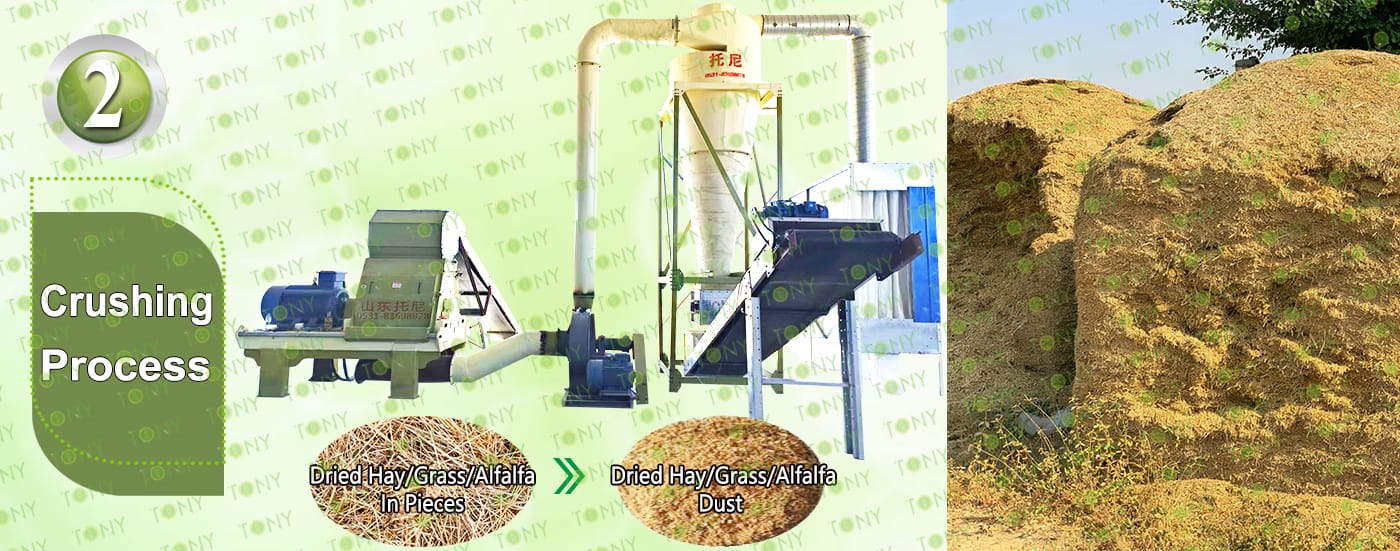
2.Fine Crushing Process
A. The process is mainly used to crush 60-70mm dried hay/grass/alfalfa pieces into 8-14mm dried hay/grass/alfalfa dust.
B.TONY brand effective hammer mill TFD100-200-315KW*3sets
C.Capacity: 32-40tons/hour.
Main parts:
(1)TONY Effective Hammer Mill
(2)Galvanized Dust Collector.
(3)Sawdust Conveying Fan.
(4)Cyclone With Airlock.
(5)Electrical Cabinet.
3.Hay/Grass/Alfalfa Dust Storage Process:
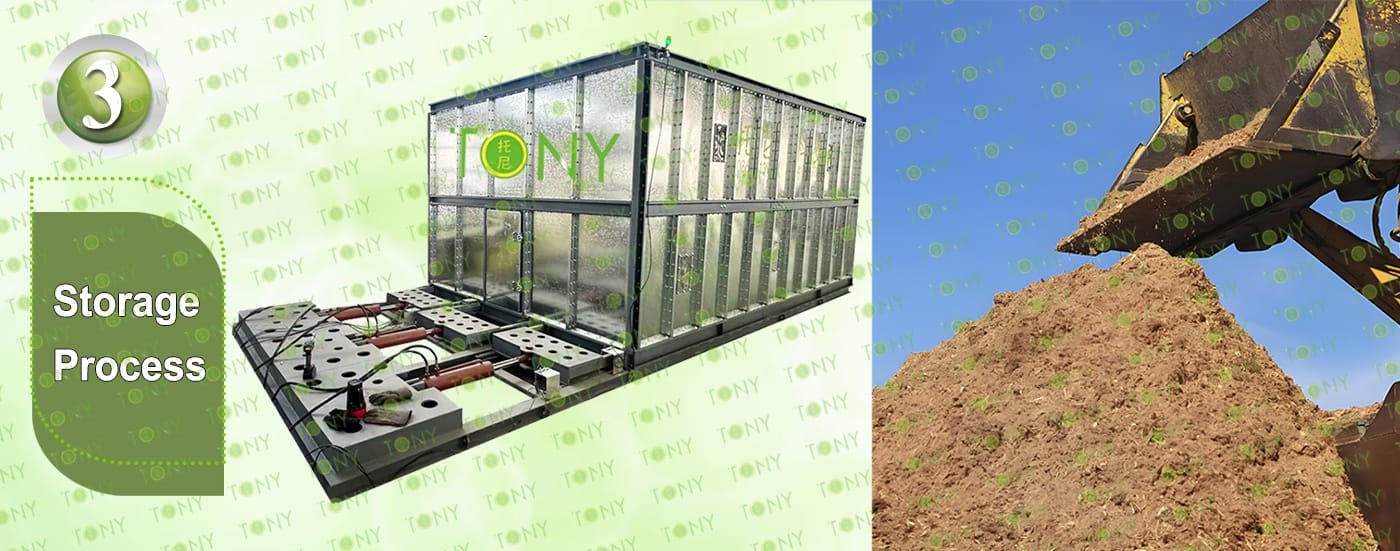
A. This process is mainly used to storage the hay/grass/alfalfa dust that comes out of the hammer mill.It is hydraulic galvanized storage silo which is more stable and hay/grass/alfalfa dust in it is not easy to be blocked.
B.TONY Brand Large Hydraulic Storage Silo to storage the hay/grass/alfalfa dust that comes out of the hammer mill.This process can be optional by customer.If customer do not chose the storage bin,he can storage the sawdust on the ground directly which may need some labour.
Main Parts:
(1)TONY's new Large Hydraulic Storage Silo.
(2)With Screws Inside the Storage Bin to Prevent Hay/Grass/Alfalfa Dust Blocked.
4.Pelletizing Process:
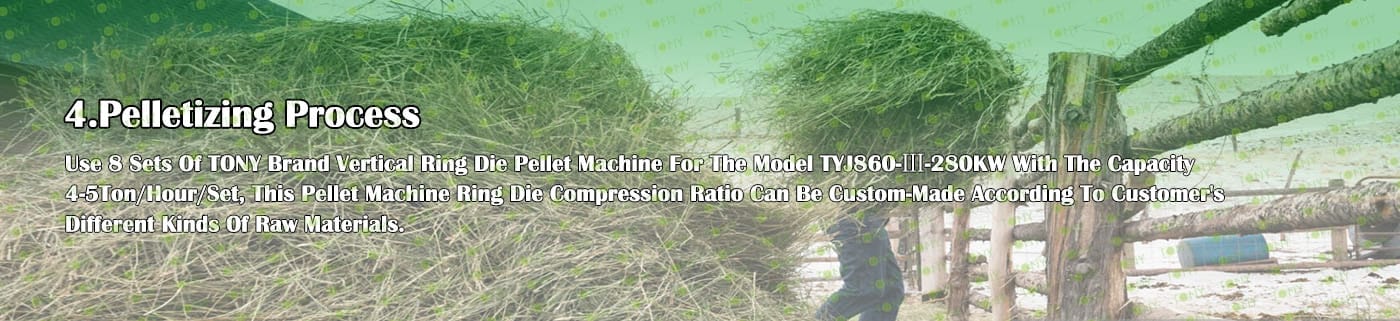
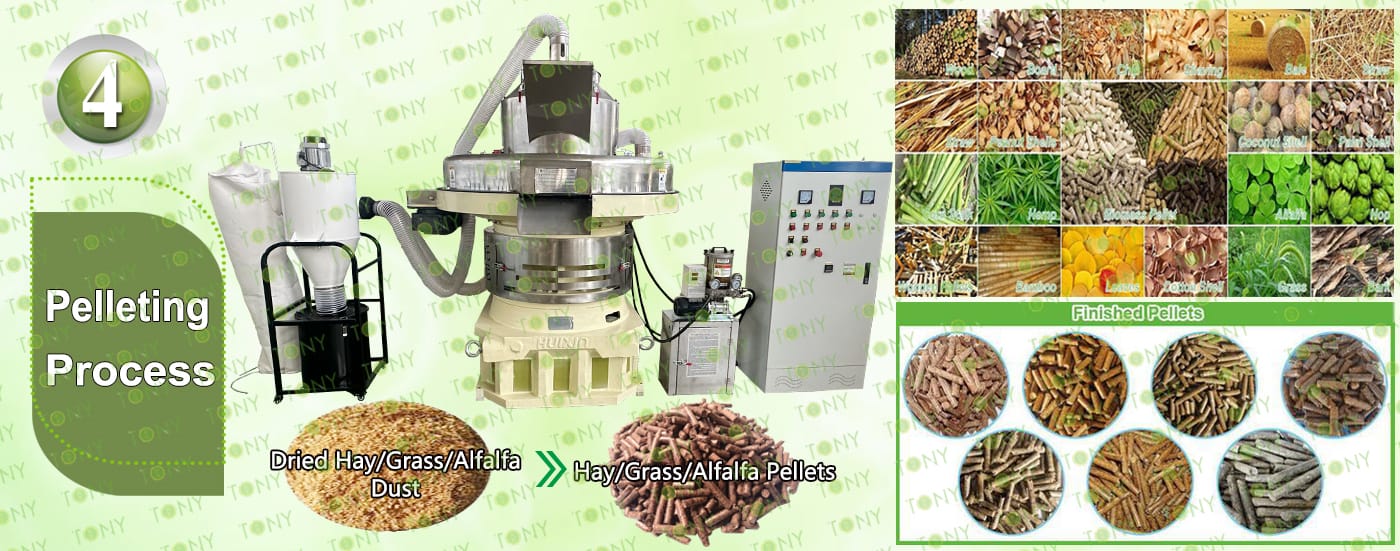
A.This process is mainly used to products pellets with φ6-8mm.
B.TONY brand vertical ring die pellet machine TYJ860-Ⅲ-280KW *8sets
C. Capacity:32-40tons/hour.
D.Double Screw Cycling Silo is added above the pellet machine, which has the advantages of saving space, saving labor, intelligently controlling the feeding speed, not easy to block the material, and improving production efficiency.
Main Parts:
(1)TONY New Vertical Ring Die Pellet Machine.
(2)Cyclone And Bags Dust Collectors.
(3)Bearings Automatic Lubrication System.
(4)Electrical Cabinets.
For more equipment details and information, you can contact TONY
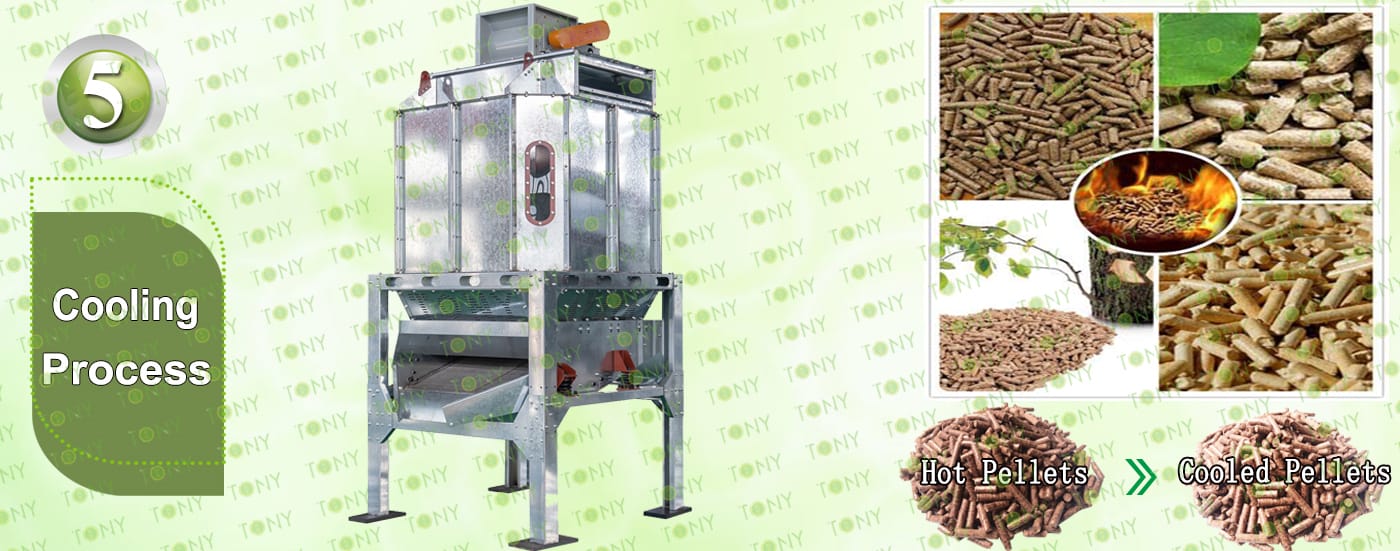
5.Cooling Process:
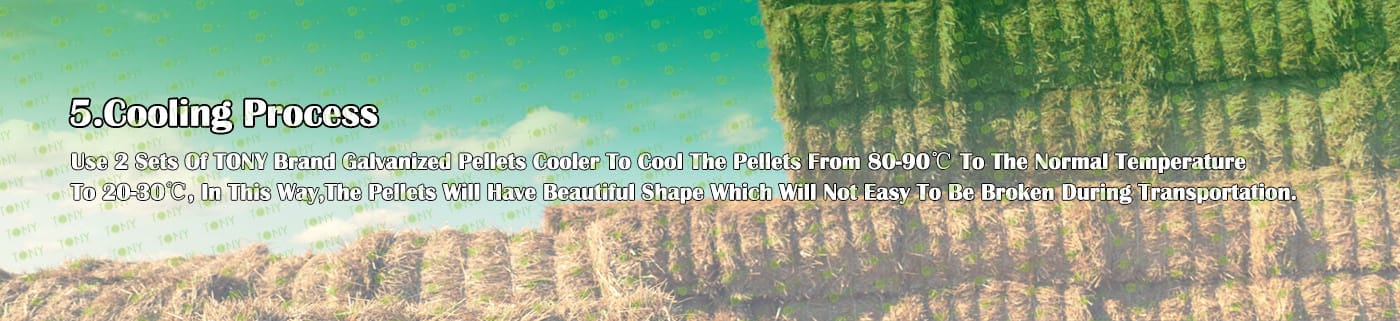
A.This process is mainly used to cool pellets from 80-90℃ to 20-30℃
B.TONY brand galvanized pellets cooler*2 sets
C.Capacity:32-40tons/hour.
Main Parts:
(1)TONY's New Galvanized Pellets Cooler Separator With Vibrating Screen.
(2)Cyclone and bags dust collectors.
(3)Fan Blower.
(4)Connect Pipes.
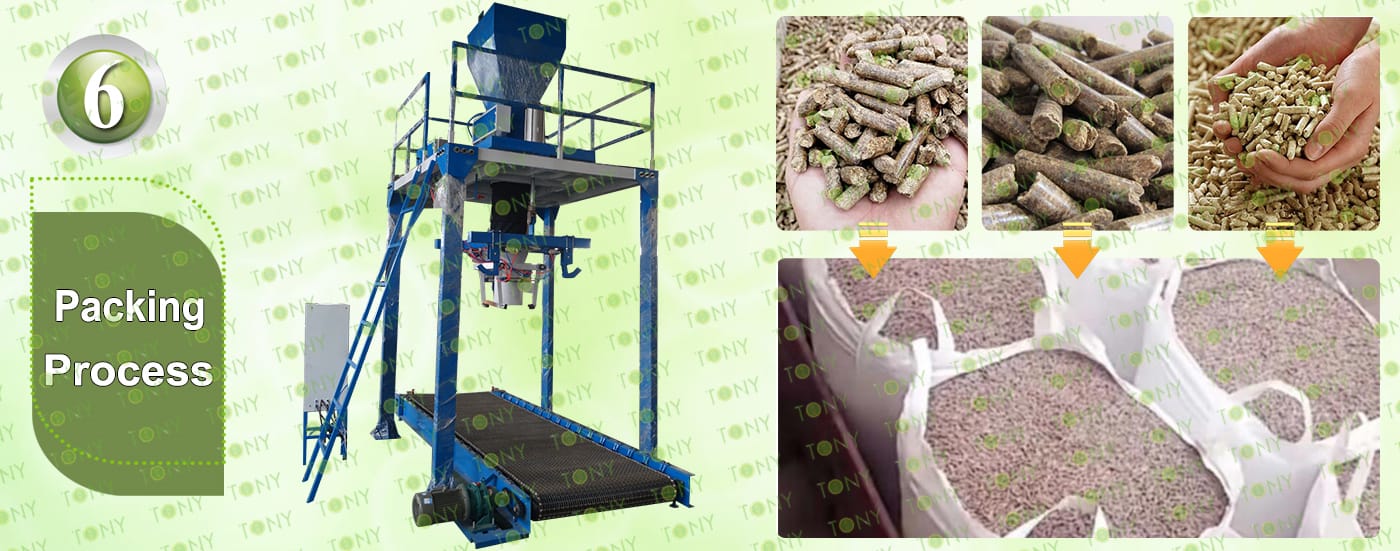
6.Packing Process:
A.This process is mainly used to pack pellets into 1Ton/Bags.
B.TONY brand ton packing machine*2sets
C.Capacity: 32-40tons/hour.
Main Parts:
(1)TONY Ton Packing Machine
(2)Electronic Platform Scale Metering System
(3)Automatic Tare, Zero, and Drop Correction Functions
(4)Feeding System Features Fast, Medium, and Slow Feeding Speeds to Ensure Measuring Accuracy

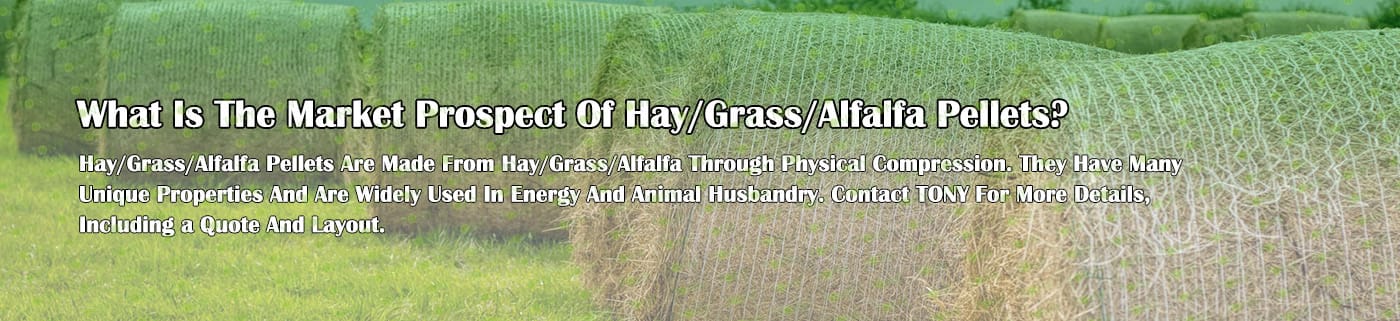
The dried Hay/Grass/Alfalfa pellet market analysis can be explored in detail from multiple aspects, including market size, supply, demand, competitive landscape, and policy environment.
1.Market Size and Growth
In recent years, the global dried Hay/Grass/Alfalfa pellet market, especially the dried Hay/Grass/Alfalfa pellet market, has shown a significant growth trend. According to the Luyi Market Strategy forecast, the global dried Hay/Grass/Alfalfa pellet market size reached a significant level in 2023 and is expected to continue its rapid growth in the coming years. In China, with the advancement of the dairy industry revitalization plan and the "grain-to-feed" policy, the dried Hay/Grass/Alfalfa pellet market has shown enormous development potential.
2.Market Supply and Demand
The supply of the dried Hay/Grass/Alfalfa pellet market mainly depends on production technology and quality control. On the demand side, with global population growth and increased consumer demand for high-quality meat and dairy products, the livestock industry's demand for high-quality feed is also increasing, thus promoting the development of the dried Hay/Grass/Alfalfa pellet market.
3.Market Competition Landscape
The competitive landscape of the dried Hay/Grass/Alfalfa pellet industry is complex. Key competitive factors include:
Intra-industry competition: Slow industry growth, intense market share competition, numerous competitors, and low product differentiation.
Customer bargaining power: Can customers persuade sellers to lower prices, improve product quality, or provide better services?
Supplier bargaining power: Can suppliers persuade buyers to accept higher prices, shorter payment terms, or more reliable payment methods?
Threat from potential competitors: New entrants will bring new production capacity, share resources and market share, which may lead to increased costs and decreased profits.
Pressure from substitute products: Competitive pressure from products with similar functions or meeting the same needs.
4.Policy Environment and Future Trends
The policy environment has a significant impact on the development of the grass pellet market. For example, the National Dairy Industry Revitalization Plan and the "Grain-to-Feed" policy have provided a favorable development environment for the dried hay/grass/alfalfa pellet industry. Furthermore, continuous advancements in pelleting and feed processing technologies have significantly improved the production efficiency and quality of grass pellets, further boosting market development.
In summary, the dried hay/grass/alfalfa pellet market will continue to be driven by policy support and technological advancements, resulting in continued growth in market size and demand, and increasingly fierce competition.
The advantages of biomass particles are mainly as follows:
1.Biomass pellet fuel has a high fuel value, and the calorific value is about 3700~4800 kcal /kg. Fully meet the needs of home heating, cleaning and most boilers
2.Biomass pellet fuel is high purity, does not contain other non-heat debris, its carbon content 75-85, ash 3-6, water content 1-3, does not contain coal gangue, stone and other impurities that do not heat but consume heat, can reduce costs for enterprises.
3.Biomass pellet fuel does not contain sulfur, does not corrode the boiler, can extend the service life of the boiler, do not need to replace the boiler frequently, and save the cost of the enterprise.
4.Because biomass pellet fuel does not contain sulfur, combustion does not produce sulfur dioxide and other harmful substances, does not pollute the atmosphere, does not pollute the environment.
5.Biomass pellet fuel is clean and hygienic, convenient to feed, reduce the labor intensity of workers, greatly improve the working environment, and enterprises will reduce the cost of labor.
6.Less ash after the combustion of biomass pellet fuel, the earth reduces the site of stacking coal ballast and reduces the cost of discharging ballast.
7.The ash after combustion of biomass pellet fuel is a high-quality organic potash fertilizer, which can be recycled.
8.Biomass pellet fuel is a renewable energy, biomass pellet as a new type of pellet fuel has won wide recognition with its unique advantages; Compared with traditional fuels, it not only has economic advantages but also environmental benefits, which fully meets the requirements of sustainable development.

2025 Tony Machinery - All Rights Reserved. Map