




















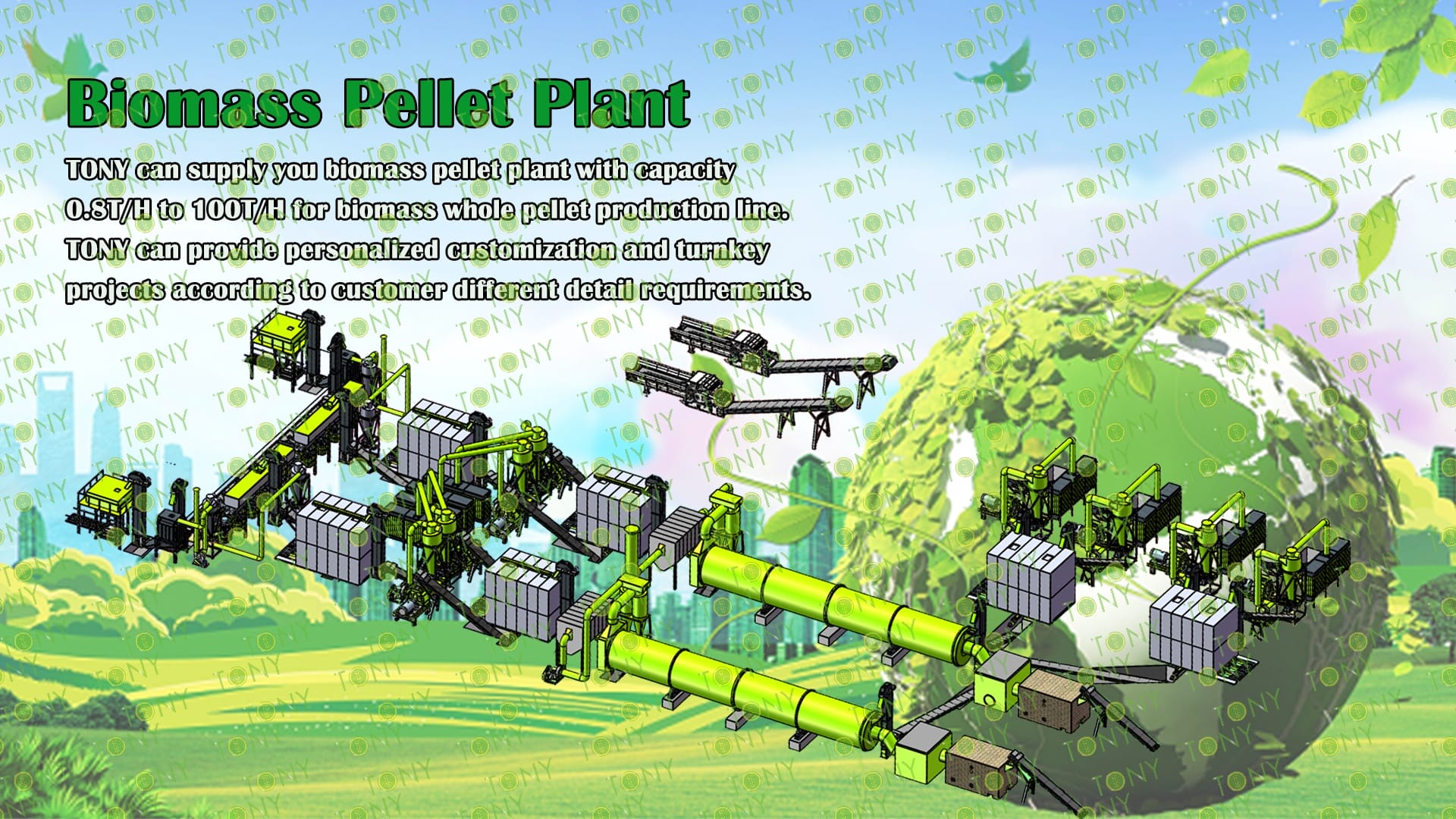
Project Brief Introduction:
1.Product:Dried Hay/Grass/Alfalfa Pellet Line
2.Capacity:10-12Ton /Hour
3.TONY Brand 10-12Ton /Hour Dried Hay/Grass/Alfalfa Pellet Line Project Process
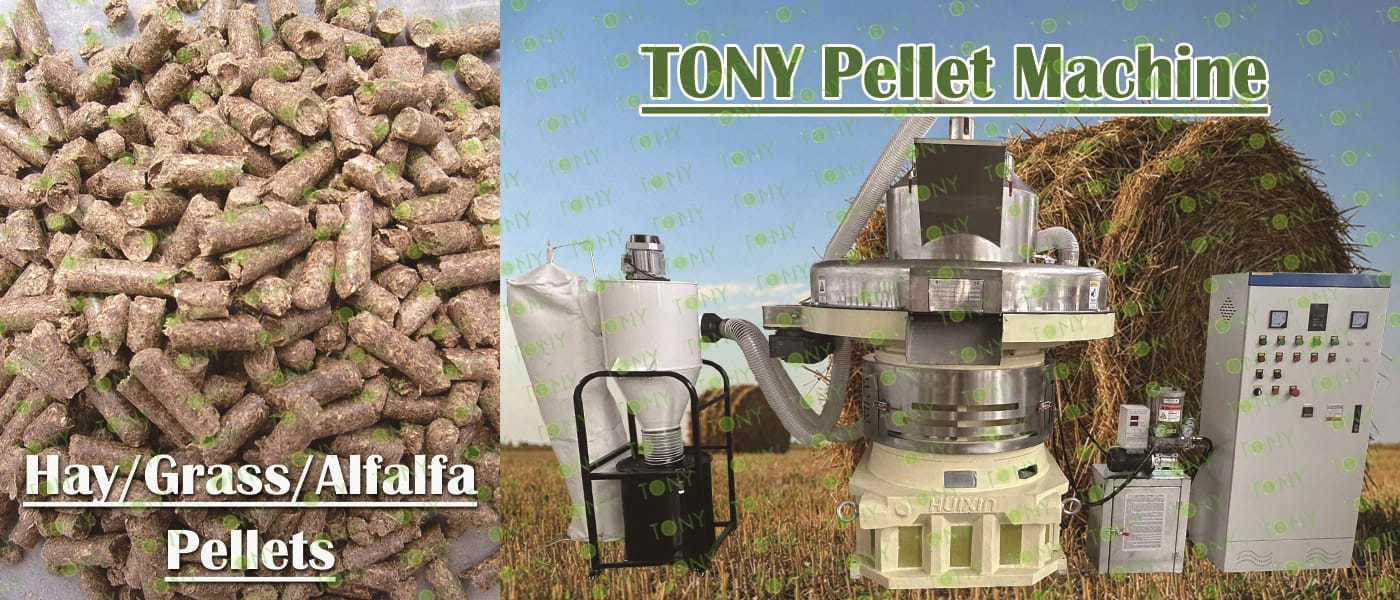
4.Main Machine: Straw Cutter,Hammer Mill,TONY Pellet Machine TYJ760-Ⅲ-160KW,Pellets Cooler,Packing Machine And Belt Conveyors
5.Total Power: About 1380KW
6.Need Area: About ㎡ L: M W: M H: M
Project Layout For Customer:
图片
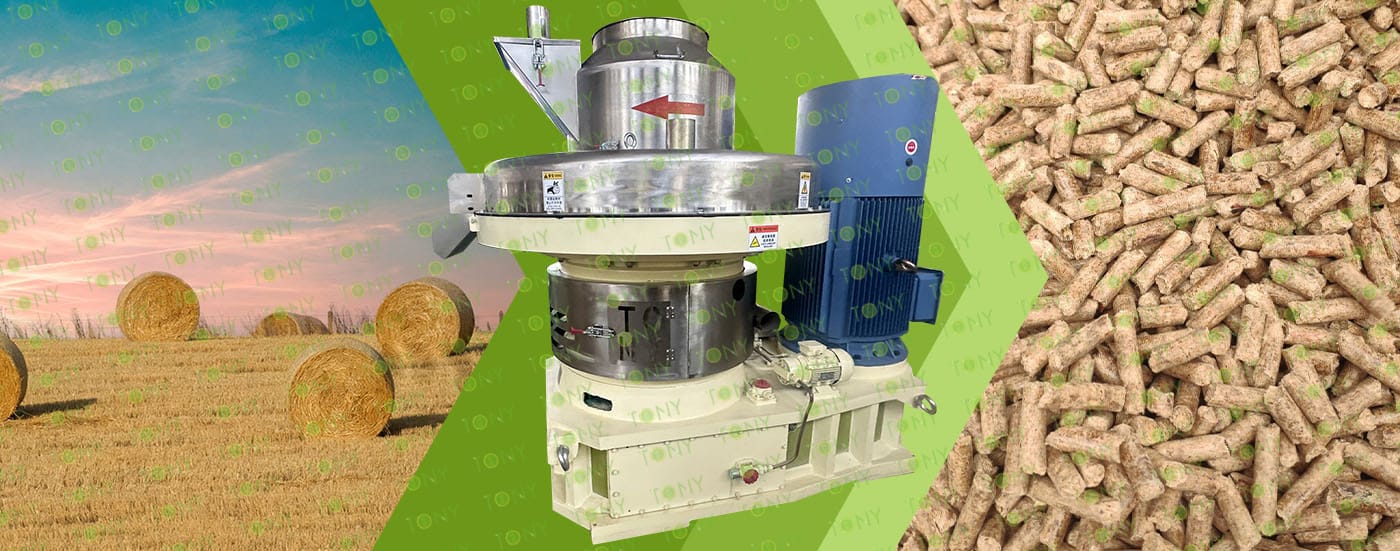
1.The working principle of dried hay/grass/alfalfa biomass pellet processing equipment
(1)Extrusion Shaping:The pre-treated material is conveyed to the pellet mill. The internal pressure rollers rotate at high speed driven by a motor, forcibly pressing the material into the small holes (usually 6-12 mm in diameter) of the ring die. The material is subjected to high pressure (50-100 MPa) and frictional heat within the holes, tightly binding it into a columnar shape.
(2)Cutting to Length:As the columnar shape is extruded from the other side of the ring die, the cutter on the outside of the equipment cuts it to a set length (usually 3-8 mm), forming standard pellets.
(3)Cooling and Screening:The freshly extruded pellets are approximately 80-95℃ and need to be cooled to room temperature in a counter-current cooler. Simultaneously, the moisture content is stabilized at 12%-14% to prevent the pellets from absorbing moisture and becoming moldy. After cooling, the pellets are screened to remove debris, yielding a qualified finished product.
2.Characteristics of dried hay/grass/alfalfa biomass pellet processing equipment
(1)Low equipment investment:Short process, no drying system. Compared with wet material lines, it eliminates expensive equipment such as drum dryers, hot air furnaces, and dust removal and desulfurization equipment, reducing overall equipment purchase costs by 30%-40%, making it more suitable for small and medium-sized processing needs.
(2)Energy consumption and environmental protection:Low energy consumption, easy to meet standards. Low energy consumption: No heat source consumption in the drying process (accounting for 40%-60% of the total energy consumption of wet material lines), only the energy consumption of motors for conditioning and granulation is required, and the energy consumption per unit product is 25%-35% lower than that of wet material lines.
(3)Less environmental pressure:No need to treat waste gas and dust in the drying process, only small bag filters are needed in the crushing and granulation processes, significantly reducing environmental investment and operation and maintenance costs.
(4)Wide range of applicable scenarios:adaptable to a variety of dry materials and highly flexible. In addition to alfalfa, it is also compatible with other low-moisture biomass raw materials such as dry corn stalks and dry wheat stalks. There is no need to change the core equipment, only to adjust the crushing particle size and conditioning parameters, which is suitable for processing scenarios with a variety of raw materials.
3.Application scenarios of dried hay/grass/alfalfa biomass pellet processing equipment
(1)Application:Feed companies purchase dried hay/grass/alfalfa from production areas (or dry and store it themselves), process it into pellets of different sizes using pelleting equipment (e.g., 6mm diameter for dairy cows, 8mm for beef cattle), and then sell it to farms or distributors.
(2)Reasons for Suitability:Commercial feed needs to be stored for a long time (6-12 months). Dried hay/grass/alfalfa (10%-15% moisture content) is less prone to mold. Processing it into pellets makes it easier to control nutrient loss (such as vitamins and protein), and the pellet shape facilitates packaging, transportation, and sales.
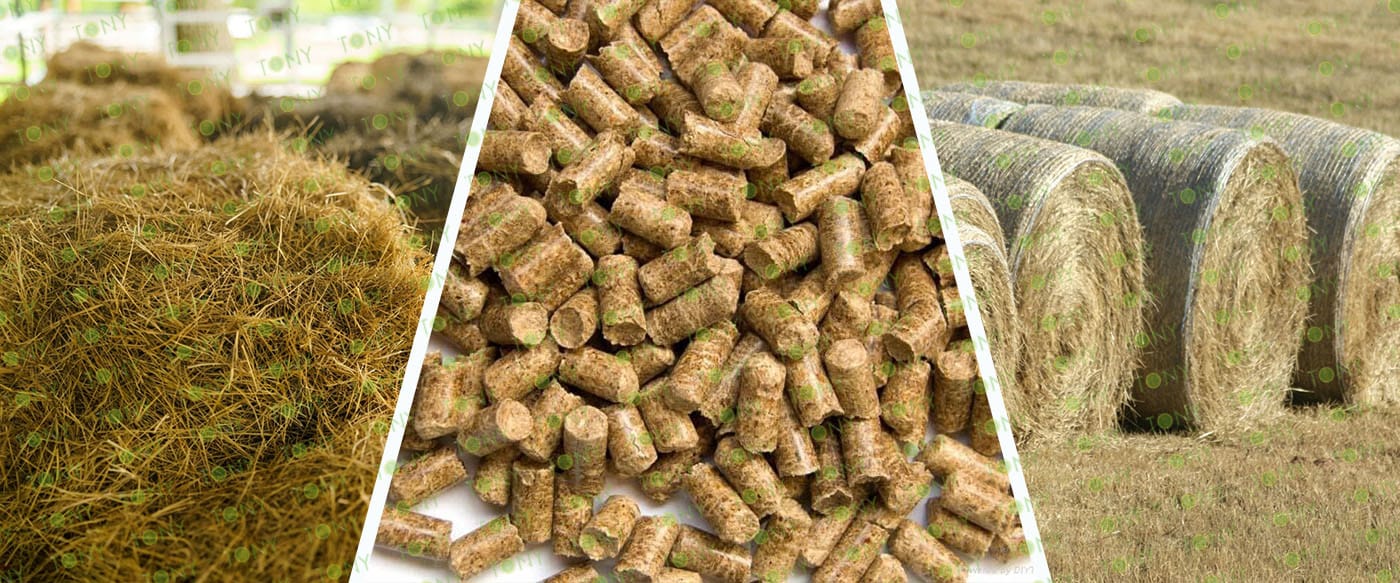
TONY Brand 10-12TPH Dried Hay/Grass/Alfalfa Line can process dried grass and various biomass materials related to agricultural waste into biomass pellets. Grass processed into biomass pellets has a wide range of uses. As fuel: Grass pellets can be used as fuel for power plant boilers, industrial boilers, and residential heating. Its calorific value is similar to coal, but it is cheaper and produces fewer pollutants during combustion, making it a more environmentally friendly fuel. As animal feed: Grass pellets processed by a grass pellet mill can be used as livestock feed. This method can make full use of grass, reduce feed costs, and also help solve the problem of grass disposal. These uses can not only effectively use agricultural waste, reduce environmental pollution, but also create economic benefits and promote sustainable agricultural development.
1. Capacity: 10-12Ton/Hour
2. Raw materials: Dried Hay/Grass/Alfalfa
3. Moisture: About 10-15%
4. Application: All kinds of biomass materials suitable for pellet production.
Suitable customers: Green energy companies, agricultural cooperatives, and small - scale rural processing units that have ready access to dried grass and related agricultural residues.
5. Finished Pellets Markets: The core applications of grass pellets revolve around two main directions: "clean energy substitution" and "feed supplementation," covering diverse scenarios such as industrial heating, agricultural breeding, and residential heating. This not only solves the pollution problem caused by grass waste but also provides low-cost energy and feed resources.
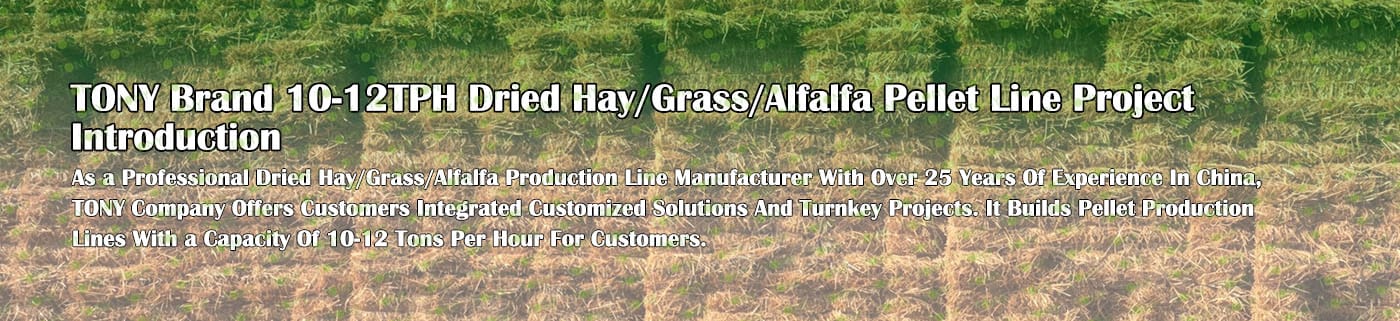
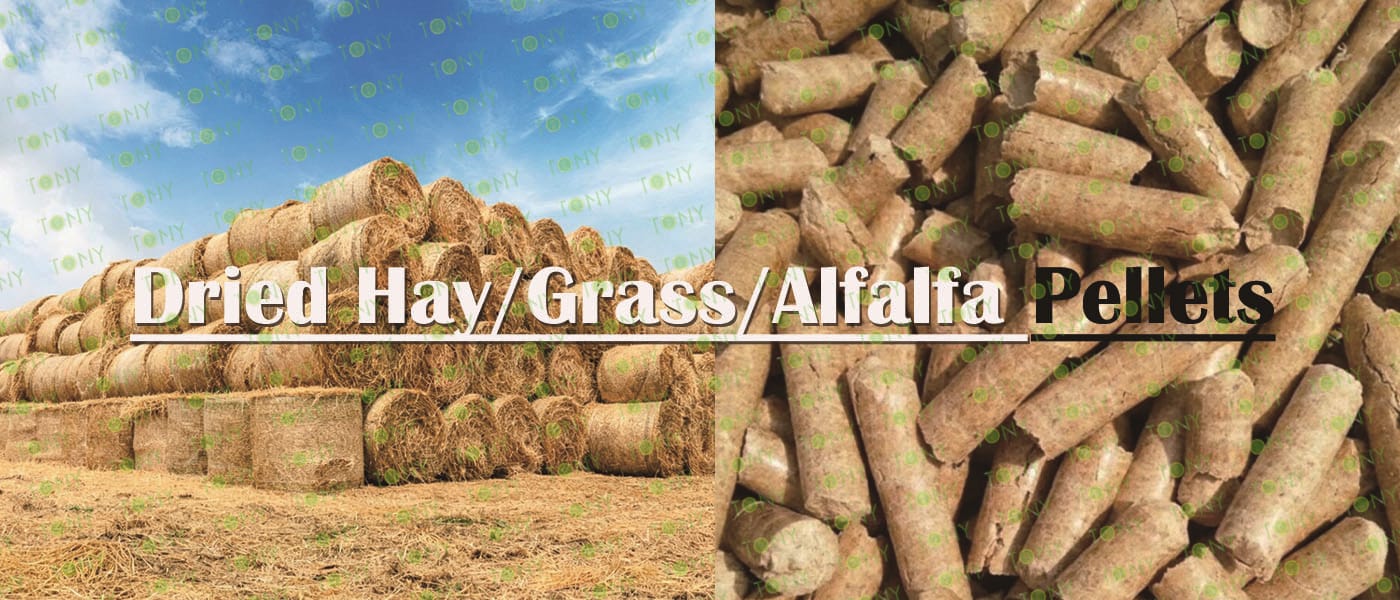
1. Project Name: Dried Hay/Grass/Alfalfa Production Line
2. Raw Material: Bales of Dried Hay/Grass/Alfalfa
3. Moisture Content of Raw Material:10-15%
4. Capacity: 10-12TPH
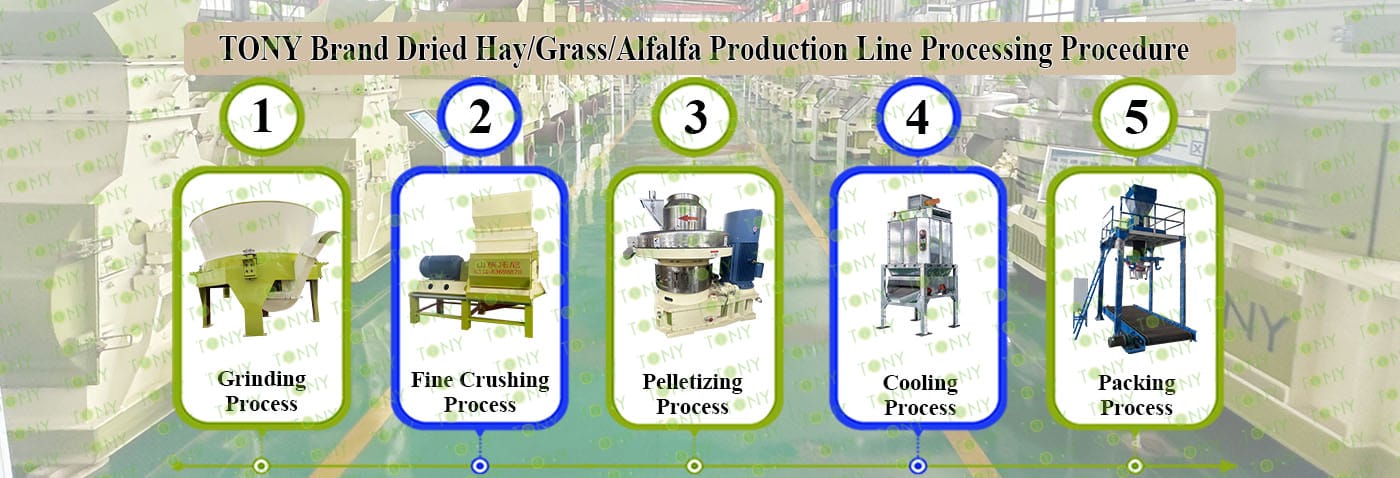
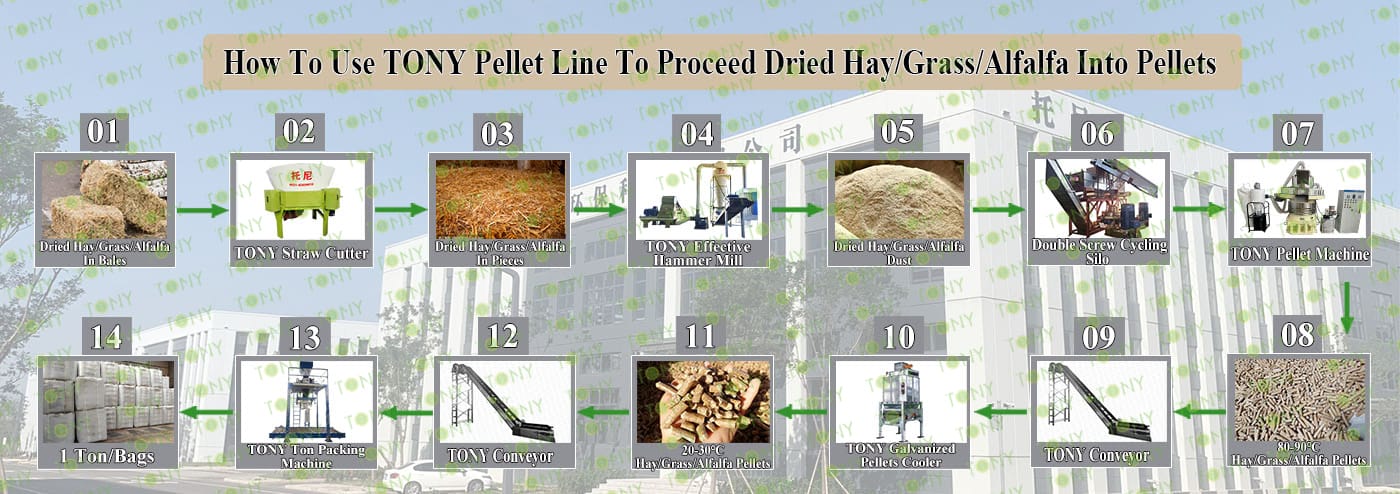
5. Process: Grinding Process - Fine Crushing Process - Pelletizing Process - Cooling Process - Packing Process
6. Main Equipment: Straw Cutter -TPX2000-90KW, Effective Hammer Mill- TFD75-160-160KW, TONY Pellet Machine-TYJ760-III-160KW, Galvanized Pellets Cooler, Ton Packing Machine and Belt Conveyors
|
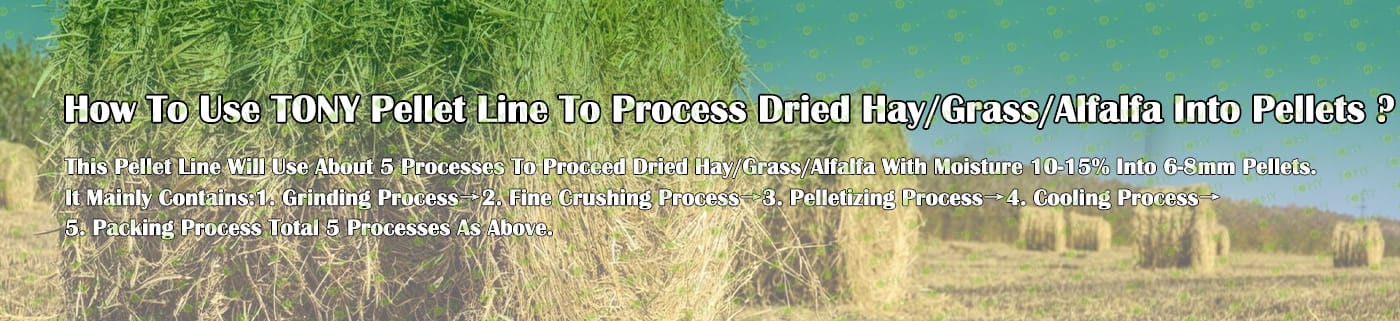
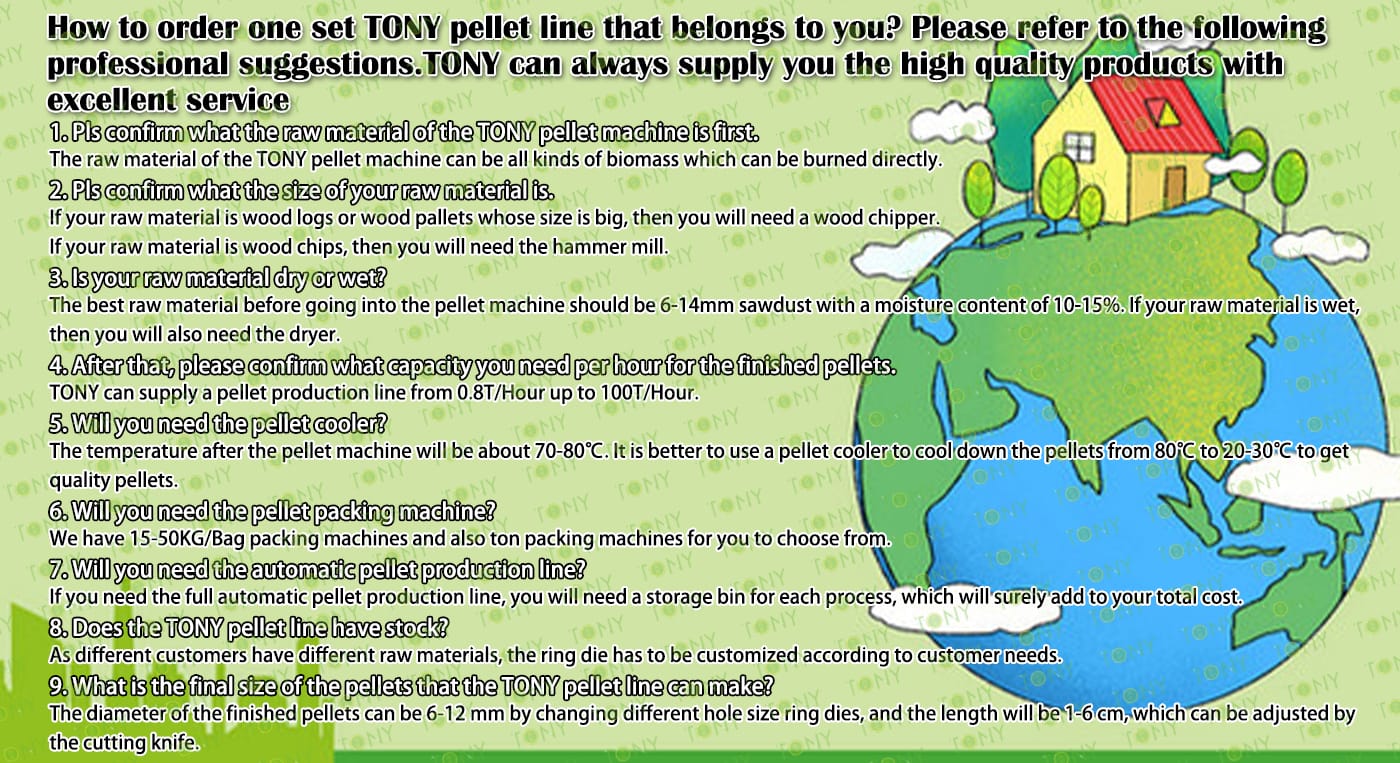
How To Use TONY Pellet Line To Proceed From Dried Hay/Grass/Alfalfa Into Pellets? It mainly contains the following steps and machines as following: 1.Use TONY straw cutter to grind dried hay/grass/alfalfa bales φ ≤1.8m into 60-70mm dried hay/grass/alfalfa pieces. 2.Use TONY effective hammer mill to crush 60-70mm dried hay/grass/alfalfa pieces into 8-14mm dried hay/grass/alfalfa dust. 3.Use TONY vertical ring die pellet machine to products pellets with φ6-8mm. 4.Use TONY galvanized pellets cooler to cool pellets from 80-90℃ to 20-30℃. 5.Use TONY ton packing machine to pack the pellets into 1 ton/bags. You can contact TONY to get for more details information and quotation. TONY can supply you all the products as above with competitive price and excellent quality. |
|
|||||||||||||||||||||||||||||||||||||||||||||
图片
图片
| Next, TONY Will Introduce To You All The Necessary Machinery That Will Be Used For The Whole Pellet Production Line. Some Machines Can Be Custom - Made By Customers According To Different Customers' Detailed Demands. Contact TONY For More Details, Including Quotation And Layout. | ||
 |
 |
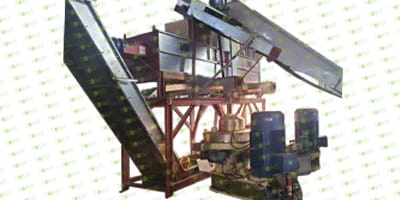 |
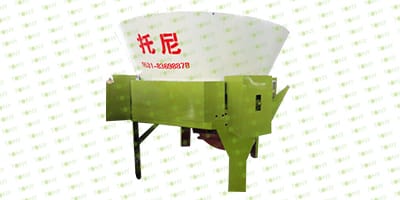
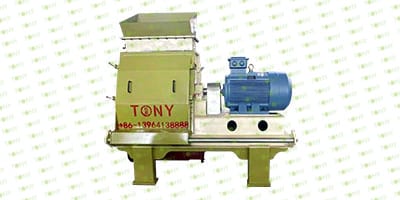
| Straw Cutter | Effective Hammer Mill | Double Screw Cycling Silo |
| 1.To Grind Dried Hay/Grass/Alfalfa Bales Diameter ≤1.8m Into 60-70mm Dried Hay/Grass/Alfalfa Pieces 2.Model:TPX2000-90KW*3Sets 3.Capacity:3-4Ton/Hour/Set |
1.To Crush 60-70mm Dried Hay/Grass/Alfalfa Pieces Into 8-14mm Dried Hay/Grass/Alfalfa Dust. 2.Model: TFD75-160-160KW*2Sets 3.Capacity:5-6Ton/Hour/Set |
1.To Storage Hay/Grass/Alfalfa Dust Before Pellet Machine;Adjust The Speed Of Hay/Grass/Alfalfa Dust Entering The Pellet Machine 2.Model: TLC-6*2Sets 3.Capacity:5-6Ton/Hour/Set |
 |
 |
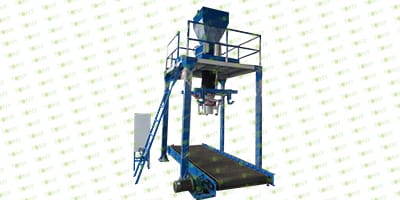 |
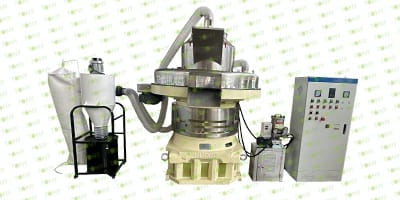
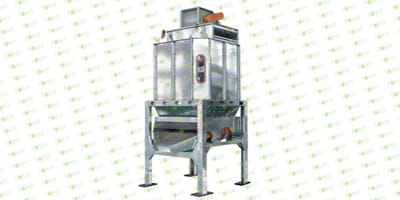
| Vertical Ring Die Pellet Machine | Galvanized Pellets Cooler | Ton Packing Machine |
| 1.To Press Hay/Grass/Alfalfa Dust Into 6-8mm Biomass Pellets 2.Model: TYJ760-III-160KW*4Sets 3.Capacity:2.5-3Ton/Hour/Set 4.New 304SS Type |
1.To Cool Pellets From 80-90℃ to 20-30℃ 2.Model:TCN-4*2Sets 3.Capacity:10-12Ton/Hour |
1.To Pack Pellets Into 1 Ton/Bags. 2.Model: TBD*2Sets 3.Capacity: 10-12Ton/Hour |
图片
1.Grinding Process
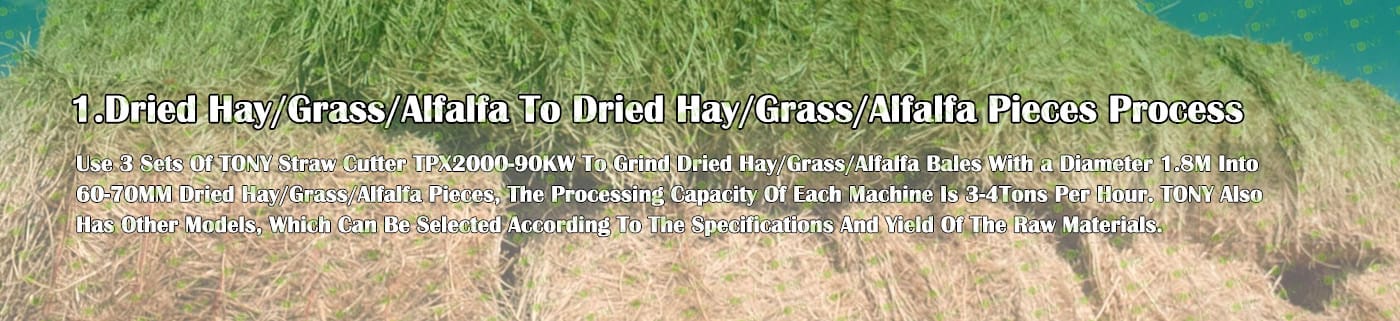
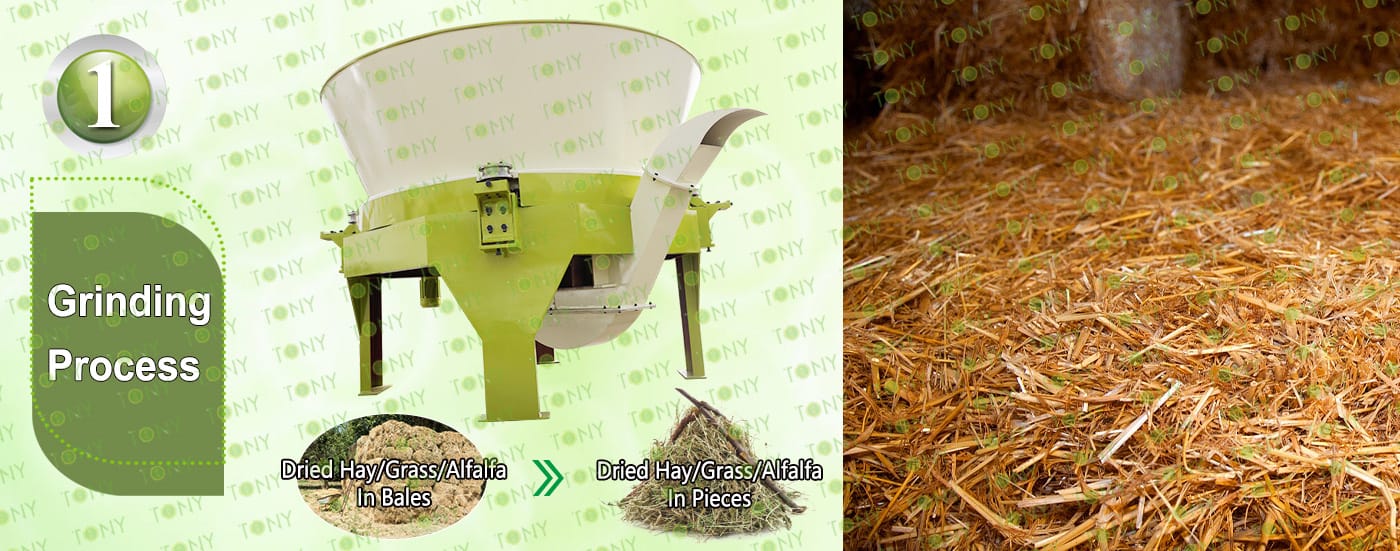
A.The process is mainly used to grind dried hay/grass/alfalfa within 1.8m in diameter into dried hay/grass/alfalfa pieces. The rotary cutting mode of the outer chain of the gear, the rotary cutting rotor blade is sharp, and the blade types are various, which can be rotated to cut various bales of grass with different diameters, different thicknesses, different lengths and different water contents
B.TONY brand straw cutter TPX2000-90KW models *3sets
C.Capacity:3-4ton/hour/set
Main Parts:
(1)Tony's New Straw Cutter
(2)Enlarged Turntable
(3)Rotary Cutting System
(4)Drive system
(5)Electrical Cabinet.
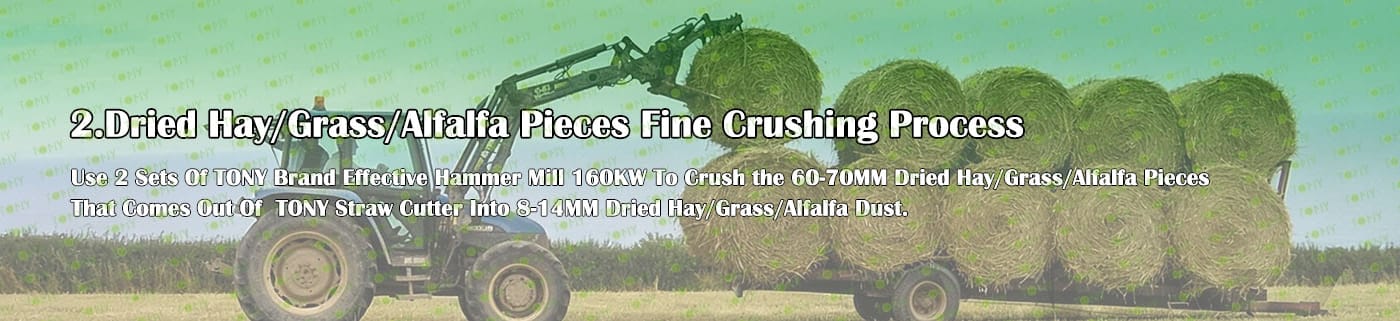
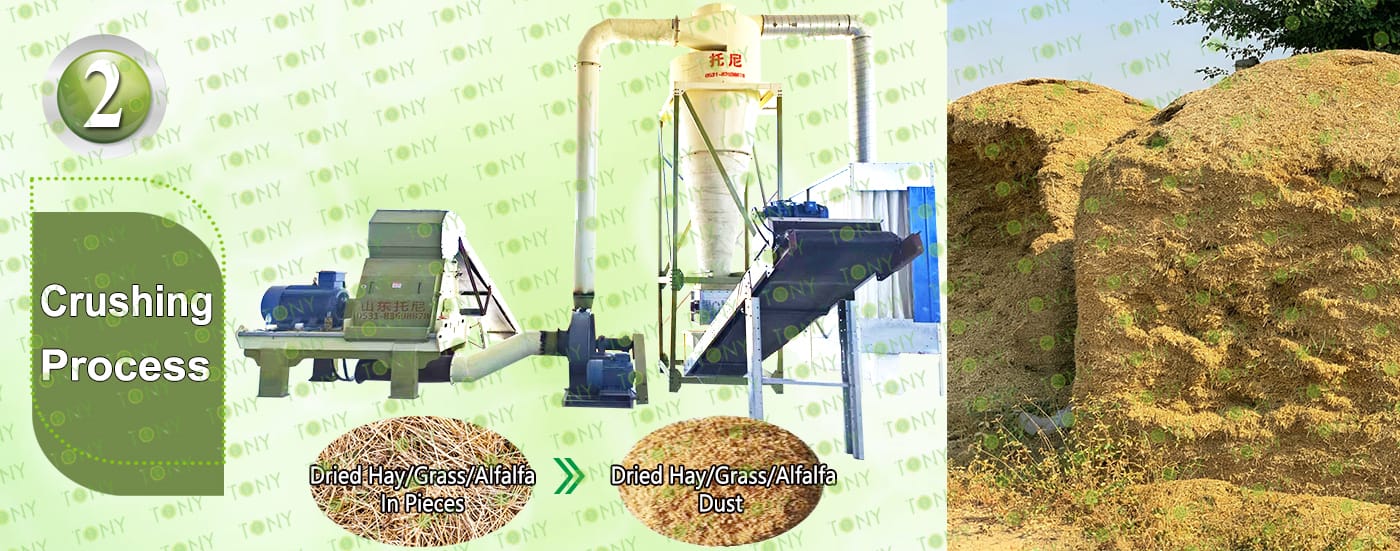
2.Fine Crushing Process
A. The process is mainly used to crush 60-70mm dried hay/grass/alfalfa pieces into 8-14mm dried hay/grass/alfalfa dust.
B.TONY brand effective hammer mill TFD75-160-160KW *2sets
C.Capacity:10-12tons/hour.
Main parts:
(1)TONY Effective Hammer Mill
(2)Galvanized Dust Collector.
(3)Sawdust Conveying Fan.
(4)Cyclone With Airlock.
(5)Electrical Cabinet.
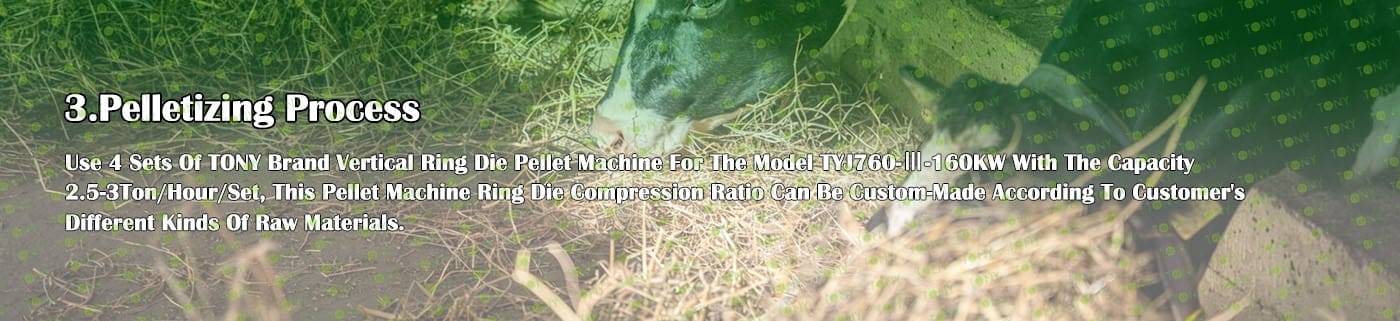
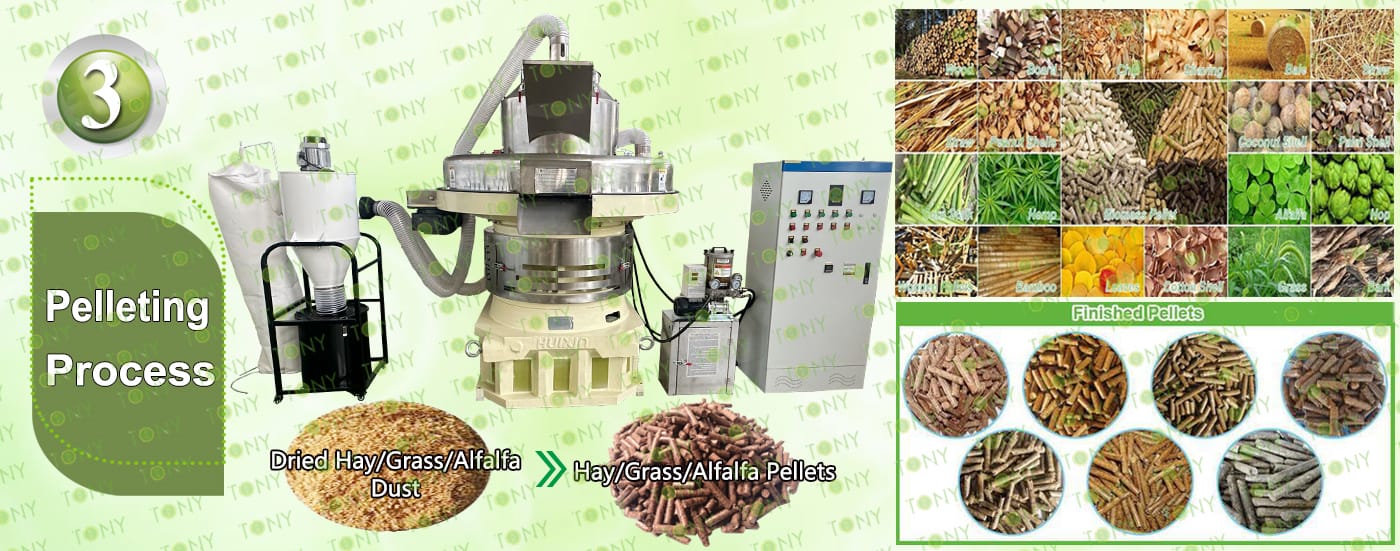
3.Pelletizing Process:
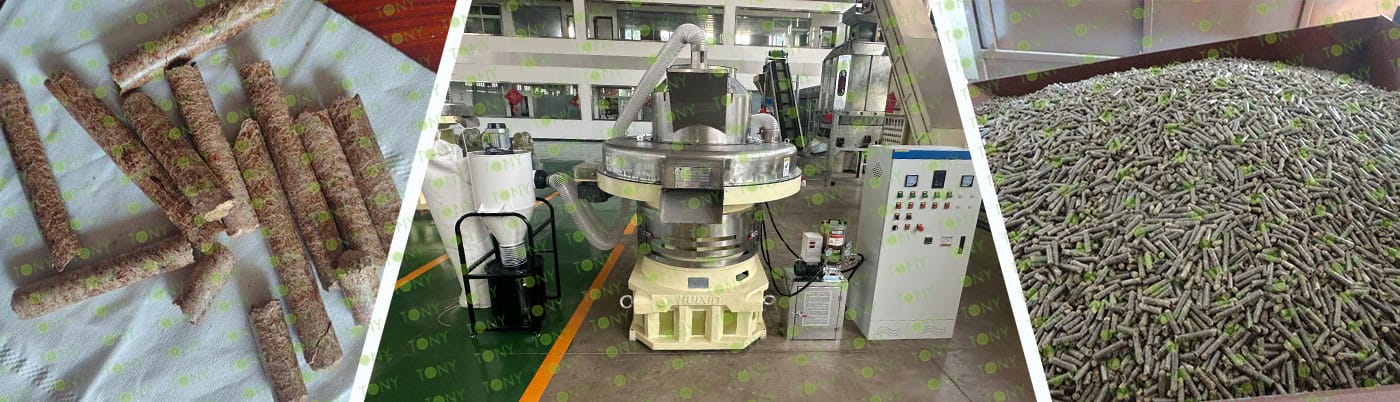
A.This process is mainly used to products pellets with φ6-8mm.
B.TONY brand vertical ring die pellet machine TYJ760-Ⅲ-160KW*4sets
C. Capacity:10-12tons/hour.
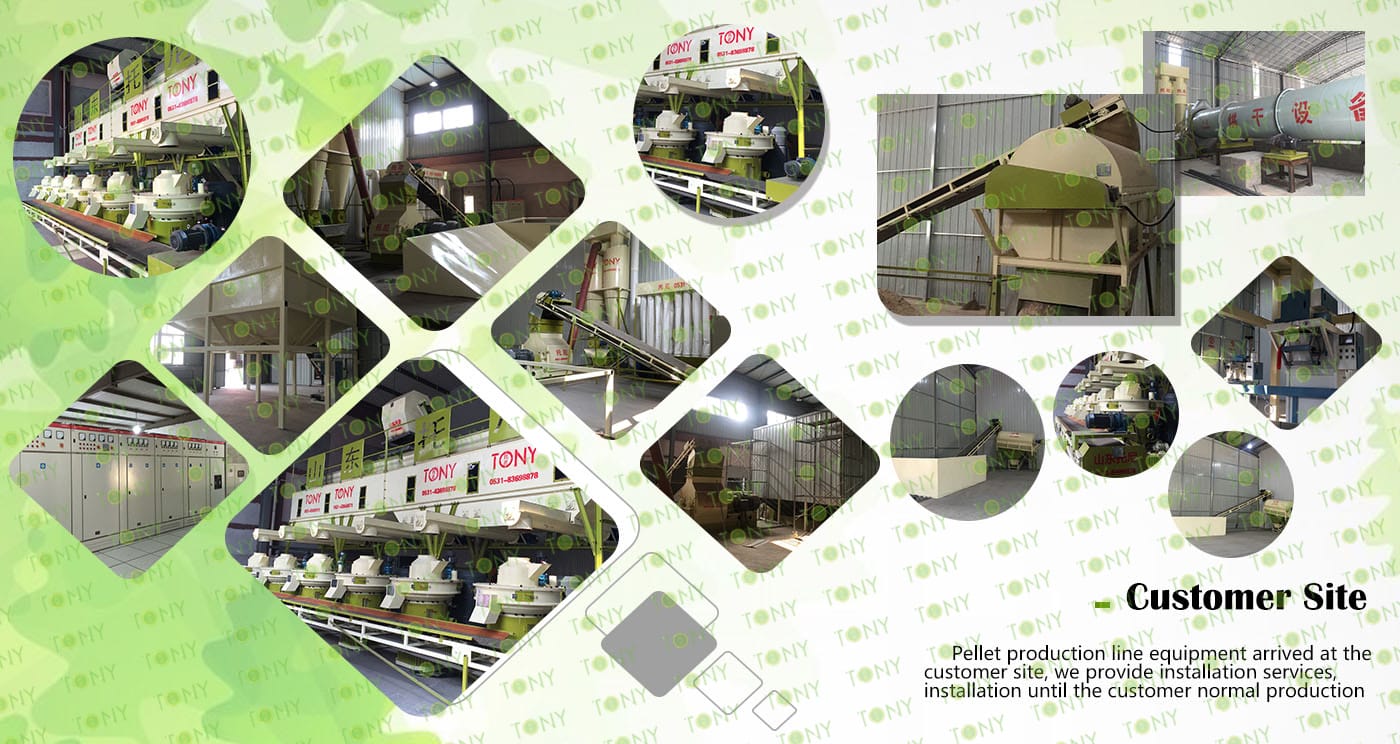
D.Double Screw Cycling Silo is added above the pellet machine, which has the advantages of saving space, saving labor, intelligently controlling the feeding speed, not easy to block the material, and improving production efficiency.
Main Parts:
(1)TONY New Vertical Ring Die Pellet Machine.
(2)Cyclone And Bags Dust Collectors.
(3)Bearings Automatic Lubrication System.
(4)Electrical Cabinets.
For more equipment details and information, you can contact TONY
4.Cooling Process:
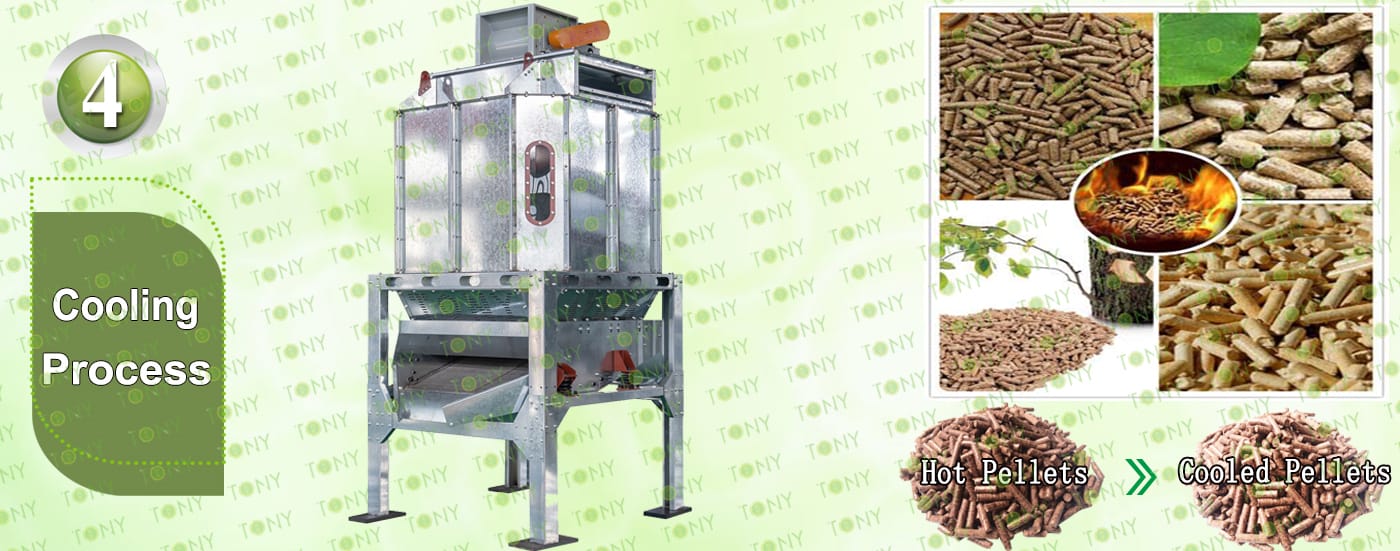
A.This process is mainly used to cool pellets from 80-90℃ to 20-30℃
B.TONY brand galvanized pellets cooler*2 sets
C.Capacity:10-12tons/hour.
Main Parts:
(1)TONY's New Galvanized Pellets Cooler Separator With Vibrating Screen.
(2)Cyclone and bags dust collectors.
(3)Fan Blower.
(4)Connect Pipes.
5.Packing Process:
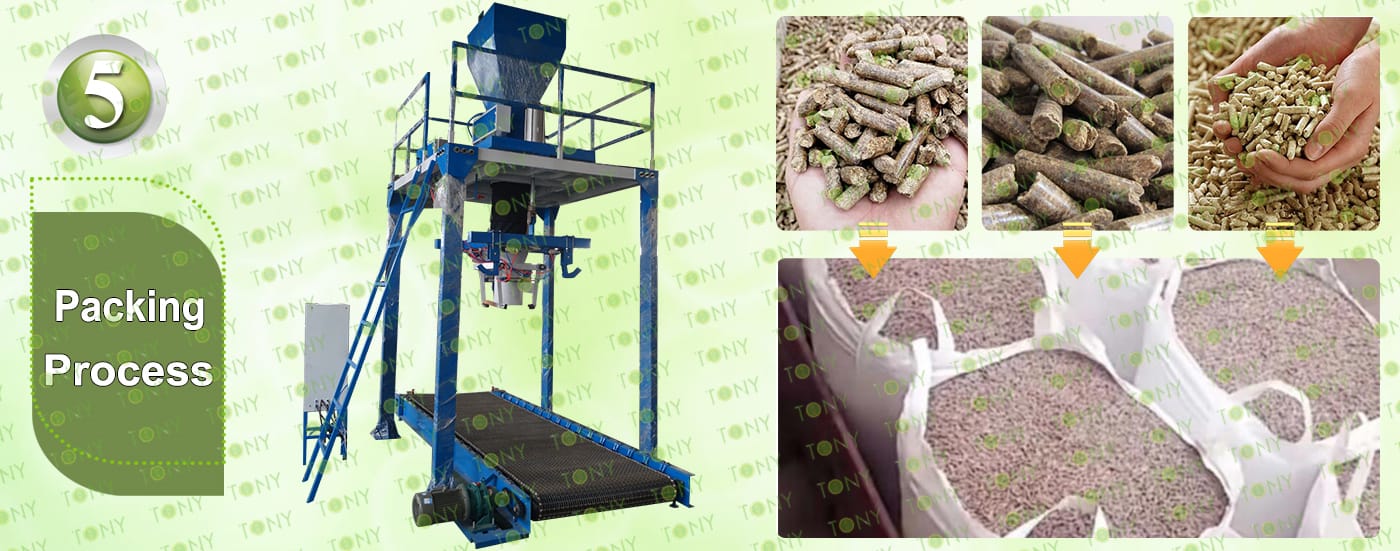
A.This process is mainly used to pack pellets into 1ton/bags.
B.TONY brand ton packing machine*2sets
C.Capacity: 10-12tons/hour.
Main Parts:
(1)TONY Ton Packing Machine
(2)Electronic Platform Scale Metering System
(3)Automatic Tare, Zero, and Drop Correction Functions
(4)Feeding System Features Fast, Medium, and Slow Feeding Speeds to Ensure Measuring Accuracy

Market Advantages of Dried Hay/Grass/Alfalfa Processing into Biomass Pellets:
1.Cost Advantage Transmitted to Pricing:
By eliminating drying costs, the unit cost of the product is 15%-20% lower than that of wet hay processing for the same production capacity. This allows for flexible pricing in the market, making it particularly attractive to small and medium-sized heating companies and residential users.
2.More Stable Product Quality:
Dried Hay/Grass/Alfalfa has highly controllable moisture content, resulting in pellets with minimal moisture fluctuations (typically ≤12%). This makes them less prone to charring during combustion, provides stable calorific value, and makes it easier to pass quality inspections by downstream industrial customers.
3.More Specific Applicable Regions:
Particularly suitable for arid regions or rural areas with natural drying conditions. Abundant local hay resources and convenient storage further reduce raw material transportation and storage costs.
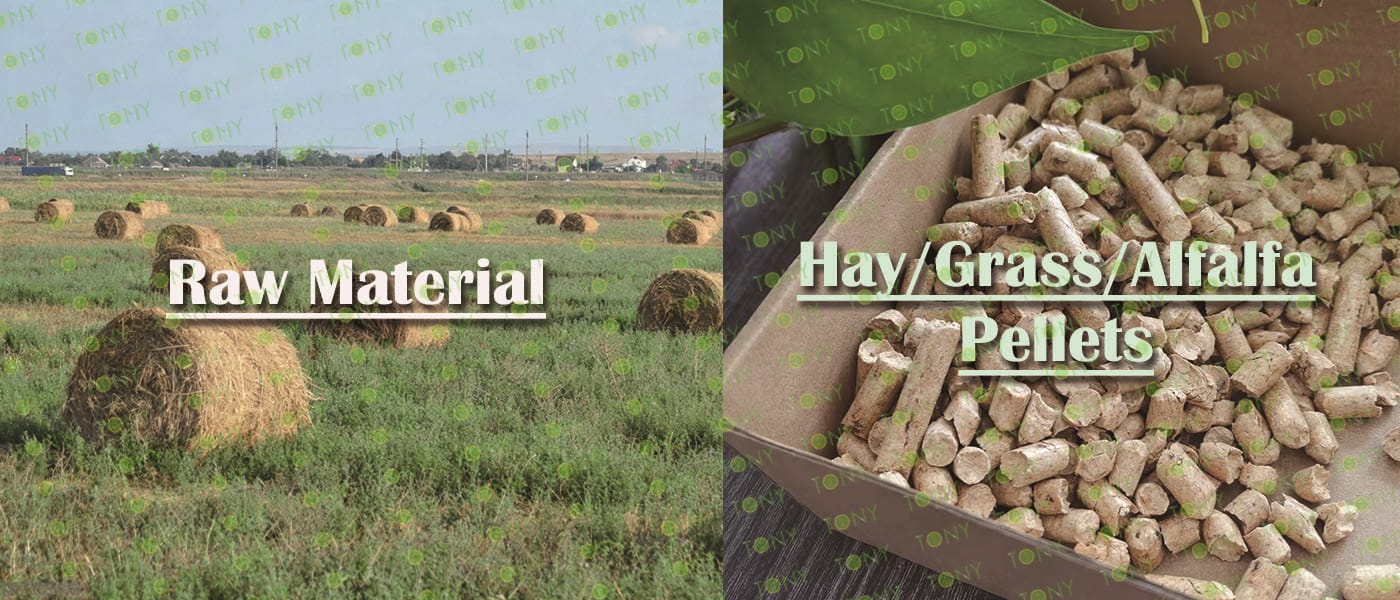
Biomass pellet fuel:Emphasizing "energy attributes," it prioritizes combustion efficiency and environmental friendliness. Its characteristics revolve around "high efficiency, cleanliness, and easy storage," primarily serving energy substitution needs.
1.Combustion performance adaptable to energy scenarios:
Its basic calorific value is stable at 14-17 MJ/kg, lower than wood pellets but higher than ordinary straw fuel, meeting the heat requirements of scenarios such as home heating, small industrial boilers, and biomass power generation; ash content during combustion is only 2%-5%, with minimal coking and low subsequent cleaning costs.
2.Physical properties conducive to storage and transportation:
Pellet density reaches 1.1-1.3 g/cm³, reducing volume by 5-8 times compared to loose hay, significantly reducing storage space requirements; moisture content ≤12%, it is not prone to moisture absorption and mold, allowing for long-term storage, with a loss rate of only 1%-2% during long-distance transportation, far lower than loose hay.
3.Outstanding environmental and cost advantages:
When burned, the emissions of sulfur dioxide and nitrogen oxides are only 1/10 to 1/20 of those of coal, which complies with environmental protection policies; the raw materials can be mixed with low-cost agricultural waste such as hay and straw, and there is no need to retain nutrients during processing. The process is simple and the unit cost is 40%-60% lower than that of feed pellets.
2025 Tony Machinery - All Rights Reserved. Map