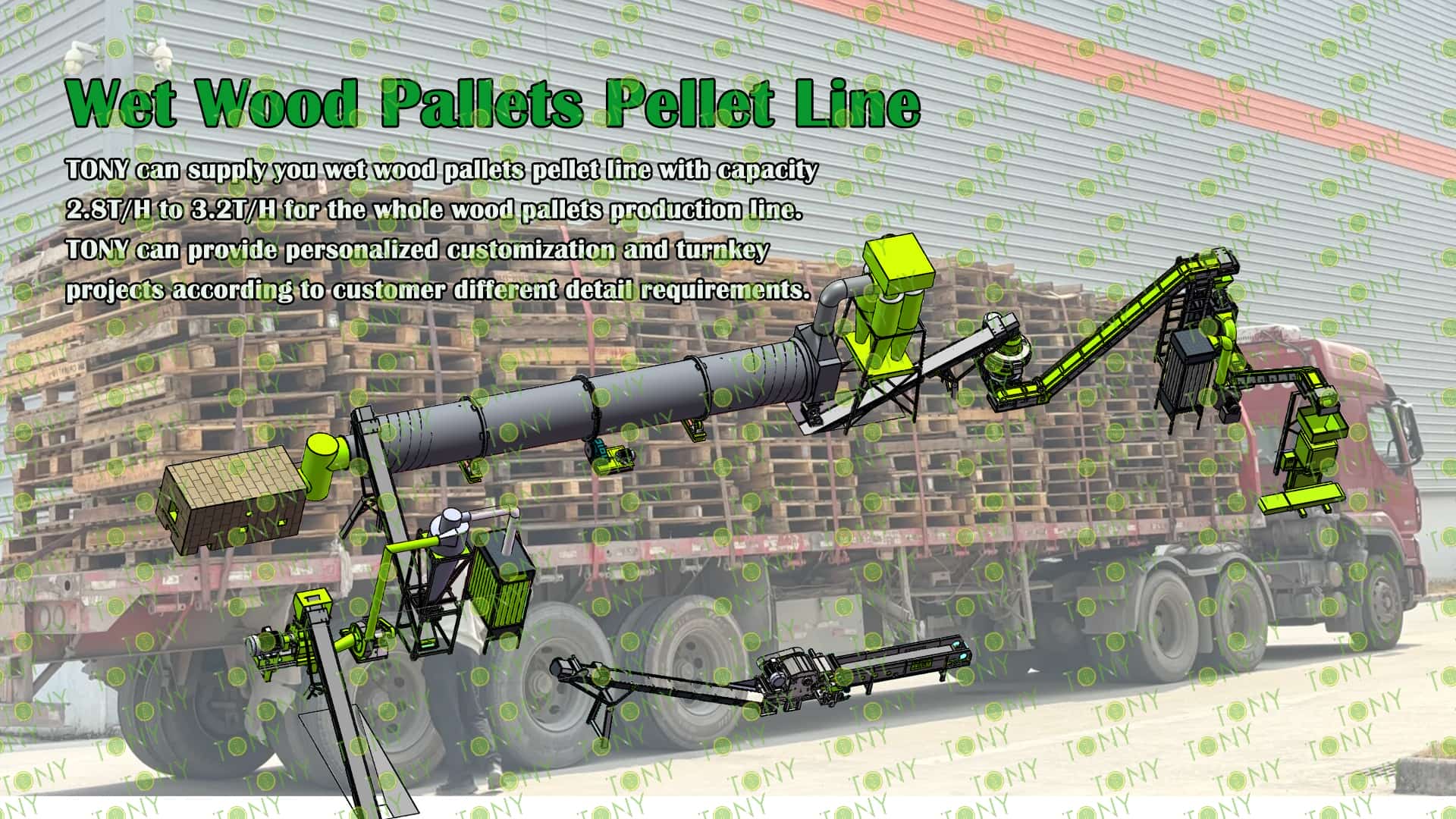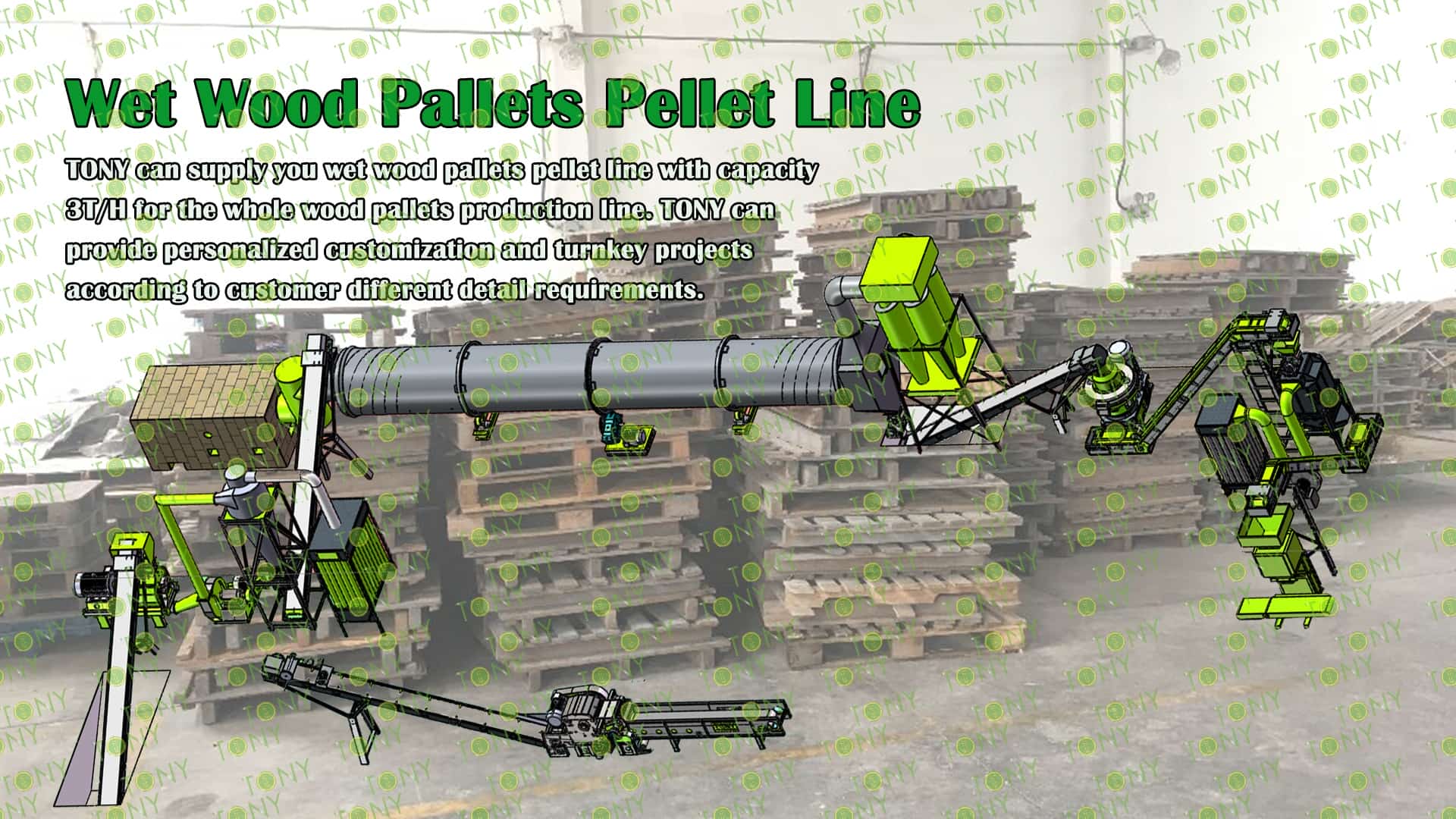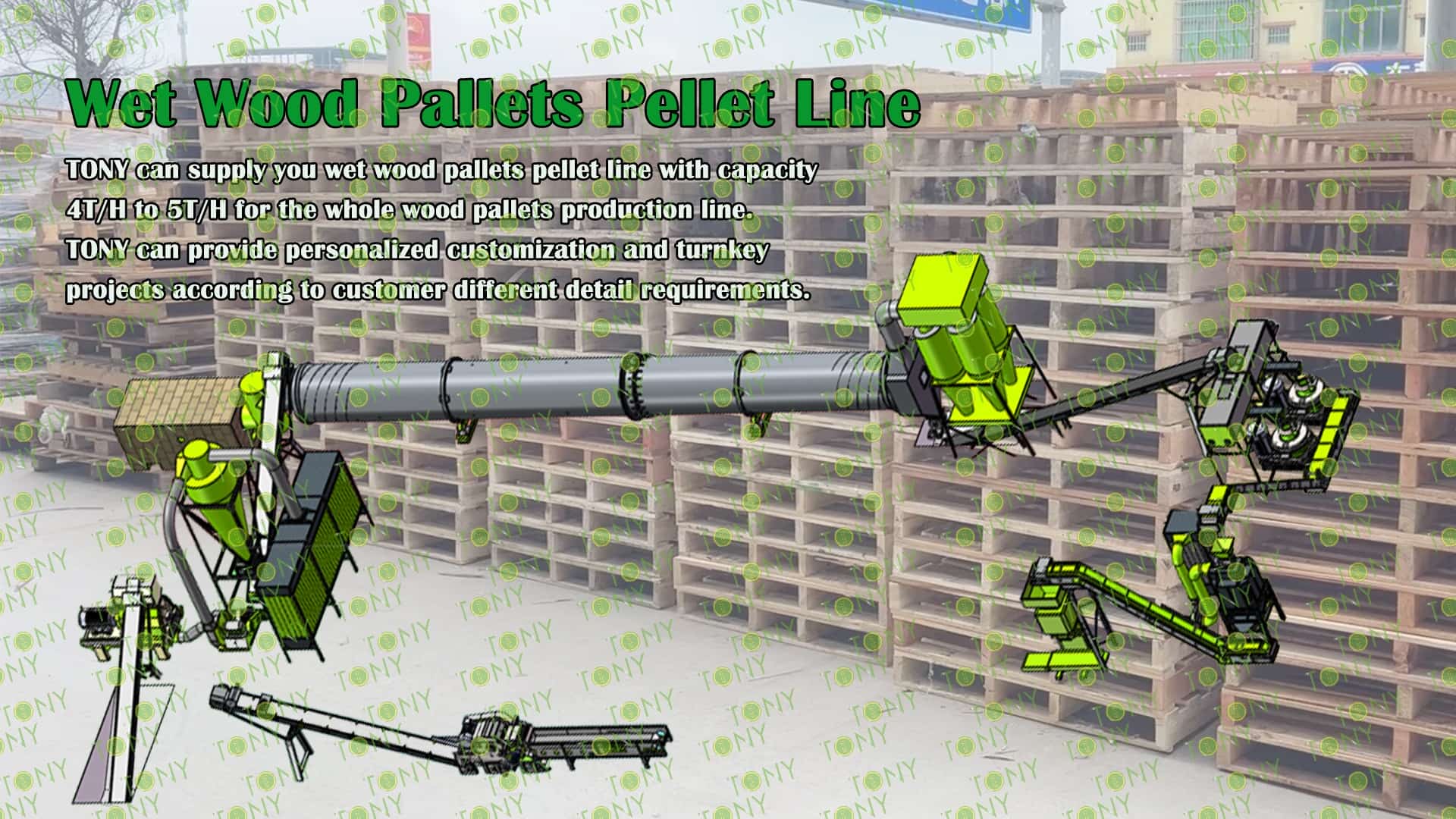




















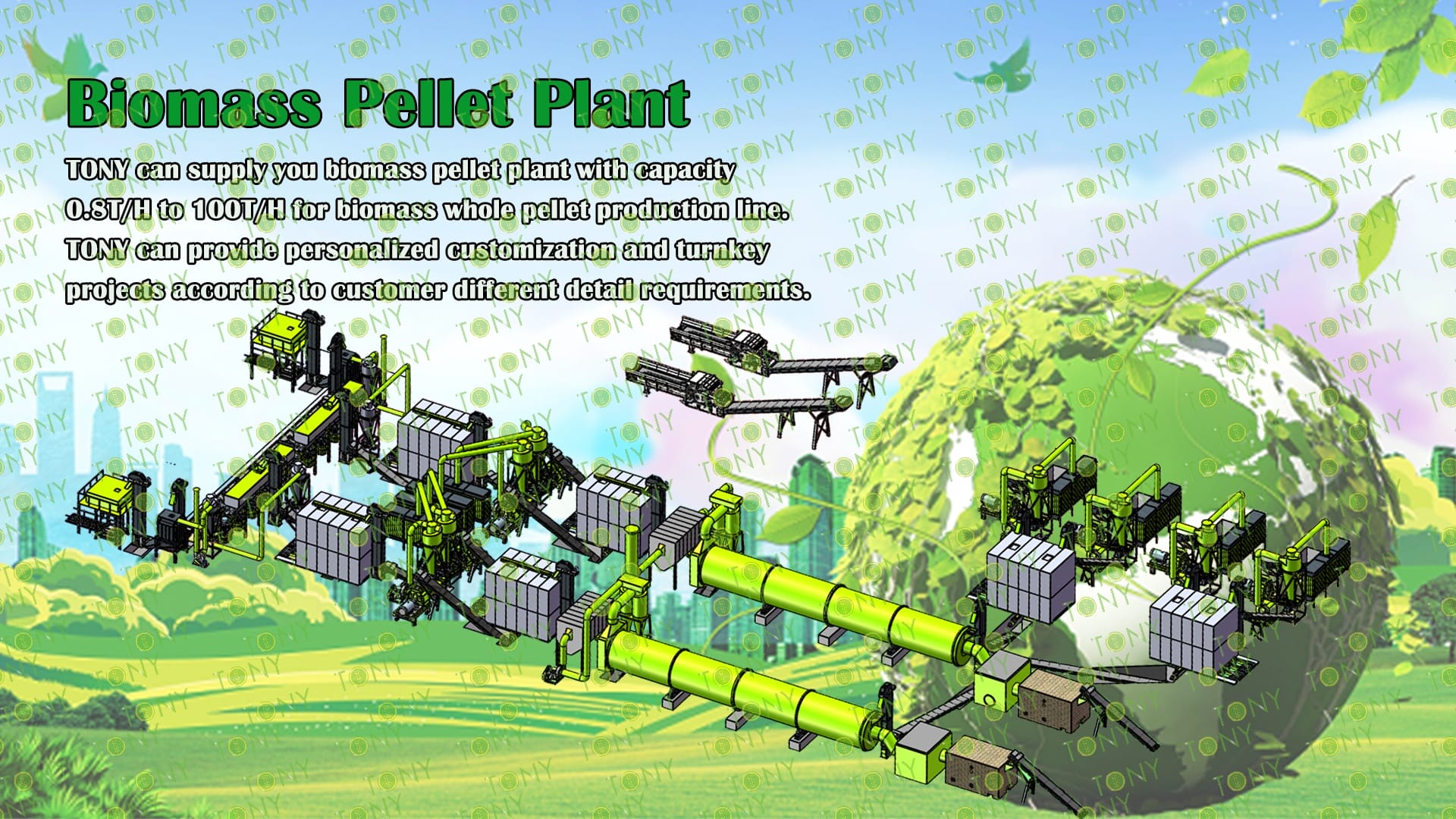

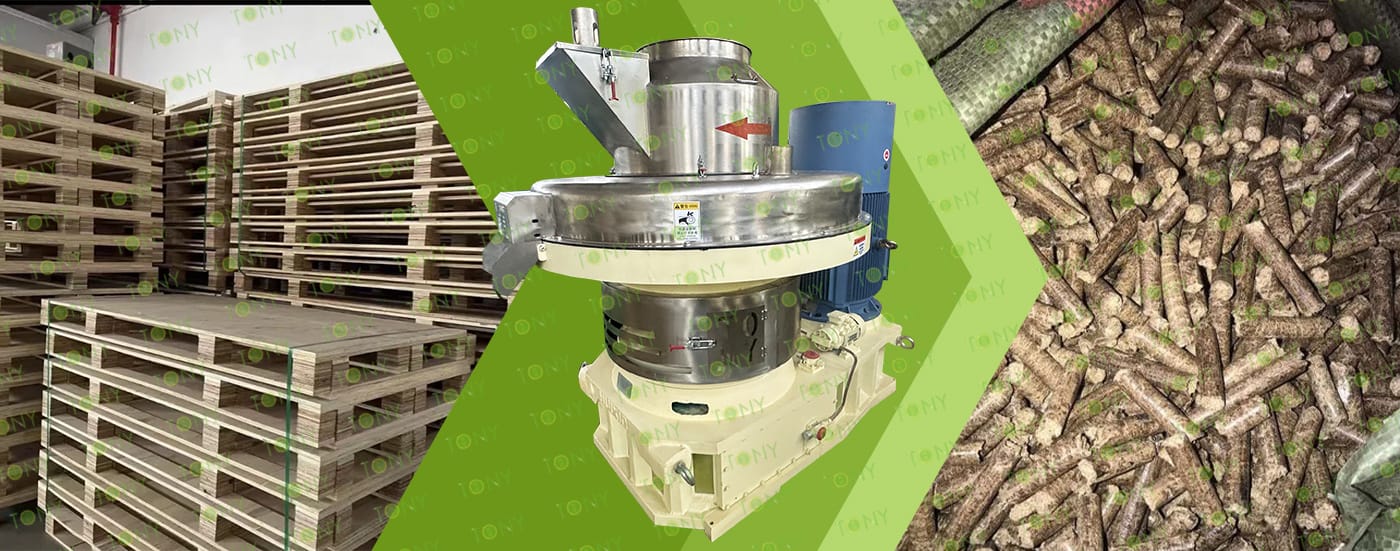
1.The working principle of wet wood pallets biomass pellet processing equipment
The overall principle of wood pallet pellet processing equipment is essentially to transform "irregular, high-impurity, high-moisture" waste wood pallets into "regular, impurity-free, high-density, and easy-to-store" biomass pellets through the continuous physical processing of "dismantling and impurity removal → crushing and volume reduction → crushing and refinement → drying and moisture control → high-temperature and high-pressure molding → cooling and stabilization." No chemical agents are added throughout the process, and molding is achieved by relying on the adhesiveness of the wood's own fibers. This not only solves the problem of environmentally friendly disposal of wood pallet waste, but also achieves resource recycling (the pellets can be used as fuel, feed carrier, etc.).
2.Characteristics of wet wood pallets biomass pellet processing equipment
(1)High-strength crushing/smashing system to cope with "large block + hard" raw materials
Wood pallets are mostly whole boards (usually 1.2m×1.0m, 1.1m×1.1m in size), and some are plywood and solid wood hard materials. The crusher needs to have high torque and wear resistance
(2)High-efficiency impurity removal device to accurately separate "metal + non-metal" impurities
The key pain point of wood pallet processing is "containing metal nails and plastic accessories". The equipment usually integrates a multi-stage impurity removal system to ensure the purity of the particles
(3)Wide range of moisture content adaptation to reduce drying energy consumption
Wood pallets have different storage environments and large differences in moisture content (15%-30%). The drying system of the equipment (mostly a drum hot air dryer) can achieve precise temperature control (80-120℃) and humidity adjustment, stabilizing the moisture content of wood chips at 10%-15% (the optimal humidity for pelletizing)
(4)Wood pallet pellet processing requires multiple steps: crushing → impurity removal → pulverization → drying → pelletizing → cooling → screening. Equipment typically comes in the form of a complete production line, with core features including a consistent process flow and a high degree of automation.
(5)Wood pallet raw materials (especially plywood and hardwood) subject equipment components to significant wear and tear, making durability a key feature.
(6)Wood pallet processing is prone to dust and noise, and poses significant risks to mechanical safety. Therefore, the equipment features specific environmental and safety design features.
(7)Wood pallet pellet production equipment can be flexibly adjusted based on the user's production capacity, site, and intended use of the finished product, meeting diverse needs.
3.Application scenarios of wet wood pallets biomass pellet processing equipment
(1)Civilian solid fuel: Wet pallet pellet fuel has a high utilization rate, is easy to store and use, is hygienic and safe, and can be used for home heating.
(2)Main solid fuel for industrial boilers: It can replace raw coal, heavy oil, and gas, reducing air pollution. Every 10,000 tons of biomass fuel burned can replace 7,000 tons of standard coal, reducing sulfur dioxide emissions by 165 tons, smoke emissions by 80 tons, and carbon dioxide emissions by 14,400 tons.
(3)Thermal power generation: The fuel calorific value can reach 3,400-6,000 kcal.
In short, wet wood pallet biomass pellet fuel can be described as "environmentally friendly", "energy-saving", "renewable", and "zero-carbon emission", and is the best renewable energy source to replace coal. From the perspectives of cost, energy saving, and environmental protection, biomass fuel is a better alternative to coal.

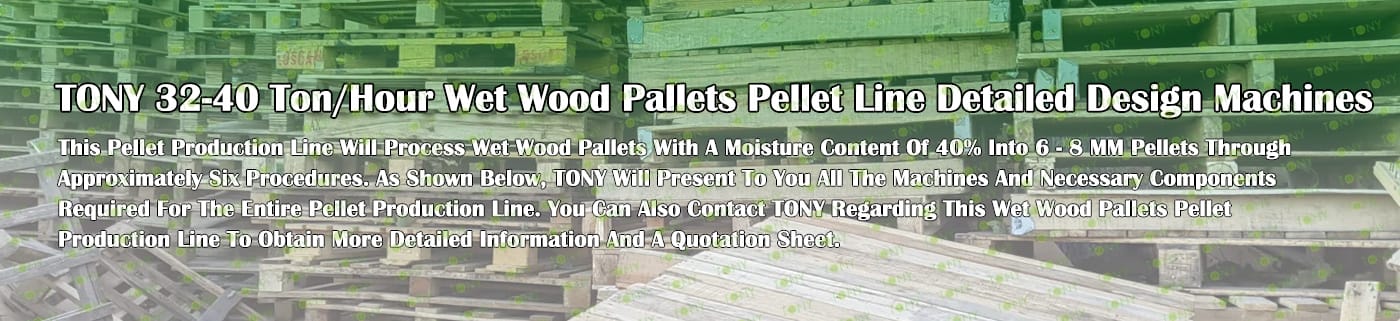
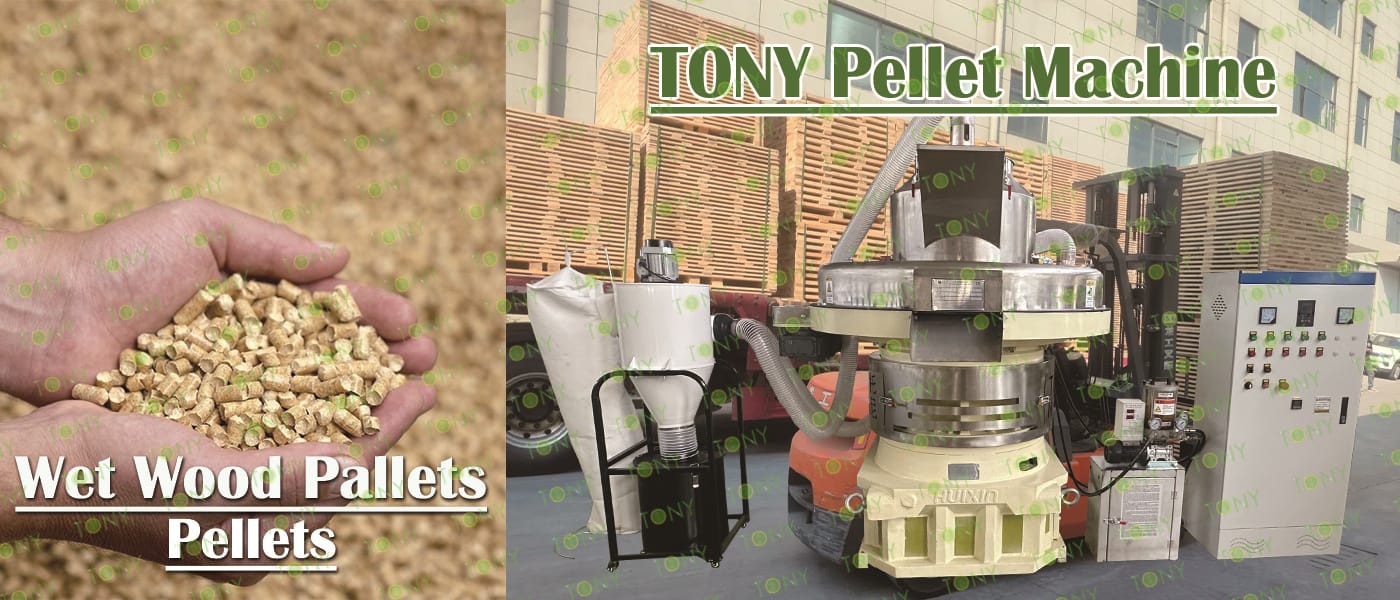
TONY Brand 32-40Ton/Hour Wet Wood Pallets Pellet Manufacturing Plant can take wet wood pallets, various types of wood - related biomass materials, such as branches, small - diameter logs, and wood shavings, with wet wood as the main raw material. After pretreatment and processing, it is solidified into high - density wood pellet fuel. This fuel is an ideal substitute for coal and oil and plays a role in energy conservation and emission reduction. At present, it has been widely used in regions rich in wood resources.
1. Capacity: 32-40Ton/Hour
2. Raw materials: Wet wood pallets
3. Moisture: Wet type, about 40%.
4. Application: All kinds of waste wood pallets or more waste wood raw materials
Suitable customers: Logistics and warehousing companies, various manufacturing plants, ports and airports, construction sites, large supermarkets and shopping malls, and other places where waste wood pallets have advantages
5. Finished Pellets Markets: Large power plants ,domestic heating, industrial heating, combustion heat, heating systems, boiler rooms, school canteens, foundry heat sources.

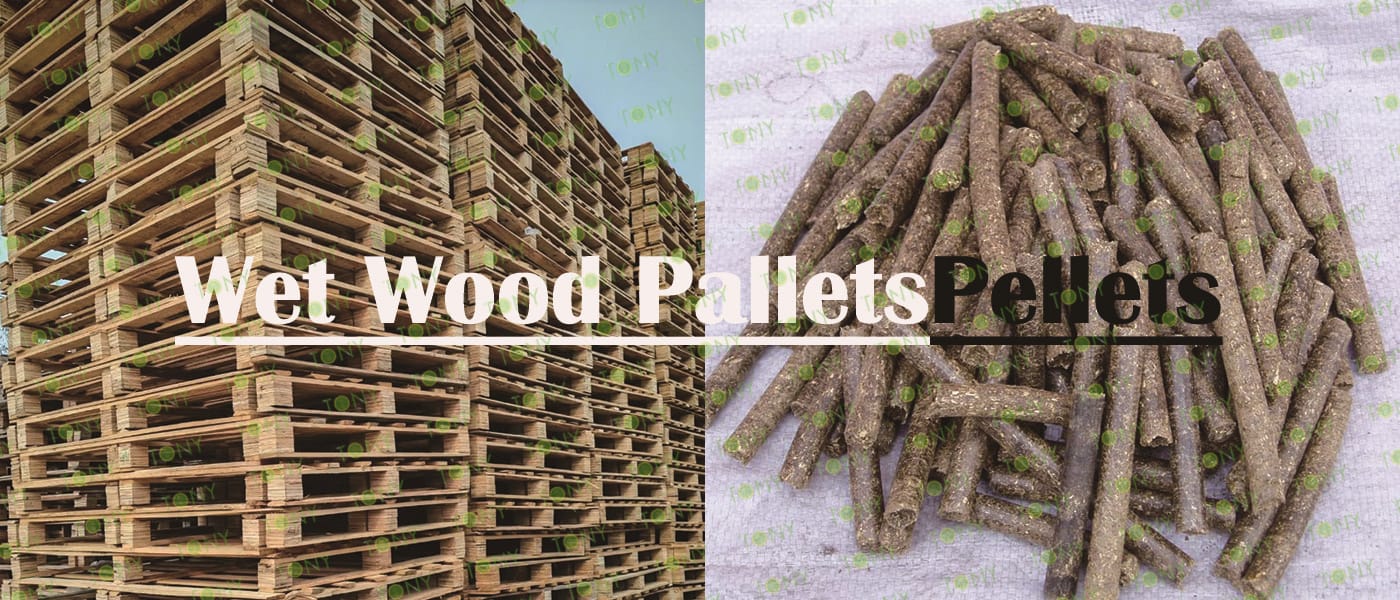
1. Project Name: Wet Wood Pallets Pellet Production Line
2. Raw Material: All kinds of wet wood pallets
3. Moisture Content of Raw Material: 40%
4. Capacity: 32-40tons per hour
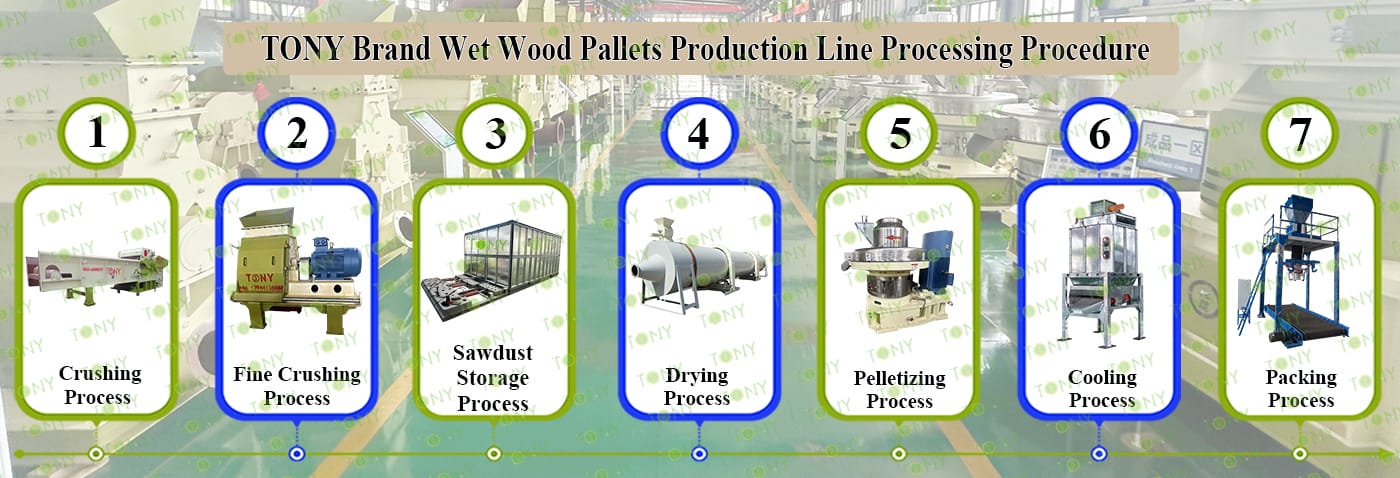
5. Process: Crushing Process - Fine Crushing Process -Sawdust Storage Process- Drying Process - Pelletizing Process - Cooling Process - Packing Process
6. Main Equipment: Comprehensive Chipper TPC1600-1000-315KW, Effective Hammer Mill-TFD100*200-315KW, TONY Large Hydraulic Storage Silo,Rotary Drum Dryer-2.5*24m, TONY Pellet Machine TYJ860-Ⅲ-280KW, Pellet Cooler, Ton Packing Machine and Belt Conveyors

|
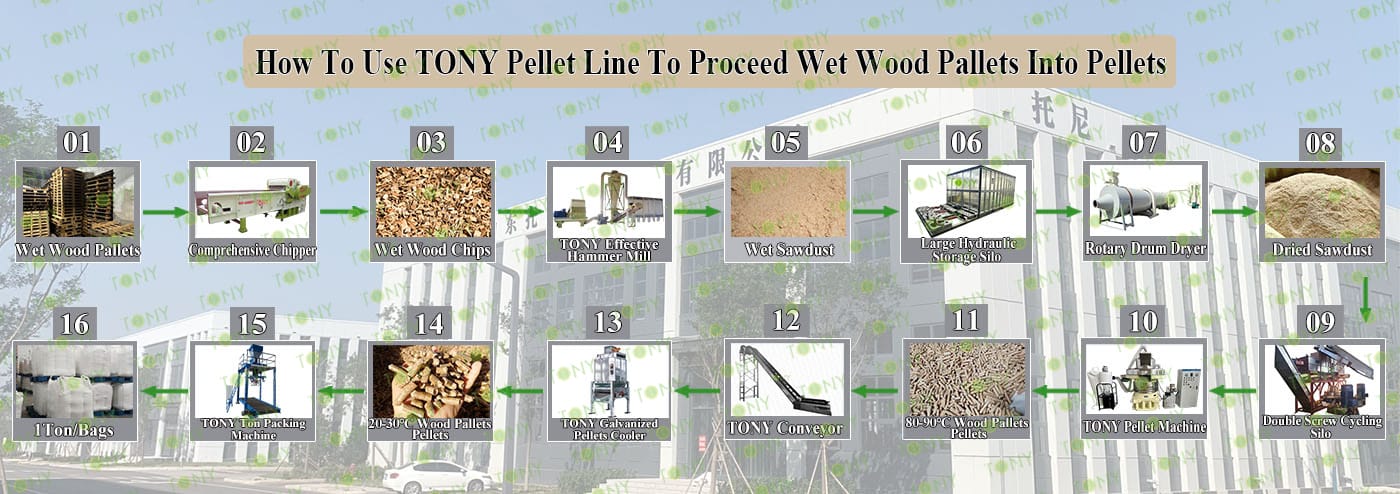
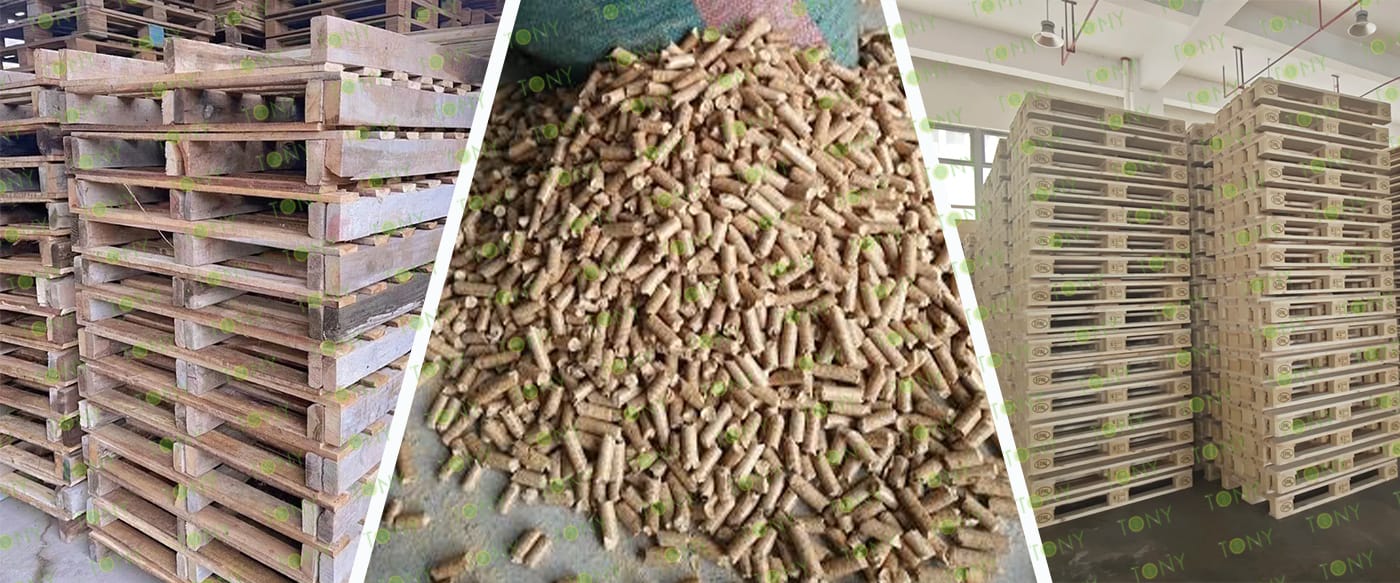
How to use the TONY pellet production line to make pellets from wet wood pallets? The process mainly includes the following steps and equipment: 1. Use TONY comprehensive chipper to grind wet wood pallets with width 1.6m into wood chips 25 - 55 mm in length. 2. Use TONY effective hammer mill to crush the 25-55 mm wood chips into 8-14 mm sawdust. 3.Use TONY large hydraulic storage silo to storage 8-14 mm sawdust 4. Use TONY rotary drum dryer to dry the sawdust with a 40% moisture content down to a moisture content of 10%-15%. 5. Use TONY vertical ring die pellet machine to produce pellets with a diameter of 6-8 mm. 6. Use TONY galvanized cooler to cool the pellets from 80-90°C to 20-30°C. 7. Use TONY ton packing machine to pack the pellets into bags, each weighing 1 ton. For more detailed information and quotations, you can contact TONY. TONY can provide all the above - mentioned products at highly competitive prices and with excellent quality. |
|
|||||||||||||||||||||||||||||||||||||||||||||||||||||||
|
Next, TONY Will Introduce To You All The Necessary Machinery That Will Be Used For The Whole Pellet Production Line. Some Machines Can Be Custom - Made By Customers According To Different Customers' Detailed Demands. Contact TONY For More Details, Including Quotation And Layout. |
|||
 |
 |
 |
 |
|
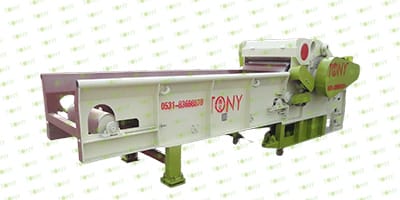
Comprehensive Chipper |
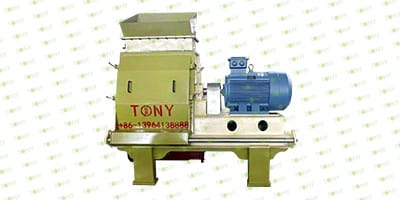
Effective Hammer Mill |
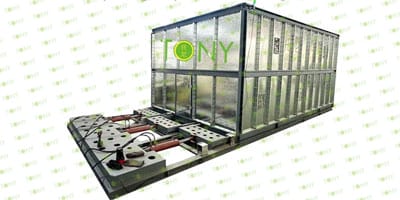
Large Hydraulic Storage Silo |
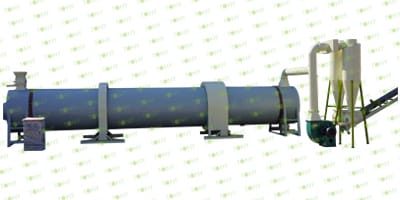
Rotary Drum Dryer |
|
1.To Grind Wood pallets Width ≤1.6m Into25-55mm Wood Chips. |
1.To Crush 25-55mm Wood Chips Into 8-14mm Sawdust. |
1.To Storage Sawdust Before Dryer Control Sawdust Flow Entering The Dryer |
1.To Dry The 40% Sawdust Into 10-15% Sawdust. |
 |
 |
 |
 |
|
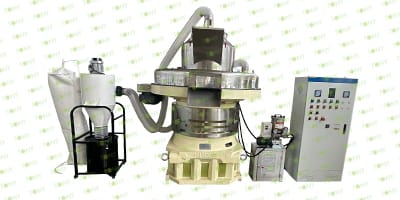
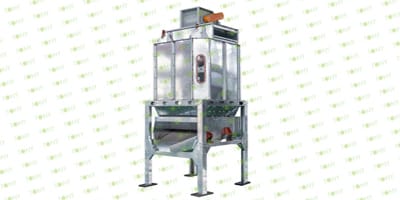
Vertical Ring Die Sawdust Pellet Machine |
Galvanized Pellets Cooler |
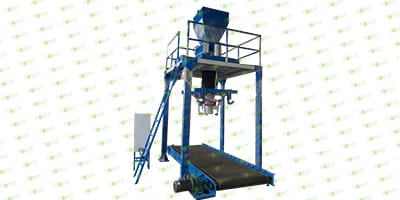
Ton Packing Machine |
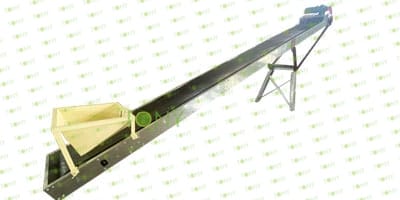
Belt Conveyor |
|
1.To Press Dry Sawdust Into 6-8mm Biomass Pellets |
1.To Cool Pellets From 80-90℃ Into 20-30℃ |
1.To Pack Pellets Into 1Ton/Bags |
1.To Transport Wood Chips,Sawdust,Pellets. |
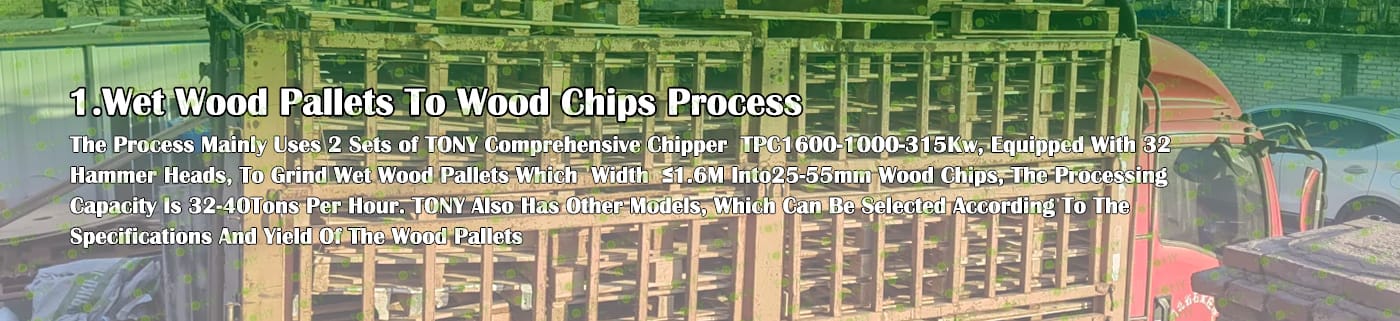
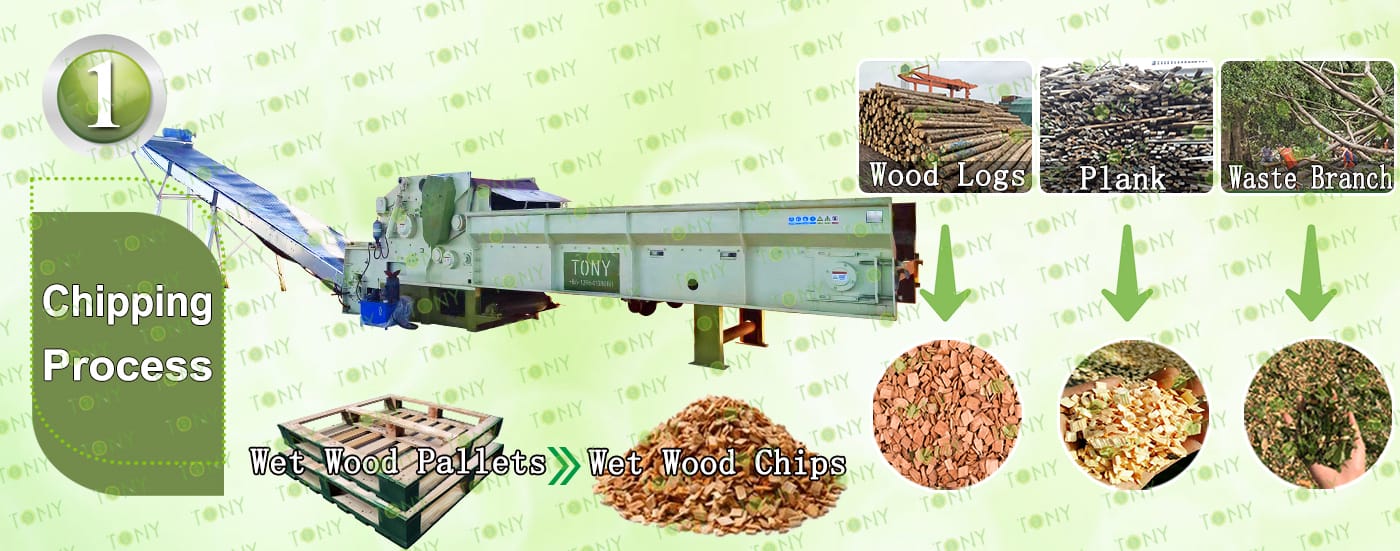
1.Wood Pallets Chipping Process:
A. This process is mainly used to grind wooden pallets with nails less than 1.6 m in width into wood chips with a size of 25-55 mm. The final size of the wood chips can be adjusted by replacing the screen with different sizes and replacing or adjusting the hammer heads with different specifications.
B.TONY Brand comprehensive chipper TPC1600-1000-315kw model with 32hammer heads*2sets
C.Capacity:32-40Ton/Hour.
Main Parts:
(1)TONY's Comprehensive Chipper.
(2)Feed And Discharge Belt Frequency Control To Prevent Card Material
(3)Hydraulic System Control Can Be Used For Thicker Materials
(4) Electronic Control System Allows The Equipment To Be Used Normally
Contact Tony For More Details With Quotation

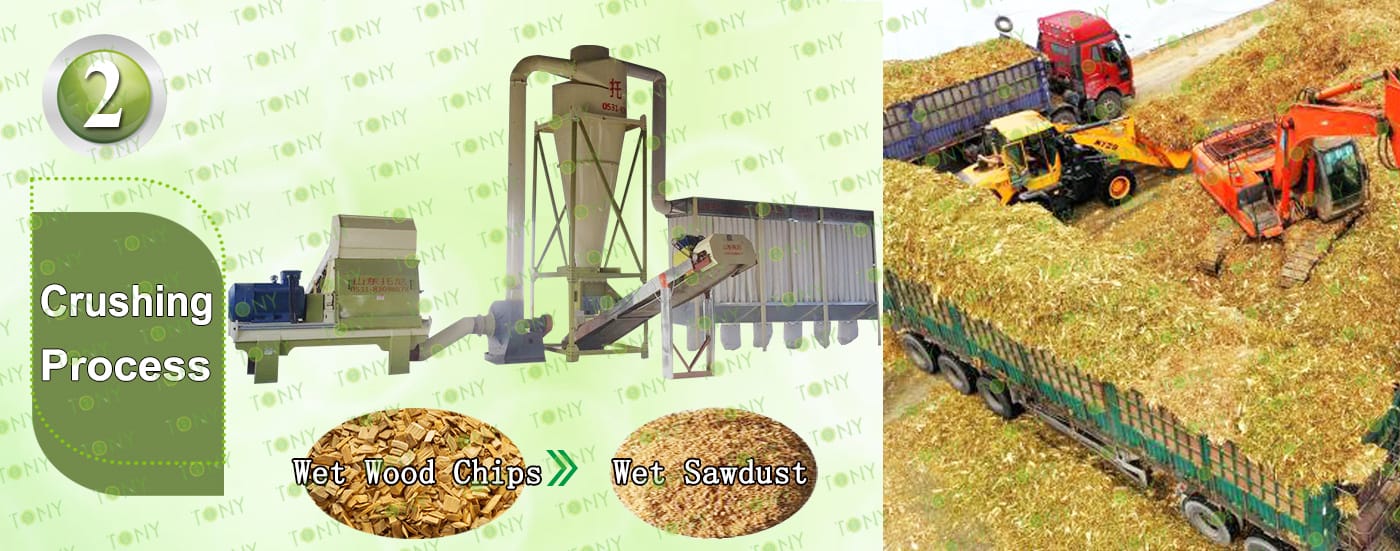
2.Wood Chips Fine Crushing Process:
A.This process is mainly used to crush 25-55mm wood chips into 8-14mm sawdust.
B.Capacity:32-40Ton/Hour.
C.TONY brand effective hammer mill TFD100*200-315KW*3sets
Main Parts:
(1)TONY Effective Hammer Mill.
(2)Galvanized Dust Collector.
(3)Sawdust Transportation Fan Blower.
(4)Cyclone With Airlock.
(5)Electrical Cabinets.

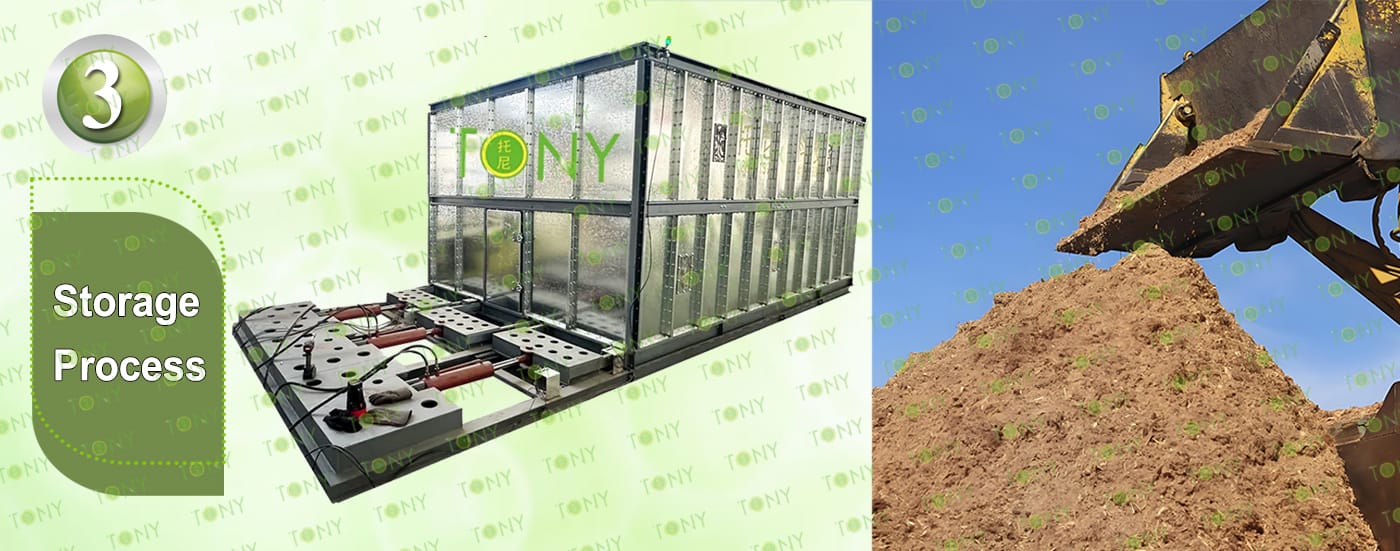
3.Sawdust Storage Process:
A. This process is mainly used to storage the sawdust that comes out of the hammer mill.It is hydraulic galvanized storage bin which is more stalbe and sawdust in it is not easy to be blocked.
B. TONY brand sawdust storage to storage the sawdust that comes out of the hammer mill.This process can be optional by customer.If customer do not chose the storage bin,he can storage the sawdust on the ground directly which may need some labour.
Main Parts:
(1)TONY's New Sawdust Storage Bin.
(2)With Screws Inside The Storage Bin To Prevent Sawdust Blocked.

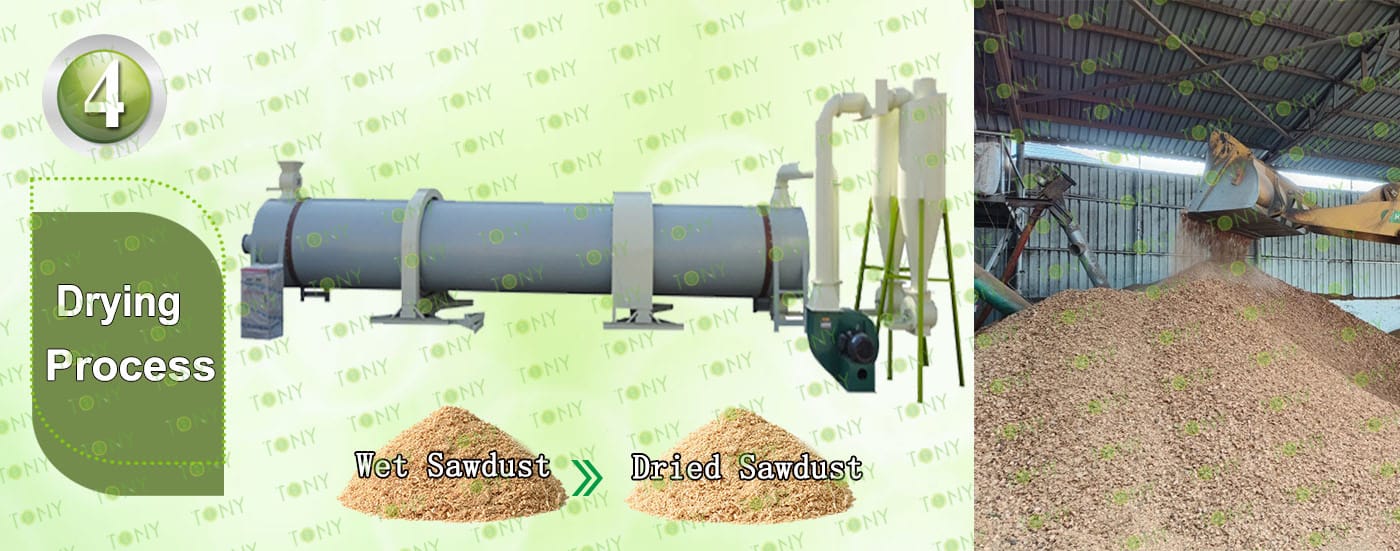
4.Sawdust Drying Process:
A.This process is mainly used to dry the sawdust from 40% to 10-15%.
B.Capacity:32-40Ton/Hour.
C.TONY use 6 sets of 2.5*24m rotary drum dryer for this process, TONY hot blast stove is made of firebrick pan, shell with H steel plate as the frame. There are 3 layers of fire blocking device inside, which can effectively prevent the fire from entering the tumble dryer.Customers can choose to use waste wood, biomass pellets, natural gas, etc. as fuel for the hot air furnace
TONY dryer use spiral tube material, and is not easy to deform.
Unlike other manufacturers with iron plate splicing welding, very easy to deformation.
Main Parts:
(1)TONY's Rotary Drum Dryer Main Body. (Reducers With Motors and Pips.)
(2)TONY's Hot Stove.
(3)Fan Blower+Cyclone With Airlock.

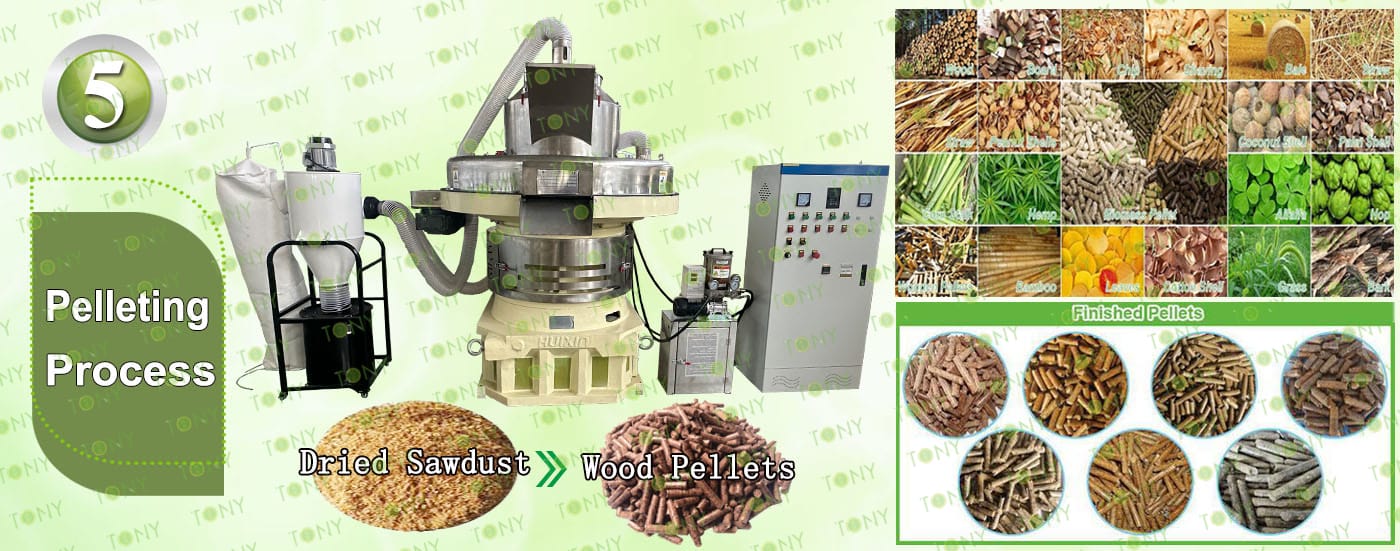
5.Pelletizing Process:
A.This process is mainly used to to product pellets into φ6-8mm.
B.Capacity32-40Ton/Hour.
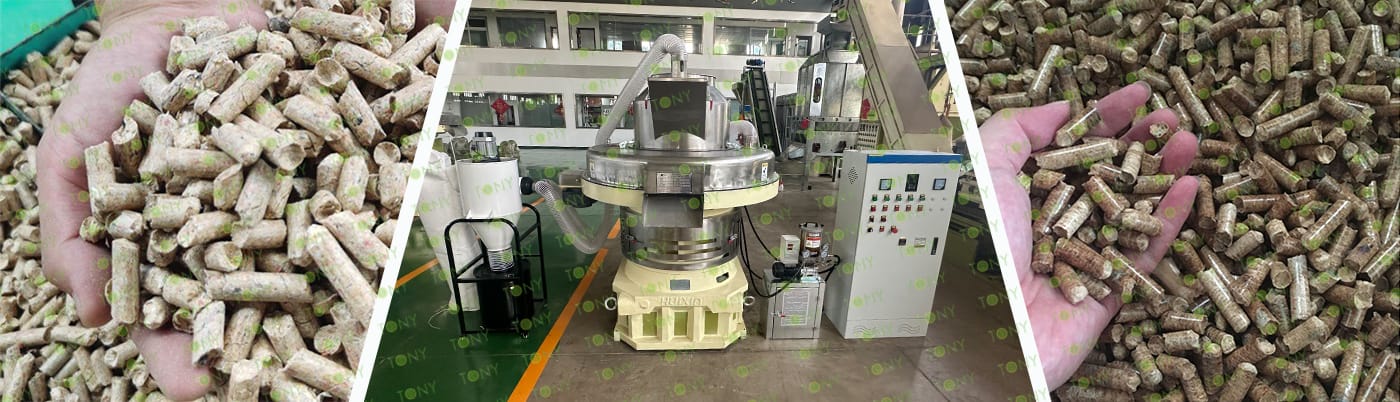
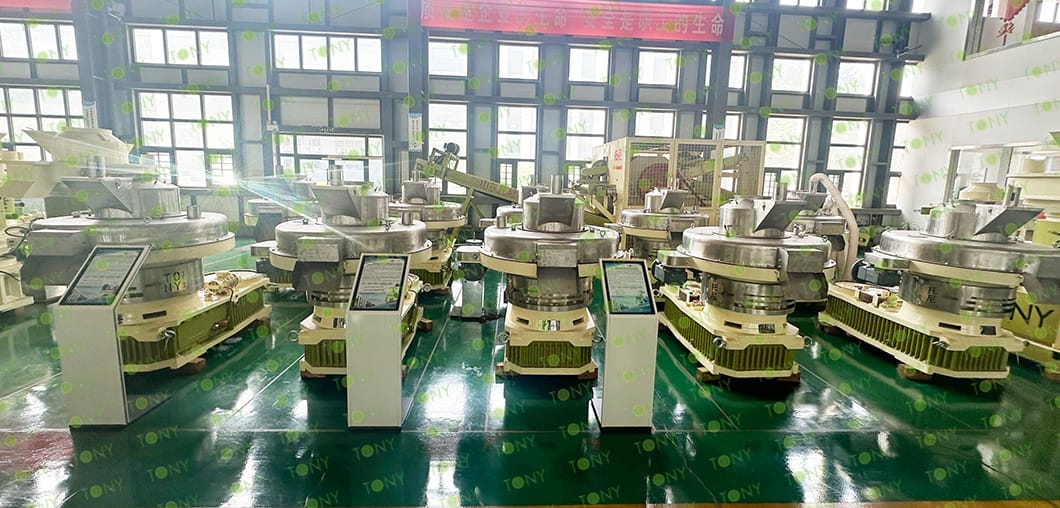
C.TONY brand vertical ring die pellet machine TYJ860-III-280KW*8sets
D.Double screw cycling silo is added above the pellet machine, which has the advantages of saving space, saving labor, intelligently controlling the feeding speed, not easy to block the material, and improving production efficiency.
Main Parts:
(1)TONY's New Vertical Ring Die Pellet Machine.
(2)Cyclone And Bags Dust Collectors.
(3)Automatic Lubrication System.
(4)Electrical Cabinets.
You can chose TONY new type SS304 pellet machine

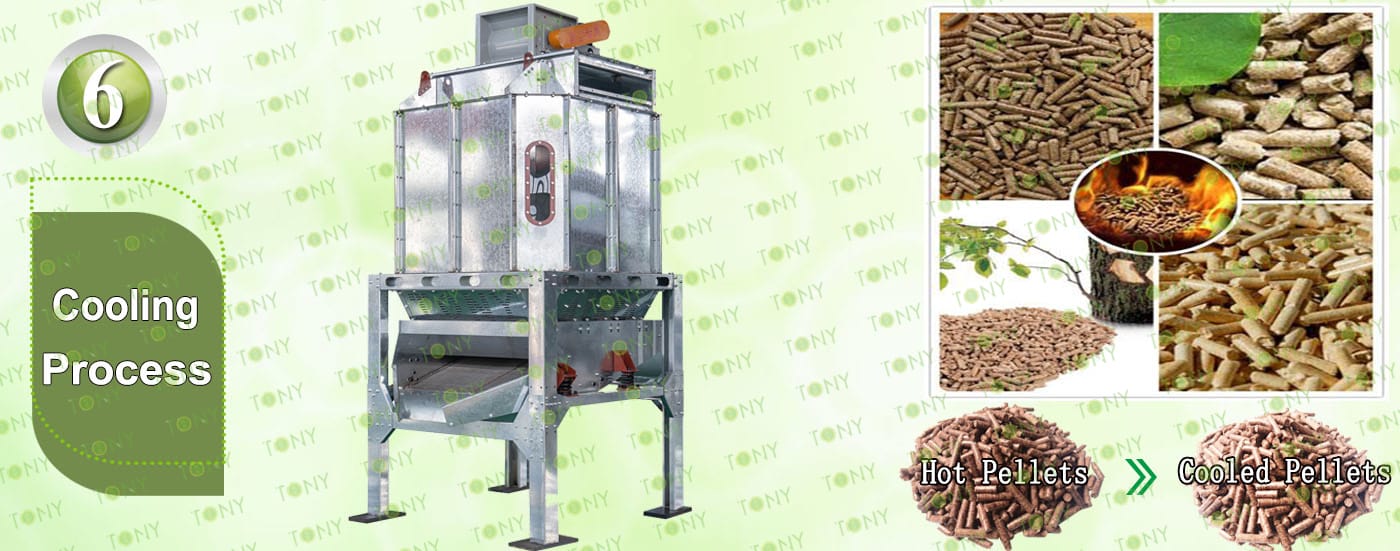
6.Cooling Process:
A.This process is mainly used to cool pellets from 80-90℃ to 20-30℃
B.Capacity:32-40Ton/Hour.
C.TONY brand galvanized cooler separator*2sets
Main Parts:
(1)TONY's Galvanized Cooler Separator With Vibrating Screen.
(2)Cyclone And Bags Dust Collectors.
(3)Fan Blower.
(4)Connect Pipes.

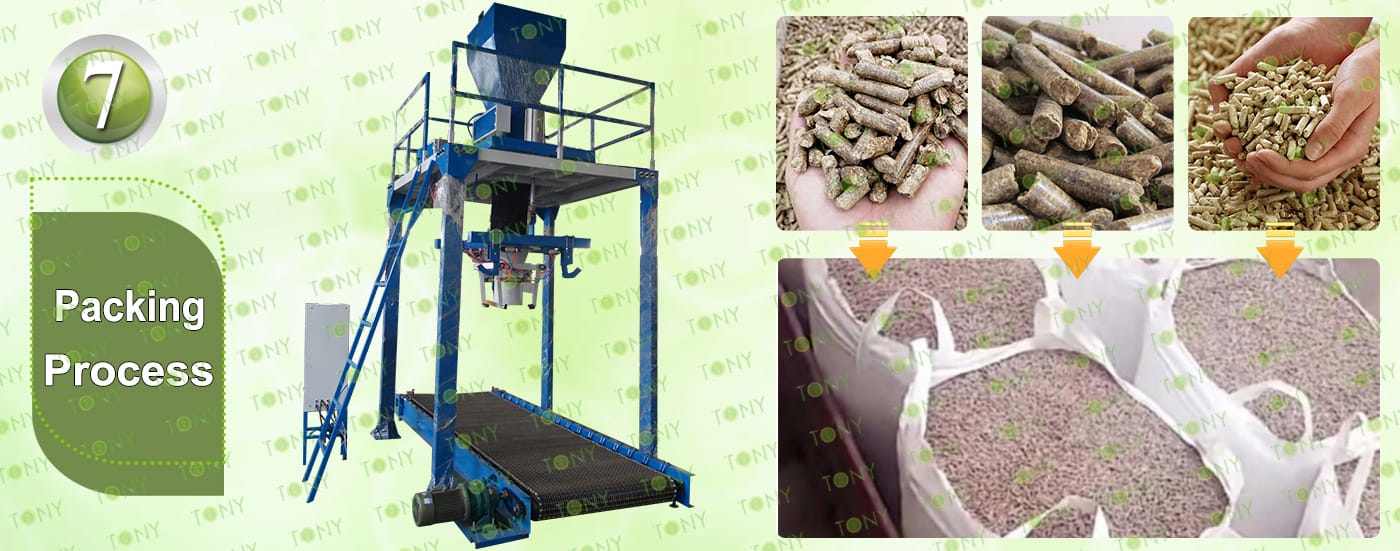
7.Packing Process:
A.This process is mainly used to pack pellets into 1Ton/Bags.
B.Capacity:32-40Ton/Hour.
C.TONY brand ton packing machine*2sets
Main Parts:
(1)TONY Ton Packing Machine
(2)Electronic Platform Scale Metering System
(3)Automatic Tare, Zero, and Drop Correction Functions
(4)Feeding System Features Fast, Medium, and Slow Feeding Speeds to Ensure Measuring Accuracy


Three Fundamental Supports for the Feasibility of Processing Wooden Pallets into Biomass Pellets
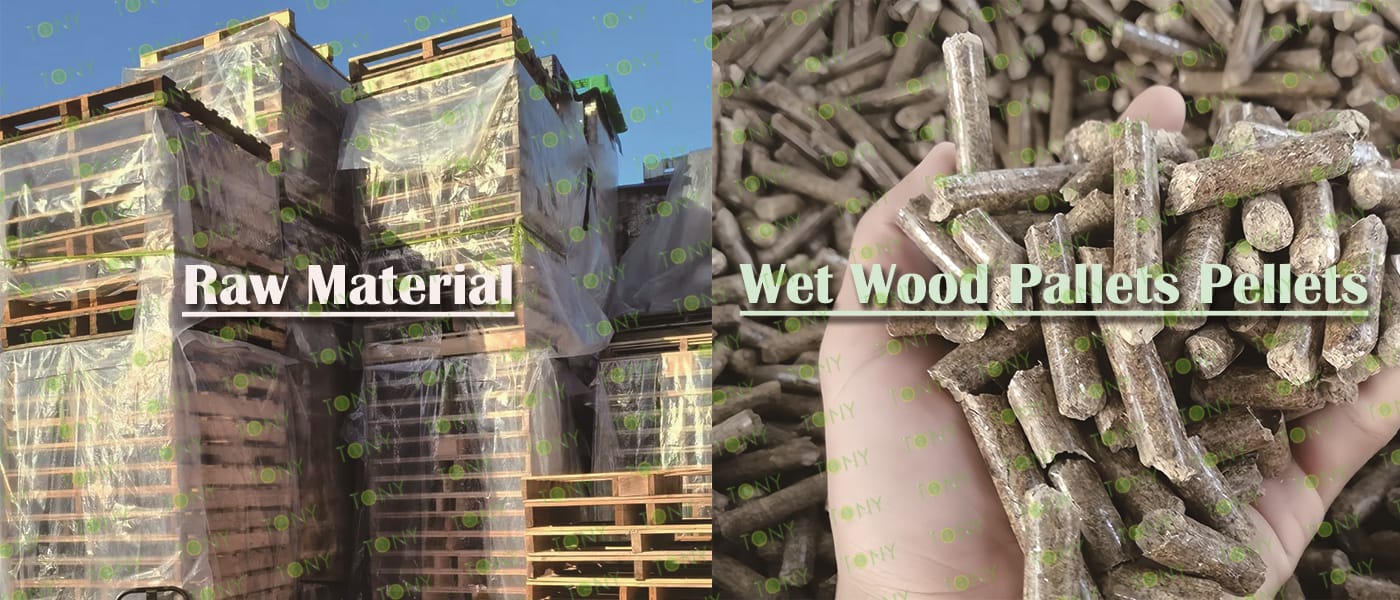
The success of this project hinges critically on the maturity of three key factors: raw material supply, policy guidance, and market demand. These factors are also the core focus of preliminary research.
1.Raw Material Supply: Stable and low-cost raw material supply is a prerequisite.
The source, supply volume, and cost of discarded wooden pallets directly determine project profitability and require critical assessment:
Raw Material Source Scenario:
Core Channels: E-commerce logistics warehouses, manufacturing factories (auto parts, home appliances, machinery), ports/bonded areas (discarded IPPC pallets from cross-border trade), and pallet rental companies (damaged and retired pallets).
Supply Characteristics: Discarded pallets in these scenarios are typically generated in bulk and are often recycled for free or at a low price, resulting in extremely low raw material costs.
Suitability of Raw Material Processing:
Wooden pallets (especially solid wood pallets) have a high wood fiber density, resulting in pellets with a calorific value of 4200-4800 kcal/kg (similar to medium-quality coal), surpassing agricultural waste such as straw and rice husks. Removal of metal (nails, clips) and minimal oil contamination is required, eliminating the need for complex pre-treatment and making them highly suitable for processing.
2. Policy Direction: Dual Benefits of Environmental and Energy Policies
Biomass pellets, as a compliant alternative fuel, have low market entry barriers. This project falls under the "solid waste resource utilization" category, meeting the "reduction and resource utilization" requirements.
3. Market Demand: Strong demand in both industrial and residential applications
The market demand for biomass pellet fuel has stabilized, eliminating the need to worry about "selling out":
Industrial (Core Customers): Small and medium-sized boilers (1-10 tons) in food processing, textile, and building materials factories, ceramic kilns, and biomass power plants (for co-firing).
Residential (Supplementary Customers): Home heating stoves, cooking energy in southern farmhouses and small restaurants, and home fireplace users.

1.Resource Recycling: Solving the "Solid Waste Problem"
Waste-to-Resource: Used wooden pallets are a common source of solid waste in the logistics and warehousing industries. If they are discarded or incinerated without proper treatment, they can lead to resource waste and environmental pollution. Pallet pellets transform them into high-value products.
2.Excellent performance: Suitable for multiple scenarios and easy to use.
As biomass pellet fuel or industrial auxiliary materials, pallet pellets offer stable physical and chemical properties, providing a superior user experience compared to traditional bulk wood, coal, and other materials.
3.Outstanding environmental performance: Low pollution.
The clean nature of pallet pellets is a core competitive advantage.
4.Significant economic value: Low cost and stable returns.
From production to application, the economic advantages of pallet pellets permeate the entire supply chain. Demand for biomass pellets is strong, and revenue is stable.
The core advantages of pallet pellets are their triple combination of environmental protection, cost-effectiveness, and practicality. They solve the solid waste disposal problem of used pallets and provide a clean and efficient alternative energy source. They balance low production costs with convenient application. Therefore, they have broad application prospects in logistics waste recycling, biomass energy, and clean heating. They are also a "circular economy + green energy" project encouraged by current policies.



2025 Tony Machinery - All Rights Reserved. Map