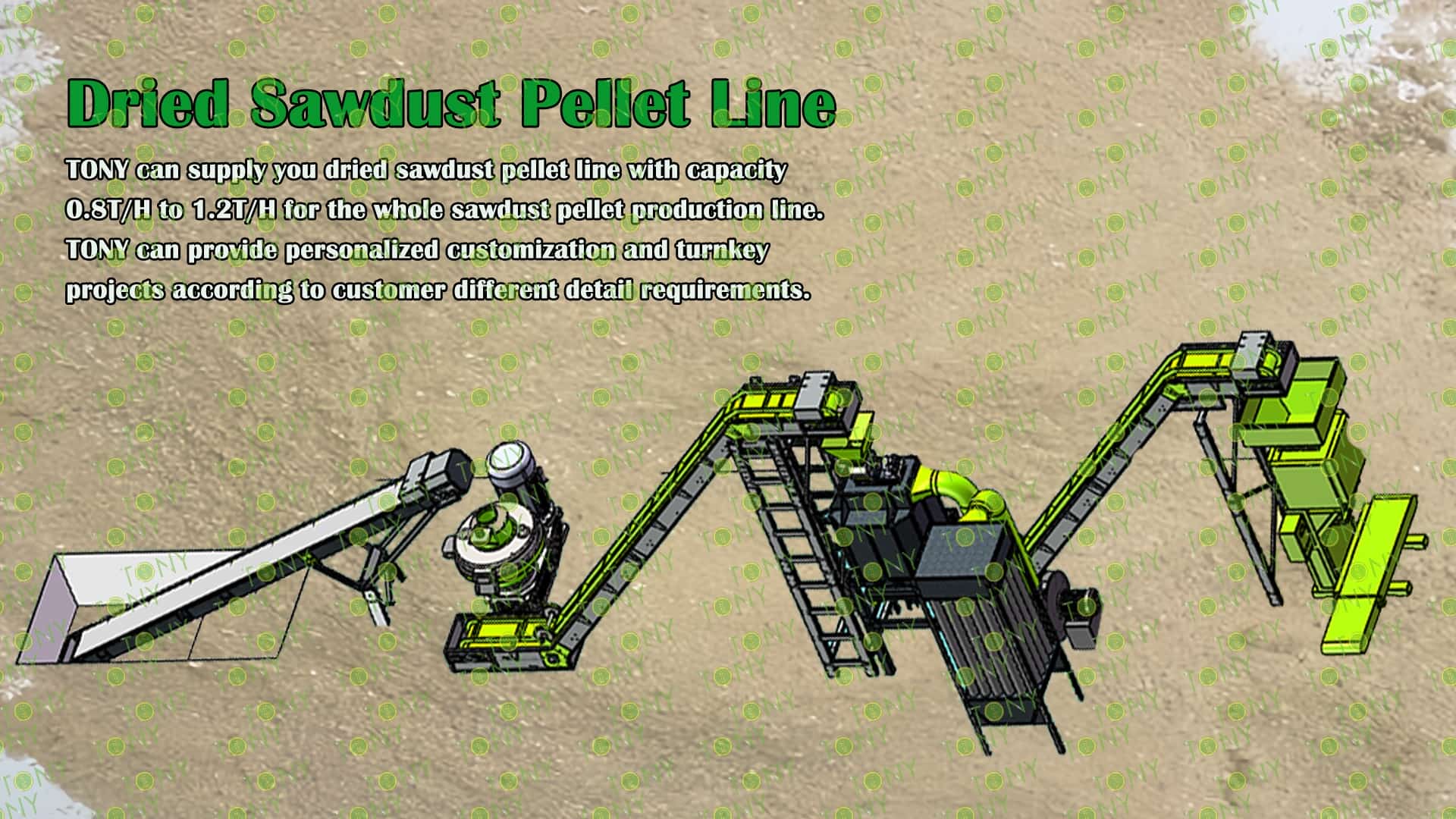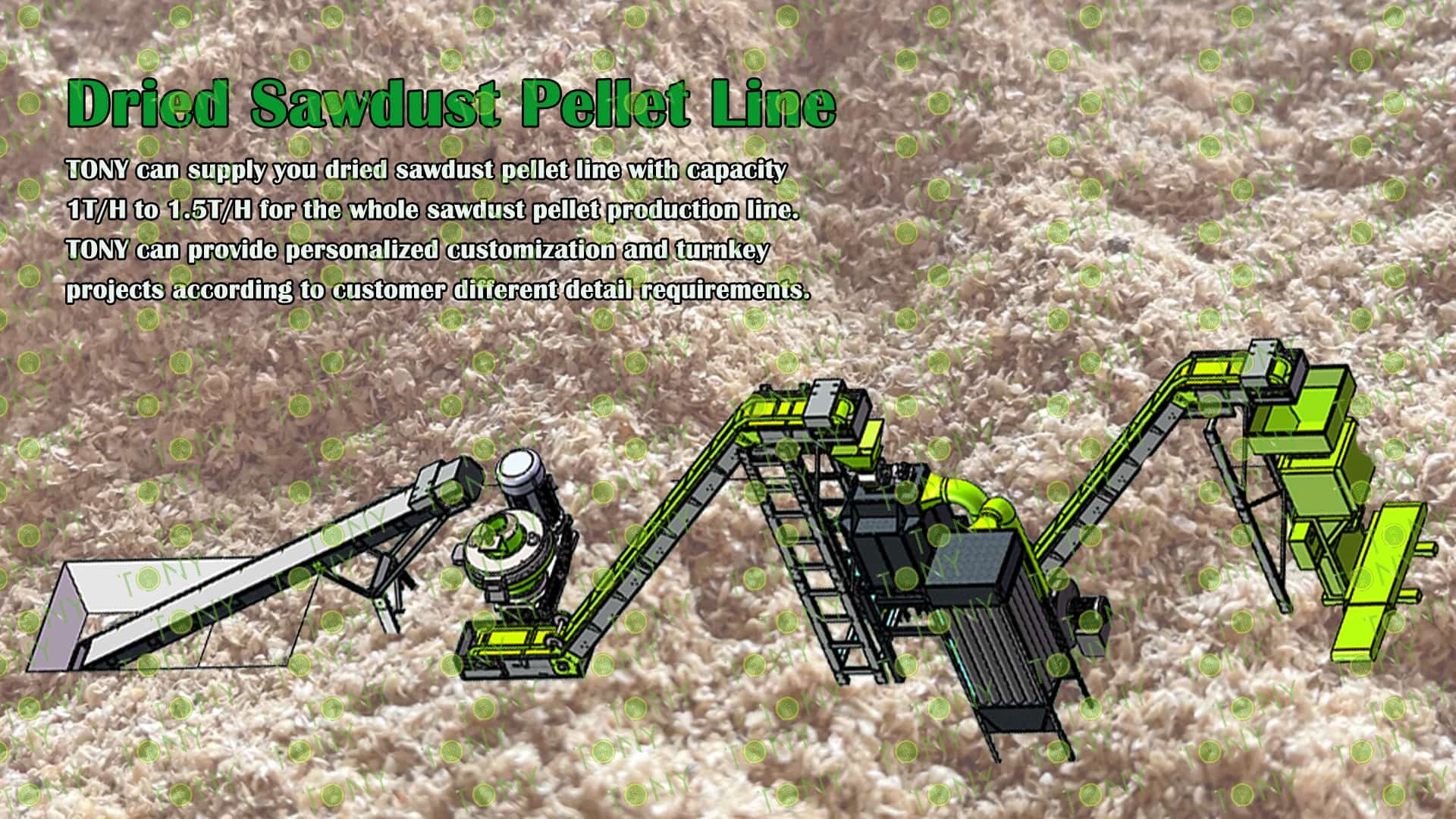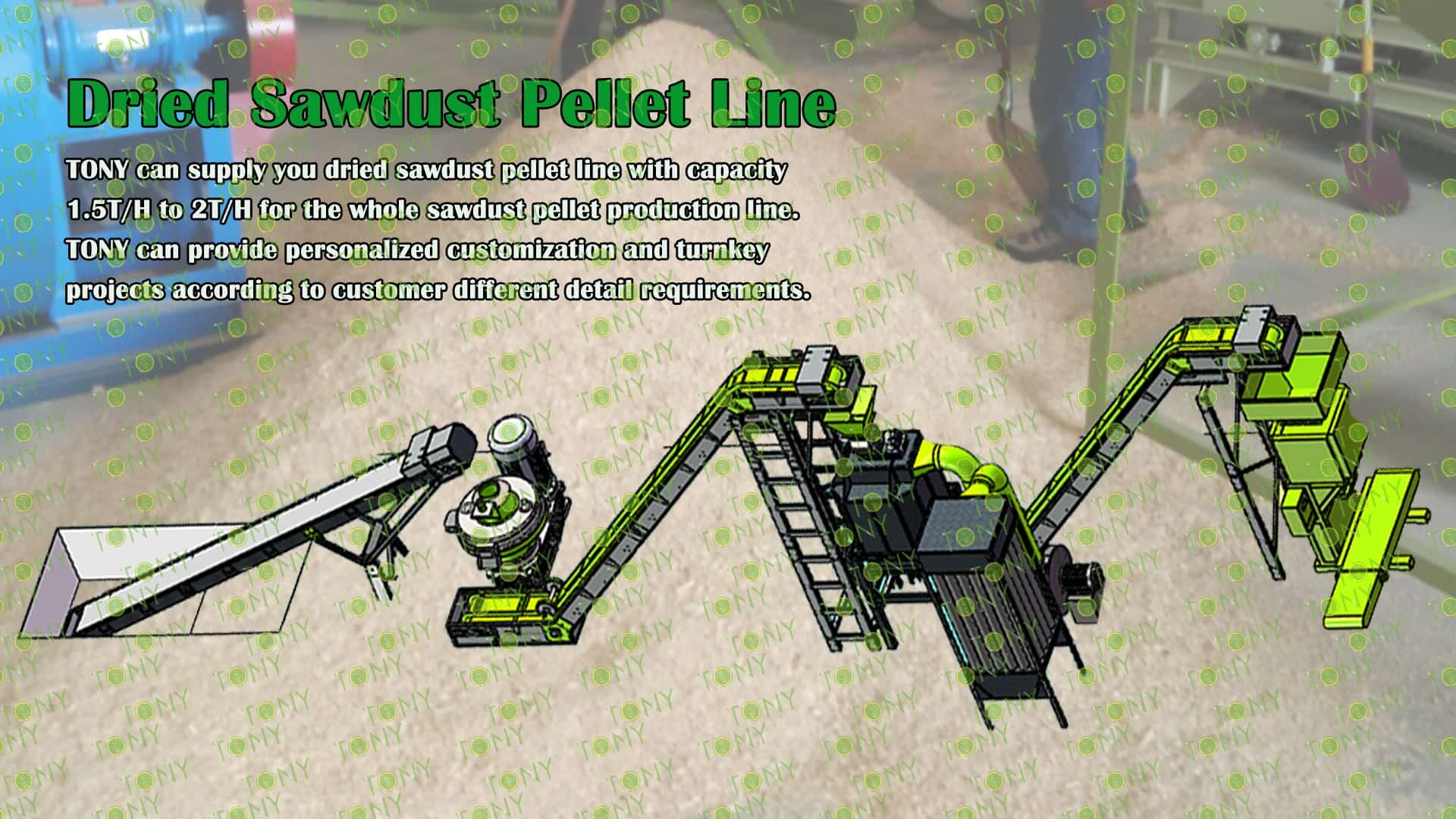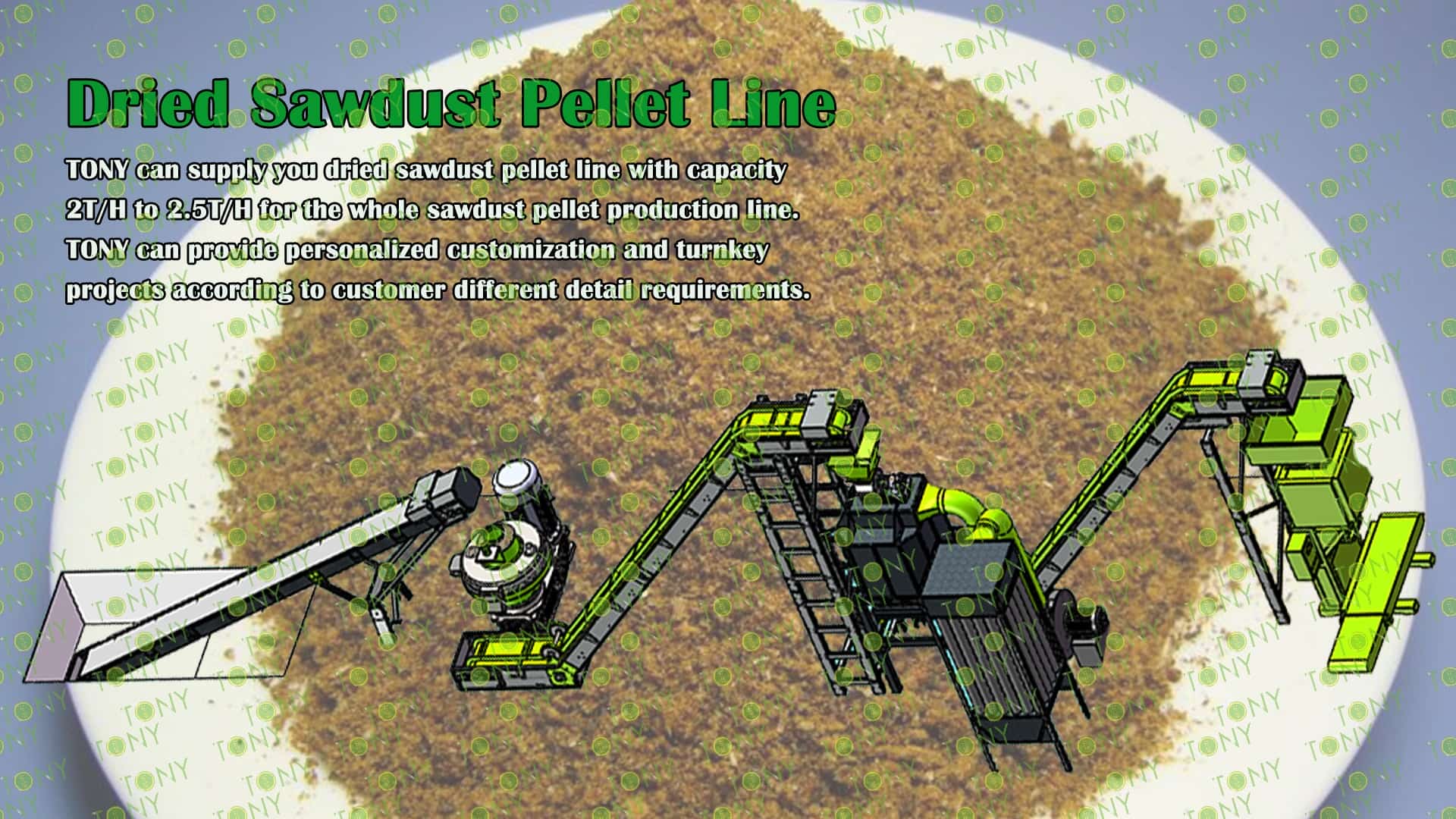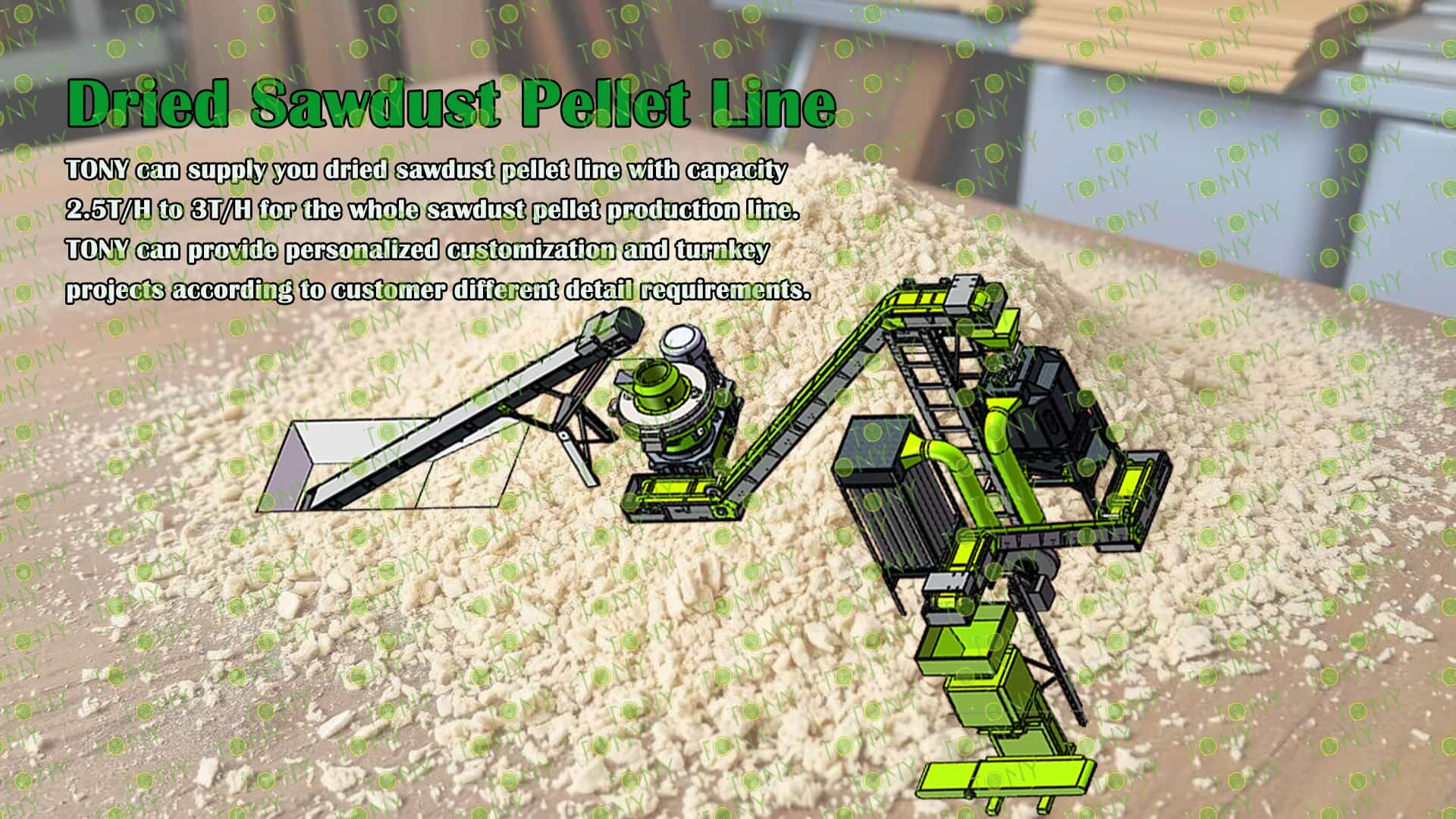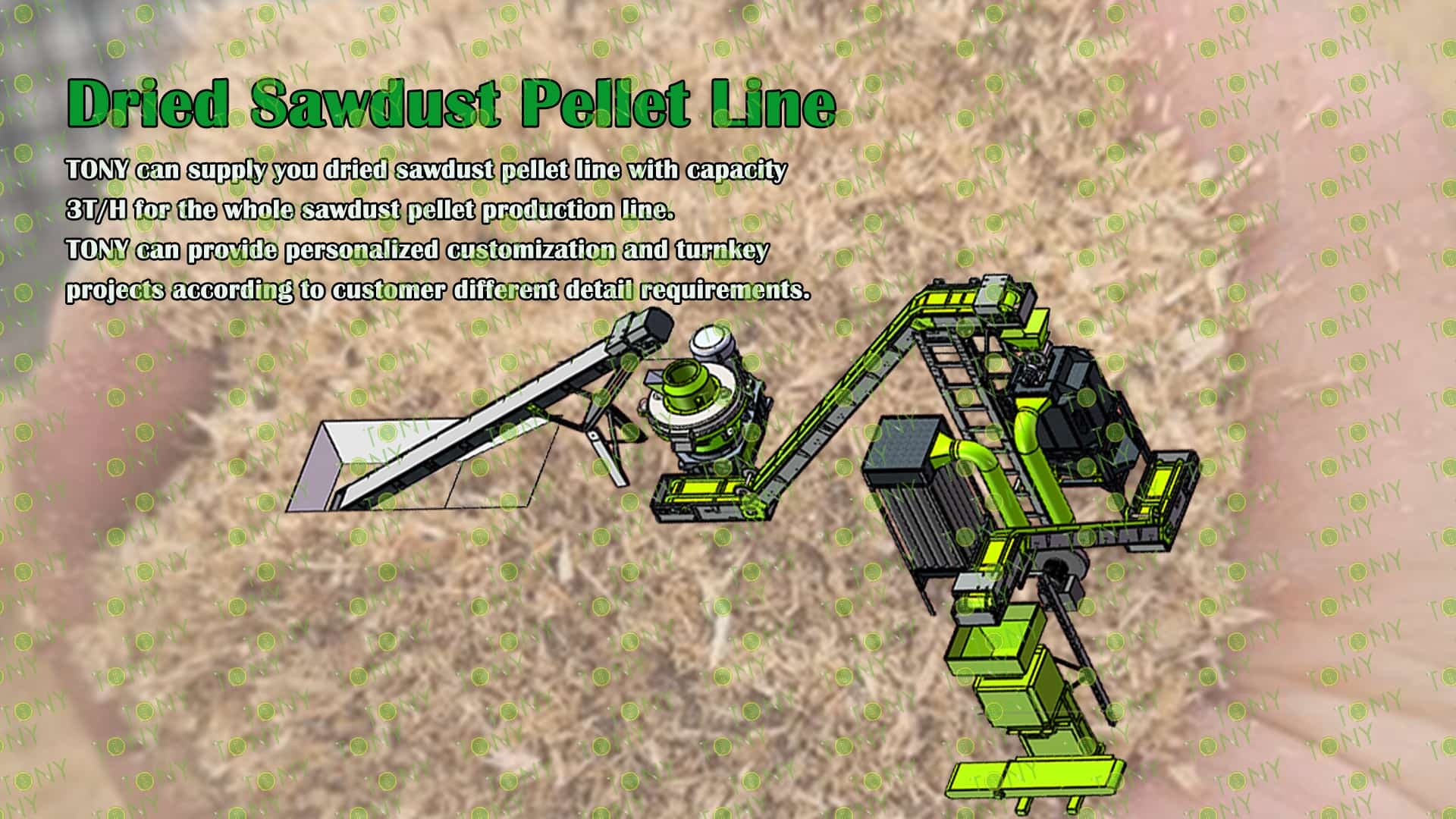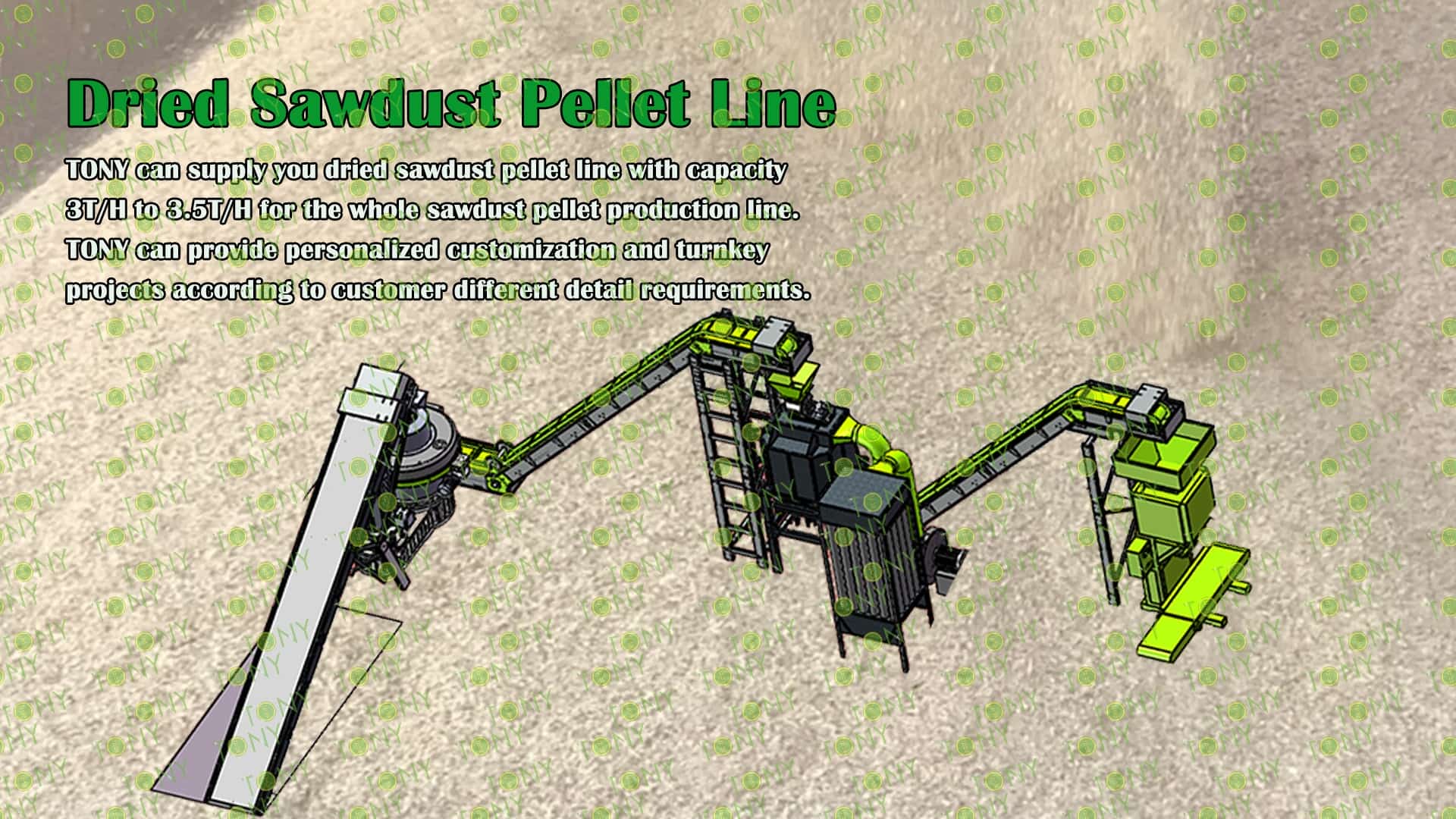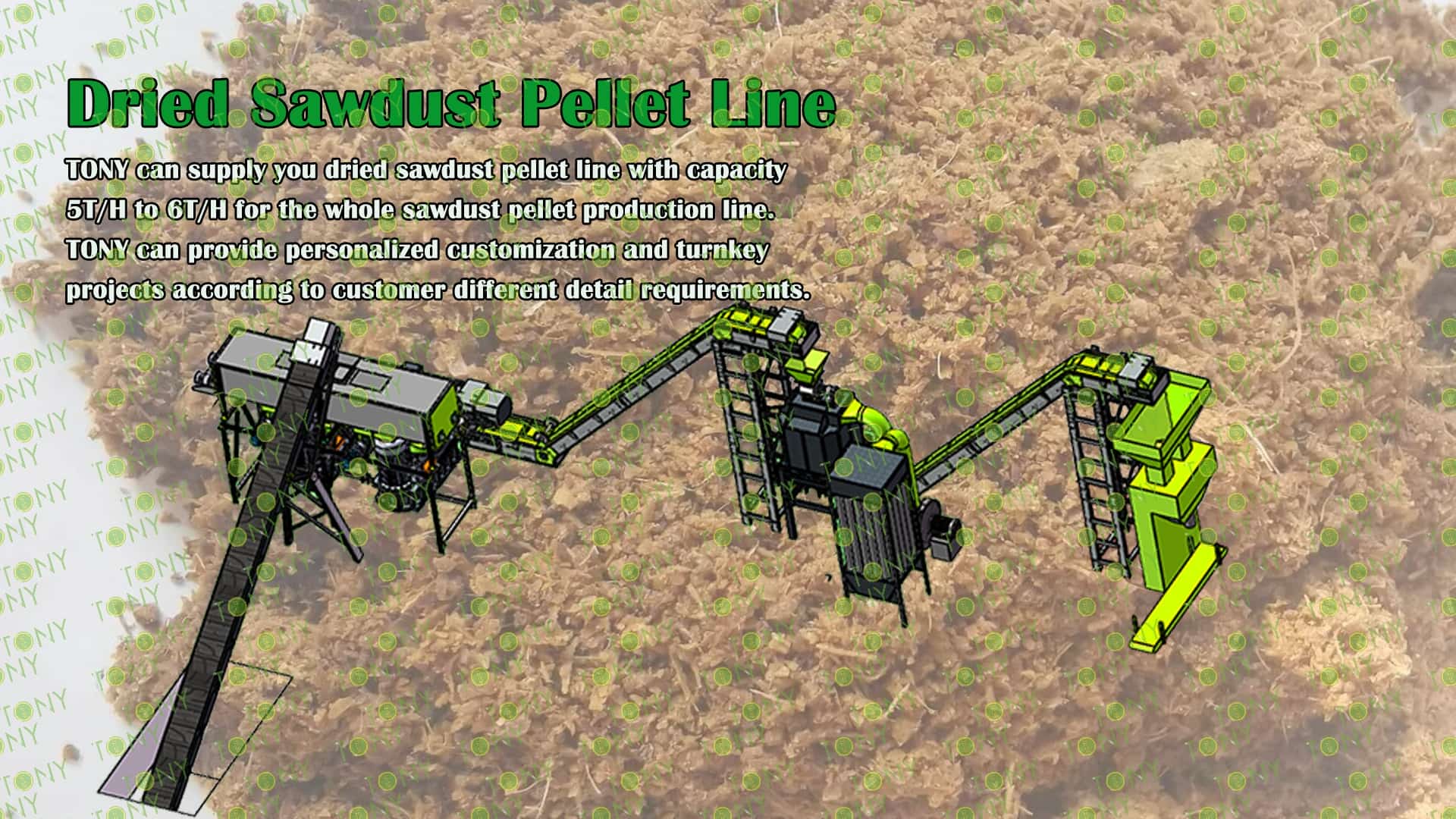




















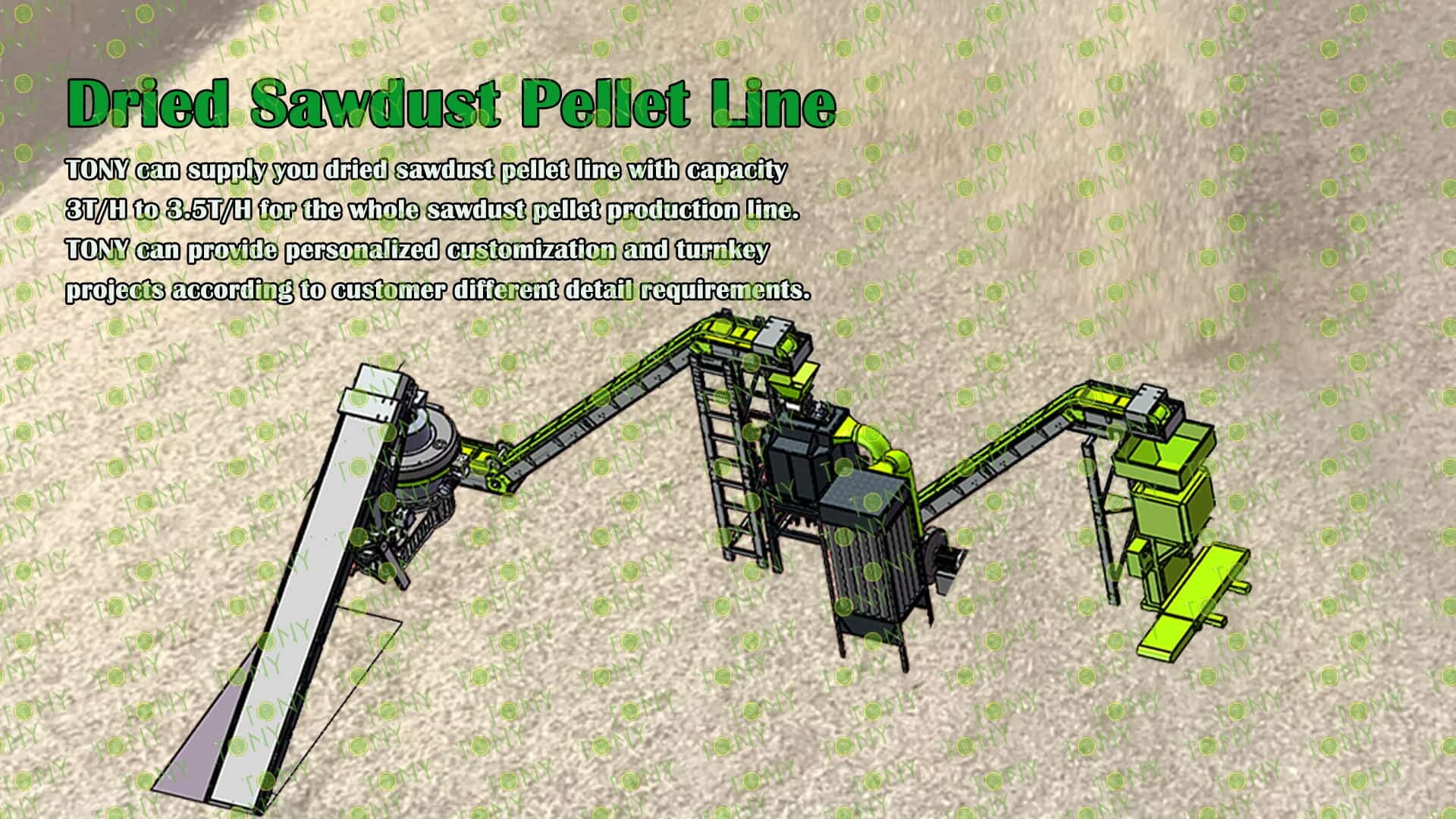
Project Brief Introduction:
1.Product:Dried Sawdust Pellet Line
2.Capacity: 3-3.5T/Hour
3.TONY Brand 3-3.5Ton /Hour Dried Sawdust Pellet Line Project Process
4.Main Machine:TONY Pellet Machine TYJ860-Ⅲ-220KW,Pellets Cooler,Packing Machine And Belt Conveyors
5.Total Power: About 250KW
6.Need Area: About ㎡ L: M W: M H: M
Project Layout For Customer:
三维图
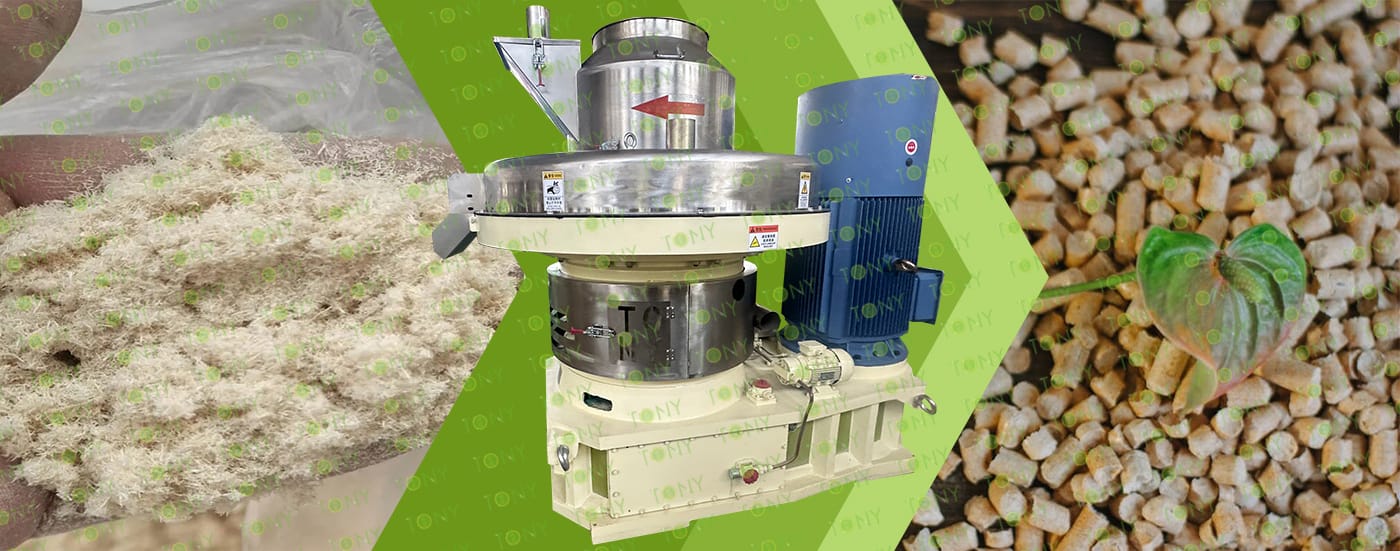
1.The working principle of dried sawdust biomass pellet processing equipment
(1)Core Forming: Fiber reorganization and densification under mechanical extrusion is a key step in converting sawdust into pellets. The core principle is "high-pressure extrusion + wood fiber self-bonding." Lignin in the sawdust (a natural adhesive that softens under pressure and frictional heat) works together with moisture to tightly bind the fibers, forming pellets with a fixed shape.
(2)Core component: The forming machine—the "ring die pellet machine"—is more adaptable to dried materials and less prone to clogging.
During the extrusion process, intense friction between the sawdust and the inner wall of the die and the surface of the rollers generates frictional heat of 60-90°C. This temperature softens the lignin in the sawdust (the softening point of lignin is approximately 70-100°C). Simultaneously, the moisture forms "liquid bridges" that bind the dispersed fibers together, providing a foundation for subsequent shaping.
2.Characteristics of dried sawdust biomass pellet processing equipment
(1)High efficiency and energy saving: The dried sawdust pellet machine can process waste materials such as wood chips into pellet fuel, which not only reduces environmental pollution but also realizes the recycling of resources and greatly improves energy utilization efficiency.
(2)Multifunctionality: In addition to being able to process biomass fuel, the dried sawdust pellet machine can also process animal feed, organic fertilizer, etc., and is widely used in agriculture, breeding and other fields.
(3)Advanced pelletizing technology: The dried sawdust pellet machine adopts advanced pelletizing technology, which can automatically control parameters such as feed amount and temperature during the pelletizing process, greatly reducing production costs and making the production process more economical and environmentally friendly.
(4)High-quality components: The main shaft and the connected hollow shaft of the dried sawdust pellet machine are made of alloy structural steel imported from Germany through water forging, rough turning, heat treatment, fine turning and fine grinding. The reasonable structure and uniform hardness improve the fatigue resistance and wear resistance of the components, providing more reliable guarantee for safe operation.
3.Application scenarios of dried sawdust biomass pellet processing equipment
(1)Civilian solid fuel: Wood pellet fuel has a high utilization rate, is easy to store and use, is hygienic and safe, and can be used for home heating.
(2)Main solid fuel for industrial boilers: It can replace raw coal, heavy oil, and gas, reducing air pollution. Every 10,000 tons of biomass fuel burned can replace 7,000 tons of standard coal, reducing sulfur dioxide emissions by 165 tons, smoke emissions by 80 tons, and carbon dioxide emissions by 14,400 tons.
(3)Thermal power generation: The fuel calorific value can reach 3,400-6,000 kcal.
In short, sawdust biomass pellet fuel can be described as "environmentally friendly", "energy-saving", "renewable", and "zero-carbon emission". It is the best renewable energy source to replace coal. From the perspectives of cost, energy saving, and environmental protection, biomass fuel is a better alternative to coal.

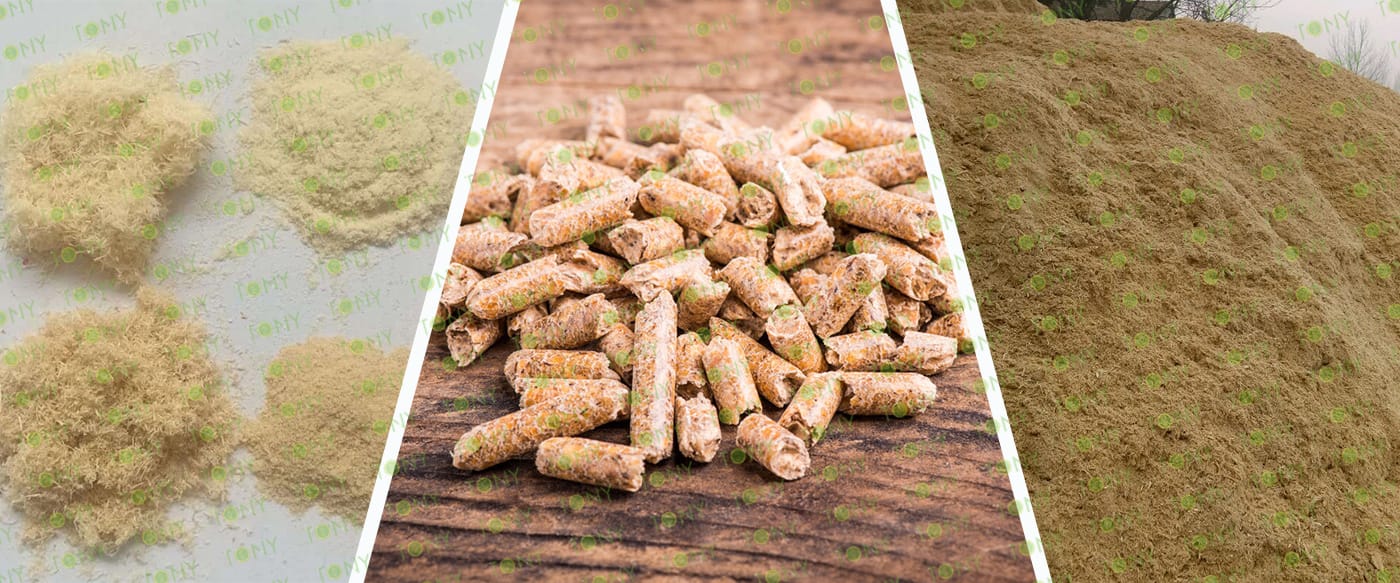
TONY Brand 3-3.5Ton/Hour Dried Sawdust Pellet Manufacturing Plant can take dried sawdust,wood chips, various types of wood - related biomass materials, such as wood pallets ,branches, wood logs, and wood shavings. After pretreatment and processing, dried sawdust is solidified into high - density wood pellet fuel. This fuel is an ideal substitute for coal and oil and plays a role in energy conservation and emission reduction.
1. Capacity: 3-3.5Ton/Hour
2. Raw materials: Dried sawdust
3. Moisture: Dry type, about 10%-15%.
4. Application: All kinds of wood sawdust or more waste wood raw materials
Suitable customers:Wood processing plants, furniture manufacturing plants, construction sites, landscaping companies and other places with advantageous sawdust resources
5. Finished Pellets Markets: Large power plants ,domestic heating, industrial heating, combustion heat, heating systems, boiler rooms, school canteens, foundry heat sources.


1. Project Name: Dried Sawdust Pellet Production Line
2. Raw Material: All kinds of dried sawdust
3. Moisture Content of Raw Material: 10%-15%
4. Capacity:3-3.5 tons per hour
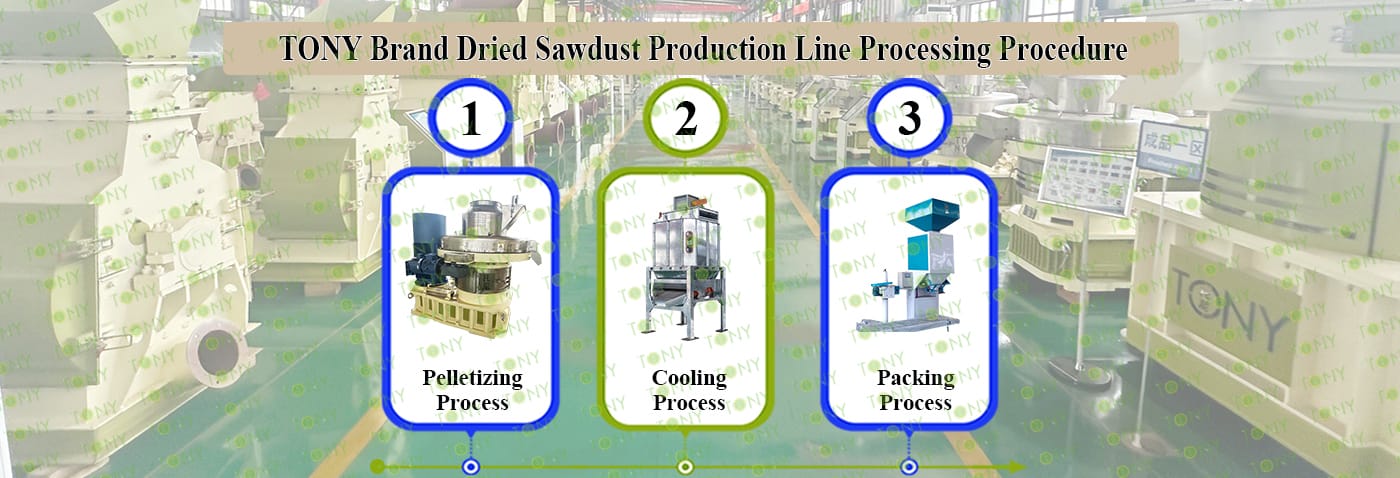
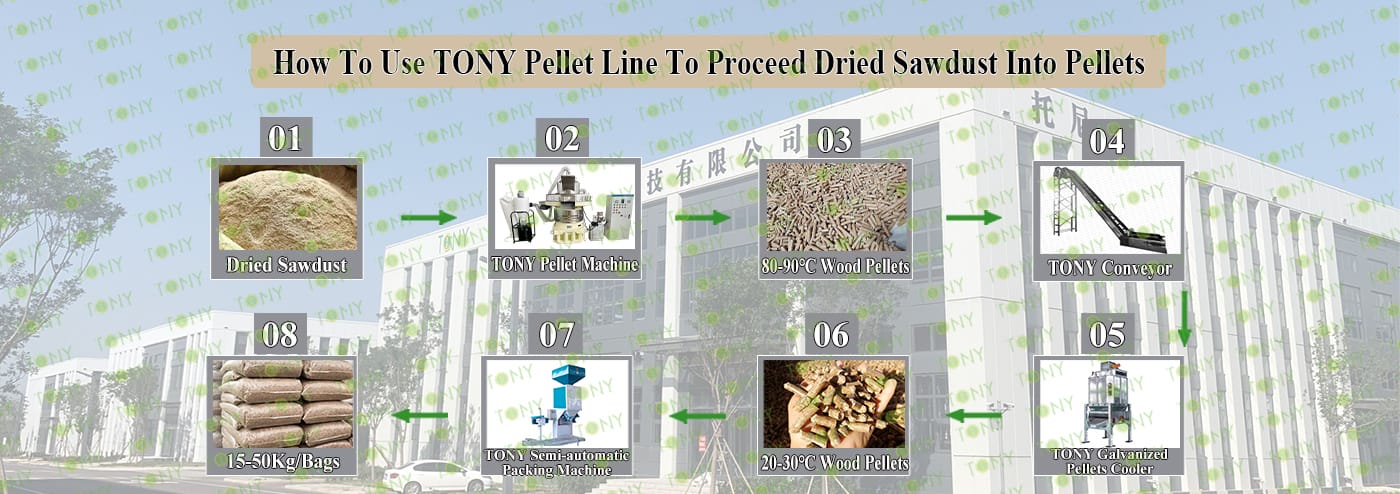
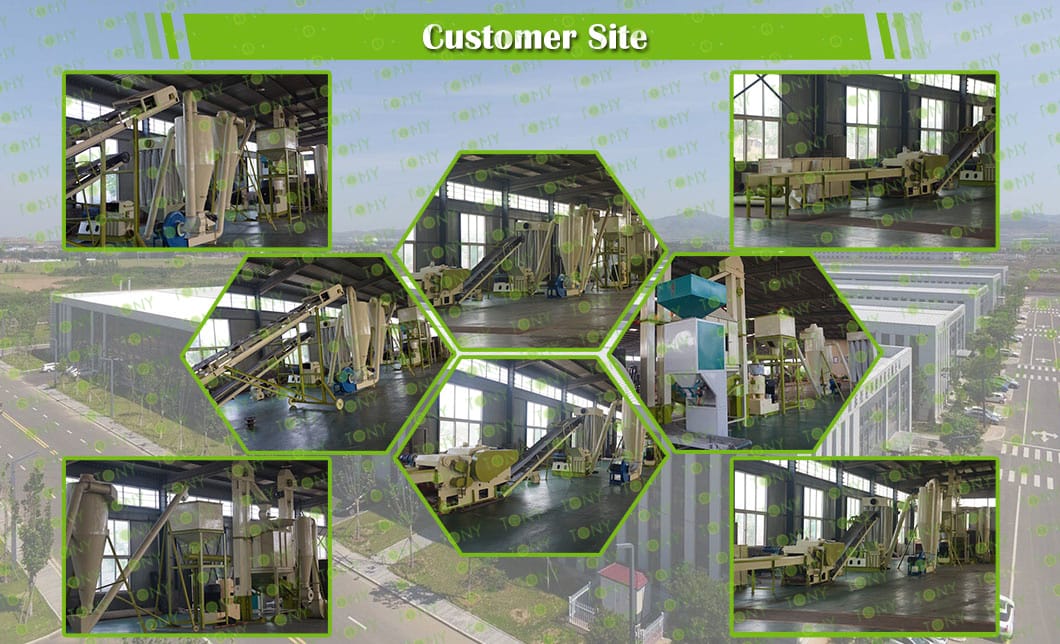
5. Process: Pelletizing Process - Cooling Process - Packing Process
6. Main Equipment: TONY Pellet Machine TYJ860-Ⅲ-220KW, Galvanized Pellets Cooler, Semi-automatic Packing Machine and Belt Conveyors

|
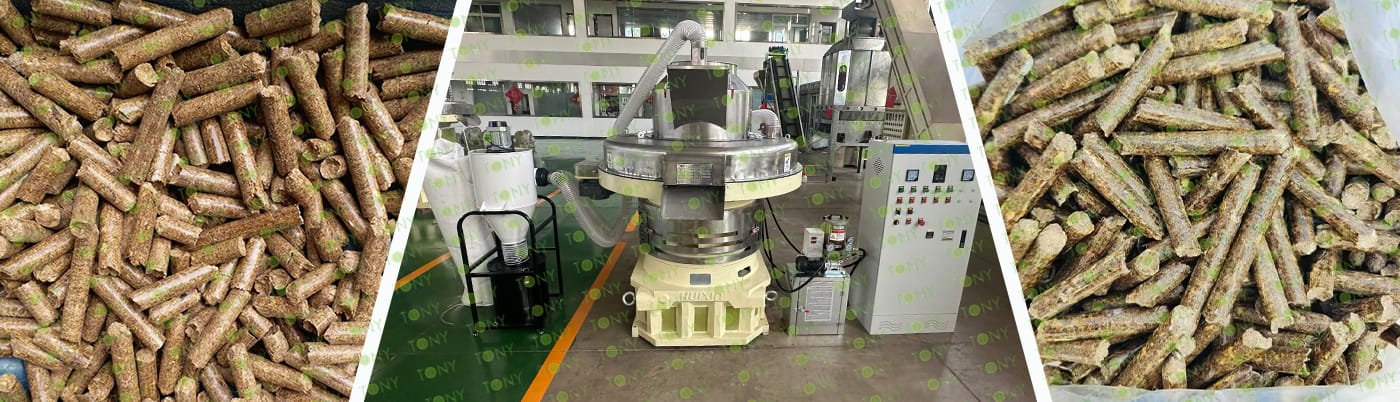
How to use the TONY pellet production line to make pellets from dried sawdust? The process mainly includes the following steps and equipment: 1. Use TONY vertical ring die pellet machine to produce pellets with a diameter of 6-8 mm. 2. Use TONY galvanized pellets cooler to cool the pellets from 80-90°C to 20-30°C. 3. Use TONY semi - automatic packing machine to pack the pellets into bags, each weighing 15-50 kg. For more detailed information and quotations, you can contact TONY. TONY can provide all the above - mentioned products at highly competitive prices and with excellent quality. |
|
|||||||||||||||||||||||||||||||||||

三维图
| Next, TONY Will Introduce To You All The Necessary Machinery That Will Be Used For The Whole Pellet Production Line. Some Machines Can Be Custom - Made By Customers According To Different Customers' Detailed Demands. Contact TONY For More Details, Including Quotation And Layout. | |||
 |
 |
 |
 |
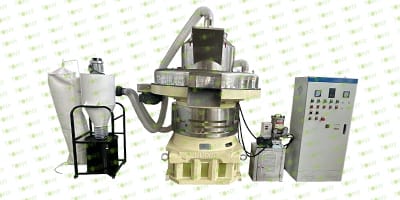
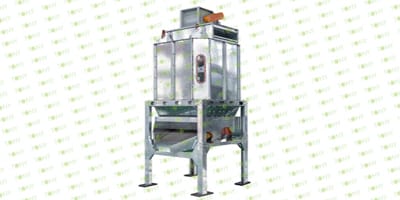
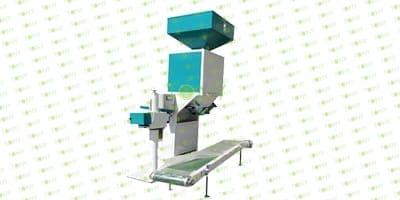
| Vertical Ring Die Pellet Machine | Galvanized Pellets Cooler | Semi-automatic Packing Machine | Belt Conveyor |
| 1.To Press Dry Sawdust Into 6-8mm Biomass Pellets 2.Model: TYJ860-III-220KW*1set 3.Capacity:3-3.5Ton/Hour/Set 4.New 304SS Type |
1.To Cool Pellets From 80-90℃ Into 20-30℃ 2.Model: TCN-2.5*1set 3.Capacity:3-3.5Ton/Hour |
1.To Pack Pellets Into 15-50Kg/Bags. 2.Model: TBF-50*1set 3.Capacity:3-3.5Ton/Hour |
1.To Transport Sawdust,Pellets. 2.Width: 50cm*3sets 3.Capacity:Designed With The Whole Line |
三维图

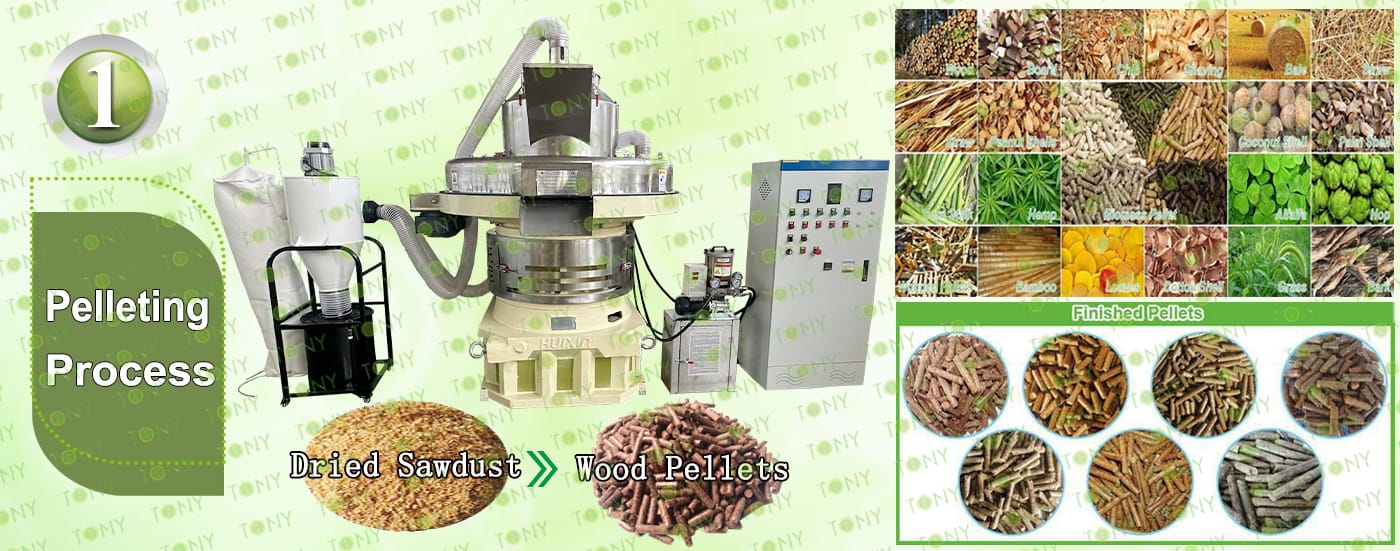
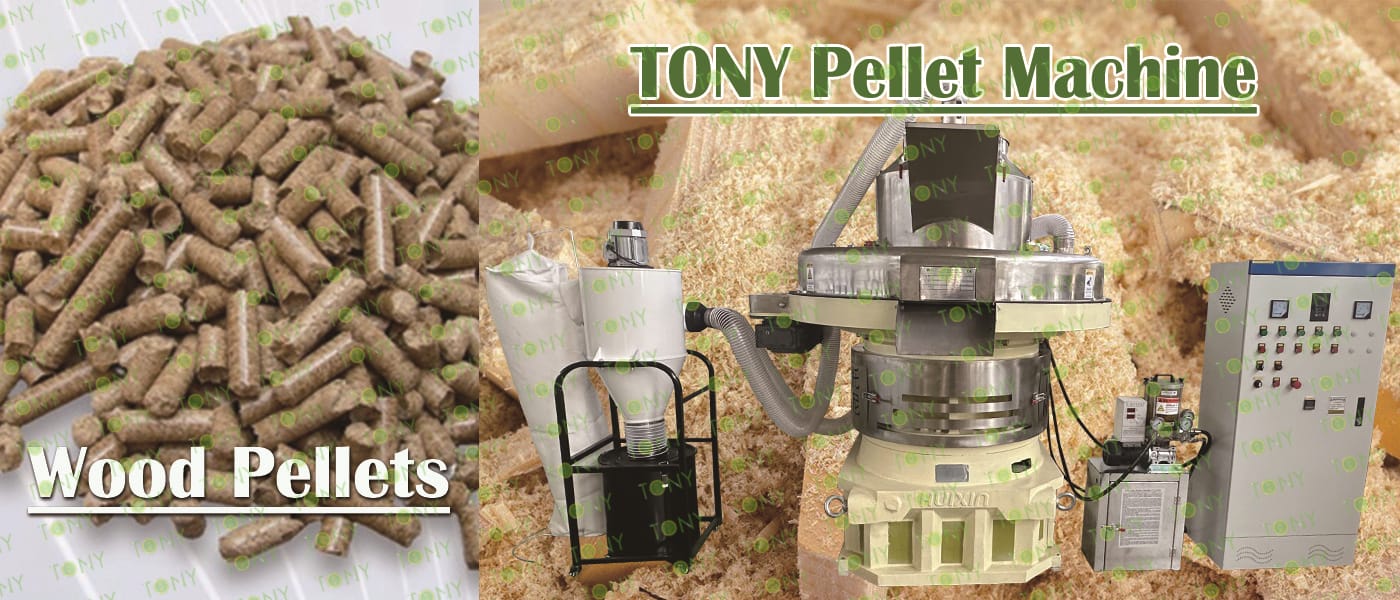
1.Pelletizing Process:
A.This process is mainly used to to product pellets into φ6-8mm.
B.Capacity:3-3.5Ton/Hour.
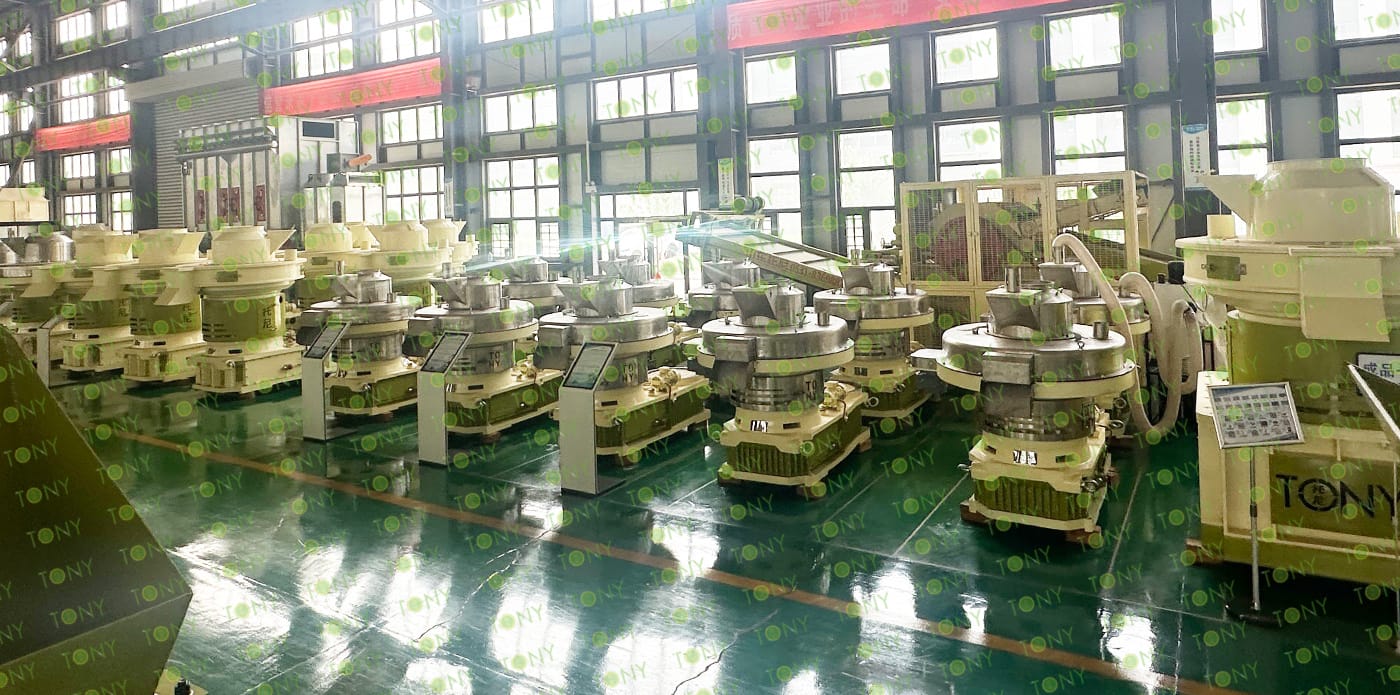
C.TONY brand vertical ring die pellet machine TYJ860-III-220KW*1set
Main Parts:
(1)TONY's New Vertical Ring Die Pellet Machine.
(2)Cyclone And Bags Dust Collectors.
(3)Automatic Lubrication System.
(4)Electrical Cabinets.
You can chose TONY new type SS304 pellet machine

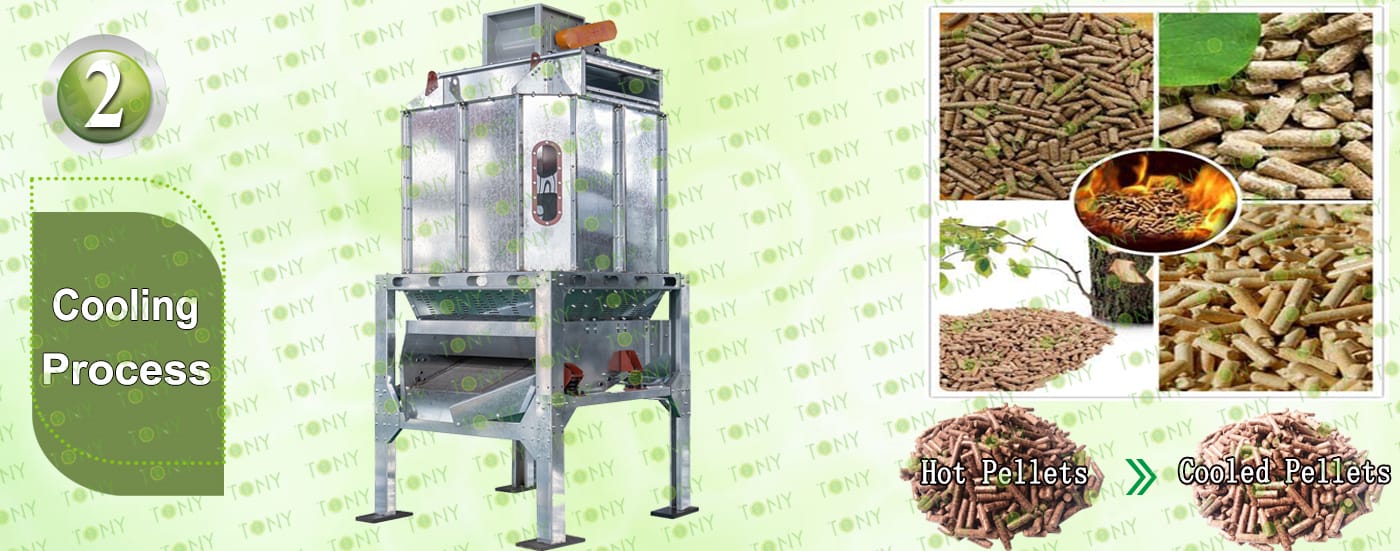
2.Cooling Process:
A.This process is mainly used to cool pellets from 80-90℃ to 20-30℃
B.Capacity:3-3.5Ton/Hour.
C.TONY brand galvanized pellets cooler *1set
Main Parts:
(1)TONY's Galvanized Pellets Cooler With Vibrating Screen.
(2)Cyclone And Bags Dust Collectors.
(3)Fan Blower.
(4)Connect Pipes.

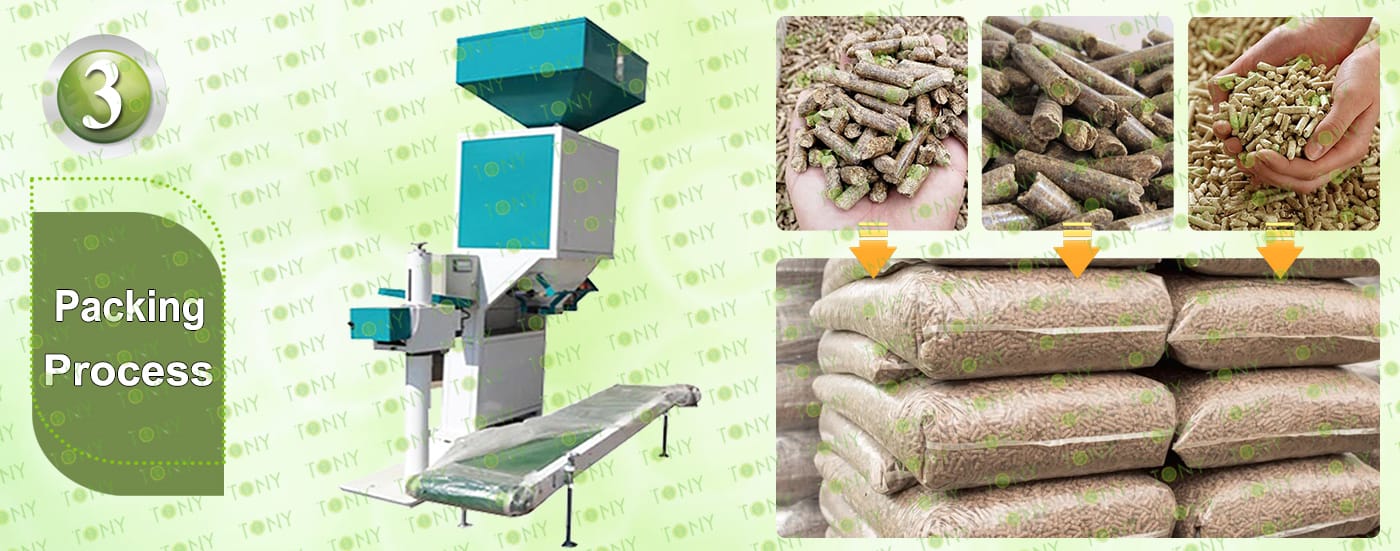
3.Packing Process:
A.This process is mainly used to pack pellets into 15-50Kg/Bags.
B.Capacity:3-3.5Ton/Hour.
C.TONY semi-automatic packing machine*1set
Main Parts:
(1)TONY's Semi-Automatic Packing Machine.
(2)Sew Machine, Buyer Can Also Choose Hot Seal Machine For Chosen,To Confirm With Tony For The Price Difference.
(3)Bags Transportation Conveyors.
(4)Feeding Inlet Silo.
(5)Electrical Cabinets.

Three Fundamental Supports for the Feasibility of Processing Dry Sawdust into Biomass Pellets
The success of this project depends on the maturity of three key factors: raw material supply, policy guidance, and market demand. These factors were also the core focus of preliminary research.
1.Raw Material Supply: A stable and low-cost raw material supply is a prerequisite.
The source, supply volume, and cost of dry sawdust directly determine the project's profitability and require rigorous evaluation:
(1)Raw Material Source Scenario:
Core Channels: Wood processing plants, furniture factories, and panel mills.
Supply Characteristics: These sources produce large quantities of sawdust and are often recycled for free or at a low price, resulting in extremely low raw material costs.
(2)Raw Material Processing Suitability:
Wood chips have a high fiber density, and the resulting pellets can reach a calorific value of 4200-4800 kcal/kg (comparable to medium-quality coal), far exceeding agricultural waste such as straw and rice husks. Since wood chips do not require complex pre-processing (such as nailing and clamping) and produce minimal oil pollution, they are well-suited for processing.
2.Policy Direction: Dual Benefits of Environmental and Energy Policies
Biomass pellets are a compliant alternative fuel with low market entry barriers. This project falls under the "Solid Waste Resource Utilization" category and meets the "Reduction and Resource Utilization" requirements.
3.Market Demand: Strong Industrial and Residential Market Demand
The market demand for biomass pellet fuel is stable, with no concerns about stock shortages:
(1)Industrial (Core Customers): Small and medium-sized boilers (1-10 tons) in food processing, textile, and building materials factories, ceramic kilns, and biomass power plants (for co-firing).
(2)Residential (Supplementary Customers): Home heating stoves, cooking energy in southern farmhouses and small restaurants, and home fireplace users.


Advantages of Wood Pellets
Processing dry sawdust into biomass pellets not only offers numerous advantages in terms of environmental protection, economic and social development, and energy structure, but also boasts excellent combustion performance. The main advantages are as follows:
1.Calorific Value and Combustion Residues
The calorific value and ash content of sawdust pellets after combustion are approximately 10% lower than those of medium-quality coal. However, wood pellets burn completely under normal operating conditions. Coal, on the other hand, does not burn completely, leaving residual ash containing 10% to 15% combustible components. Therefore, in practical applications, the effective calorific value of the two is comparable.
2.Combustibility
Wood pellets are more flammable and easier to ignite than coal, significantly reducing the ignition time required for combustion.
3.Solid Emissions
Wood pellets produce significantly lower solid emissions than coal. This not only reduces slag disposal costs but also reduces environmental pollution. Solid emissions from biomass pellets are primarily ash, accounting for approximately 0.4% to 7.0% of the total weight. In contrast, coal combustion produces a mixture of ash, alkali, and unburned coal, accounting for approximately 25% to 40% of the total weight.
4.Air Pollution and Corrosion
Coal causes far greater levels of air pollution and boiler corrosion than biomass pellets. Coal smoke contains large amounts of particulate carbon as well as toxic and corrosive gases such as sulfur dioxide and carbon monoxide. Sawdust biomass pellets are primarily composed of C-H organic matter, and their flue gas contains no particulate carbon or sulfur dioxide. Instead, it is primarily composed of C-H volatile gases, with virtually no sulfur dioxide or carbon monoxide. The smoke color during combustion is below Ringelmann Class I, significantly reducing air pollution and carbon dioxide emissions. Wood biomass pellets are internationally recognized as a "clean fuel."
5.Cost and Time Savings
Compared to coal, using biomass pellets as boiler fuel can save costs and time. For example, using wood biomass pellets for a 0.5-ton boiler can reduce costs by 11% and time by 34%. For example, compared to coal-fired power generation, a 0.5-ton boiler can reduce fuel costs by 10% and time by 16%.
6.Sustained Combustion
Wooden biomass pellets typically burn 8 to 10 times longer than loose, soft materials, maintaining a stable and continuous combustion state, ensuring a more reliable energy supply.




2025 Tony Machinery - All Rights Reserved. Map