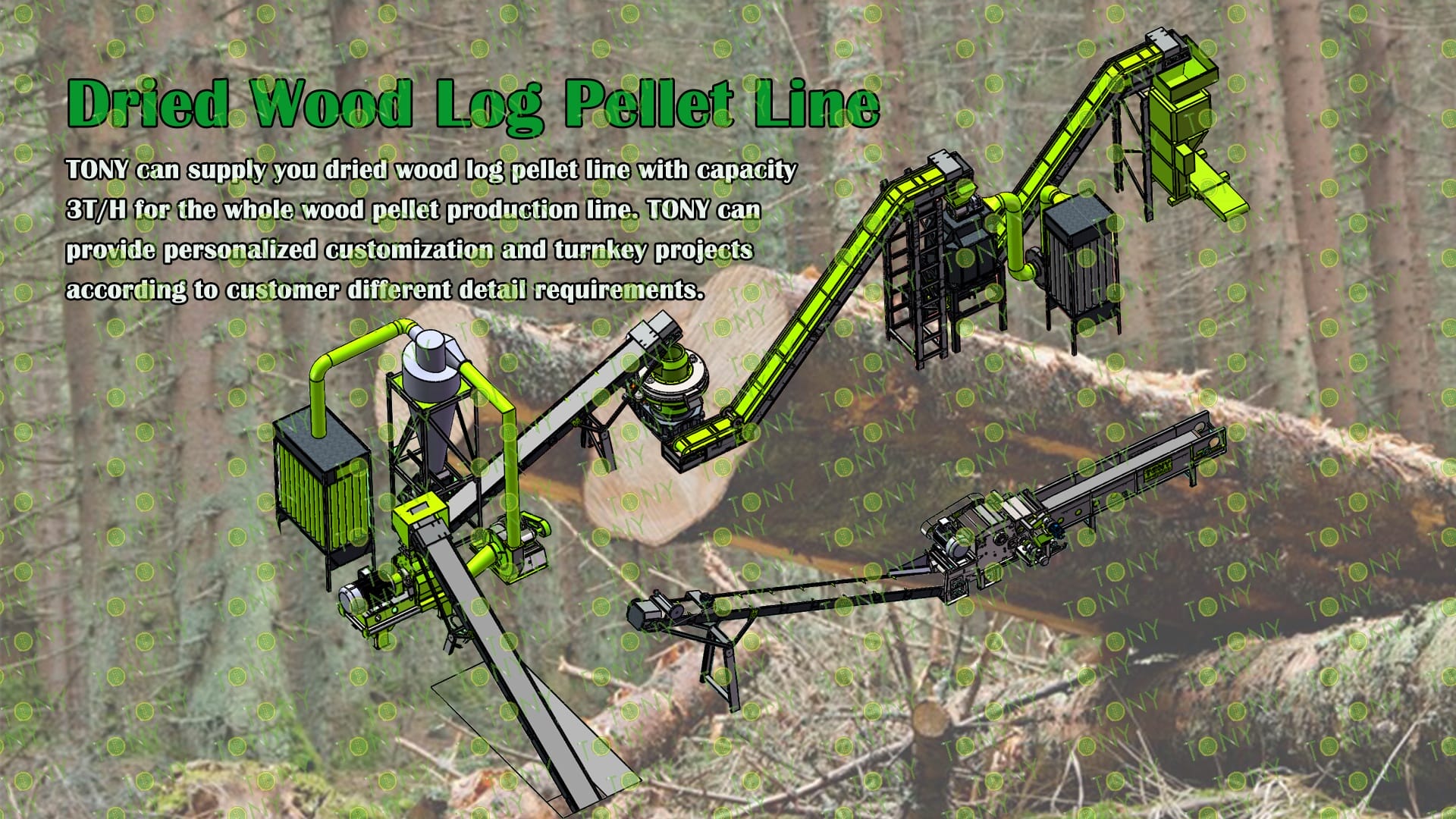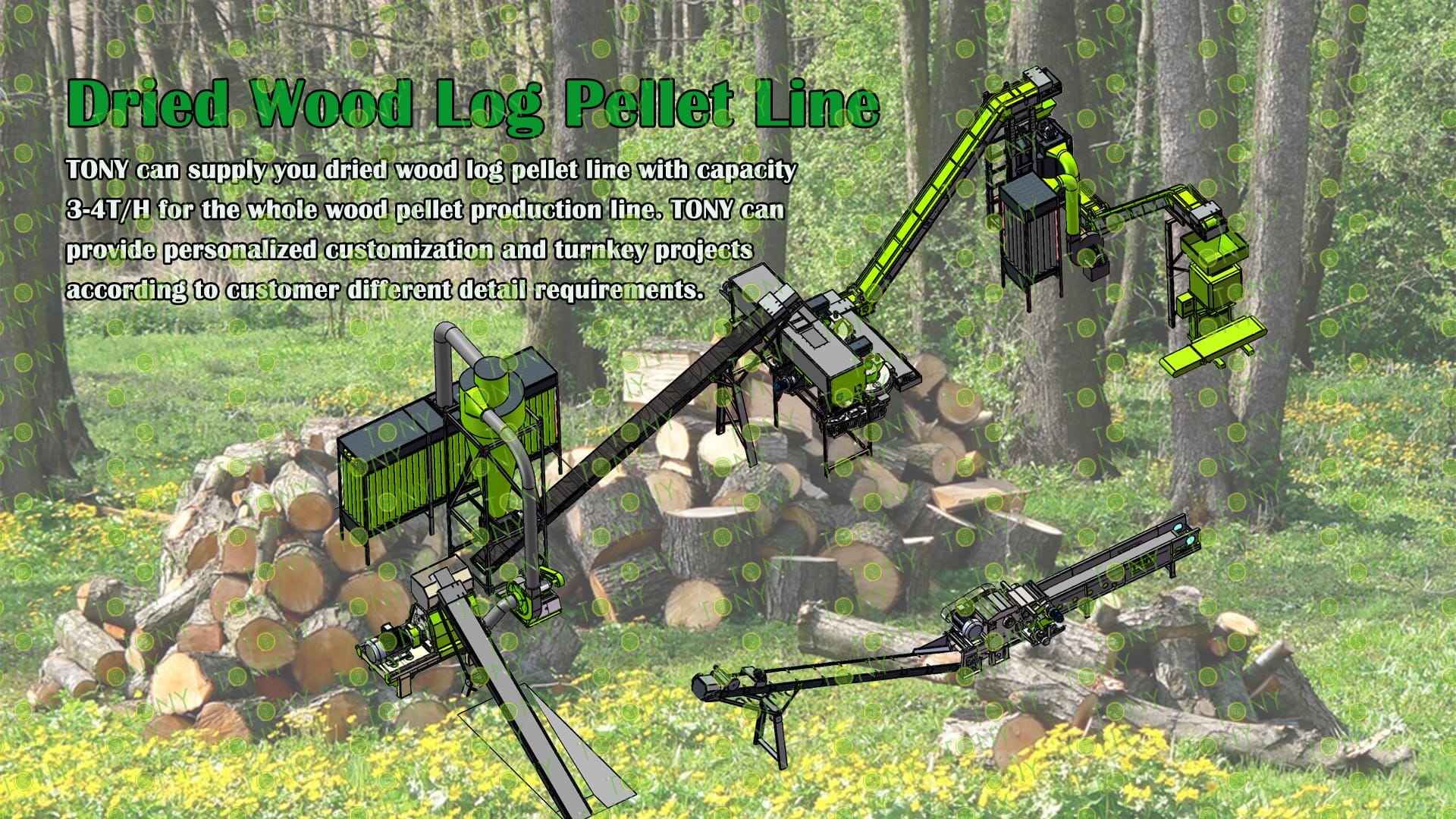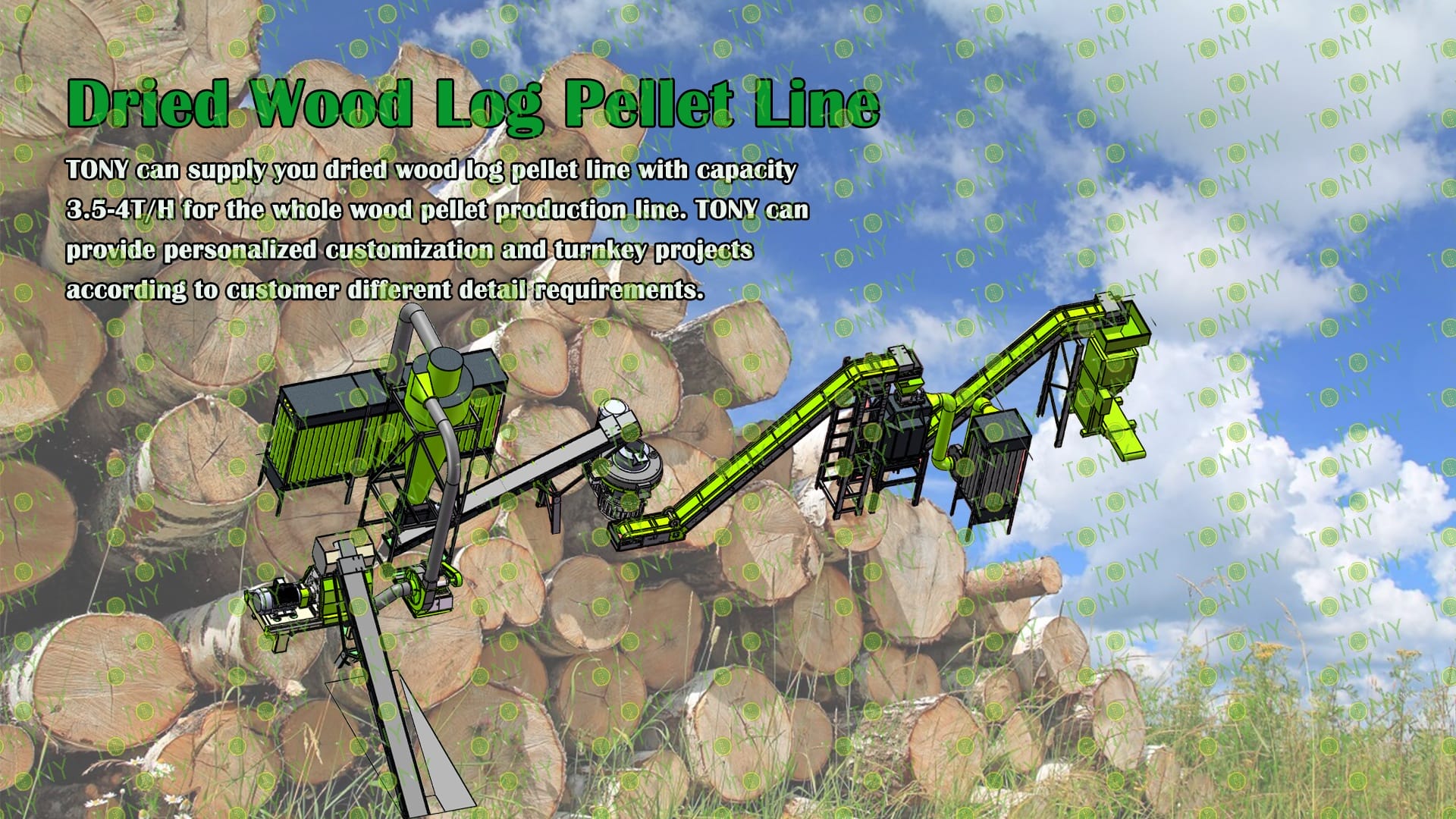




















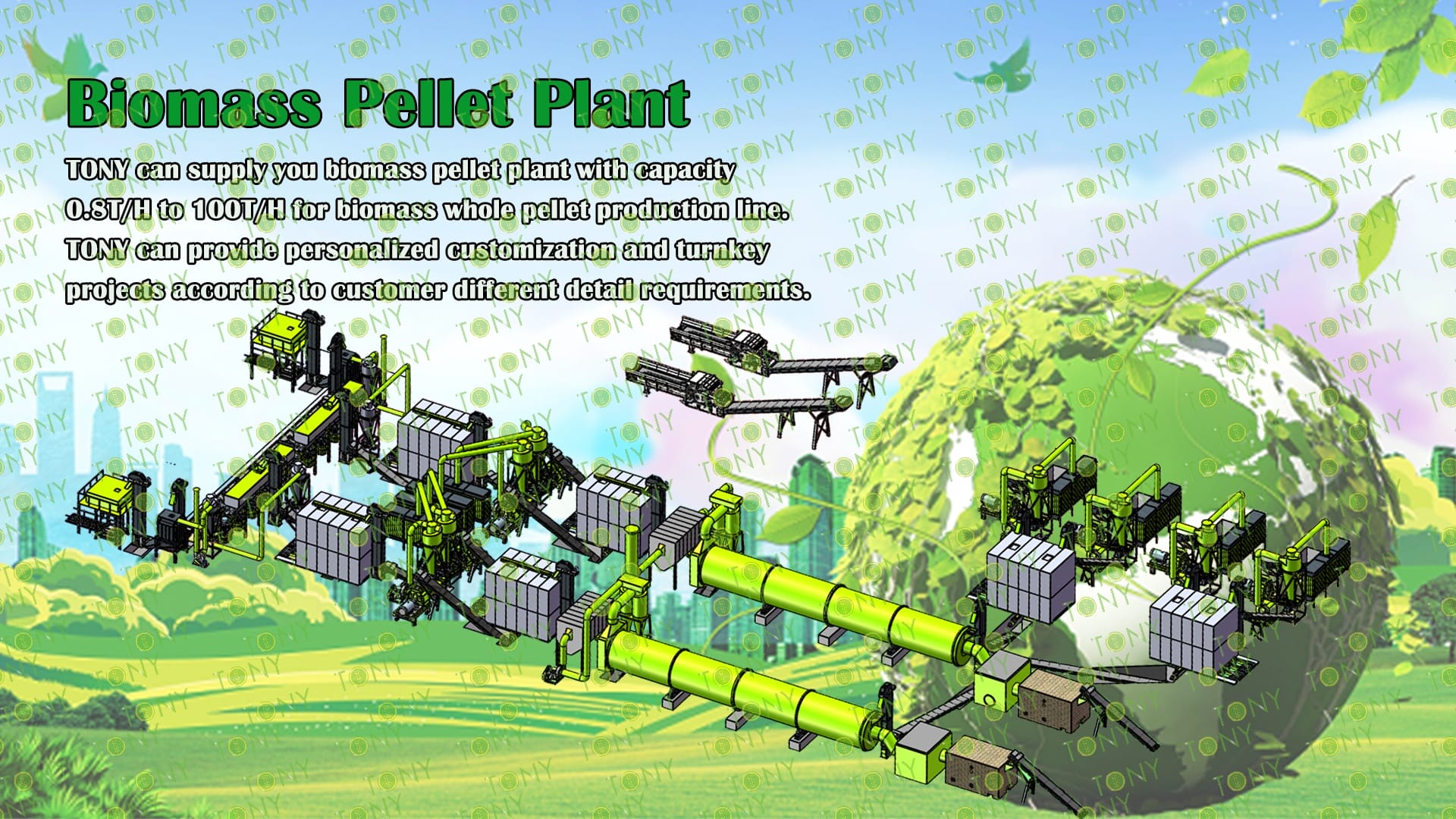

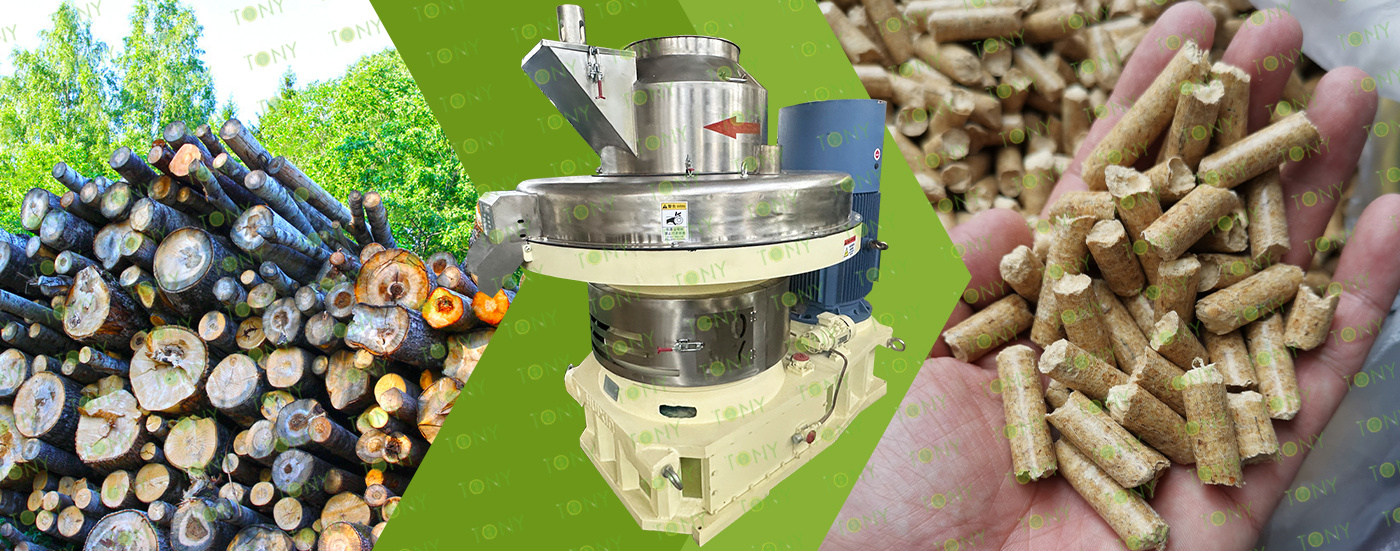
1.The working principle of dried wood log biomass pellet processing equipment
Dry wood biomass pellet processing equipment operates by converting dry wood waste (such as sawdust, shavings, and wood chips) into high-density, regularly shaped biomass pellet fuel through a series of physical processes. This process relies on mechanical extrusion and the natural bonding of lignin, eliminating the need for additional adhesives. The dry wood biomass pellet processing process can be summarized as follows: raw material pretreatment → extrusion molding → post-processing. Because the raw material is "dry wood" (with a moisture content typically controlled at 10%-15%), deep drying is not required. Instead, the process focuses on densifying the material through mechanical force and utilizing the heat generated during processing to activate the bonding properties of lignin, ultimately forming stable pellets.
2.Characteristics of dried wood log biomass pellet processing equipment
(1)Clean and environmentally friendly, with low pollutant emissions
As a biomass energy source, carbon emissions during combustion are close to "carbon neutral" (the CO₂ absorbed during the growth process of wood is basically balanced by the CO₂ released during combustion), which can reduce greenhouse gas emissions by more than 70% compared to coal.
The sulfur and nitrogen content is extremely low (usually sulfur <0.05%, nitrogen <0.1%), and almost no sulfur dioxide and nitrogen oxides are produced during combustion. No complex desulfurization and denitrification equipment is required, and it meets environmental emission standards (such as EU EN 14961-2 standard).
The ash content is low (high-quality wood pellets have an ash content of <0.5%), and there is little residue after combustion, which reduces the frequency of ash cleaning and waste residue treatment costs.
(2)High combustion efficiency and stable thermal energy.
The low calorific value is generally 16-19MJ/kg (approximately 3800-4500 kcal/kg), close to that of medium-quality coal (4000-5000 kcal/kg), but it burns more completely (burnout rate > 95%) and can achieve a thermal efficiency of over 85% (much higher than the 50%-60% of direct combustion of loose wood chips).
The combustion process is stable and the flame is uniform, making it suitable as a continuous fuel for boilers, fireplaces, and biomass power plants. The energy supply can be precisely adjusted through an automatic control system.
3.Application scenarios of dried wood log biomass pellet processing equipment
Wood processing plants (such as furniture, wood flooring, and plywood factories) generate large quantities of dry sawdust, shavings, offcuts, and scraps during production. These waste materials have a low moisture content (typically ≤15% after natural air drying) and can be directly processed into pellet fuel through dry wood pellet processing without additional drying, thus achieving a "waste-to-energy" internal cycle:
(1)Self-use energy supply:The pellets produced can be directly used in the factory's heating system (such as boilers and kilns), replacing traditional coal and natural gas, reducing energy costs (biomass pellets are typically 30%-50% cheaper than natural gas) and lowering carbon emissions.
(2)Reduced waste disposal costs: Wood waste can be recycled through processing equipment, eliminating the need for waste accumulation and waste incineration (which can be polluting). Excess pellets can even be sold to generate additional revenue.
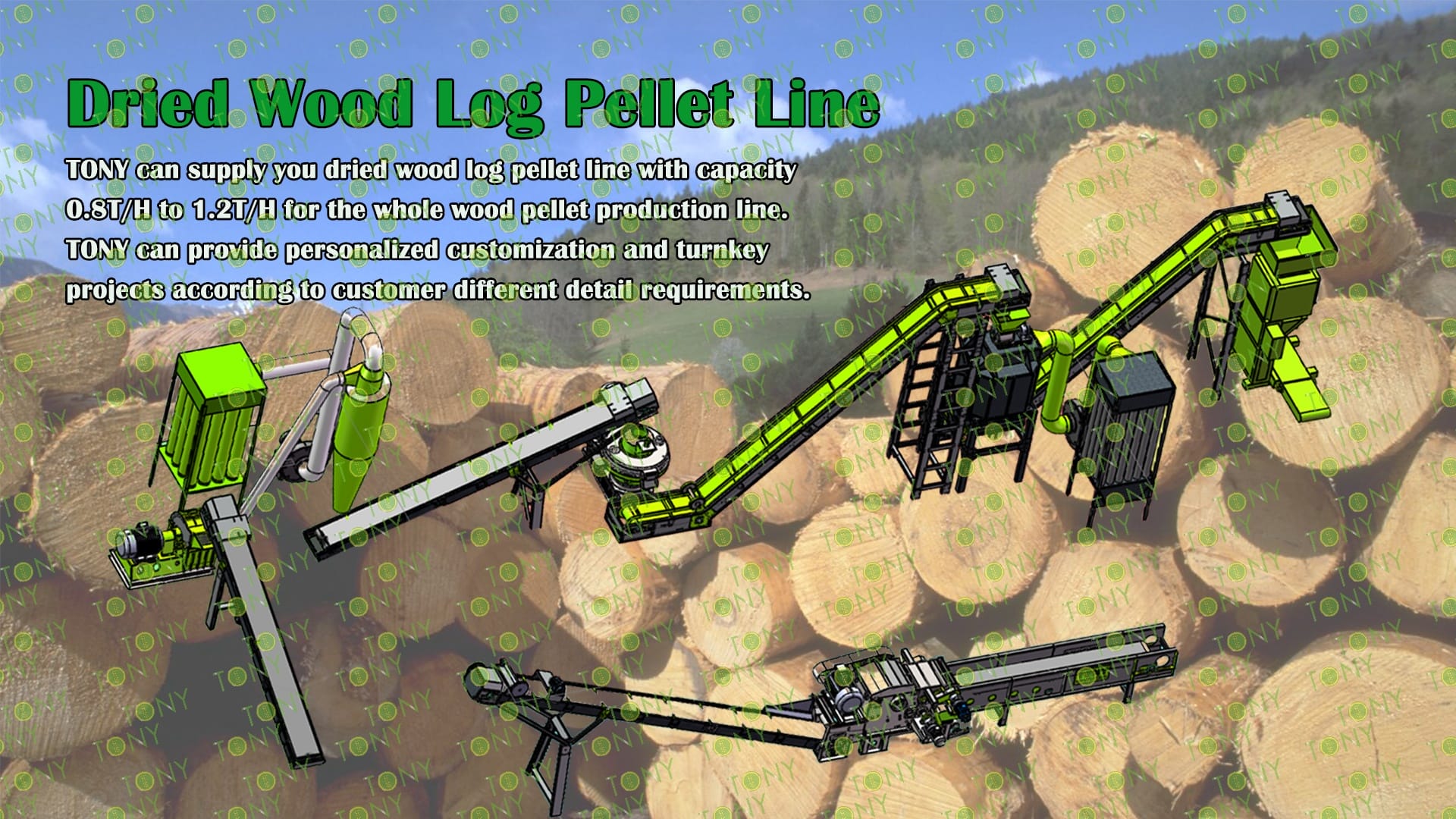
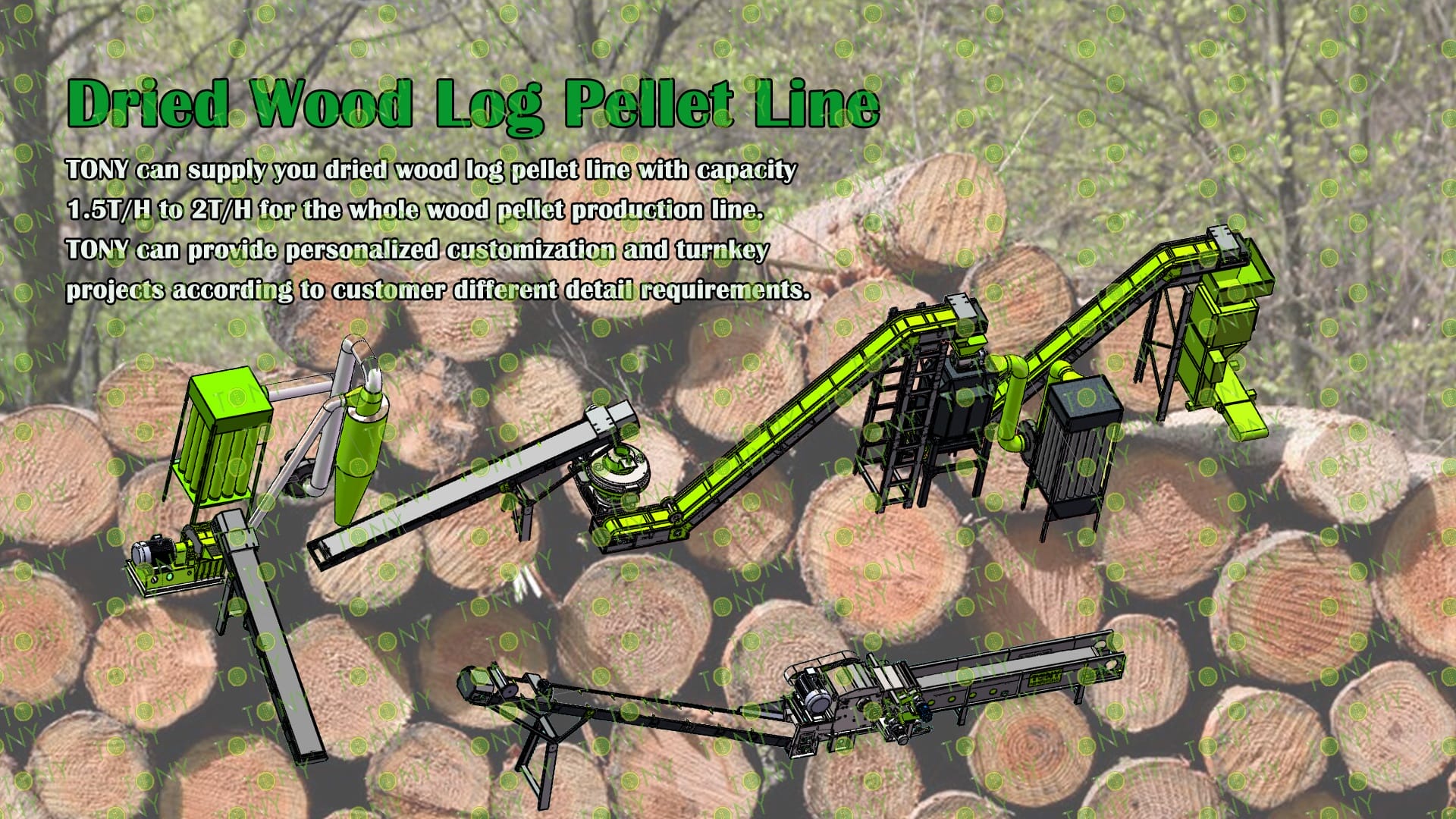
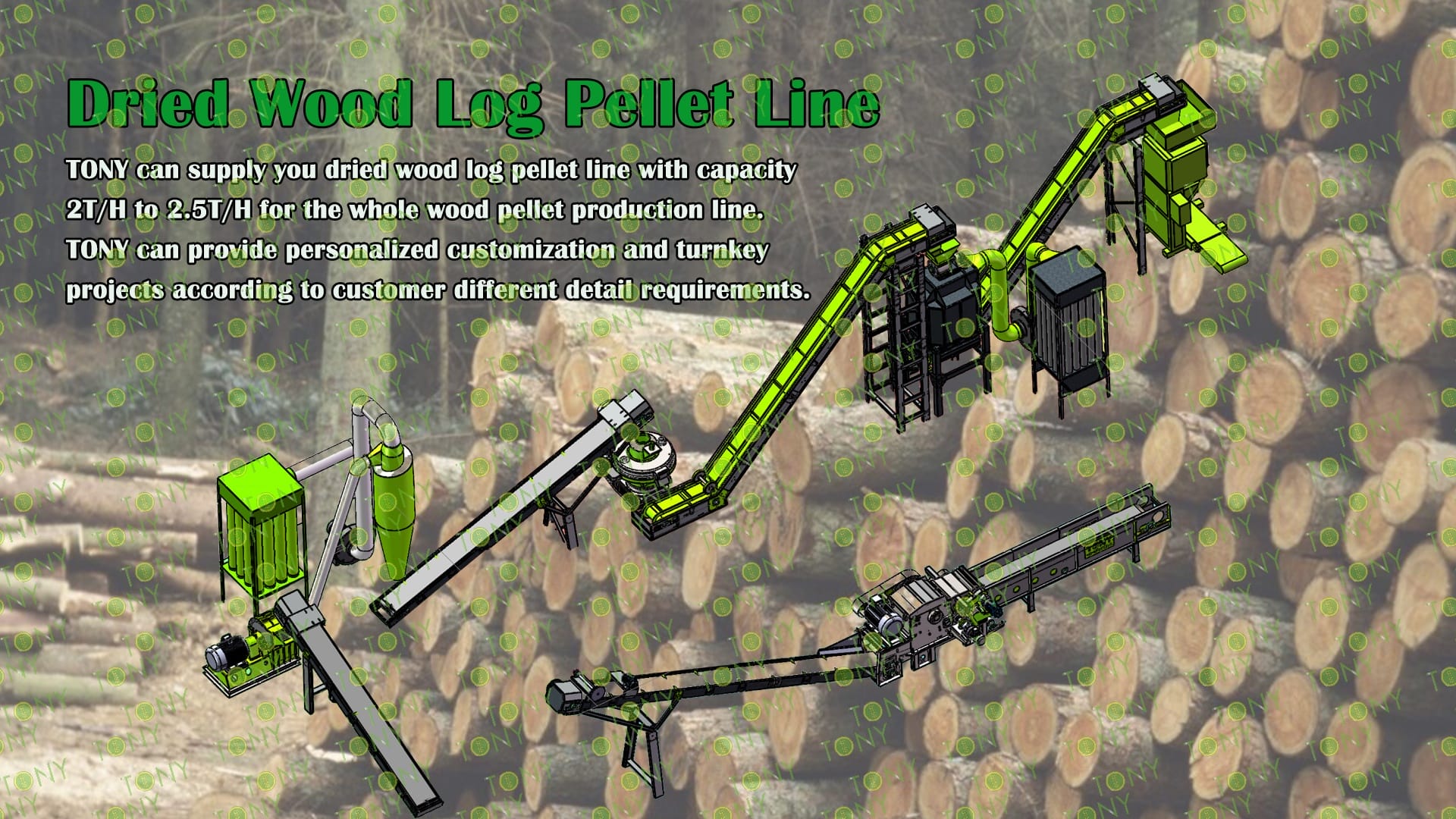
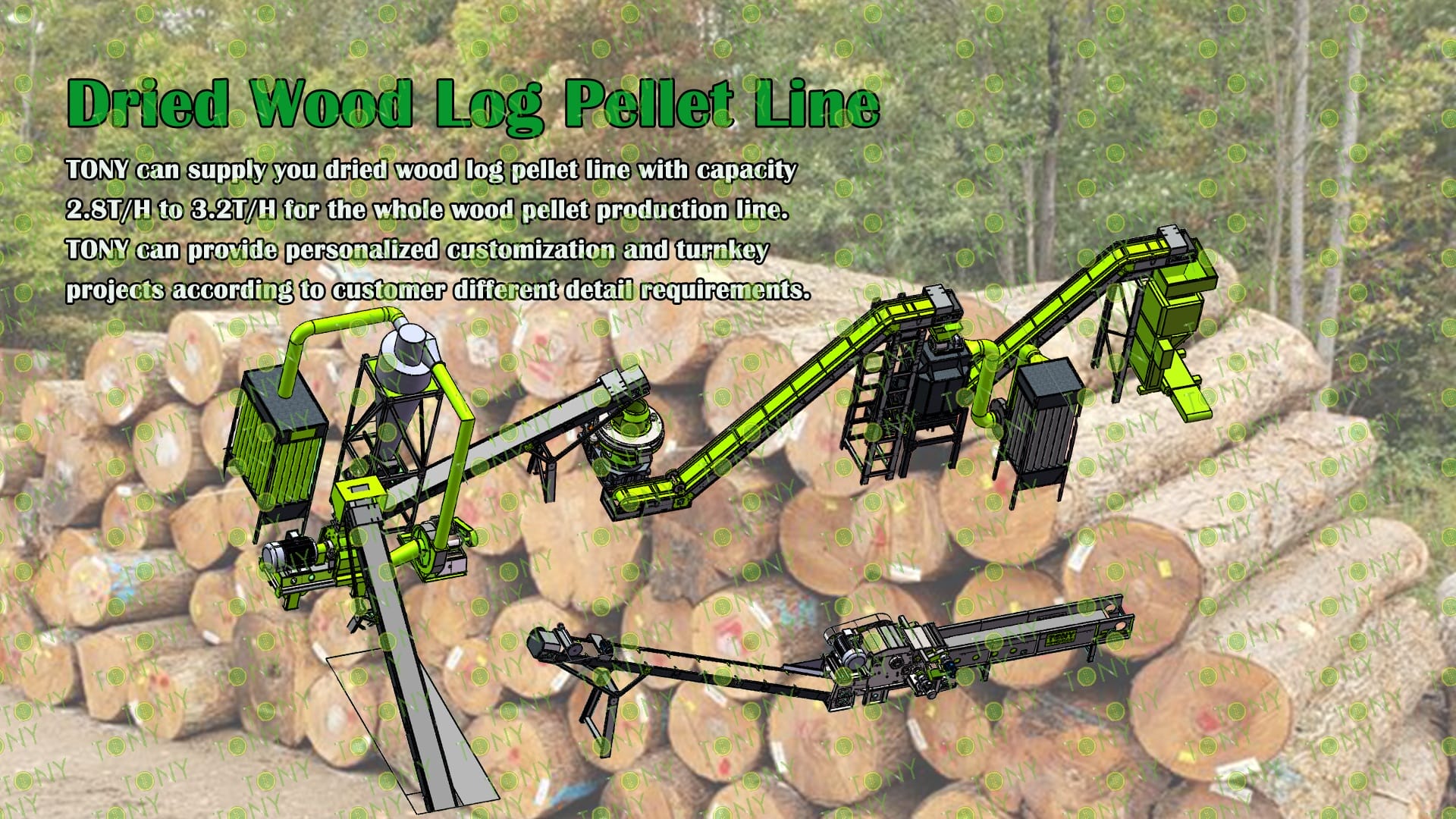
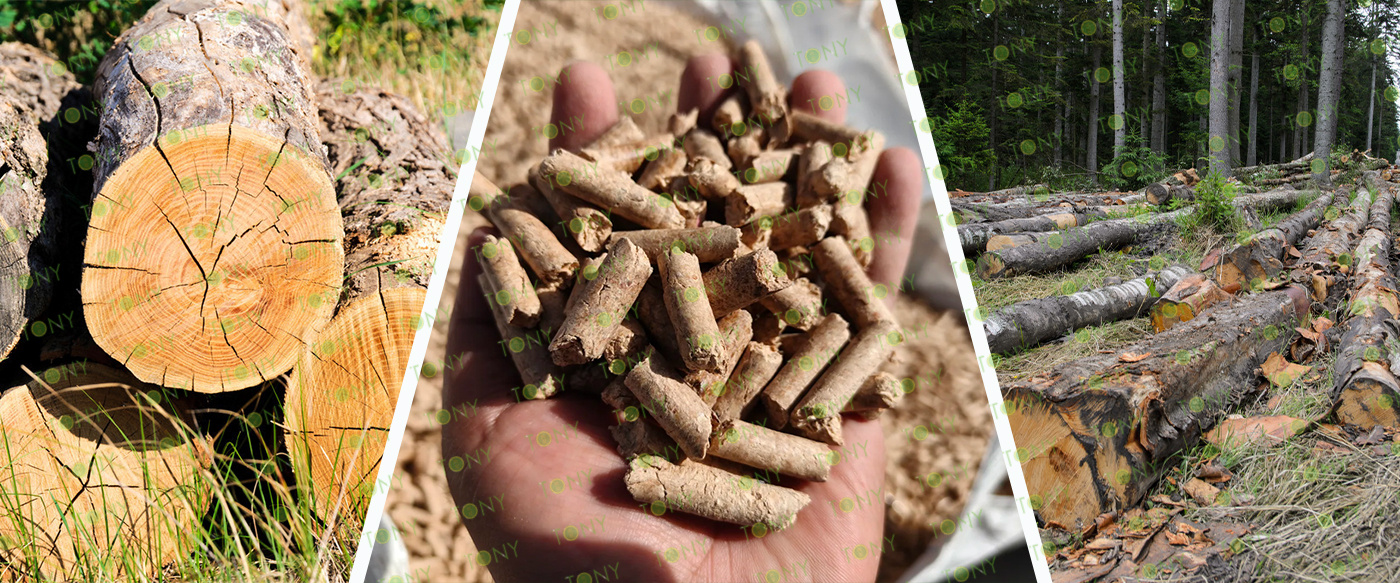
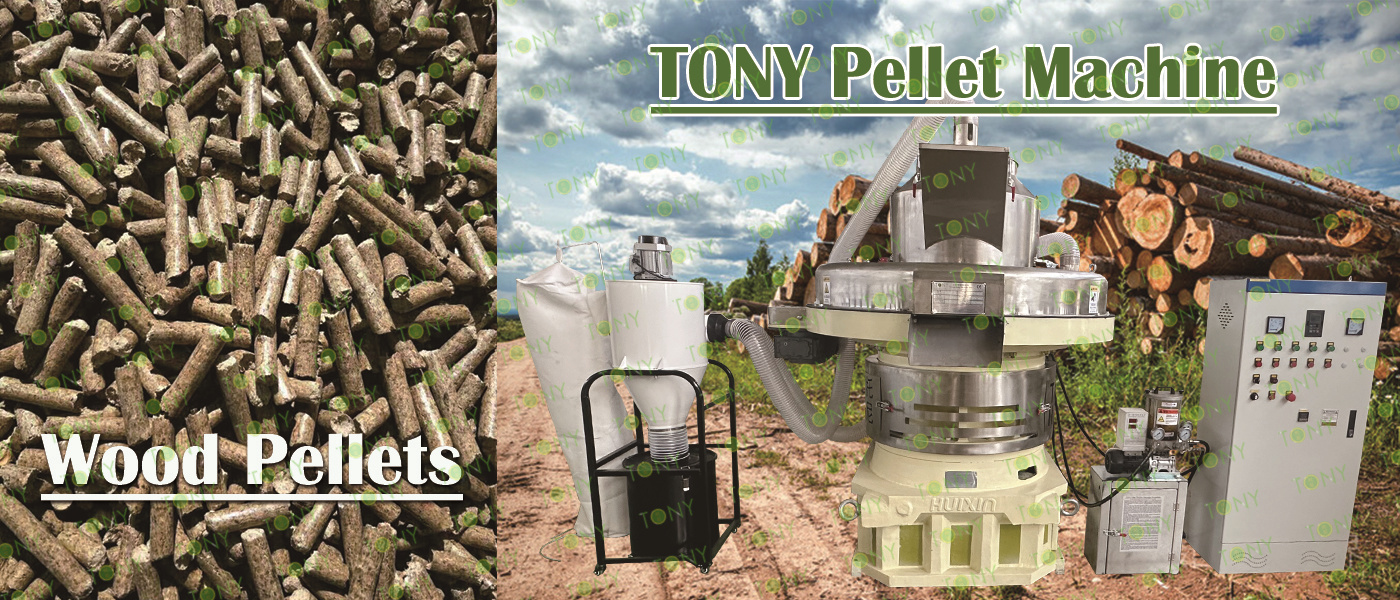
TONY Brand 28-35Ton/Hour Dried Wood Log Pellet Manufacturing Plant can take dried wood, various types of wood - related biomass materials, such as branches, small - diameter logs, and wood shavings, with dried wood as the main raw material. After pretreatment and processing, it is solidified into high - density wood pellet fuel. This fuel is an ideal substitute for coal and oil and plays a role in energy conservation and emission reduction. At present, it has been widely used in regions rich in wood resources.
1. Capacity: 28-35Ton/Hour
2. Raw materials: Dried wood logs , branches, small - diameter logs, twigs, etc.
3. Moisture: Dried type, about 10-15%.
4. Application: All kinds of wood - based biomass materials suitable for pellet production.
Suitable customers: Green energy companies, forestry enterprises, and private wood - processing workshops that have advantages in wood raw materials.
5. Finished Pellets Markets: Large power plants ,domestic heating, industrial heating, combustion heat, heating systems, boiler rooms, school canteens, foundry heat sources.

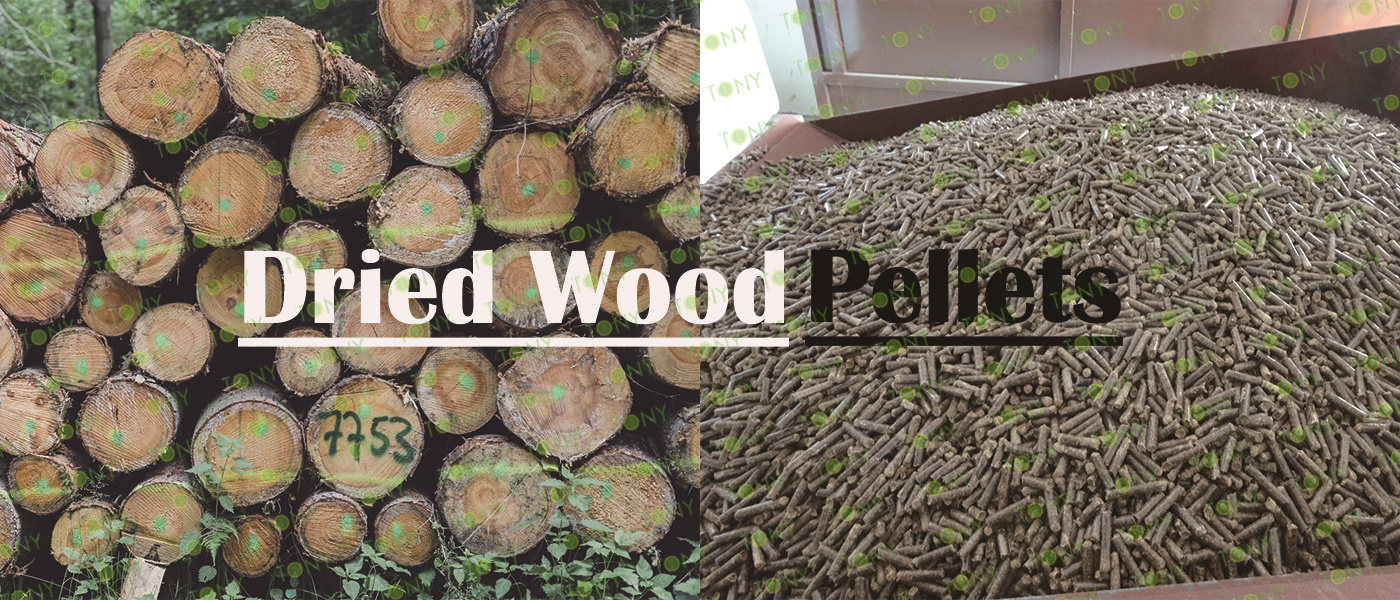
1. Project Name: Dried Wood Log Pellet Production Line
2. Raw Material: All kinds of Dried wood log
3. Moisture Content of Raw Material: 10-15%
4. Capacity: 28-35 tons per hour
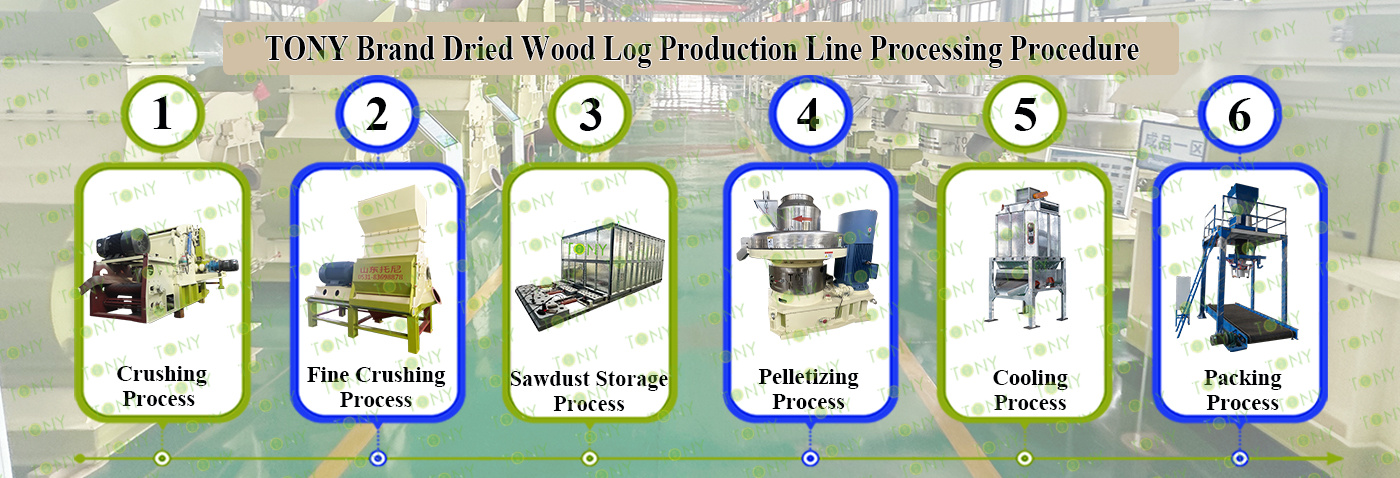
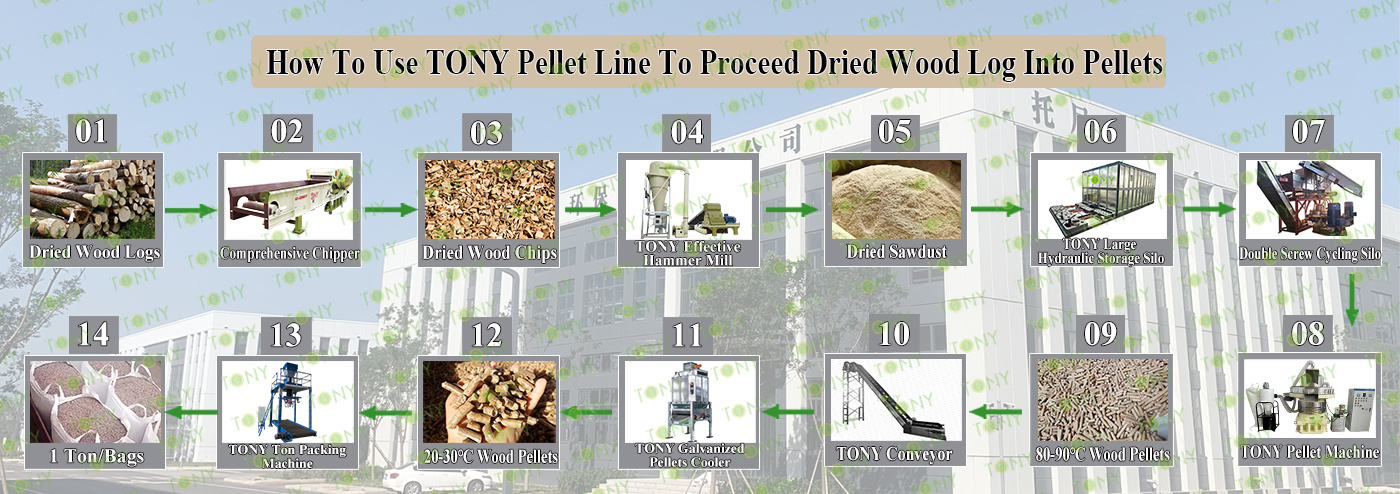
5. Process: Crushing Process - Fine Crushing Process -Sawdust Storage Process- Pelletizing Process - Cooling Process - Packing Process
6. Main Equipment: Comprehensive Chipper TPC1400-700-250KW, Effective Hammer Mill-TFD85-250-250KW, TONY Large Hydraulic Storage Silo,TONY Pellet Machine TYJ860-Ⅲ-280KW, Pellet Cooler, Ton Packing Machine and Belt Conveyors

|
How to use the TONY pellet production line to make pellets from dried wood log? The process mainly includes the following steps and equipment: 1. Use TONY comprehensive chipper to cut dried wood log with a diameter of less than 30cm into wood chips 25 - 55 mm in length. 2. Use TONY effective hammer mill to crush the 25-55 mm wood chips into 8-14 mm sawdust. 3.Use TONY large hydraulic storage silo to storage 8-14 mm sawdust 4. Use TONY vertical ring die pellet machine to produce pellets with a diameter of 6-8 mm. 5. Use TONY galvanized cooler to cool the pellets from 80-90°C to 20-30°C. 6. Use TONY ton packing machine to pack the pellets into bags, each weighing 1 ton. For more detailed information and quotations, you can contact TONY. TONY can provide all the above - mentioned products at highly competitive prices and with excellent quality. |
|
||||||||||||||||||||||||||||||||||||||||||||||||||
| Next, TONY Will Introduce To You All The Necessary Machinery That Will Be Used For The Whole Pellet Production Line. Some Machines Can Be Custom - Made By Customers According To Different Customers' Detailed Demands. Contact TONY For More Details, Including Quotation And Layout. | ||
 |
 |
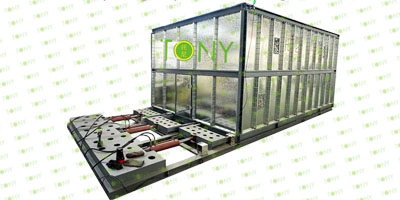 |
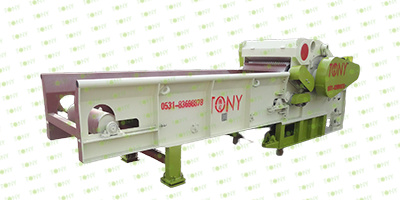
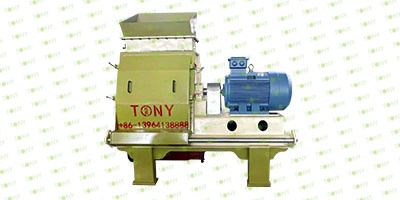
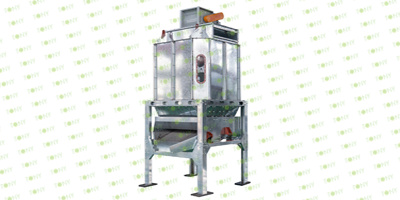
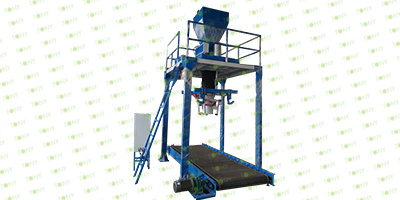
| Comprehensive Chipper | Effective Hammer Mill | Large Hydraulic Storage Silo |
|
1.To Grind Wood Logs φ ≤35cm Into25-55mm Wood Chips. 2.Model: TPC1400-700-250KW With 6 Blades*2sets 3.Capacity:28-35Ton/Hour. |
1.To Crush 25-55mm Wood Chips Into 8-14mm Sawdust. 2.Model: TFD85-250-250KW*5sets 3.Capacity: 5.5-7Ton/Hour/Set |
1.To Storage Sawdust Before Pellet machine Model: TCY-45*2sets 2.TONY Uses Galvanized Material |
 |
 |
 |
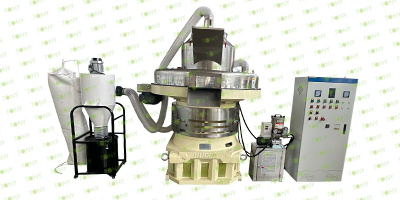
| Vertical Ring Die Sawdust Pellet Machine | Galvanized Pellets Cooler | Ton Packing Machine |
|
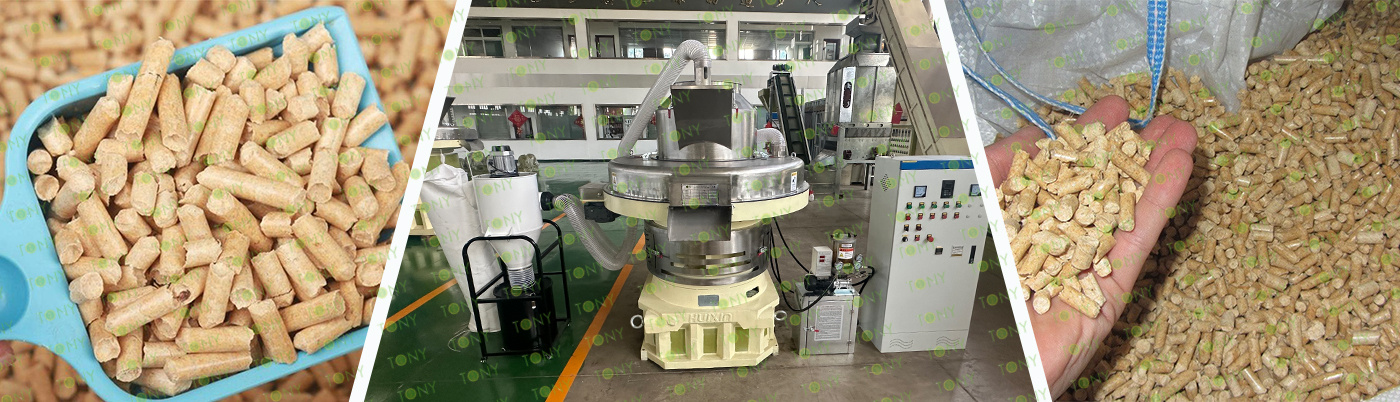
1.To Press Dry Sawdust Into 6-8mm Biomass Pellets 2.Model: TYJ860-III-280KW*7sets 3.Capacity:4-5Ton/Hour/Set 4.New 304SS Type |
1.To Cool Pellets From 80-90℃ Into 20-30℃ 2.Model: TCN-10*2sets 3.Capacity:28-35Ton/Hour |
1.To Pack Pellets Into 1Ton/Bags. 2.Model: TBD*2sets 3.Capacity: 28-35Ton/Hour |
1.Wood Chipping Process:
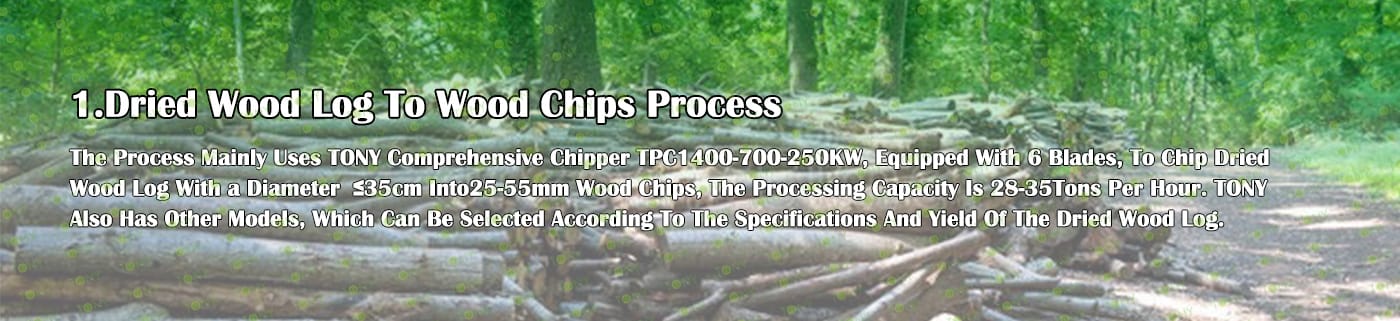
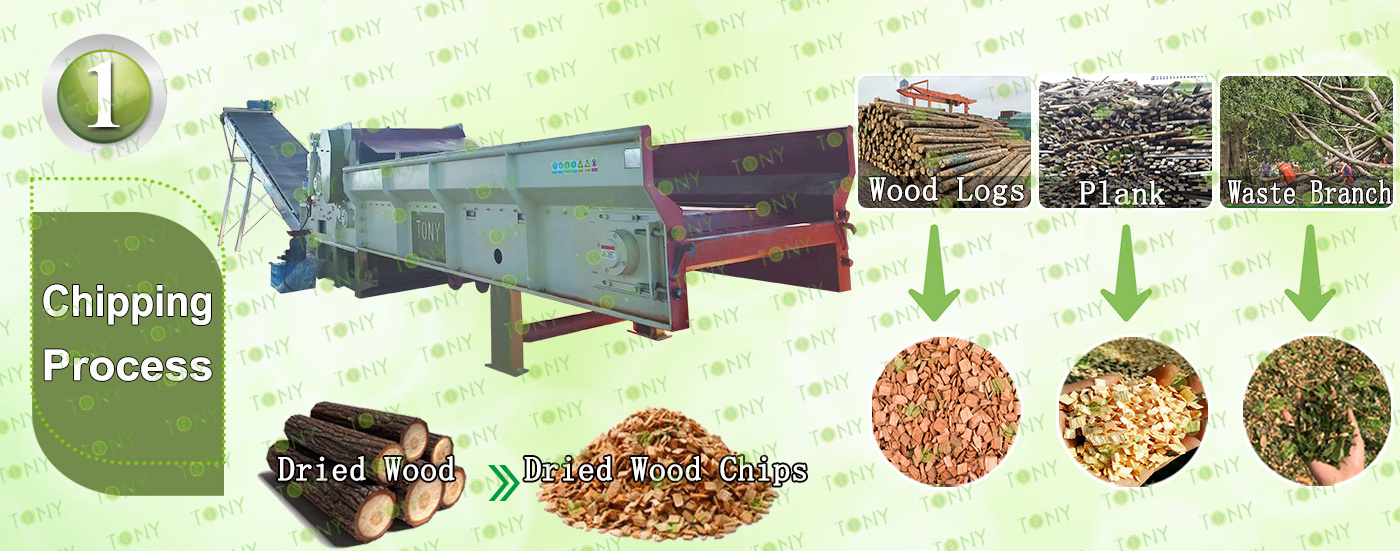
A.This process is mainly used to grind the wood logs whose diamater is under 35cm into wood chips with size 25-55mm. The finish wood chips size can be adjustable by changing different sizes of screeners and adding flying knives inside the wood chipper.
B.TONY brand TPC1400-700-250KW model with 6 flying blades type*2sets
C.Capacity:28-35Ton/Hour.
Main Parts:
(1)TONY's Comprehensive Chipper.
(2)Feed And Discharge Belt Frequency Control To Prevent Card Material
(3)Hydraulic System Control Can Be Used For Thicker Materials
(4)Electronic Control System Allows The Equipment To Be Used Normally
Contact Tony For More Details With Quotation

2.Wood Chips Fine Crushing Process:
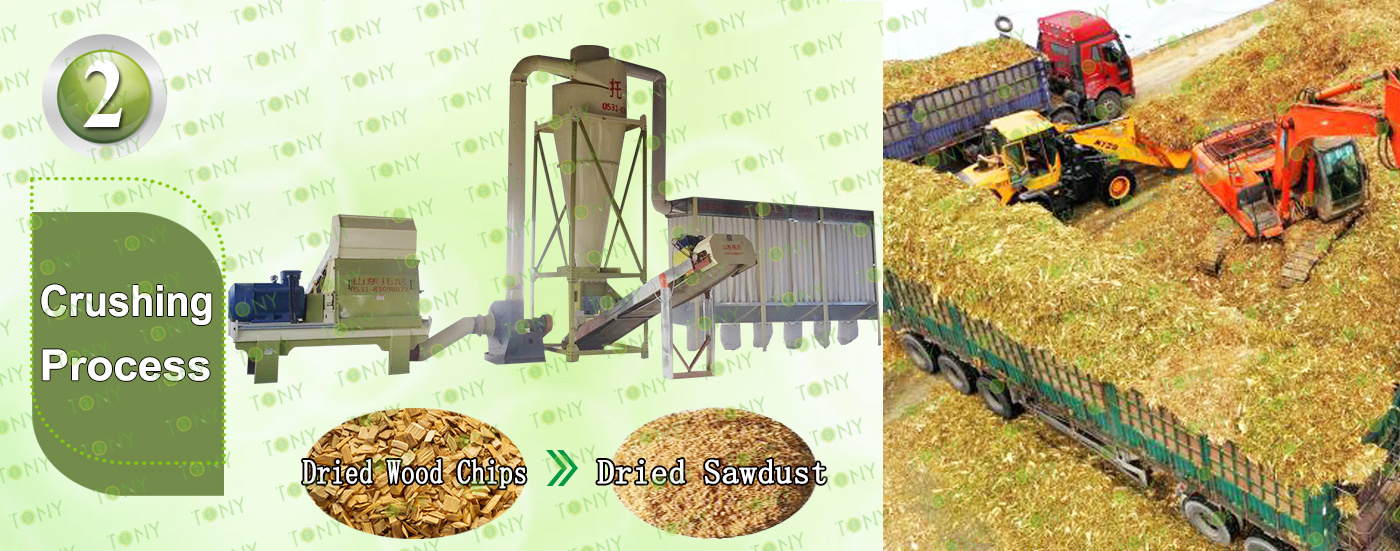
A.This process is mainly used to crush 25-55mm wood chips into 8-14mm sawdust.
B.Capacity:28-35Ton/Hour.
C.TONY brand effective hammer mill TFD85-250-250KW*5sets
Main Parts:
(1)TONY Effective Hammer Mill.
(2)Galvanized Dust Collector.
(3)Sawdust Transportation Fan Blower.
(4)Cyclone With Airlock.
(5)Electrical Cabinets.
3.Sawdust Storage Process:
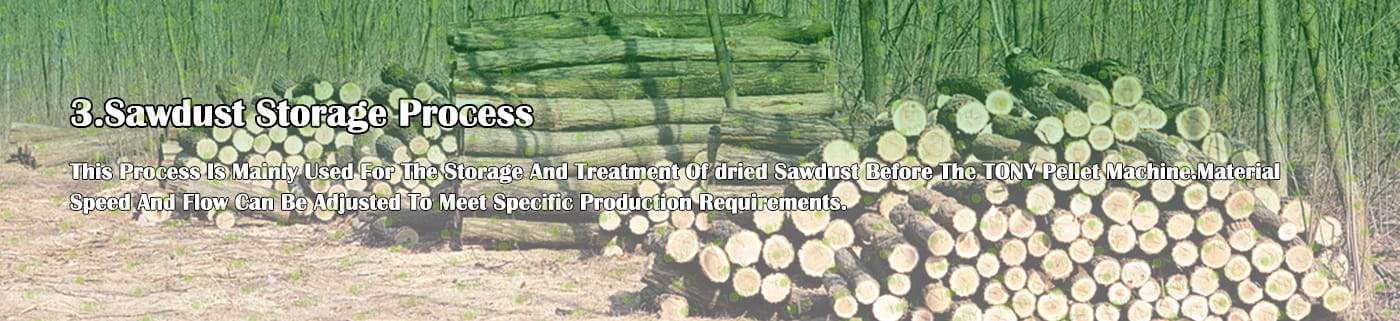
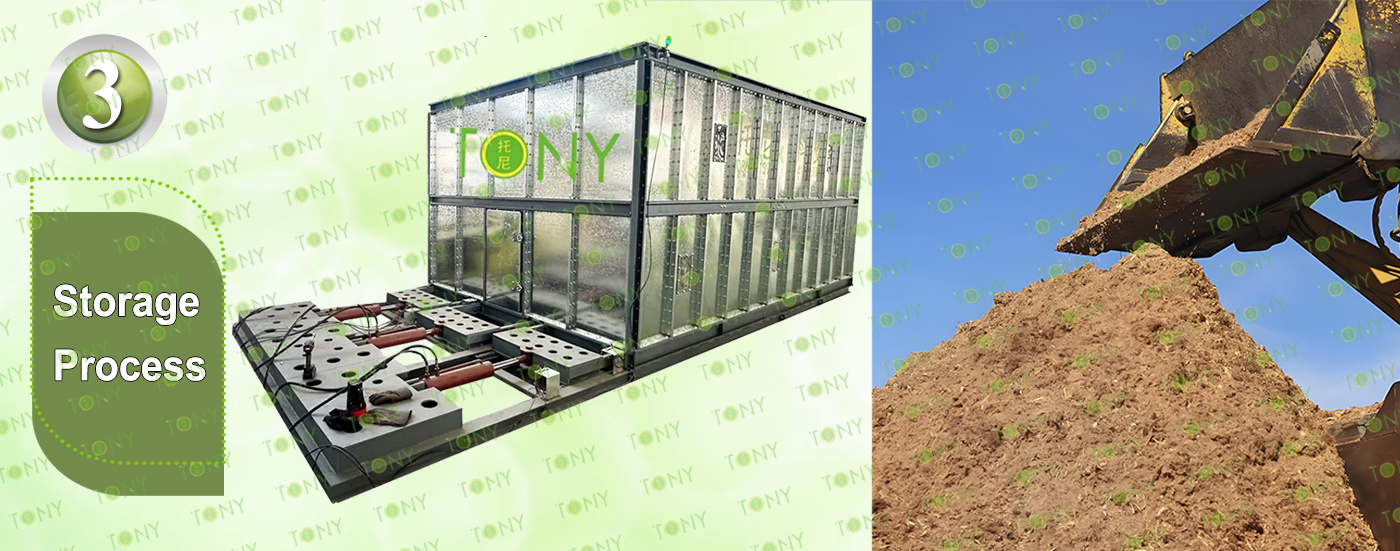
A. This process is mainly used to storage the sawdust that comes out of the hammer mill.It is hydraulic galvanized storage bin which is more stalbe and sawdust in it is not easy to be blocked.
B. TONY brand sawdust storage to storage the sawdust that comes out of the hammer mill.This process can be optional by customer.If customer do not chose the storage bin,he can storage the sawdust on the ground directly which may need some labour.
Main Parts:
(1)TONY's New Sawdust Storage Bin.
(2)With Screws Inside The Storage Bin To Prevent Sawdust Blocked.

4.Pelletizing Process:
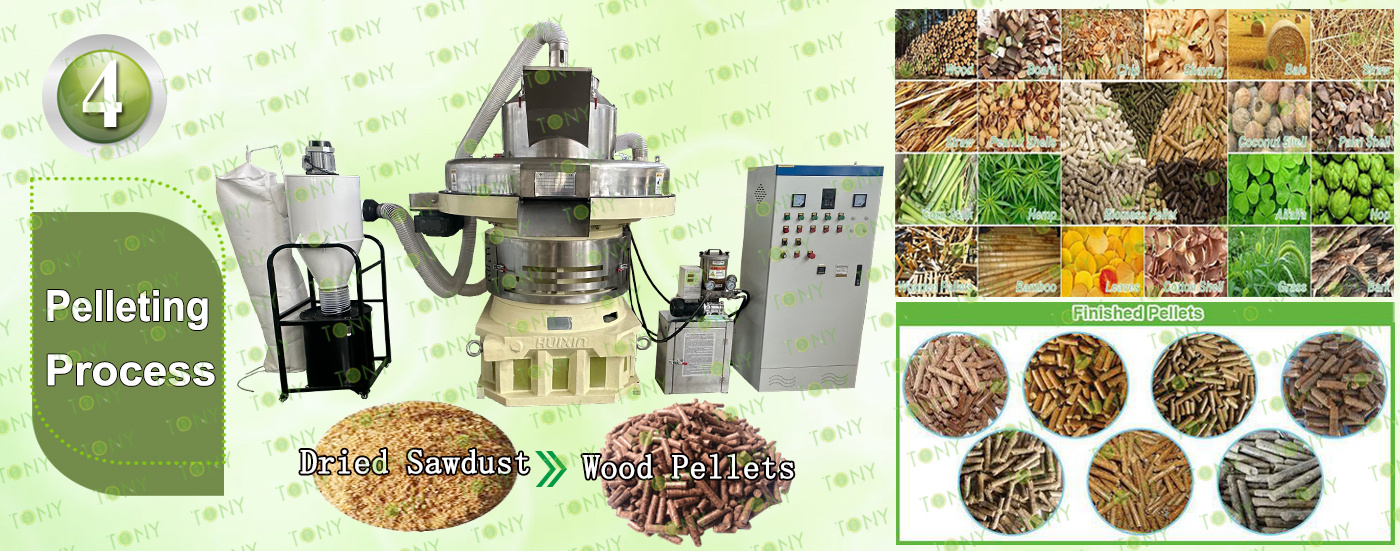
A.This process is mainly used to to product pellets into φ6-8mm.
B.Capacity:28-35Ton/Hour.
C.TONY brand vertical ring die pellet machine TYJ860-III-280KW*7sets
D.Double screw cycling silo is added above the pellet machine, which has the advantages of saving space, saving labor, intelligently controlling the feeding speed, not easy to block the material, and improving production efficiency.
Main Parts:
(1)TONY's New Vertical Ring Die Pellet Machine.
(2)Cyclone And Bags Dust Collectors.
(3)Automatic Lubrication System.
(4)Electrical Cabinets.
You can chose TONY new type SS304 pellet machine

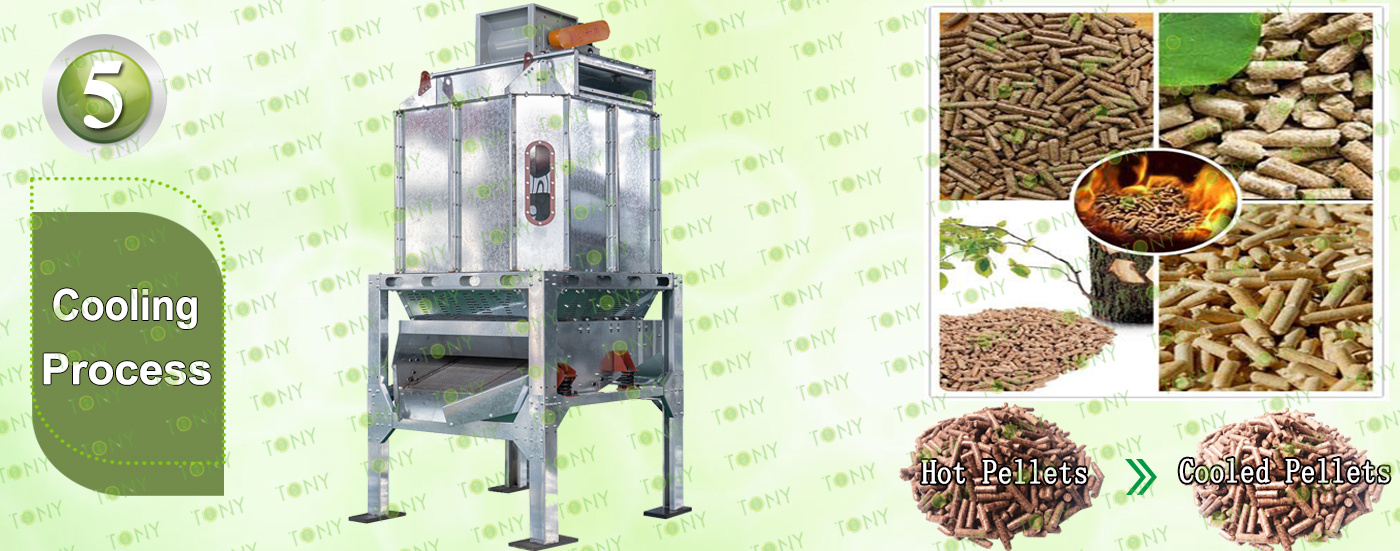
5.Cooling Process:
A.This process is mainly used to cool pellets from 80-90℃ to 20-30℃
B.2 sets of TONY galvanized cooler separator With Capacity 28-35ton/hour
Main Parts:
(1)TONY's Galvanized Cooler Separator With Vibrating Screen.
(2)Cyclone And Bags Dust Collectors.
(3)Fan Blower.
(4)Connect Pipes.

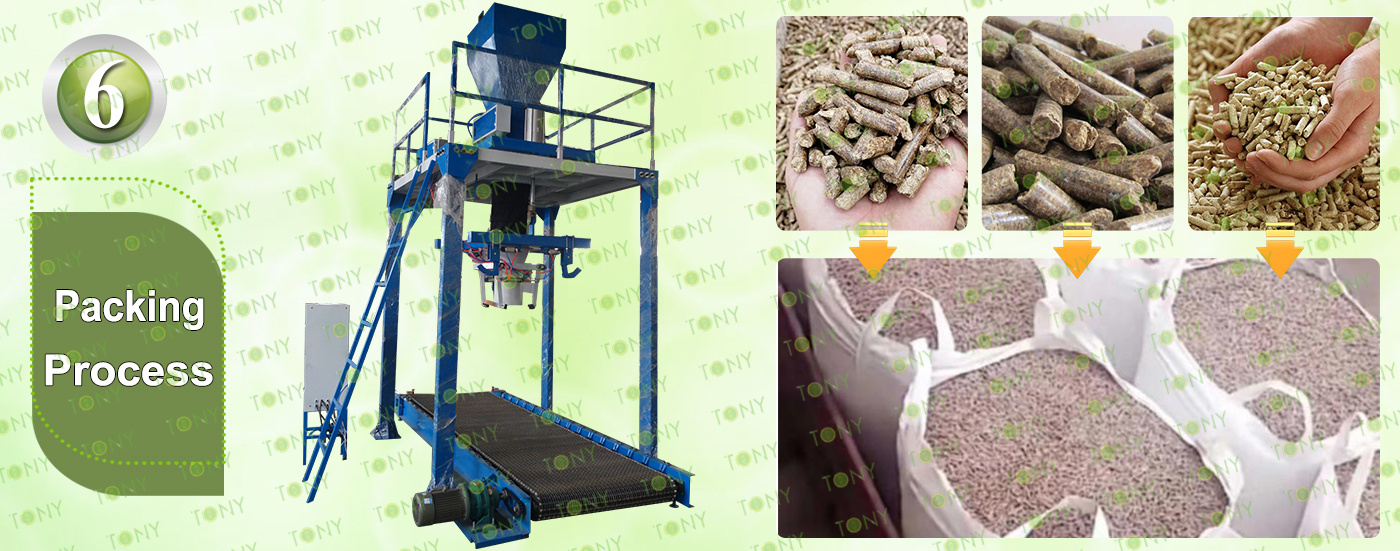
6.Packing Process:
A.This process is mainly used to pack pellets into 1 ton/bags.
B.2 sets of TONY ton packing machine
Main Parts:
(1)TONY Ton Packing Machine
(2)Electronic Platform Scale Metering System
(3)Automatic Tare, Zero, and Drop Correction Functions
(4)Feeding System Features Fast, Medium, and Slow Feeding Speeds to Ensure Measuring Accuracy

1.Market Prospects and Project Advantages of Dry Wood Processing Biomass Pellets
Driven by global environmental protection trends and growing demand for clean energy, processing dry wood into biomass pellet fuel has become a highly promising business opportunity. As a coal alternative, biomass pellet fuel continues to see growing market demand, boasting a calorific value of up to 4,000 kcal/kg. Meanwhile, the utilization rate of wood processing residues is less than 30%, leaving a significant unmet market demand for biomass pellet fuel. This presents a vast market opportunity for entrepreneurs.
This project also boasts core advantages such as policy support (environmental protection industries) and readily available raw materials (abundant waste from the construction and furniture industries), demonstrating its potential to replace coal.
2.Project Details of Dry Wood Processing Biomass Pellets
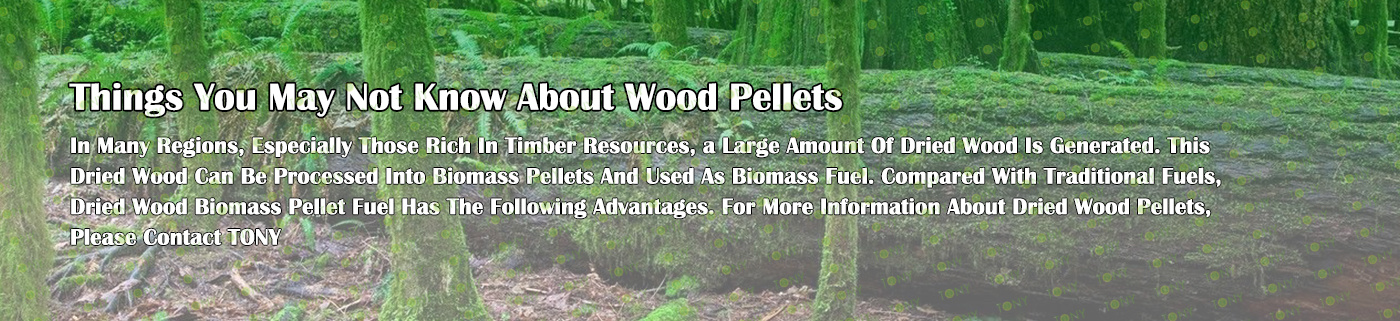
Project Process: First, dry wood is crushed into sawdust in a crusher. These sawdust are then fed directly into a pellet mill to be processed into biomass pellet fuel.
1.Environmental friendliness:
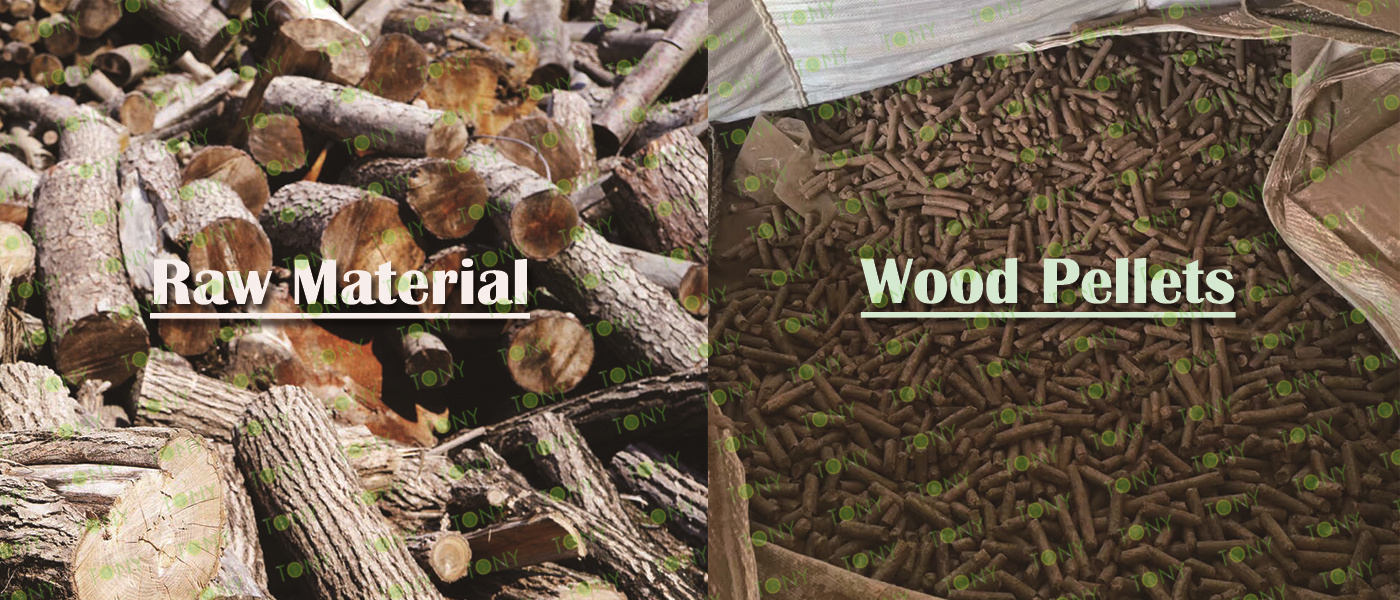
Dry wood pellets are typically made from wood waste and sawdust. This utilization method reduces wood waste and aligns with modern green production concepts. Furthermore, using dry wood pellets as fuel reduces dependence on fossil fuels, thereby reducing environmental pollution.
2.Energy-efficiency:
The production process for dry wood pellets typically requires low energy consumption and is highly efficient.
3.High combustion efficiency:
Dry wood pellets have a high combustion rate, with a calorific value of approximately 3,900 to 4,800 kcal/kg. After carbonization, the calorific value can even reach 7,000 to 8,000 kcal/kg. This makes them a highly efficient fuel option in the biomass energy sector.
4.Cleanliness:
Dry wood pellets contain no sulfur or phosphorus, are non-corrosive to boilers, and do not produce sulfur dioxide or phosphorus pentoxide. Therefore, they do not contribute to acid rain and pollute the atmosphere or the environment. Furthermore, their combustion produces minimal ash, reducing the space required for ash storage and the cost of ash removal.
5.Widely applicable:
Dry wood pellets can be used in a variety of applications. In the biomass energy sector, they can be used for power generation and heating. Dimensional stability: Dry wood particles are dried and hot-pressed during the production process, so they have good dimensional stability and strength and are not easy to warp or deform.



2025 Tony Machinery - All Rights Reserved. Map