




















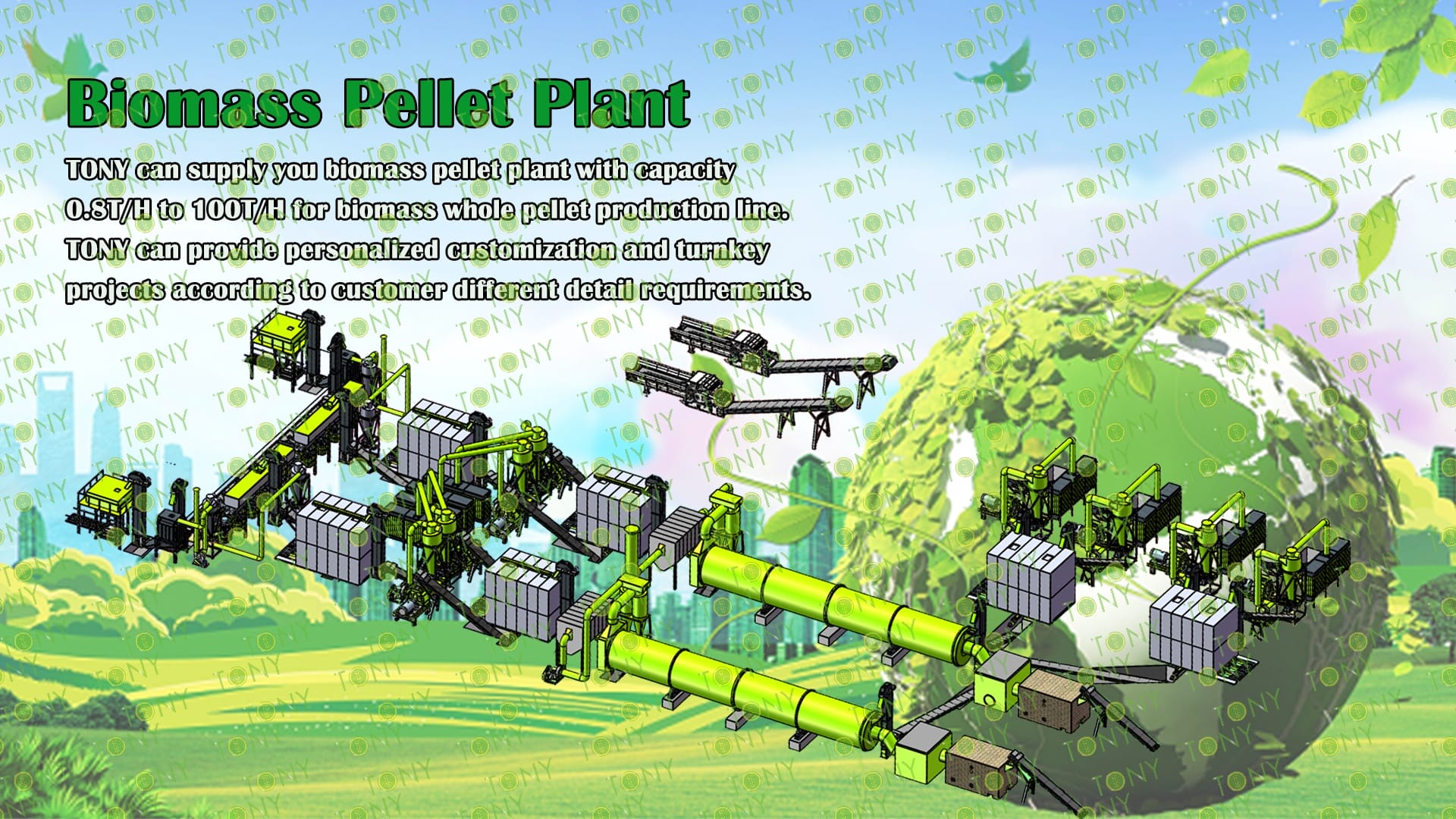

Project Brief Introduction:
1.Product:Wet Coconut Shell Pellet Line
2.Capacity:9-10.5Ton /Hour
3.TONY Brand 9-10.5Ton /Hour Wet Coconut Shell Pellet Line Project Process
4.Main Machine: Hammer Mill,Rotary Drum Dryer,TONY Pellet Machine TYJ860-Ⅲ-220KW,Pellets Cooler,Packing Machine And Belt Conveyors
5.Total Power: About 1220KW
6.Need Area: About ㎡ L: M W: M H: M
Project Layout For Customer:
3D图3
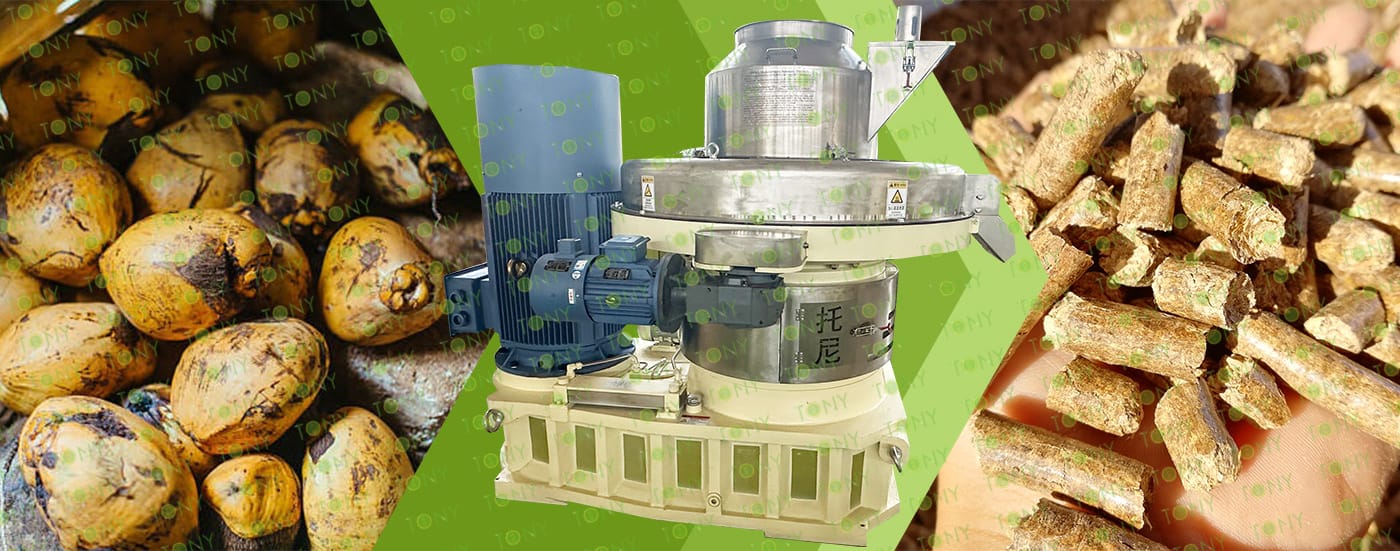
1.The working principle of wet coconut shell biomass pellet processing equipment
The core principle of processing wet coconut shells into biomass pellets is to utilize the physical properties of the wet coconut shells combined with external pressure and temperature to achieve dense pelletizing. The entire process does not rely on additional adhesives; it primarily depends on the natural binding force formed by the softening of lignin in the wet coconut shells at high temperatures.
2.Characteristics of wet coconut shell biomass pellet processing equipment
(1)Excellent Environmental Friendliness:No wastewater discharge throughout the entire process. The production process is equipped with dust removal devices (pulse bag filters, dust removal efficiency ≥99%), resulting in low dust emission concentrations that meet environmental standards. The production process is odorless and low-noise, suitable for both indoor and outdoor installation.
(2)High Raw Material Adaptability and High Added Value:In addition to pure wet coconut shells, 5%-10% of raw materials such as rice straw and sawdust can be mixed in without affecting the molding quality. Agricultural waste (wet coconut shells) is converted into high-density biomass pellets (calorific value approximately 4000-4500 kcal/kg), achieving "turning waste into treasure" and increasing added value by 3-5 times.
(3)Stable Operation and Optional Automation:Small and medium-sized production lines can achieve semi-automatic control, while large production lines can be equipped with PLC control systems to achieve full-process automation (integrated raw material conveying, processing, and finished product packaging), reducing labor costs and minimizing failure rates.
3.Application scenarios of wet coconut shell biomass pellet processing equipment
Tropical Coconut Producing Areas – Core Application Areas Leveraging Raw Material Advantages
These regions have huge yields of wet coconut shells and low raw material acquisition costs, making them the most concentrated areas for equipment application.
(1)Southeast Asian Countries:
For example, Indonesia, Thailand, and the Philippines, as major global coconut producers, generate large amounts of wet coconut shell waste. Local enterprises or processing plants directly install equipment to convert the waste into pellet fuel to meet local energy needs or for export.
(2)Tropical Southern China:
For example, Hainan, the Leizhou Peninsula in Guangdong, and Xishuangbanna in Yunnan, the coconut processing industry (such as coconut juice and coconut meat processing) generates a large amount of wet coconut shells. Equipment is mostly installed by local agricultural product processing enterprises or professional biomass energy companies to realize on-site resource utilization of waste.
(3)Caribbean and South America:
For example, Brazil and Colombia, some tropical islands and coastal areas have extensive coconut cultivation. Equipment is used to process local wet coconut shells to provide heating and power fuel for residents or small factories.

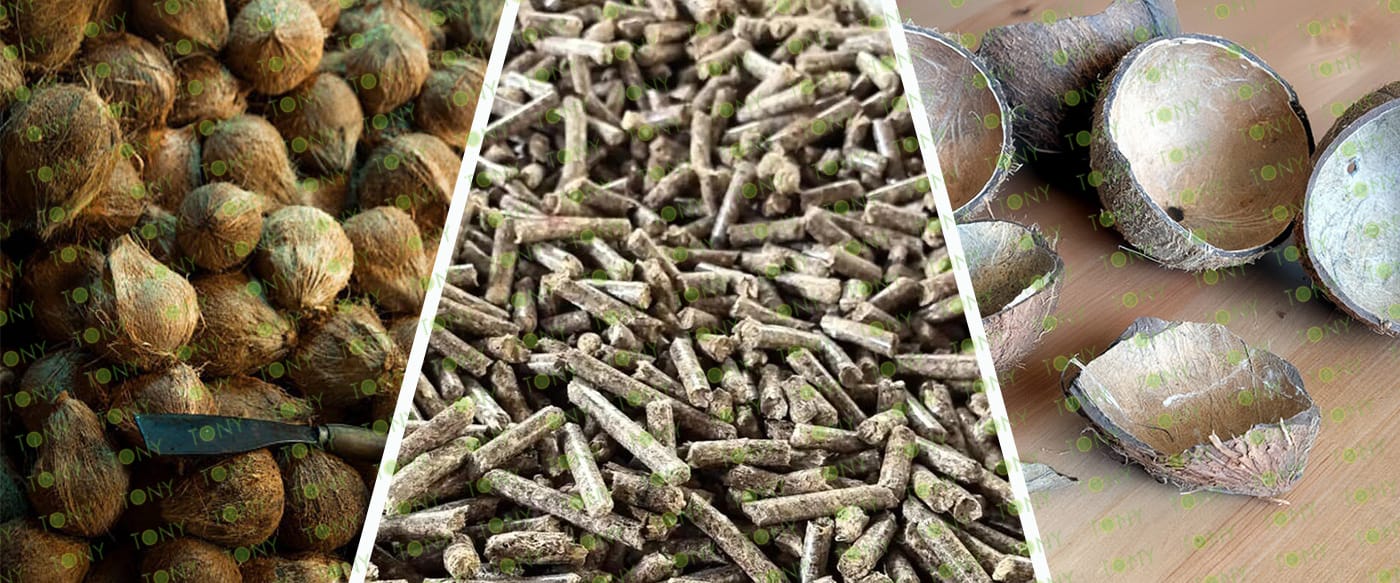
TONY Brand 9-10.5Ton/Hour Wet Coconut Shell Pellet Manufacturing Plant can take wet coconut shell into biomass pellets.Coconut shells have a high carbon content and high calorific value. When processed into pellets, they burn more completely, resulting in fewer pollutants. The raw material is widely available, representing waste recycling at a low cost. Processing coconut shells into biomass pellets is highly feasible and offers advantages in terms of environmental protection and resource reuse.
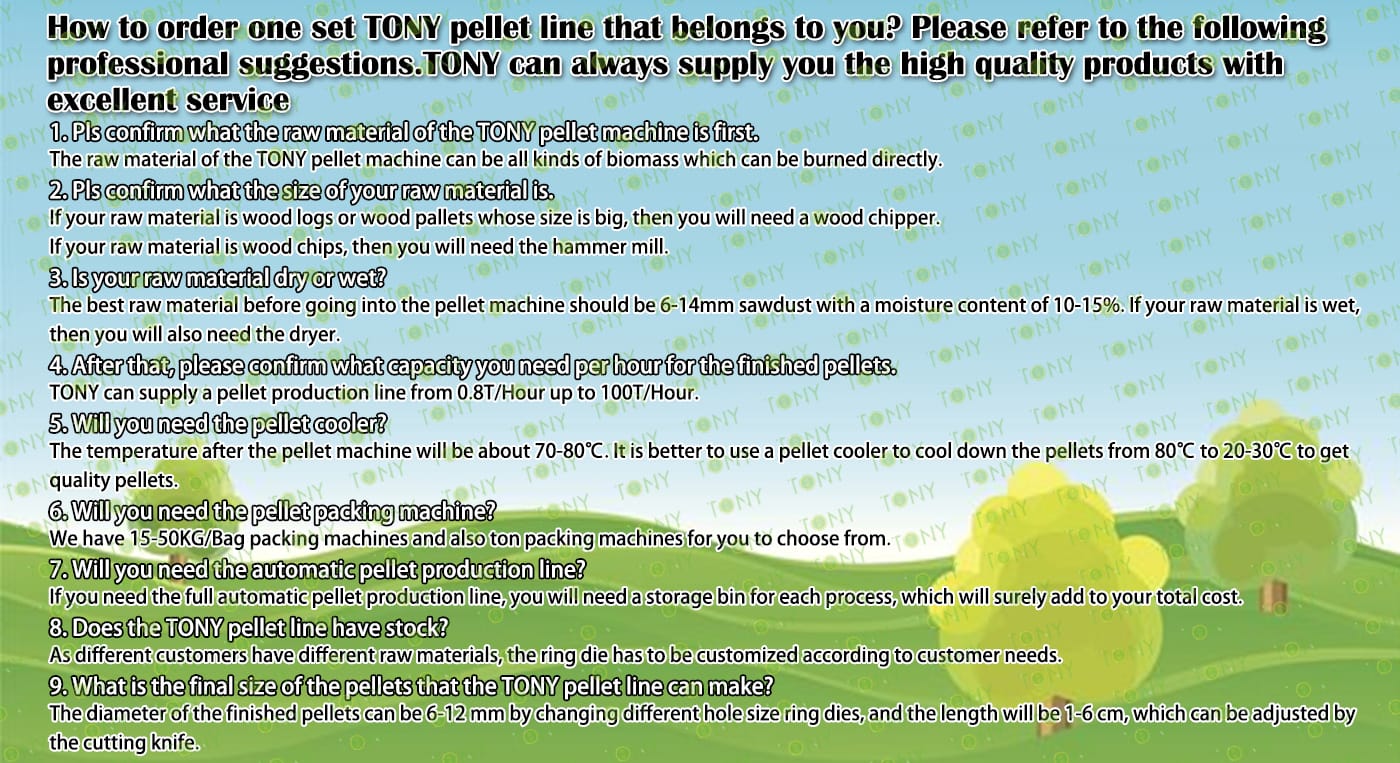
1. Capacity:9-10.5Ton/Hour
2. Raw materials: Wet Coconut Shell
3. Moisture: Wet type, about 40-55%.
4. Application: All kinds of biomass materials suitable for pellet production.
Suitable customers: Those working in coconut-producing areas, such as coconut growers and coconut processing companies (e.g., coconut juice factories and coconut meat processing plants); biomass energy entrepreneurs; investors in agriculture/environmental protection; and individuals who can reliably obtain sufficient coconut shell raw materials.
5. Finished Pellets Markets: Large power plants ,domestic heating, industrial heating, combustion heat, heating systems, boiler rooms, school canteens, foundry heat sources.

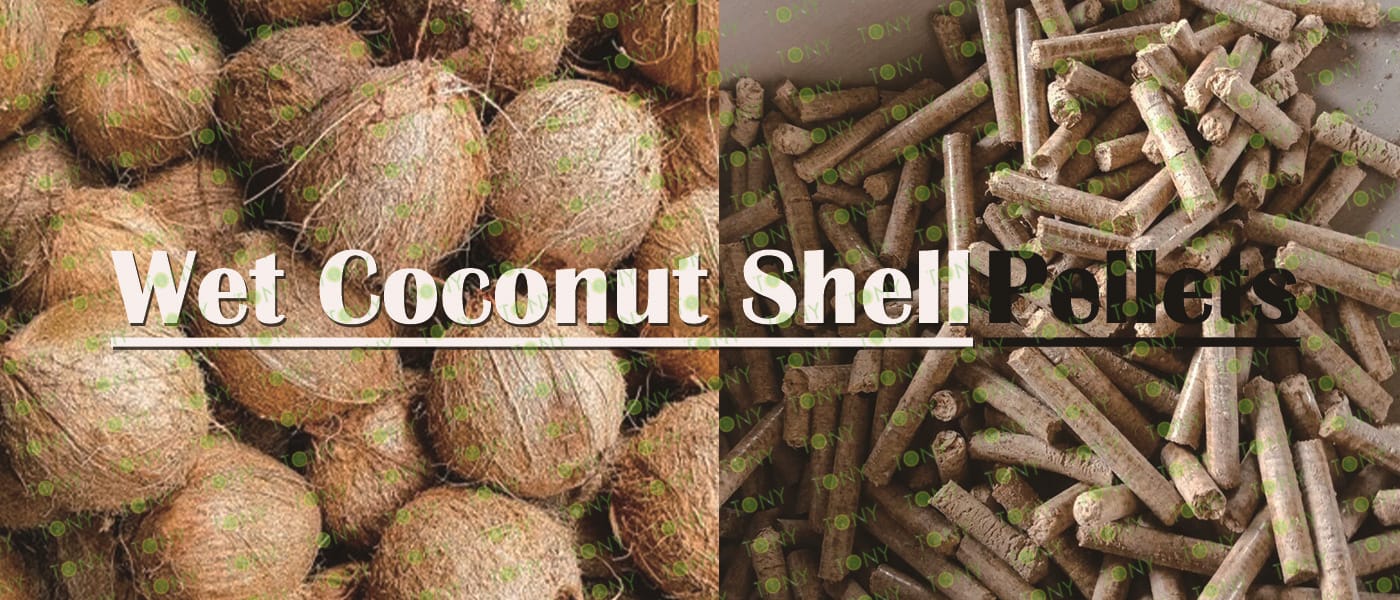
1. Project Name: Wet Coconut Shell Pellet Production Line
2. Raw Material: All kinds of Wet Coconut Shell
3. Moisture Content of Raw Material: 40-55%
4. Capacity: 9-10.5TPH
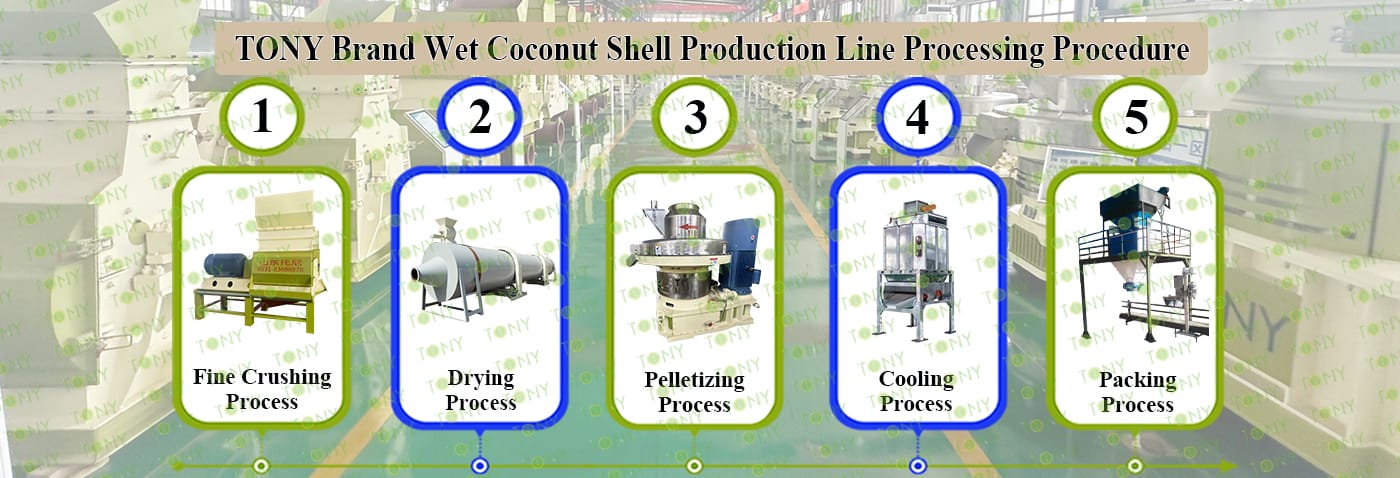
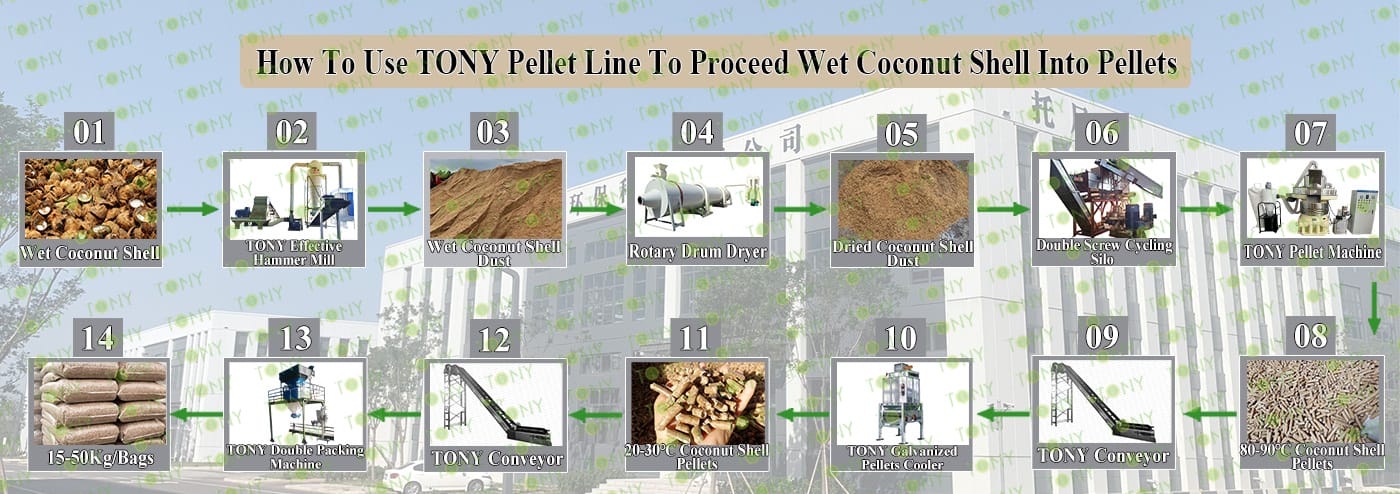
5. Process: Fine Crushing Process - Drying Process - Pelletizing Process - Cooling Process - Packing Process
6. Main Equipment:Effective Hammer Mill-TFD75-132-132KW, Rotary Drum Dryer-3-24m, TONY Pellet Machine- TYJ860-Ⅲ-220KW, Galvanized Pellets Cooler, Double Packing Machine and Belt Conveyors

|
How To Use TONY Pellet Line To Proceed From Wet Coconut Shell Into Pellets? It mainly contains the following steps and machines as following: 1.Use TONY effective hammer mill to crush the coconut shell into 8-14 mm coconut shell dust. 2.Use TONY rotary drum dryer to dry the 40-55% wet coconut shell dust into 10-15% dried coconut shell dust 3.Use TONY vertical ring die pellet machine to products pellets with φ6-8mm. 4.Use TONY galvanized pellets cooler to cool pellets from 80-90℃ to 20-30℃. 5.Use TONY double packing machine to pack the pellets into 15-50kg/bags. For more detailed information and quotations, you can contact TONY. TONY can provide all the above - mentioned products at highly competitive prices and with excellent quality. |
|
|||||||||||||||||||||||||||||||||||||||||||||
3D图 图1-长宽
3D图 图2-高
| Next, TONY Will Introduce To You All The Necessary Machinery That Will Be Used For The Whole Pellet Production Line. Some Machines Can Be Custom - Made By Customers According To Different Customers' Detailed Demands. Contact TONY For More Details, Including Quotation And Layout. | ||
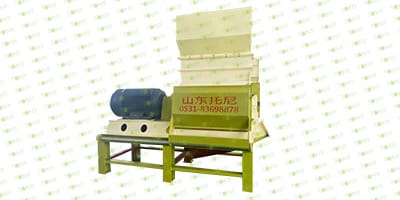 |
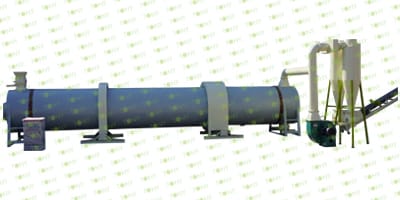 |
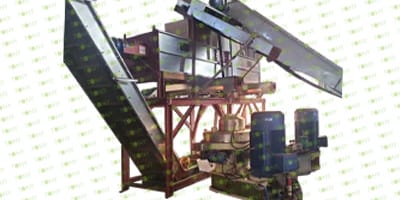 |
| Effective Hammer Mill | Rotary Drum Dryer | Double Screw Cycling Silo |
| 1.To Crush Coconut Shell Into 8-14mm Coconut Shell Dust. 2.Model: TFD75-132-132KW*2Sets 3.Capacity:4-5Ton/Hour/Set |
1.To Dry The 40-55% Coconut Shell Dust Into 10-15%Coconut Shell Dust. 2.Model: THGD3-24*1Set 3.Capacity:9-10.5Ton/Hour/Set |
1.To Stroage Coconut Shell Dust Before Pellet Machine; Adjust The Speed Of Coconut Shell Dust Entering The Pellet Machine 2.Model: TLC-11*1Set 3.Capacity:9-10.5Ton/Hour/Set |
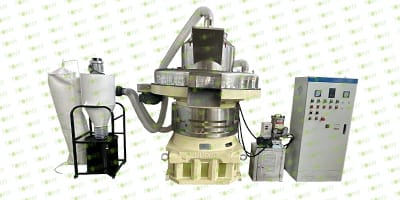 |
 |
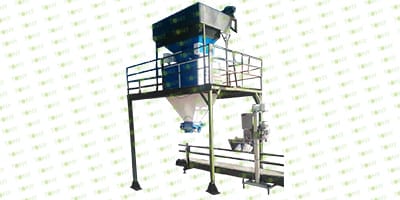 |
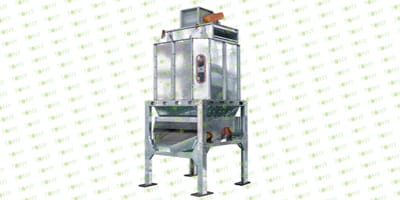
| Vertical Ring Die Pellet Machine | Galvanized Pellets Cooler | Double Packing Machine |
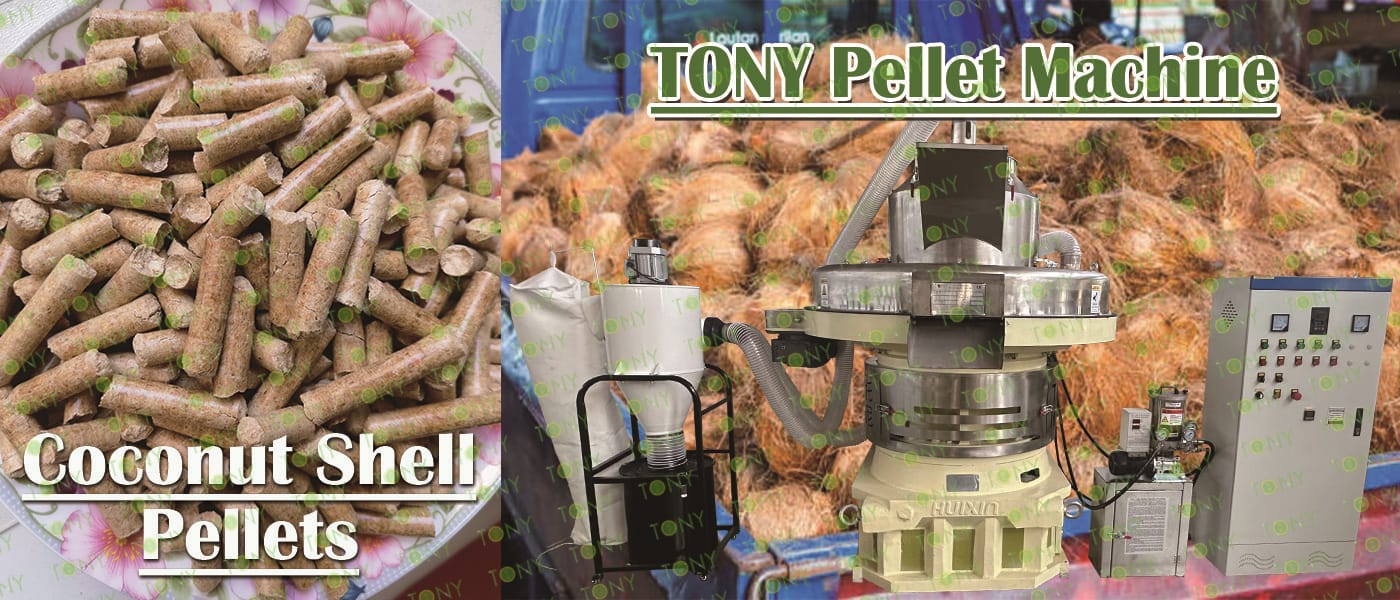
| 1.To Press Dry Coconut Shell Dust Into 6-8mm Biomass Pellets 2.Model: TYJ860-III-220KW*3Sets 3.Capacity:3-4Ton/Hour/Set 4.New 304SS Type |
1.To Cool Pellets From 80-90℃ Into 20-30℃ 2.Model: TCN-10*1Set 3.Capacity:9-10.5Ton/Hour |
1.To Pack Pellets Into 15-50KG/Bags. 2.Model: TPZ-50*1Set 3.Capacity: 9-10.5Ton/Hour |
3D图 图3
1.Coconut Shell Fine Crushing Process:
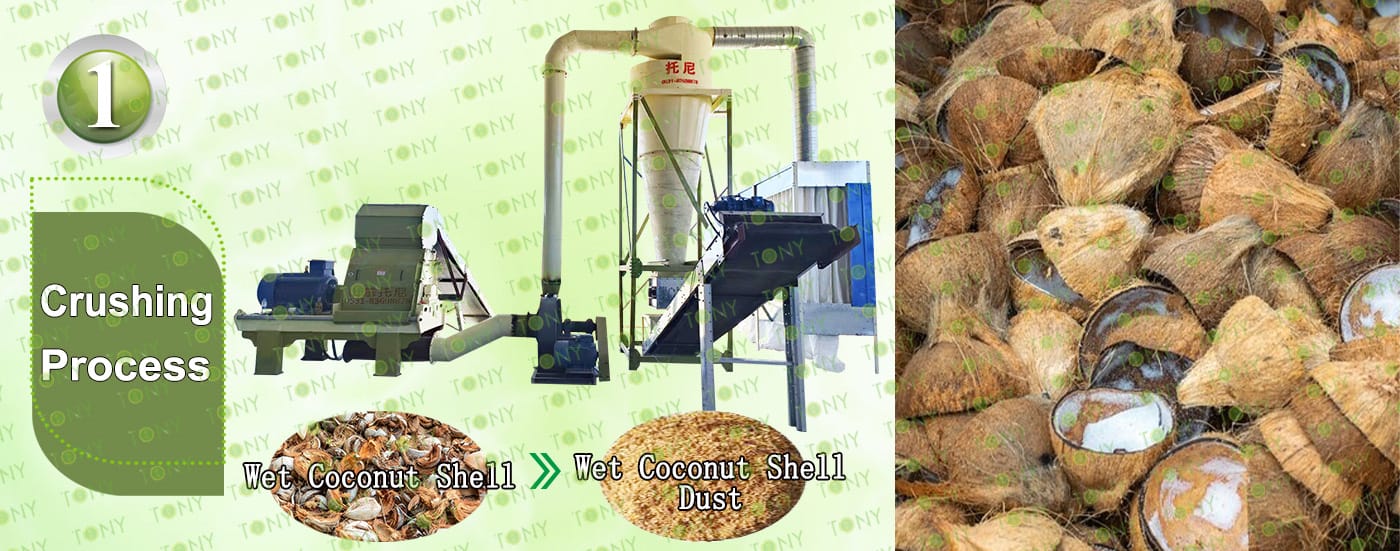
A.This process is mainly used to crush coconut shell into 8-14mm coconut shell dust.
B.Capacity:9-10.5Ton/Hour.
C.TONY brand effective hammer mill TFD75-132-132KW*2sets
Main Parts:
(1)TONY Effective Hammer Mill.
(2)Galvanized Dust Collector.
(3)Sawdust Transportation Fan Blower.
(4)Cyclone With Airlock.
(5)Electrical Cabinets.
2.Coconut Shell Dust Drying Process:
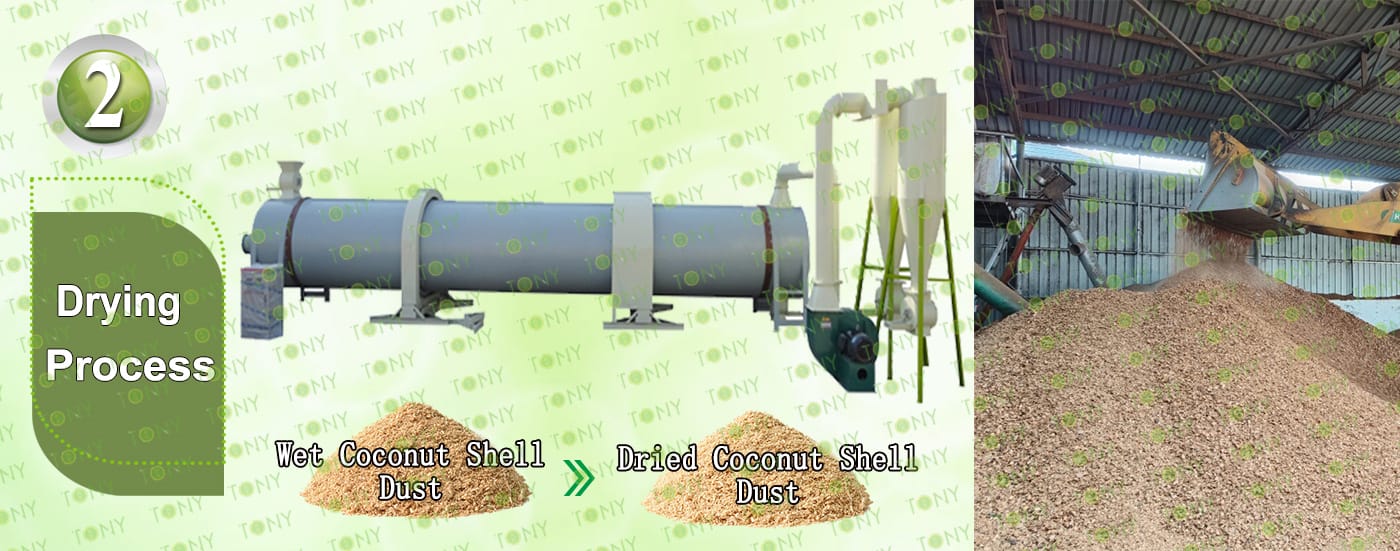
A.This process is mainly used to dry the coconut shell dust from 40-55% to 10-15%.
B.Capacity:9-10.5Ton/Hour.
C.TONY use 1set of 3*24m rotary drum dryer for this process, TONY hot blast stove is made of firebrick pan, shell with H steel plate as the frame. There are 3 layers of fire blocking device inside, which can effectively prevent the fire from entering the tumble dryer.Customers can choose to use waste wood, biomass pellets, natural gas, etc. as fuel for the hot air furnace
TONY dryer use spiral tube material, and is not easy to deform.
Unlike other manufacturers with iron plate splicing welding, very easy to deformation.
Main Parts:
(1)TONY's Rotary Drum Dryer Main Body. (Reducers With Motors and Pips.)
(2)TONY's Hot Stove.
(3)Fan Blower+Cyclone With Airlock.
3.Pelletizing Process:
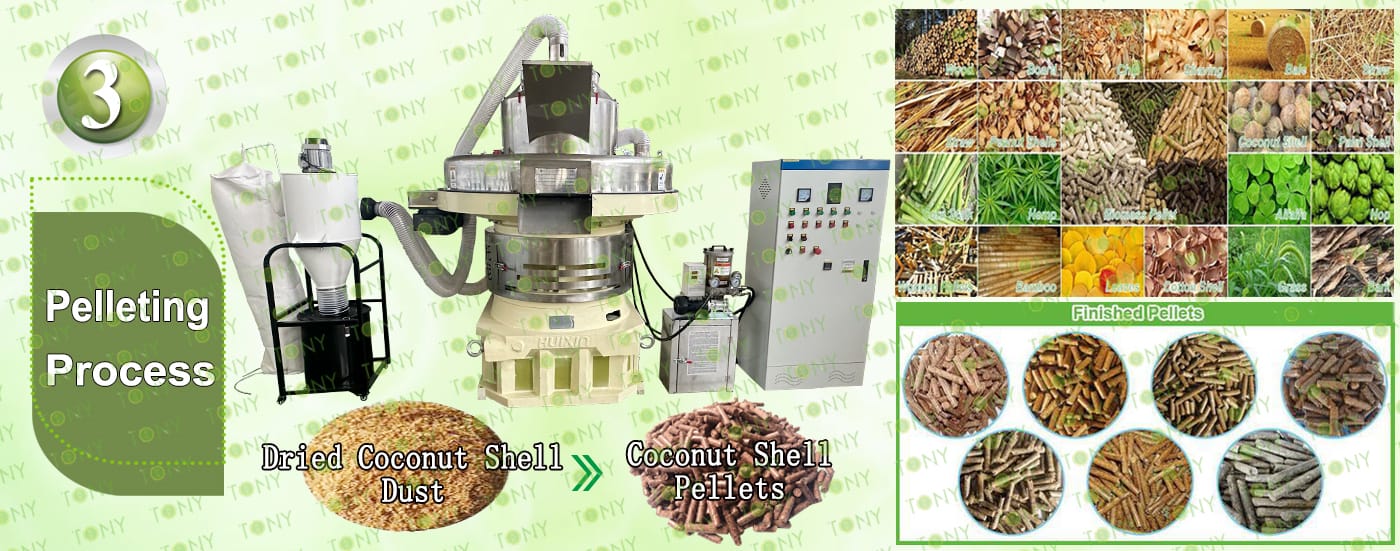
A.This process is mainly used to to product pellets into φ6-8mm.
B.Capacity:9-10.5Ton/Hour.
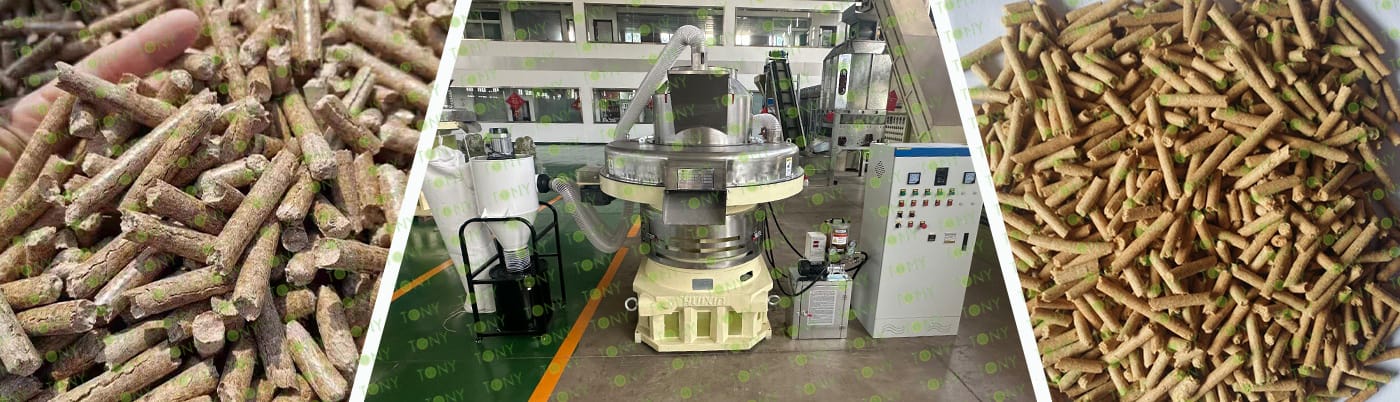
C.TONY brand vertical ring die pellet machine TYJ860-Ⅲ-220KW*3sets
D.Double Screw Cycling Silo is added above the pellet machine, which has the advantages of saving space, saving labor, intelligently controlling the feeding speed, not easy to block the material, and improving production efficiency.
Main Parts:
(1)TONY's New Vertical Ring Die Pellet Machine.
(2)Cyclone And Bags Dust Collectors.
(3)Automatic Lubrication System.
(4)Electrical Cabinets.
You can chose TONY new type SS304 pellet machine
4.Cooling Process:
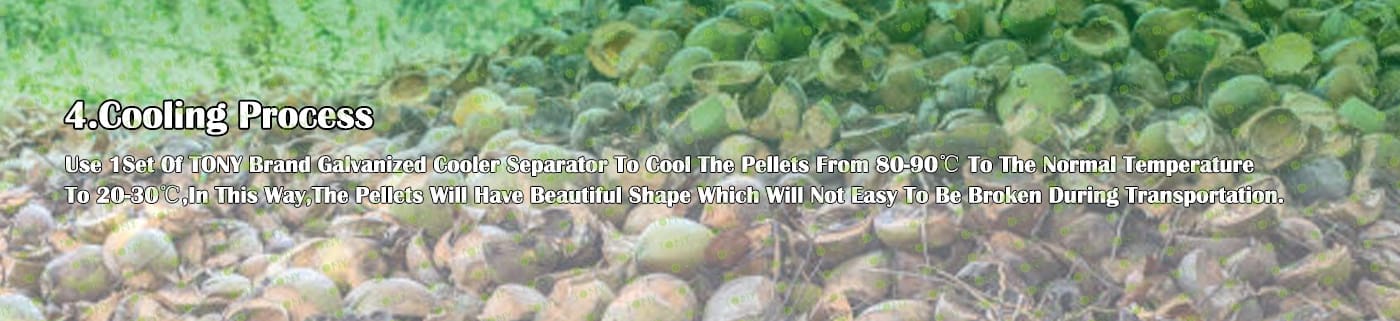
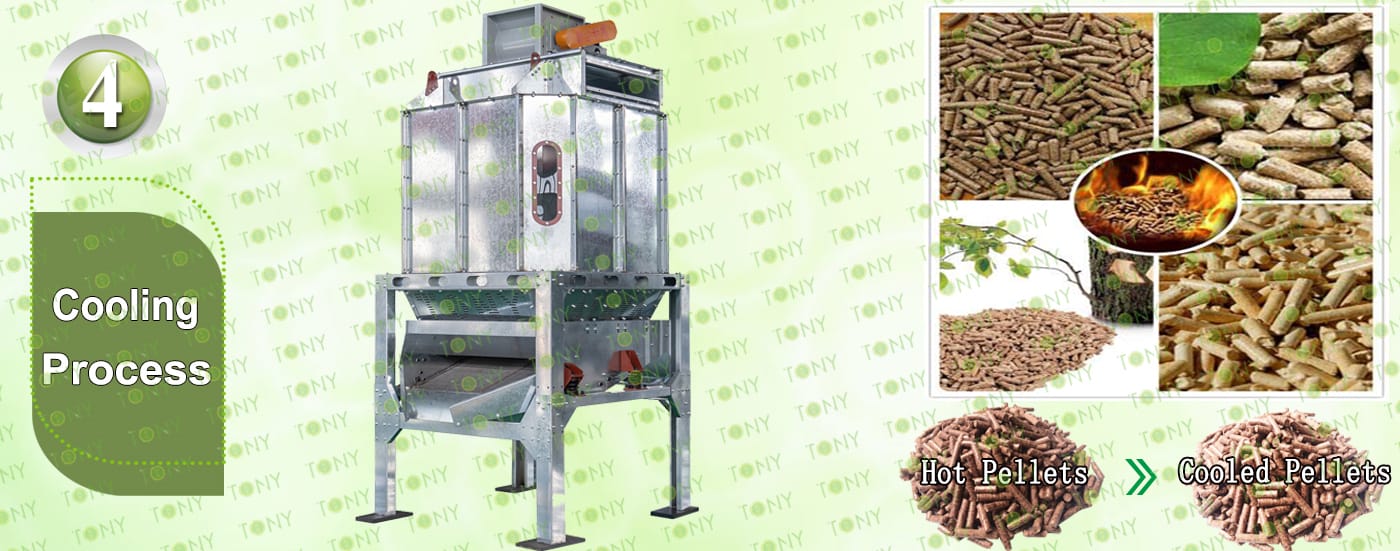
A.This process is mainly used to cool pellets from 80-90℃ to 20-30℃
B.Capacity:9-10.5Ton/Hour.
C.TONY brand galvanized cooler separator*1set
Main Parts:
(1)TONY's Galvanized Cooler Separator With Vibrating Screen.
(2)Cyclone And Bags Dust Collectors.
(3)Fan Blower.
(4)Connect Pipes.
5.Packing Process:
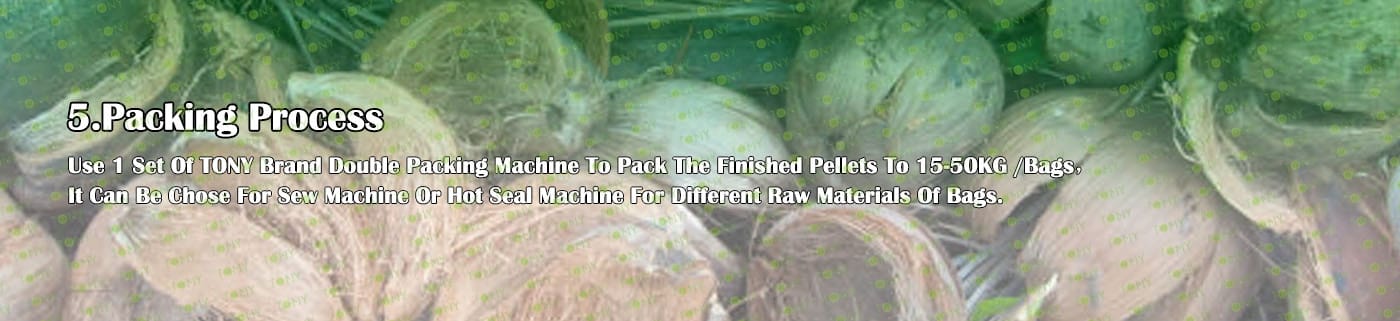
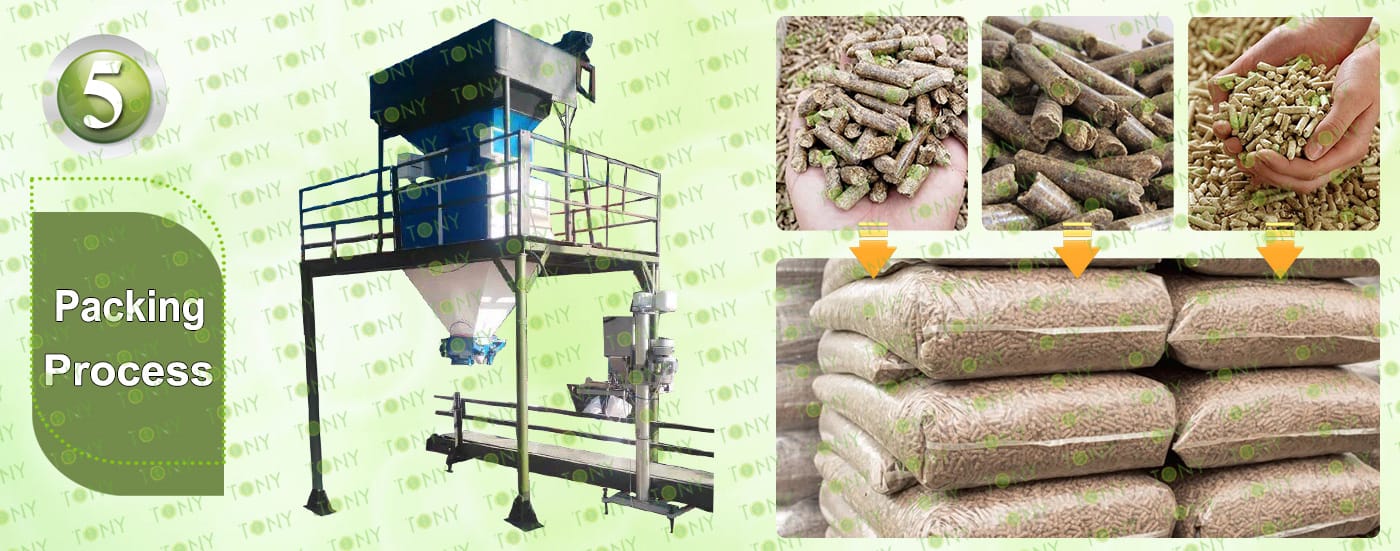
A.This process is mainly used to pack pellets into 15-50kg/bags.
B.Capacity:9-10.5Ton/Hour.
C.TONY double packing machine*1 set
Main Parts:
(1)TONY's Double Packing Machine
(2)Sew Machine, Buyer Can Also Choose Hot Seal Machine For Chosen,To Confirm With Tony For The Price Difference.
(3)Bags Transportation Conveyors.
(4)Feeding Inlet Silo.
(5)Electrical Cabinets.

Core Process of Coconut Shell Biomass Pellet Processing Project
The process is highly standardized and mainly consists of 4 steps, each directly affecting product quality and production capacity.
1.Raw Material Collection and Pre-treatment:
Wet coconut shells (moisture content 40%-60%) are purchased from partners and transported to the equipment via conveyor belt.
2.Crushing and Drying:
The raw materials enter a drum dryer, where hot air (temperature 120-150℃) reduces the moisture content to 15%-20%. They then enter a crusher and are ground into fibrous powder.
3.Pelletizing and Cooling:
The powder enters a pelletizer, where it is compressed under high pressure (die compression ratio) to form pellets with a diameter of 8-12mm. The pellets are then cooled from 60-80℃ to room temperature using a cooler to prevent clumping.
4.Screening and Packaging:
The cooled pellets are screened by a vibrating screen to remove broken particles. Qualified pellets are automatically packaged into bags (usually 25kg/bag) and stored in the finished product warehouse for sale.
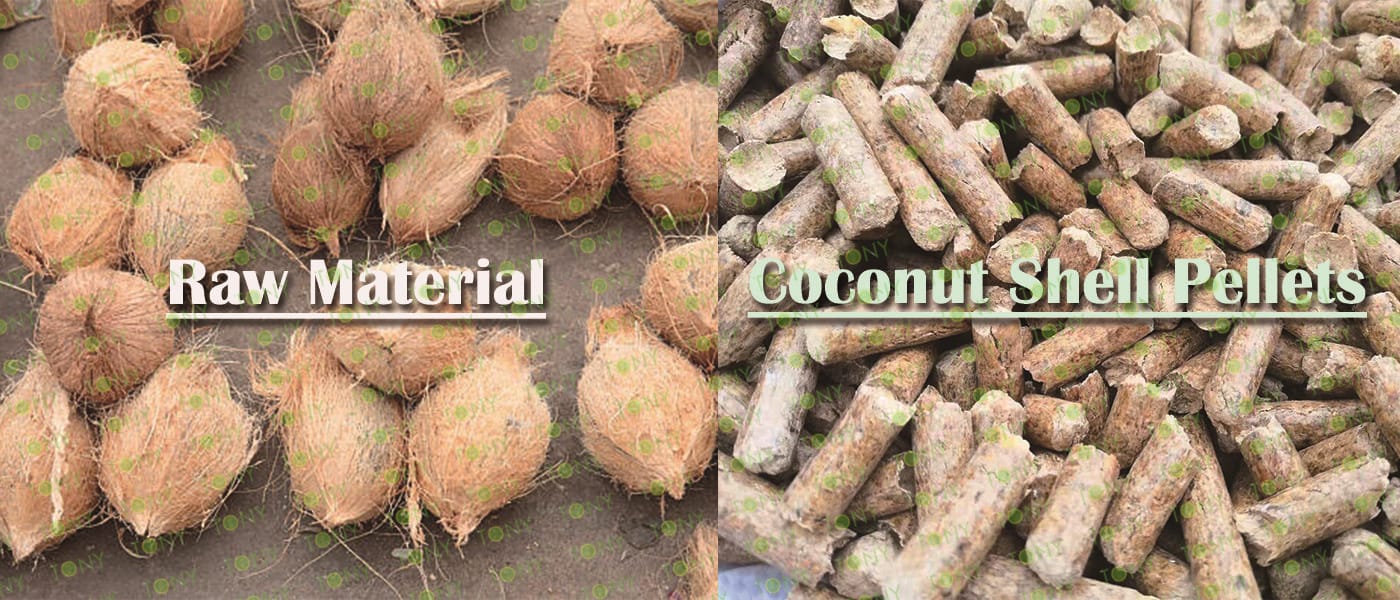
When used as fuel, coconut shell pellets offer excellent combustion performance suitable for small to medium-sized heating and power generation needs. Their core advantages lie in their calorific value and combustion stability.
1.High and sustained calorific value:
The lower heating value of the pellets after molding is approximately 18-22 MJ/kg, close to that of medium-quality coal (approximately 20-25 MJ/kg). The flame is stable and the heat release is uniform during combustion, making it suitable for continuous heating applications.
2.Complete combustion and low residue:
Coconut shell fibers burn more completely after compression, resulting in an ash content of only 2%-5%, far lower than that of raw coal (typically above 10%). This reduces the frequency of slag cleaning and the amount of solid waste requiring treatment.
3.Low moisture content:
The moisture content of the processed pellets is controlled at 10%-15%, avoiding heat loss due to excessive moisture during combustion and improving thermal efficiency.

2025 Tony Machinery - All Rights Reserved. Map