




















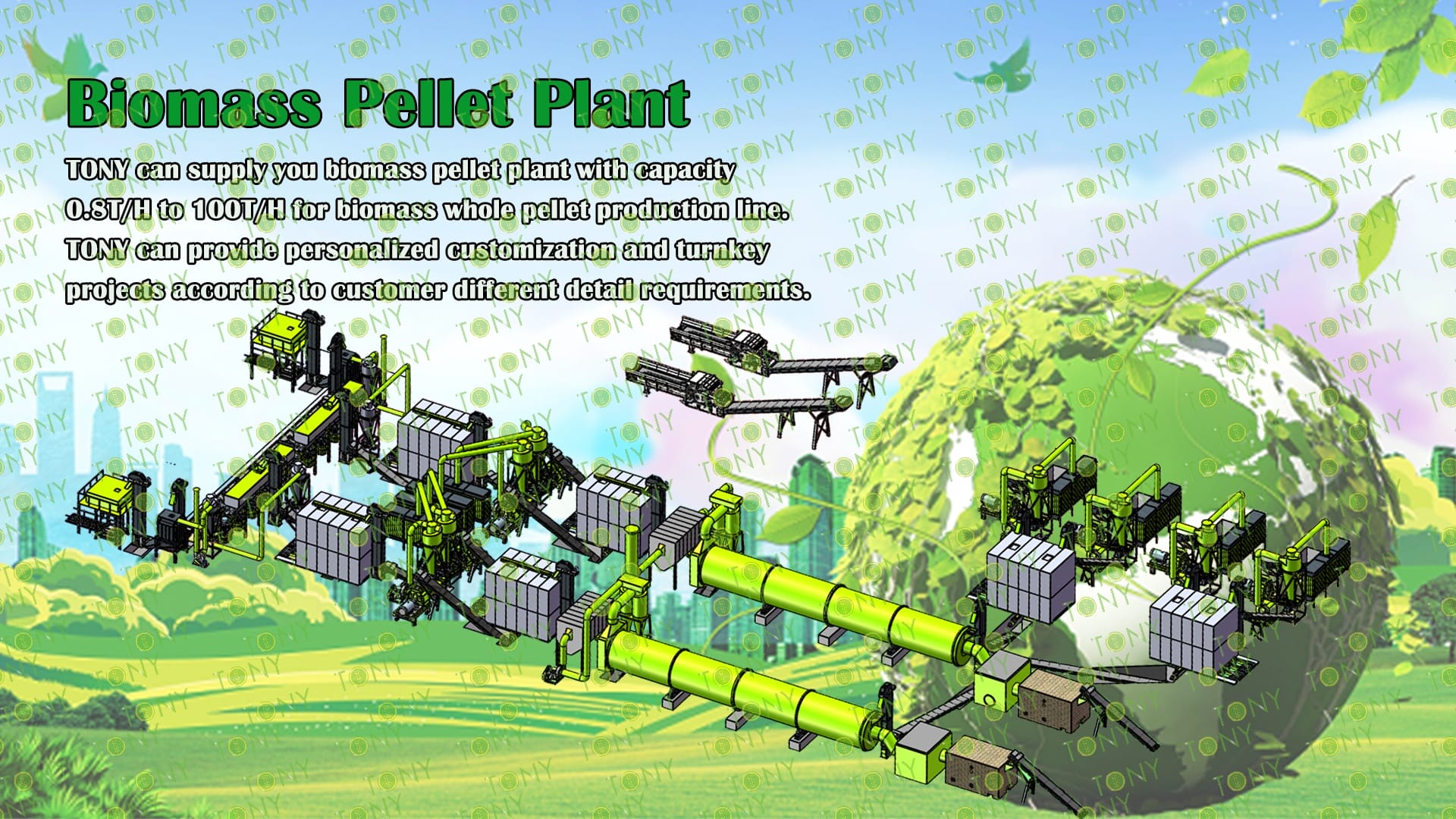
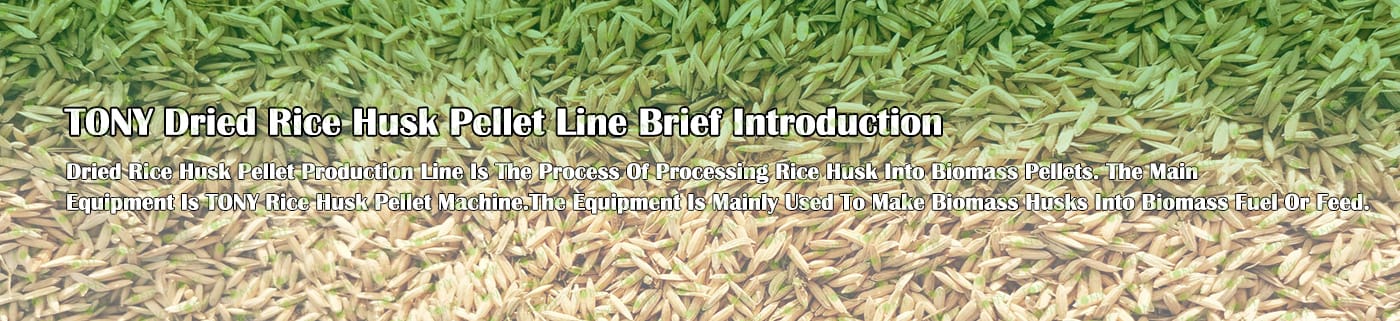
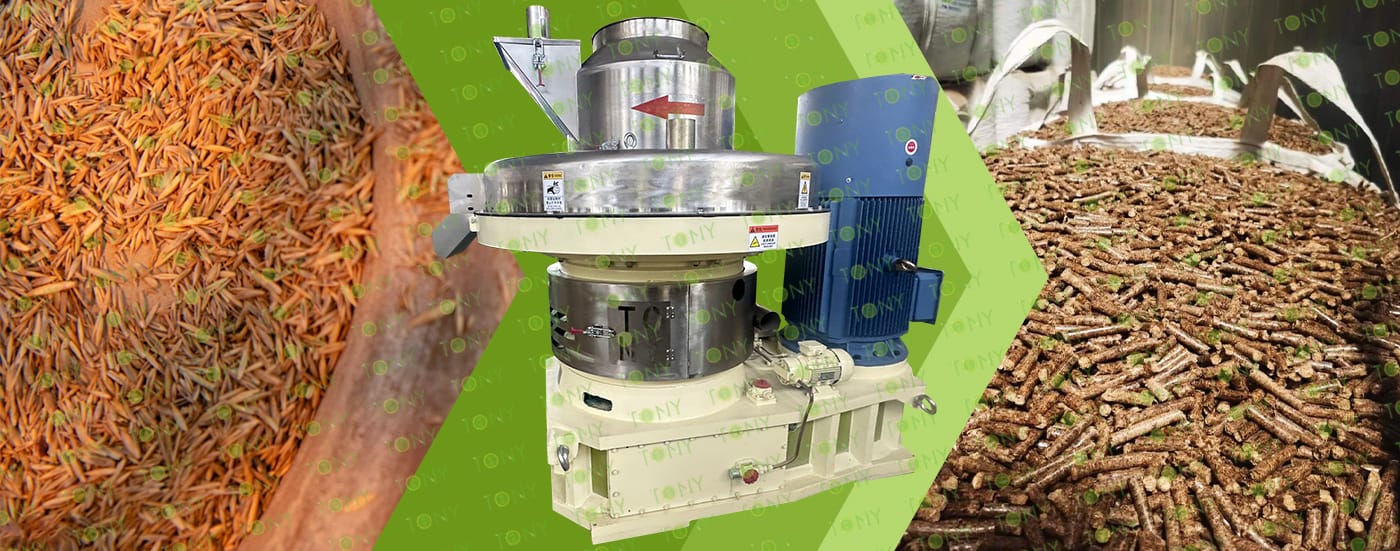
1.The working principle of dried rice husk biomass pellet processing equipment
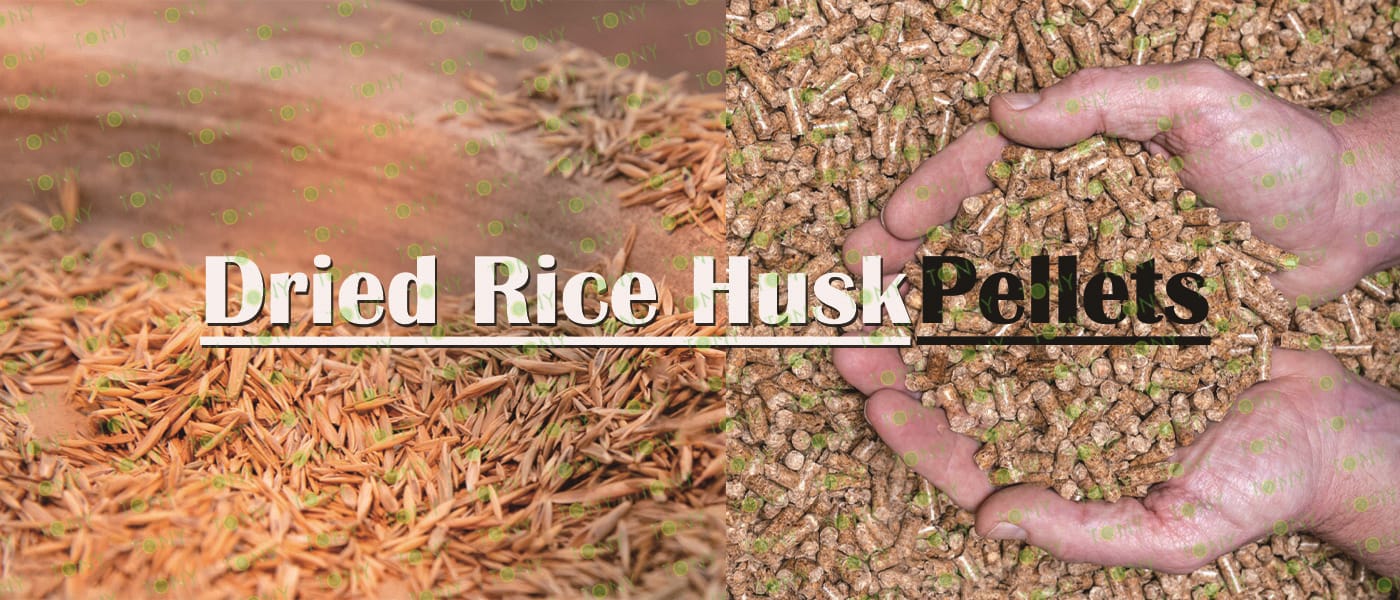
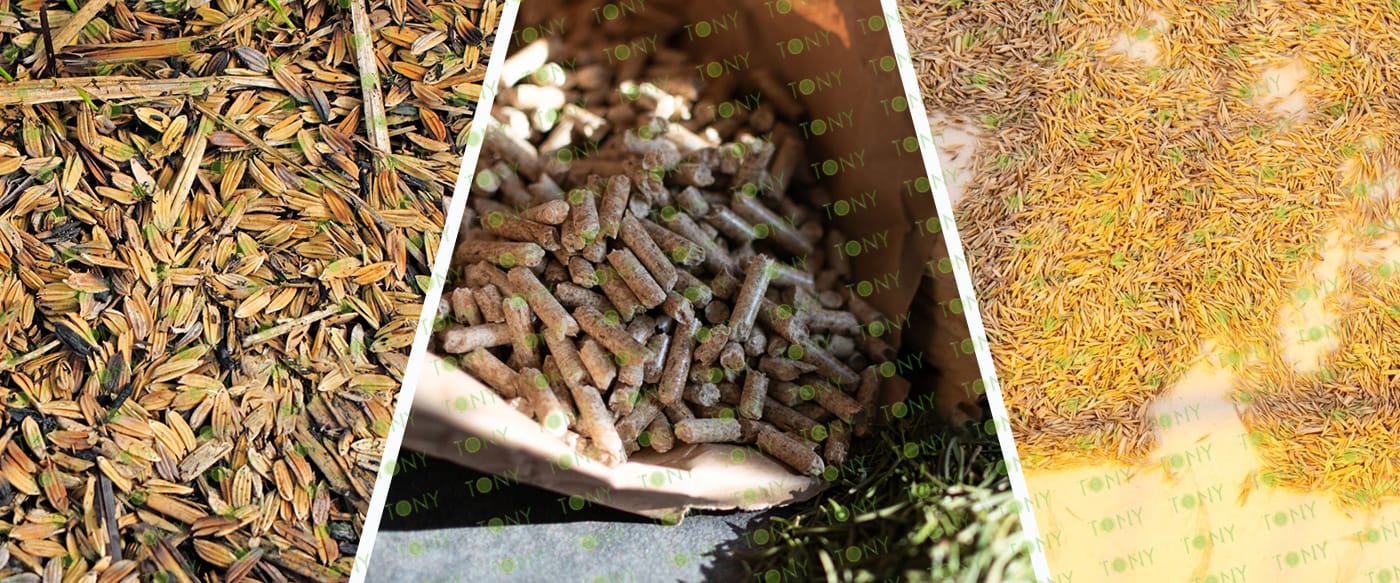
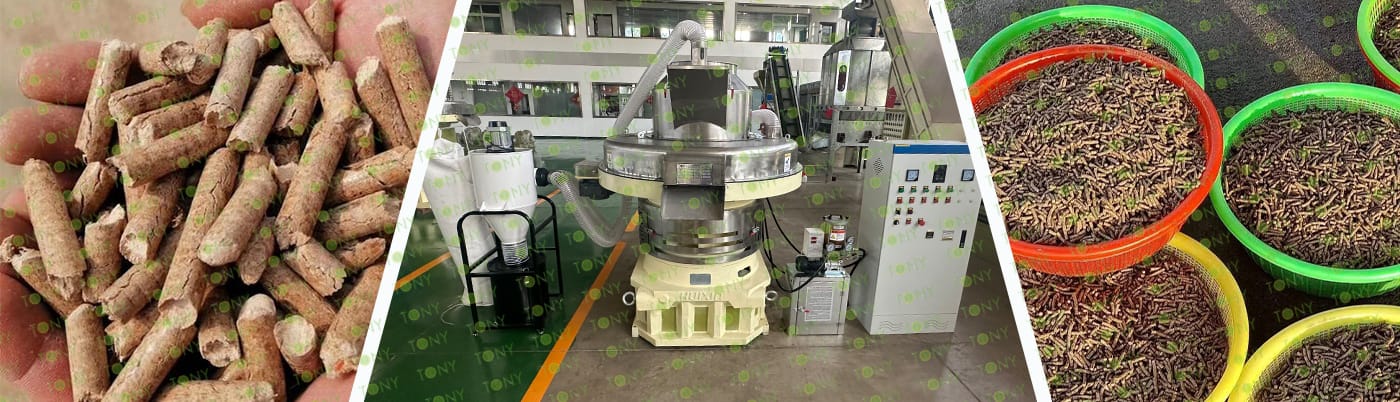
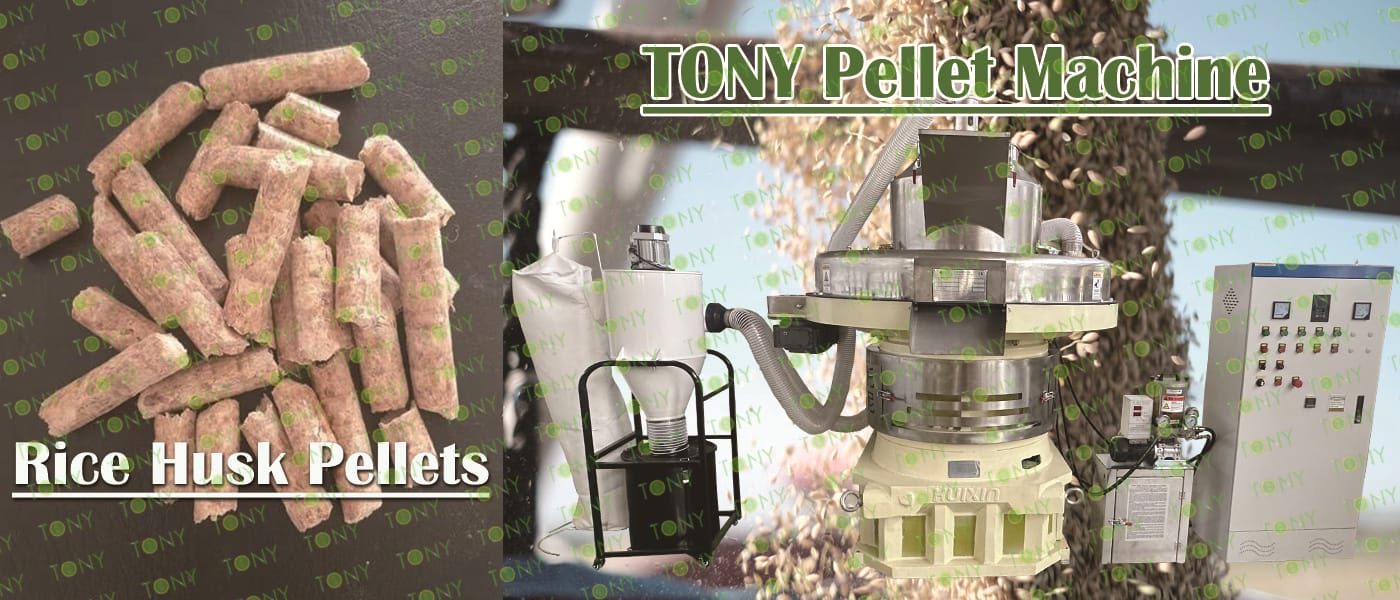
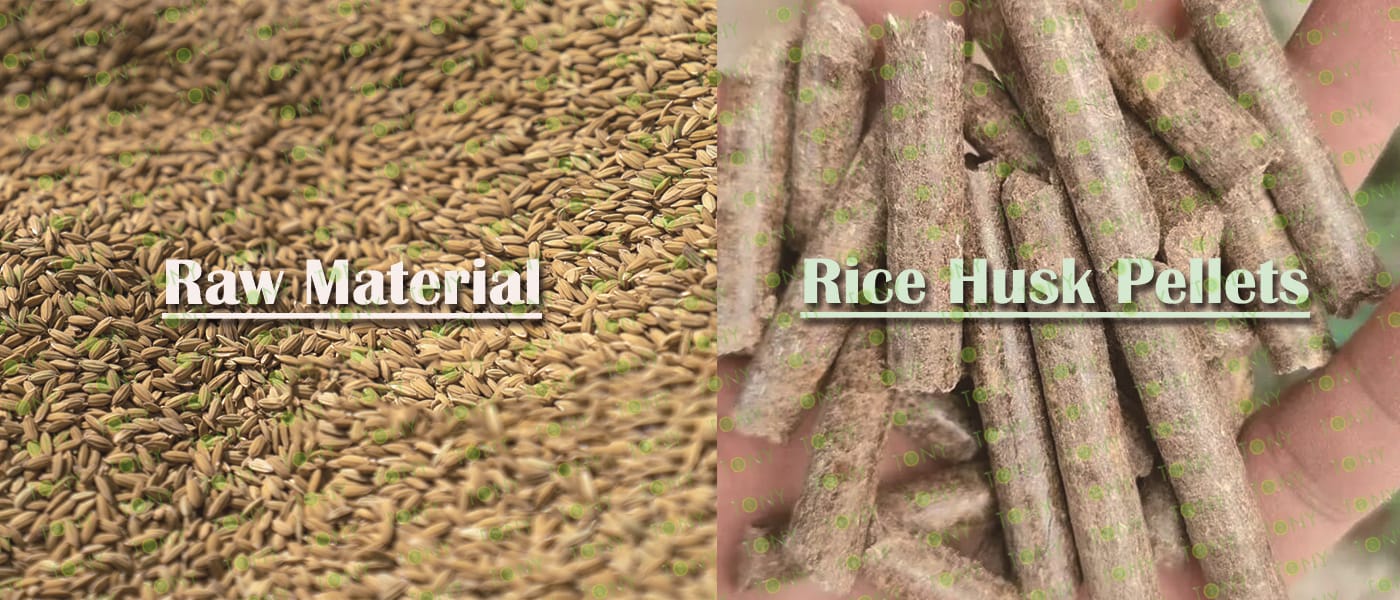
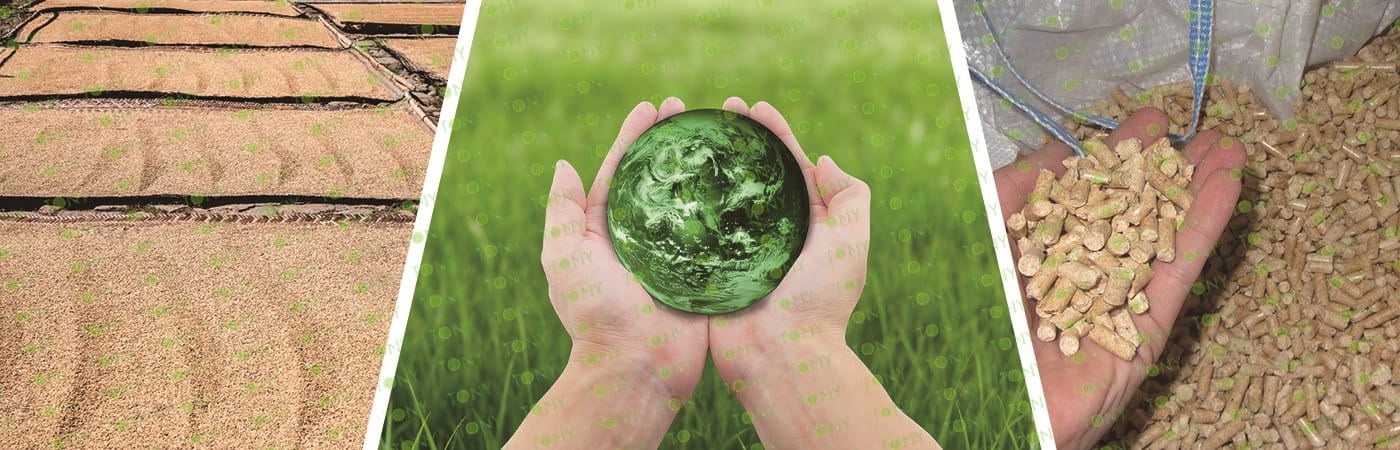
The main equipment of rice husk pellet pressing is biomass pellet machine. The processing process of rice husk particles is relatively simple, and the dry rice husk is pressed into rod particles by biomass pellet machine. The finished Product has high particle density, can be burned, high calorific value, low ash content, and is often used as fuel instead of coal
2.Characteristics of dried rice husk biomass pellet processing equipment
(1)High efficiency:TONY biomass pellet machine unique design, is high efficiency, large capacity output.
(2)High quality pellet machine: The biomass pellet machine produced by Tony has solid work, stable operation and service life.
(3)The equipment has a high degree of automation, reduces manual operation, not only saves labor costs, but also can achieve efficient production.
(4)The applicability of raw materials is stronger, many raw materials can be pressed biomass particles, only need to replace the mold and other accessories can truly achieve "one machine multi-purpose"
3.Application scenarios of dried rice husk biomass pellet processing equipment
(1)Domestic heating and living energy, clean, pollution-free, easy to store and transport;
(2)Industrial boiler and kiln fuel, instead of coal and gas, to solve environmental pollution;
(3)Can be used as a fuel for gasification power generation and thermal power generation to solve the problem of shutting down small thermal power plants;
(4)It can also be used as feed for livestock in large farms for easy storage and transportation.
TONY Brand 32-40TPH Dried Rice Husk Pellet Line can process dried rice husk and various biomass materials into biomass pellets. The core of the rice husk biomass pellet production line is to take advantage of the characteristics of rice husks—lightweight, high in silicon, and low in agglomeration—and transform agricultural waste rice husks into standardized biomass fuel through customized pretreatment and pelleting processes. This fuel is widely applicable to rice-growing areas and energy demand scenarios.The core significance of the rice husk biomass pellet production line is to realize the resource utilization, reduction and low-carbon utilization of rice husk waste, which not only solves the problem of agricultural solid waste pollution, but also provides a clean option for energy structure transformation, and has economic, environmental and social value.
1. Capacity: 32-40Ton/Hour
2. Raw materials: Dried rice husk
3. Moisture: About 10-15%
4. Application: All kinds of biomass materials suitable for pellet production.
Suitable customers:Green energy companies, large farms, private growers and other customers with advantages in raw materials.
5. Finished Pellets Markets:Large power plants, domestic heating, industrial heating, combustion heat, heating heating, boiler room, school canteen, foundry heat source.
1. Project Name: Dried Rice Husk Pellet Production Line
2. Raw Material: Dried rice husk
3. Moisture Content of Raw Material:10-15%
4. Capacity: 32-40TPH
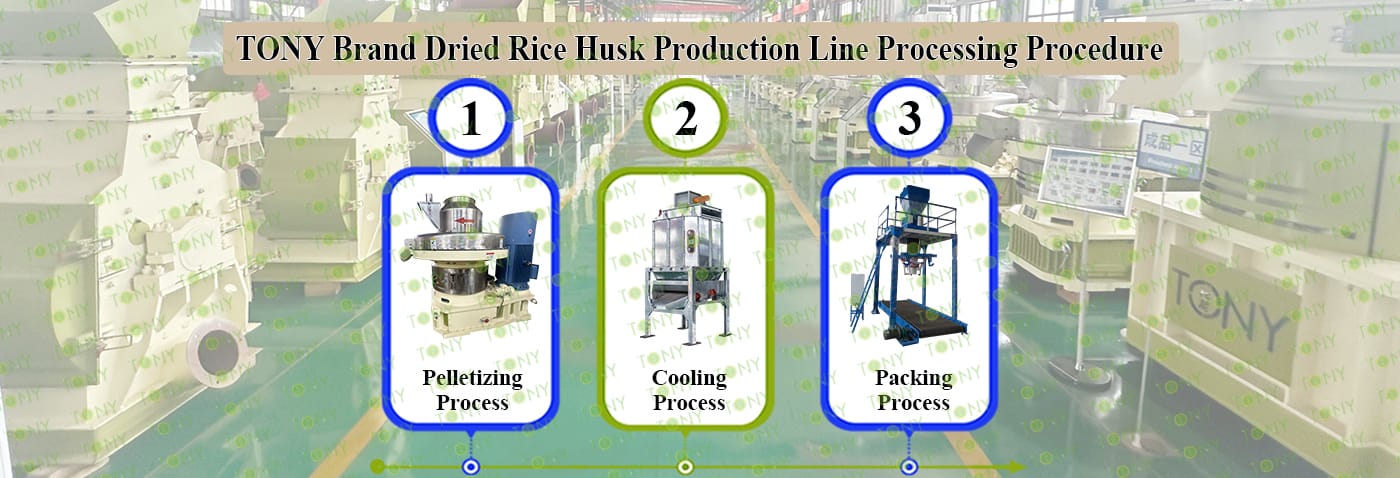
5. Process: Pelletizing Process - Cooling Process - Packing Process
6. Main Equipment: TONY Pellet Machine-TYJ860-III-280KW, Galvanized Pellets Cooler, Ton Packing Machine and Belt Conveyors

|
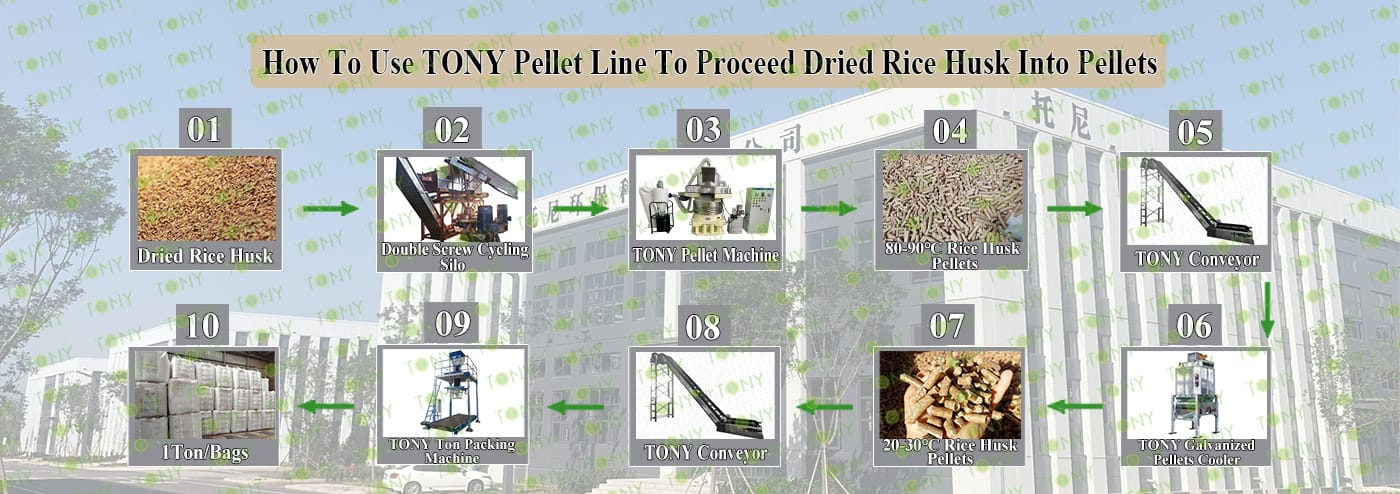
How To Use TONY Pellet Line To Proceed From Dried Rice Husk Into Pellets? It mainly contains the following steps and machines as following: 1.Use TONY vertical ring die pellet machine to products pellets with φ6-8mm. 2.Use TONY galvanized pellets cooler to cool pellets from 80-90℃ to 20-30℃. 3.Use TONY ton packing machine to pack the pellets into 1 ton/bags. You can contact TONY to get for more details information and quotation. TONY can supply you all the products as above with competitive price and excellent quality. |
|
|||||||||||||||||||||||||||||||||||

| Next, TONY Will Introduce To You All The Necessary Machinery That Will Be Used For The Whole Pellet Production Line. Some Machines Can Be Custom - Made By Customers According To Different Customers' Detailed Demands. Contact TONY For More Details, Including Quotation And Layout. | |||
 |
 |
 |
 |
| Double Screw Cycling Silo | Vertical Ring Die Pellet Machine | Galvanized Pellets Cooler | Ton Packing Machine |
| 1.To Storage Rice Husk Before Pellet Machine; Adjust The Speed Of Rice Husk Entering The Pellet Machine 2.Model: TLC-50*2Sets 3.Capacity:16-20Ton/Hour/Set |
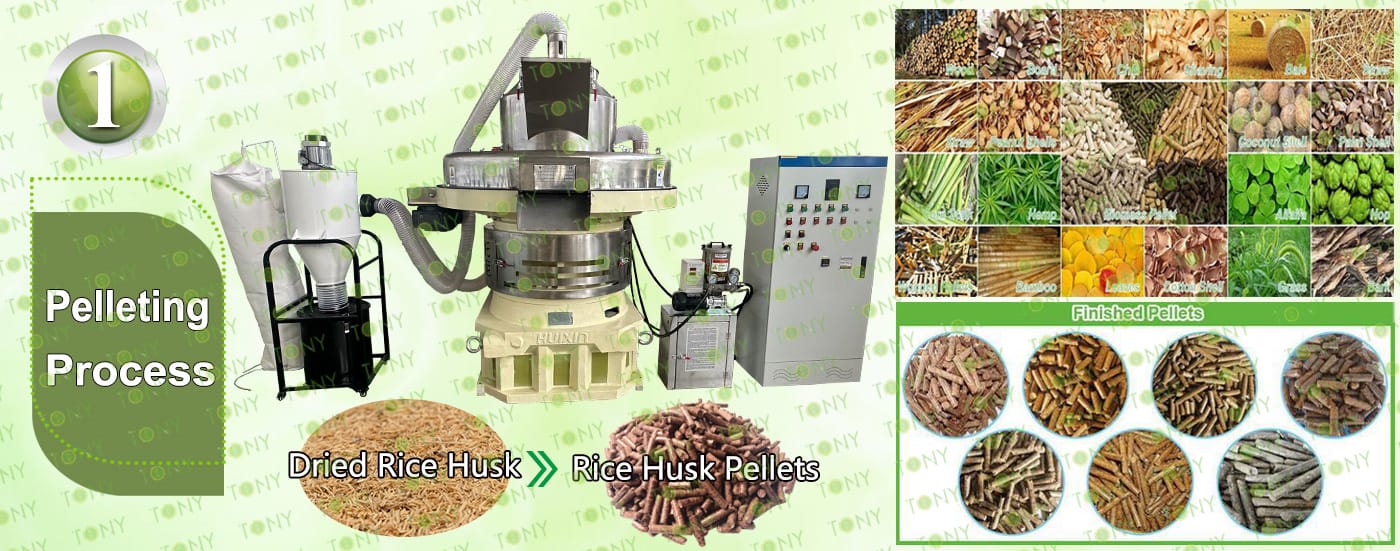
1.To Press Rice Husk Into 6-8mm Biomass Pellets 2.Model: TYJ860-III-280KW*8Sets 3.Capacity:4-5Ton/Hour/Set 4.New 304SS Type |
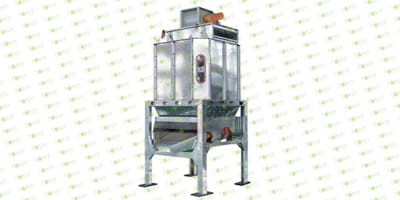
1.To Cool Pellets From 80-90℃ to 20-30℃ 2.Model:TCN-10*2Sets 3.Capacity:32-40Ton/Hour |
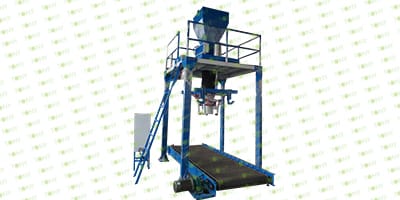
1.To Pack Pellets Into 1 Ton/Bags. 2.Model: TBD* 2 Sets 3.Capacity:32-40Ton/Hourr |
1.Pelletizing Process:
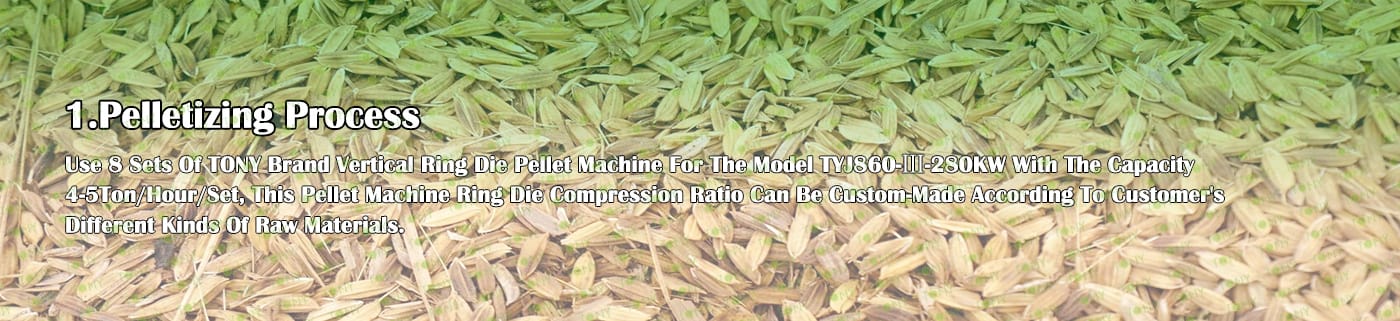
A.This process is mainly used to products pellets with φ6-8mm.
B.TONY brand vertical ring die pellet machine TYJ860-Ⅲ-280KW *8sets
C.Capacity:32-40tons/hour.
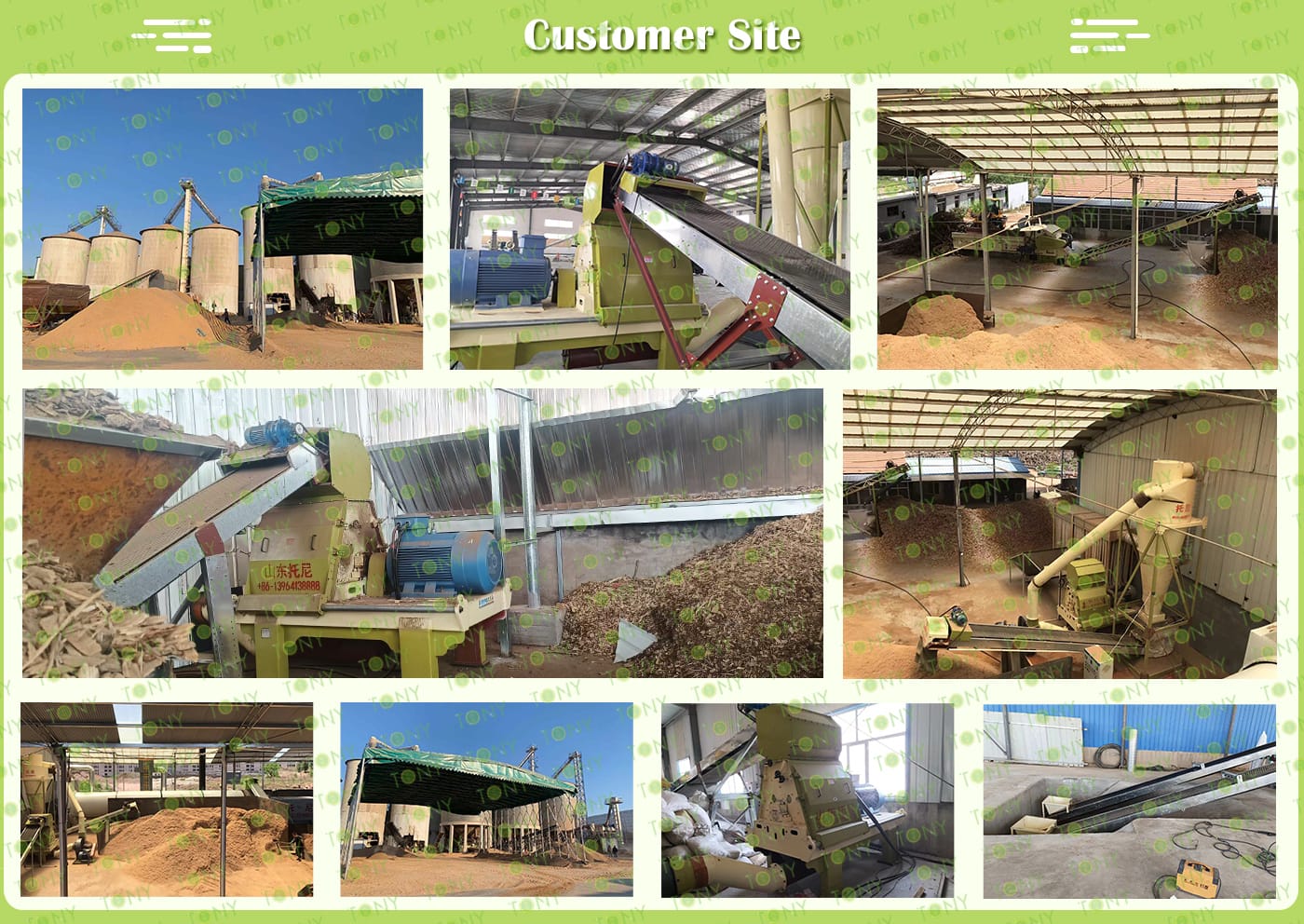
D.Double Screw Cycling Silo is added above the pellet machine, which has the advantages of saving space, saving labor, intelligently controlling the feeding speed, not easy to block the material, and improving production efficiency.
Main Parts:
(1)TONY New Vertical Ring Die Pellet Machine.
(2)Cyclone And Bags Dust Collectors.
(3)Bearings Automatic Lubrication System.
(4)Electrical Cabinets.
For more equipment details and information, you can contact TONY

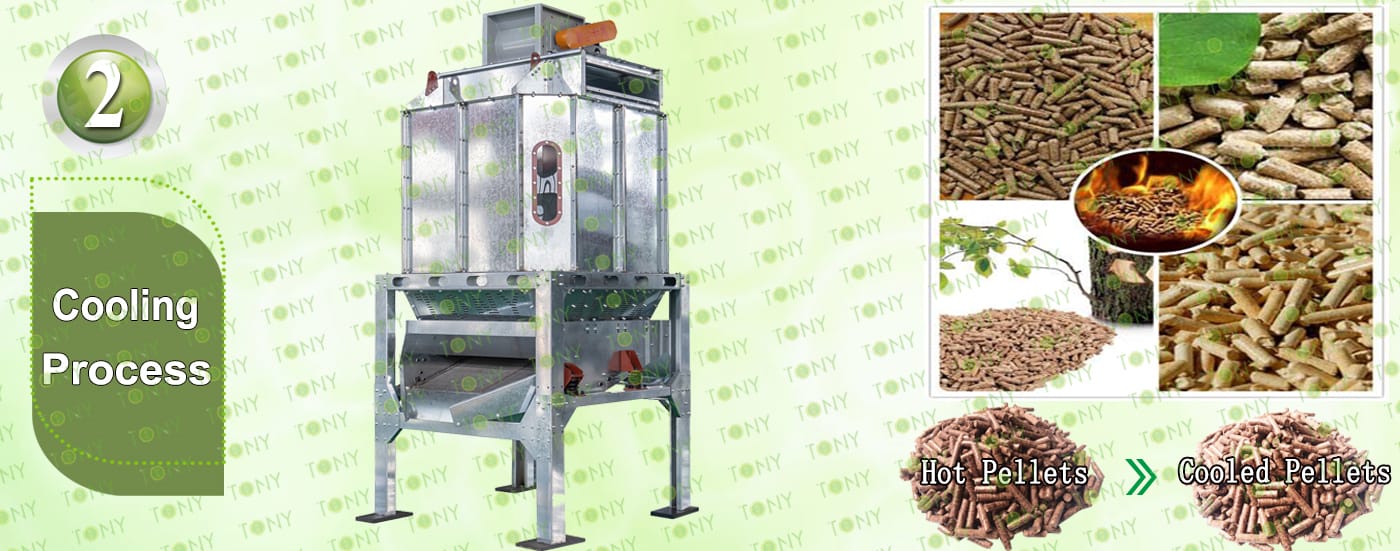
2.Cooling Process:
A.This process is mainly used to cool pellets from 80-90℃ to 20-30℃
B.TONY brand galvanized pellets cooler*2sets
C.Capacity:32-40tons/hour.
Main Parts:
(1)TONY's New Galvanized Pellets Cooler Separator With Vibrating Screen.
(2)Cyclone and bags dust collectors.
(3)Fan Blower.
(4)Connect Pipes.

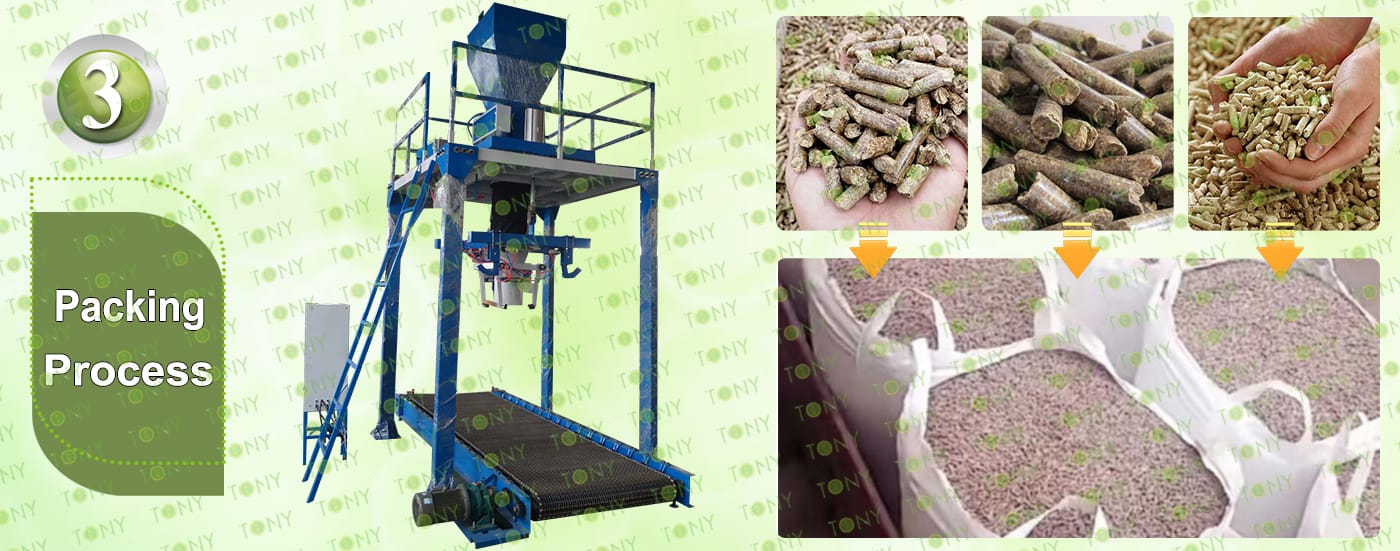
3.Packing Process:
A.This process is mainly used to pack pellets into 1ton/bags.
B.Capacity:32-40tons/hour.
C.TONY band ton packing machine*2 sets
Main Parts:
(1)TONY Ton Packing Machine
(2)Electronic Platform Scale Metering System
(3)Automatic Tare, Zero, and Drop Correction Functions
(4)Feeding System Features Fast, Medium, and Slow Feeding Speeds to Ensure Measuring Accuracy

1.Environmental Protection Demand Drives Market Development
(1)Global Environmental Awareness:As the global emphasis on environmental protection continues to increase, countries are actively seeking renewable and clean energy to replace traditional high-polluting energy. As a kind of clean energy, rice husk biomass pellets have significant environmental advantages. Its harmful gas emissions generated in the combustion process are much lower than traditional coal and other fuels, in line with environmental requirements, in the context of increasingly strict environmental policies, its market demand is expected to continue to grow.
(2)Tackling Climate Change:Reducing greenhouse gas emissions is the key to the global response to climate change. Using rice husks to produce biomass pellet fuel can effectively reduce the dependence on fossil fuels, thereby reducing carbon emissions. This makes rice husk biomass pellets have broad market application prospects under the general trend of global carbon emission reduction.
2.Growing Energy Demand Brings Opportunities
(1) Multi-Sector Energy Demand:The demand for energy in industry, agriculture, construction and other fields continues to increase. On the industrial side, many enterprises require a large amount of heat energy for production processes, and rice husk biomass pellets can serve as a stable source of energy supply. In the field of agriculture, rice husk biomass particles can also be used in the heating and drying operations of some agricultural facilities. In addition, in terms of residents' lives, with the improvement of living standards, the demand for clean heating and cooking fuels is also growing, and rice husk biomass pellets can meet some of this demand, and its market size is expected to expand with the growth of energy demand.
(2) Diversity Of Energy Supply:Rice husk biomass pellets complement the diversity of energy supply. In some areas, there may be insufficient supply of traditional energy or a single energy structure. As a locally available energy resource, rice husk biomass pellets can improve the stability and diversity of local energy supply and reduce dependence on external energy sources.
3.Abundant Raw Materials And Low Cost
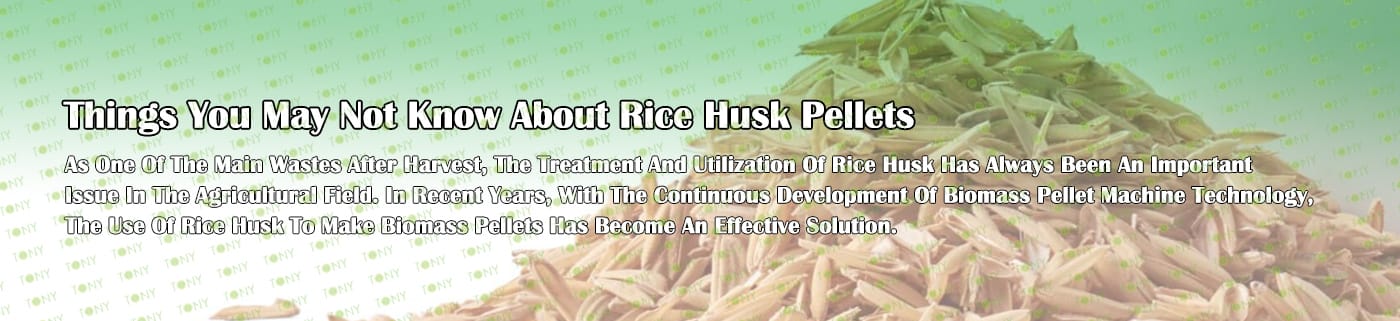
(1)Wide Source Of Raw Materials:Rice husk is a by-product of rice processing, and the source is very wide. China is a big rice producing country, which produces a large number of rice husks every year. This rich supply of raw materials provides a solid material basis for the large-scale production of rice husk biomass pellets, which can ensure a stable production supply and meet market demand.
(2)Relatively Low Cost:ince rice husk is a waste of rice processing, its acquisition cost is relatively low. In the production of rice husk biomass pellets, the relatively low raw material cost helps to improve the competitiveness of the product, which can be provided to users at a more favorable price in the market, attracting more consumers to choose rice husk biomass pellets, and further expanding the market share.
Advantages of Rice Husk Pellets
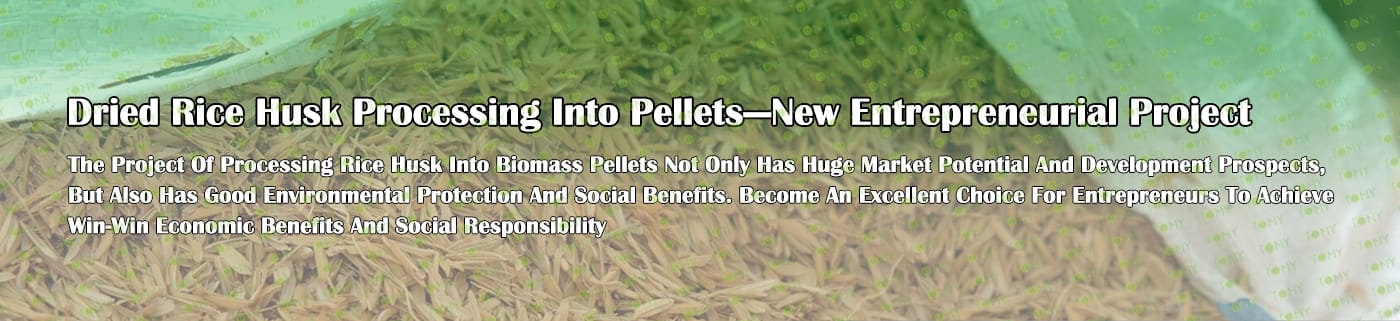
Processing rice husks into biomass pellets offers numerous advantages in environmental protection, economic and social development, and energy structure, and also provides excellent combustion performance. The main advantages are as follows:
1.Calorific Value and Combustion Residue
The calorific value and ash content of rice husk pellets after combustion are about 10% lower than that of medium-quality coal. However, rice husk pellets can burn completely under normal operating conditions. Coal, on the other hand, cannot burn completely, leaving a residue containing 10% to 15% combustible components. Therefore, in practical applications, the effective calorific value of both is comparable.
2.Combustibility
Rice husk pellets are more easily combusted than coal, igniting faster and significantly reducing the ignition time required for combustion.
3.Solid Emissions
The solid emissions from rice husk pellets are far lower than those from coal. This not only reduces slag treatment costs but also reduces environmental pollution. The solid emissions from biomass pellet combustion are mainly ash, accounting for approximately 0.4% to 7.0% of the total weight. In contrast, coal combustion produces a mixture of ash, alkaline earth, and unburned coal, accounting for approximately 25% to 40% of the total weight.
4. Air Pollution and Corrosio
Air pollution and boiler corrosion caused by coal are far greater than those caused by biomass pellets. Coal smoke contains a large amount of particulate carbon as well as toxic and corrosive gases such as sulfur dioxide and carbon monoxide. Sawdust biomass pellets are mainly composed of hydrocarbon organic matter, and their flue gas does not contain particulate carbon or sulfur dioxide. Instead, it is mainly composed of volatile hydrocarbon gases, with almost no sulfur dioxide or carbon monoxide. The smoke produced during combustion is lower than the Ringelmann Class I standard, significantly reducing air pollution and carbon dioxide emissions. Wood biomass pellets are internationally recognized as a "clean fuel."
5.Cost and Time Savings
Using biomass pellets as boiler fuel can save costs and time compared to coal. For example, for a 0.5-ton boiler, using rice husk biomass pellets can reduce costs by 11% and time by 34%. For example, compared to coal-fired power generation, a 0.5-ton boiler can reduce fuel costs by 10% and time by 16%. 6. Sustained Combustion: Rice husk biomass pellets typically burn 8 to 10 times longer than loose, soft materials, maintaining a stable and continuous combustion state, thus ensuring a more reliable energy supply.



2025 Tony Machinery - All Rights Reserved. Map