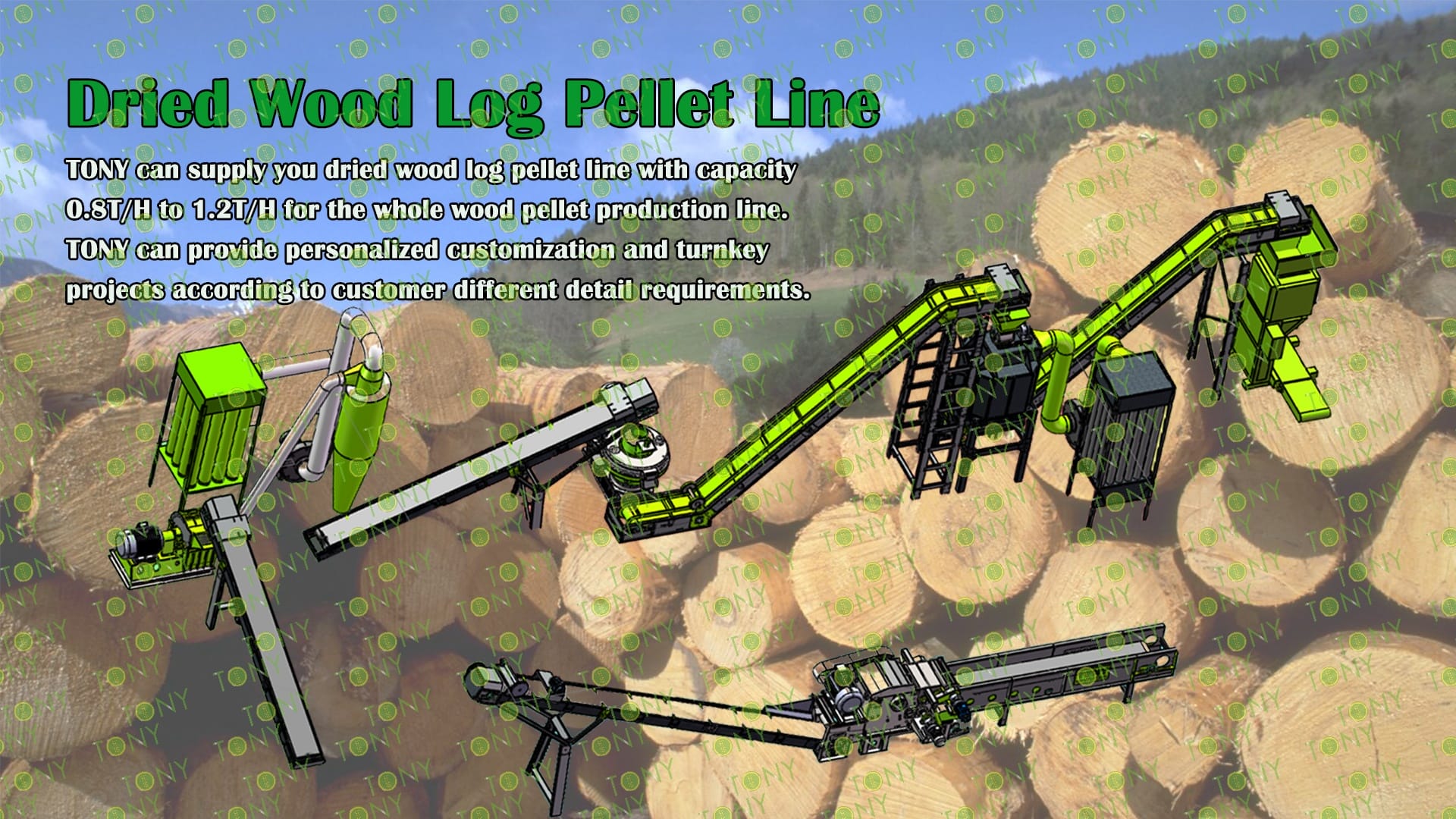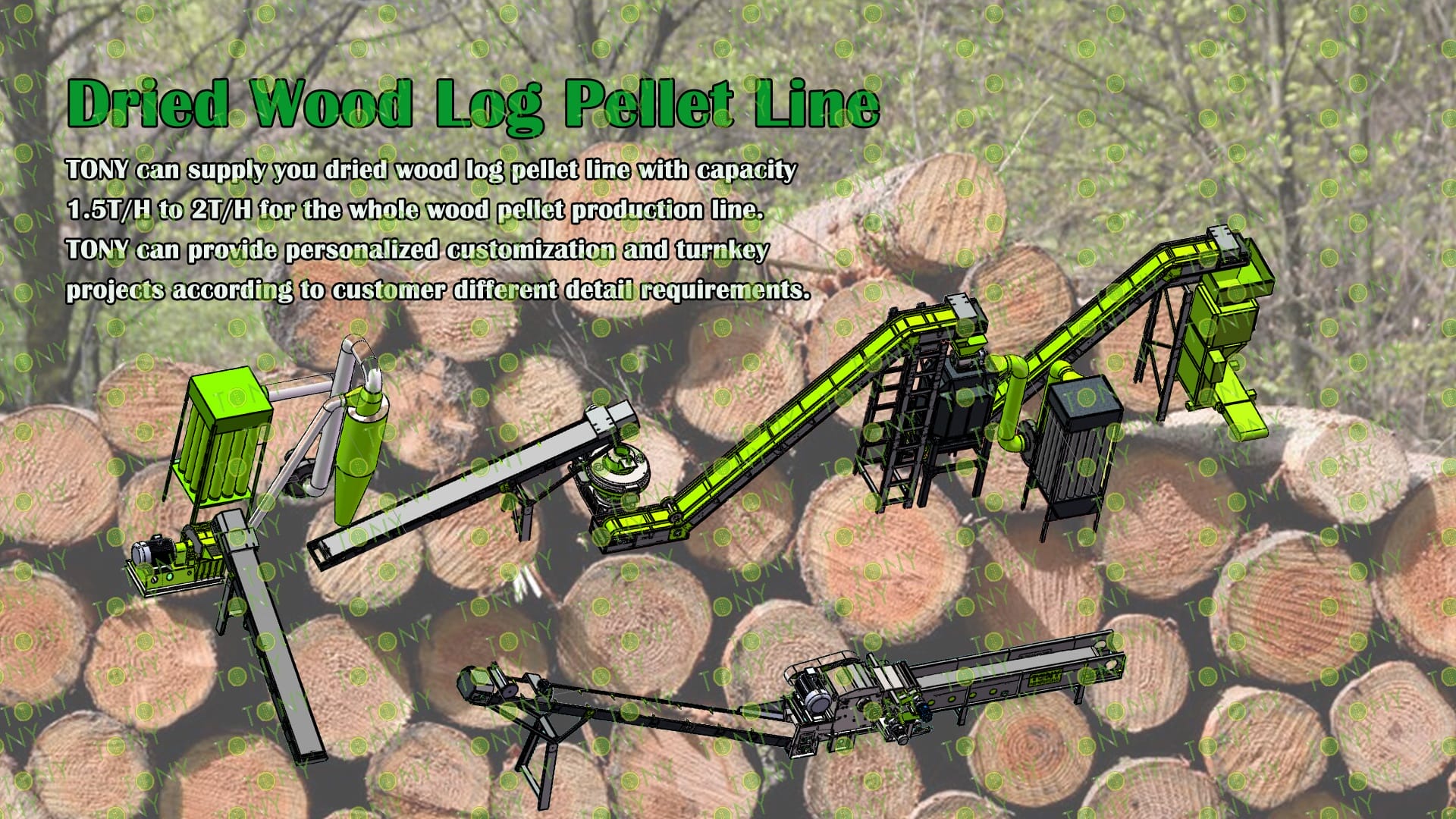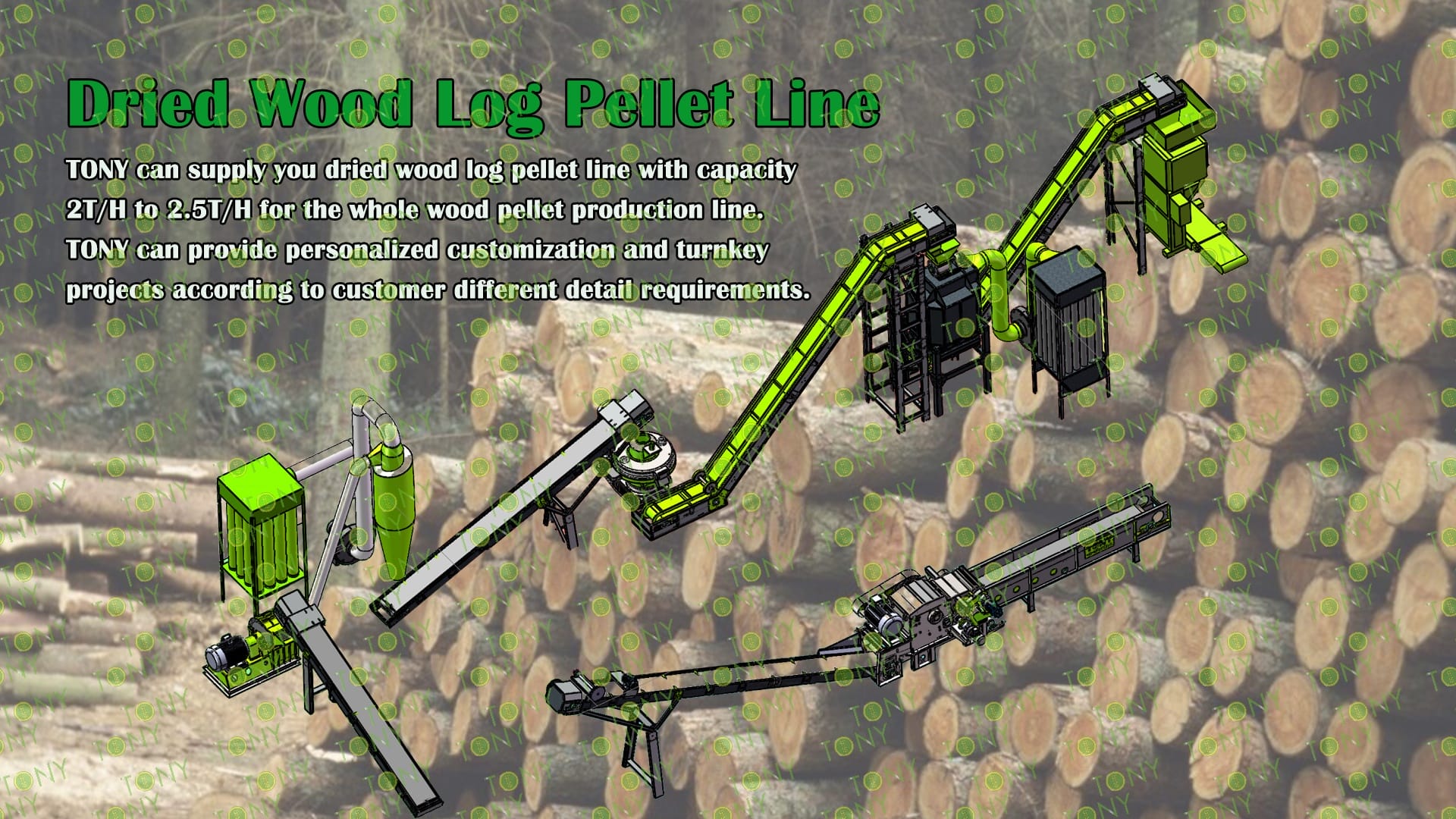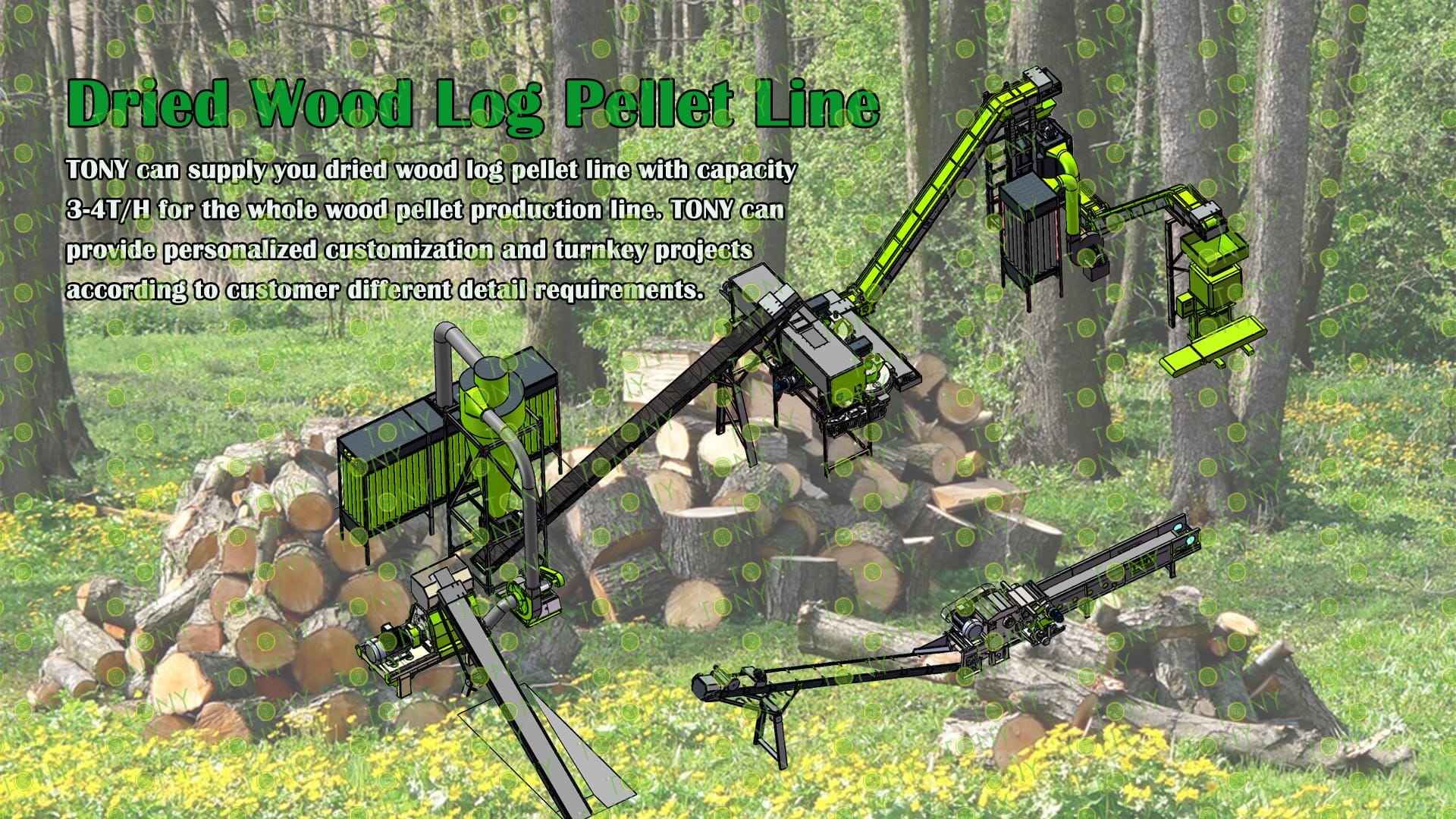




















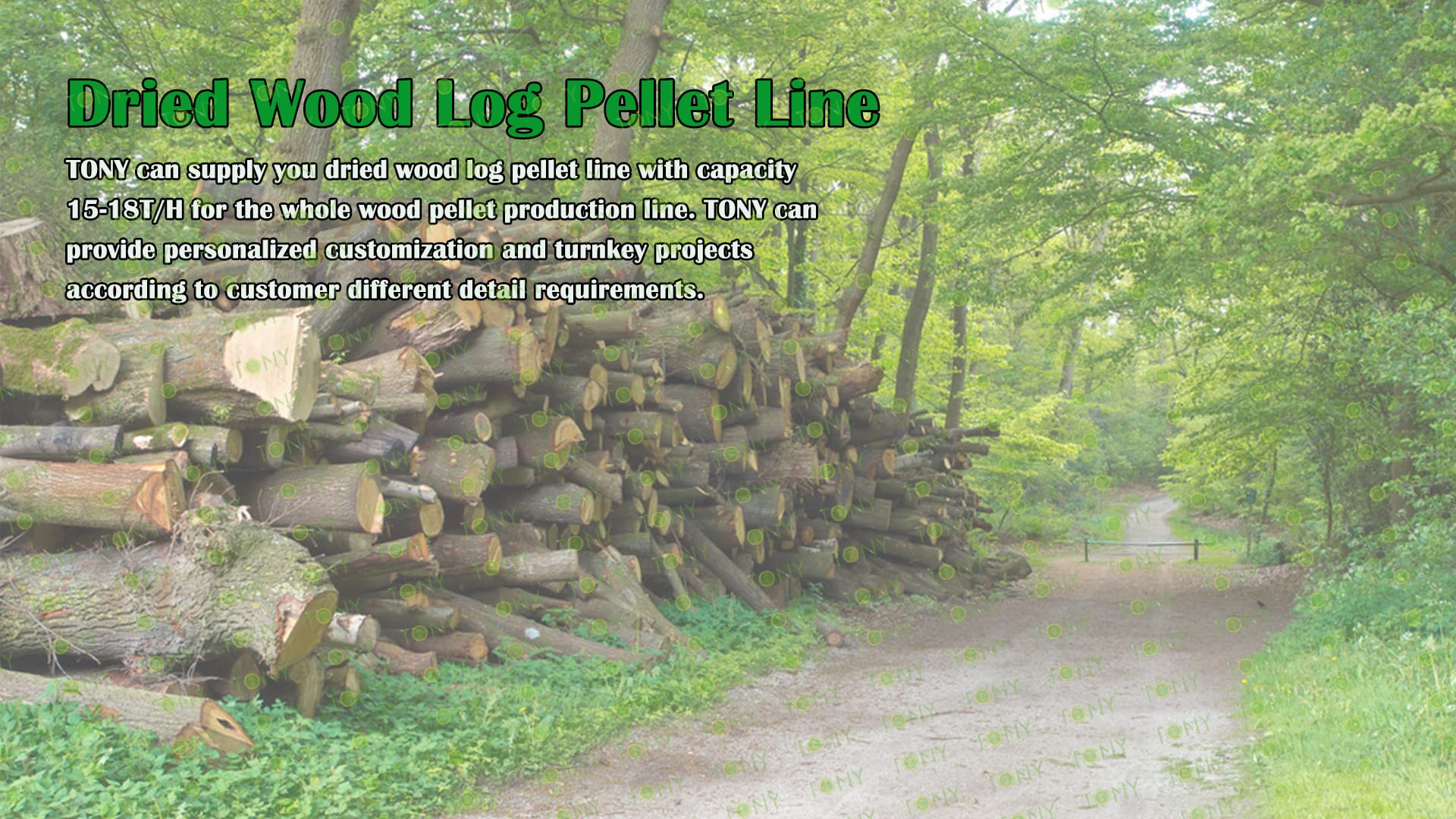

Project Brief Introduction:
1.Product:Dried Wood Log Pellet Line
2.Capacity:15-18T/Hour
3.TONY Brand 15-18Ton /Hour Dried Wood Log Pellet Line Project Process
4.Main Machine: Comprehensive Chipper,Hammer Mill,Large Hydraulic Storage SiloTONY Pellet MachineTYJ860-Ⅲ-250KW,Pellets Cooler,Packing Machine And Belt Conveyors
5.Total Power: About 2050KW
6.Need Area: About ㎡ L: M W: M H: M
Project Layout For Customer:
3d图
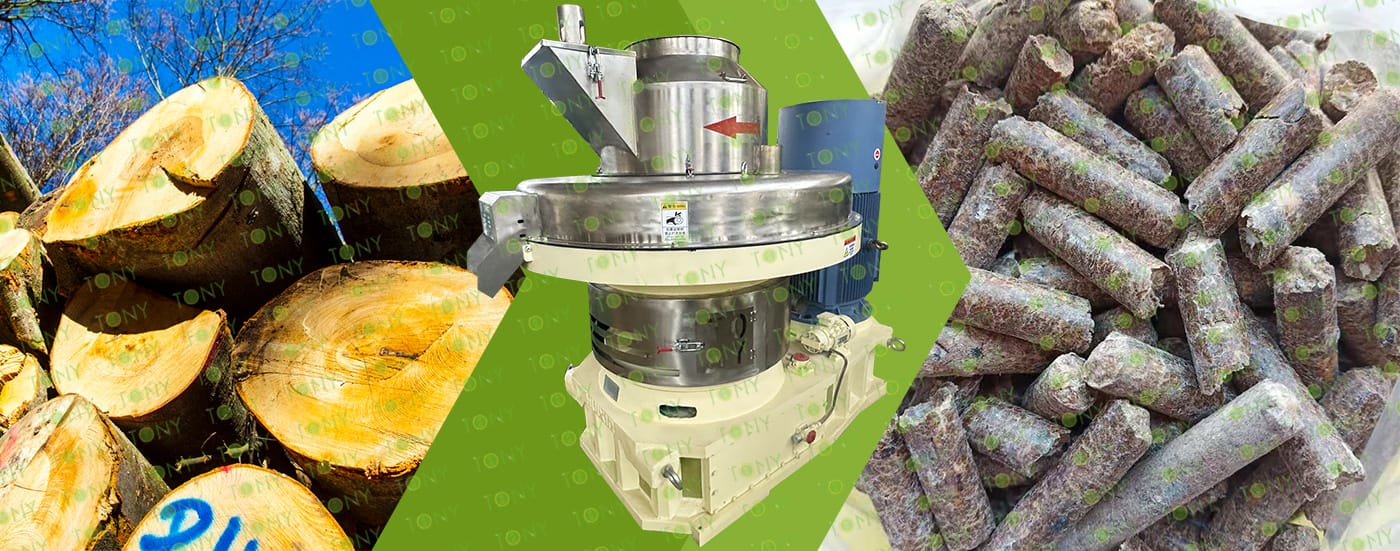
1.The working principle of dried wood log biomass pellet processing equipment
Dry wood biomass pellet processing equipment operates by converting dry wood waste (such as sawdust, shavings, and wood chips) into high-density, regularly shaped biomass pellet fuel through a series of physical processes. This process relies on mechanical extrusion and the natural bonding of lignin, eliminating the need for additional adhesives. The dry wood biomass pellet processing process can be summarized as follows: raw material pretreatment → extrusion molding → post-processing. Because the raw material is ""dry wood"" (with a moisture content typically controlled at 10%-15%), deep drying is not required. Instead, the process focuses on densifying the material through mechanical force and utilizing the heat generated during processing to activate the bonding properties of lignin, ultimately forming stable pellets.
2.Characteristics of dried wood log biomass pellet processing equipment
(1)Strong adaptability to raw materials and targeted optimization of dry material processing
One of the core features of dry wood pellet equipment is the efficient processing of low-moisture raw materials, which is significantly different from equipment that processes high-moisture raw materials (which requires a matching dryer):
No need for a deep drying module:Since the raw materials themselves are already dry (moisture content ≤15%), the equipment can save the high-energy consumption of drum dryers or air dryers, and only retain a simple humidity control device (such as a spray water replenishment system) to replenish a small amount of water when some materials are too dry (<10%), thereby reducing overall energy consumption.
High crushing and screening accuracy:Equipped with a dedicated hammer or knife crusher, dry hard wood (such as branches, waste wood boards) can be crushed into uniform wood chips ≤5mm, avoiding excessive powder generation due to the brittleness of dry materials; the screening process uses a multi-layer screen to strictly control the particle size of the raw materials, ensuring that the dry materials are evenly stressed during molding and reducing broken particles.
(2)Special design of core equipment (pellet mill)
The pellet mill is the core of the dry wood pellet mill. Its structure and parameters are optimized for the characteristics of dry materials to ensure efficient molding under low moisture conditions:
Wear resistance of ring die and roller:Dry wood fibers are relatively hard and lack water lubrication. The ring die (inner wall die hole) and roller surface are made of high-hardness alloy material (such as 40CrNiMo) and are carburized and quenched. The wear resistance is improved by more than 30% compared with ordinary pellet mills, reducing the wear of dry materials on the equipment.
Extrusion parameters are adapted to dry materials:The gap between the roller and the ring die is smaller (usually 0.1-0.3mm), and the extrusion force is greater (up to 80-120MPa), ensuring that dry wood chips are fully compressed under low moisture conditions; at the same time, the ring die speed is slightly lower (300-500r/min), which prolongs the residence time of the material in the die hole, allowing the lignin to be fully softened under frictional heat (100-130℃), compensating for the problem of insufficient adhesion of the dry material.
Feeding uniformity control:A variable frequency screw feeder is used to monitor the flow of dry materials in the silo in real time through sensors to avoid uneven feeding caused by poor fluidity of dry materials (easy to be suspended or bridged), thus ensuring a stable molding process.
3.Application scenarios of dried wood log biomass pellet processing equipment
The core application scenario for wood pellet processing equipment is converting wood waste into environmentally friendly fuel.
(1)Raw material sources:
Sawdust and scraps from lumber processing plants, branches and trunks pruned from forestry farms, wood chips and shavings from furniture factories, and waste wood from building demolition.
(2)Product Applications:
Residential Heating: Produces clean pellet fuel for fireplaces and home heating stoves, replacing coal and natural gas and reducing pollutant emissions.
Industrial Heating: Provides boiler fuel for food processing plants, building materials factories (such as tile drying), textile mills, and other facilities, meeting steam and hot water needs for industrial production.
Power Generation: Used as fuel in biomass power plants, generating electricity that is fed into the grid through combustion, or provides electricity and heat to distributed energy stations (such as villages, towns, and industrial parks).

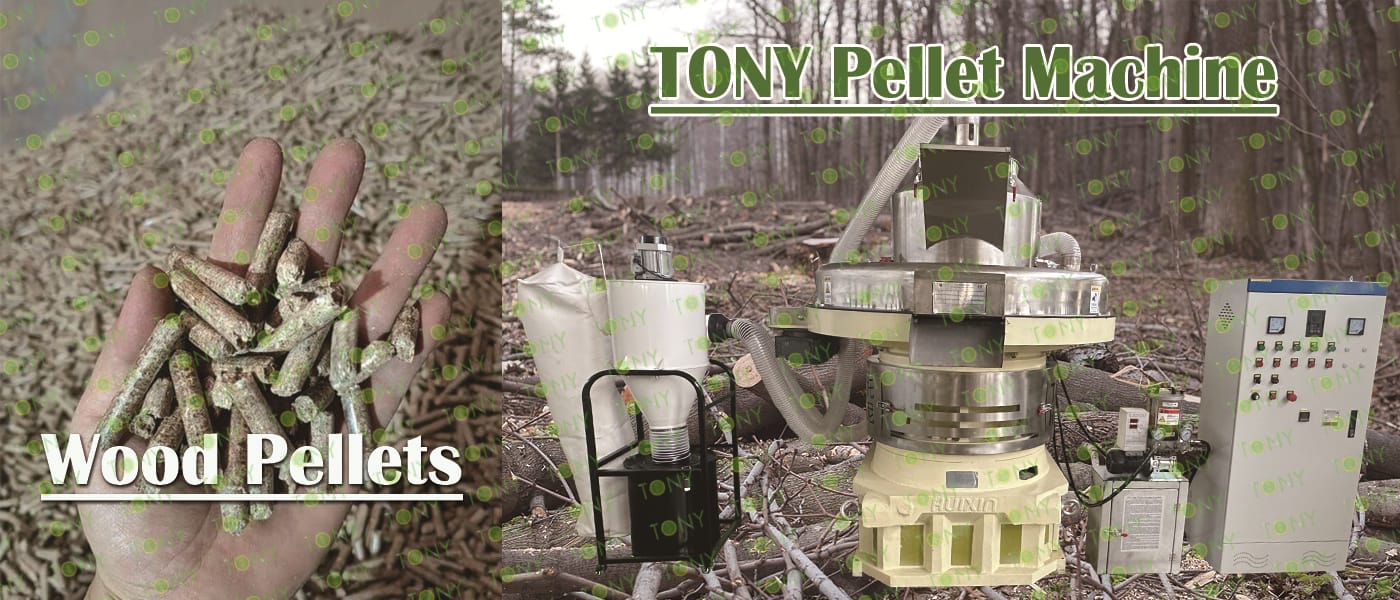
TONY Brand 15-18Ton/Hour Dried Wood Log Pellet Manufacturing Plant can take dried wood, various types of wood - related biomass materials, such as branches, small - diameter logs, and wood shavings, with dried wood as the main raw material. After pretreatment and processing, it is solidified into high - density wood pellet fuel. This fuel is an ideal substitute for coal and oil and plays a role in energy conservation and emission reduction. At present, it has been widely used in regions rich in wood resources.
1. Capacity: 15-18Ton/Hour
2. Raw materials: Dried wood logs , branches, small - diameter logs, twigs, etc.
3. Moisture: Dried type, about 10-15%.
4. Application: All kinds of wood - based biomass materials suitable for pellet production.
Suitable customers: Green energy companies, forestry enterprises, and private wood - processing workshops that have advantages in wood raw materials.
5. Finished Pellets Markets: Large power plants ,domestic heating, industrial heating, combustion heat, heating systems, boiler rooms, school canteens, foundry heat sources.

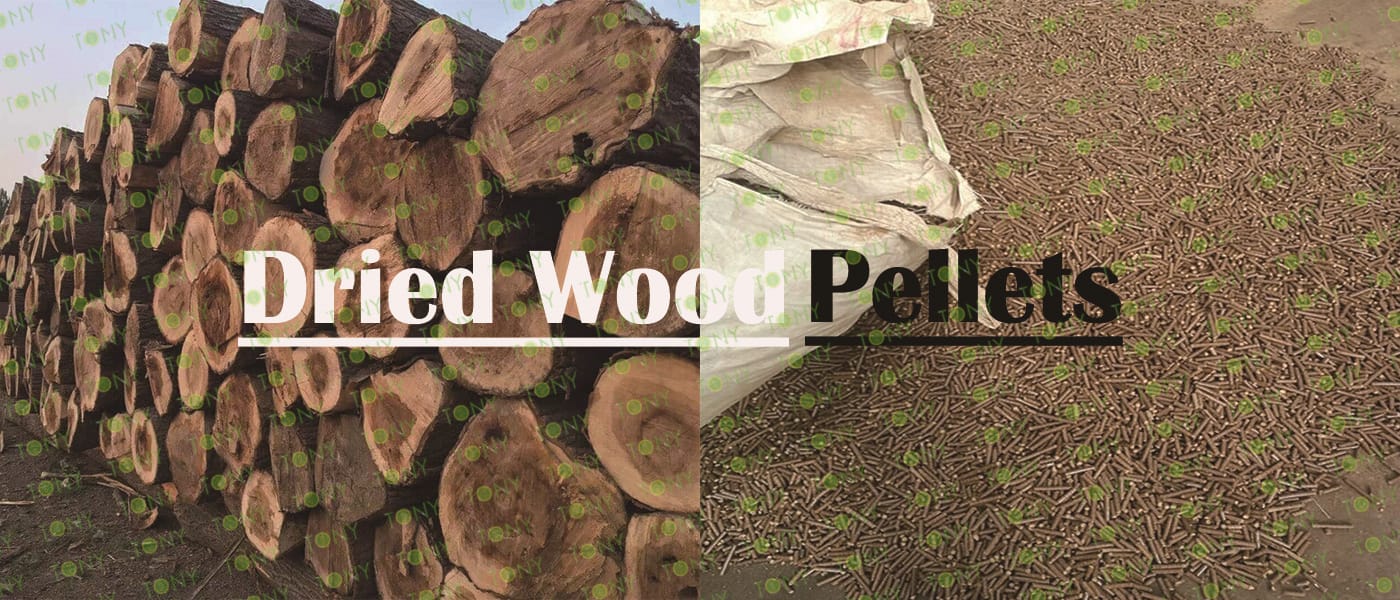
1. Project Name: Dried Wood Log Pellet Production Line
2. Raw Material: All kinds of Dried wood log
3. Moisture Content of Raw Material: 10-15%
4. Capacity: 15-18 tons per hour
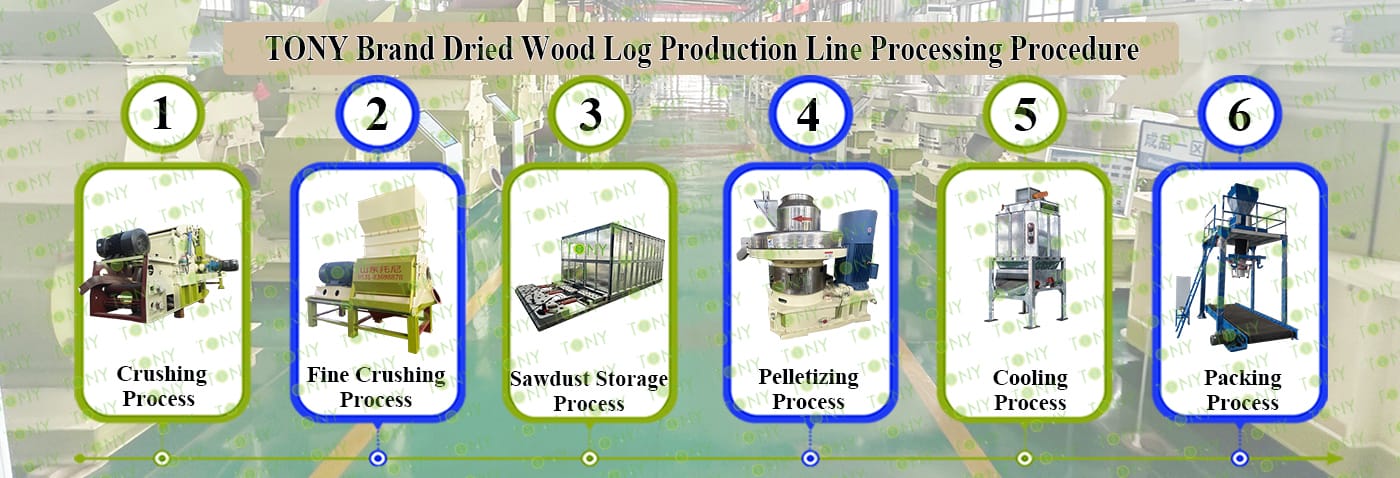
5. Process: Crushing Process - Fine Crushing Process -Sawdust Storage Process- Pelletizing Process - Cooling Process - Packing Process
6. Main Equipment: Comprehensive Chipper TPC1600-1000-250KW, Effective Hammer Mill-TFD85-250-250KW, TONY Large Hydraulic Storage Silo,TONY Pellet Machine TYJ760-Ⅲ - 160KW, Pellet Cooler, Ton Packing Machine and Belt Conveyors

|
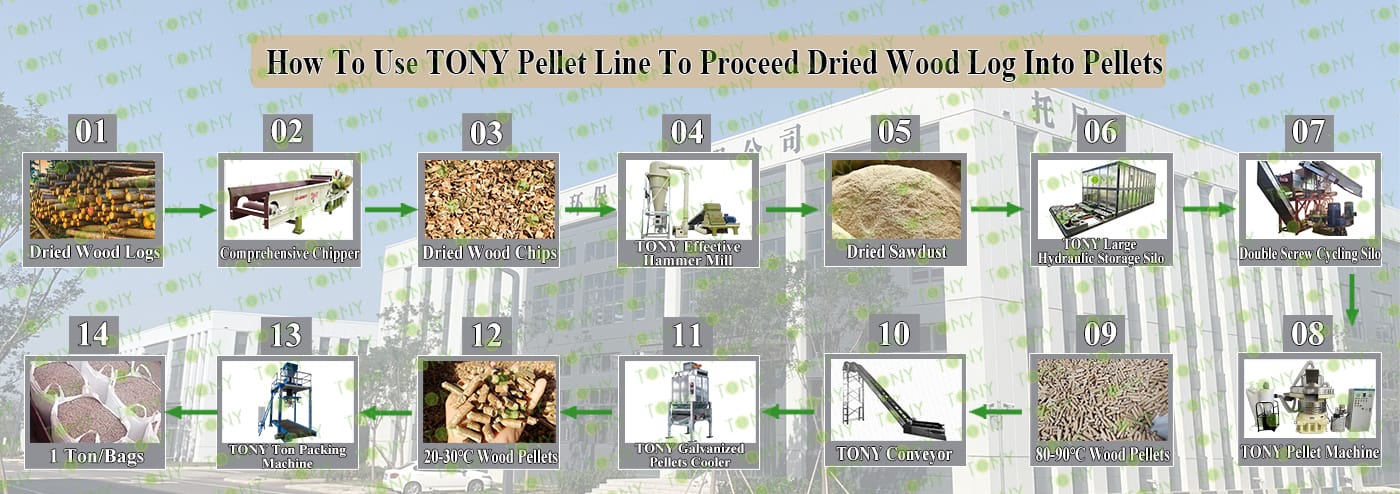
How to use the TONY pellet production line to make pellets from dried wood log? The process mainly includes the following steps and equipment: 1. Use TONY comprehensive chipper to cut dried wood log with a diameter of less than 35cm into wood chips 25 - 55 mm in length. 2. Use TONY effective hammer mill to crush the 25-55 mm wood chips into 8-14 mm sawdust. 3.Use TONY large hydraulic storage silo to storage 8-14 mm sawdust 4. Use TONY vertical ring die pellet machine to produce pellets with a diameter of 6-8 mm. 5. Use TONY galvanized cooler to cool the pellets from 80-90°C to 20-30°C. 6. Use TONY ton packing machine to pack the pellets into bags, each weighing 1 ton. For more detailed information and quotations, you can contact TONY. TONY can provide all the above - mentioned products at highly competitive prices and with excellent quality. |
|
||||||||||||||||||||||||||||||||||||||||||||||||||

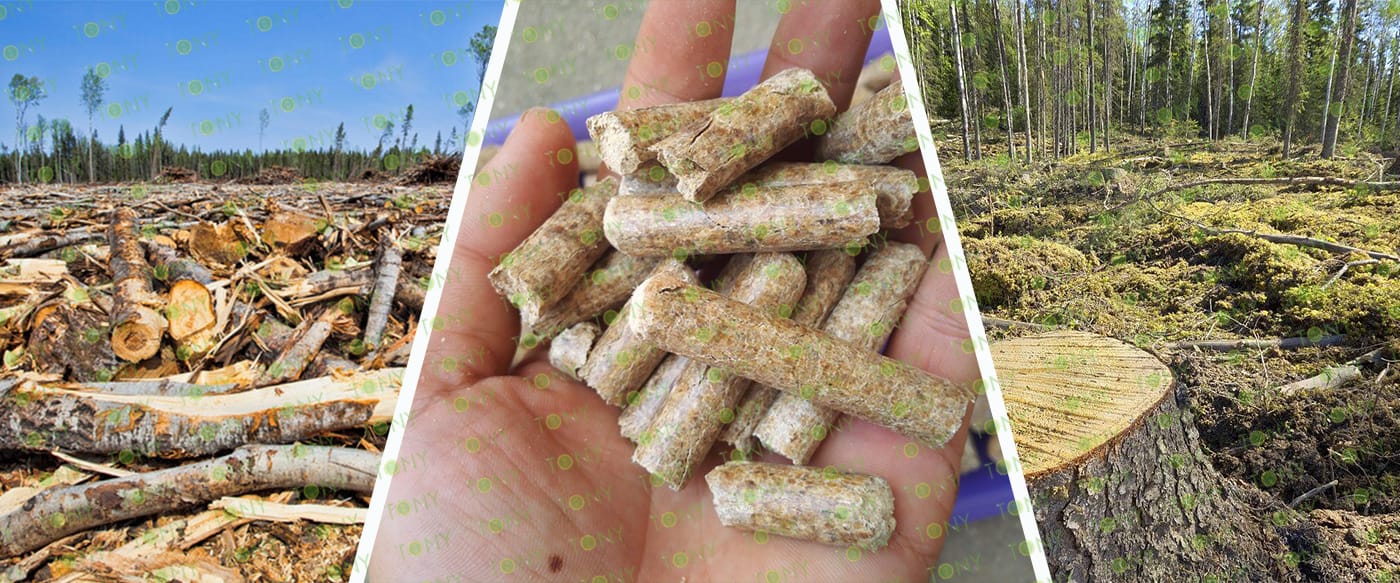
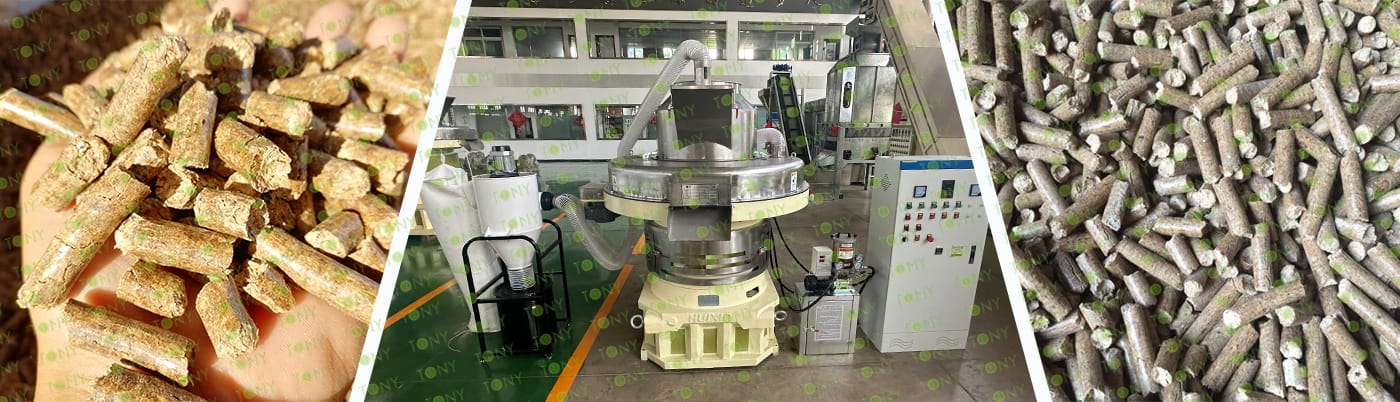
| Next, TONY Will Introduce To You All The Necessary Machinery That Will Be Used For The Whole Pellet Production Line. Some Machines Can Be Custom - Made By Customers According To Different Customers' Detailed Demands. Contact TONY For More Details, Including Quotation And Layout. | ||
 |
 |
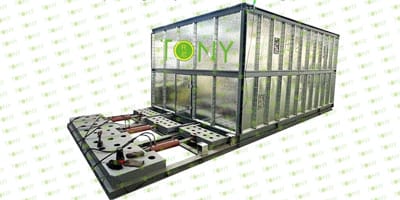 |
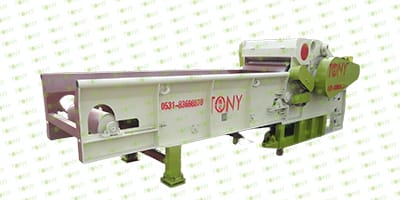
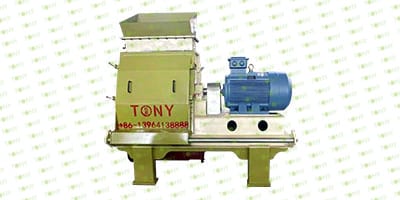
| Comprehensive Chipper | Effective Hammer Mill | Large Hydraulic Storage Silo |
|
1.To Grind Wood Logs φ ≤40cm Into25-55mm Wood Chips. 2.Model: TPC1600-1000-250KW With 6 Blades*1set 3.Capacity:20-30Ton/Hour. |
1.To Crush 25-55mm Wood Chips Into 8-14mm Sawdust. 2.Model: TFD85-250-250KW*2sets 3.Capacity: 8-10Ton/Hour/Set |
1.To Storage Sawdust Before Pellet machine 2.Model: TCY-25*2sets 3.TONY Uses Galvanized Material |
 |
 |
 |
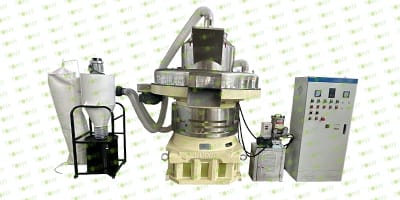
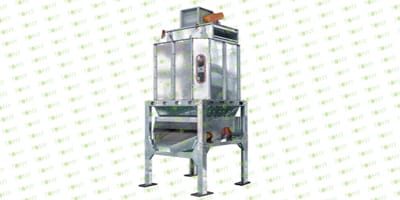
| Vertical Ring Die Sawdust Pellet Machine | Galvanized Pellets Cooler | Ton Packing Machine |
|
1.To Press Dry Sawdust Into 6-8mm Biomass Pellets 2.Model: TYJ760-III-160KW*6sets 3.Capacity:2.5-3Ton/Hour/Set 4.New 304SS Type |
1.To Cool Pellets From 80-90℃ Into 20-30℃ 2.Model: TCN-4*2sets 3.Capacity:15-18Ton/Hour |
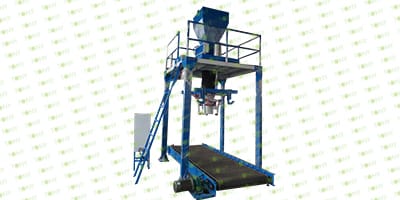
1.To Pack Pellets Into 1Ton/Bags. 2.Model: TBD*2sets 3.Capacity: 15-18Ton/Hour |
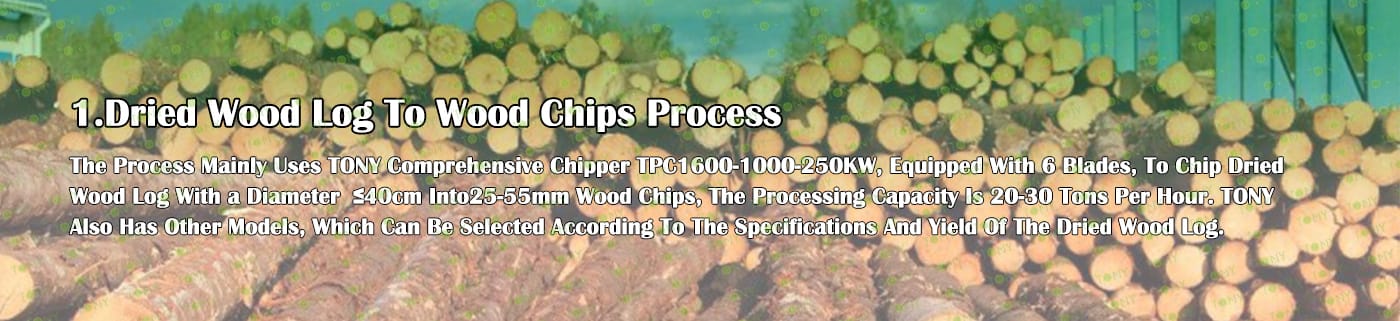
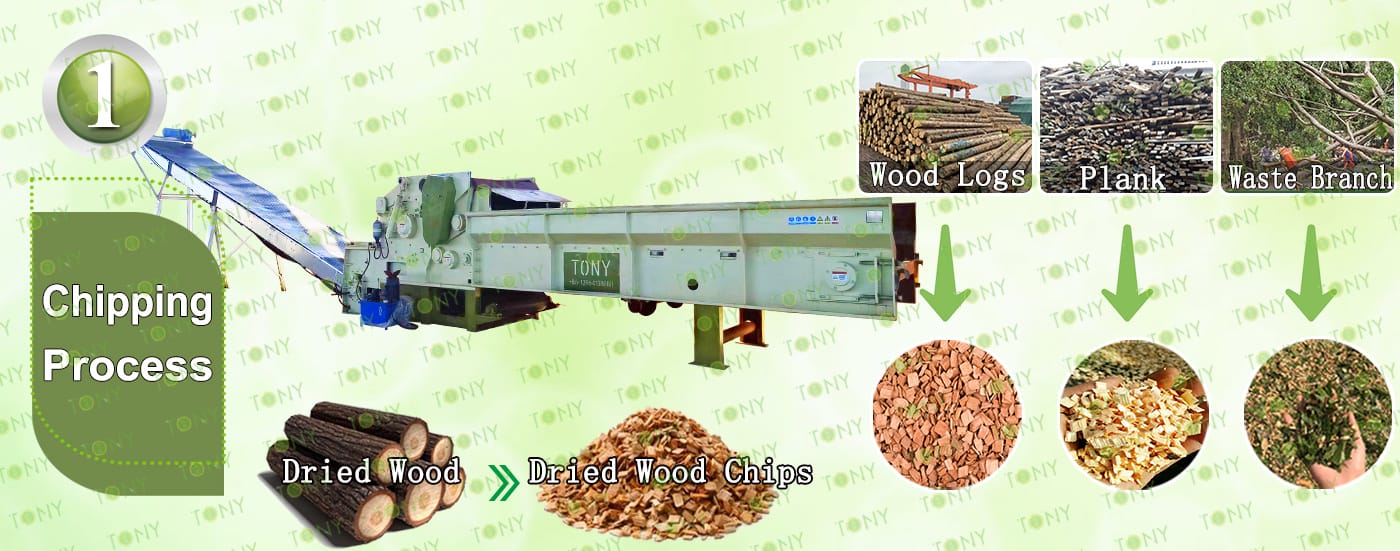
1.Wood Chipping Process:
A.This process is mainly used to grind the wood logs whose diamater is under 40cm into wood chips with size 25-55mm. The finish wood chips size can be adjustable by changing different sizes of screeners and adding flying knives inside the wood chipper.
B.TONY brand TPC1600-1000-250KW model with 6 flying blades type
C.Capacity:20-30Ton/Hour.
Main Parts:
(1)TONY's Comprehensive Chipper.
(2)Feed And Discharge Belt Frequency Control To Prevent Card Material
(3)Hydraulic System Control Can Be Used For Thicker Materials
(4)Electronic Control System Allows The Equipment To Be Used Normally
Contact Tony For More Details With Quotation

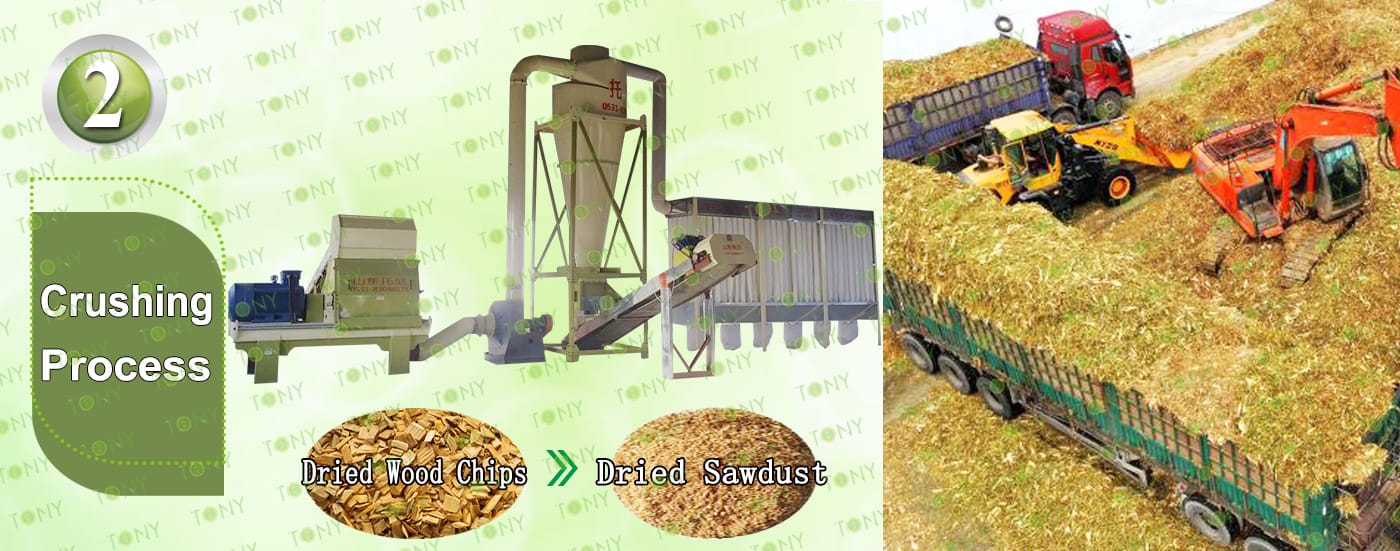
2.Wood Chips Fine Crushing Process:
A.This process is mainly used to crush 25-55mm wood chips into 8-14mm sawdust.
B.Capacity:15-18Ton/Hour.
C.TONY brand effective hammer mill TFD85-250-250KW*2sets
Main Parts:
(1)TONY Effective Hammer Mill.
(2)Galvanized Dust Collector.
(3)Sawdust Transportation Fan Blower.
(4)Cyclone With Airlock.
(5)Electrical Cabinets.
3.Sawdust Storage Process:
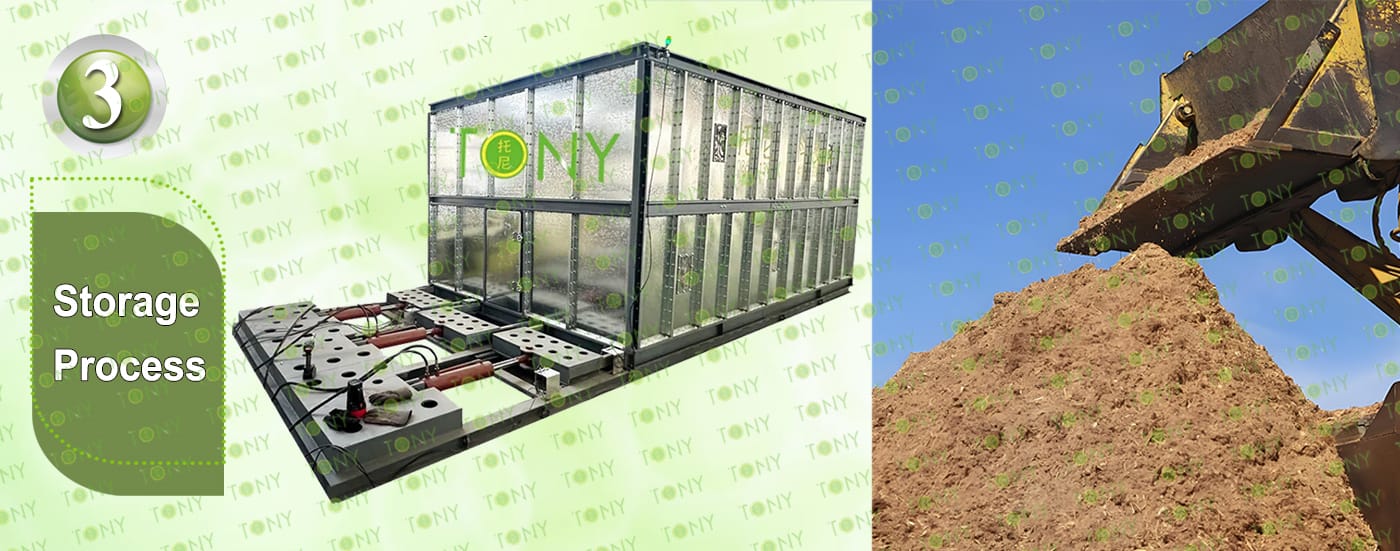
A. This process is mainly used to storage the sawdust that comes out of the hammer mill.It is hydraulic galvanized storage bin which is more stalbe and sawdust in it is not easy to be blocked.
B. TONY brand sawdust storage to storage the sawdust that comes out of the hammer mill.This process can be optional by customer.If customer do not chose the storage bin,he can storage the sawdust on the ground directly which may need some labour.
Main Parts:
(1)TONY's New Sawdust Storage Bin.
(2)With Screws Inside The Storage Bin To Prevent Sawdust Blocked.
4.Pelletizing Process:
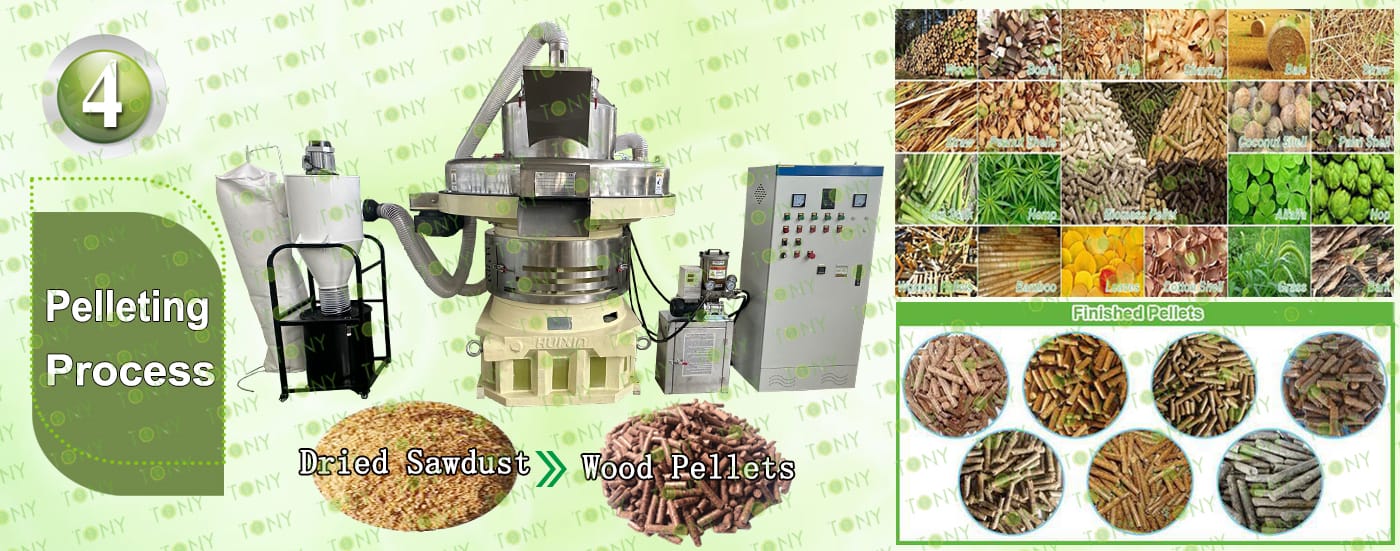
A.This process is mainly used to to product pellets into φ6-8mm.
B.Capacity:15-18Ton/Hour.
C.TONY brand vertical ring die pellet machine TYJ760-III-160KW*6sets
D.Double screw cycling silo is added above the pellet machine, which has the advantages of saving space, saving labor, intelligently controlling the feeding speed, not easy to block the material, and improving production efficiency.
Main Parts:
(1)TONY's New Vertical Ring Die Pellet Machine.
(2)Cyclone And Bags Dust Collectors.
(3)Automatic Lubrication System.
(4)Electrical Cabinets.
You can chose TONY new type SS304 pellet machine

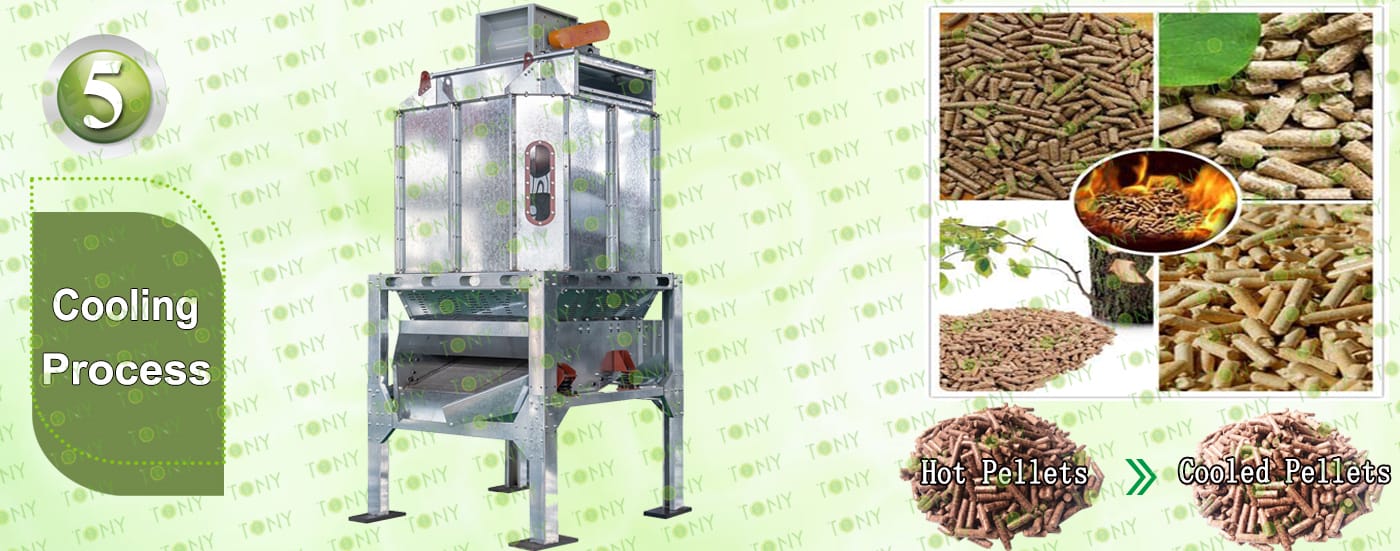
5.Cooling Process:
A.This process is mainly used to cool pellets from 80-90℃ to 20-30℃
B.2 sets of TONY galvanized cooler separator With Capacity 15-18Ton/Hour
Main Parts:
(1)TONY's Galvanized Cooler Separator With Vibrating Screen.
(2)Cyclone And Bags Dust Collectors.
(3)Fan Blower.
(4)Connect Pipes.

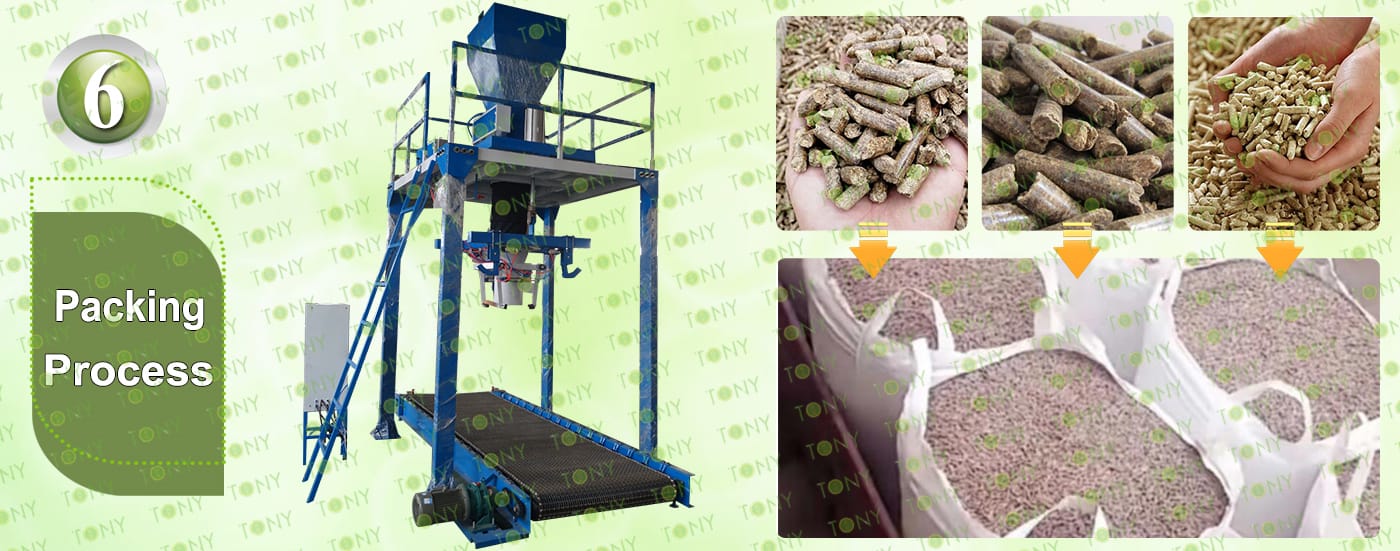
6.Packing Process:
A.This process is mainly used to pack pellets into 1ton/bags.
B.2 sets of TONY ton packing machine
Main Parts:
(1)TONY Ton Packing Machine
(2)Electronic Platform Scale Metering System
(3)Automatic Tare, Zero, and Drop Correction Functions
(4)Feeding System Features Fast, Medium, and Slow Feeding Speeds to Ensure Measuring Accuracy"

1.Market Demand
Biomass pellet fuel has a wide range of applications, and the market size continues to grow. Specific demand scenarios include:
(1)Industrial boiler fuel:Many factories require fuel for heating their boilers, and biomass pellets can serve as a clean alternative energy source. Paper mills, food processing plants, and other industries all have related demand, with this sector accounting for over 55% of the market share.
(2)District heating:Clean heating is being promoted continuously, and biomass pellets can be used as a heat source fuel, with a stable annual procurement volume.
(3)Biomass power generation:The demand for pellet fuel is relatively rigid.
2.Production Process
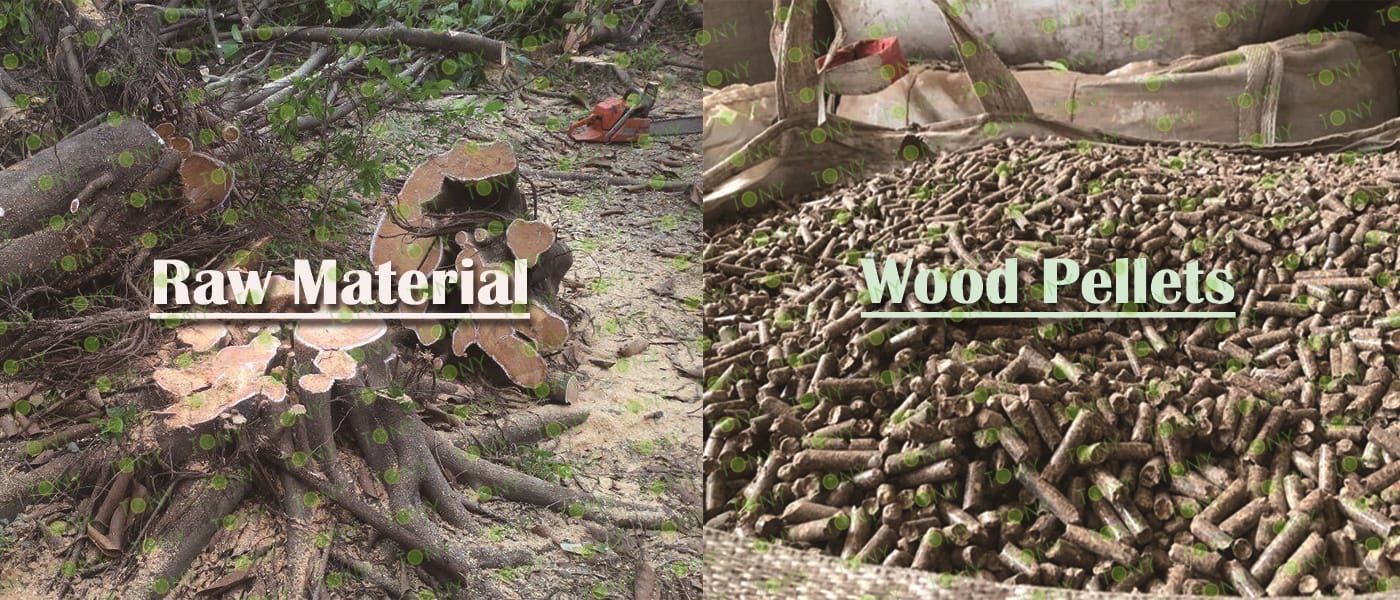
(1)Raw Material Pretreatment:Dry wood is crushed in a crusher and then refined into a suitable sawdust particle size by a grinder, providing qualified raw material for subsequent pelletizing.
(2)Pellet Forming:The pretreated sawdust is conveyed to the pelletizer, where it is pressed into biomass pellets under high temperature and high pressure.
(3)Cooling and Screening:The newly produced pellets are hot and require cooling equipment to reduce the temperature. Screening machines are then used to remove substandard pellets, ensuring the quality of the finished product. Packaging and warehousing: Qualified biomass pellets are packaged and then sent to the warehouse for storage and sale."

1.High Energy Efficiency
(1)High calorific value and stable combustion:After compression molding, wood pellets significantly increase their density (typically 1.1-1.3 tons/cubic meter), resulting in a significantly higher energy density than raw wood chips. They also offer stable combustion and high thermal efficiency. Their low calorific value is typically 4200-4800 kcal/kg, close to that of coal (5000-6000 kcal/kg), meeting the heat requirements of industrial boilers and home heating applications.
(2)Full combustion and low ash content:Compared to loose wood chips or straw, wood pellets burn more completely, with ash content typically below 5% (high-quality pellets can even be below 1%), reducing ash removal costs and equipment wear.
2.Outstanding Environmental Benefits
(1)Low Carbon Emissions:Wood pellets are a biomass energy source. The carbon dioxide produced by their combustion comes from carbon absorbed by plants during growth, theoretically achieving a ""carbon cycle."" Compared to fossil fuels like coal and oil, they can significantly reduce greenhouse gas emissions (such as carbon dioxide and sulfur dioxide), contributing to carbon neutrality goals.
(2)Renewable Raw Materials:The raw materials are derived from wood processing waste (such as scraps from furniture and lumber mills), transforming waste into treasure, reducing environmental pollution caused by waste incineration or landfills, and avoiding the need for deliberate tree felling, thus aligning with the concept of sustainable development.
3.Convenient Storage and Transportation
(1)Regular Shape and High Density:The wood chip pellets are uniformly cylindrical (typically 6-8 mm in diameter and 20-30 mm in length), with a volume only 1/5-1/10 of the original wood chip, saving storage space. They can be stored efficiently in bags or bulk, and are resistant to moisture (moisture content is generally controlled at 8%-12%).
(2)Low Transportation Costs:The high density reduces transportation costs, making it suitable for long-distance transport and facilitating large-scale supply.
4.Wide Range of Applications
(1)Energy:It can be used as a coal-replacing fuel in industrial boilers and biomass power plants. It is also suitable for use in residential heating systems such as fireplaces and stoves, ensuring ease of use and cleanliness. Agriculture and Environmental Protection: After crushing, wood pellets can be used as organic fertilizer or as a culture medium for mushroom cultivation. Some modified wood pellets can also be used as adsorbents to treat industrial wastewater, offering low cost and excellent results.
(2)Industrial Auxiliary:They can be used as raw materials for biomass plastics and artificial boards, achieving diversified resource utilization.
5.Economic Efficiency and Policy Support
(1)Low Raw Material Cost:Biomass pellets primarily utilize wood processing waste, which is widely available and inexpensive, making them particularly suitable for areas near forestry and furniture industries.
(2)Policy Support:As a clean energy source, many governments provide subsidies for the production and use of biomass pellets (such as electricity and equipment subsidies), reducing investment and operating costs.


2025 Tony Machinery - All Rights Reserved. Map