




















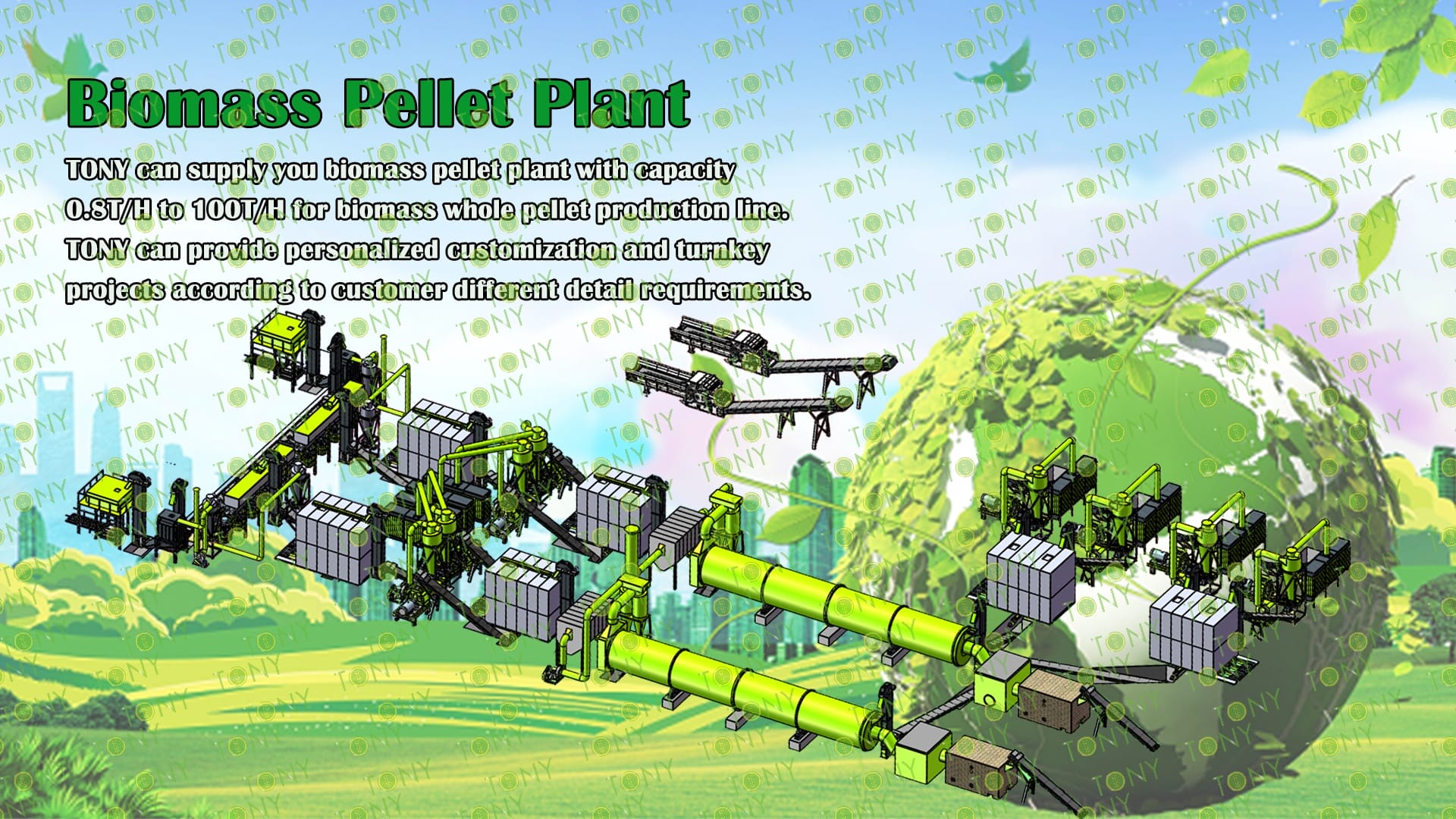
Project Brief Introduction:
1.Product:Dried Rice Husk Pellet Line
2.Capacity:14-16Ton /Hour
3.TONY Brand 14-16Ton /Hour Dried Rice Husk Pellet Line Project Process
4.Main Machine: TONY Pellet Machine TYJ860-Ⅲ-250KW,Pellets Cooler,Packing Machine And Belt Conveyors
5.Total Power: About 1080KW
6.Need Area: About ㎡ L: M W: M H: M
Project Layout For Customer:
3D图3
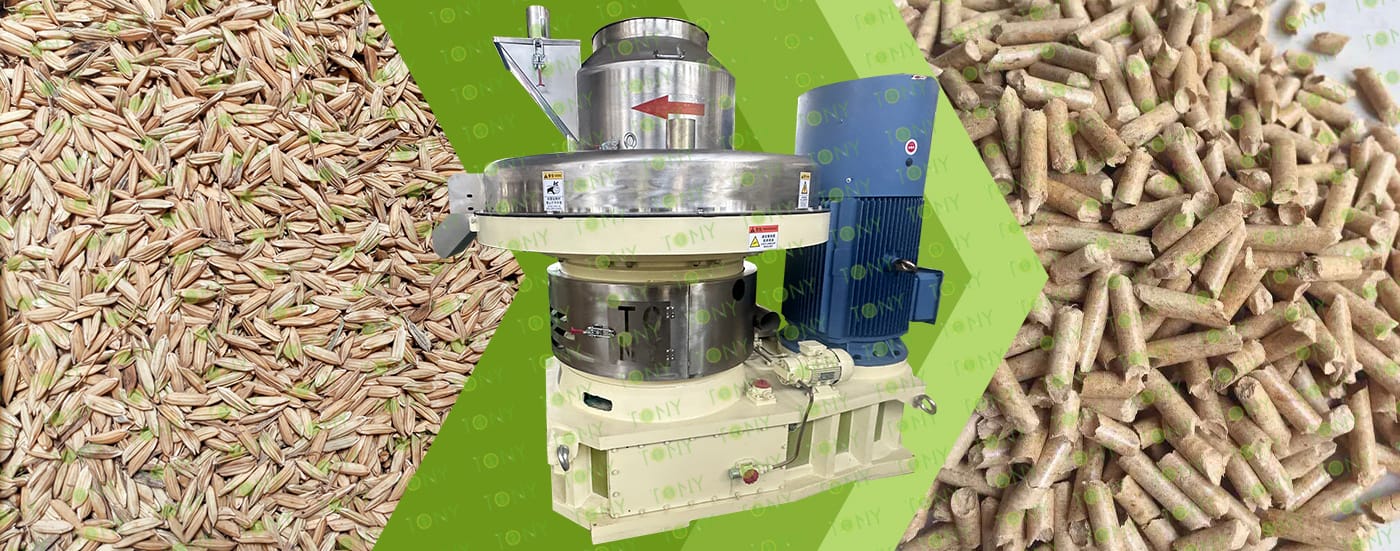
1.The working principle of dried rice husk biomass pellet processing equipment
The core principle of processing rice husks into biomass pellets is to utilize the physical properties of the rice husks combined with external pressure and temperature to achieve dense molding. The entire process does not rely on external adhesives; it primarily depends on the natural binding force formed by the softening of lignin in the rice husks at high temperatures.
2.Characteristics of dried rice husk biomass pellet processing equipment
The rice husk pellet processing equipment is a production line specifically designed for rice husks. Its core feature is customized production based on the characteristics of the raw materials, thereby ensuring production efficiency and optimizing finished product quality. The pelletizing stage compresses the rice husks into high-density pellets. The cooling and screening stages stabilize the pellet properties and remove substandard products. The equipment at each stage works collaboratively to transform the raw materials into the finished product.
3.Application scenarios of dried rice husk biomass pellet processing equipment
Processing equipment provides fuel (as an alternative to coal and oil) for factory boilers and kilns, such as steam boilers in textile and food processing plants, and heating kilns in the ceramics and building materials industries. Stable pellet production ensures energy supply.
(1)Power Generation:Biomass power plants require large quantities of standardized pellets as fuel. Large-scale processing equipment can meet the stringent requirements of power plants for pellet calorific value and density, ensuring efficient combustion and stable power generation.
(2)Residential Heating:For pellets used in domestic fireplaces and space heaters, processing equipment must control the size and hardness of the pellets to suit domestic combustion equipment. The precision of the equipment's production directly impacts the user experience with these pellets.
(3)Environmental Protection and Waste Management:In waste and wastewater treatment plants, processing equipment converts organic waste (such as sludge and food waste) into fuel pellets for resource recovery. Corrosion-resistant and clogging-resistant designs are crucial.
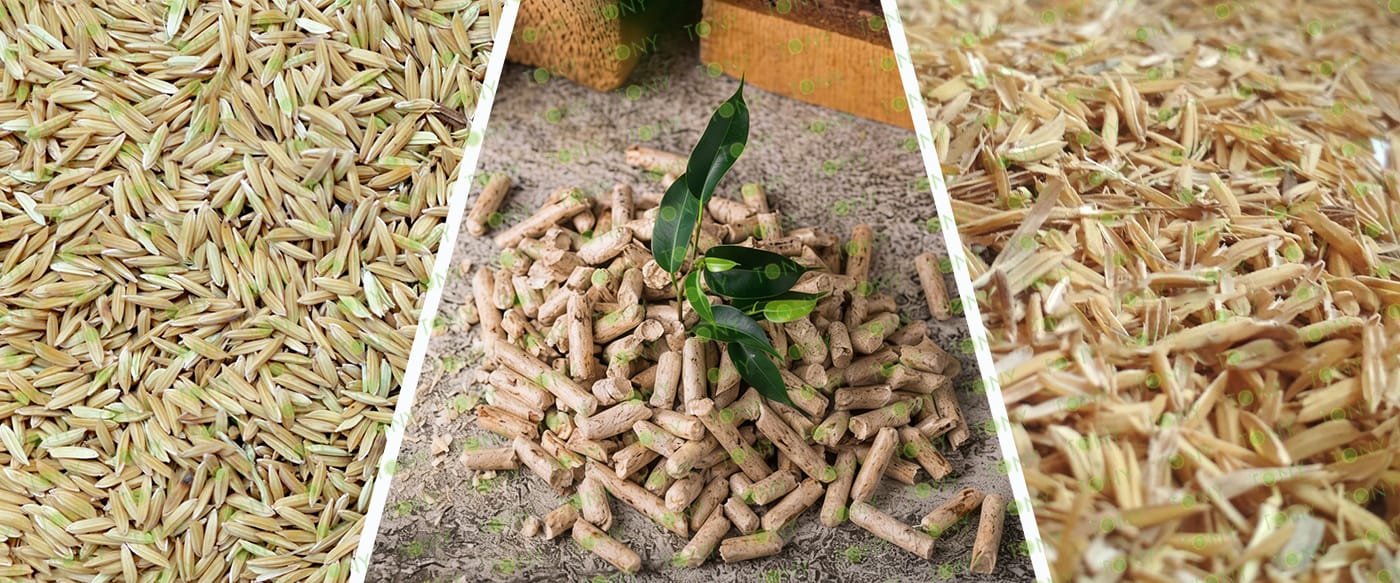
TONY Brand 14-16TPH Dried Rice Husk Pellet Line can process dried rice husk and various biomass materials into biomass pellets. The core of the rice husk biomass pellet production line is to take advantage of the characteristics of rice husks—lightweight, high in silicon, and low in agglomeration—and transform agricultural waste rice husks into standardized biomass fuel through customized pretreatment and pelleting processes. This fuel is widely applicable to rice-growing areas and energy demand scenarios.The core significance of the rice husk biomass pellet production line is to realize the resource utilization, reduction and low-carbon utilization of rice husk waste, which not only solves the problem of agricultural solid waste pollution, but also provides a clean option for energy structure transformation, and has economic, environmental and social value.
1. Capacity: 14-16Ton/Hour
2. Raw materials: Dried rice husk
3. Moisture: About 10-15%
4. Application: All kinds of biomass materials suitable for pellet production.
Suitable customers: Green energy companies, large farms, private growers and other customers with advantages in raw materials.
5. Finished Pellets Markets: Large power plants, domestic heating, industrial heating, combustion heat, heating heating, boiler room, school canteen, foundry heat source.

1. Project Name: Dried Rice Husk Pellet Production Line
2. Raw Material: Dried rice husk
3. Moisture Content of Raw Material:10-15%
4. Capacity: 14-16TPH
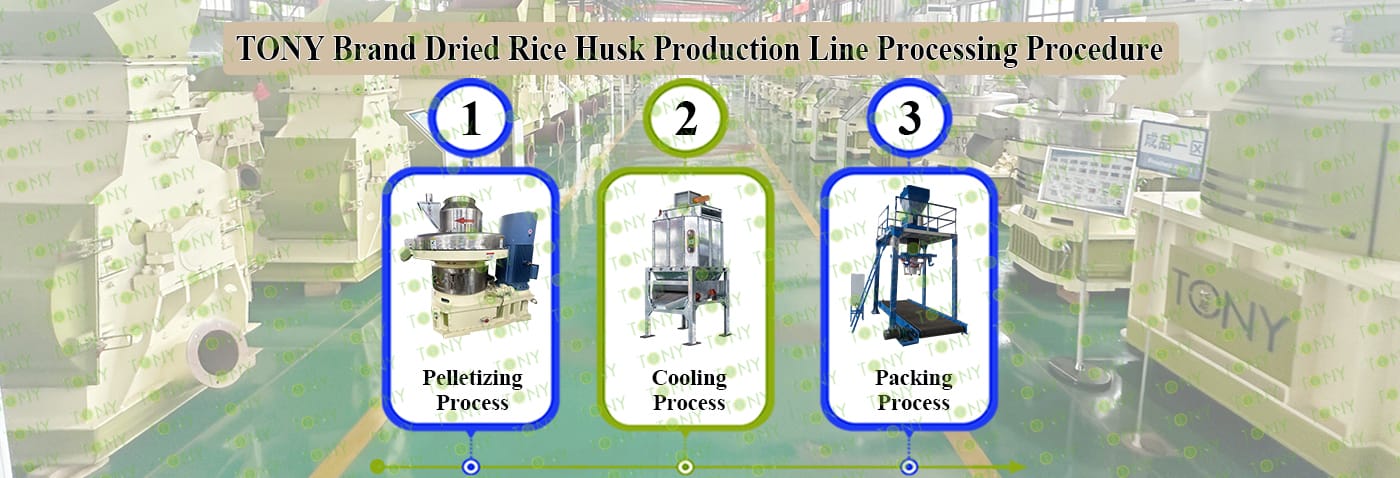
5. Process: Pelletizing Process - Cooling Process - Packing Process
6. Main Equipment: TONY Pellet Machine-TYJ860-III-250KW, Galvanized Pellets Cooler, Ton Packing Machine and Belt Conveyors

|
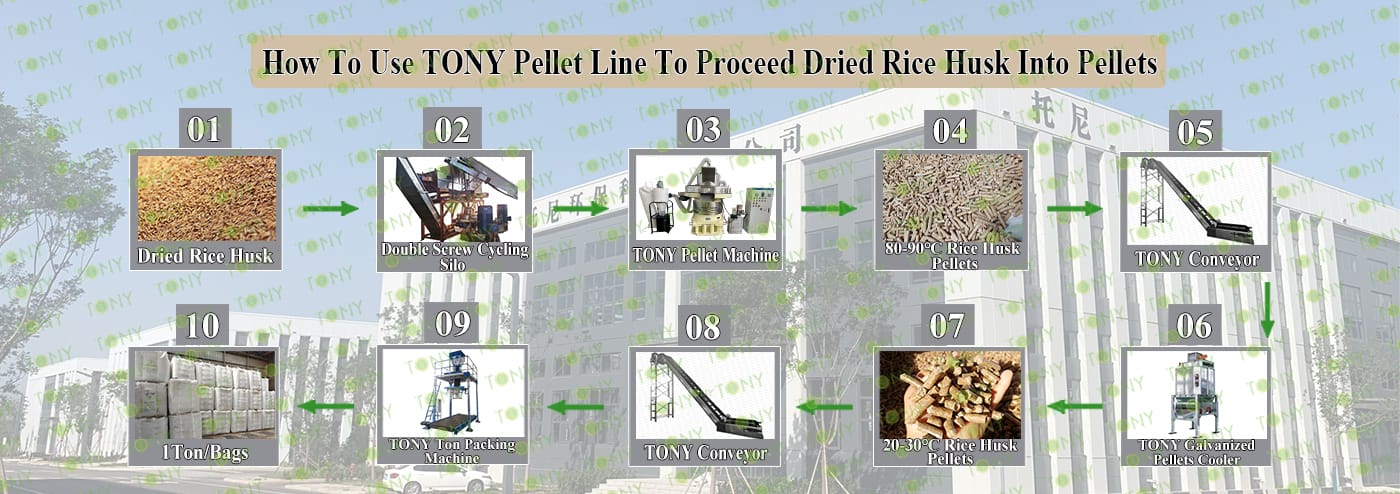
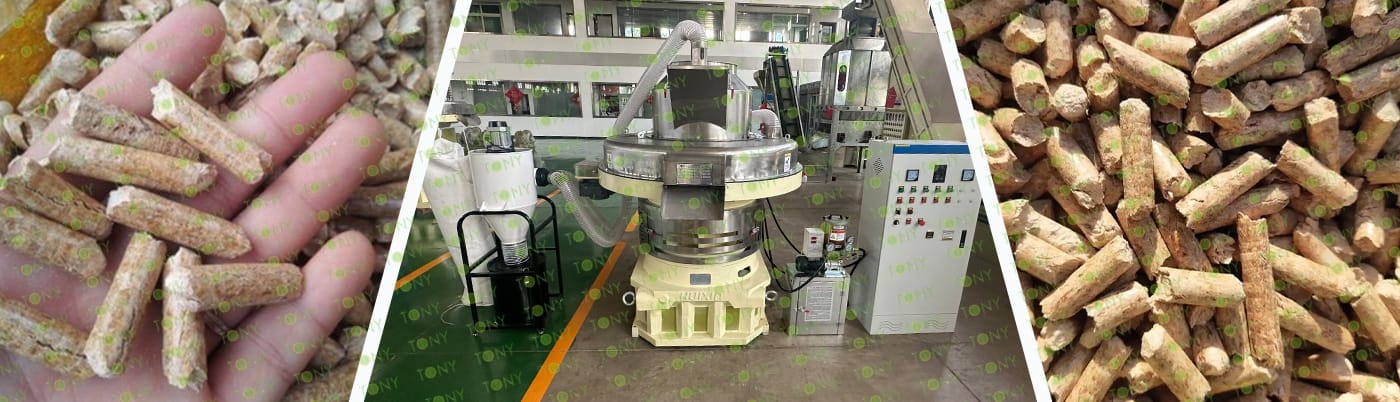
How To Use TONY Pellet Line To Proceed From Dried Rice Husk Into Pellets? It mainly contains the following steps and machines as following: 1.Use TONY vertical ring die pellet machine to products pellets with φ6-8mm. 2.Use TONY galvanized pellets cooler to cool pellets from 80-90℃ to 20-30℃. 3.Use TONY ton packing machine to pack the pellets into 1 ton/bags. You can contact TONY to get for more details information and quotation. TONY can supply you all the products as above with competitive price and excellent quality. |
|
|||||||||||||||||||||||||||||||||||
3D图 图1-长宽
3D图 图2-高
| Next, TONY Will Introduce To You All The Necessary Machinery That Will Be Used For The Whole Pellet Production Line. Some Machines Can Be Custom - Made By Customers According To Different Customers' Detailed Demands. Contact TONY For More Details, Including Quotation And Layout. | |||
 |
 |
 |
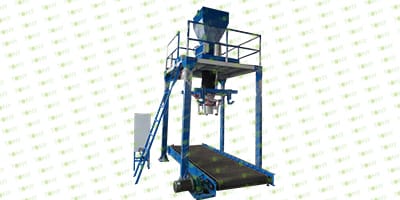 |
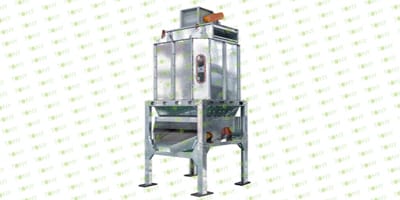
| Double Screw Cycling Silo | Vertical Ring Die Pellet Machine | Galvanized Pellets Cooler | Ton Packing Machine |
| 1.To Storage Rice Husk Before Pellet Machine; Adjust The Speed Of Rice Husk Entering The Pellet Machine 2.Model: TLC-16*1Set 3.Capacity:14-16Ton/Hour/Set |
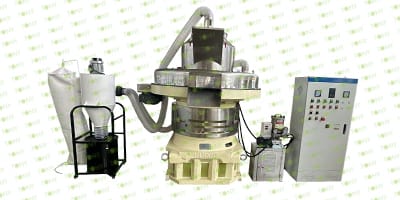
1.To Press Rice Husk Into 6-8mm Biomass Pellets 2.Model: TYJ860-III-250KW*4Sets 3.Capacity:3.5-4.5Ton/Hour/Set 4.New 304SS Type |
1.To Cool Pellets From 80-90℃ to 20-30℃ 2.Model:TCN-10*1Set 3.Capacity:14-16Ton/Hour |
1.To Pack Pellets Into 1 Ton/Bags. 2.Model: TBD* 1Set 3.Capacity:14-16Ton/Hour |
3D图 图3

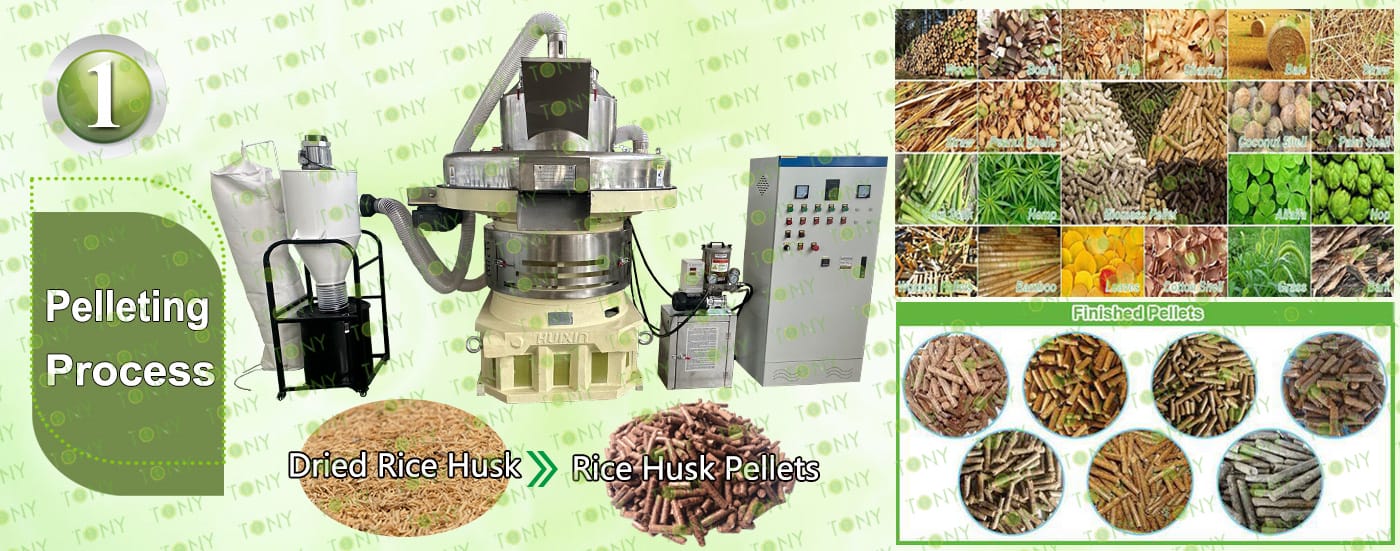
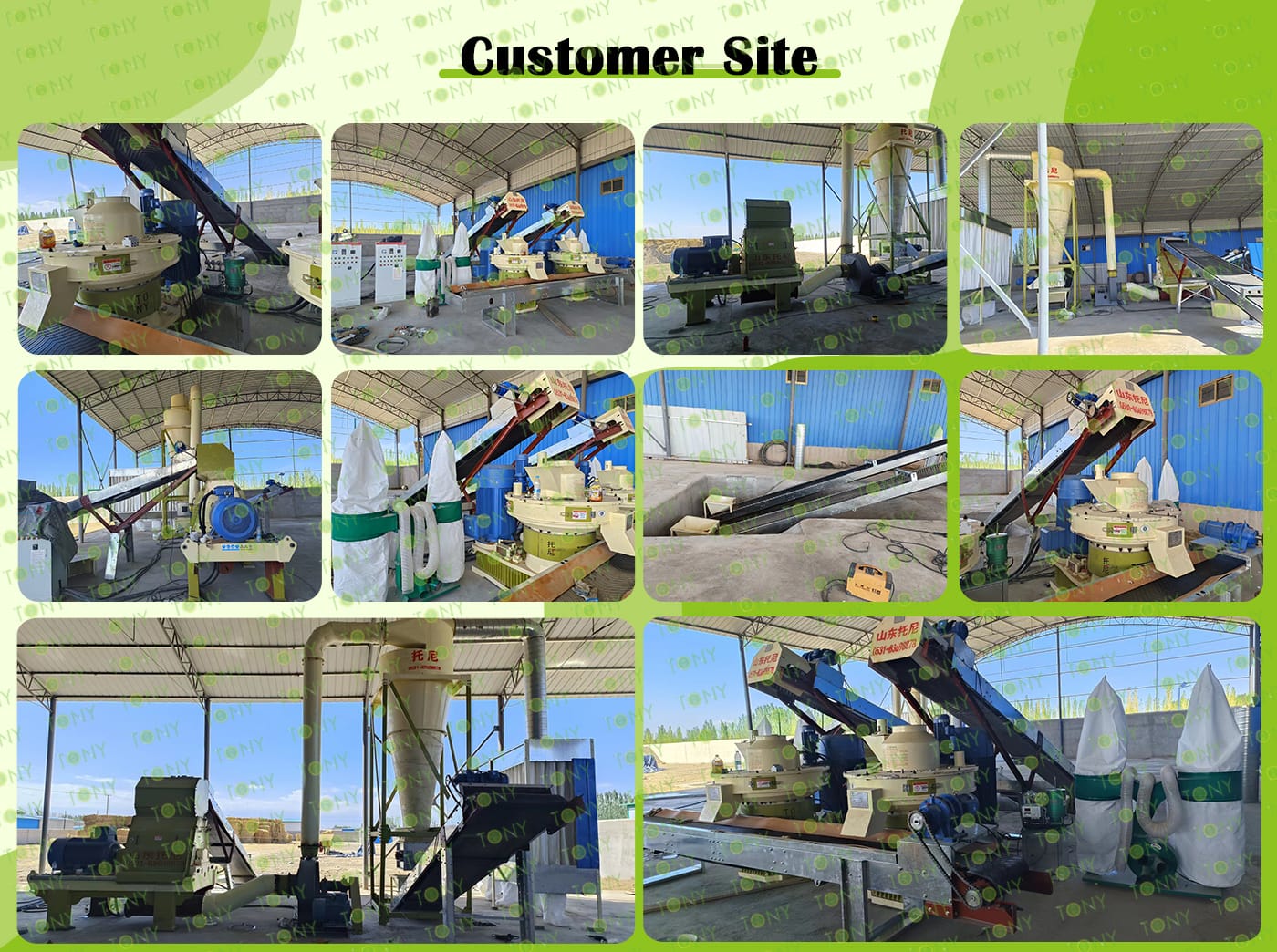
1.Pelletizing Process:
A.This process is mainly used to products pellets with φ6-8mm.
B.TONY brand vertical ring die pellet machine TYJ860-Ⅲ-250KW*4sets
C.Capacity:14-16tons/hour.
D.Double Screw Cycling Silo is added above the pellet machine, which has the advantages of saving space, saving labor, intelligently controlling the feeding speed, not easy to block the material, and improving production efficiency.
Main Parts:
(1)TONY New Vertical Ring Die Pellet Machine.
(2)Cyclone And Bags Dust Collectors.
(3)Bearings Automatic Lubrication System.
(4)Electrical Cabinets.
For more equipment details and information, you can contact TONY
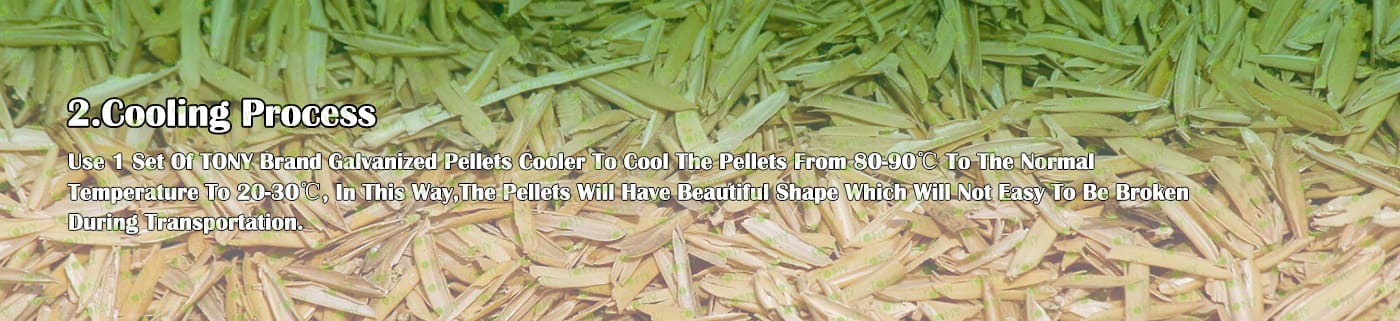
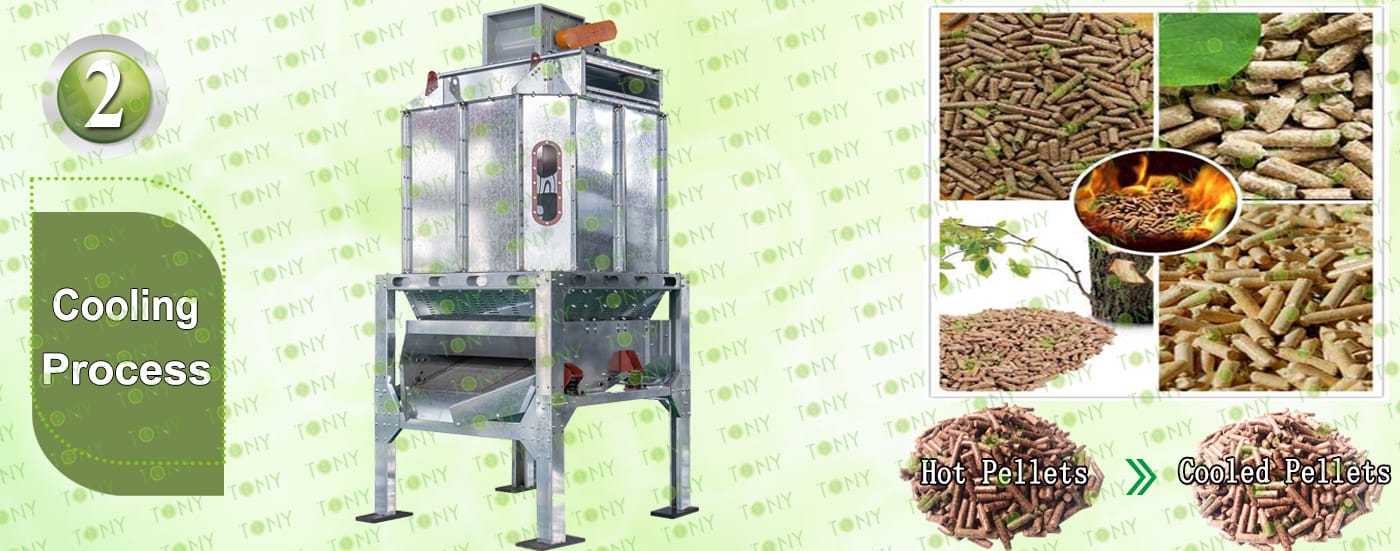
2.Cooling Process:
A.This process is mainly used to cool pellets from 80-90℃ to 20-30℃
B.TONY brand galvanized pellets cooler*1set
C.Capacity:14-16tons/hour.
Main Parts:
(1)TONY's New Galvanized Pellets Cooler Separator With Vibrating Screen.
(2)Cyclone and bags dust collectors.
(3)Fan Blower.
(4)Connect Pipes.

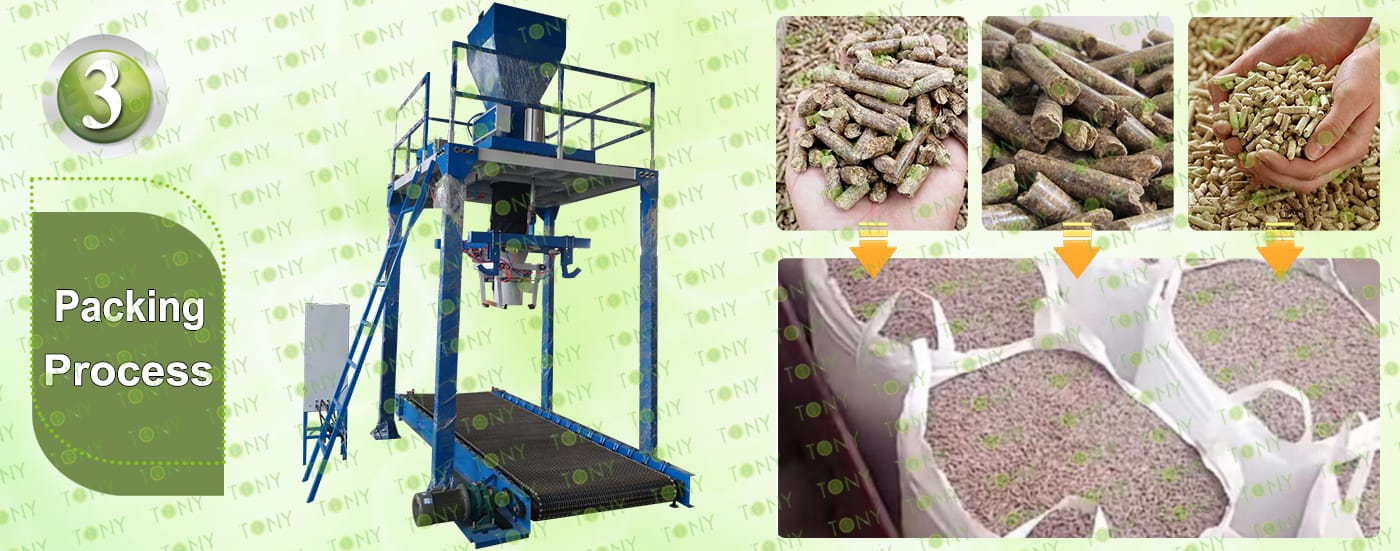
3.Packing Process:
A.This process is mainly used to pack pellets into 1ton/bags.
B.Capacity:14-16tons/hour.
C.TONY band ton packing machine*1 set
Main Parts:
(1)TONY Ton Packing Machine
(2)Electronic Platform Scale Metering System
(3)Automatic Tare, Zero, and Drop Correction Functions
(4)Feeding System Features Fast, Medium, and Slow Feeding Speeds to Ensure Measuring Accuracy

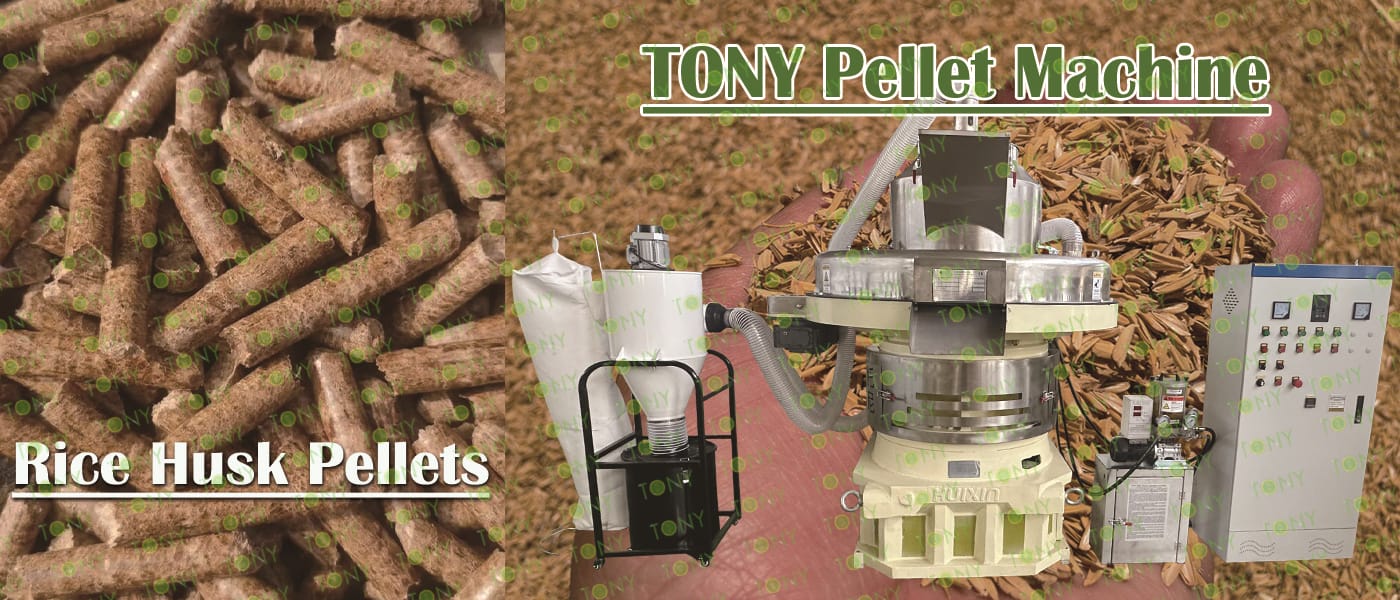
Rice husk biomass pellet is used as raw material to press rice husk into high-density particles, which has the advantages of low ignition point, high heating, clean and sanitary Combustion process, and is a high-quality fuel to replace Coal and other traditional fuels.
In recent years, coal resources are increasingly lacking, and the development and utilization of biomass is of great significance to global environmental protection and energy Conservation. With rice husk as the main raw material, The formed rice husk particles have the characteristics of high combustion efficiency, large heat, less sulfur dioxide, ammoniaNitrogen compounds and dust, etc., and the combustion efficiency reaches more than 85% (more than The Ordinary coal combustion efficiency of about 60%).
Using rice husk to do biomass pellet process is very simple, rice husk does not need pretreatment directly can enter the rice husk pellet machine for granulation, low cost and simple Operation, rice husk pellet as a new biomass fuel, With high heat value. Its heat density is between 3500-4500 kcal/kg. In contrast, the heat density of wood chips is only about 1800-2200 kcal/kg. Therefore, the thermal efficiency of rice husk particles is more than 50% higher than That of traditional wood chips, and it is a very excellent biomass fuel.
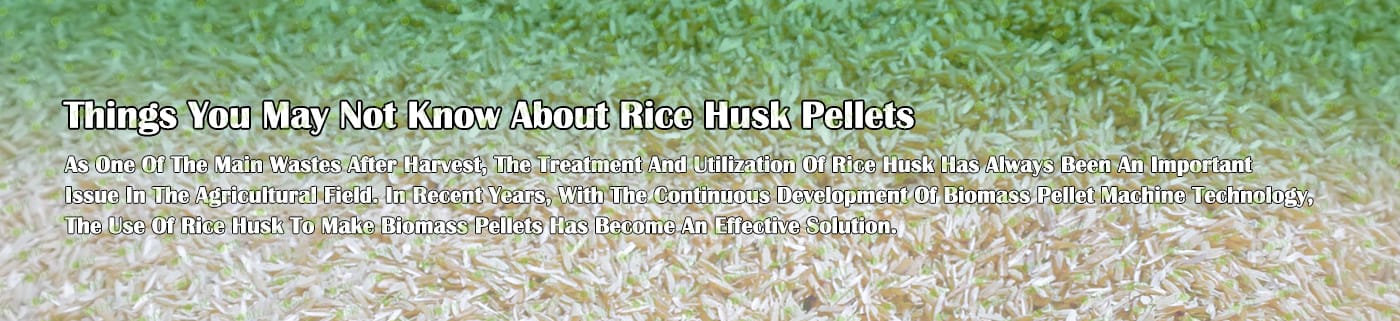
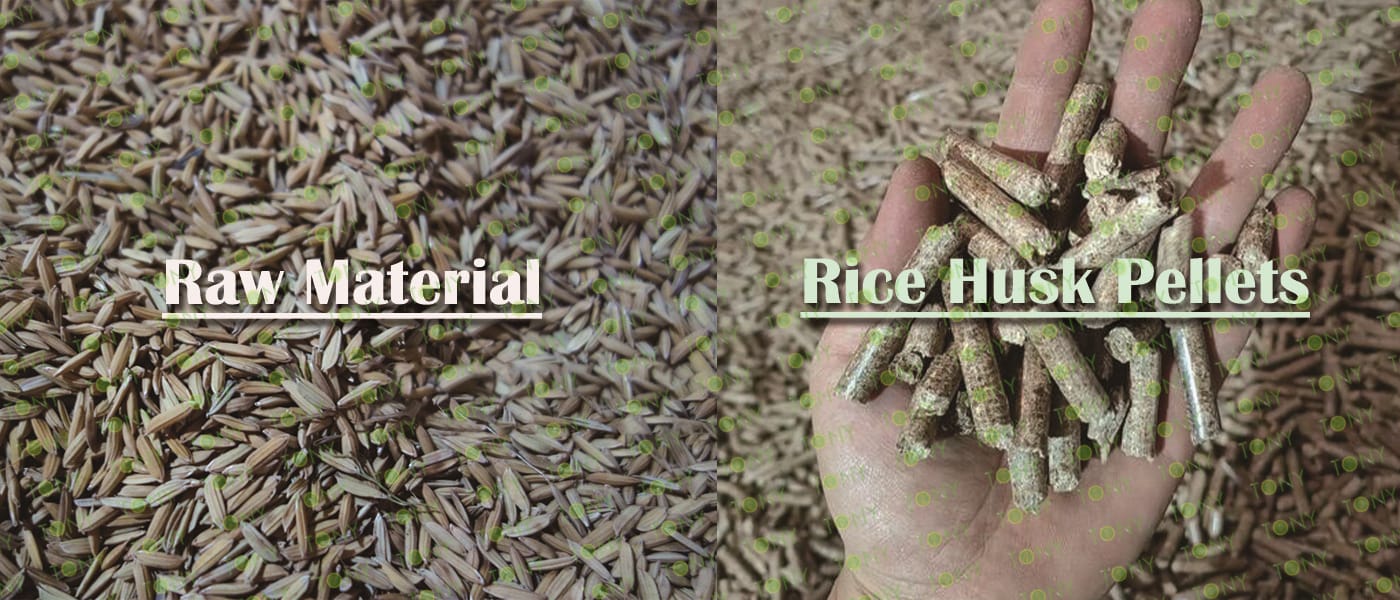
Biomass pellets is a new type of energy products, it is the use of biomass resources after processing and production of small granular solid fuel, rice husk is the shell of rice, is a part of rice, mainly contains cellulose, hemicellulose And other cellulose substances. As a kind of biomass resource, rice husk has attracted more and more attention and application in recent years due to its advantages of wide source, renewable and environmental protection.
Rice husk biomass particles have the following advantages:
1.Green Environmental Protection:
Rice husk is one of agricultural waste, rich in resources and renewable use, burning will not produce harmful substances, friendly to the Environment.
2.Economical And Practical:
The price of rice husk particles is more favorable than that of traditional fuels (such as wood), and the use of rice husk particles as fuel can save energy and reduce transportation costs.
3.High Calorific Value:
The calorific value of rice husk biomass particles refers to the heat released per unit mass of fuel, which is often used to compare the energy content of different fuels. According to experimental data, the calorific Value of rice husk biomass particles is between 4300-4800 kcal/kg, which is equivalent to the calorific value of coal, but its sulfur content is very low, so the emission of sulfur dioxide and other pollutants are also very small. Suitable For household, industry, hot water supply and other fields.
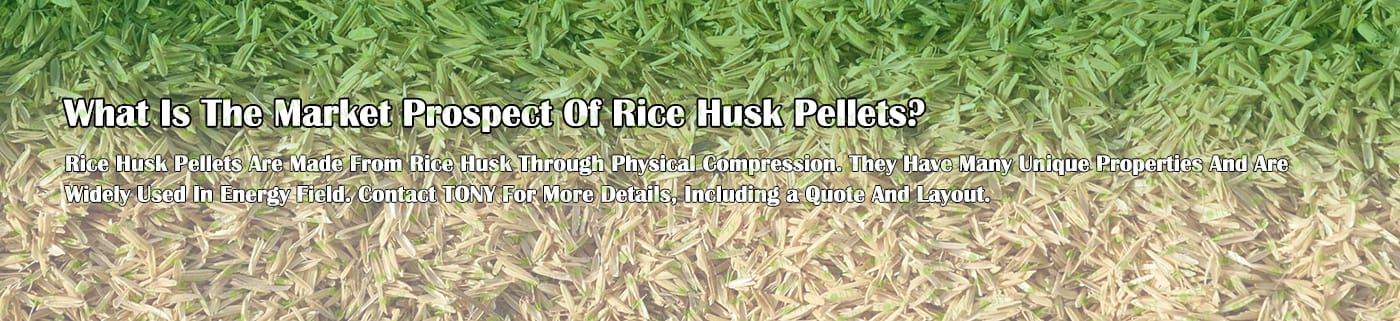
With the continuous popularization of the concept of environmental protection, the application prospect of rice husk biomass particles will be more and more broad.

2025 Tony Machinery - All Rights Reserved. Map