





















Control "innate conditions" from the source.
1.Moisture content: The lifeblood of pellet formation.
The optimal moisture content range is generally 10%-15% (slightly different for different raw materials, e.g., 12%-15% for wood and 10%-12% for straw).
Excessively high moisture content can cause pellets to become loose and moldy, potentially clogging the mold during molding and even causing equipment overload.
Excessively low moisture content can increase raw material fiber brittleness, resulting in insufficient bonding, making pellets prone to breakage and significantly increasing energy consumption.
Countermeasures: Equip precise drying equipment (e.g., drum dryers) with online moisture meters for real-time control to avoid relying on "rule of thumb."
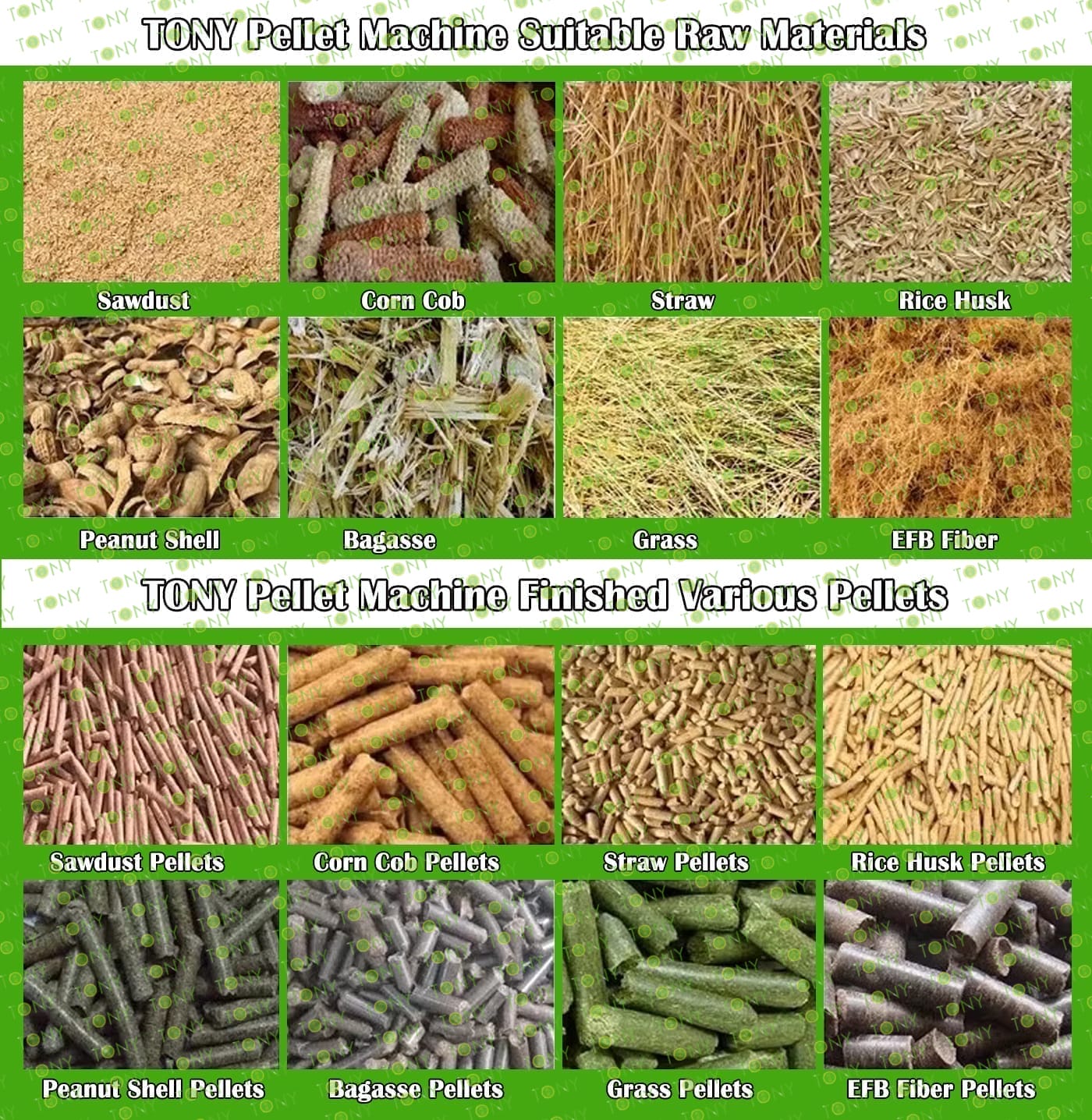
2.Raw material type and impurities: Determine the upper limit of pellet quality.
Single raw material (e.g., pure sawdust) is easier to control quality than mixed raw materials. When mixing, pay attention to fiber matching (e.g., the ratio of straw to sawdust should not exceed 30% to avoid excessive ash content). Strictly remove impurities (metal, sand, gravel, plastic, etc.): Metal impurities can directly damage the pelletizer mold and rollers, sand and gravel can increase equipment wear, and plastic can produce harmful gases when burned.
Countermeasures: Install a magnetic separator and screen before feeding the raw materials, and manually sort out visible foreign matter.
3.Raw Material Particle Size: The "Precision Requirement" of Pretreatment
The raw material particle size after grinding must be uniform, generally controlled at 3-5mm (a larger particle size can lead to uneven particle density, while a smaller particle size increases grinding energy consumption).
Different raw materials have different grinding requirements: hardwood requires finer grinding, while straw should be ground less excessively (to prevent fiber breakage and affect bonding).
Biomass pellet processing is a multi-step process involving raw material pretreatment, equipment operation, and process control. Oversights in any step can affect pellet quality, production efficiency, and equipment life.