





















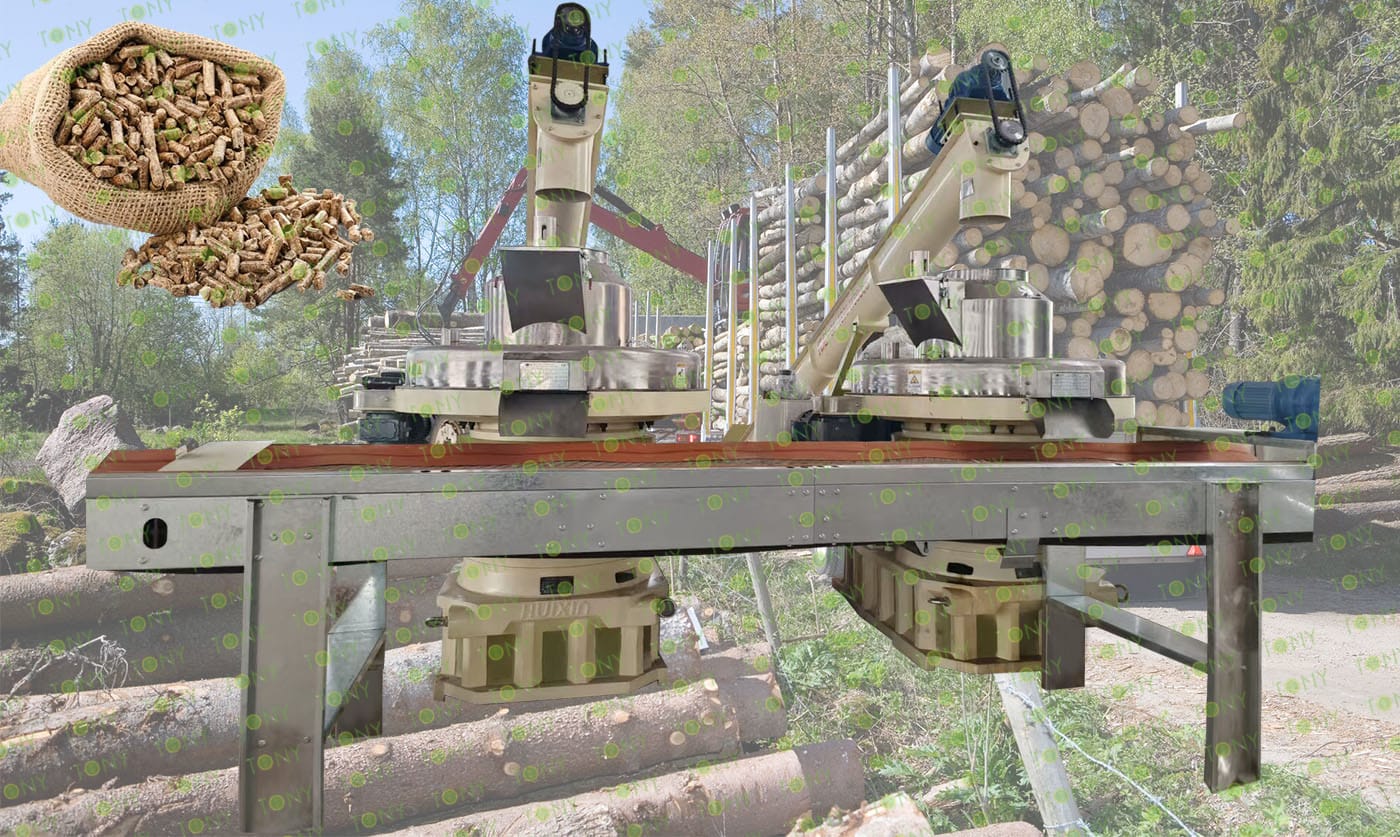
In agricultural and forestry production, large amounts of "waste" such as straw, wood chips, and branches were once considered a burden—indiscriminate burning polluted the environment, storage piles took up space, and even posed a fire hazard. The advent of biomass pellet machines has transformed these seemingly useless waste materials into a clean energy source with economic, environmental, and social value, truly realizing the multi-faceted value creation of "waste into treasure."
1. Economic Value: From "Waste Disposal Costs" to "Sustainable Profits"
Reducing Waste Disposal Costs and Creating New Revenue Sources
Traditionally, farmers face hidden costs such as hauling and burning straw, and fines for burning it. Companies also face waste disposal fees for wood processing waste. Converting these waste materials into pellet fuel not only offsets these costs but also opens up new revenue streams for agricultural cooperatives, forestry farms, and wood processing plants. Extending the Industrial Chain and Activating the Regional Economy
Pellet fuel production drives the development of upstream and downstream industries: the front end requires teams for raw material collection and transportation; the mid-end involves the manufacturing and maintenance of pellet processing equipment; and the back-end fosters fuel storage, logistics, and end-user sales networks. In rural areas, this "waste-pellet-energy" industrial chain also absorbs local labor, contributing to rural revitalization.
2.Environmental Value: A "Green Transformation" to Protect Ecology
Replacing Fossil Fuels and Reducing Carbon Emissions
Biomass pellet fuel is a renewable energy source. The carbon dioxide released during combustion is nearly balanced by the carbon absorbed during plant growth, achieving zero net emissions in the "carbon cycle." Compared to coal combustion, biomass pellets emit only one-tenth the sulfur dioxide and one-fifth the nitrogen oxides, significantly reducing the causes of acid rain and smog.
Curbing "waste pollution" and improving the living environment
Open-air straw burning was once a major source of air pollution. Biomass pellet machines, by fully collecting straw, fundamentally address this problem. At the same time, the resource utilization of forestry waste reduces the risk of pests and diseases and fires caused by accumulation in forests, protecting forest ecosystems.
3.Social Value: Ensuring Energy Security and People's Livelihood Needs
Improving Energy Self-Sufficiency and Alleviating Energy Shortages
As a local renewable energy source, biomass pellet fuel can be widely used in industrial heating, rural cooking, and power generation, reducing dependence on coal and natural gas and providing a "buffer zone" for energy security.
Supporting the Agricultural Circular Economy and Promoting the Development of Green Agriculture
The ash from burning biomass pellets is rich in potassium, calcium, and other elements and can be returned to the fields as organic fertilizer, forming a closed-loop "straw - pellets - ash - fertilizer - crops" cycle. This model not only reduces the use of chemical fertilizers but also improves soil fertility, aligning with the development of green agriculture.
The value of a biomass pellet machine goes far beyond its physical processing capabilities. It also reshapes how we understand waste: nature doesn't have "waste," only misplaced resources. Through technological innovation, these once abandoned biomass materials are blossoming with multiple values in the form of pellet fuel in the fields of energy, economy, and ecology, becoming an important link connecting agriculture, environmental protection, and energy security, and providing a vivid practical example for sustainable development.