





















Traditional coal combustion is energy-intensive, polluting, and puts significant pressure on environmental protection. Combustion of scattered agricultural and forestry waste produces excessive smoke, has unstable calorific value, and low utilization rate. Driven by the dual demands of green energy conservation, cost reduction, and efficiency improvement, biomass pellet green energy, with its core advantages of high combustion efficiency, clean and low emissions, and stable durability, has become a superior alternative to traditional energy sources, truly achieving a balance between high-efficiency energy use and environmental protection.
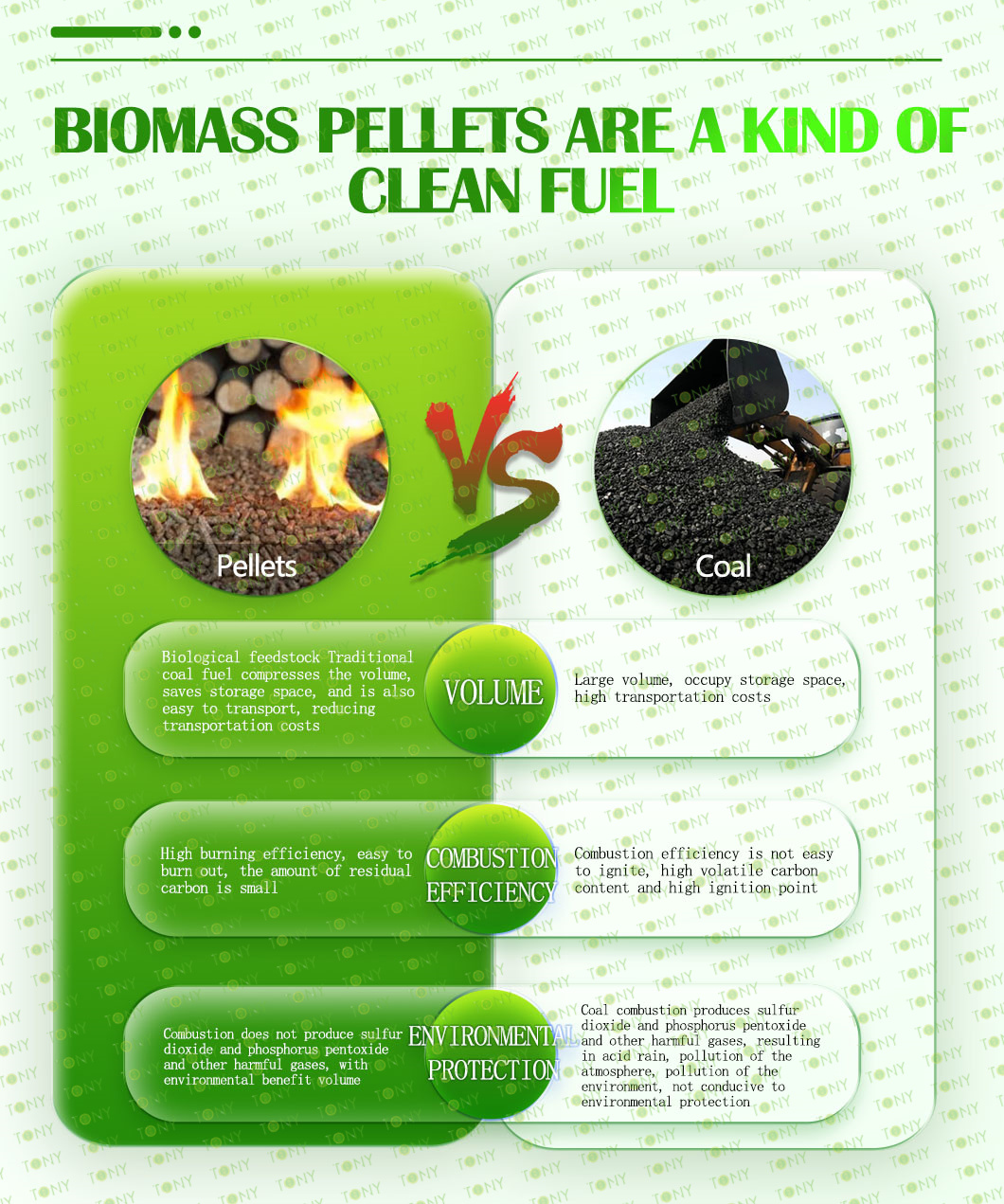
Highly efficient and stable combustion eliminates the problem of inefficient energy consumption. Biomass pellets are made from agricultural and forestry waste such as straw, rice husks, sawdust, and forestry by-products, refined through crushing, drying, and high-pressure extrusion molding processes. The fuel is dense, has low moisture content, and a uniform and stable calorific value. Compared to raw coal and loose waste, pellet fuel has a high burnout rate, long-lasting heat, and rapid temperature rise. There is no open flame drift or intermittent flameout during combustion, which greatly improves the utilization rate of thermal energy. It fully meets the energy needs of various scenarios such as industrial boiler heating, agricultural product drying, factory and residential heating, and constant temperature for aquaculture, and completely solves the pain points of incomplete combustion, heat waste, and high energy consumption of traditional fuels.