





















In the straw biomass pellets production line , the pretreatment stage directly determines the operational efficiency of the entire line and the quality of the finished product; specifically, rotary cutting the straw beforehand is a crucial step for saving time and effort while minimizing production issues. Many manufacturers attempt to pelletize whole bales or long straw segments directly, a practice prone to machine clogging, poor pellet formation, and low output. In contrast, performing rotary cutting beforehand eliminates most production risks at the source, ensuring a smoother and more stable pelletizing process.
Untreated straw varies in length, possesses long fibers, and is highly bulky; when fed into the equipment, it easily accumulates and bridges at the inlet, causing uneven feeding and frequent interruptions or material backflow. Furthermore, long straw is difficult to pulverize and refine adequately, resulting in inconsistent particle sizes and uneven pressure distribution during compression. This leads to loose, fragile pellets of inconsistent quality, significantly lowering the pass rate of the finished product. Such issues not only increase the workload for manual clearing and cleaning but also accelerate wear on press rollers and dies, thereby shortening the equipment's service life.
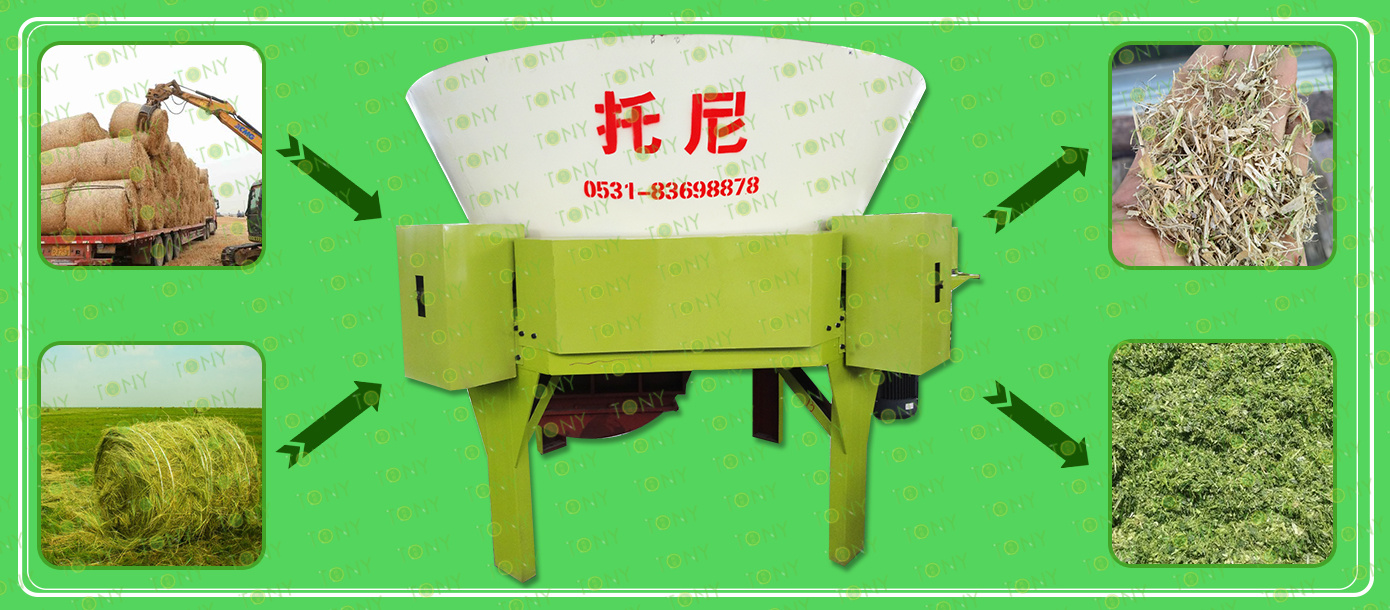
Pre-processing straw via rotary cutting transforms straw of varying lengths into uniformly sized short pieces. This creates a compact material structure that flows smoothly, fundamentally resolving issues like inlet clogging and material bridging. Uniform material facilitates rapid pulverization, mixing, and conditioning; the consistent size and texture ensure better bonding during compression, significantly improving the pellet formation rate. The resulting pellets are hard, uniform in appearance, and resistant to crumbling.
This rotary-cutting pretreatment method effectively reduces equipment downtime caused by malfunctions, lowers wear and tear and labor costs, and substantially boosts production efficiency. A simple preliminary step effectively enhances quality and efficiency while reducing waste, truly enabling trouble-free straw pelletizing, high production efficiency, and superior product quality—making it an essential process for large-scale straw pellet production.