





















In the biomass pellet production process, controlling raw material moisture is the critical factor determining both finished product quality and production efficiency. Properly managing the drying stage and precisely regulating moisture content can significantly boost productivity, effectively prevent operational issues, and enhance overall output and quality. Many production lines suffer from poor pellet formation, machine blockages, and high defect rates—problems largely stemming from improper moisture control—underscoring the vital importance of the drying phase.
Biomass pellet production line adheres to strict standards regarding raw material moisture, with the optimal range for pelletizing generally falling between 10% and 15%. If moisture levels are too high, the material is difficult to compact during pressing; the resulting pellets are loose and fragile, prone to cracking and crumbling after discharge, which drastically lowers the pass rate. Furthermore, high-moisture material increases equipment load, leading to issues such as roller slippage, die clogging, and excessive material backflow. Frequent shutdowns for cleaning severely reduce production efficiency while accelerating equipment wear and increasing maintenance costs.
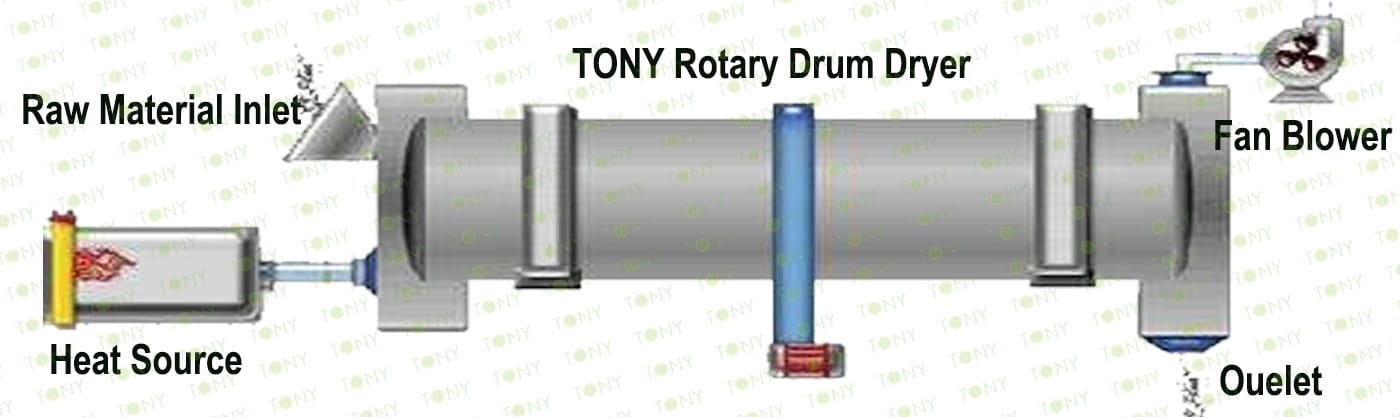
Conversely, excessively low moisture levels also hinder production. Material that is too dry lacks fiber toughness and exhibits poor binding properties during pressing, making it difficult to form pellets. This not only reduces the pellet yield but also generates significant dust and waste, resulting in raw material loss. Precise moisture control during drying ensures the raw material fibers possess the right balance of softness and rigidity and optimal binding characteristics, making them ideally suited for the pelletizing process and ensuring continuous, stable production line operation.
Effective moisture control during drying not only improves efficiency and reduces equipment malfunctions but also significantly enhances the quality of the finished pellets. Pellets produced with optimal moisture levels feature uniform density and adequate hardness; they burn efficiently with a stable calorific value, resist mold and deterioration, and offer a longer shelf life. Thus, strictly controlling drying moisture is a key strategy for boosting profitability through low-cost, high-efficiency production, making it an indispensable core process in biomass pellet manufacturing.