





















A key advantage of biomass pellet processing is its versatility regarding raw materials; leveraging mature molding technologies and adaptable equipment, the vast majority of organic agricultural and forestry waste can serve as feedstock. This breaks the limitations of traditional fuel processing—which typically relies on a single type of raw material—enabling the resource utilization of diverse solid biomass wastes with exceptional adaptability.
The process accommodates a wide range of materials. Forestry waste—including sawdust, wood shavings, branches, bark, furniture offcuts, and discarded wooden pallets—can be processed directly. Agricultural waste serves as a core feedstock, with crop residues such as corn stalks, wheat straw, rice straw, rice husks, peanut shells, and cotton stalks all capable of being efficiently formed into pellets. Furthermore, industrial organic waste—such as spent mushroom substrate, herbal medicine residues, and sugarcane bagasse—along with various herbaceous plant residues, can be fed into the production line without the need for strict material sorting.
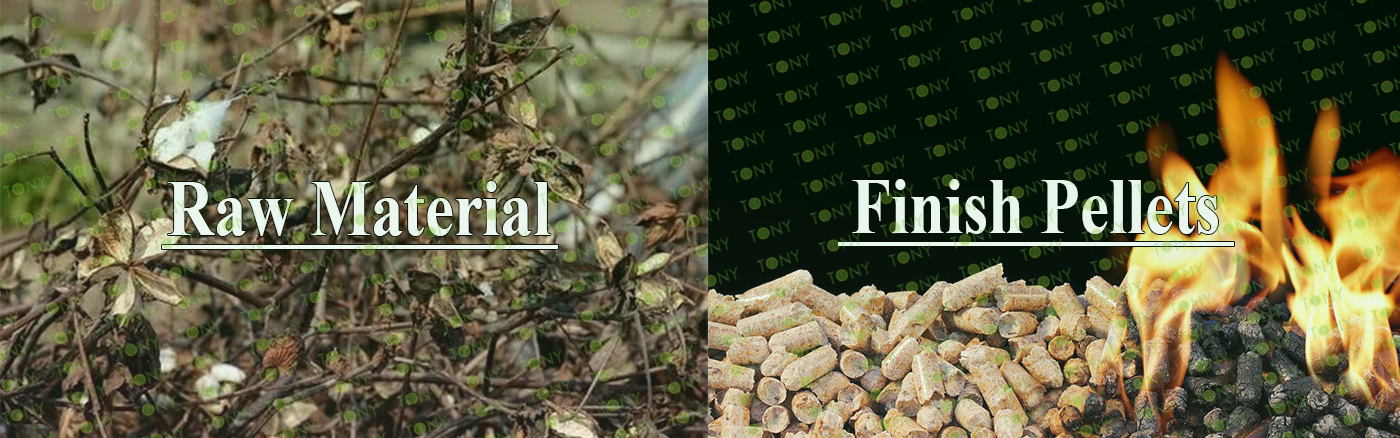
The process is also highly tolerant of varying raw material conditions, eliminating the need for rigorous pre-treatment. Integrated equipment—combining crushing, drying, and conditioning—adapts to materials with differing moisture levels and fiber coarseness. There is no requirement for uniform material specifications, which significantly lowers the costs associated with collection and sorting. Mixed materials can also be processed together; the resulting pellets maintain uniform density and stable calorific value, ensuring consistent combustion quality and performance.
This material versatility allows for localized sourcing and production, effectively unlocking the value of otherwise idle agricultural and forestry waste. It mitigates environmental pollution caused by waste accumulation and open burning while simultaneously reducing pellet fuel production costs. With its broad material adaptability, biomass pellet processing offers both environmental and economic benefits, serving as an excellent industrial model for clean energy recycling.