




















1.The working principle of dried rice husk biomass pellet processing equipment
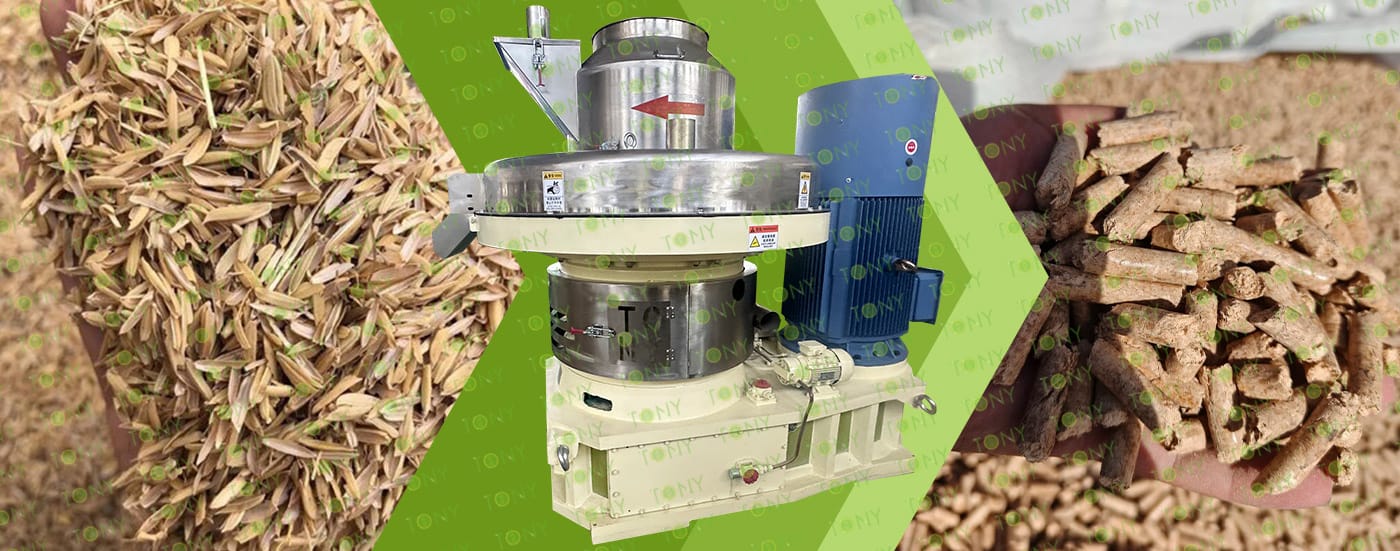
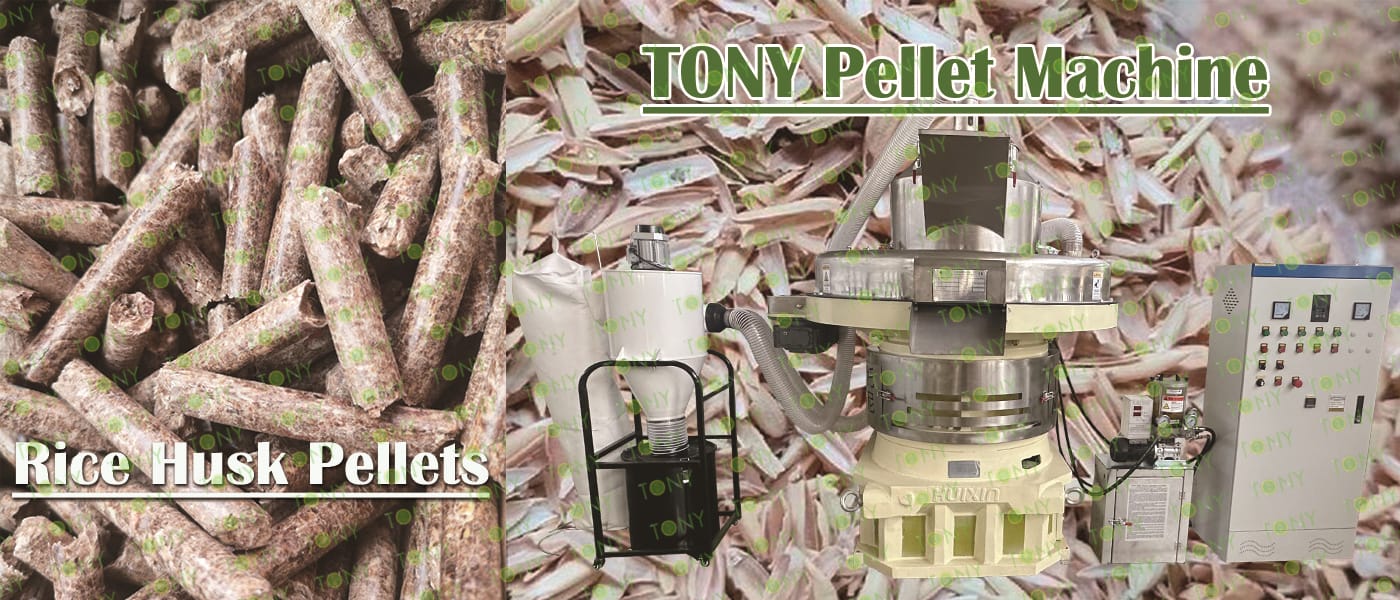
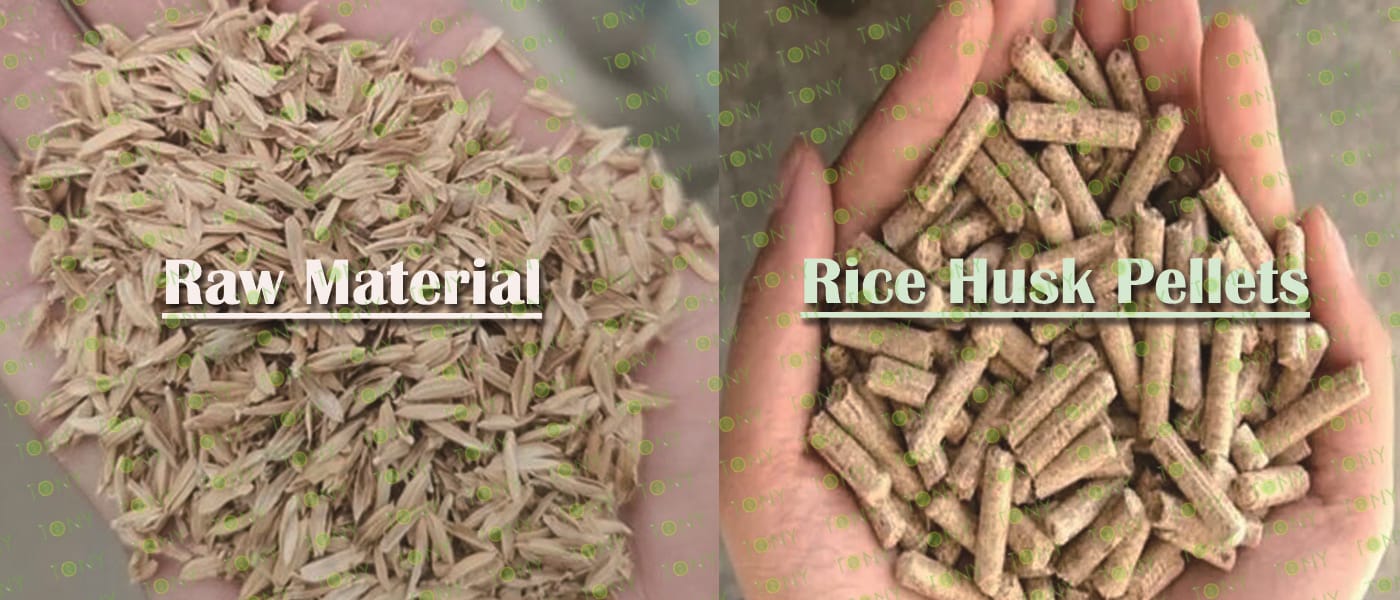
The principle of the dry rice husk pellet processing equipment is to physically compress dry rice husks into pellets. During the pelleting process, biomass sawdust raw material falls vertically into the feed port. The rotation of the pressure rollers causes the material to be continuously and evenly distributed on the inner surface of the mold cavity. Under the crushing of the pressure rollers, the powdery material passes through the holes of the mold. During this process, the material is subjected to high pressure and high temperature, which causes physical changes or appropriate chemical changes, causing the powdery material to form a continuously elongated cylindrical solid body. Then, the pellets are cut by the cutting blade and discharged from the discharge port. At this point, the pellet pressing process is completed.
2.Characteristics of dried rice husk biomass pellet processing equipment
(1)Highly efficient pelleting and stable pellet quality:The core equipment, the ring die pellet mill, uses a high-strength alloy ring die and wear-resistant pressure rollers, which can withstand the high friction during wet sawdust extrusion, ensuring continuous production.
(2)Strong adaptability to high-moisture raw materials:It can quickly reduce moisture content to the required 10%-15% for pelleting, and can operate stably even with large fluctuations in raw material moisture (such as sawdust collected during the rainy season).
(3)Energy-saving and environmentally friendly, with high resource utilization.
(4)High degree of automation and convenient operation: It can monitor parameters such as raw material moisture, pelleting temperature, and output in real time, and automatically adjust drying time, feeding speed, and pressure roller speed, reducing manual intervention.
3.Application scenarios of dried rice husk biomass pellet processing equipment
(1)Bio-based material filler:Rice husk granules and their processed products (such as rice husk ash and rice husk powder) can be used as inexpensive, renewable fillers or reinforcing materials for environmentally friendly plastics, building materials (such as lightweight bricks and silicate boards), and friction materials (such as brake pads), improving product performance and reducing costs.
(2)Thermal insulation covering agent in the metallurgical industry:Rice husk granules or their carbonized products can be used as thermal insulation covering agents for molten steel and iron, reducing heat loss and metal oxidation.
(3)Raw material for activated carbon/silica:Rice husks are rich in silicon and carbon, making them an important raw material for producing activated carbon for water treatment or silica (silica) for the rubber industry. Improved combustion performance: more complete combustion, higher thermal efficiency, and lower dust emissions.
(4)Easy storage and transportation:The granules have good flowability and can be sold in bulk or bags, greatly reducing long-distance transportation and storage costs. Processing equipment can provide uniformly sized raw material granules for subsequent deep processing.

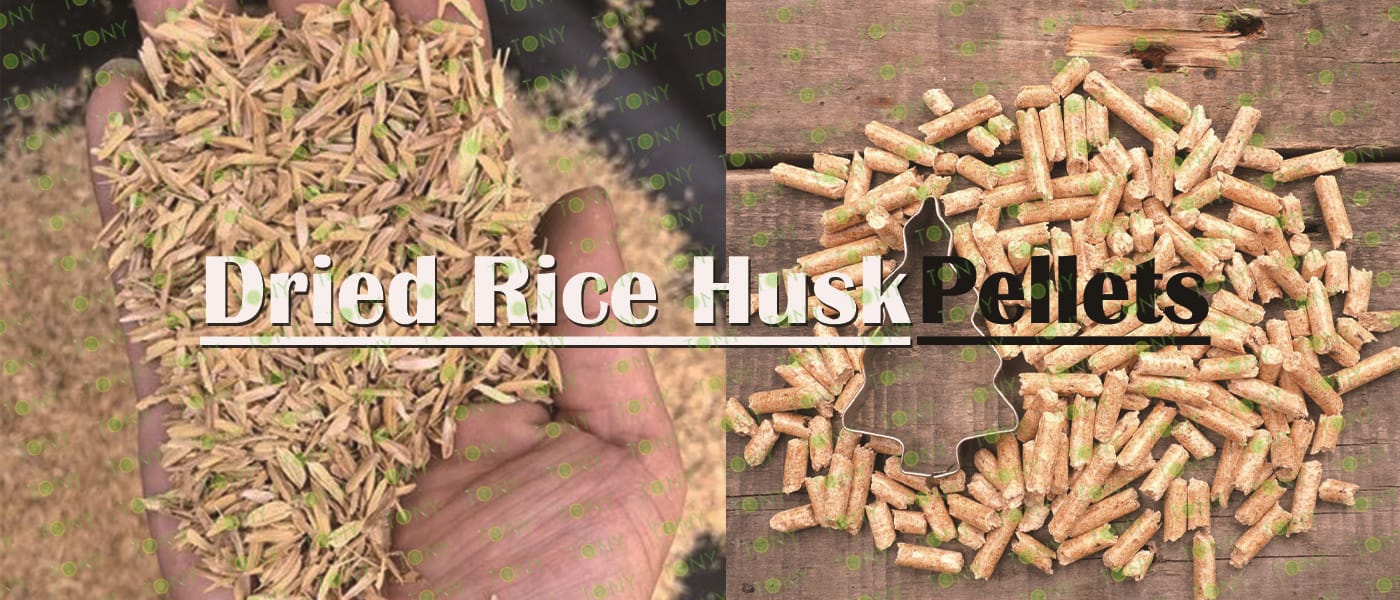
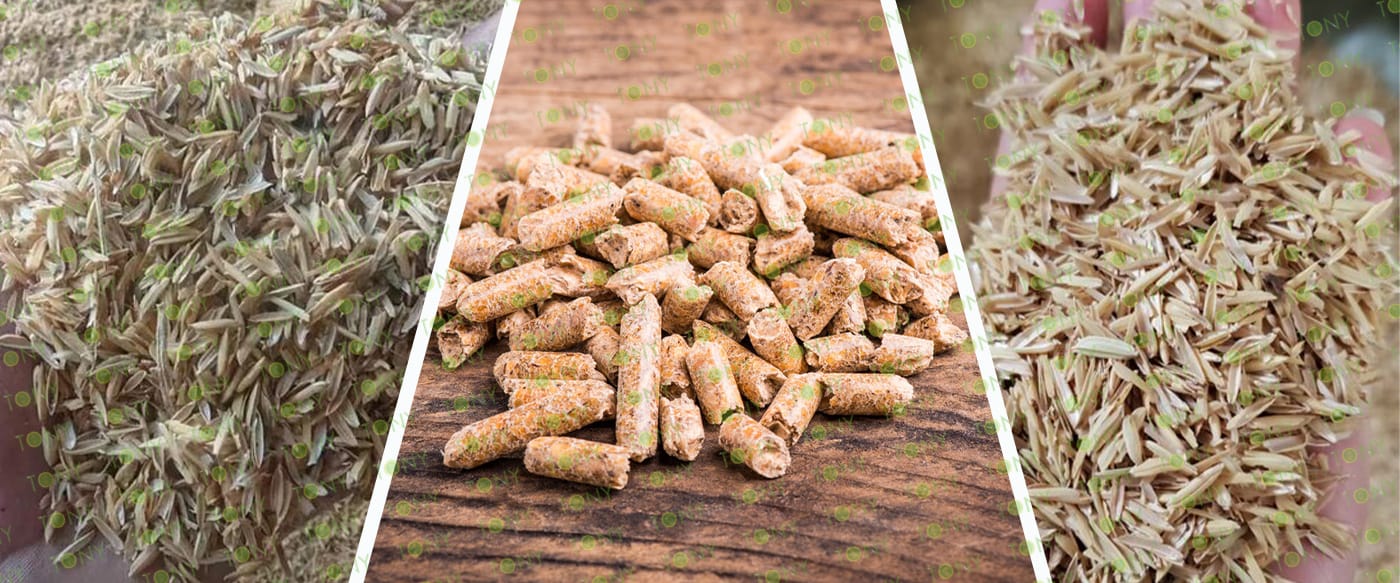
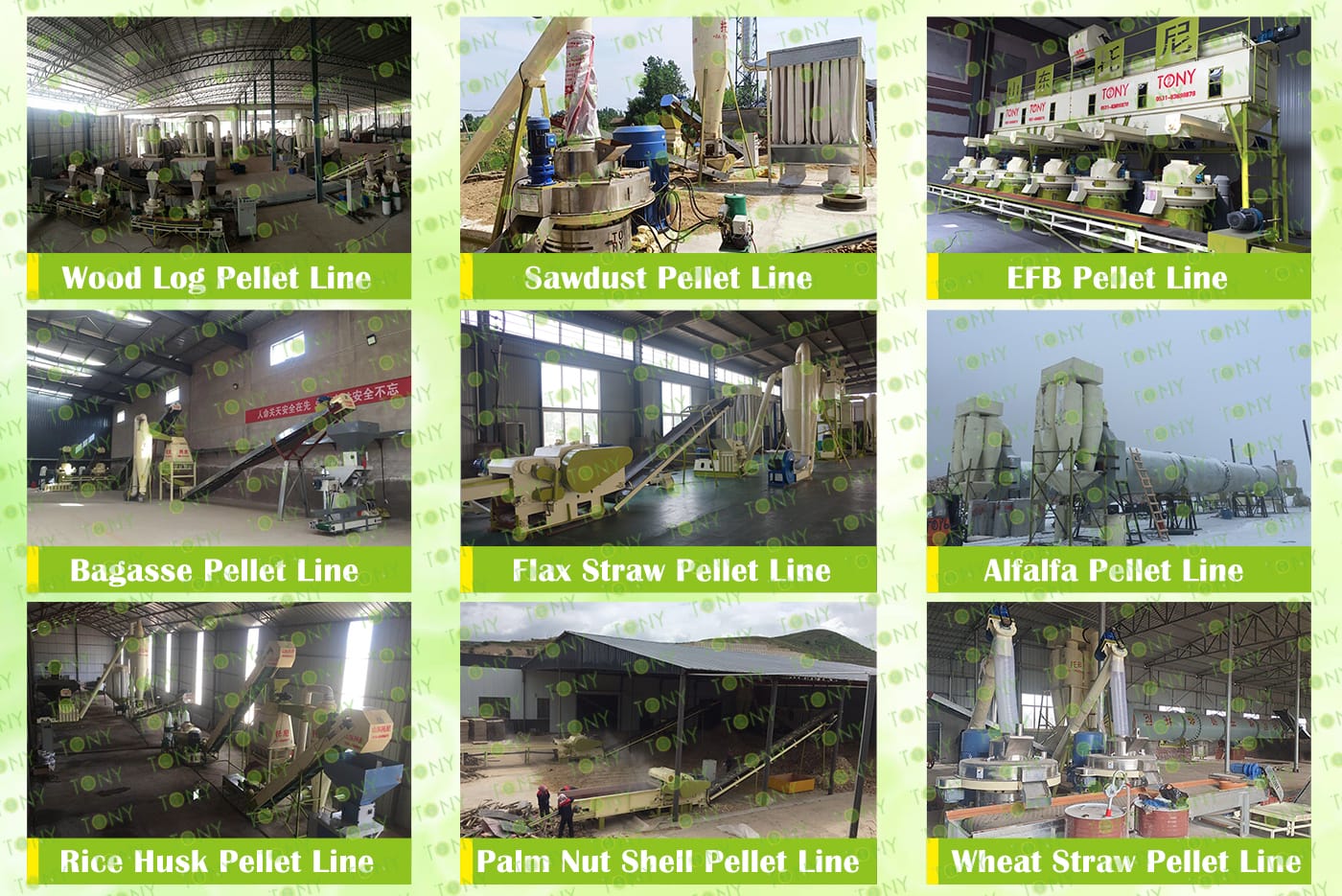
TONY Brand 80-100TPH Dried Rice Husk Pellet Line can process dried rice husk and various biomass materials into biomass pellets. The core of the rice husk biomass pellet production line is to take advantage of the characteristics of rice husks—lightweight, high in silicon, and low in agglomeration—and transform agricultural waste rice husks into standardized biomass fuel through customized pretreatment and pelleting processes. This fuel is widely applicable to rice-growing areas and energy demand scenarios.The core significance of the rice husk biomass pellet production line is to realize the resource utilization, reduction and low-carbon utilization of rice husk waste, which not only solves the problem of agricultural solid waste pollution, but also provides a clean option for energy structure transformation, and has economic, environmental and social value.
1. Capacity:80-100Ton/Hour
2. Raw materials: Dried rice husk
3. Moisture: About 10-15%
4. Application: All kinds of biomass materials suitable for pellet production.
Suitable customers: Green energy companies, large farms, private growers and other customers with advantages in raw materials.
5. Finished Pellets Markets: Large power plants, domestic heating, industrial heating, combustion heat, heating heating, boiler room, school canteen, foundry heat source.
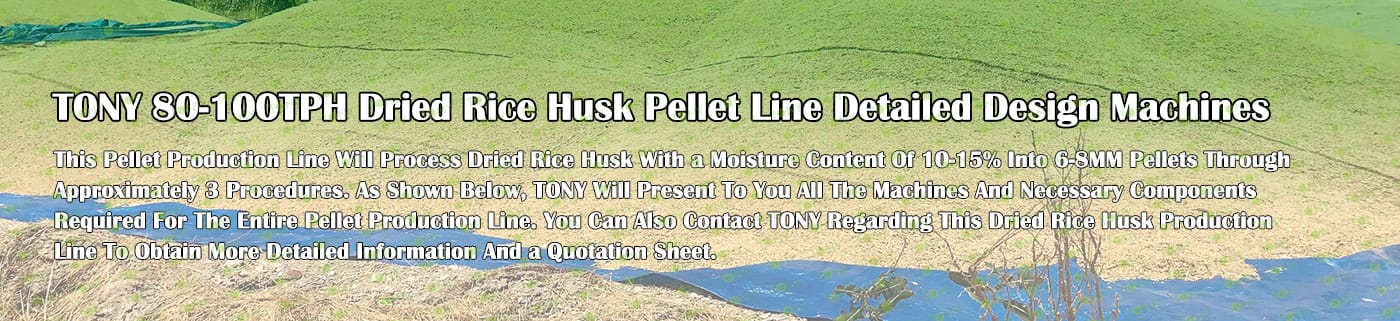
1. Project Name: Dried Rice Husk Pellet Production Line
2. Raw Material: Dried rice husk
3. Moisture Content of Raw Material:10-15%
4. Capacity: 80-100TPH
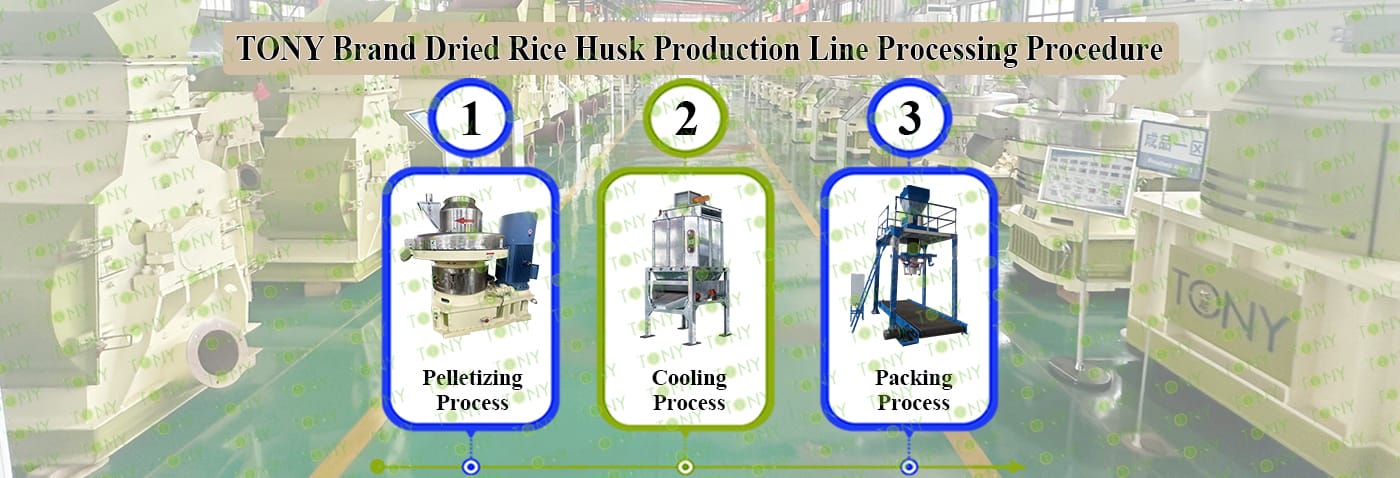
5. Process:Pelletizing Process - Cooling Process - Packing Process
6. Main Equipment:TONY Pellet Machine-TYJ860-III-280KW, Galvanized Pellets Cooler, Ton Packing Machine and Belt Conveyors

|
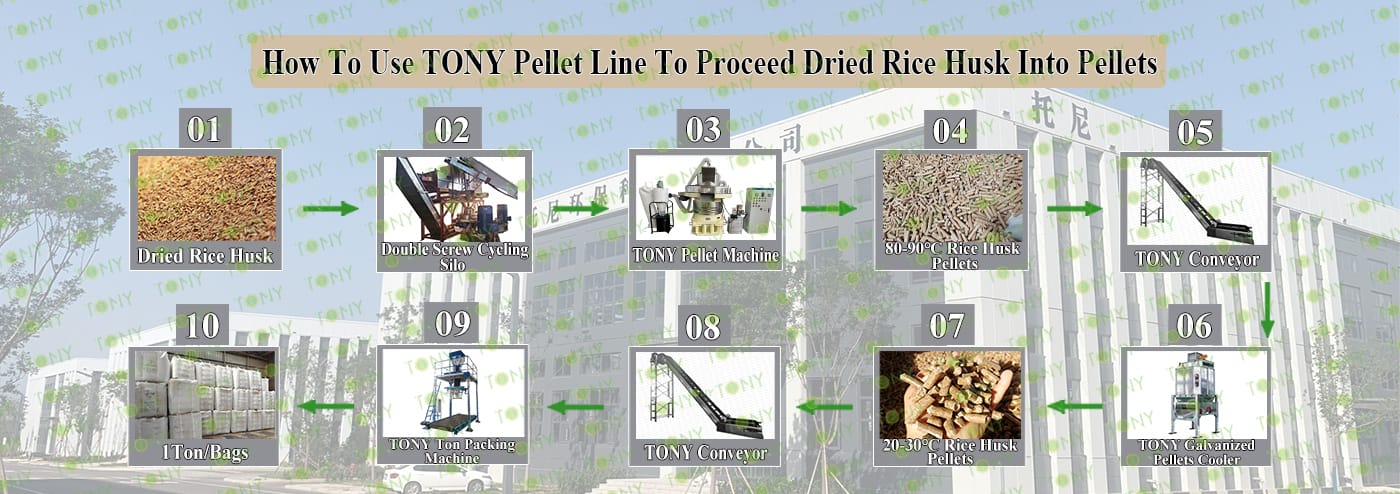
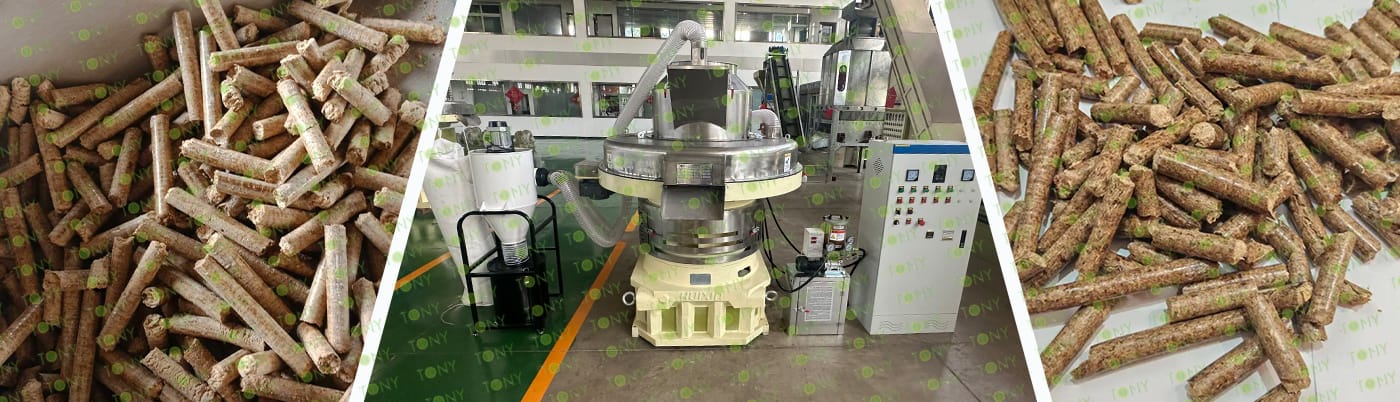
How To Use TONY Pellet Line To Proceed From Dried Rice Husk Into Pellets? It mainly contains the following steps and machines as following: 1.Use TONY vertical ring die pellet machine to products pellets with φ6-8mm. 2.Use TONY galvanized pellets cooler to cool pellets from 80-90℃ to 20-30℃. 3.Use TONY ton packing machine to pack the pellets into 1 ton/bags. You can contact TONY to get for more details information and quotation. TONY can supply you all the products as above with competitive price and excellent quality. |
|
|||||||||||||||||||||||||||||||||||
| Next, TONY Will Introduce To You All The Necessary Machinery That Will Be Used For The Whole Pellet Production Line. Some Machines Can Be Custom - Made By Customers According To Different Customers' Detailed Demands. Contact TONY For More Details, Including Quotation And Layout. | |||
 |
 |
 |
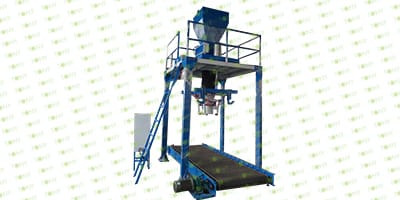 |
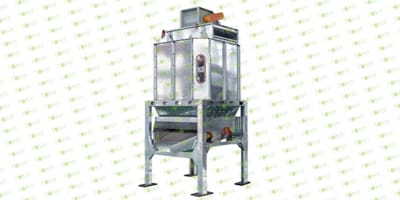
| Double Screw Cycling Silo | Vertical Ring Die Pellet Machine | Galvanized Pellets Cooler | Ton Packing Machine |
| 1.To Storage Rice Husk Before Pellet Machine; Adjust The Speed Of Rice Husk Entering The Pellet Machine 2.Model: TLC-25*4Sets 3.Capacity:20-25Ton/Hour/Set |
1.To Press Rice Husk Into 6-8mm Biomass Pellets 2.Model: TYJ860-III-280KW*20Sets 3.Capacity:4-5Ton/Hour/Set 4.New 304SS Type |
1.To Cool Pellets From 80-90℃ to 20-30℃ 2.Model:TCN-10*4Sets 3.Capacity:80-100Ton/Hour |
1.To Pack Pellets Into 1 Ton/Bags. 2.Model: TBD*4Sets 3.Capacity:80-100Ton/Hour |

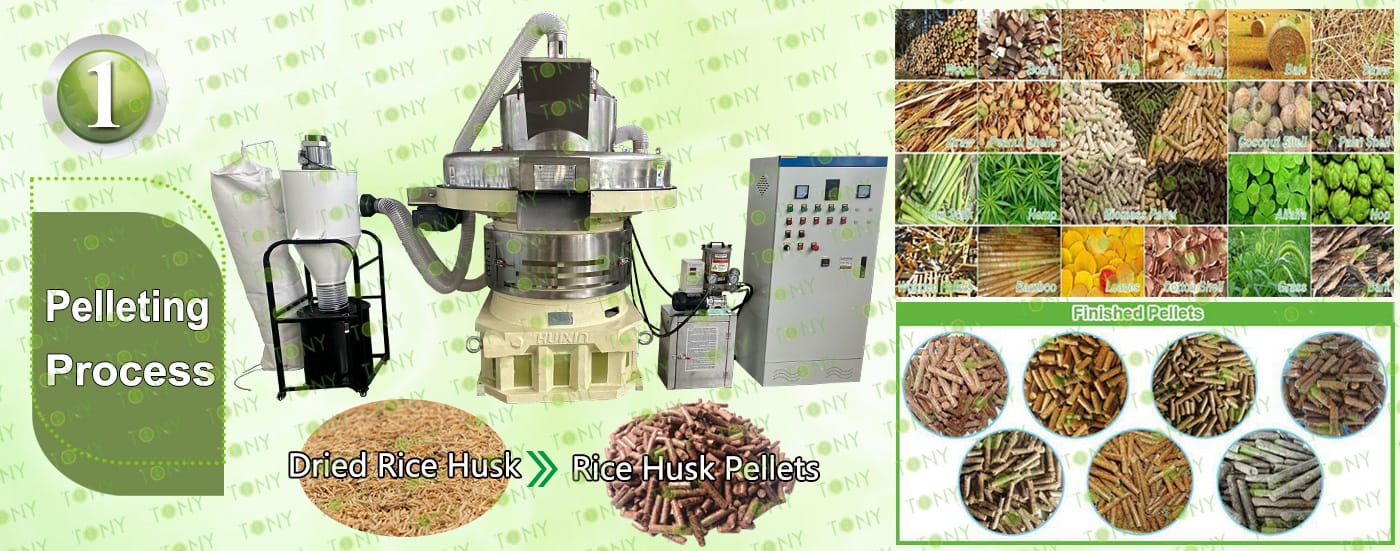
1.Pelletizing Process:
A.This process is mainly used to products pellets with φ6-8mm.
B.TONY brand vertical ring die pellet machine TYJ860-Ⅲ-280KW *20sets
C.Capacity:80-100tons/hour.
D.Double Screw Cycling Silo is added above the pellet machine, which has the advantages of saving space, saving labor, intelligently controlling the feeding speed, not easy to block the material, and improving production efficiency.
Main Parts:
(1)TONY New Vertical Ring Die Pellet Machine.
(2)Cyclone And Bags Dust Collectors.
(3)Bearings Automatic Lubrication System.
(4)Electrical Cabinets.
For more equipment details and information, you can contact TONY

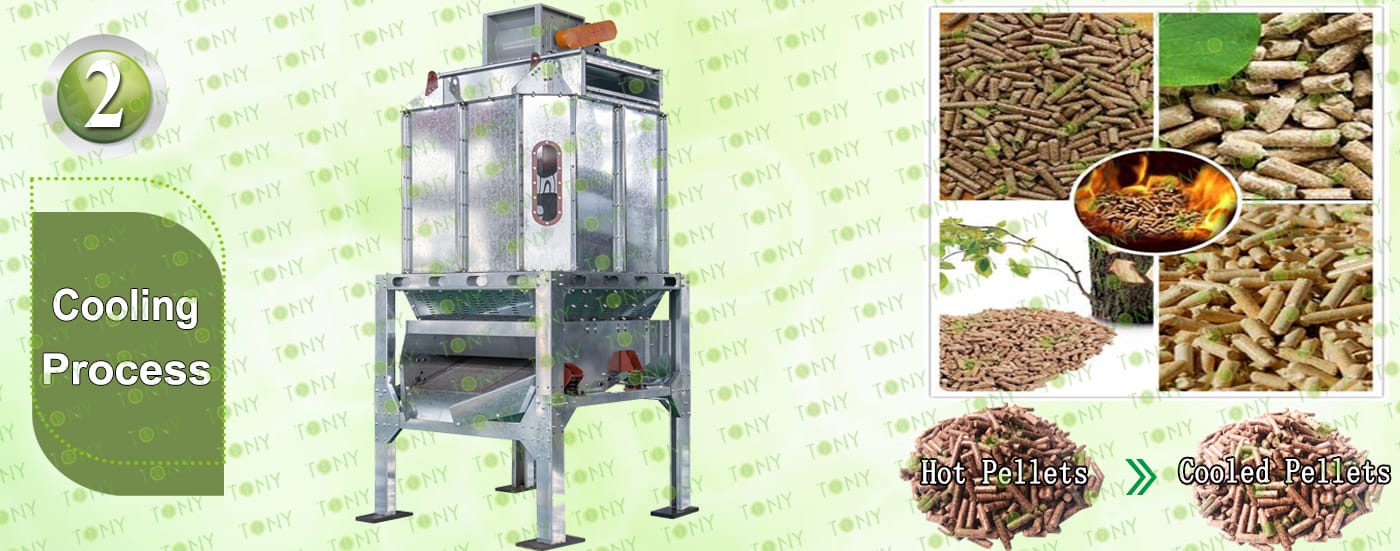
2.Cooling Process:
A.This process is mainly used to cool pellets from 80-90℃ to 20-30℃
B.TONY brand galvanized pellets cooler*4sets
C.Capacity:80-100tons/hour.
Main Parts:
(1)TONY's New Galvanized Pellets Cooler Separator With Vibrating Screen.
(2)Cyclone and bags dust collectors.
(3)Fan Blower.
(4)Connect Pipes.

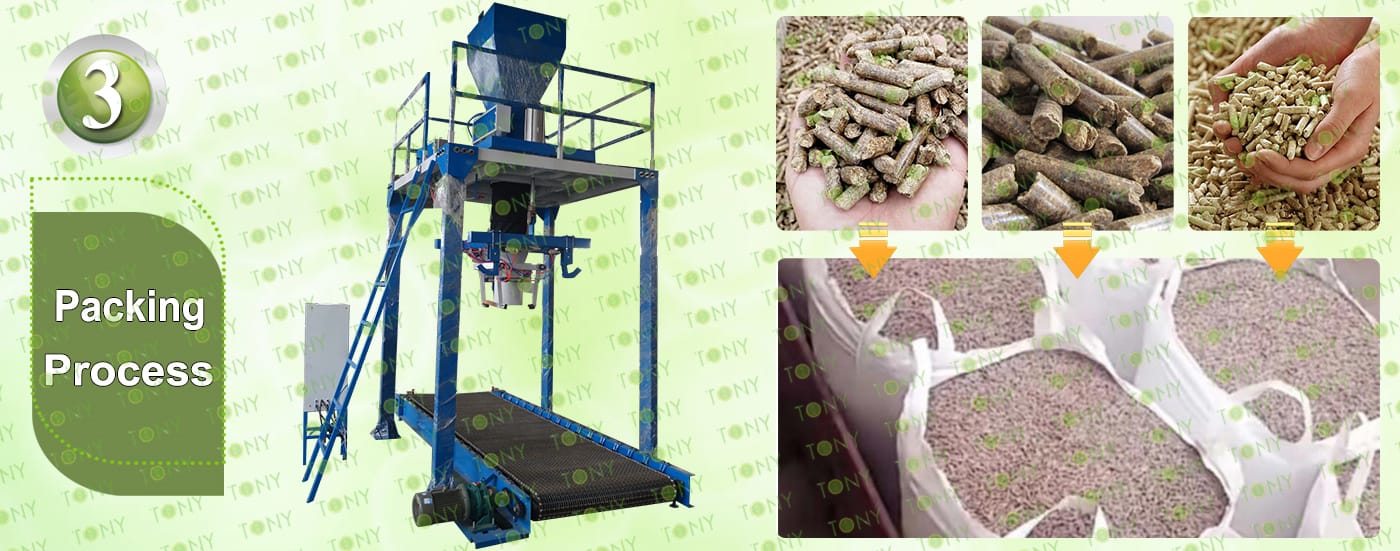
3.Packing Process:
A.This process is mainly used to pack pellets into 1ton/bags.
B.Capacity:80-100tons/hour.
C.TONY band ton packing machine* 4sets
Main Parts:
(1)TONY Ton Packing Machine
(2)Electronic Platform Scale Metering System
(3)Automatic Tare, Zero, and Drop Correction Functions
(4)Feeding System Features Fast, Medium, and Slow Feeding Speeds to Ensure Measuring Accuracy

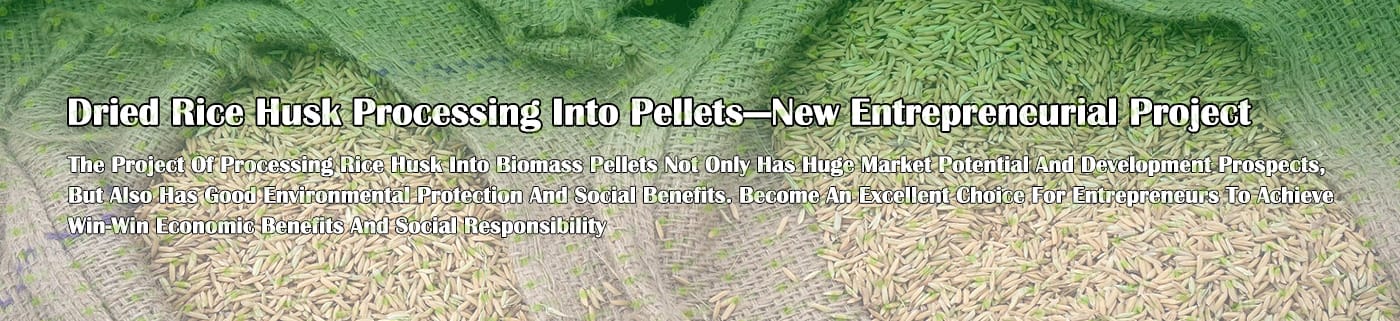
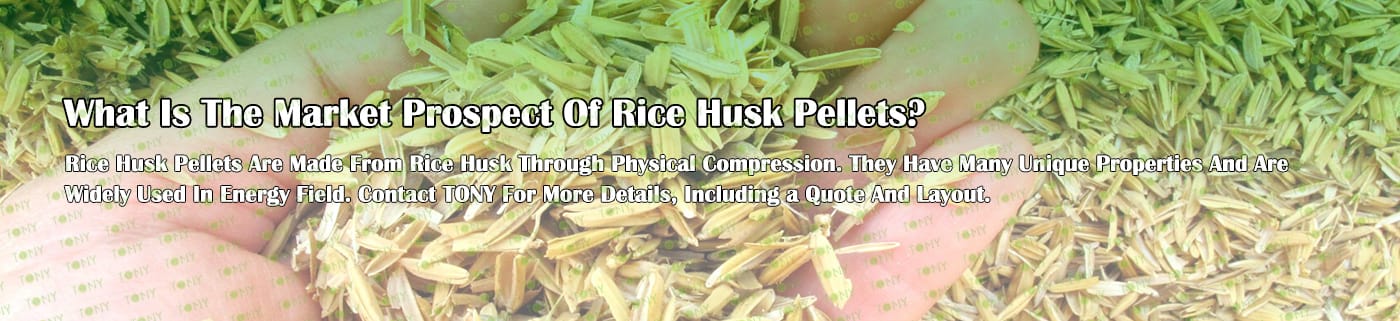
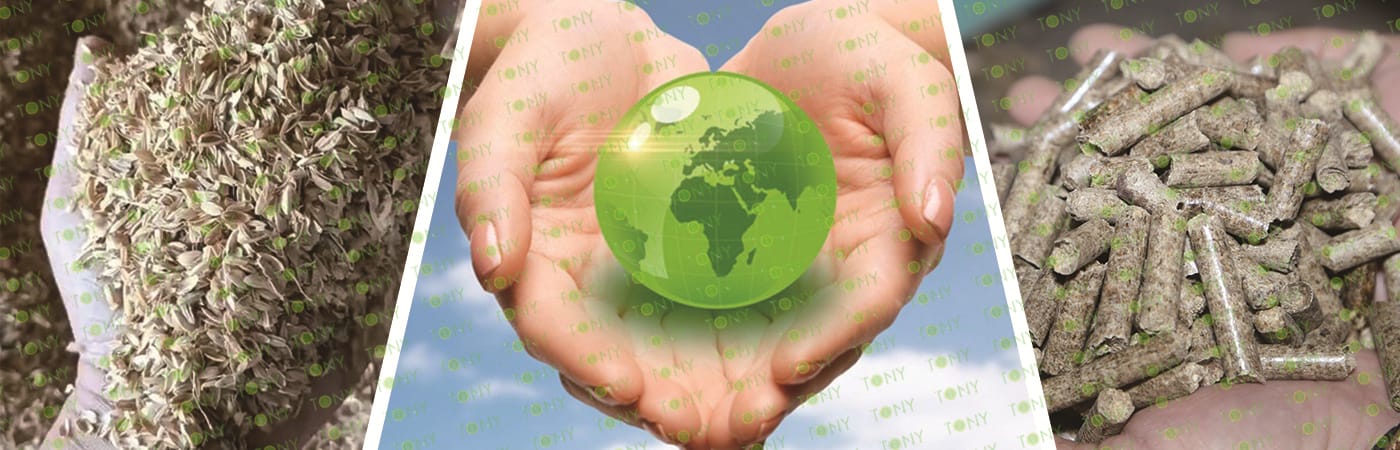
Processing dried rice husks into biomass pellets is a policy-supported, technologically mature, and environmentally friendly entrepreneurial direction suitable for small and medium-sized investors. Dried rice husks, as agricultural waste, are low-cost and widely available. Processed into biomass pellets, they can replace coal, offering high combustion efficiency (calorific value approximately 3600 kcal/kg) and reducing carbon emissions by more than 50% compared to coal.<sup>11</sup> The government has listed biomass energy as a strategic emerging industry, with subsidies provided in some regions. Market demand covers industrial boilers, power plants, and residential heating. Some regions offer tax breaks or equipment subsidies for environmental projects, reducing initial investment pressure. Long-term supply agreements can be signed with rice mills to ensure a stable, low-price supply. Products can be supplied to nearby biomass power plants and heating companies through long-term contracts. Considering all factors, the rice husk biomass pellet processing project has a promising long-term development prospect.

1.Industrial Energy Substitution:
Suitable for industries requiring medium- and low-temperature steam, such as textiles and food processing. Boiler modification is simple (only ash removal system required), and fuel costs are 40% lower than natural gas.
2.Regional Distributed Energy:
Establishing small pellet plants in rice-dense areas (such as Southeast Asia and southern China) can solve power and heating problems in remote areas and reduce energy transportation costs.
3.Co-firing Technology Compatibility:
Can be co-fired with pulverized coal at a ratio of 20-30%, directly reducing carbon emissions from power plants and complying with biomass co-firing policies in various countries.
4.Carbon Trading Revenue:
Inclusion in CCER (China) or international carbon markets can generate $5-15 in revenue per ton of emission reduction.
5.Subsidy Support:
Many countries offer equipment purchase subsidies (such as China's 30% subsidy) and electricity price subsidies (above 0.75 RMB/kWh) for biomass fuel projects.
6.Supply Chain Synergy:
Promotes the integration of agriculture and the energy industry, creating jobs in collection, processing, and transportation.


2025 Tony Machinery - All Rights Reserved. Map