





















1. Optimizing Straw Pretreatment Efficiency and Reducing Overall Energy Consumption in Pellet Processing
Raw material pretreatment (crushing, drying, etc.) accounts for over 40% of the total energy consumption in biomass pellet processing. The straw rotary cutter significantly reduces this energy consumption through its "high-efficiency shearing + low-energy design":
High Processing Efficiency: A single rotary cutter can produce 3-8 tons of straw per hour (far exceeding the 1-2 tons/hour efficiency of traditional straw choppers), meeting the raw material needs of small and medium-sized pellet production lines (1-5 tons/hour) and avoiding production line "runouts" caused by insufficient pretreatment capacity.
Significant Energy Efficiency: The rotary cutter primarily relies on mechanical shearing force, with unit energy consumption being only 60%-70% of that of a hammer mill (processing 1 ton of straw consumes approximately 15-20 kWh of electricity, while a shredder requires 25-30 kWh).
Integrated Drying: The surface area of the short straw is increased (3-5 times that of the whole straw). times). In subsequent drying processes (such as hot air drying), water evaporation efficiency is increased by 20%-30%, and drying time is shortened from 8 hours to 6 hours, further reducing overall energy consumption.
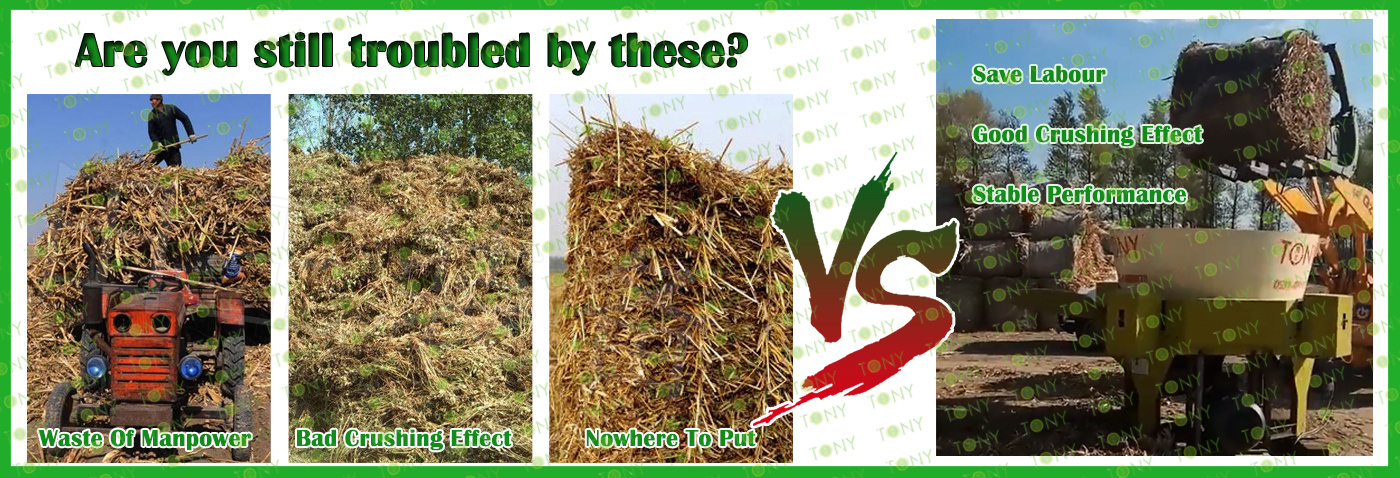
2. Adapting To Diverse Straw Raw Materials, Expanding The Raw Material Sources For Pellet Processing.
There are many types of straw (corn stalks, wheat straw, cotton stalks, rapeseed straw, etc.), and their physical properties vary greatly (for example, cotton stalks have a high degree of lignification, and rice straw has a high silicon content). Traditional pretreatment equipment has poor adaptability to these raw materials, limiting the raw material range for pellet processing. The straw rotary cutter features adjustable blade gap (0.5-2cm) and rotation speed (800-1500 rpm), allowing optimized processing parameters for different straw characteristics:
For highly lignified cotton and corn stalks, reduce the blade gap (0.5-1cm) and increase the rotation speed (1200-1500 rpm) to ensure thorough fiber severing.
For more flexible wheat and rice straw, increase the blade gap (1-2cm) and reduce the rotation speed (800-1000 rpm) to avoid over-crushing and resulting in excessively fine particles (which can cause feed problems in the pellet machine).
For field-recycled straw with high impurities (such as soil and dead leaves), the rotary cutter can separate some impurities through a screen, reducing wear on the pellet machine and reducing the ash content of the finished product by 1%-2%.
This "one machine" multi-functionality transforms previously unusable, low-quality straw (such as cotton stalks and peanut shells) into qualified raw materials, broadening the raw material channels for pellet processing.