





















As core equipment for converting dispersed, inefficient biomass feedstock into high-density, highly efficient energy carriers, biomass pellet machines are truly a significant innovation in energy production. Through technological means, they address key bottlenecks in the large-scale and commercial application of biomass energy, promoting the transition of renewable energy utilization from "distributed and inefficient" to "centralized and efficient."
1.Disruptive Innovation in Raw Material Utilization
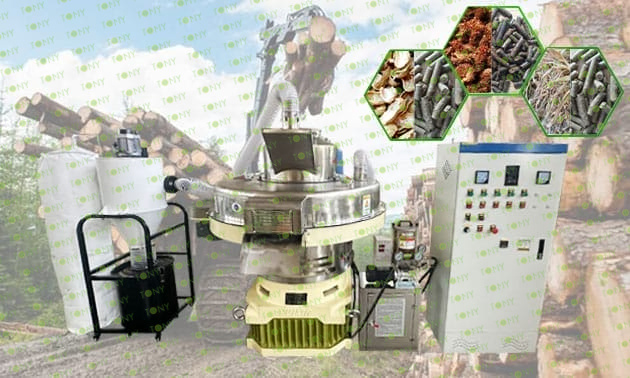
Traditional biomass energy (such as direct combustion of straw and firewood) suffers from the pain points of being "distributed, inefficient, and polluting." Open-air burning of straw pollutes the environment, while firewood combustion has a thermal efficiency of only 10%-20%, making it difficult to scale up as an industrial energy source. Biomass pellet machines use compression molding technology to compress loose materials like sawdust, straw, and agricultural and forestry waste (with a density of only approximately 0.1-0.2 tons/m³) into pellets with a density of 1.1-1.3 tons/m³. This not only solves the raw material issues of bulk, difficulty in transportation, and expensive storage, but also, through physical transformation, transforms low-value waste into a standardized energy product (with a calorific value of 4000-4500 kcal/kg, approaching that of coal). This "waste-to-treasure" model expands the boundaries of energy raw material sources and breaks through the traditional perception that energy must rely on mineral resources.
2.Decentralized Innovation in Energy Production
Traditional fossil energy production relies on centralized mining (such as coal mines and oil fields) and long-distance transportation. However, the application of biomass pellet machines promotes the localization of energy production: rural areas can utilize local agricultural and forestry waste (such as corn stalks and fruit tree branches) to process pellets locally, achieving a regional closed loop of "raw material-production-consumption." This distributed production model reduces reliance on centralized energy bases, lowers energy losses and carbon emissions during transportation, and complements and innovates the "large-scale industrial energy production model."
3.Innovation in Standardized Energy Properties
The natural properties of biomass raw materials (such as moisture and composition) result in unstable energy quality, making it difficult to adapt to standardized energy scenarios like industrial boilers and power generation equipment. The biomass pellet machine, through an integrated drying, crushing, and extrusion process, achieves highly uniform pellets with high moisture content (≤10%), particle size (6-10mm diameter), and calorific value. These pellets can directly replace coal for industrial heating, power generation, and even as a heating fuel for homes. The creation of this "standardized energy carrier" elevates biomass from a "non-standard fuel" to a standardized product that can be integrated into the energy supply chain, opening up a key link in the commercial application of biomass energy.