





















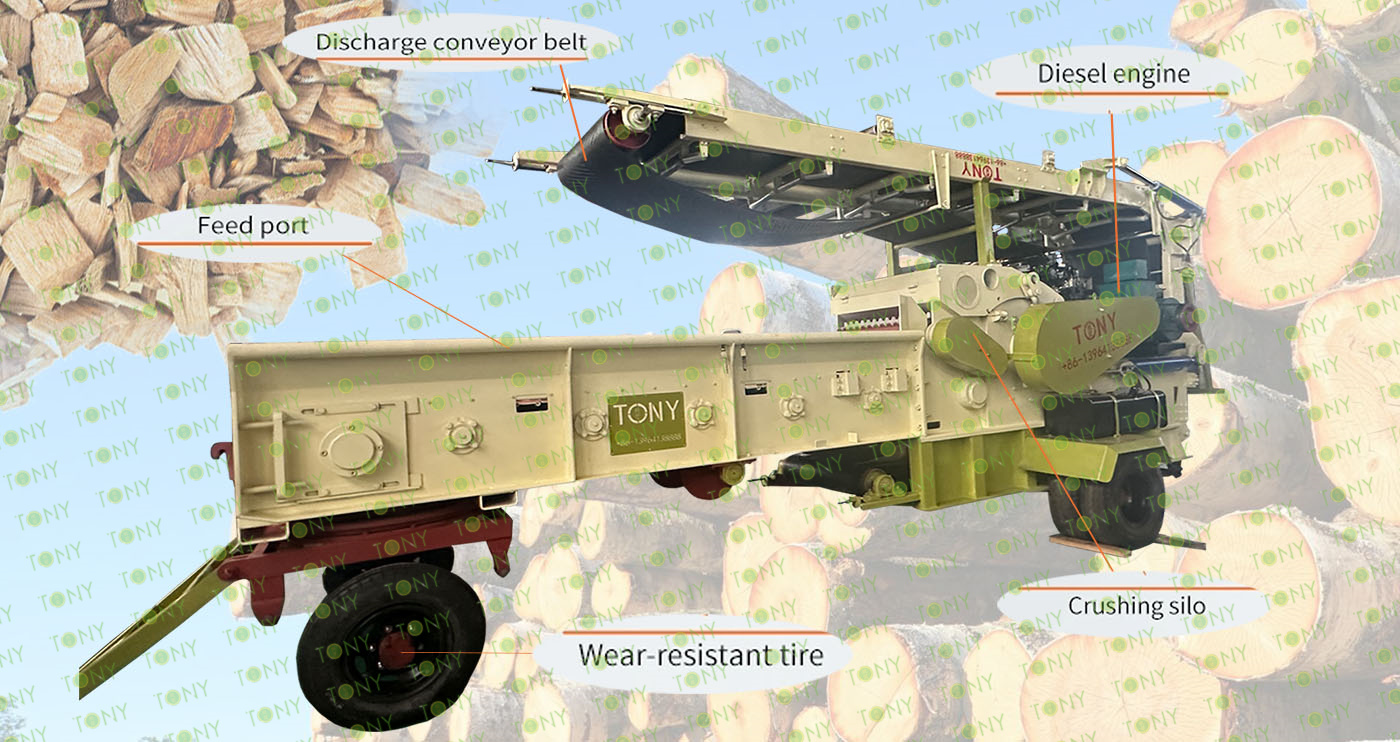
As flexible processing equipment in the wood processing industry, mobile diesel chipper not only improve the efficiency of wood resource utilization but also promote the industry's green transformation in multiple dimensions, becoming a key link between "raw material processing" and "sustainable development."
1. Reducing raw material transportation losses and lowering carbon emissions throughout the entire supply chain.
In traditional wood processing, logs or waste wood must be transported to fixed processing plants for processing, which presents two major environmental pain points:
High transportation energy consumption: Loose wood (such as branches and scraps) is bulky and low-density. Vehicle loading rates during transportation are less than 30%, resulting in high fuel consumption and carbon emissions per unit of raw material.
Severe raw material losses: During long-distance transportation, wood is prone to 10%-15% losses due to compression and mildew. This loss often ends up in landfills or incineration, causing secondary pollution.
Mobile diesel crushers can be deployed directly at logging sites, wood processing plant waste areas, and even construction waste dumps to complete the crushing process on-site.
The density of crushed wood particles increases to 1/5-1/3 of their original volume, increasing transport loading efficiency by over 60%, significantly reducing the number of transport vehicles, and lowering fuel consumption by approximately 40%-50%.
On-site processing of raw materials avoids losses during long-distance transportation, increasing wood utilization to over 95%, and reducing waste generation at the source.
This "on-site crushing - high-density transportation" model concentrates carbon emissions from wood processing in the "crushing" stage, rather than distributing them throughout the entire "transportation + processing" chain, significantly reducing the industry's carbon footprint.
2. Efficiently Process Wood Waste, Promoting a "Waste-to-Resource" Resource Cycle
The wood processing industry generates a vast amount of waste annually: branches and stumps from logging, scraps from furniture factories, and scrap wood from demolition. If improperly handled, these waste streams can become an ecological burden—open-air dumping occupies land, while incineration releases significant amounts of PM2.5 and VOCs (volatile organic compounds).
One of the core benefits of mobile diesel crushers is converting dispersed, low-value waste into standardized raw materials:
Crushed wood chips can be used directly as biomass fuel (for boiler combustion), raw material for wood-based panels (fiberboard, particleboard), or as a culture medium for edible fungi, completing a closed-loop "waste-to-resource" cycle.
For nail-included waste and rotten wood that are difficult to directly utilize, crushing combined with magnetic separation (to remove metal impurities) allows them to be processed into recycled board materials or biomass pellets, avoiding a one-size-fits-all approach to landfill.
This "local digestion" model transforms wood waste from an environmental pollutant into a green economic resource, activating the industry's circular value.