





















Effective pretreatment for high-efficiency hammer mills begins with ensuring precise control over the grinding particle size. The fundamental principle of granulation relies on the bonding of uniform powder under pressure; if particle sizes are inconsistent, fine powder tends to over-compress and gelatinize—clogging die holes—while coarse particles fail to bond adequately, resulting in cracked granules and excessive fines. During routine pretreatment, screen apertures must be matched to the required granule specifications, and screen integrity must be regularly inspected; damaged, deformed, or worn screens should be replaced promptly to prevent oversized material from bypassing the screen. Additionally, adjusting the hammer clearance ensures thorough grinding and uniform particle size, preventing poor granulation and low product yield at the source, thereby eliminating the need for repeated rework.
Secondly, strictly implementing impurity removal and equipment cleaning during pretreatment significantly reduces equipment downtime caused by malfunctions. Hard foreign objects mixed in the raw materials—such as stones, nails, or metal fragments—can enter the hammer mill if not thoroughly intercepted; they not only wear down hammers and screens but can also pass directly into the granulator, scratching or jamming the ring die and press rollers, potentially causing severe equipment failure and production line stoppages. Therefore, during the grinding pretreatment stage, it is essential to verify the proper functioning of magnetic separators and screening equipment, and to regularly clear out accumulated material, debris, and residual clumps from within the machinery. Controlling raw material moisture content is also crucial to prevent wet material from sticking to screens or clogging equipment, which would otherwise impede discharge and cause material buildup; managing this at the source minimizes the risk of granulator blockages and repair-inducing failures, ensuring continuous, stable production line operation.
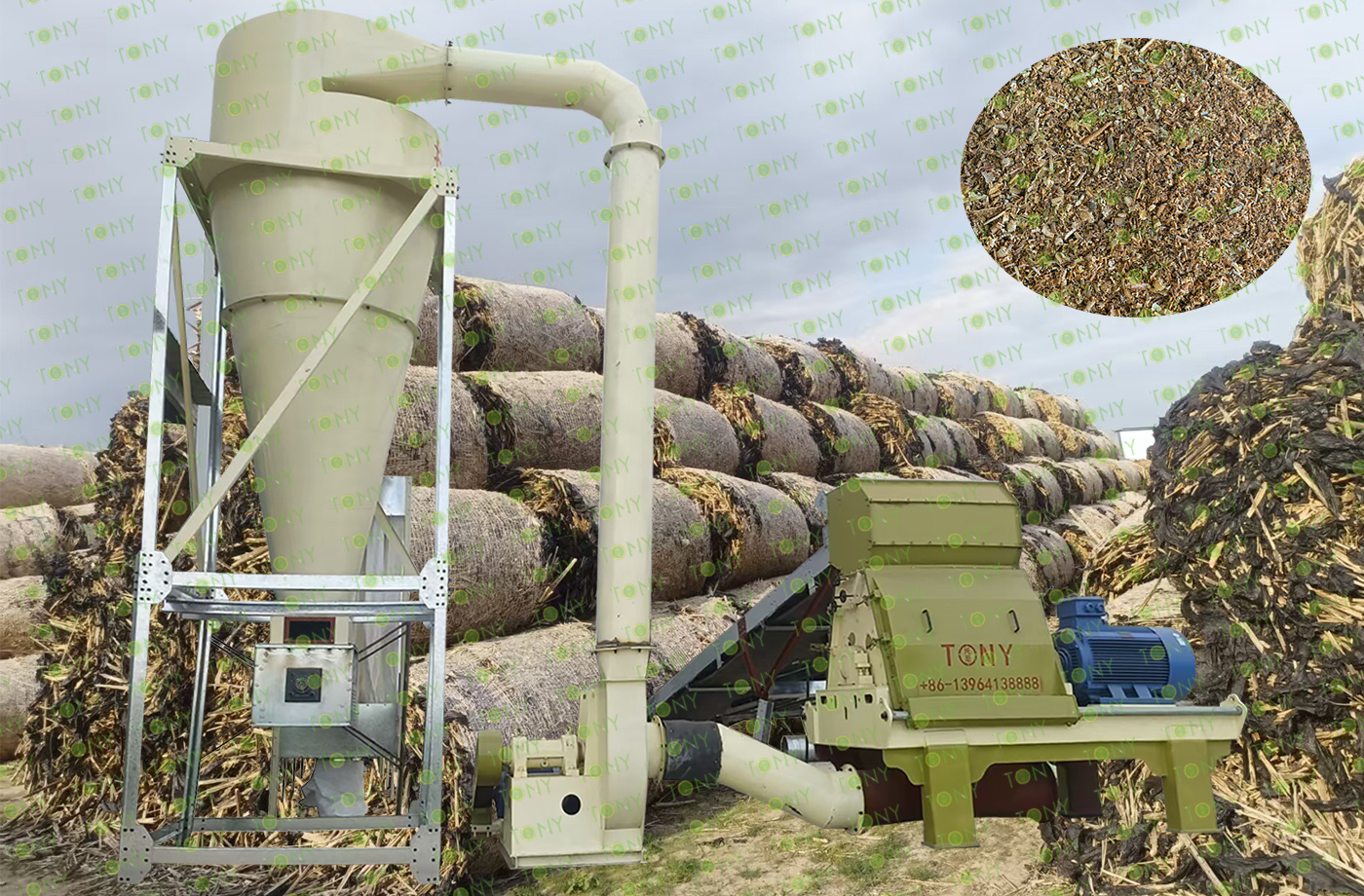
Furthermore, standardized hammer mill pretreatment effectively reduces energy consumption and equipment wear, thereby extending the service life of the granulation production line. If the grinding process is inadequate, an excess of coarse material significantly increases the workload on the pellet mill; the main unit requires more power to extrude and compress the material, leading to soaring electricity costs and accelerated wear on critical, high-wear components—such as ring dies and press rollers—thereby shortening replacement cycles and raising consumable costs. In contrast, material that has undergone fine pre-processing in a hammer mill features uniform particle size and a loose texture, ensuring a smooth extrusion process with minimal resistance and stable equipment loads. This not only boosts hourly pellet production capacity but also reduces wear on components, lowering maintenance costs and minimizing downtime for repairs.
Furthermore, standardized pre-processing effectively enhances the quality and market competitiveness of the finished pellets. Uniformly ground material achieves consistent gelatinization during pelletization, resulting in pellets with optimal hardness, regular shape, and structural integrity—free from fines and resistant to delamination or cracking. Whether regarding the palatability and retention rate of feed pellets or the calorific value and density of biomass pellets, the product meets high-quality standards. At the same time, a stable pre-processing workflow ensures consistent material quality across batches, preventing fluctuations in the finished product, minimizing the generation of substandard goods and waste, and increasing the overall production yield.