





















Biomass pellets represent a new type of clean, energy-efficient, and eco-friendly energy source. They are produced from a wide variety of abundant raw materials—including agricultural and forestry waste, herbaceous plants, and industrial scraps—with each material type offering specific advantages for the resulting fuel and ensuring exceptionally high resource utilization rates.
Forestry-based materials are the primary choice for biomass pellet production, encompassing branches, bark, wood chips, sawdust, bamboo scraps, fallen leaves, and wood processing offcuts. Characterized by high lignocellulose content and density, these materials yield pellets that are compact, durable, and slow-burning, with stable calorific values and minimal ash content. Regarded as the highest-quality feedstock, they are widely used for industrial and residential heating.
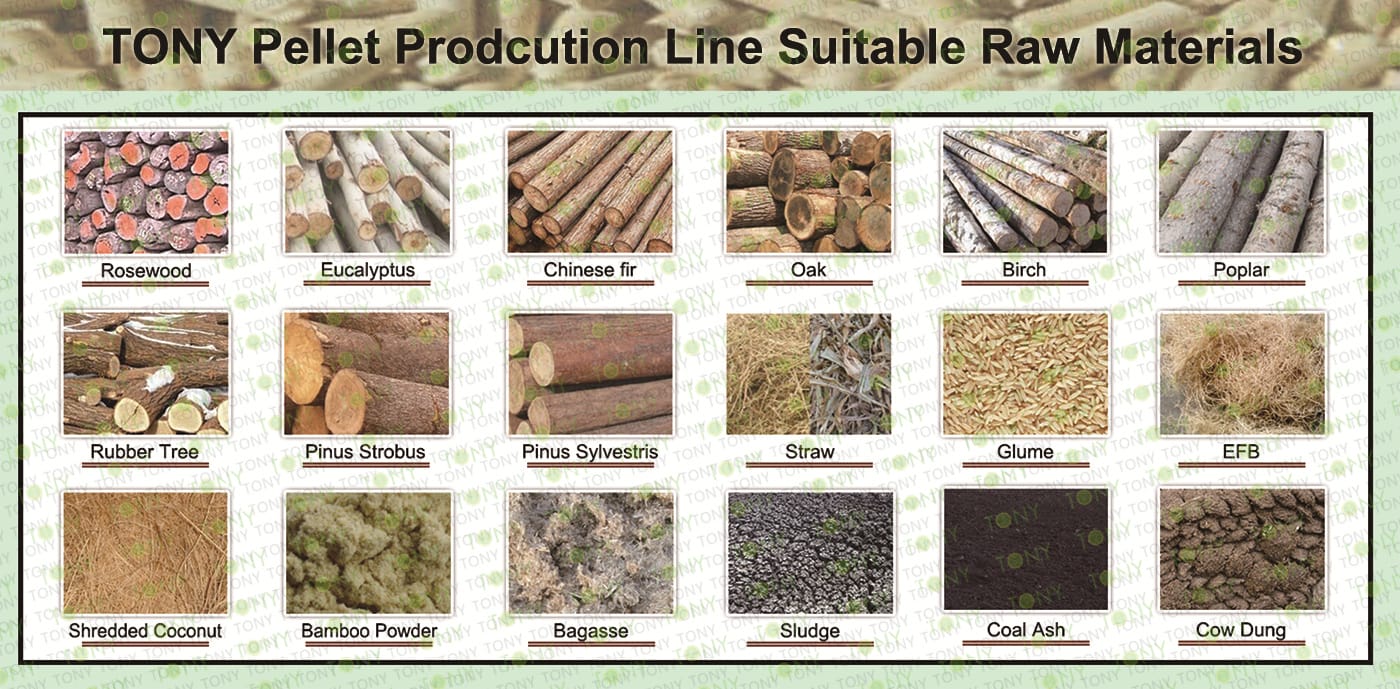
Agricultural materials offer the most abundant supply, comprising crop residues such as straw, rice husks, peanut shells, corn cobs, cotton stalks, wheat straw, and sugarcane bagasse. Easily sourced and cost-effective, these materials can be processed—via crushing, drying, and compression—into high-quality pellets. This process effectively addresses issues like environmental pollution from straw burning and resource waste from stockpiling, making the pellets ideal for daily use in small- and medium-sized boilers.
In addition, herbaceous plants and industrial organic waste serve as viable feedstocks. Fast-growing and highly renewable herbaceous plants—such as reeds, wild grasses, and shrubs—act as excellent supplementary materials. Meanwhile, industrial waste—including scraps from furniture and board factories or discarded wood panels—can be processed and utilized after simple treatment.
These diverse raw materials do not require strict sorting or specific blending ratios; they can be processed individually or in combination. This approach enables the circular utilization of waste resources, delivering both environmental and economic benefits while aligning with green, low-carbon development principles.