





















1. Raw Material Types
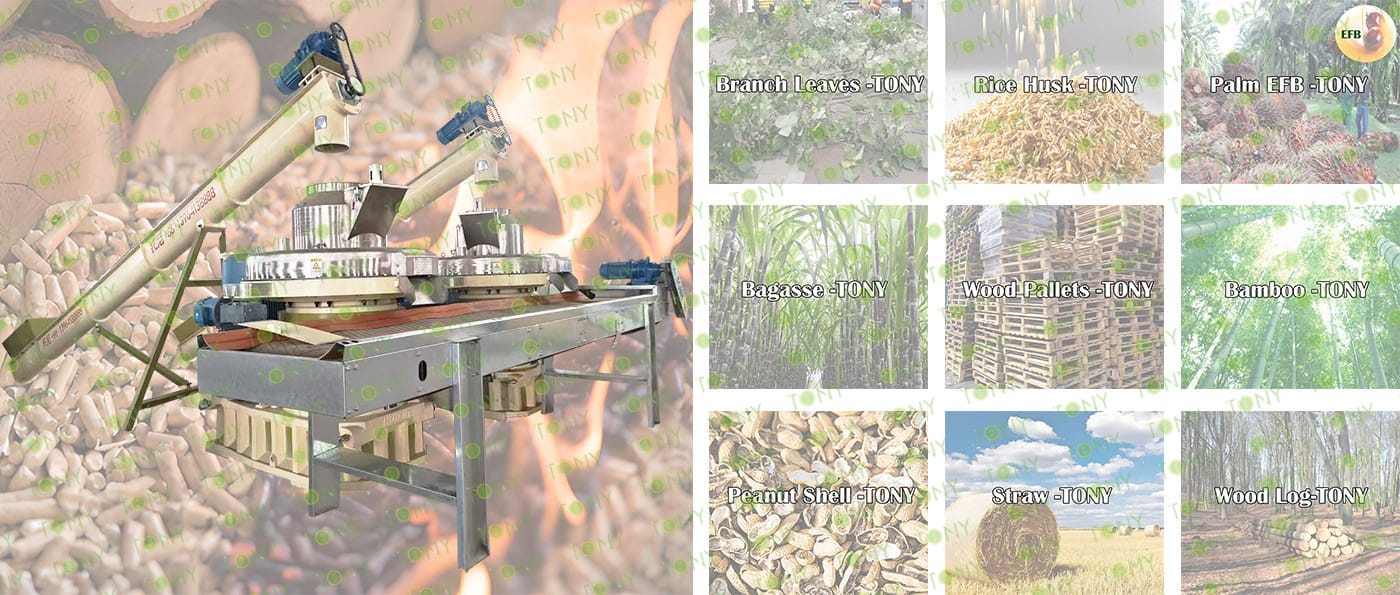
Wood chips, wood shavings, and bamboo chips offer good molding properties and cause minimal wear; conversely, corn stalks, wheat straw, rice husks, and tree branches have tough fibers that accelerate mold wear, leading to higher consumable costs under similar processing conditions.
Raw Material Moisture Content (Critical Factor)
Dry wood chips (15%–20% moisture): No drying required, resulting in significant electricity savings;
Wet branches and field crop stalks (30%–40% moisture): Require a dryer, increasing electricity costs per ton;
Higher moisture content leads to greater mass loss during processing; producing one ton of finished product requires more raw material, effectively raising the calculated raw material cost.
2. Procurement Distance and Transport Costs
Sourcing wood scraps locally minimizes costs; transporting raw materials over distances exceeding 50 km adds freight charges, directly driving up total costs.
3. Purchase Price and Seasonal Fluctuations
Straw is abundant and inexpensive during the autumn harvest season; raw material shortages during off-seasons drive up purchase prices for wood chips and straw; sawdust prices remain consistently stable in regions with clusters of wood processing plants.
4. Impurity Content
High levels of soil, sand, and stones accelerate wear on pulverizer hammers and pellet mill dies, increasing the consumption of wear parts and reducing the final product yield.