





















1.Rural Residential Use (Highly Practical)
Replaces loose coal and firewood for winter heating:
Clean operation with no black smoke or indoor ash; eliminates the need for chopping wood or manual fire-starting; automatic furnaces provide constant-temperature heating;
Crop stalks can be processed on-site with zero fuel procurement costs; ash can be returned to fields as fertilizer;
The top choice for rural areas in the North facing coal bans; solves the challenge of clean winter heating.
2.Commercial Applications (Best Value for Money)
Guesthouses, hotels, bath centers, canteens, and livestock farms:
Provides hot water, space heating, and temperature control for livestock; significantly lowers operating costs compared to natural gas;
Small-to-medium equipment has a compact footprint and operates automatically, requiring no dedicated 24-hour supervision;
Smokeless combustion ensures no negative impact on business operations or livestock growth.
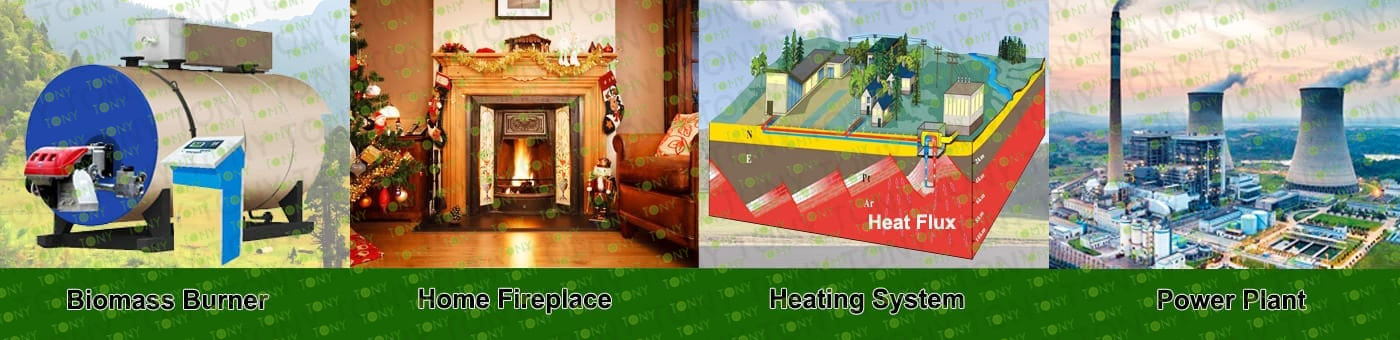
3.Light Industrial Production (Essential Utility)
Board manufacturing, drying facilities, food processing, medicinal herb drying, greenhouse climate control, and hot-air furnaces for printing/dyeing plants:
Delivers stable high-temperature hot air or steam to meet continuous production demands;
On-site pelletization of self-generated sawdust and offcuts allows for complete internal waste utilization and near-zero fuel costs;
Simplifies environmental compliance and avoids the risk of coal-fired boiler shutdowns.
4.Large-Scale Thermal Power & District Heating
Centralized heating for villages/towns and biomass power plants:
Relies on large-scale feedstock collection and provides continuous, stable energy; a mature renewable energy solution.