





















Equipment clogging is the most common issue encountered during biomass pellet production line; it not only disrupts schedules and reduces output but also accelerates wear on dies and rollers, thereby increasing maintenance costs. Frequent clogging is rarely due to equipment malfunction itself but rather stems from inadequate raw material pretreatment or mismatched operating parameters. Mastering key solutions allows operators to completely overcome clogging issues and ensure stable, efficient equipment performance.
The core strategy for preventing clogs is to strictly control raw material particle size and moisture content through standardized pretreatment. This is the most fundamental and effective way to eliminate clogging. Many enterprises overlook material preparation, feeding the machine with a mix of uneven lengths, inconsistent moisture levels, and hard impurities. Coarse fibers tend to tangle and jam, wet material sticks to die holes, and overly dry material is too hard to extrude—all of which lead to die clogging and machine stalls.
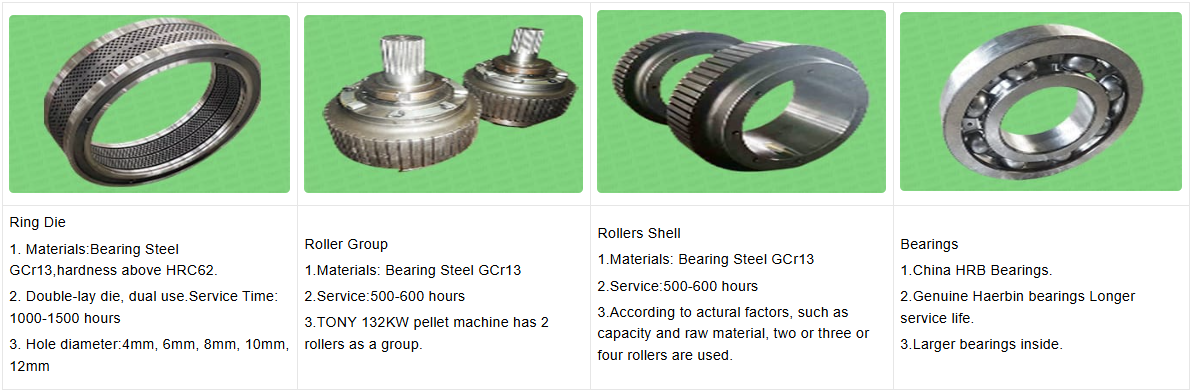
The process is straightforward: before production, use dual-shaft hammer mill to finely pulverize raw materials—such as straw, wood chips, and fruit bunches—to a uniform size while removing hard impurities like stones and metal fragments. Simultaneously, strictly regulate moisture content, keeping it within the optimal molding range of 12%–18%. Excessively wet material causes sticking and clogging, while material that is too dry creates high extrusion resistance and molding difficulties; conversely, finely ground material with standard moisture content flows smoothly and does not accumulate to block the die holes.
Additionally, simple operational practices can completely prevent clogging. Preheat the equipment under no-load conditions before startup to bring the dies and rollers to the appropriate operating temperature; maintain a steady feed rate during production to avoid jams caused by dumping large amounts of material at once; and regularly clear accumulated material from die holes and check roller clearances.
By implementing standardized raw material pretreatment, operators can resolve the root causes of frequent clogging, significantly reduce downtime due to equipment failure, minimize wear and tear, improve pellet formation rates and production efficiency, lower costs, and ensure the continuous, stable operation of the production line.