





















In biomass pellet processing, the uniformity of raw materials is a crucial prerequisite for determining the quality of the finished product, production efficiency, and equipment stability. Raw materials such as logs, branches, wood scraps, and waste wood are often irregular in shape, length, and size. If directly fed into the crushing and pelleting processes, they are prone to problems such as processing bottlenecks, uneven output, and unstable calorific value of the finished product. Wood chippers, as a core pre-processing equipment in biomass processing, have the key advantage of standardizing material specifications and stabilizing raw material dimensions, solving the problem of irregular raw material composition at the source and laying a solid foundation for the efficient and stable operation of the entire production line.
Unprocessed wood raw materials are irregular in shape, with large pieces of wood, long branches, and fine debris mixed together. This not only makes transportation difficult but also significantly increases the workload of subsequent crushers, easily causing equipment blockages, jams, and accelerated wear, leading to frequent shutdowns for cleaning and severely reducing overall production efficiency. Meanwhile, uneven raw material size leads to significant differences in moisture content during subsequent drying and inconsistent grinding fineness, ultimately resulting in biomass pellets with varying density, unstable calorific value, and reduced forming rate. Excessive residue and debris directly impact product quality and market reputation.
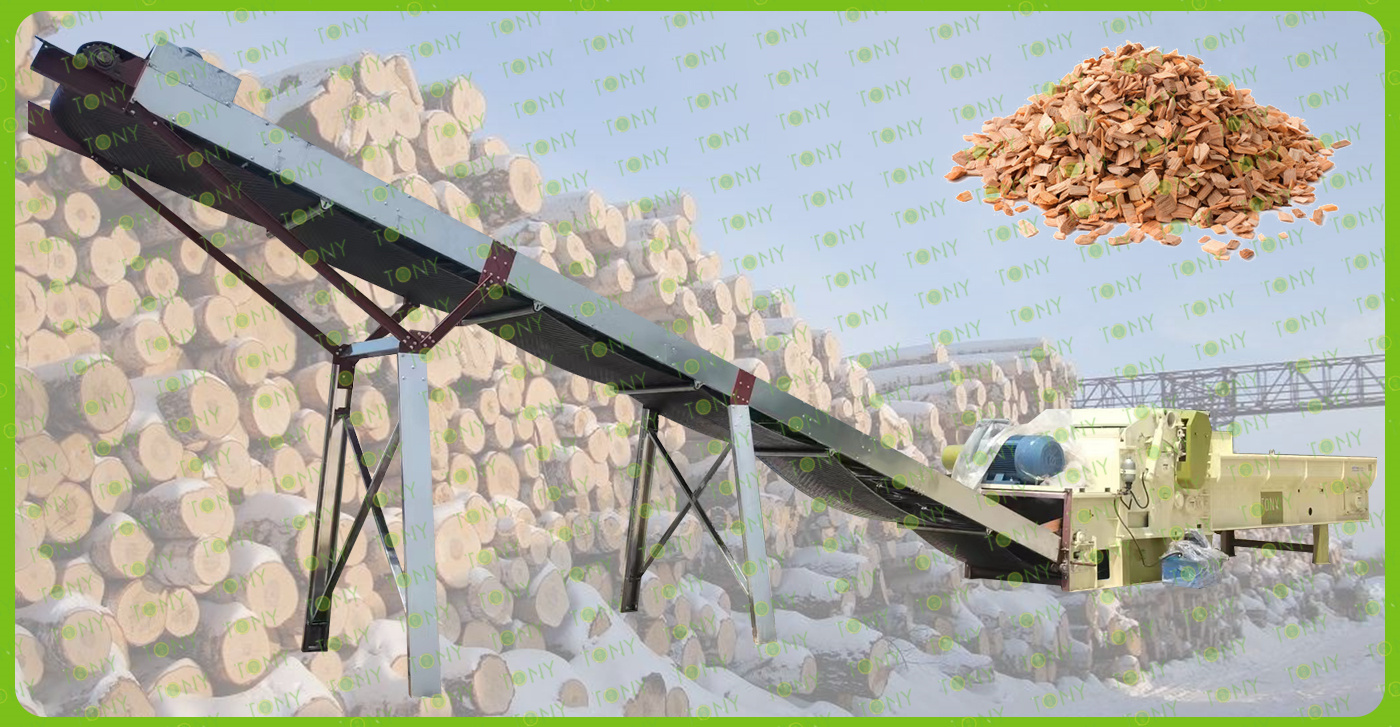
Wood chippers can perform standardized cutting processing on various bamboo and wood raw materials, forestry waste, and wood scraps. Whether it's messy branches, whole pieces of wood, or waste boards, they can all be cut into uniformly sized and sized wood chips. The equipment can flexibly adjust the cutting dimensions according to production needs, precisely controlling the length and thickness of the wood chips, ensuring a high degree of uniformity in the specifications of each batch of raw materials, completely eliminating the problem of inconsistent material size and shape. Stable and uniform material shape makes material conveying and feeding smoother, preventing material blockages and machine jams from the source, significantly reducing equipment failure rate and maintenance costs.
Stable raw material dimensions bring comprehensive advantages in improving quality and efficiency for subsequent processing steps. Uniformly sized wood chips dry at a consistent speed, with more precise moisture content control, effectively preventing some materials from being too dry while others are too wet, ensuring uniform and stable crushing results. The uniformly crushed material exhibits consistent adhesion and even pressure during high-pressure pelleting, significantly increasing the forming rate. This results in biomass pellets with uniform density, regular appearance, and stable calorific value, leading to a substantial upgrade in finished product quality.
In conclusion, wood chippers are indispensable upstream equipment in biomass pellet production lines. Through precise cutting and uniform specifications, they ensure more stable raw material size and more uniform material texture, guaranteeing continuous and stable production line operation, reducing equipment wear, and significantly improving the quality of finished biomass pellets. This achieves a dual improvement in production efficiency and product quality, making it a key supporting equipment for biomass waste recycling and large-scale green energy production.