





















The ring die is the core forming component of the biomass pellet machine; prolonged use leads to issues such as aperture wear, inner wall coking, deformation, and clogging, all of which directly impact pellet formation rates and product quality. Regular ring die replacement is crucial for ensuring stable equipment operation. The replacement process is standardized and straightforward: by following the established steps—shutting down and depressurizing, disassembling and cleaning, and installing and calibrating—the replacement can be completed safely, effectively preventing equipment failure.
Safety preparations must be made before replacing the ring die. First, completely turn off the main power supply and cut off the power input; wait for the machine to come to a full stop and depressurize to eliminate the risk of operating under pressure. Next, clear any residual material from the feed inlet and compression chamber, and remove dust and fuel clumps accumulated on the ring die surface to prevent debris from compromising installation precision. Simultaneously, inspect associated components like the pressure rollers and main shaft for wear, performing any necessary repairs.
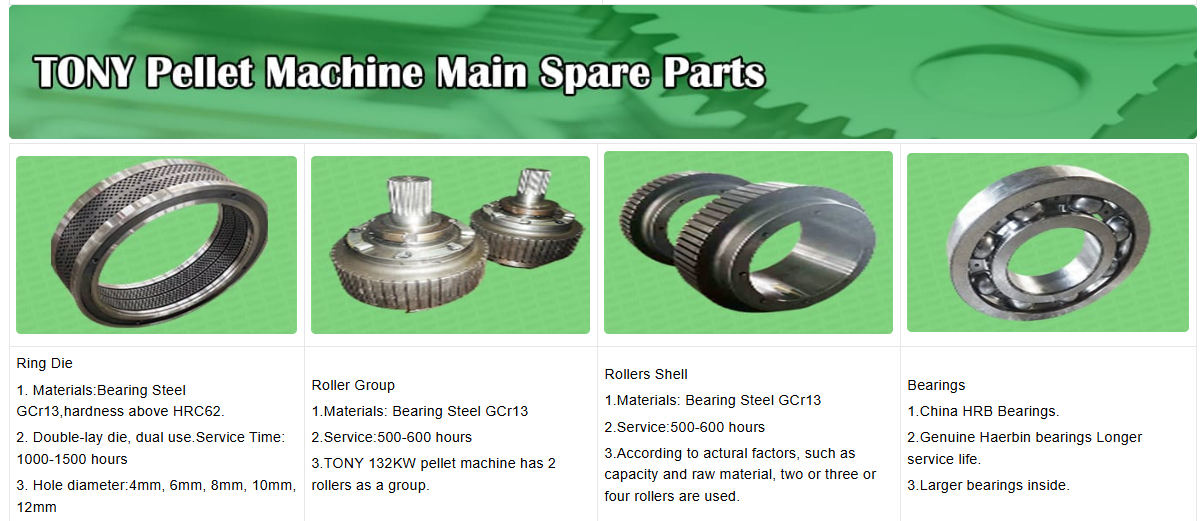
Once preparations are complete, disassemble the old ring die by removing the fixing bolts and retaining plate in sequence, then carefully extract the old ring die; avoid using excessive force or prying, which could damage the contact surfaces of the main shaft and machine base. After removal, clean the mounting area to eliminate oil, rust, and residue, ensuring a flat, clean surface for the new ring die.
When installing the new ring die, position it accurately and securely; once aligned, tighten the fixing bolts evenly to ensure the ring die is firmly fixed without shifting or loosening, thereby preventing wobbling or misalignment during operation. After installation, fine-tune the gap between the pressure rollers and the ring die to ensure it is uniform and appropriate—a critical factor for successful pellet formation.
Finally, conduct a no-load test run at low speed to check for abnormal noises or jamming. Once confirmed trouble-free, introduce a small amount of material for a trial run to observe the pellet formation quality. This standardized, safe, and simple replacement process effectively restores production capacity and extends the service life of the pellet machine.