





















Compared to traditional energy sources, biomass pellets possess significant advantages in three core dimensions: environmental protection, energy efficiency, and circularity, completely shattering the preconceived notion that "renewable energy is inefficient and impractical." In terms of environmental performance, it is a truly low-carbon and clean energy source. The raw materials absorb carbon dioxide during growth, and the amount of carbon released during combustion is roughly equal to the amount of carbon sequestration, achieving near-zero carbon emissions. Simultaneously, the fuel contains no harmful elements such as sulfur or phosphorus, and produces almost no acidic gases such as sulfides or nitrogen oxides during combustion, preventing acid rain pollution. Its emissions are far superior to traditional fuels like coal and heavy oil, perfectly meeting environmental emission standards. Very little ash remains after combustion, and the wood ash is rich in trace elements such as potassium and phosphorus, allowing it to be directly used as organic fertilizer for fields, forming a green closed-loop ecological chain of "waste collection—energy utilization—ash fertilization."
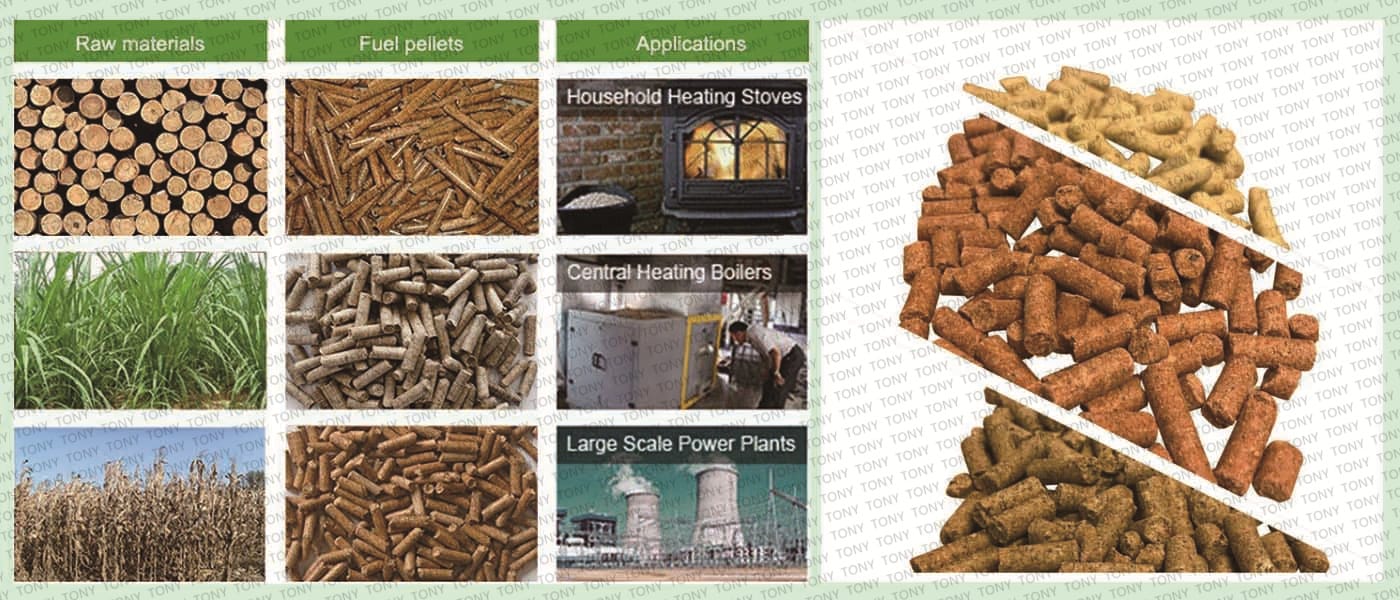
In terms of energy efficiency, biomass pellets completely overcome the shortcomings of traditional agricultural and forestry waste, such as low calorific value, incomplete combustion, and excessive smoke. After being compressed under high pressure, the particle density is significantly increased, resulting in a compact texture, low moisture content, stable and sustained combustion, strong firepower, and consistent calorific value comparable to ordinary coal. This fully meets the energy needs of various scenarios such as industrial production, district heating, and agricultural product drying. Furthermore, its small and uniform size greatly reduces storage and transportation costs compared to loose raw waste, and it is less susceptible to moisture and deterioration, facilitating large-scale storage and regular use. Its practicality far surpasses that of traditional loose biomass fuels.