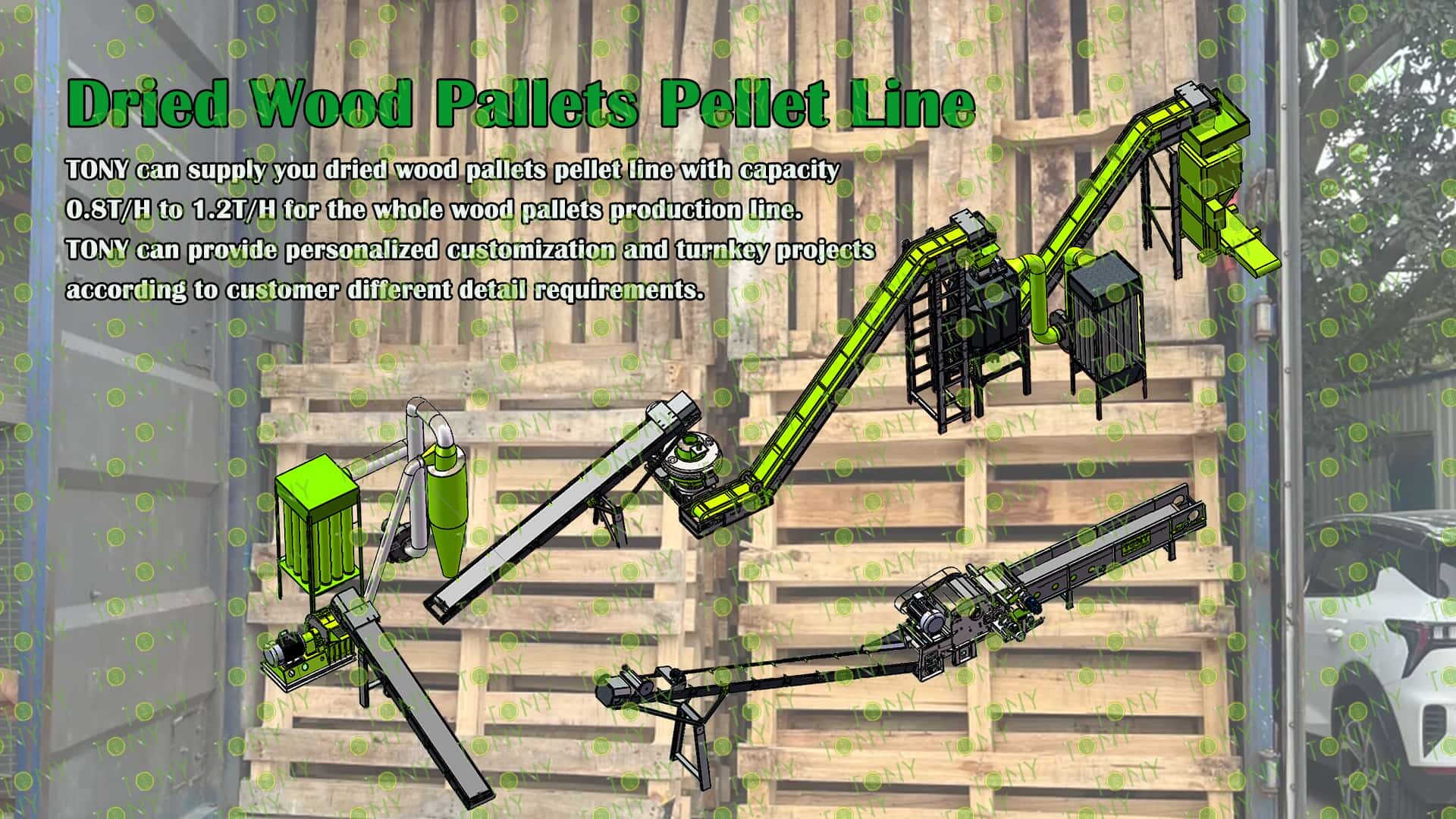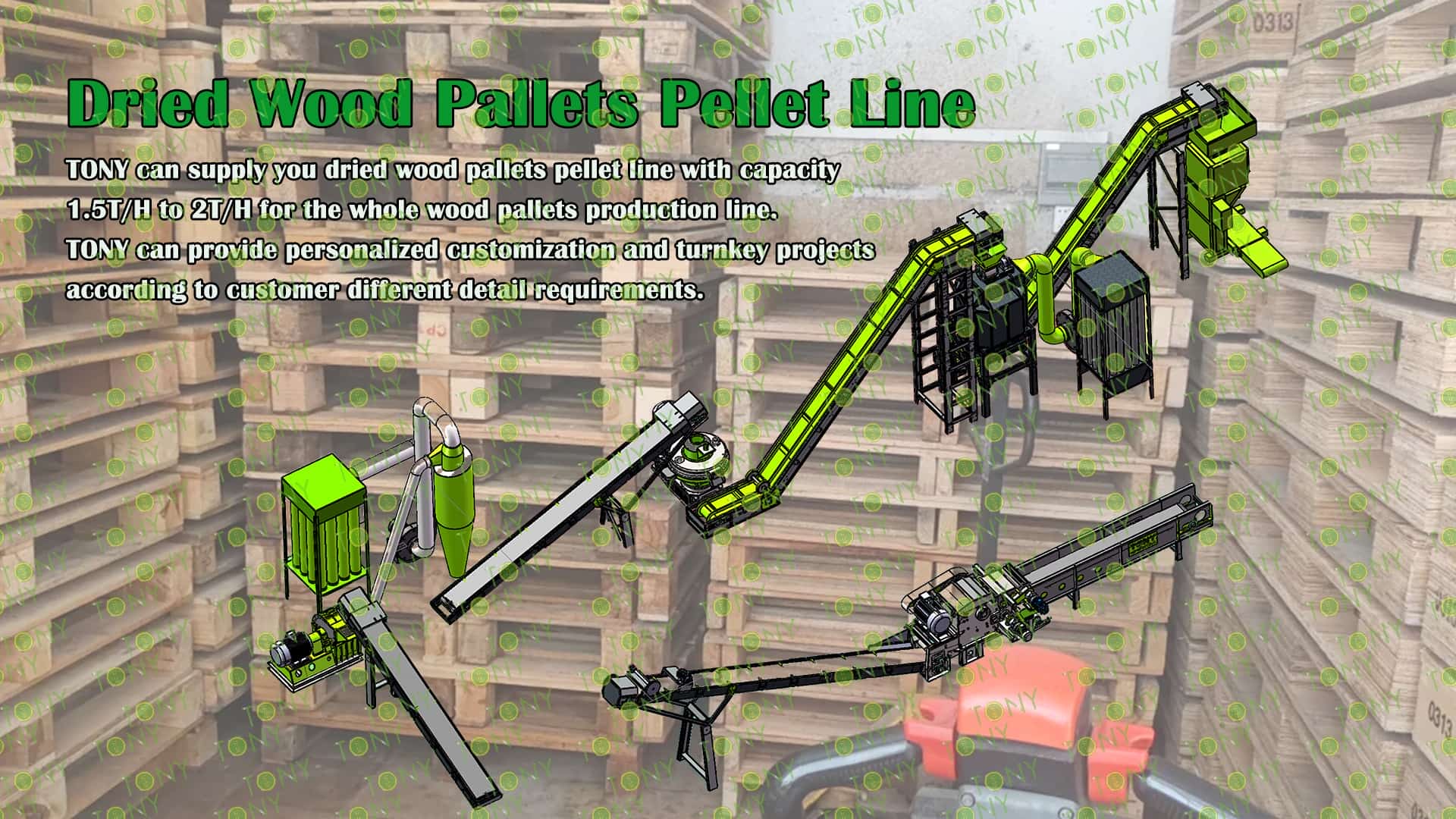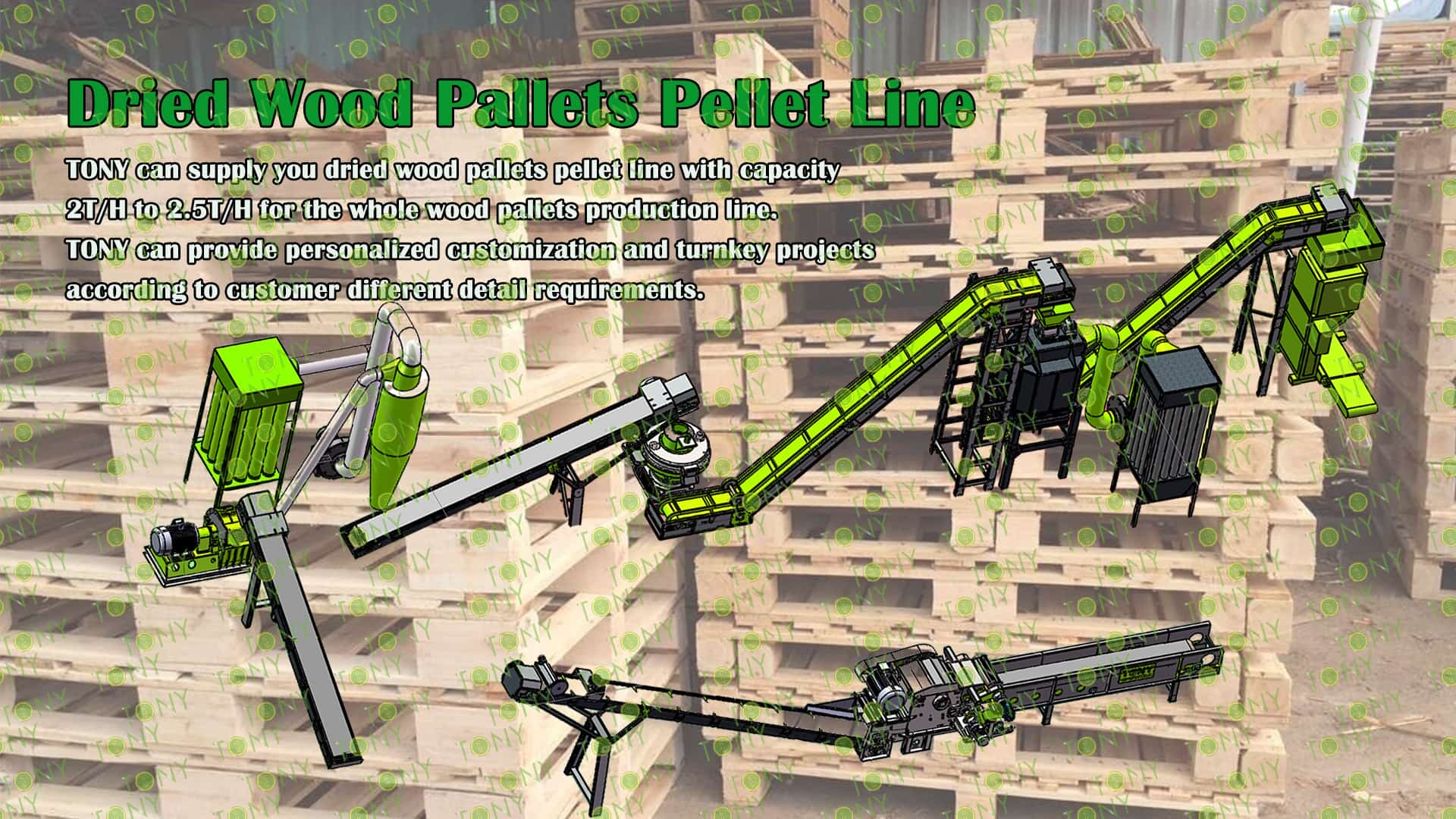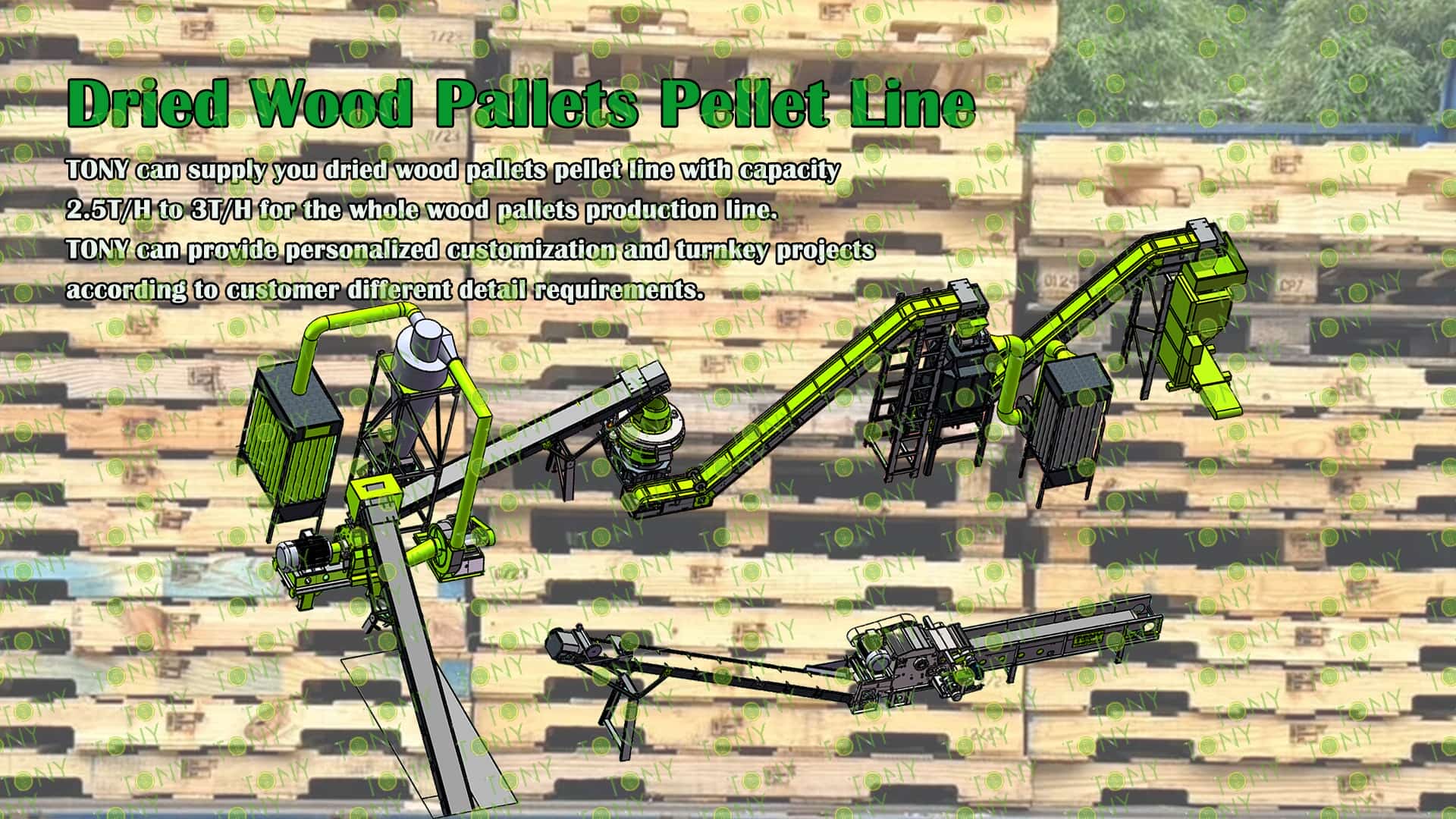





















1.The working principle of dried wood pallets biomass pellet processing equipment
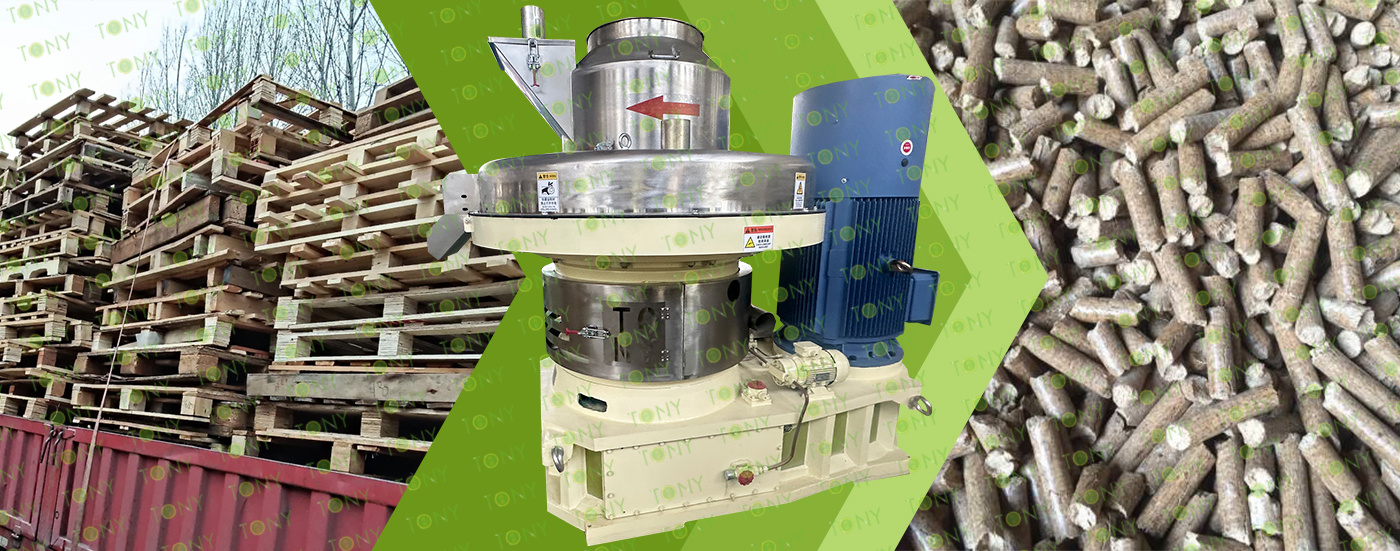
The core principle of wood pellet processing equipment, such as wood chip pellet mills, is to convert biomass feedstock into high-density pellet fuel through mechanical compression. The basic process involves three steps: feedstock pretreatment (crushing, pulverizing, and drying), mechanical compression, and finished product processing (cooling and packaging). For example, in a vertical ring die pellet mill, a motor connected to a reducer via a coupling drives the ring die. The feedstock enters the compression zone under gravity, where rollers squeeze the material into the ring die holes. After forming the pellets in the die, a cutter cuts them into pellets of fixed lengths.
2.Characteristics of dried wood pallets biomass pellet processing equipment
The pellet processing equipment is a production line specifically designed for waste pallets (containing nails, metal connectors, and wood with uneven moisture and hardness). Its core features are tailored to the raw material characteristics, ensuring production efficiency, and optimizing finished product quality. The crushing stage processes the pallets into 25-55mm wood chips. The equipment design balances crushing efficiency with impurity tolerance. The pulverization stage processes pre-treated wood segments/chips into 2-5mm sawdust (the optimal particle size for pelletization). The drying stage controls moisture content and ensures pellet formation efficiency. The pelletizing stage forms the core and presses the powder into high-density pellets. The cooling and screening stages stabilize pellet properties and eliminate substandard products. The equipment in each stage works synergistically to transform raw materials into finished products.
3.Application scenarios of dried wood pallets biomass pellet processing equipment
Wood pellets (also known as "biomass pellet fuel") are a key alternative to traditional fossil fuels like coal and heavy oil due to their high combustion efficiency, low pollution emissions, and convenient storage and transportation. They are also the most popular application for wood pallet pellet processing equipment, including:
(1)Industrial Boiler/Kiln Fuel:Small and medium-sized boilers (steam boilers and hot water boilers) in the food processing, textile, chemical, and building materials industries, as well as heating equipment such as ceramic and glass kilns, can directly use wood pallet pellets (with a calorific value of approximately 4200-4800 kcal/kg, similar to medium-quality coal).
(2)Residential Heating/Household Energy:Wood pallet pellets can be used as fuel for household biomass heating stoves and fireplaces. The pellets burn stably (no black smoke or odor) and are automatically fed through a dedicated hopper, eliminating the need for frequent refills. Furthermore, some catering businesses (such as small restaurants) use them to replace liquefied petroleum gas for heating, reducing energy costs.
(3)Power Plant Supplemental Fuel:Some biomass power plants mix wood pallet pellets with other biomass fuels, such as straw and sawdust, for power generation or combined heat and power (cogeneration) (generating both electricity and steam). The high density of wood pallet pellets (0.8-1.2 g/cm³) reduces transportation and storage space, lowering raw material storage costs for power plants. Furthermore, the high purity of the wood fiber (free of sand and impurities found in straw) reduces the risk of boiler slagging.

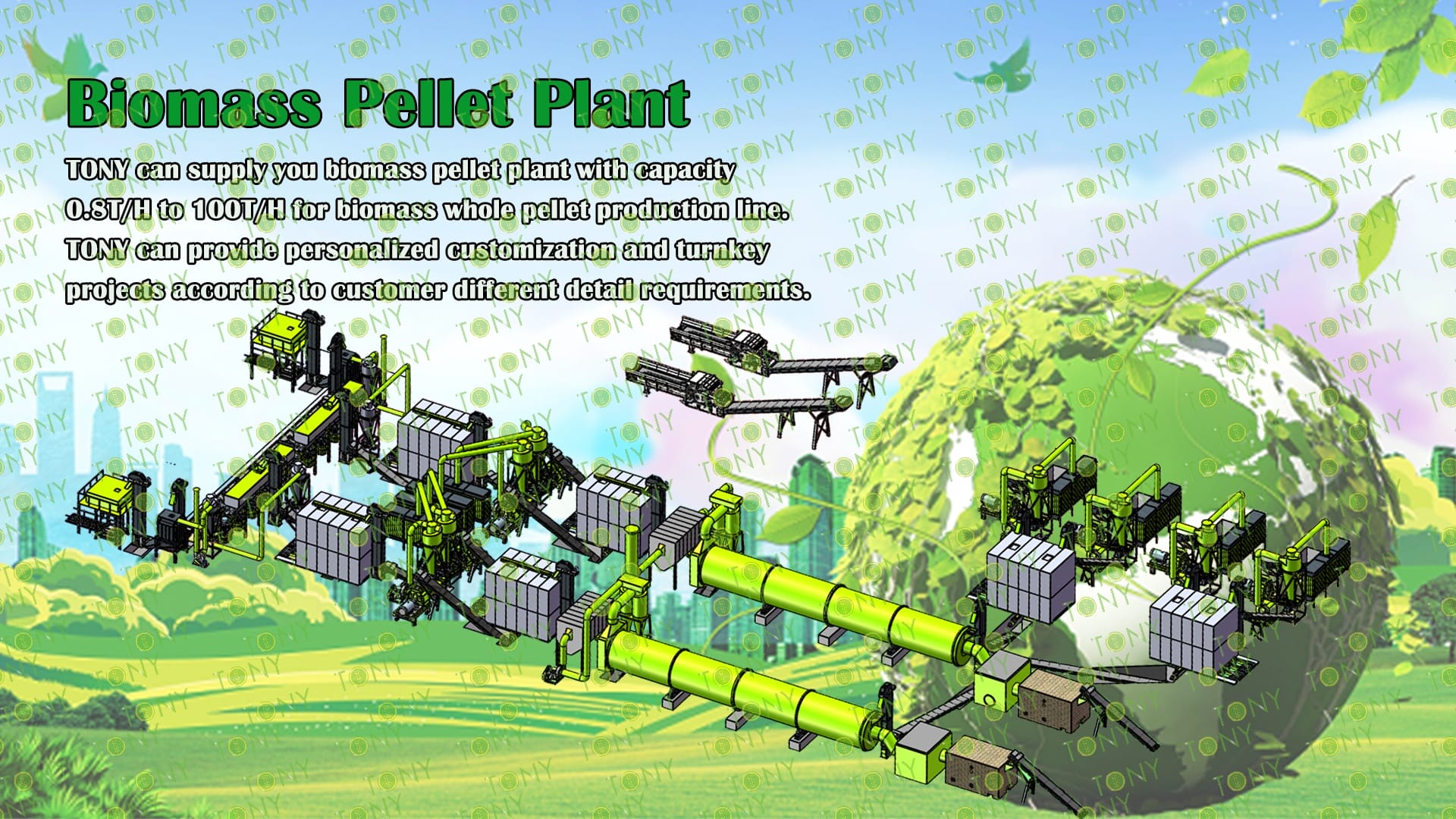
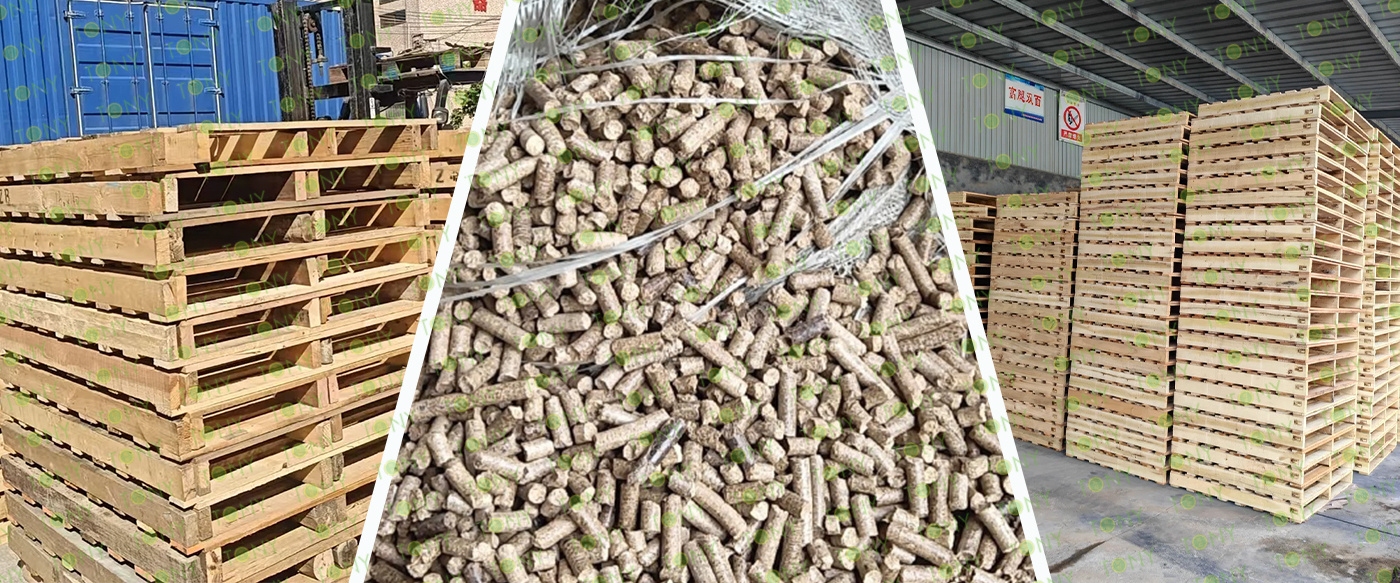
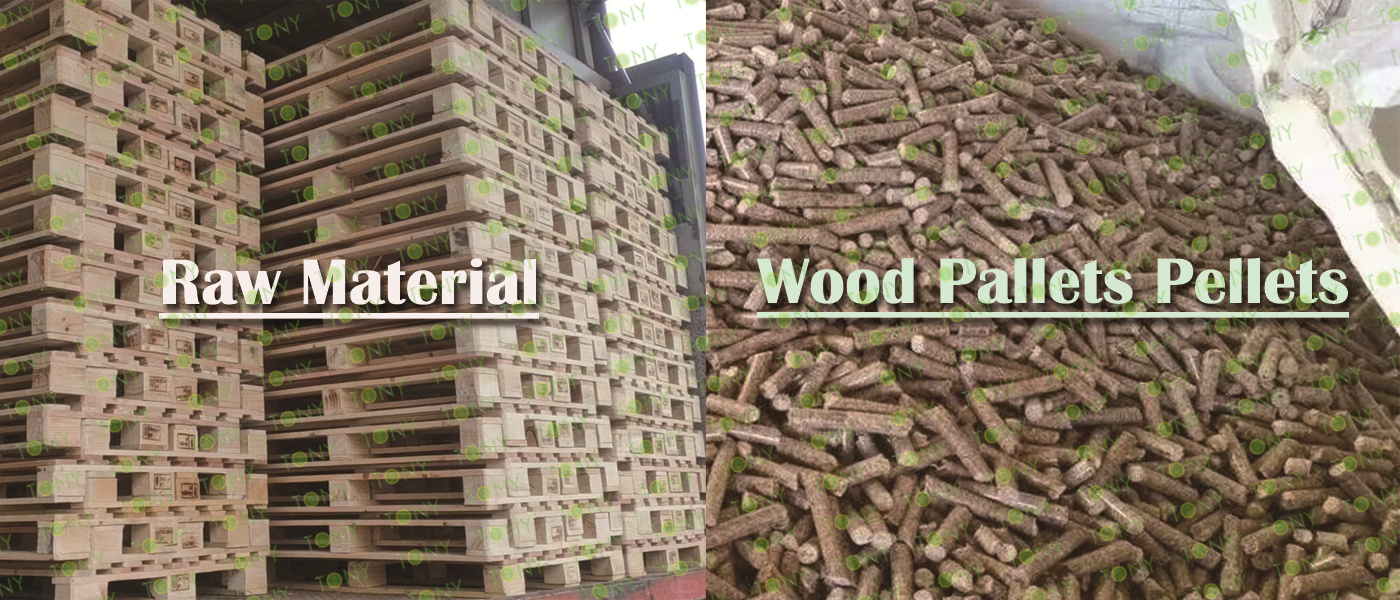
TONY Brand 32-40Ton/Hour Dried Wood Pallets Pellet Manufacturing Plant can take dried wood pallets, various types of wood - related biomass materials, such as branches, small - diameter logs, and wood shavings. After pretreatment and processing, dried wood pallets is solidified into high - density wood pellet fuel.The content of pollutants such as sulfur dioxide and nitrogen oxides produced by biomass pellets during combustion is extremely low, and the dust emission is also low, which can effectively reduce air pollution. Moreover, the raw material sources of biomass pellets are very wide, and the combustion efficiency is high. Compared with traditional fossil energy, it reduces the production and use costs and has higher economic efficiency. It has received a lot of attention and promotion.
1. Capacity: 32-40 Ton/Hour
2. Raw materials: Dried wood pallets
3. Moisture: Dry type, about 10-15%.
4. Application: All kinds of waste wood pallets or more waste wood raw materials
Suitable customers: Logistics and warehousing companies, various manufacturing plants, ports and airports, construction sites, large supermarkets and shopping malls, and other places where waste wood pallets have advantages
5. Finished Pellets Markets: Large power plants ,domestic heating, industrial heating, combustion heat, heating systems, boiler rooms, school canteens, foundry heat sources.

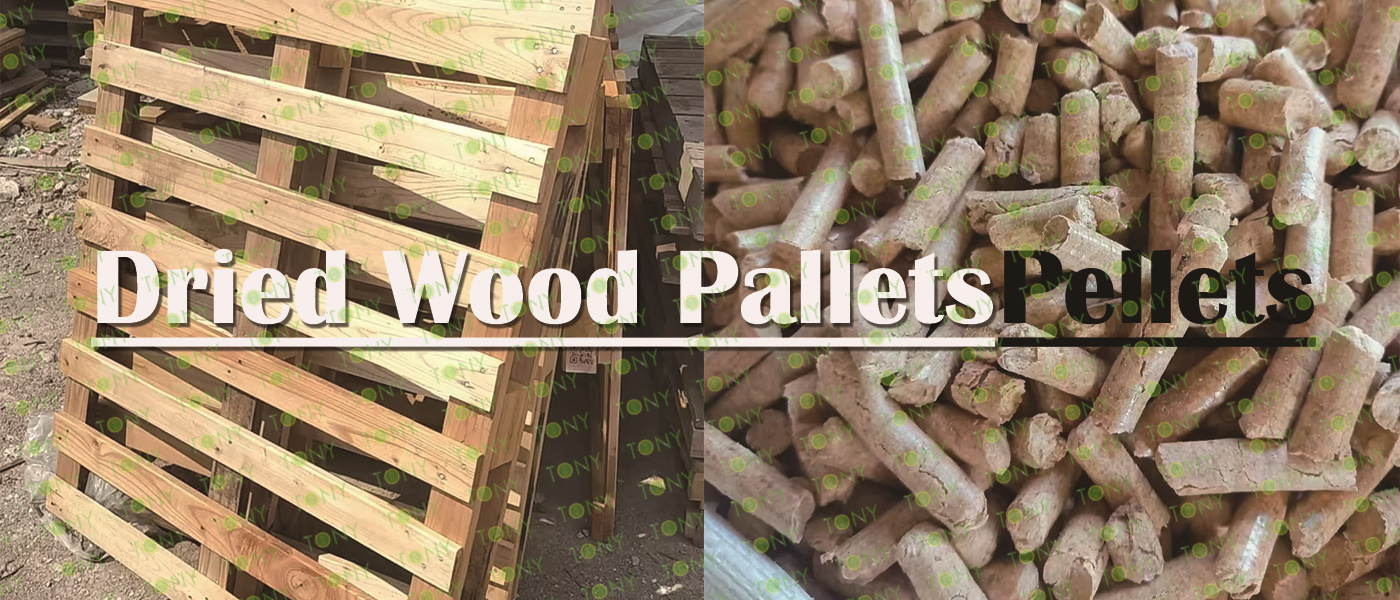
1. Project Name: Dried Wood Pallets Pellet Production Line
2. Raw Material: All kinds of dried wood pallets
3. Moisture Content of Raw Material: 10-15%
4. Capacity: 32-40 tons per hour
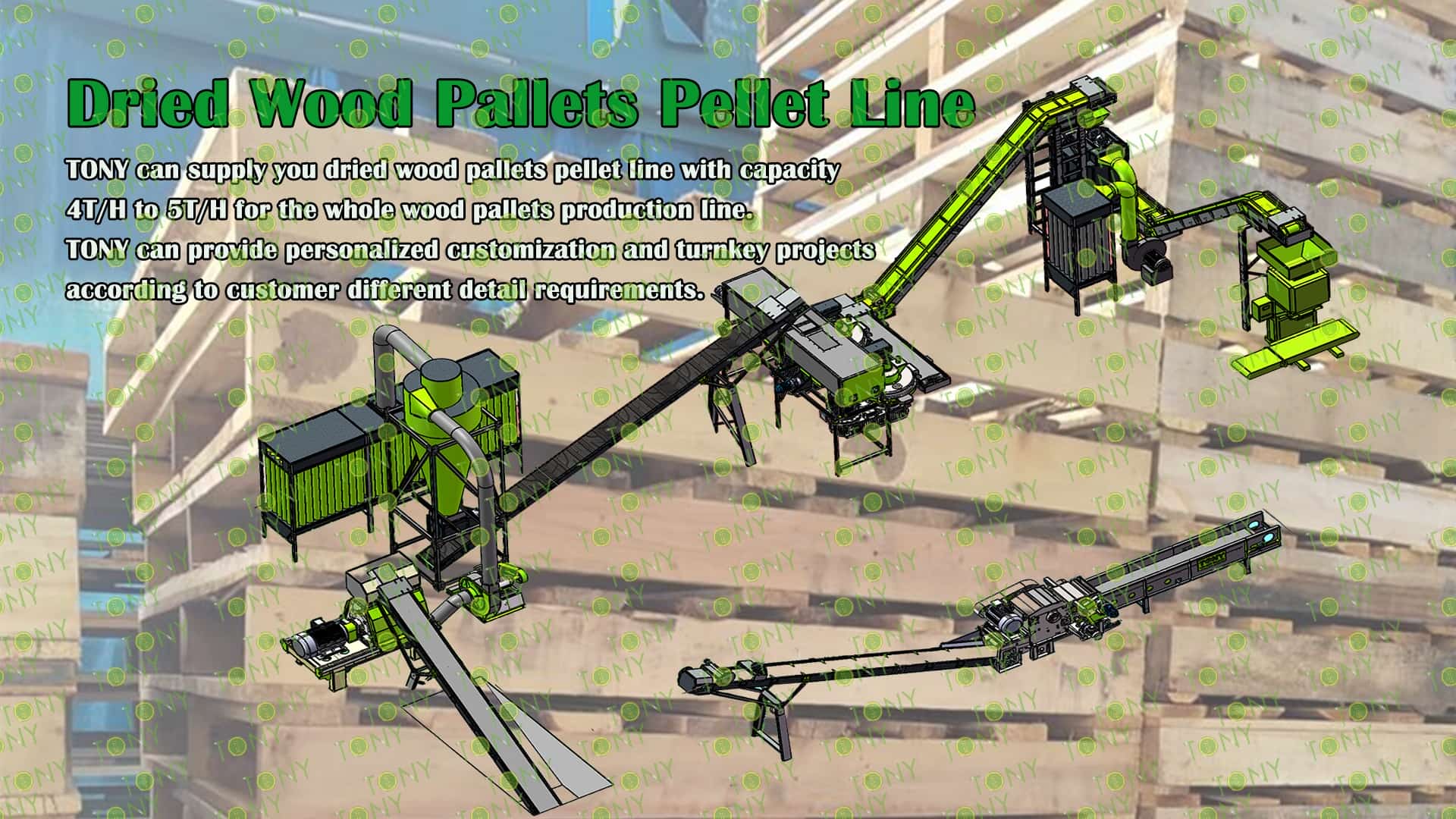
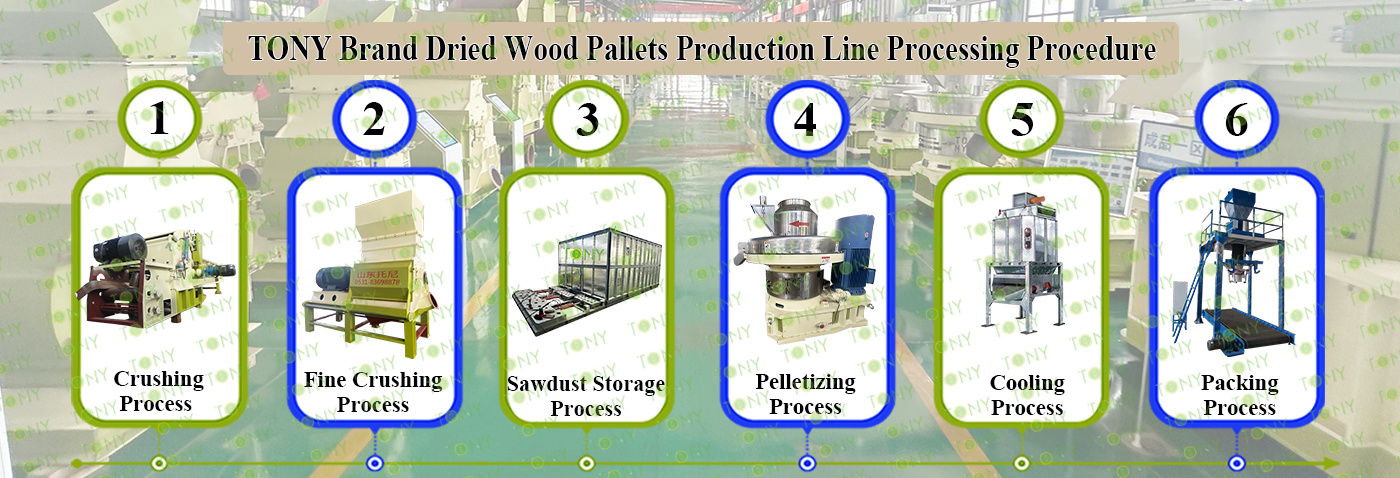
5. Process: Crushing Process - Fine Crushing Process -Sawdust Storage Process- Pelletizing Process - Cooling Process - Packing Process
6. Main Equipment: Comprehensive Chipper TPC1600-1000-315KW, Effective Hammer Mill-TFD100-200-315KW, TONY Large Hydraulic Storage Silo,TONY Pellet Machine TYJ860-Ⅲ-280KW, Pellet Cooler, Ton Packing Machine and Belt Conveyors

|
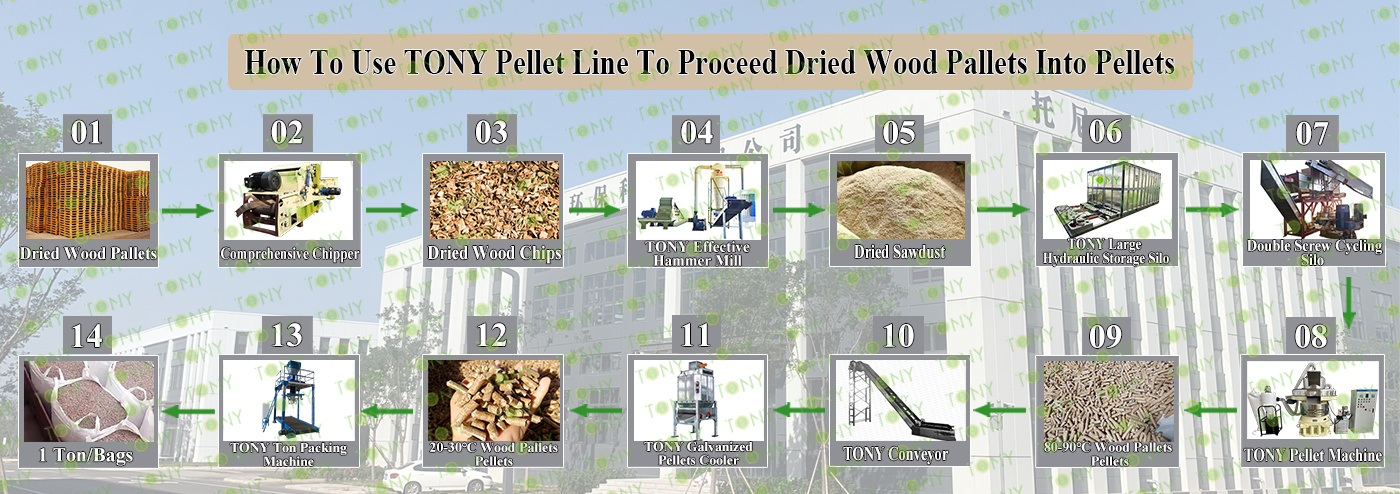
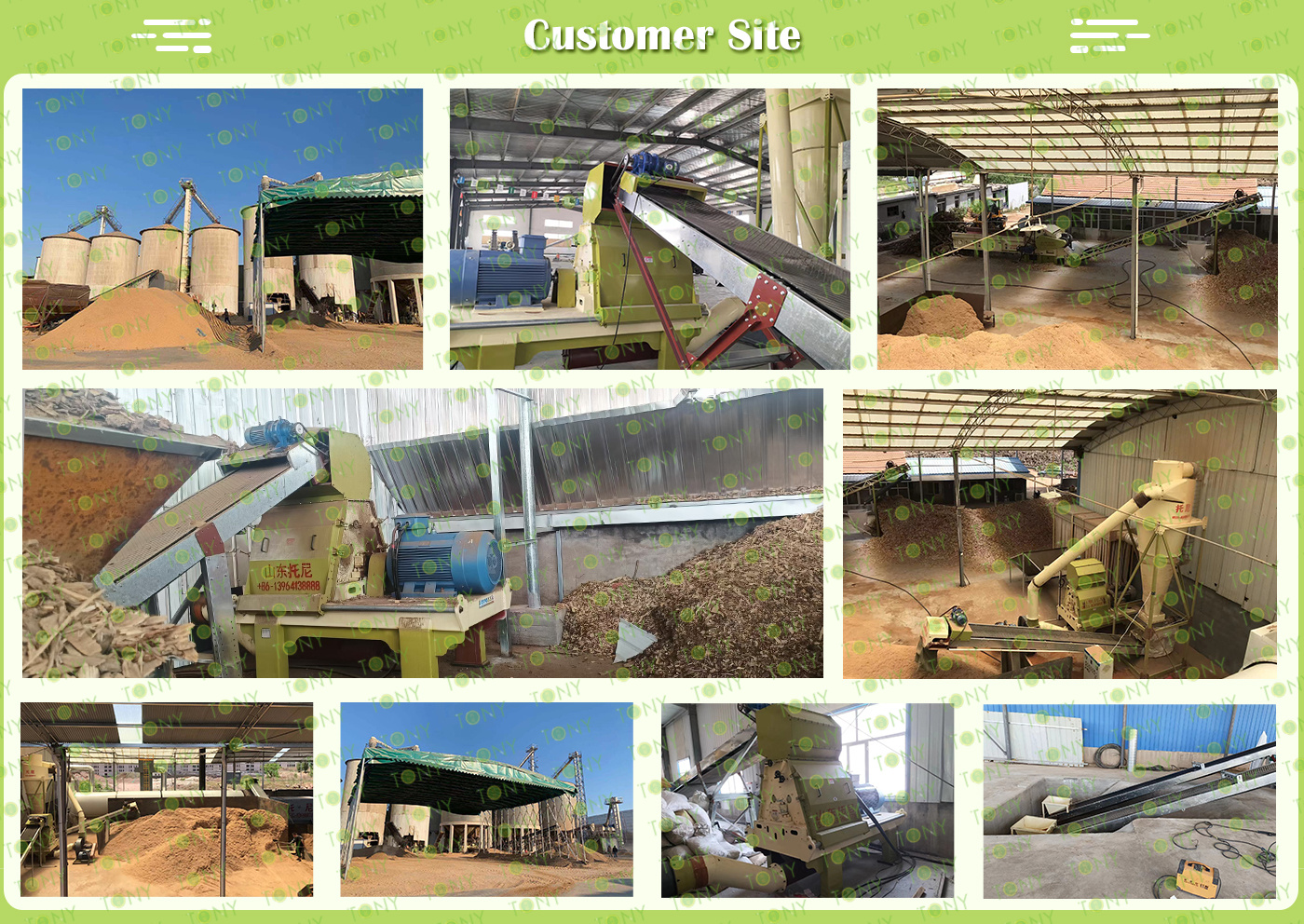
How to use the TONY pellet production line to make pellets from dried wood pallets? The process mainly includes the following steps and equipment: 1. Use TONY comprehensive chipper to grind dried wood pallets with width 1.6m into wood chips 25 - 55 mm in length. 2. Use TONY effective hammer mill to crush the 25-55 mm wood chips into 8-14 mm sawdust. 3.Use TONY large hydraulic storage silo to storage 8-14 mm sawdust 4. Use TONY vertical ring die pellet machine to produce pellets with a diameter of 6-8 mm. 5. Use TONY galvanized pellets cooler to cool the pellets from 80-90°C to 20-30°C. 6. Use TONY ton packing machine to pack the pellets into bags, each weighing 1 ton. For more detailed information and quotations, you can contact TONY. TONY can provide all the above - mentioned products at highly competitive prices and with excellent quality. |
|
||||||||||||||||||||||||||||||||||||||||||||||||||

| Next, TONY Will Introduce To You All The Necessary Machinery That Will Be Used For The Whole Pellet Production Line. Some Machines Can Be Custom - Made By Customers According To Different Customers' Detailed Demands. Contact TONY For More Details, Including Quotation And Layout. | ||
 |
 |
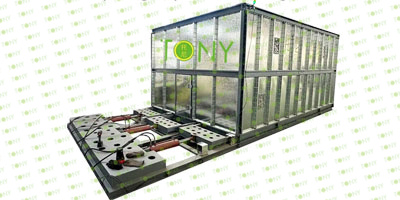 |
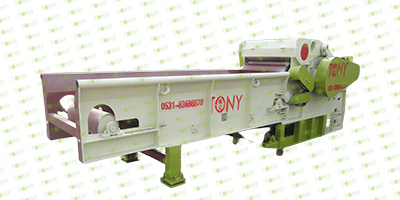
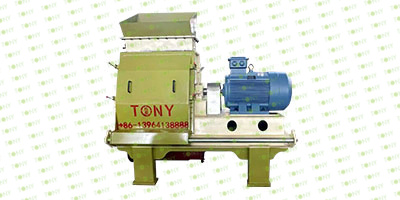
| Comprehensive Chipper | Effective Hammer Mill | Large Hydraulic Storage Silo |
| 1.To Grind Wood pallets Width ≤1.3m Into25-55mm Wood Chips. 2.Model: TPC1600-1000-315KW With 32 Hammer Heads*2sets 3.Capacity: 32-40Ton/Hour. |
1.To Crush 25-55mm Wood Chips Into 8-14mm Sawdust. 2.Model: TFD100-200-315KW*3sets 3.Capacity: 12-14Ton/Hour/Set |
1.To Storage Sawdust Before Pellet machine 2.Model: TCY-35*3sets 3.TONY Uses Galvanized Material |
 |
 |
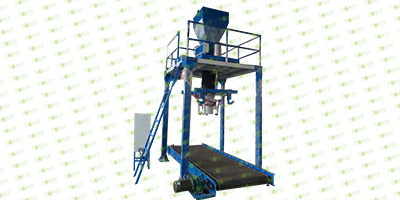 |
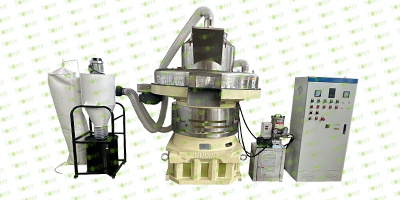
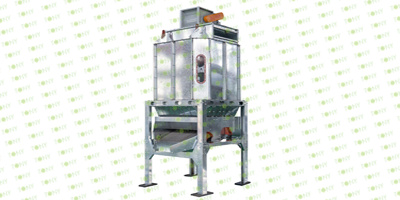
| Vertical Ring Die Sawdust Pellet Machine | Galvanized Pellets Cooler | Ton Packing Machine |
| 1.To Press Dry Sawdust Into 6-8mm Biomass Pellets 2.Model: TYJ860-III-280KW*8sets 3.Capacity:4-5Ton/Hour/Set 4.New 304SS Type |
1.To Cool Pellets From 80-90℃ Into 20-30℃ 2.Model: TCN-10*2sets 3.Capacity:32-40Ton/Hour |
1.To Pack Pellets Into 1Ton/Bags. 2.Model: TBD*2sets 3.Capacity: 32-40Ton/Hour |
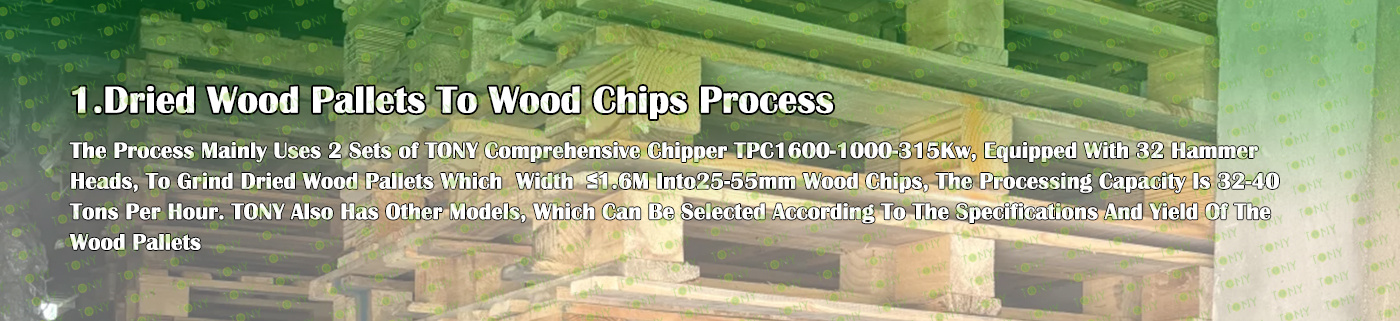
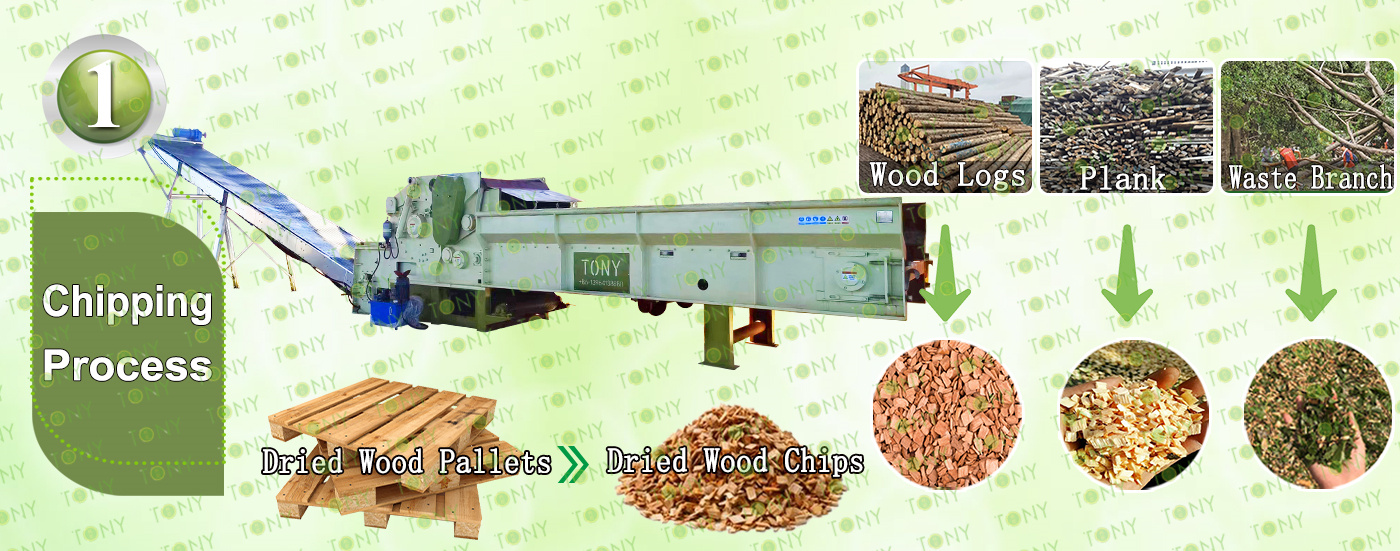
1.Wood Pallets Chipping Process:
A. This process is mainly used to grind wooden pallets with nails less than 1.6 m in width into wood chips with a size of 25-55 mm. The final size of the wood chips can be adjusted by replacing the screen with different sizes and replacing or adjusting the hammer heads with different specifications.
B.TONY brand comprehensive chipper TPC1600-1000-315KW model with 32 hammer heads*2sets
C.Capacity:32-40Ton/Hour.
Main Parts:
(1)TONY's Comprehensive Chipper.
(2)Feed And Discharge Belt Frequency Control To Prevent Card Material
(3)Hydraulic System Control Can Be Used For Thicker Materials
(4)Electronic Control System Allows The Equipment To Be Used Normally
Contact Tony For More Details With Quotation

2.Wood Chips Fine Crushing Process:
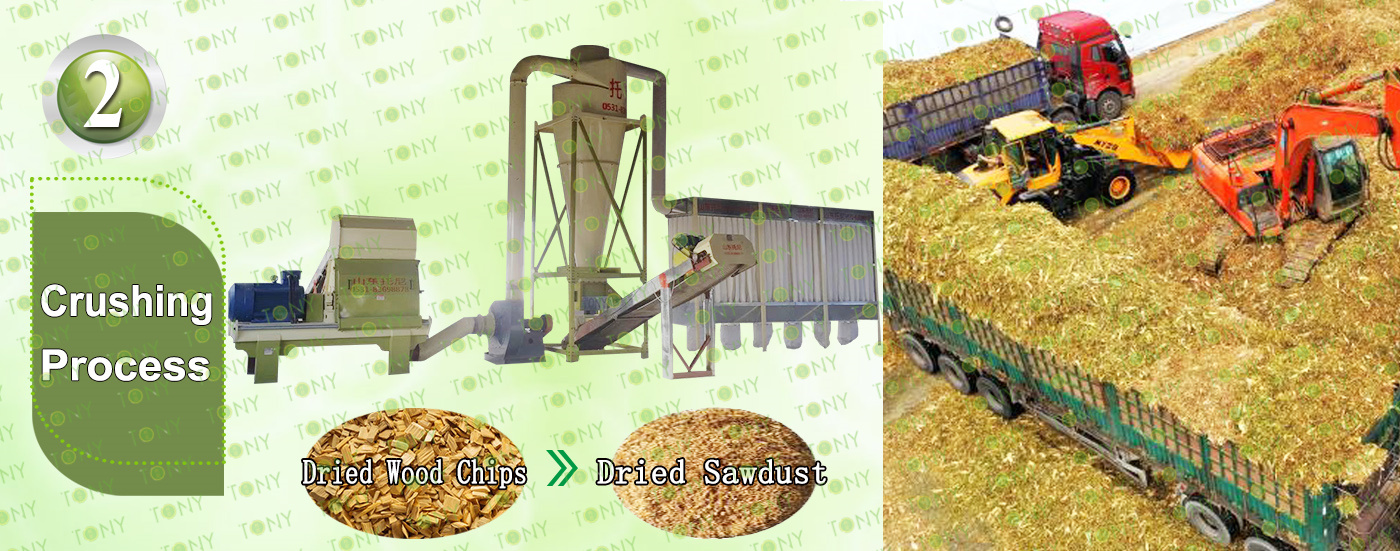
A.This process is mainly used to crush 25-55mm wood chips into 8-14mm sawdust.
B.Capacity:32-40Ton/Hour.
C.TONY brand effective hammer mill TFD100-200-315KW*3sets
Main Parts:
(1)TONY Effective Hammer Mill.
(2)Galvanized Dust Collector.
(3)Sawdust Transportation Fan Blower.
(4)Cyclone With Airlock.
(5)Electrical Cabinets.
3.Sawdust Storage Process:
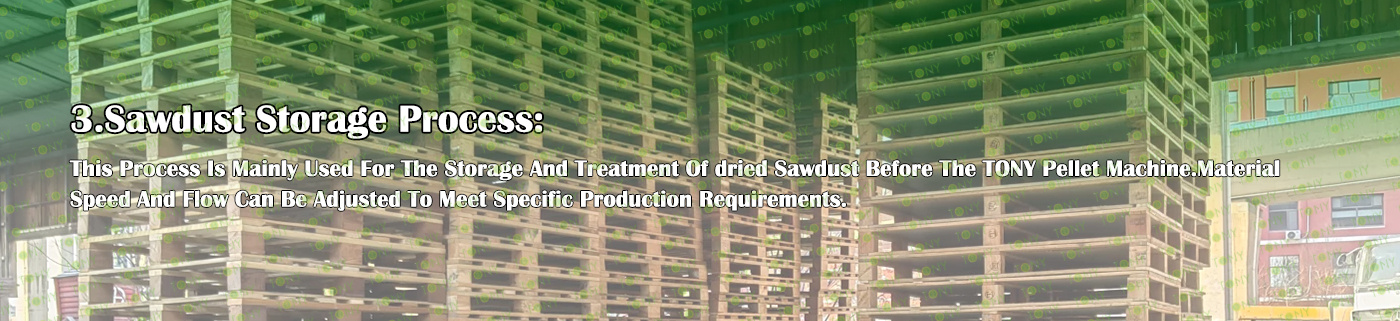
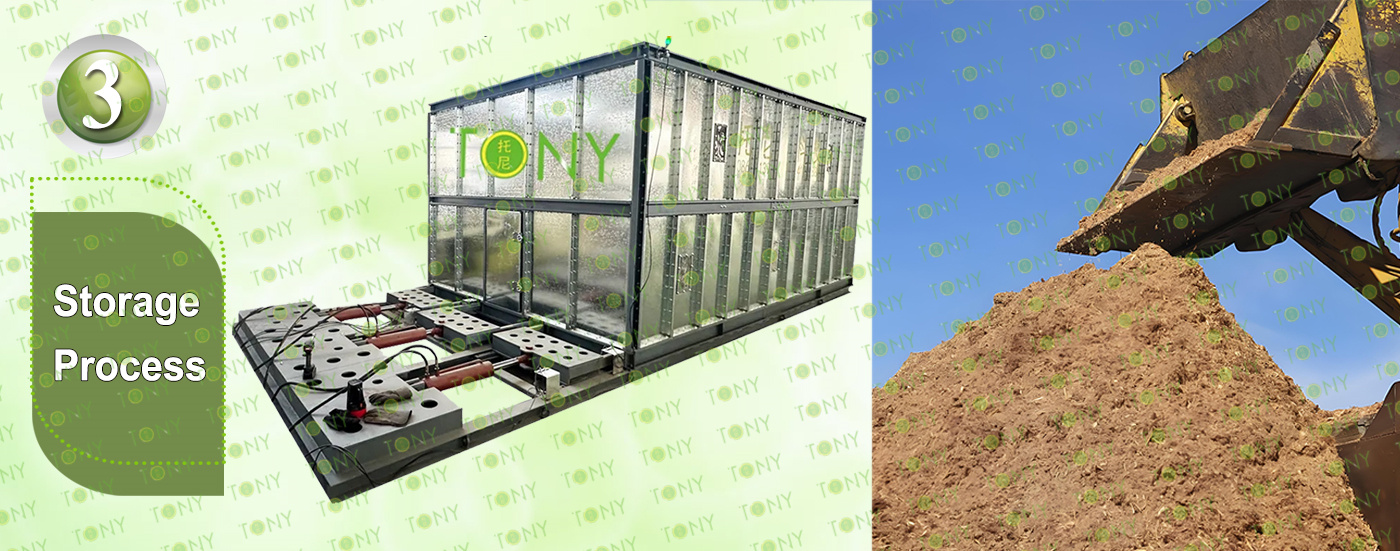
A. This process is mainly used to storage the sawdust that comes out of the hammer mill.It is hydraulic galvanized storage bin which is more stalbe and sawdust in it is not easy to be blocked.
B. TONY brand sawdust storage to storage the sawdust that comes out of the hammer mill.This process can be optional by customer.If customer do not chose the storage bin,he can storage the sawdust on the ground directly which may need some labour.
Main Parts:
(1)TONY's New Sawdust Storage Bin.
(2)With Screws Inside The Storage Bin To Prevent Sawdust Blocked.

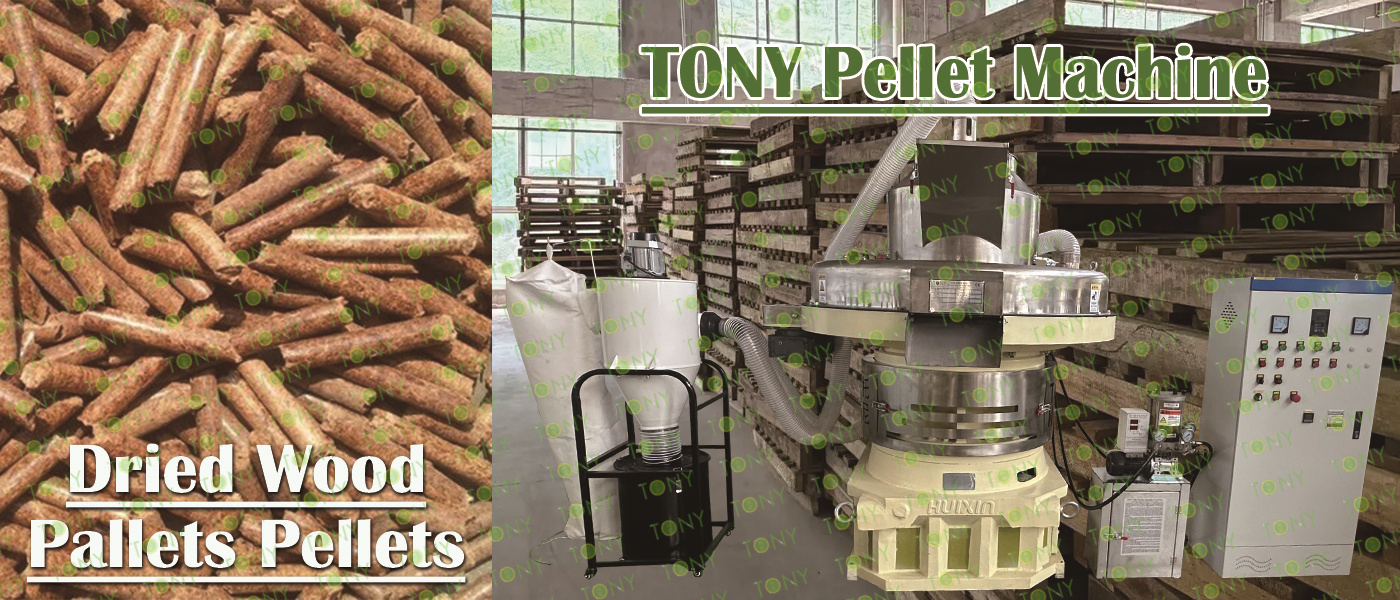
4.Pelletizing Process:
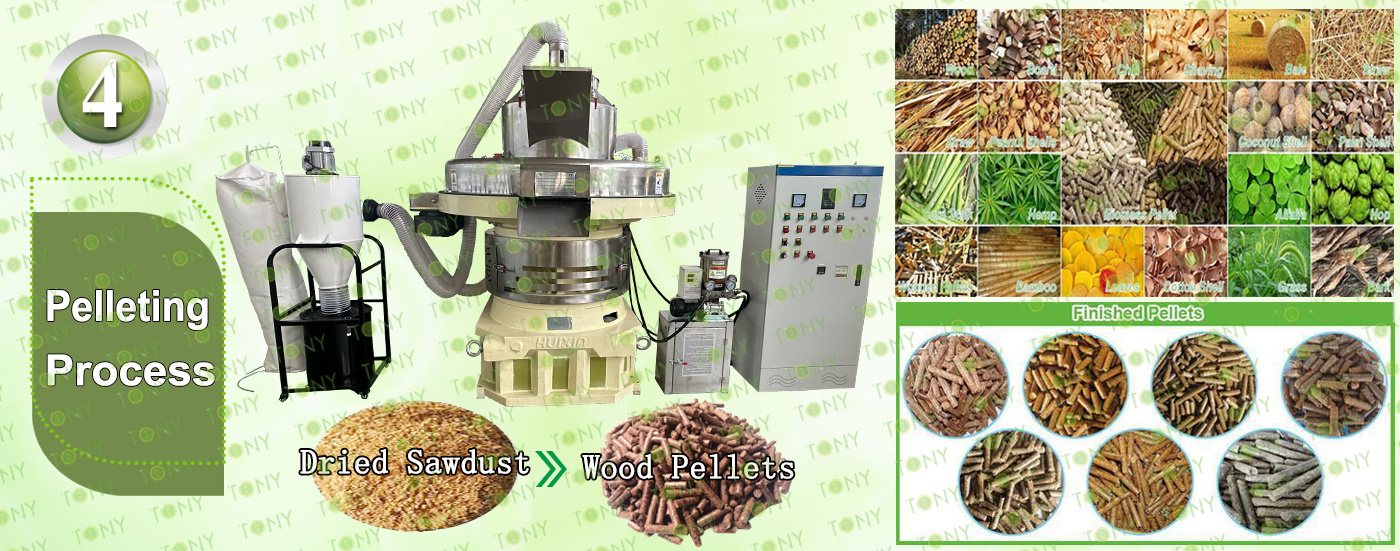
A.This process is mainly used to to product pellets into φ6-8mm.
B.Capacity:32-40Ton/Hour.
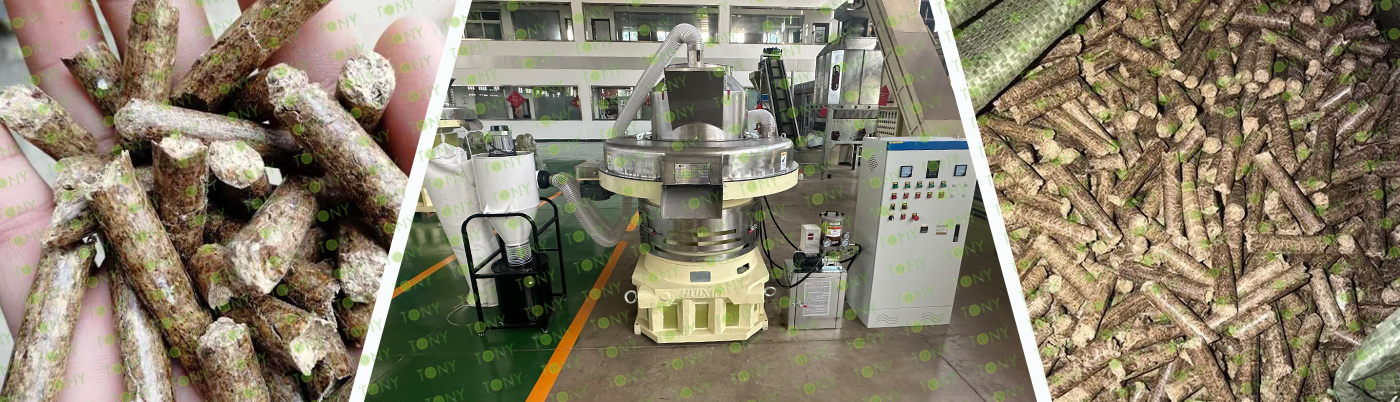
C.TONY brand vertical ring die pellet machine TYJ860-Ⅲ-280KW*8sets
D.Double screw cycling silo is added above the pellet machine, which has the advantages of saving space, saving labor, intelligently controlling the feeding speed, not easy to block the material, and improving production efficiency.
Main Parts:
(1)TONY's New Vertical Ring Die Pellet Machine.
(2)Cyclone And Bags Dust Collectors.
(3)Automatic Lubrication System.
(4)Electrical Cabinets.
You can chose TONY new type SS304 pellet machine

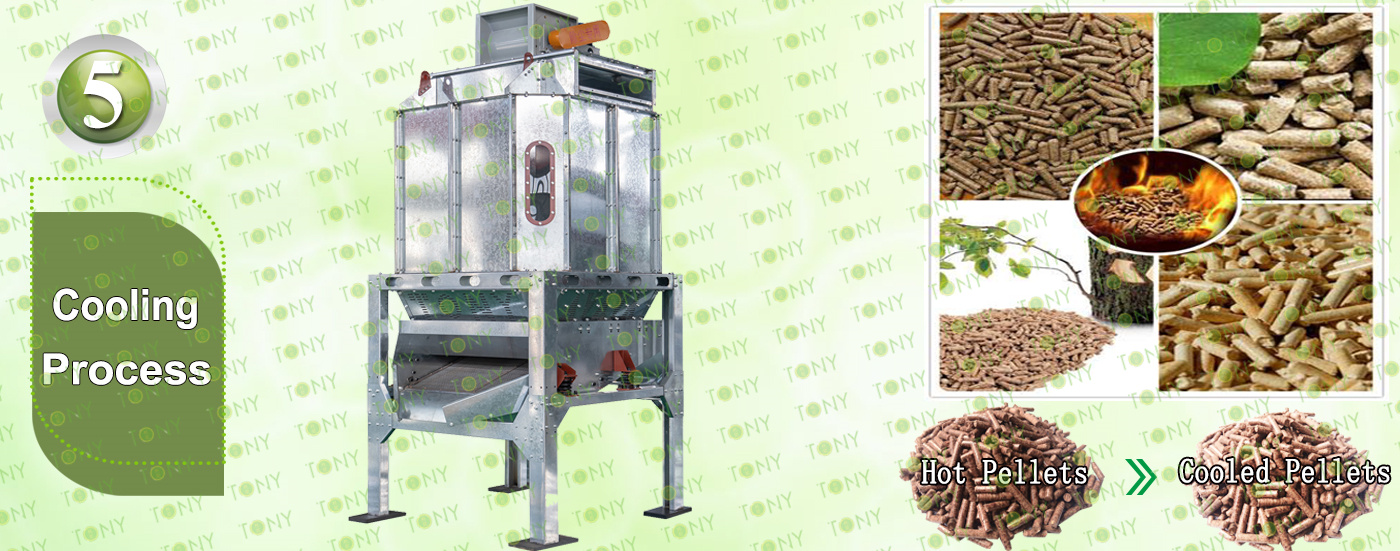
5.Cooling Process:
A.This process is mainly used to cool pellets from 80-90℃ to 20-30℃
B.Capacity:32-40Ton/Hour.
C.TONY brand galvanized cooler separator*2sets
Main Parts:
(1)TONY's Galvanized Cooler Separator With Vibrating Screen.
(2)Cyclone And Bags Dust Collectors.
(3)Fan Blower.
(4)Connect Pipes.

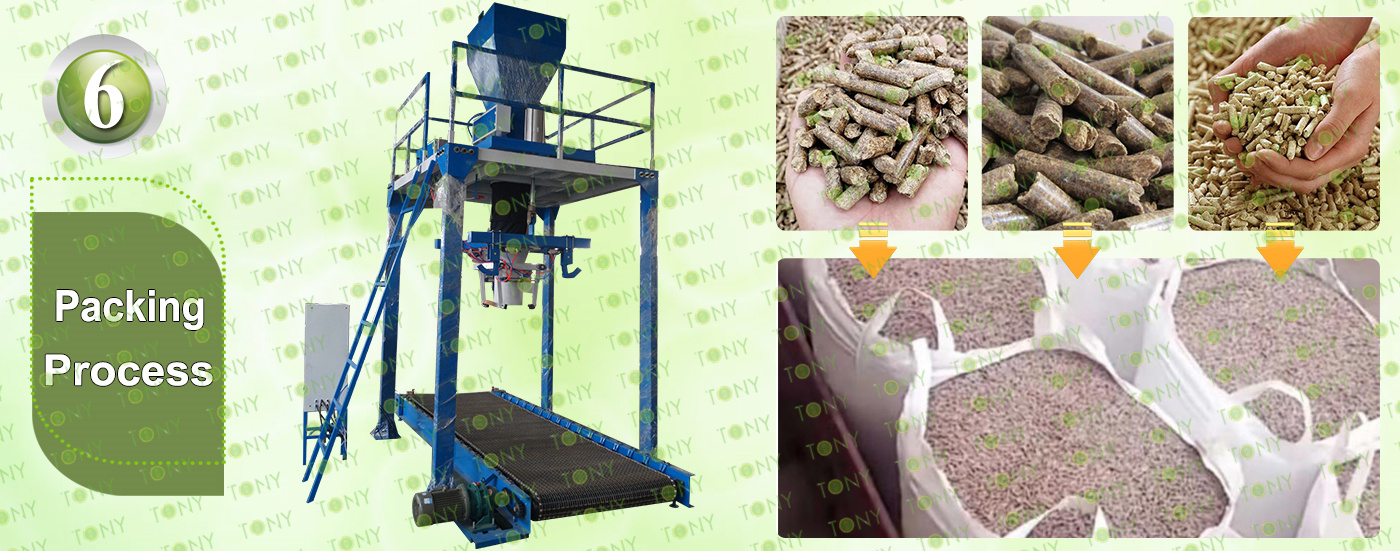
6.Packing Process:
A.This process is mainly used to pack pellets into 1ton/bags.
B.2 sets of TONY ton packing machine
Main Parts:
(1)TONY Ton Packing Machine
(2)Electronic Platform Scale Metering System
(3)Automatic Tare, Zero, and Drop Correction Functions
(4)Feeding System Features Fast, Medium, and Slow Feeding Speeds to Ensure Measuring Accuracy


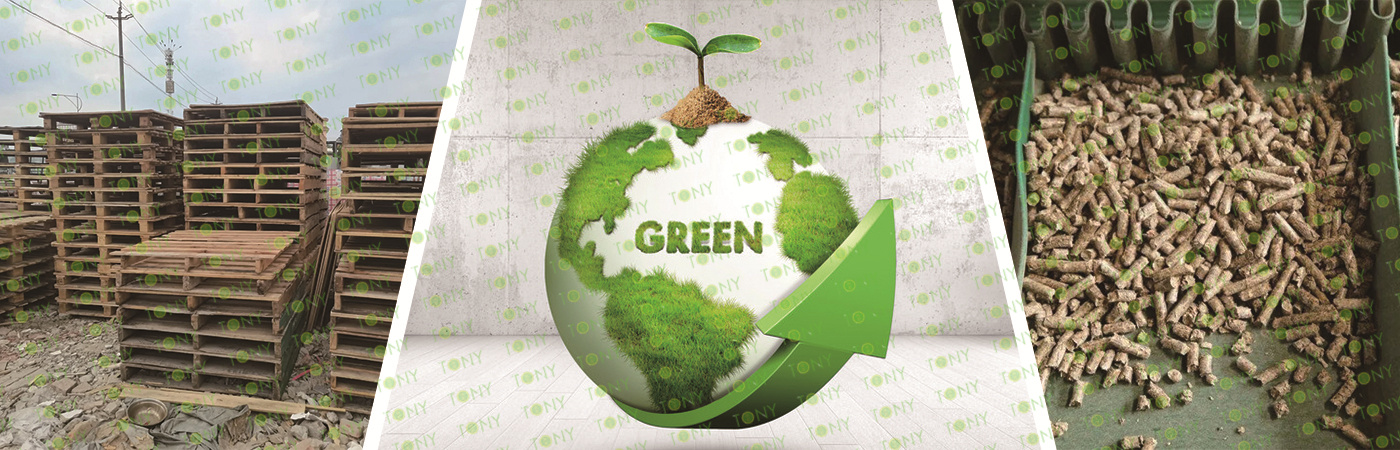
1.Outstanding Environmental Protection and Low Carbon Emissions
Carbon Neutral: Wood pellet fuel is derived from wood processing waste (such as wood chips and sawdust) and is a biomass energy source. The carbon dioxide absorbed during plant growth is roughly balanced by the carbon dioxide released during combustion, making it a "carbon-neutral" energy source, significantly reducing its contribution to the greenhouse effect.
Low Pollutant Emissions: Compared to coal, wood pellets produce extremely low levels of pollutants such as sulfur dioxide and nitrogen oxides (often far below environmental standards) when burned, and dust emissions are also low, effectively reducing air pollution and meeting increasingly stringent environmental regulations.
2.Wide Source of Raw Materials and Controllable Costs
Abundant Raw Materials: The main raw materials are scraps, wood chips, sawdust, branches, and bark generated during wood processing. These materials are readily available and stable in forestry, furniture manufacturing, and papermaking. They can even be "turned waste into treasure," reducing the environmental impact of landfills or incineration.
Cost Advantages: The raw materials are mostly industrial waste, resulting in relatively low procurement costs. Furthermore, some regions offer subsidies for biomass energy projects, further reducing production and usage costs. Compared to other energy sources like natural gas and fuel oil, biomass energy is economical.
3.High Combustion Efficiency and Efficient Energy Utilization
High Density: Wood pellets are compressed and formed, resulting in a density significantly higher than that of raw wood or sawdust (typically 1.1-1.3 tons/cubic meter). They are less prone to loosening during combustion, maintaining a stable combustion state and a long-lasting flame. They also offer high thermal efficiency (typically exceeding 85%, compared to the 40%-50% of loose firewood).
Stable Combustion: The pellets have a regular shape and uniform size, facilitating automated feeding and combustion control. They can be precisely adjusted with a matching pellet stove, reducing energy waste and making them suitable for applications requiring a stable heat source.
4.Convenient Storage and Transportation
Small Size: Compressed pellets are only 1/5-1/8 the volume of raw sawdust, significantly saving storage space. They can be stored in bags or in bulk, eliminating the need for specialized storage facilities, making them suitable for homes, businesses, and other environments.
Low Transportation Costs: The high density allows for higher energy transport per unit volume, improving transportation efficiency and reducing transportation costs. Furthermore, the pellets are resistant to moisture (some products are treated to prevent moisture), minimizing loss during transportation.
5.Diverse Application Scenarios
Civilian Applications: They can be used for home heating and cooking (using devices such as pellet fireplaces and pellet stoves). They are simple and clean to operate, replacing traditional coal and firewood to improve the indoor environment.
Industrial Applications: They can be used as boiler fuel to provide steam or hot water for factories, hotels, and hospitals. In agriculture, they can be used for greenhouse heating and drying agricultural products (such as grains and medicinal herbs).
Power Generation: They can be used as fuel in biomass power plants, either mixed with coal or burned alone to generate electricity, contributing to the transformation of the energy structure.

Advantages of Wood Pallet Pellets
Processing wood pallet pellets into biomass pellets not only offers numerous advantages in terms of environmental protection, economic and social development, and energy structure, but also boasts excellent combustion performance. The main advantages are as follows:
1.Calorific Value and Combustion Residues
The calorific value and ash content of biomass pellets after combustion are approximately 10% lower than those of medium-quality coal. However, pellets burn completely under normal operating conditions. Coal, on the other hand, does not burn completely, leaving residual ash containing 10% to 15% combustible components. Therefore, in practical applications, the effective calorific value of the two is comparable.
2.Combustibility
Pellets are more flammable and easy to ignite than coal, significantly reducing the ignition time required for combustion.
3.Solid Emissions
Biomass pellets produce significantly lower solid emissions than coal. This not only reduces slag disposal costs but also reduces environmental pollution. Solid emissions from biomass pellets are primarily ash, accounting for approximately 0.4% to 7.0% of the total weight. In contrast, solid emissions from coal combustion are a mixture of ash, alkali, and unburned coal, accounting for approximately 25% to 40% of the total weight. 4. Air Pollution and Corrosion
Coal causes far greater levels of air pollution and boiler corrosion than wood biomass pellets. Coal smoke contains large amounts of particulate carbon, as well as toxic and corrosive gases such as sulfur dioxide and carbon monoxide. Biomass pellets are primarily composed of C-H organic matter, and their flue gas contains no particulate carbon or sulfur dioxide. Instead, it consists primarily of C-H volatile gases, with virtually no sulfur dioxide or carbon monoxide. The smoke color during combustion is below Ringelmann Class I, significantly reducing air pollution and carbon dioxide emissions. Biomass pellets are internationally recognized as a "clean fuel."
4.Cost and Time Savings
Compared to coal, using biomass pellets as boiler fuel can save costs and time. For example, using wood biomass pellets for a 0.5-ton boiler can reduce costs by 11% and time by 34%. For example, compared to coal-fired power generation, a 0.5-ton boiler can reduce fuel costs by 10% and time by 16%.
5.Sustained Combustion
Wood biomass pellets typically burn 8 to 10 times longer than loose, soft materials, maintaining a stable and continuous combustion state, ensuring a more reliable energy supply.




2025 Tony Machinery - All Rights Reserved. Map